Largest Libraries and Archives in the World
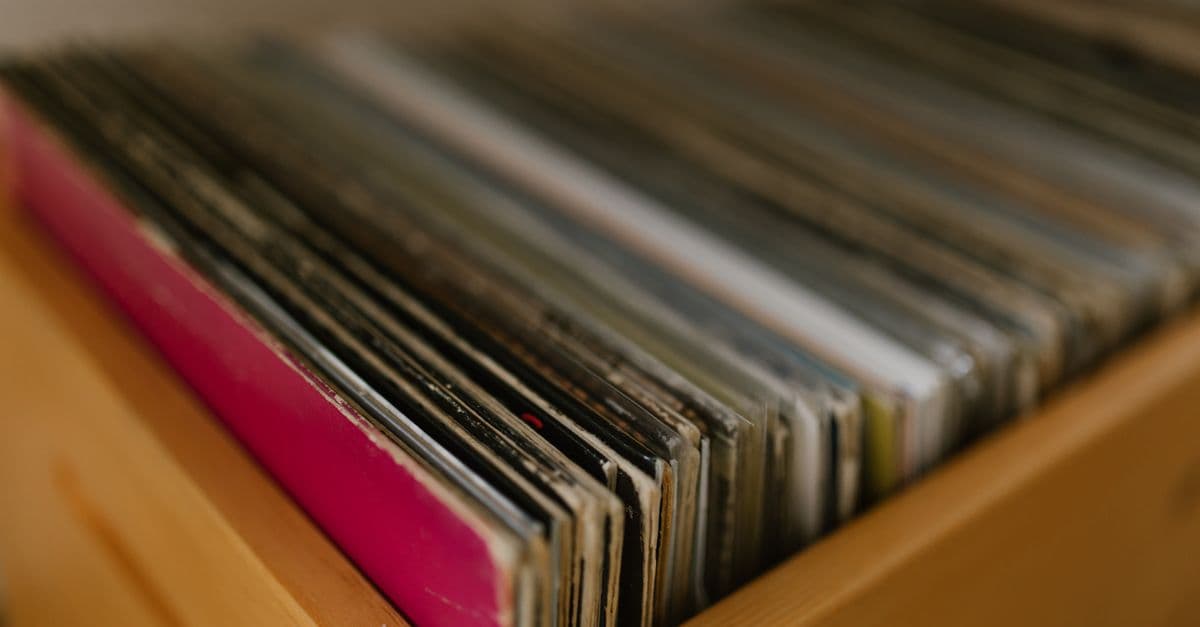
Photo: RDNE Stock project / Pexels
The Library of Congress in Washington, D.C. holds roughly 173 million items across three buildings and about 1,600 kilometers (1,000 miles) of shelving. That makes it the largest library in the world by total item count, ahead of the British Library and the National Library of China. But "largest" gets complicated fast once you separate books from manuscripts, physical shelving from digital storage, and national libraries from the archives that quietly hold more raw data than any of them. This guide breaks down the real numbers, how they're measured, and why the answer keeps shifting.
What "largest library" actually means
Ask ten people to define a library's size and you'll get ten different metrics. Some count printed volumes only. Others count every item — maps, photographs, sound recordings, sheet music, patents, newspapers — which is why the Library of Congress's headline number, 173 million items, includes roughly 41 million books and other print materials plus more than 130 million items that aren't books at all, according to the library's own collection statistics.
The British Library takes a similar broad-count approach, reporting a collection in the range of 170 to 200 million items depending on the year cited, spanning manuscripts, maps, stamps, and sound archives alongside roughly 14 million books. When a source says the British Library "has more books" than the Library of Congress, that's often true for printed volumes specifically, even though the Library of Congress wins on total item count.
This distinction matters because it changes the ranking depending on which number a headline picks. A library counting only bound books looks very different from one counting every microfilm reel, map sheet, and 78-rpm disc it has ever accessioned. Neither number is wrong; they're just answering different questions.
The largest physical libraries, ranked
Ranking libraries by scale is a lot like ranking mountains: the answer depends on whether you're measuring the peak, the base, or the total mass. Physical libraries are usually compared by total catalogued items, since that's the number institutions themselves report and audit most consistently.
| Institution | Country | Reported collection size | Notable holdings |
|---|---|---|---|
| Library of Congress | United States | ~173 million items | ~41 million books/print items, 15 million photographs, largest map collection in the world |
| British Library | United Kingdom | ~170–200 million items | ~14 million books, extensive newspaper and sound archives |
| National Library of China | China | ~41 million items | 3,500+ oracle bone inscriptions, 1.6 million thread-bound classical volumes |
| Bibliothèque nationale de France | France | ~42 million items | 16 million books, 950,000 maps, 2 million music scores |
| Russian State Library | Russia | ~48 million items | One of the largest collections in continental Europe |
| National Diet Library | Japan | ~45 million items | Japan's only legal deposit library |
| Vatican Apostolic Library | Vatican City | ~1.6 million books, 75,000 manuscript codices | World's oldest continuously operating library, founded 1475 |
Table: Approximate holdings of the world's largest physical libraries. Figures compiled from institutional reports and vary by measurement date and counting method.
Notice that the National Library of China, at roughly 41 million items, sits well below the Library of Congress and British Library on raw count, but its collection includes some of the oldest surviving written material on Earth: over 3,500 tortoise-shell and bone fragments carved with oracle-bone script dating back more than 3,000 years, according to the library's own published collection summary.
Why isn't the Vatican Library on the "biggest" list?
The Vatican Apostolic Library holds around 1.6 million printed books and 75,000 manuscript codices, which is small by item count next to the Library of Congress. Its significance is historical rather than volumetric: founded in 1475, it's the oldest continuously operating library in the world, and it holds unique medieval and Renaissance manuscripts found nowhere else.
How libraries actually measure "size"
A library isn't a single number, it's a stack of overlapping counts: bound volumes, serials, manuscripts, maps, recordings, and, increasingly, digital files that were never printed at all. Institutions typically report a headline "items" figure for public communication and a separate, more granular figure for cataloguers and researchers.
Think of a library's size the way you'd think of a city's population. A city's population count depends on whether you're counting registered residents, daytime workers, or metro-area commuters — and none of those numbers is "wrong," they just measure different boundaries. A library's item count works the same way: shelf-linear-feet measures physical footprint, while item count measures discrete cataloged objects, and neither maps cleanly onto "how much knowledge is stored here."
That ambiguity is also why shelving length is a useful cross-check. The Library of Congress reports roughly 1,600 kilometers (1,000 miles) of bookshelves across its Washington campus. The Vatican's newer archive, the Vatican Apostolic Archive (distinct from the Vatican Library), stores its holdings on more than 85 linear kilometers of shelving, including a bunker vault beneath the Vatican Museums' Cortile della Pigna, per the Archive's own published history. Shelving length gives a physical, hard-to-inflate number that's harder to game than an "items" count, which can balloon depending on how granularly individual documents are catalogued.
How does the Library of Congress become the biggest library?
The Library of Congress grew large primarily through the US copyright deposit system: since 1870, nearly every book copyrighted in the United States has been required to submit copies to the Library. Over 150 years of automatic legal deposit, combined with acquisitions, gifts, and the absorption of specialized collections like Thomas Jefferson's original personal library after the 1814 fire, compounded into the largest catalogued collection on Earth.
The archives that outgrew the libraries
Libraries collect published and curated material. Archives collect records, government paperwork, correspondence, and now, increasingly, born-digital files that were never printed. On raw volume, several archives now dwarf even the biggest libraries.
The US National Archives and Records Administration (NARA) holds an estimated 13.5 billion pages of textual federal records, alongside roughly 40 million photographs, 10 million maps and charts, and more than 835 terabytes of electronic records, according to NARA's own congressional budget justification documents. NARA is selective by design: federal agencies transfer only the 2 to 5 percent of records judged to have permanent historical value, which means that 13.5-billion-page figure represents a filtered slice of a far larger federal paper trail.
The Internet Archive is a different animal entirely. Founded in 1996 to build a digital library of the internet, it now runs the Wayback Machine, which has captured more than 866 billion individual web page snapshots. Its total unique data footprint exceeds 99 petabytes; with the redundant copies the organization keeps for preservation against data loss, that climbs past 212 petabytes, per the Internet Archive's public infrastructure blog. One petabyte is roughly 1,000 terabytes, or enough to store about 500 billion pages of plain text, which makes the Internet Archive's holdings, by raw information volume, larger than every national library's physical collection combined.
Is the Internet Archive really bigger than the Library of Congress?
By raw data volume, yes: 99+ petabytes versus an estimated few hundred terabytes for the Library of Congress's digital collections. But the comparison is a bit like comparing a warehouse's square footage to a museum's number of exhibits — the Internet Archive stores unstructured web snapshots at massive scale, while the Library of Congress catalogs and curates each of its 173 million items individually, which is a fundamentally different (and far more labor-intensive) kind of "large."
Why archives are measured in petabytes, not books
A physical library's growth is bounded by architecture: you can only build so many floors and so much shelving before you need a second building. Archives that collect digital records have no such ceiling, which is why their growth curves look completely different.
Storage engineers use a rough rule of thumb: a single page of plain text is about 2 kilobytes, so one terabyte can theoretically hold around 500 million pages of text. Scale that to the Internet Archive's 99 petabytes of unique data, and you get a number in the tens of trillions of theoretical text-page equivalents, though in practice the Archive's storage is dominated by images, video, and full web-page code rather than plain text, so that figure is illustrative, not literal.
This is also why national libraries have started running parallel digital-preservation programs distinct from their physical collections. The British Library's digital collections, the Bibliothèque nationale de France's Gallica digitization project, and the Library of Congress's web archiving program are all attempts to capture born-digital and digitized material at a scale that physical shelving could never accommodate. None of these digital programs yet approaches the Internet Archive's scale, partly because national libraries prioritize curated completeness over the Internet Archive's broad, automated web-crawling approach.
What people get wrong about "biggest library" claims
The single most common error in casual rankings is treating "most books" and "most items" as interchangeable. A library that reports 200 million items might have fewer printed books than one reporting 40 million items, because the larger figure counts every map sheet, photograph negative, and sound recording as a separate item. Always check whether a ranking specifies books, printed volumes, or total items before trusting the order.
A second common mistake is ignoring measurement dates. Collections grow every year through acquisition and legal deposit, and institutions update their public figures on inconsistent schedules; a number quoted from a 2015 press release can be meaningfully out of date by 2026. The Library of Congress alone adds roughly 12,000 to 15,000 items to its collections on a typical working day, based on the library's public acquisitions reporting, which means any static ranking is already slightly stale the moment it's published.
A third mistake is comparing archives to libraries as though they're the same category. NARA's 13.5 billion pages and the Internet Archive's 99+ petabytes aren't "bigger libraries" in the traditional sense, they're a different kind of institution entirely, built around record-keeping and preservation rather than curated public access to published works. Treating them as directly comparable to the Library of Congress's item count mixes two different measurement systems the way comparing a country's GDP to a company's market capitalization does: technically numbers, not directly comparable numbers.
Finally, be skeptical of any list that doesn't cite a source or date for its figures. Library collection statistics are usually published in annual reports or on institutional websites; if a ranking article can't point to where its numbers came from, treat the ranking as unverified.
The Library of Alexandria: how the world's most famous library actually vanished
No library in history casts a longer shadow than the Library of Alexandria, founded in Egypt around the early third century BCE under Ptolemy I and expanded by his successors into the ancient world's leading center of scholarship. Ancient writers gave wildly inconsistent counts of its holdings, ranging from roughly 40,000 up to 700,000 papyrus scrolls, with figures near 400,000 cited most often, and the variance itself is instructive: nobody agreed on whether to count duplicate copies, individual scroll volumes of a single multi-scroll work, or holdings split between the main library and its satellite collection at the Serapeum temple (The Collector). The library grew through aggressive, state-funded acquisition; Ptolemy II reportedly ordered that any scrolls found aboard ships docking in Alexandria's harbor be confiscated, copied by the library's scribes, and only the copies returned to their owners.
The popular story of the library's end is that Julius Caesar burned it to the ground in 48 BCE during his siege of Alexandria. Modern historians largely reject this as the actual cause of the library's disappearance. Ancient sources describe scholars visiting and using the library decades after Caesar's siege, and one of Caesar's own officers, Aulus Hirtius, wrote that Alexandria's buildings were "almost completely secure against fire" because they were largely built from stone rather than timber (National Geographic). The likelier explanation is that Caesar's troops burned ships and dockside warehouses during the fighting, and some number of scrolls stored near the harbor, not the library building itself, were lost in that blaze.
What actually erased the library was a slower, less cinematic process: a roughly 300-year stretch of reduced royal patronage, political upheaval under Roman rule, and at least a few additional damaging events, including unrest during the reign of Emperor Aurelian in the 270s CE and the destruction of the Serapeum daughter library by a Christian mob in 391 CE, after Emperor Theodosius I ordered pagan temples closed (allthatsinteresting.com). Some later medieval accounts, since disputed by most historians, attribute a final destruction to the Muslim conquest of Egypt in 642 CE. By the time any of these later events occurred, though, the library that Ptolemy I founded had likely already shrunk to a fraction of its former holdings.
The lesson for anyone studying today's largest libraries and archives is that no collection is protected by scale alone. The Library of Alexandria was, by contemporary accounts, the single largest concentration of written knowledge on Earth in its era, and it still disappeared, not through one catastrophic event but through a long accumulation of neglect, funding loss, and smaller incidents that compounded over centuries. It's the same reason the Internet Archive maintains redundant backup copies of its 99-plus petabytes across multiple physical sites rather than trusting any single building: institutional decline, not just fire, is what erases collections at scale.
The takeaway
By total item count, the Library of Congress is the largest library in the world at roughly 173 million items, narrowly ahead of the British Library's 170 to 200 million. But that framing only captures physical, curated collections. Once you include archives and born-digital storage, the Internet Archive's 99-plus petabytes and NARA's 13.5 billion pages of federal records dwarf every physical library on Earth in raw information volume. The real answer to "what's the biggest library" depends entirely on whether you're counting curated items, shelving length, or bytes, and any honest ranking should tell you which one it's using before it tells you who wins. Other record lists measured by size include the largest ships ever built and the largest solar farms in the world.
Read next:
- The Largest Structures Ever Built
- The Fastest Man-Made Objects Ever Built
- Countries with the Most Data Centers
Frequently Asked Questions
Q: What is the largest library in the world? A: The Library of Congress in Washington, D.C. is generally considered the largest library in the world by total item count, holding roughly 173 million items, including about 41 million books and print materials plus more than 130 million non-book items such as photographs, maps, and recordings.
Q: Is the British Library bigger than the Library of Congress? A: The British Library's collection is often reported in the 170 to 200 million item range, which can exceed the Library of Congress in some counting methods, and the British Library holds more printed books specifically. By the most commonly cited total-item figures, though, the Library of Congress is usually ranked first.
Q: What is the largest archive in the world? A: By raw data volume, the Internet Archive is the largest archive in the world, storing more than 99 petabytes of unique data (over 212 petabytes including backup redundancy) and more than 866 billion web page captures in its Wayback Machine.
Q: How big is the US National Archives collection? A: The US National Archives and Records Administration (NARA) holds an estimated 13.5 billion pages of textual federal records, roughly 40 million photographs, 10 million maps, and over 835 terabytes of electronic records, according to NARA's congressional budget documents.
Q: How much shelving does the Library of Congress use? A: The Library of Congress reports approximately 1,600 kilometers (1,000 miles) of bookshelves across its three Washington, D.C. buildings.
Q: Why do library size rankings disagree with each other? A: Rankings disagree because "size" can mean total items, printed books only, shelving length, or digital storage volume, and institutions update their published figures on different schedules. A ranking that doesn't specify its metric and date should be treated as unreliable.
Q: Is the Vatican Library the oldest library in the world? A: The Vatican Apostolic Library, founded in 1475, is the oldest continuously operating library in the world, though older library collections have existed historically (such as the Library of Alexandria) without surviving into the present day.
Q: How did the Library of Congress become so large? A: The Library of Congress grew primarily through the US copyright deposit system, which has required copyright holders to submit copies of their work to the Library since 1870, combined with major acquisitions such as Thomas Jefferson's personal library after the original collection burned in 1814.
Q: What's the difference between a library and an archive? A: Libraries typically collect and curate published materials, like books, journals, and recordings, for public access. Archives collect unpublished records, such as government documents, correspondence, and institutional files, usually organized by provenance rather than subject, and often with more restricted public access.
Q: How many items does the National Library of China hold? A: The National Library of China holds around 41 million items, including more than 3,500 oracle bone inscriptions dating back over 3,000 years and 1.6 million volumes of traditional thread-bound Chinese texts, according to the library's published collection summary.
Sources
- National Library of China — Wikipedia, citing institutional collection data
- Internet Archive's Storage — DSHR's Blog (2026)
- National Archives FY2025 Congressional Justification (archives.gov)
- About the National Archives of the United States (archives.gov)
- Vatican Apostolic Archive — official history page
- Bibliothèque nationale de France — Wikipedia, citing institutional figures
- Library of Congress, "Fascinating Facts" and annual collections reporting (loc.gov)
- British Library, "Facts and Figures" institutional page (bl.uk)
Follow new articles
Add SciHub101 to your feed reader to see new science and technology stories.
About the Author
SciHub101 is an independent science and technology publication founded and edited by Buğra Sözeri, a software engineer and app developer based in Türkiye. AI tools assist with drafting and research. Source documentation in the existing archive is uneven, and articles are being reviewed and corrected. The Editorial Team byline identifies editorial responsibility; it does not certify specialist or independent human review. Where we compare products, anything built by our own team is labelled as such — see the editorial guidelines and About page for how corrections and disclosures work.
Related Articles

Largest Ships Ever Built: Tankers, Container Ships, and Floating Cities
The largest ship ever built was a 458-meter supertanker. Compare record-holders by length, tonnage, and cargo capacity, from supertankers to floating LNG plants.
Largest Dams in the World Explained: Height, Volume, and Power
The largest dam changes depending on whether you rank by height, reservoir, concrete volume, or hydroelectric output. Here is the science behind each record.
The Largest Empires in History: The One Where the Sun Never Set
At its peak around 1920, the British Empire governed roughly a quarter of the planet's land and a fifth of its people — about 35 million square kilometres spread so widely that, somewhere within it, the sun was always shining. It is the largest empire by area in human history. But by a different measure, a 13th-century empire that grew from a few thousand horsemen was even more astonishing: the largest contiguous land empire ever, conquered in a single lifetime.

The Deadliest Natural Disasters in History: Death Tolls, Causes, and the Science Behind the Catastrophes
The 1931 China floods killed an estimated 1 to 4 million people — the single most lethal natural disaster in recorded human history. The 1815 eruption of Mount Tambora cooled the entire planet and triggered crop failures across three continents, adding tens of thousands of deaths to the 71,000 who died directly from the volcano. The 2004 Indian Ocean tsunami killed 227,898 people in 14 countries within hours. These events share a common thread: the science of how Earth releases stored energy intersects with human vulnerability in ways that transform geological processes into humanitarian catastrophes.

The Largest Structures Ever Built: Towers, Bridges, Dams, and Walls
The Burj Khalifa in Dubai stands 828 meters tall — for context, you could stack almost two Empire State Buildings on top of each other and still not reach its antenna. But height is only one dimension of 'largest.' The world's longest bridge stretches 164.8 km across China. The Great Wall of China, including all branches, runs over 21,000 km. The largest building by floor area is a Boeing factory in Washington State that covers 398,000 square meters under a single roof. What engineering limits the next record depends on which dimension you're measuring and why physics makes every additional meter harder than the last.

Countries with the Most Libraries (2025 Ranked)
Russia has more libraries than any country — 130,000+ public, school, and special libraries. The United States has the world's largest library (the Library of Congress, with 173 million items). Finland has the highest library visit rate per capita of any country.