The Tallest Dams Ever Built

Photo: Luxinate Fynt / Pexels
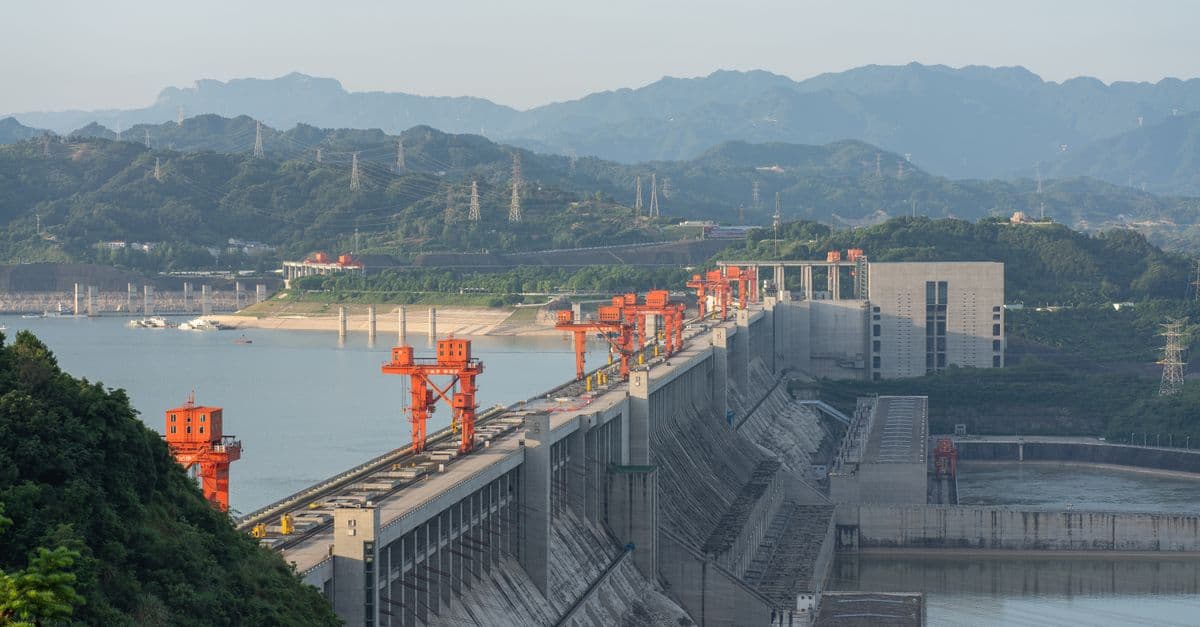
The Jinping-I Dam in Sichuan, China, completed in 2014, stands 305 meters (1,001 feet) tall, currently the world's tallest dam, a record confirmed by Guinness World Records. That's taller than the Eiffel Tower and roughly equivalent to stacking two Statue of Liberty monuments on top of each other. It's a double-curvature arch dam, a design chosen specifically because of the narrow, steep-walled canyon it was built to hold back, and understanding why that shape was necessary explains almost everything about how the world's tallest dams get built at all.
What actually counts as a "tallest" dam
Dam height sounds like a simple number, but engineers measure it a specific way: from the lowest point of the foundation to the top of the crest, not from the visible waterline or the surrounding terrain. The International Commission on Large Dams (ICOLD), the global body that sets standards for dam classification, defines a "large dam" as any structure exceeding 15 meters (49 feet) in foundation height, or one between 10 and 15 meters that meets additional criteria around reservoir capacity or flood discharge. That distinction matters because it separates genuine record-height engineering from dams that merely look tall from a downstream viewpoint.
This measurement convention is also why height rankings can shift when a dam is later modified. Grande Dixence Dam in Switzerland, for instance, was raised in stages through the 1950s and 1960s until it reached its current 285 meters (935 feet), a height it held as the world's tallest dam for years before Asian megaprojects overtook it. A dam's record isn't necessarily set once at completion; some structures climb the rankings gradually as engineers add height in phases.
The practical effect is that "tallest dam" rankings are a moving target shaped by decades of incremental construction, not a single burst of ambition. Jinping-I's 305-meter figure represents one continuous construction project completed over nine years, from 2005 to 2014, according to project documentation cited by Britannica. Other record-holders, like Grande Dixence, got there through multiple phases spread across a much longer timeline.
Why dam height depends on the shape of the valley, not just ambition
An arch dam's curved shape transfers the water's horizontal pressure sideways into the canyon walls on either side, using the surrounding rock itself as a structural support, much like a stone archway transfers weight outward into its supporting pillars rather than straight down. Engineers describe this as putting the dam body almost entirely into compression: concrete resists compressive force extremely well, which is why an arch dam can be dramatically thinner than a gravity dam of equal height and still hold back the same load.
This design only works in a narrow canyon with strong, stable rock walls capable of bearing that transferred load. If the valley is too wide, the arch has nothing solid to push against at a useful angle, and the compressive stresses that make the design efficient never fully develop. That's precisely why Jinping-I sits in a deep, narrow gorge on the Yalong River: the site's steep granite walls were structurally necessary to support an arch design at that extreme height, and a wider or geologically weaker valley simply couldn't support the same design regardless of engineering ambition.
This is also why arch dams remain comparatively rare worldwide even though they're often the most material-efficient option available. Practical Engineering's analysis of dam design notes that the geometry only becomes advantageous past a certain height-to-width ratio, which is part of why short arch dams are almost never built: below a certain scale, the material savings don't justify the specialized geological survey and stress-modeling work an arch design demands. Dam height, in other words, is constrained as much by available geology as by construction budget or technical capability.
Jinping-I's neighbors on the height list reinforce the pattern. Xiaowan Dam, at 292 meters (958 feet), and Xiluodu Dam, at 285.5 meters (937 feet), both sit in the same general region of southwestern China, carved through similarly steep river gorges in Yunnan and Sichuan provinces. All three are arch dams built within a few years of each other, a cluster that reflects a specific geological opportunity, not a coincidence of construction scheduling.
Why water pressure, not just water volume, drives dam design
Water pressure against a dam wall increases with depth, not with the total volume of water behind it, which is why dam walls are built progressively thicker toward the base. The deepest section of a dam experiences dramatically more pressure than the water surface near the top, a relationship engineers call hydrostatic pressure: pressure that increases linearly with depth below the surface, regardless of the width or shape of the body of water above it.
This is the same physical principle that makes deep-sea submersibles need thicker hulls than surface ships. Pressure scales with depth, independent of how large the overall body of water is, so a small, deep reservoir behind a tall dam can generate more pressure at its base than a much larger but shallower reservoir behind a wide, low dam.
This is also why a taller dam isn't simply a scaled-up version of a shorter one. The structural engineering, foundation depth, and material requirements all shift substantially as height increases, since the pressure differential between the base and the top of an extremely tall dam is far greater than in a modest one. A dam twice as tall as another doesn't need merely twice the strength at its base; the increase in required structural capacity grows faster than the increase in height, which is one reason record-height dams take years of specialized geotechnical study before construction even begins.
How engineers calculate the load at the base of a tall dam
Engineers calculate hydrostatic pressure at any given depth using the water's density, gravitational acceleration, and depth below the surface, a relationship that means pressure at the base of a 300-meter dam is roughly three times greater than at 100 meters. Foundation design, wall thickness, and reinforcement all scale to withstand this maximum base-level pressure, which is why the lowest sections of record-tall dams are engineered far more conservatively than the sections near the crest.
The three main ways engineers build a dam tall enough to matter
Not every record-height dam uses the same structural approach, and the differences reveal a lot about how engineers match design to available geology and materials. Broadly, tall dams fall into three categories, each resisting water pressure through a fundamentally different mechanism.
- Arch dams rely on compression, curving upstream so that horizontal water thrust transfers into the rock abutments on either side of a narrow canyon, the same structural principle at work in Jinping-I, Xiaowan, and Xiluodu.
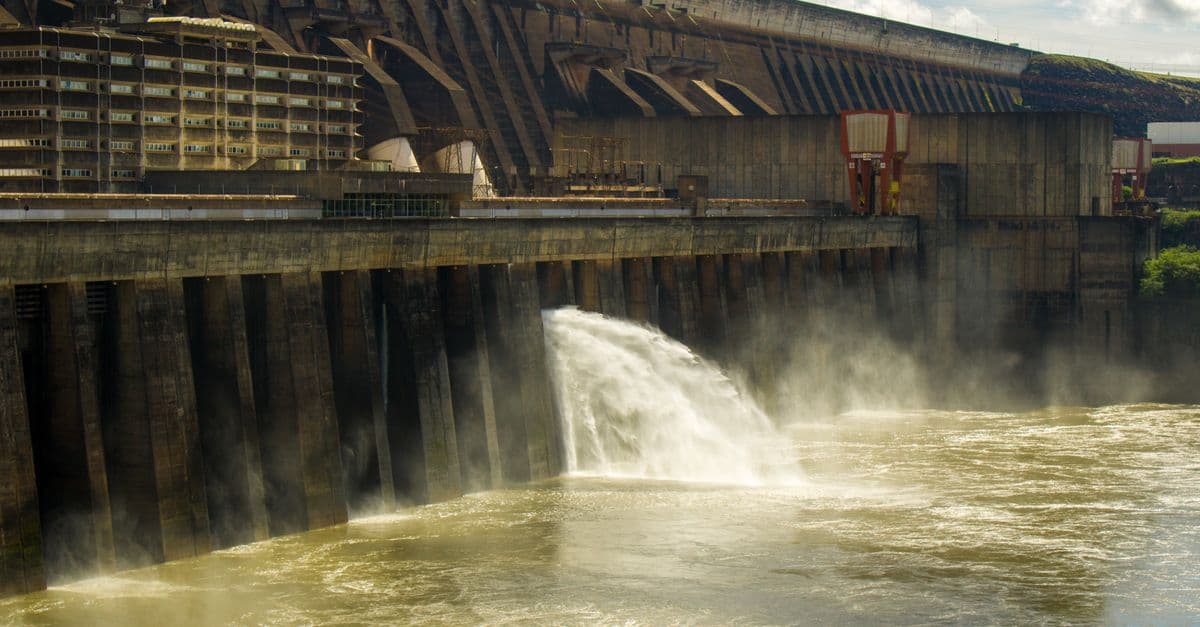
- Gravity dams rely on sheer mass. A gravity dam holds back water purely through its own weight and the friction of its broad base against the foundation rock, with a trapezoidal cross-section that tapers from a wide base to a narrower crest. Grande Dixence Dam in Switzerland, the world's tallest gravity dam at 285 meters (935 feet), uses this approach, requiring a much larger volume of concrete than an equivalent arch design would.
- Embankment dams rely on friction between compacted particles of earth and rock, typically built around a watertight core of clay or concrete. These are by far the most common dam type worldwide; embankment dams account for roughly 80 percent of large dams built in the United States, according to engineering analysis published by FeynBox. Tajikistan's Nurek Dam, at 300 meters (984 feet), is an earth-fill embankment structure and the tallest embankment dam ever completed.
Each approach trades off differently. Arch dams use the least material but demand the narrowest, strongest geology. Gravity dams work almost anywhere a foundation can bear their enormous weight but require far more concrete. Embankment dams can be built with locally available soil and rock, making them cheaper in remote regions, but they require enormous footprints and are generally more vulnerable to overtopping if floodwater ever spills over the crest.
Comparing the world's tallest dams
| Dam | Height | Location | Type | Completed |
|---|---|---|---|---|
| Jinping-I Dam | 305 m (1,001 ft) | Sichuan, China | Arch dam | 2014 |
| Nurek Dam | 300 m (984 ft) | Tajikistan | Earth-fill embankment dam | 1980 |
| Xiaowan Dam | 292 m (958 ft) | Yunnan, China | Arch dam | 2014 |
| Xiluodu Dam | 285.5 m (937 ft) | Yunnan/Sichuan border, China | Arch dam | 2014 |
| Grande Dixence Dam | 285 m (935 ft) | Switzerland | Gravity dam | 1965 |
The five tallest completed dams span three different structural approaches, arch, embankment, and gravity, proof that "tall" doesn't mean "built the same way."
Notably, several of the world's tallest dams have been completed in China within the past two decades, driven largely by the country's aggressive hydropower expansion, taking advantage of the steep, narrow gorges found throughout its southwestern mountain regions. China's Yalong, Lancang (Mekong), and Jinsha river basins in particular offered the combination of deep canyons and hard granite bedrock that arch-dam engineering favors, which is part of why three of the world's five tallest dams sit within a few hundred kilometers of each other.
Why dam design also has to account for earthquakes
Many record-tall dams, including Jinping-I, sit in seismically active regions, since narrow, steep mountain gorges suitable for arch dams often coincide with tectonically active zones where such terrain forms in the first place. The same tectonic forces that push mountain ranges upward and carve deep river gorges over geological time also generate the fault lines that produce earthquakes, so a site's suitability for an arch dam and its earthquake risk are frequently linked rather than coincidental.
Engineers design these structures with specific seismic tolerances, incorporating detailed geological surveys and stress modeling before construction begins, since a structural failure at this scale, directly upstream of a populated area, would be catastrophic. This risk shaped the extensive multi-year geological studies conducted before Jinping-I's construction began, and it remains an active engineering concern across the region: reporting on a 2026 earthquake in Tibet noted that roughly 68 major dams already operate in the broader Himalayan hydropower corridor, with another 101 planned or under construction in one of the world's most seismically active mountain zones, according to coverage citing regional dam-safety assessments.
Earthquake risk to dams isn't limited to direct shaking damage to the structure itself. A magnitude-7.8 earthquake that struck Nepal in 2015 knocked out nearly a fifth of the country's hydropower capacity for more than a year, largely through landslides and infrastructure damage around dam sites rather than dam-wall failure directly. That distinction matters for engineers: seismic dam design has to account for cascading effects like landslide-triggered waves inside the reservoir, not just ground shaking against the dam wall.
What seismic design actually adds to a tall dam
Seismic-resistant dam engineering typically layers in flexible joint systems, reinforced foundation anchoring, and continuous monitoring instrumentation that tracks even minor structural shifts after smaller earthquakes. Post-earthquake inspection protocols, like the rapid-assessment framework developed for cascade hydropower stations along China's Yalong River, allow engineers to check dam integrity within hours of a seismic event rather than waiting for scheduled inspections.
What people get wrong about dam height records
A common misconception is that a taller dam always holds back more water than a shorter one. Reservoir volume depends on the shape and size of the valley being flooded, not solely on wall height, so a shorter dam in a wide, shallow valley can impound significantly more total water than a very tall dam in a narrow gorge. Jinping-I's narrow-canyon reservoir holds about 7.7 billion cubic meters, a large figure in absolute terms, but far smaller than reservoirs behind considerably shorter dams built across wide floodplain valleys elsewhere in the world.
Another mistake is assuming all tall dams use the same construction method. As the comparison table above shows, some record-height dams, like Tajikistan's Nurek Dam, are earth-fill embankment dams, built from compacted soil and rock rather than poured concrete, an entirely different engineering approach from Jinping-I's curved concrete arch, chosen because the local geology and available materials favored a different design. Assuming every tall dam is a concrete arch structure misses the fact that engineers pick a design category based on the site's rock quality, available materials, and seismic profile, not a single universal template for "how to build tall."
A third, subtler misconception is treating dam height records as purely a matter of engineering ambition or national prestige. In reality, no amount of budget or political will can put an arch dam in a wide, geologically weak valley; the site has to offer a narrow gorge with rock strong enough to absorb the transferred load. This is why record-height dams cluster so heavily in specific geographic regions, southwestern China, the Alps, Central Asia's mountain river valleys, rather than appearing wherever a government decided to build one.
The takeaway
The Jinping-I Dam's record 305-meter height was made possible not by superior concrete or unprecedented ambition alone, but by a specific geological feature, a narrow, steep-walled granite gorge, capable of absorbing the enormous sideways loads an arch dam design transfers into its surrounding rock. The dams just behind it on the height list, Nurek's earth-fill embankment and Grande Dixence's concrete gravity structure, prove that "tall" can mean at least three structurally different engineering solutions, each matched to what its specific valley and available materials allowed. Dam height records, in short, are as much a story about available geology and seismic risk management as they are about engineering capability.
Read next:
- The Largest Solar Power Plants
- The Longest Suspension Bridge Spans
- The Deepest Scientific Drill Holes
FAQ
Q: What is the tallest dam in the world?
The Jinping-I Dam in Sichuan, China, completed in 2014, stands 305 meters (1,001 feet) tall, a height confirmed as a Guinness World Record. It's a double-curvature concrete arch dam built across the Yalong River.
Q: Why are arch dams built in narrow canyons specifically?
An arch dam's curved shape transfers the water's horizontal pressure sideways into the canyon walls, using the surrounding rock as structural support, a design that requires a narrow canyon with strong, stable rock walls to function correctly. In a wider valley, the compressive stresses that make the design efficient never fully develop.
Q: Does a taller dam always hold back more water than a shorter one?
No. Reservoir volume depends primarily on the shape and size of the flooded valley, not wall height alone, so a shorter dam in a wide valley can impound more total water than a taller dam in a narrow gorge.
Q: Are all of the world's tallest dams built the same way?
No. Some, like Jinping-I and Xiaowan, are concrete arch dams, while others, like Tajikistan's Nurek Dam, are earth-fill embankment dams built from compacted soil and rock, and Switzerland's Grande Dixence is a concrete gravity dam that relies on sheer mass rather than curvature. The choice depends on local geology, seismic risk, and available construction materials.
Q: Why do earthquakes matter so much for tall dam design?
Narrow, steep mountain gorges suitable for arch dams often form in tectonically active regions, so record-tall dams frequently sit in earthquake-prone zones. Engineers address this with detailed seismic surveys, reinforced foundation anchoring, and continuous structural monitoring, since a failure at this scale could be catastrophic for downstream communities.
Q: How is dam height officially measured?
The International Commission on Large Dams measures dam height from the lowest point of the foundation to the crest, not from the visible waterline. This standardized measurement is why some dams, like Grande Dixence, climbed height rankings gradually as they were raised in construction phases over decades.
Q: Why are very tall dams so rarely decommissioned or removed?
Most completed dam removals in the United States have involved small, aging structures rather than tall, record-scale dams, and that gap reflects real engineering and economic constraints rather than a lack of interest. Large dams typically continue providing services, water supply, flood control, hydropower, and recreation, that communities depend on, and no other single facility easily replaces all of them at once. Removal itself is also a major engineering undertaking in its own right: a reservoir behind a tall dam can trap decades of accumulated sediment, and releasing that sediment suddenly downstream can smother aquatic habitat, alter water quality, or increase flood risk if it isn't managed in carefully staged phases (American Rivers, "How Dams are Removed"; U.S. EPA, "Frequent Questions on Removal of Obsolete Dams"). The scale of the engineering challenge grows sharply with dam height for the same structural reasons that made the dam expensive to build in the first place: more concrete or fill material to remove, more sediment trapped behind it, and a taller, more consequential release of stored water to manage safely.
The largest dam-removal project completed to date illustrates both the scale of what's possible and why it remains uncommon. In 2024, four hydroelectric dams on the Klamath River, along the California-Oregon border, were fully removed in what's widely described as the largest dam-removal project in history, reopening roughly 676 kilometers (420 miles) of river and tributary habitat for salmon that had been blocked for over a century (American Rivers, "Dam Removal on the Klamath River"; Mongabay, October 2024). Even so, the tallest of the four, Iron Gate Dam, stood only about 173 feet (53 meters) tall, less than a fifth the height of record-holders like Jinping-I. Removing a dam anywhere near 300 meters tall would involve a scale of concrete demolition, sediment management, and downstream risk mitigation that no project has yet attempted, which is a major reason record-height dams tend to be renovated, reinforced, or eventually replaced in place rather than dismantled outright.
Follow new articles
Add SciHub101 to your feed reader to see new science and technology stories.
About the Author
SciHub101 is an independent science and technology publication founded and edited by Buğra Sözeri, a software engineer and app developer based in Türkiye. AI tools assist with drafting and research. Source documentation in the existing archive is uneven, and articles are being reviewed and corrected. The Editorial Team byline identifies editorial responsibility; it does not certify specialist or independent human review. Where we compare products, anything built by our own team is labelled as such — see the editorial guidelines and About page for how corrections and disclosures work.
Related Articles


Largest Dams in the World Explained: Height, Volume, and Power
The largest dam changes depending on whether you rank by height, reservoir, concrete volume, or hydroelectric output. Here is the science behind each record.

The Longest Bridges in the World: The 164-Kilometre Crossing
The longest bridge on Earth runs for 164 kilometres — roughly the distance from London to Birmingham — carrying high-speed trains across the rice paddies and rivers of eastern China. The Danyang–Kunshan Grand Bridge is so long that calling it a 'bridge' almost understates it; it is an elevated railway the length of a small country. But the real engineering drama lies elsewhere: in the bridges that span the widest single gaps without touching the ground.
Countries with the Most Hydropower (Ranked by Installed Capacity)
China leads the world in hydropower with 435.95 GW of installed capacity — more than three times that of second-place Brazil at 110 GW. Hydropower is the world's largest source of renewable electricity, accounting for roughly 40 percent of global renewable generation. This ranking covers the top 15 countries by hydropower installed capacity using IHA and IRENA 2024 data, with methodology, historical context, and caveats about what capacity figures do and do not tell you.