The Oldest Things on Earth: Minerals, Rocks, Trees, and Fossils
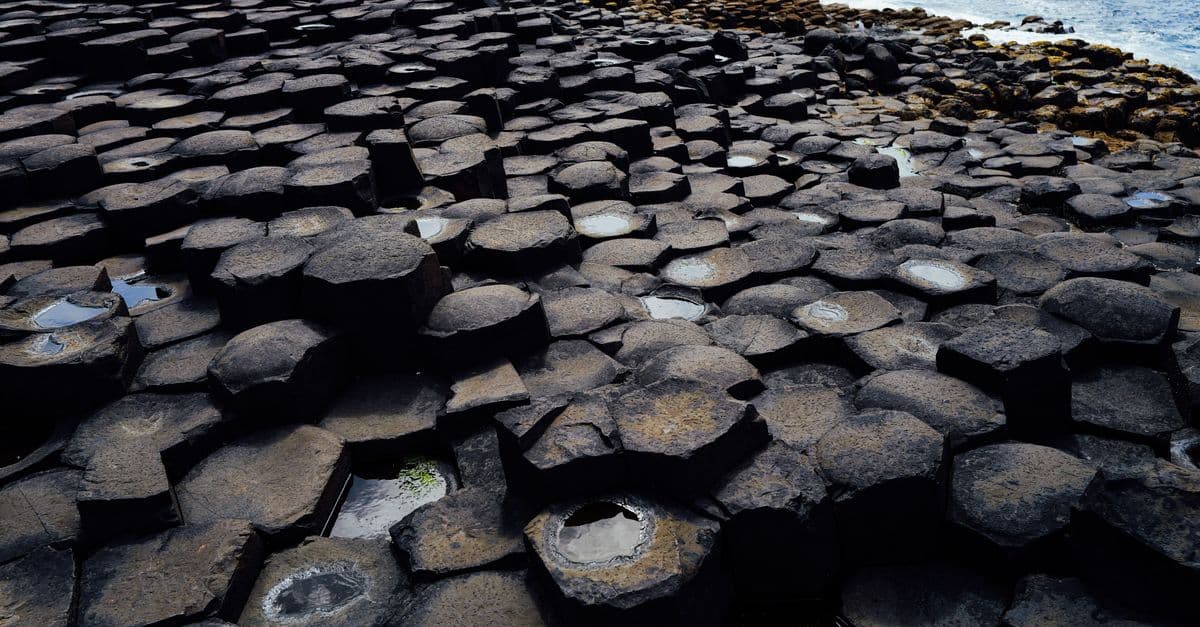
Photo: Adrien Olichon / Pexels
A zircon crystal extracted from sandstone in Western Australia's Jack Hills measures 4.404 billion years old — older than the continental crust, older than the oceans, and formed only about 160 million years after Earth itself coalesced from the solar nebula. Scientists confirmed its age using uranium-lead radiometric dating, cross-checked by the ratio of hafnium isotopes trapped inside the crystal at the moment of formation. That tiny grain of mineral survived four and a half billion years of plate tectonics, erosion, and geological recycling to reach the surface. Earth's age records cover everything from crystals to living trees to colonial organisms thousands of years old, and the techniques used to date them are as varied as the objects themselves.
How Scientists Measure Deep Time
Before examining individual records, the methods that produce reliable age estimates deserve explanation. Every technique exploits a different physical or biological process that operates at a known, constant rate.
Radiometric dating — a technique that measures the ratio of a radioactive parent isotope to its decay products (daughter isotopes) in a sample. Since radioactive decay proceeds at a constant rate governed by quantum mechanics, the ratio of parent to daughter reveals how much time has elapsed since the system closed (typically when a mineral crystallized from a melt). Uranium-lead dating uses the decay of two uranium isotopes (²³⁸U → ²⁰⁶Pb and ²³⁵U → ²⁰⁷Pb) and is among the most precise methods available, with analytical uncertainties as low as 0.1%.
Dendrochronology — the counting and cross-referencing of annual tree rings. Each ring represents one year's growth, and ring width patterns allow living trees to be linked to overlapping dead-wood records. The current master chronologies for some regions extend back over 10,000 years, allowing precise dating of wood samples from archaeological sites and dead timber.
Ice core stratigraphy — the analysis of annual layers in polar ice. Summer ice differs from winter ice in isotopic composition, bubble content, and particle load, creating a readable annual record. Older layers compress under the weight of newer ice, making individual annual layer identification impossible below a certain depth; below that, age modeling uses flow equations to estimate depth-age relationships.
Like a detective reconstructing an event from different types of physical evidence, Earth scientists cross-check multiple methods against one another to verify ages. The Jack Hills zircon age, for example, was confirmed by at least three independent laboratories using different mass spectrometers before the result was accepted.
Source: Valley, J.W. et al. (2014), "Hadean age for a post-magma-ocean zircon confirmed by atom-probe tomography," Nature Geoscience, Vol. 7 — the definitive confirmation of the 4.404 Ga age for the Jack Hills zircon grain W74/2-36 using a combination of ion microprobe U-Pb dating and atom-probe tomography.
The Oldest Mineral: The Jack Hills Zircon at 4.404 Billion Years
The oldest mineral of terrestrial origin ever dated is a grain of zircon (zirconium silicate, ZrSiO₄) recovered from a metaconglomerate at Jack Hills in the Narryer Gneiss Terrane of Western Australia. Its uranium-lead age is 4.404 ± 0.008 billion years, placing its crystallization approximately 160 million years after the formation of the solar system.
Zircon is uniquely suited for extreme age preservation. Its crystal structure incorporates uranium readily but is nearly impermeable to lead — so lead found in ancient zircons is almost entirely radiogenic, the product of uranium decay rather than contamination. Zircon is also one of the hardest common minerals (7.5 on the Mohs scale), physically resistant to abrasion and weathering. And critically, its chemical closure temperature — the temperature below which isotopes stop diffusing through the crystal — is above 900°C, meaning it retains its radiometric record even through most metamorphic events.
The Jack Hills zircon was not found in ancient bedrock. It was found in sediment — grains that had been eroded from even older source rocks, transported by ancient rivers, and deposited in a sedimentary layer. The source rock from which it eroded has long since been recycled by plate tectonics. The zircon grain is the only surviving fragment of what was once a much larger Hadean crust.
Analysis of oxygen isotopes in the Jack Hills zircon revealed a ratio consistent with low-temperature water-rock interaction — implying that liquid water existed at or near Earth's surface during the Hadean, within a few hundred million years of the planet's formation. This was a significant revision to the "hellish Hadean" picture that dominated geology before the zircon data: Earth may have had stable oceans much earlier than previously thought.
Source: Wilde, S.A. et al. (2001), "Evidence from detrital zircons for the existence of continental crust and oceans on the Earth 4.4 Gyr ago," Nature, Vol. 409 — the original publication reporting the 4.4 Ga U-Pb age for the Jack Hills zircon and its oxygen isotope implications for early Earth's oceans.
The Oldest Rock: Acasta Gneiss at 4.02 Billion Years
While individual mineral grains can survive as isolated particles in later sediments, intact rock formations are geologically far less durable. Most ancient crust has been subducted, melted, and recycled by plate tectonics. The oldest surviving intact rock formation is the Acasta Gneiss, exposed along the banks of the Acasta River in Canada's Northwest Territories.
Uranium-lead dating of zircons within the Acasta Gneiss yields ages up to 4.02 billion years — making it approximately 380 million years younger than the Jack Hills zircon, but the oldest known coherent body of rock rather than isolated grains. A gneiss is a metamorphic rock: it began as igneous rock and was subsequently subjected to high pressure and temperature, recrystallizing while remaining solid. The Acasta Gneiss has survived this transformation and hundreds of millions of years of subsequent tectonic activity.
Gneiss — a coarse-grained metamorphic rock characterized by alternating light and dark mineral bands, formed under conditions of high temperature and pressure deep in the crust. The banding reflects segregation of minerals during recrystallization. Gneiss can form from any parent rock — igneous, sedimentary, or other metamorphic rocks.
The Acasta Gneiss covers a relatively small area of exposed outcrop, roughly 20 km × 30 km (12 miles × 19 miles). Samples are available in select natural history museums, including the Smithsonian National Museum of Natural History, where small polished specimens are displayed as the oldest publicly exhibited pieces of Earth's crust.
Source: Bowring, S.A. and Williams, I.S. (1999), "Priscoan (4.00-4.03 Ga) orthogneisses from northwestern Canada," Contributions to Mineralogy and Petrology, Vol. 134 — uranium-lead zircon dating establishing the 4.02 Ga age of the Acasta Gneiss.
The Oldest Fossils: Stromatolites at 3.7 Billion Years
The oldest physical evidence for life on Earth comes from the Isua Greenstone Belt in western Greenland, where structures interpreted as stromatolites were reported in 2016 and dated to approximately 3.7 billion years ago.
Stromatolite — a laminated, sedimentary structure formed by communities of microorganisms (primarily cyanobacteria) that trap and bind sediment grains, building layered mounds. Living stromatolites exist today in a few locations, including Shark Bay in Western Australia, allowing comparison between modern and fossil structures.
The Greenland stromatolites are controversial. The 3.7 billion-year age is well-established by isotopic dating of the surrounding rock, but whether the structures represent genuine biological mats or non-biological (abiotic) precipitation processes is debated. A 2017 reanalysis in Nature by Allwood et al. argued the structures are more consistent with deformed sedimentary sequences than biological mats, and the original team has maintained their biological interpretation. The debate reflects a general challenge in Precambrian paleontology: at such extreme ages, the line between life and geochemistry is difficult to draw with certainty.
Less controversially, chemical signatures (carbon isotope ratios characteristic of biological fractionation) in the Isua rocks suggest life was present at least 3.7 billion years ago. And in the Pilbara region of Western Australia, physically distinct stromatolite structures dating to 3.48 billion years are more widely accepted as genuine biological structures.
| Evidence Type | Location | Age | Status |
|---|---|---|---|
| Putative stromatolites | Isua Greenstone Belt, Greenland | ~3.7 billion years | Contested |
| Confirmed stromatolites | Pilbara, Western Australia | ~3.48 billion years | Well accepted |
| Microfossils (Apex Chert) | Pilbara, Western Australia | ~3.5 billion years | Generally accepted |
| Chemical biosignatures (carbon isotopes) | Multiple Archean sites | ~3.8 billion years | Accepted |
| LUCA (Last Universal Common Ancestor) | Reconstructed from genomics | ~4.0 billion years (est.) | Inferred, not physical |
Source: Nutman, A.P. et al. (2016), "Rapid emergence of life shown by discovery of 3,700-million-year-old microbial structures," Nature, Vol. 537 — the discovery paper for the Greenland stromatolites, arguing for biological origin.
Source: Allwood, A.C. et al. (2018), "Reassessing evidence of life in 3,700-million-year-old rocks of Greenland," Nature, Vol. 563 — the reanalysis arguing the Greenland structures may not be biological.
The Oldest Individual Living Tree: 5,074 Years
The oldest confirmed individual (non-clonal) living tree is an unnamed Great Basin bristlecone pine (Pinus longaeva) growing in the White Mountains of California, confirmed by core sample analysis to be 5,074 years old as of 2024. Its location is kept undisclosed by the US Forest Service to prevent vandalism. The famous Methuselah tree in the same region, once considered the world's oldest, is approximately 4,857 years old and was eclipsed by its unnamed neighbor.
The Great Basin bristlecone pine's longevity is a product of its environment. At elevations above 3,000 m (10,000 ft) in the dry, rocky slopes of the White Mountains, conditions are too harsh for most competing vegetation. The trees grow extremely slowly — annual rings often less than 1 mm wide — depositing dense, resin-saturated wood highly resistant to rot, fungi, and insects. A bristlecone pine can exist as a mostly dead tree with only a thin strip of living cambium still connecting roots to a few living branches, effectively triage-managing its own survival.
Cambium — a thin layer of dividing cells just beneath the bark of woody plants, responsible for producing new wood (xylem) outward and new bark (phloem) inward. A tree can survive for centuries with only a narrow strip of cambium intact, as long as that strip connects functioning roots to functioning leaves.
The bristlecone pine record is for non-clonal trees — individual organisms sharing one root system and one genetic identity. Clonal organisms, which reproduce vegetatively and share genetic material across multiple stems, can be far older.
Source: U.S. Forest Service / White Mountain Research Station — records of bristlecone pine age determinations, including the anonymous 5,074-year-old specimen identified by Edmund Schulman and subsequent researchers.
Source: Schulman, E. (1958), "Bristlecone Pine, Oldest Known Living Thing," National Geographic Magazine, Vol. 113 — the foundational account of bristlecone pine longevity research.
The Oldest Clonal Organism: Pando at Up to 80,000 Years
Pando (Latin for "I spread") is a clonal colony of quaking aspen (Populus tremuloides) growing in the Fishlake National Forest of Utah. What appears to be a forest of approximately 47,000 individual trees is in fact a single organism: each stem is genetically identical, sharing a single massive root system covering approximately 43 hectares (106 acres). The total mass of the organism — roots, trunks, and branches — is estimated at roughly 6,000 tonnes (6.6 million kg), making it one of the heaviest living organisms as well as one of the oldest.
Pando's age is estimated by extrapolating from root growth rates and genetic evidence, not direct dating. Estimates range from 16,000 to 80,000 years, with the wide range reflecting genuine uncertainty in clonal aging methods. Unlike individual trees, clonal organisms have no annual ring record that traces to the founding event.
The distinction between Pando and a forest of separate trees illustrates a definitional challenge in measuring biological age: what counts as an "individual"? By genetic identity, Pando is one organism. By the human intuition that distinguishes one tree from another, it is 47,000 organisms. The oldest-organism record looks very different depending on which definition is applied.
| Organism | Age Estimate | Type | Location |
|---|---|---|---|
| Pando (quaking aspen colony) | 16,000–80,000 years (est.) | Clonal organism | Utah, USA |
| King Clone (creosote bush) | ~11,700 years | Clonal organism | Mojave Desert, CA |
| Old Tjikko (Norway spruce) | ~9,500 years | Clonal organism | Sweden |
| Unnamed bristlecone pine | 5,074 years | Individual tree | White Mountains, CA |
| Methuselah (bristlecone pine) | 4,857 years | Individual tree | White Mountains, CA |
| Alerce tree (Fitzroya cupressoides) | ~3,646 years | Individual tree | Chile |
Source: DeWoody, J. et al. (2008), "Pando lives: molecular genetic evidence of a giant aspen clone in central Utah," Western North American Naturalist, Vol. 68 — genetic analysis confirming Pando's single-organism identity.
The Oldest Ice Core: 1.2 Million Years from Antarctica
The oldest continuous climate record preserved in ice comes from the Beyond EPICA – Oldest Ice project, an international collaboration drilling in the Little Dome C region of Antarctica. By 2025, the project had extracted an ice core with climate records extending to approximately 1.2 million years, breaking the previous record of 800,000 years set by the original EPICA (European Project for Ice Coring in Antarctica) project in 2004.
Ice cores preserve annual layers of snowfall, trapping air bubbles that contain samples of ancient atmosphere. Analyzing these bubbles gives direct measurements of past greenhouse gas concentrations — CO₂, methane, and nitrous oxide — at the time the snow fell. The EPICA record demonstrated that current atmospheric CO₂ concentrations (approximately 420 parts per million as of 2024) are unprecedented in the 800,000-year record and almost certainly in the 1.2-million-year Beyond EPICA record.
Below a certain depth, the weight of overlying ice compresses annual layers until they are too thin to count individually. Age at that depth is estimated using ice flow models calibrated by tie points from dated volcanic ash layers and orbital tuning. The bottom ice in the Beyond EPICA core, approaching bedrock, is estimated to preserve climate signals from approximately 1.5 million years ago — the target of the full project.
Source: Beyond EPICA – Oldest Ice project, CORDIS EU research database, Project ID 815384 — official project documentation for the drilling initiative targeting 1.5 million years of climate record from the Antarctic plateau.
Source: EPICA Community Members (2004), "Eight glacial cycles from an Antarctic ice core," Nature, Vol. 429 — the original EPICA publication establishing the 800,000-year climate record with eight complete glacial-interglacial cycles.
The Oldest Living Animal: The Ocean Quahog at 507 Years
The oldest confirmed individual animal whose age was determined by direct count of growth increments is "Ming", an ocean quahog clam (Arctica islandica) dredged from waters off Iceland in 2006. Its shell growth rings — laid down annually like tree rings — were counted and verified by multiple independent researchers at Bangor University: Ming was 507 years old, having been born around 1499, during the reign of Henry VII in England.
The ocean quahog is known to live exceptionally long lives due to a very slow metabolic rate, high antioxidant enzyme activity, and resistance to oxidative damage — the cellular mechanism most strongly linked to aging in animals. Analysis of Ming's proteins revealed extremely low levels of oxidative damage relative to shorter-lived species of comparable size, consistent with the leading theories of aging based on free radical accumulation.
Older clam ages have been speculated — some open-ocean populations may harbor individuals exceeding 600 years — but none have been verified by direct, independently confirmed ring count.
For comparison, a bowhead whale (Balaena mysticetus) found with a stone harpoon point in its blubber was estimated at 211 years old. The longest-lived vertebrate is the Greenland shark (Somniosus microcephalus), with one specimen estimated at approximately 392 years old via radiocarbon dating of eye lens nuclei — though the uncertainty range on that estimate spans roughly ±120 years. For more on extreme animal longevity, see our article on the longest-living animals explained.
Source: Butler, P.G. et al. (2013), "Variability of marine climate on the North Icelandic Shelf in a 1357-year proxy archive based on growth increments in the bivalve Arctica islandica," Palaeogeography, Palaeoclimatology, Palaeoecology, Vol. 373 — the shell sclerochronology study that confirmed Ming's age at 507 years.
Source: Nielsen, J. et al. (2016), "Eye lens radiocarbon reveals centuries of longevity in the Greenland shark (Somniosus microcephalus)," Science, Vol. 353 — radiocarbon dating of Greenland shark eye lens nuclei yielding an age estimate of ~392 years for the oldest specimen.
Frequently Asked Questions
Q: What is the oldest mineral ever found on Earth?
A: The oldest mineral of terrestrial origin is a zircon grain from the Jack Hills of Western Australia, dated to 4.404 ± 0.008 billion years old using uranium-lead radiometric dating, confirmed by atom-probe tomography. It crystallized roughly 160 million years after Earth itself formed from the solar nebula. The source rock it came from has long since been destroyed by plate tectonics; the zircon grain is the only surviving fragment.
Q: What is the difference between Methuselah and Pando as the "oldest living thing"?
A: Methuselah is an individual Great Basin bristlecone pine tree in California, approximately 4,857 years old — the oldest named individual tree, verified by ring count. Pando is a clonal colony of quaking aspen in Utah estimated at 16,000 to 80,000 years old, but it is a single genetic organism spread across 47,000 stems sharing one root system. The answer depends entirely on whether "individual" means one trunk or one genome.
Q: What is the oldest confirmed living animal?
A: The oldest confirmed individual animal, verified by direct count of annual growth rings, was "Ming," an ocean quahog clam (Arctica islandica) that was 507 years old when dredged from waters off Iceland in 2006. The Greenland shark holds the vertebrate longevity record, with one specimen estimated at approximately 392 years old via radiocarbon dating of eye lens nuclei, though the uncertainty on that figure spans roughly ±120 years.
Q: How do scientists date objects that are billions of years old?
A: The primary method is radiometric dating, which measures the ratio of a radioactive parent isotope to its decay products. Because radioactive decay proceeds at a constant rate governed by quantum mechanics, the ratio reveals elapsed time since the mineral crystallized and its isotopic system closed. Uranium-lead dating is among the most precise, with uncertainties as low as 0.1%. Results are cross-checked using multiple independent laboratories and complementary methods — the Jack Hills zircon age was confirmed by at least three labs before publication.
Q: What is the oldest ice core ever drilled, and what does it tell us?
A: The Beyond EPICA — Oldest Ice project, drilling at Little Dome C in Antarctica, had by 2025 extracted ice core records extending to approximately 1.2 million years — surpassing the previous record of 800,000 years set by the original EPICA project in 2004. The cores contain trapped air bubbles that preserve direct samples of ancient atmosphere, showing that current CO₂ concentrations of roughly 420 ppm are unprecedented in the entire record. The project's ultimate target is 1.5 million years of continuous climate data.
Q: Does anything from Earth's actual formation — 4.5 billion years ago — still survive?
A: No intact rock or mineral from the moment of Earth's formation has been found. The Jack Hills zircon at 4.404 billion years comes closest, but it postdates Earth's formation by roughly 160 million years. Earth's original surface was almost certainly entirely melted and recycled during the Hadean, first by the heat of accretion and then by the giant impact thought to have formed the Moon. Meteorites and cosmic dust that predate Earth do survive, including calcium-aluminum-rich inclusions in carbonaceous chondrites dated to 4.568 billion years — but those formed in the solar nebula, not on Earth itself.
The Takeaway
Earth's oldest objects cluster around a paradox: the most ancient things survive precisely because of the conditions that make survival unusual. Zircon survives 4.4 billion years because it is chemically inert and mechanically hard. Bristlecone pines survive 5,000 years because the harsh, dry, cold conditions that seem hostile actually eliminate the fungi, insects, and competing plants that kill trees in comfortable environments. Ming the clam lived 507 years in cold, oxygen-rich, stable deep water with a metabolism slow enough that cellular damage accumulated imperceptibly slowly. Each record is not just a date — it is a lesson in which physical or biological properties confer durability across geological time.
Read next:
Follow new articles
Add SciHub101 to your feed reader to see new science and technology stories.
About the Author
SciHub101 is an independent science and technology publication founded and edited by Buğra Sözeri, a software engineer and app developer based in Türkiye. AI tools assist with drafting and research. Source documentation in the existing archive is uneven, and articles are being reviewed and corrected. The Editorial Team byline identifies editorial responsibility; it does not certify specialist or independent human review. Where we compare products, anything built by our own team is labelled as such — see the editorial guidelines and About page for how corrections and disclosures work.
Related Articles

The Rarest Elements and Materials on Earth: Astatine, Francium, and Beyond
At any given moment, the entire Earth's crust contains less than 1 gram of astatine — less than a sugar crystal. Francium, the next rarest natural element, has perhaps 30 grams present in the entire planet at once. These elements are not rare because they formed in limited quantities: they are rare because they decay so rapidly that any amount produced vanishes before it can accumulate. At the other extreme, materials like antimatter — produced only in particle accelerators — cost an estimated $62.5 trillion per gram, making them the most expensive substances ever made. Rarity in the material world has several distinct causes, and each one tells a different story about nuclear physics, geology, and thermodynamics.

The Most Massive Objects in the Universe: Stars, Black Holes, and Cosmic Walls
Stephenson 2-18 is a star so large that if it replaced the Sun, its surface would engulf Saturn's orbit. The black hole at the center of galaxy TON 618 contains 66 billion solar masses — more than the combined mass of every star in the Milky Way. The Hercules-Corona Borealis Great Wall spans 10 billion light-years, a structure so enormous that its very existence challenges the standard cosmological model. Mass in the universe operates at scales that have no human analogy, and each record reveals a different physical constraint — or its violation.
Biggest Mines in the World: The Giant Holes Powering Modern Life
The biggest mines on Earth expose how copper, iron, coal, gold, and diamonds reach the global economy, and why size can mean depth, output, or area.
Deepest Human-Made Holes on Earth
The Kola Superdeep Borehole reached 12,262 m before molten-plastic rock stopped the drill. See how it compares to oil wells, mines, and what stops us going deeper.
The Largest Caves in the World: A Cavern With Its Own Jungle and Clouds
Deep in the Vietnamese jungle is a cave so large it has its own weather. Hang Sơn Đoòng — the world's largest cave passage — contains a forest, a river, and a microclimate that forms clouds beneath its ceiling, which soars high enough to fit a 40-storey skyscraper. It was only fully explored in 2009. The largest caves on Earth are among the last great unmapped spaces on the planet, carved by nothing more than slightly acidic water and a great deal of time.
The Deadliest Animals in the World: The Tiny Killer That Beats the Lion
Ask which animal kills the most people and the mind jumps to sharks, lions, or crocodiles. The real answer is something you've swatted without a second thought: the mosquito, which killed an estimated 597,000 to 610,000 people in 2023 and 2024 alone — more than every large predator combined, many times over. The deadliest animals on Earth aren't the biggest or fiercest. They're the ones that carry disease, and the ranking overturns almost everything our instincts tell us.