The Fastest Things in Nature: From Peregrine Falcons to the Speed of Light
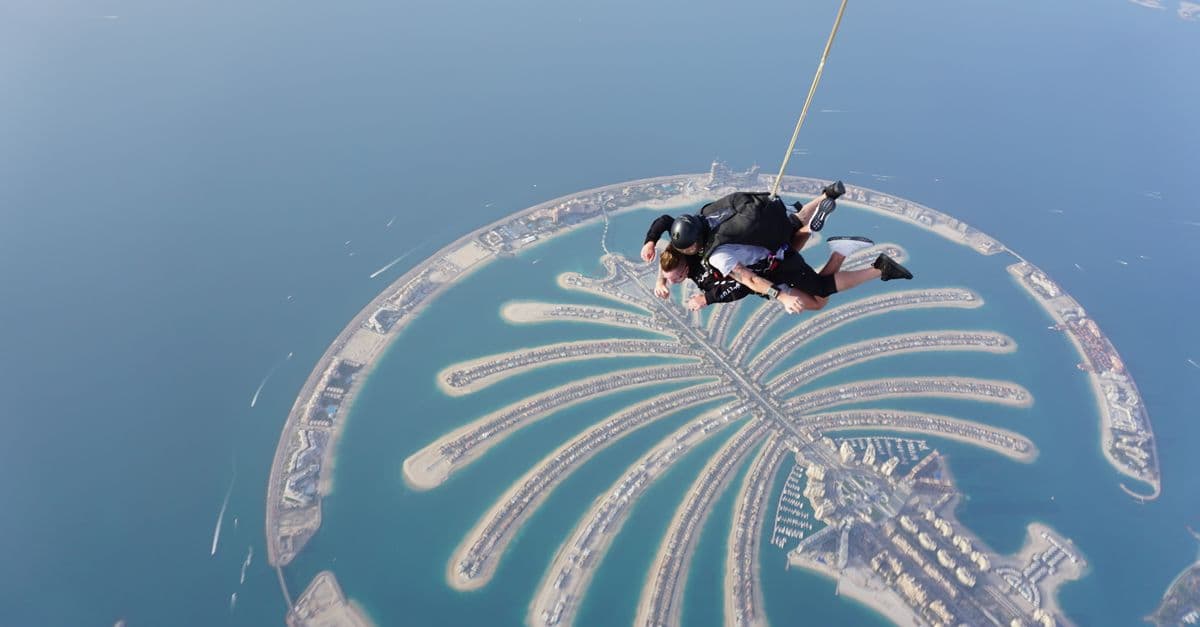
Photo: Ralph Burrows / Pexels
In 1999, a peregrine falcon named Frightful was released from a Cessna at 17,000 feet (5,180 m) over Friday Harbor, Washington. A 113-gram altimeter chip attached to her tail feathers recorded the descent rate: 389 km/h (242 mph). That figure — still the highest reliably measured speed for any bird and any animal in unpowered straight-line travel — requires the falcon to maintain aerodynamic control while experiencing air resistance forces comparable to those on a racing car. She pulls out at the bottom and catches her prey. The physics involved is no less sophisticated than aircraft design, built by 65 million years of selection pressure on a body weighing roughly 1 kilogram. Speed in nature operates at every scale, from the falcon's plunge to the millisecond strike of a shrimp's club — and at the fundamental limit, light crosses the observable universe in a lifetime.
Why Speed Matters: The Evolutionary Arms Race
Speed in animals is never free. Every kilogram of muscle is a kilogram carried at the cost of energy, and that energy must be acquired from prey. Every structural adaptation for speed — lightweight bones, streamlined body shape, elongated legs — involves trade-offs against other functions.
The result is that extreme speed evolves only where the fitness benefit is large enough to justify the metabolic and structural cost. For predators, speed enables capture of fast prey. For prey animals, speed enables escape. For parasitic plants (like the bladderwort, Utricularia, which closes its trap in under 100 microseconds), speed enables capture of microscopic prey that would escape any slower mechanism.
Terminal velocity — the maximum speed a falling object reaches when aerodynamic drag exactly balances gravitational acceleration. For a peregrine falcon in a full stoop (wings folded, body angled vertically), terminal velocity depends on the falcon's mass, cross-sectional area, and drag coefficient. By tucking its wings tightly against its body, the falcon reduces its cross-sectional area to minimize drag and thereby raises its terminal velocity.
This trade-off framework explains why the fastest animals are specialists. The cheetah is the fastest land animal but is the weakest large predator — it cannot protect its kills from lions or hyenas and frequently loses prey it has caught to scavengers. The extreme speed came at the cost of strength, bone density, and energy reserves. The peregrine falcon's speed is possible partly because it is a relatively small bird: scaling laws make it harder for larger birds to achieve the same dive speeds because mass increases as the cube of size while drag-reducing surface area scales only as the square.
Source: Pennycuick, C.J. (1989), Bird Flight Performance: A Practical Calculation Manual, Oxford University Press — the foundational reference for avian aerodynamics, terminal velocity calculation, and the trade-offs between body size and flight speed.
The Fastest Things in Nature: A Ranked Overview
| Rank | Subject | Speed | Category | Notes |
|---|---|---|---|---|
| 1 | Light (photon in vacuum) | 299,792,458 m/s (1.08 billion km/h) | Physical limit | Nothing with mass can reach this |
| 2 | Mantis shrimp strike | 23 m/s; 10,400 g acceleration | Biological movement | Acceleration, not top speed, is the record |
| 3 | Trap-jaw ant (Odontomachus) mandible | ~230 km/h; 100,000 g | Biological movement | Fastest self-powered predatory strike |
| 4 | Peregrine falcon (stoop) | ~389 km/h (242 mph) | Bird in dive | Guinness-recognized; measured 1999 |
| 5 | White-throated needletail swift | ~169 km/h (105 mph) | Fastest bird in level flight | Self-powered horizontal flight |
| 6 | Cheetah (Acinonyx jubatus) | ~120 km/h (75 mph) | Fastest land animal | Sustained only ~500 m; top speed ~30 s |
| 7 | Pronghorn antelope | ~88.5 km/h (55 mph) | Land animal (sustained) | Fastest sustained runner; evolved with predators now extinct |
| 8 | Sailfish (Istiophorus platypterus) | ~110–112 km/h (68–70 mph) | Fastest fish | High uncertainty; measured via timing over set distances |
| 9 | Black marlin (Makaira indica) | ~129 km/h claimed | Fish (disputed) | From reel-out speed of fishing line; methodology uncertain |
| 10 | Brazilian free-tailed bat | ~160 km/h | Fastest mammal in level flight | GPS-tracked horizontal flight, 2016 study |
Source: Guinness World Records — peregrine falcon record: 389.46 km/h (242 mph), measured using a Pro-Track altimeter attached to "Frightful," a peregrine trained by Ken Franklin, 1999.
Source: Patek, S.N. et al. (2004), "Deadly strike mechanism of a mantis shrimp," Nature, Vol. 428 — the primary research documenting mantis shrimp strike speed at 23 m/s and acceleration of approximately 10,400 g.
The Peregrine Falcon: Engineering a 389 km/h Dive
The peregrine falcon (Falco peregrinus) is the most widely distributed wild bird species on Earth, found on every continent except Antarctica. Its hunting technique, the stoop — a high-altitude power dive onto flying prey — is the fastest movement of any bird and, by the 1999 measurement, the fastest reliably measured speed of any animal under its own power.
The stoop begins with the falcon at altitude, scanning for prey. When prey is identified, the falcon folds its wings against its body in a teardrop shape and accelerates under gravity. Unlike a human skydiver, who maintains arms and legs extended to increase drag (slowing the fall), the falcon minimizes its cross-sectional area to maximize acceleration. The streamlined shape is assisted by a notch behind the nostrils — a baffle that redirects airflow away from the nostrils at speed, preventing the high-pressure blast from rupturing the lungs.
The aerodynamics of the stoop have been studied using computational fluid dynamics. Research published in PLOS ONE in 2014 by Ponitz et al. modeled the falcon's body shape during a dive and found the tucked wing position produces a drag coefficient only about 60% higher than a theoretical optimum streamlined body — remarkable for a biological form optimized primarily for powered horizontal flight.
At 389 km/h, the falcon's visual system faces an extreme challenge. It must track prey, adjust trajectory, and time the strike accurately at approach speeds where the distance to the prey halves in under a second. Falcon eyes contain two foveas (high-acuity spots on the retina) — the deep fovea for frontal vision and the shallow fovea for lateral vision. The deep fovea provides resolution roughly 2.5 times better than the human fovea. Peregrine falcons are thought to approach prey at an angle — not directly straight down — that keeps the prey in the deep fovea's sight line throughout the dive, an optimal trajectory confirmed mathematically.
Source: Tucker, V.A. (1998), "Gliding flight: speed and acceleration of ideal falcons during diving and pull out," Journal of Experimental Biology, Vol. 201 — mathematical model of falcon diving physics, including the body shape and wing configuration that maximize terminal velocity.
Source: Ponitz, B. et al. (2014), "Diving-Flight Aerodynamics of a Peregrine Falcon (Falco peregrinus)," PLOS ONE — computational fluid dynamics analysis of the falcon's stoop aerodynamics. Available via PMC.
The Cheetah: A Land Speed Record Built on Compromise
The cheetah (Acinonyx jubatus) is the fastest land animal, capable of reaching approximately 120 km/h (75 mph) in short sprints. A GPS-tracking study published in Nature in 2013 by Wilson et al. measured 367 individual cheetah runs in the wild in Botswana, finding top speeds of up to 98 km/h and averaging around 54 km/h. The higher 120 km/h estimate (from the Guinness record set by a cheetah named Sarah at the Cincinnati Zoo in 2012) was achieved on a straight track under controlled conditions.
The cheetah's speed comes from a suite of adaptations that collectively shift the entire body plan toward one function. The spine acts as a compression spring: as the cheetah gallops, the spine flexes deeply, extending the effective stride length by several centimeters beyond what leg length alone would allow. The stride length reaches approximately 7–8 meters at full speed. The claws are semi-retractable (unusual among cats) and provide grip like running spikes. The large nasal passages and oversized lungs and heart allow rapid oxygen delivery during the brief sprint.
The cost is significant. Cheetahs must rest 20–30 minutes after a sprint chase before they can feed on their catch — their core temperature rises to dangerous levels during the chase. They are also the weakest large predator: with relatively light bones and small jaws optimized for speed rather than strength, they cannot defend kills from lions, leopards, or hyenas. An estimated 50% of cheetah kills are stolen by other predators before the cheetah can eat.
The pronghorn antelope of North America, at 88.5 km/h, is the second-fastest land animal and the fastest sustained runner. It can maintain 70 km/h for several kilometers — a pace no cheetah can sustain. Evolutionary biologists believe the pronghorn evolved its speed in response to predators that are now extinct: the North American cheetah and several large cursorial (running) wolves that disappeared at the end of the Pleistocene, roughly 12,000 years ago. The pronghorn survived the predators but retains the adaptations.
Source: Wilson, J.W. et al. (2013), "Locomotion dynamics of hunting in wild cheetahs," Nature, Vol. 498 — GPS tracking of 367 wild cheetah hunts providing direct measurement of field speed, acceleration, and maneuverability.
The Mantis Shrimp Strike: The Fastest Biological Weapon
If speed is measured as acceleration rather than top velocity, no organism on Earth approaches the mantis shrimp. The peacock mantis shrimp (Odontodactylus scyllarus) strikes its prey with a calcified club that accelerates at approximately 10,400 g — 10,400 times the acceleration due to gravity — reaching 23 m/s (83 km/h) in approximately 700 microseconds (0.0007 seconds).
Acceleration (in g) — a measure of how rapidly velocity changes, expressed as a multiple of Earth's gravitational acceleration (9.81 m/s²). Fighter pilot ejection seats accelerate at roughly 12–14 g. The mantis shrimp strike produces 10,400 g — an acceleration that no mechanical structure built by humans comes close to achieving in a biological context.
The mechanism is not pure muscle power. Muscles contract too slowly to produce this acceleration directly. Instead, the shrimp uses a power amplification mechanism: muscles contract slowly, compressing a saddle-shaped elastic structure made of mineralized chitin — a biological spring. A latch mechanism holds the appendage cocked until the spring has stored maximum energy, then releases it explosively, like a compressed spring released instantaneously.
The strike delivers two separate force pulses to the prey. The first is direct mechanical impact. The second, arriving milliseconds later, is the implosion of cavitation bubbles — vapor bubbles that form in the low-pressure wake of the fast-moving club, then collapse violently. Cavitation implosion produces temperatures briefly exceeding 4,000°C and pressures sufficient to dent stainless steel. Mantis shrimp have been documented breaking aquarium glass 6 mm thick. The cavitation pulse, even if the initial strike misses, can stun or kill prey independently.
This dual-impact mechanism is the reason mantis shrimp have attracted serious engineering interest. The club's structure — alternating helical layers of mineral fiber at different angles — provides exceptional fracture resistance. A material that can absorb two sequential high-velocity impacts without shattering is extremely desirable for body armor and impact-resistant panels. Multiple research groups have produced synthetic materials inspired by the mantis shrimp's club architecture.
Source: Patek, S.N. and Caldwell, R.L. (2005), "Extreme impact and cavitation forces of a biological hammer: strike forces of the peacock mantis shrimp (Odontodactylus scyllarus)," Journal of Experimental Biology, Vol. 208 — measured strike forces of up to 1,500 N and documented the cavitation bubble mechanism.
Source: Weaver, J.C. et al. (2012), "The stomatopod dactyl club: a formidable damage-tolerant biological hammer," Science, Vol. 336 — structural analysis of the mantis shrimp club's helicoidal fiber architecture, proposing it as a model for impact-resistant engineered materials.
The Fastest Plants: Exploding Pollen and Spring-Loaded Traps
Speed is not limited to animals. Several plant species have evolved explosive mechanical mechanisms for pollen dispersal and prey capture that operate on timescales comparable to the fastest animal movements.
The white mulberry (Morus alba) releases pollen from its stamens in under 25 microseconds — the fastest recorded movement in any plant. The stamens act as catapults: bent inward as the flower matures, they store elastic energy in their structure, then release explosively when triggered by a disturbance. The pollen is launched at approximately half the speed of sound (around 170 m/s), reaching the air efficiently even under still conditions.
Venus flytrap (Dionaea muscipula) closes in approximately 100 milliseconds, using hydraulic pressure changes in leaf cells triggered by mechanical stimulation of the trigger hairs. The speed is impressive for plant movement but far slower than the mulberry pollen release or the bladderwort's trap.
Bladderworts (Utricularia species) trap zooplankton underwater using a trap that fires in 100–900 microseconds — comparable to the mantis shrimp strike in timescale. The trap door creates a suction when triggered by touching the trigger hairs, drawing water and the prey inside in a single inhalation.
Source: Taylor, P.E. et al. (2006), "High-speed pollen release in the white mulberry tree, Morus alba L.," Sexual Plant Reproduction, Vol. 19 — documentation of the fastest recorded plant movement, mulberry pollen launch at sub-25-microsecond timescale.
The Sailfish and the Fastest Fish
The sailfish (Istiophorus platypterus) is widely cited as the fastest fish, with claimed speeds of 110–112 km/h (68–70 mph). This figure requires a large caveat: sailfish speed measurements are notoriously difficult to make accurately. The most commonly cited historical figures came from reel-out rates of fishing line — if a sailfish pulls out 100 meters of line in a given time, that implies a speed. But the line can be pulled at an angle, the reel drag adds uncertainty, and the fish is being actively resisted. These are upper-bound estimates, not controlled measurements.
More rigorous telemetry and hydrodynamic studies place realistic sailfish burst speeds in the range of 30–40 km/h, with short bursts potentially reaching higher. Speeds above 100 km/h have not been measured directly by modern methods. The black marlin's claimed 129 km/h comes from an even more uncertain methodology.
What is established: sailfish, swordfish, and marlin are among the fastest fish, achieving speeds that allow them to herd and slash through schools of baitfish effectively. Their bill is used not primarily as a spear but as a slashing tool: high-speed video of sailfish feeding shows them rotating sideways to use the bill to stun and scatter schooling fish before picking them off individually. The bill's flat cross-section is optimized for slashing drag, not penetration.
Source: Domenici, P. et al. (2014), "How sailfish use their bills to capture schooling prey," Proceedings of the Royal Society B, Vol. 281 — high-speed video analysis showing sailfish use their bills as slashing tools rather than spears, with measured approach speeds and strike kinematics.
The Ultimate Speed Limit: Why Nothing Outruns Light
The speed of light in a vacuum — 299,792,458 meters per second (approximately 1.08 billion km/h or 186,000 miles per second) — is not simply the fastest thing measured. It is a fundamental property of spacetime: the maximum speed at which any information or matter can travel.
Special relativity — Einstein's 1905 framework, which established that the speed of light in a vacuum is the same in all reference frames regardless of the motion of the observer or source. As any object with mass accelerates toward the speed of light, two things happen: its effective mass increases, and its internal time slows relative to a stationary observer. The energy required to accelerate it further increases without limit. Reaching exactly light speed would require infinite energy, which makes it physically impossible for any mass-bearing object.
Light itself — photons — travel at this speed because photons have zero rest mass. They are not "moving through" space; they exist at the intersection of space and time in a way that has no classical analog.
The biological speed records discussed in this article — 389 km/h for a falcon, 23 m/s for a mantis shrimp strike, 170 m/s for mulberry pollen — are all operating far below any relativistic regime. Light, in a single second, covers 299,792 km — approximately the circumference of Earth 7.5 times. In the time it takes the peregrine falcon to dive 1 meter, light has traveled 2.77 million kilometers.
The gap between biology's fastest movements and light's speed is not a failure of evolution. It reflects the fact that biology operates at thermal energies — the energy scales of chemical bonds and molecular motors — while photons operate at scales where quantum mechanics and relativity govern behavior. The two regimes do not overlap.
For more on the extreme physics of collapsed stellar objects and the role of light-speed limits in nature, see our coverage of what a neutron star is.
Frequently Asked Questions
Q: What is the fastest animal on Earth?
A: For diving speed, the peregrine falcon at approximately 389 km/h (242 mph). For level flight, the white-throated needletail swift at approximately 169 km/h. For land speed, the cheetah at approximately 120 km/h in short sprints. For acceleration, the mantis shrimp's strike at 10,400 g — though the strike's actual top speed (~83 km/h) is modest compared to the falcon's dive.
Q: How was the peregrine falcon's 389 km/h speed measured?
A: In 1999, falconer Ken Franklin attached a 113-gram Pro-Track altimeter chip to the tail feathers of his trained peregrine "Frightful." The chip recorded altitude versus time during stoop dives initiated after being released from a Cessna at 17,000 feet. The rate of altitude change gave the velocity. The methodology was developed with engineers and mathematicians, though some ornithologists have noted that the dive altitude and conditions were artificial compared to typical wild hunts.
Q: Can anything travel faster than light?
A: No material object or information can travel faster than light in a vacuum, as established by special relativity. There are theoretically permissible phenomena that can be described as "superluminal" — such as quantum entanglement correlations and the expansion of the universe itself — but neither can transmit information or matter faster than light. No exception has been observed experimentally.
Q: How does the mantis shrimp strike so fast?
A: The shrimp does not contract its muscles directly to produce the strike speed. Instead, muscles slowly compress a saddle-shaped chitin spring against a latch mechanism. When released, the spring's stored elastic energy drives the appendage from rest to 23 m/s in approximately 700 microseconds, achieving 10,400 g of acceleration. This power amplification strategy — storing energy slowly, releasing it suddenly — is analogous to a crossbow: the bow stores energy over seconds; the bolt receives it in milliseconds.
Q: Is the cheetah the fastest land animal over any distance?
A: Only at short distances (up to about 500 meters). The pronghorn antelope of North America can sustain 70 km/h for several kilometers, a pace no cheetah can match. For distances above roughly one kilometer, the pronghorn is faster than the cheetah on average. The cheetah wins only the short-sprint category.
Q: What is the fastest plant movement?
A: The white mulberry (Morus alba) releases pollen via stamens that fire in under 25 microseconds, launching pollen at approximately half the speed of sound (~170 m/s). This is the fastest recorded movement in any plant, faster than the Venus flytrap's 100-millisecond closure or the bladderwort trap's 100–900 microsecond suction mechanism.
Read next:
Follow new articles
Add SciHub101 to your feed reader to see new science and technology stories.
About the Author
SciHub101 is an independent science and technology publication founded and edited by Buğra Sözeri, a software engineer and app developer based in Türkiye. AI tools assist with drafting and research. Source documentation in the existing archive is uneven, and articles are being reviewed and corrected. The Editorial Team byline identifies editorial responsibility; it does not certify specialist or independent human review. Where we compare products, anything built by our own team is labelled as such — see the editorial guidelines and About page for how corrections and disclosures work.
Related Articles

The Hottest and Coldest Places on Earth: Records, Science, and Survival
On July 10, 1913, a thermometer at Furnace Creek Ranch in Death Valley recorded 56.7°C (134°F) — the highest air temperature ever officially accepted by the World Meteorological Organization. On July 21, 1983, a weather station at Vostok in Antarctica measured -89.2°C (-128.6°F), the lowest surface air temperature in recorded history. Between these two extremes, Earth's surface spans 145.9 degrees Celsius. That range is not just geography: it reflects the physics of atmosphere, solar geometry, topography, and the remarkably thin thermal envelope that makes the planet habitable at all.
The Deepest Places in the Ocean: Inside the Mariana Trench and Challenger Deep
The deepest known point on Earth's surface sits 10,935 meters below sea level in the western Pacific — deeper than Everest is tall. At Challenger Deep in the Mariana Trench, the water pressure reaches 1,086 bar (15,750 psi), equivalent to 50 jumbo jets resting on a single square meter. Three crewed descents have reached this point, and each one found life there. The hadal zone, that alien strip of ocean below 6,000 meters, covers less than 1% of the seafloor but harbors organisms that have evolved in permanent darkness, crushing pressure, and near-freezing temperatures.


The Strongest Animals by Relative Strength: Beetles, Ants, and the Science of Scaling
A horned dung beetle weighing less than 2 grams can pull a load equivalent to 1,141 times its own body weight — the equivalent of an average adult human dragging two fully loaded 18-wheel trucks simultaneously. A tropical mite just 1 mm long generates a pull force 1,150 times its body weight. These numbers are not accidents of evolution: they follow directly from a physical law called the square-cube relationship, which guarantees that smaller animals will always be stronger relative to their size than larger ones. Understanding why reveals something fundamental about the limits of scale in biology.
The Deadliest Animals in the World: The Tiny Killer That Beats the Lion
Ask which animal kills the most people and the mind jumps to sharks, lions, or crocodiles. The real answer is something you've swatted without a second thought: the mosquito, which killed an estimated 597,000 to 610,000 people in 2023 and 2024 alone — more than every large predator combined, many times over. The deadliest animals on Earth aren't the biggest or fiercest. They're the ones that carry disease, and the ranking overturns almost everything our instincts tell us.

The Oldest Living Trees in the World: A Pine Older Than the Pyramids
High in California's White Mountains grows a bristlecone pine that was already a thousand years old when the Egyptians built the Great Pyramid. Named Methuselah, it has been alive for over 4,850 years — a single organism that has witnessed the entire span of recorded human civilization. And it may not even be the oldest: some trees cheat death by cloning themselves, producing organisms that have lived, in a sense, for tens of thousands of years.