The Largest Caves in the World: A Cavern With Its Own Jungle and Clouds
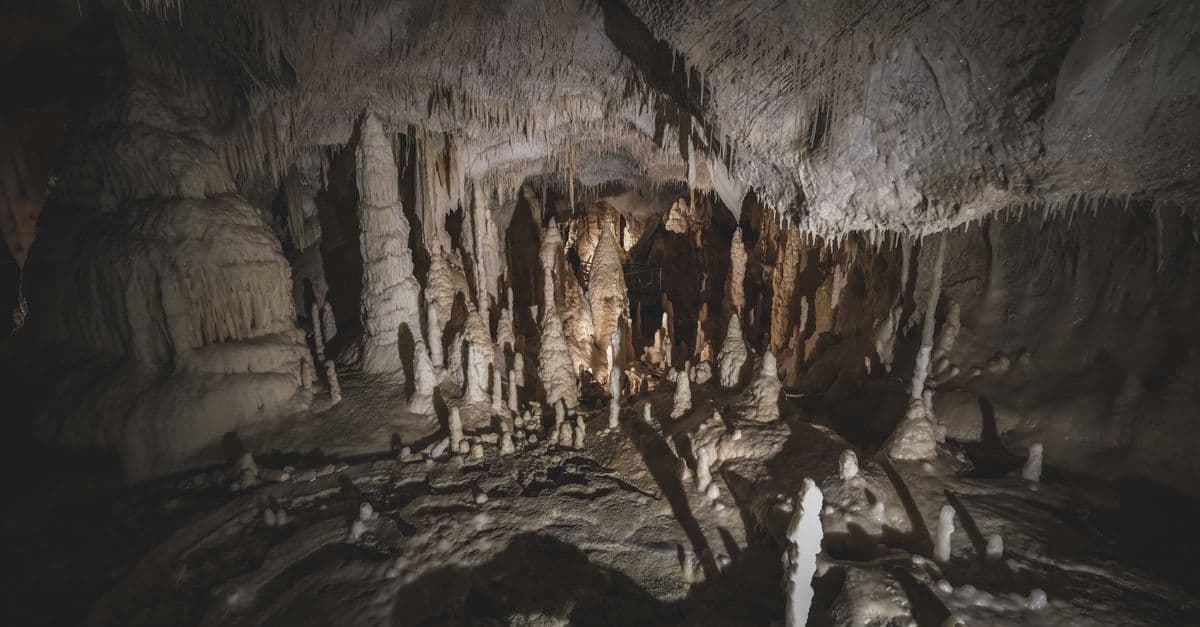
Photo: Francesco Ungaro / Pexels
The largest cave passage in the world is Hang Sơn Đoòng in Vietnam — so vast it contains its own jungle, river, and clouds, with a ceiling high enough to hold a 40-storey skyscraper. Only fully explored in 2009, it is a reminder that some of the planet's biggest spaces are still being discovered underground, decades after satellites had already mapped every mountain and coastline above ground. But "largest cave" is not a single record. It splits into at least five separate measurements — passage volume, total system length, chamber floor area, chamber volume, and vertical depth — and different caves on different continents hold each one.
The Short Answer: Largest Caves
Table 1. The world's cave superlatives, by category.
| Cave | Record | Location | Key Figure |
|---|---|---|---|
| Hang Sơn Đoòng | Largest passage by volume | Vietnam | 38.5 million m³ |
| Mammoth Cave System | Longest system (mapped passage) | USA (Kentucky) | 676+ km |
| Sistema Sac Actun | Longest underwater cave system | Mexico (Yucatán) | 386+ km |
| Miao Room (Gebihe system) | Largest single chamber by volume | China (Guizhou) | 10.78 million m³ |
| Sarawak Chamber | Largest single chamber by floor area | Malaysia (Borneo) | 164,459 m² |
| Veryovkina Cave | Deepest known cave | Georgia (Abkhazia, Caucasus) | ~2,212 m deep |
| Kazumura Cave | Longest lava tube | USA (Hawaii) | ~65.5 km |
"Largest" splits into longest, widest, deepest, and highest-volume — different caves win each, and cavers argue about the exact numbers because caves, unlike buildings, keep changing as explorers survey new passages.
Hang Sơn Đoòng: The Cave With Weather
Hang Sơn Đoòng ("Mountain River Cave") sits in Vietnam's Phong Nha-Kẻ Bàng National Park, a UNESCO World Heritage karst region near the border with Laos. It holds the record for the largest cave passage on Earth by volume — an estimated 38.5 million cubic meters, according to measurements reported by National Geographic and the British Cave Research Association (spacedaily.com). Its central passage runs more than five kilometers, with sections reaching roughly 200 meters (656 ft) high and 150 meters (492 ft) wide. National Geographic reported that a Boeing 747 could fly through parts of the cave with room to spare, and that a 40-storey skyscraper would fit inside its main chamber (spacedaily.com).
Its scale produces genuine, well-documented phenomena, not just impressive statistics:
- Its own jungle. In two places, sections of the cave's roof have collapsed, forming enormous skylights called dolines. Sunlight pours through, and a forest has grown up on the cave floor beneath them, with trees reported to exceed 40 meters in height (spacedaily.com).
- Its own clouds. The temperature and humidity difference between the cool cave interior and the warmer outside air causes fog and low clouds to form near the ceiling in certain sections, a genuine underground microclimate rather than a figure of speech.
- A river. The Rào Thương River carved the cave over an estimated two to five million years and still flows through parts of it, occasionally flooding the lower passages during Vietnam's monsoon season and cutting off exploration for months at a time.
Sơn Đoòng's discovery timeline is almost stranger than its size. A local farmer named Hồ Khanh stumbled on the entrance in 1990 while sheltering from a storm, but he lost track of its exact location and could not relocate it for years. British caver Howard Limbert's team, working with Hồ Khanh, finally found and surveyed it in 2009, and National Geographic announced it as the world's largest natural cave that same year, with the record subsequently confirmed by Guinness World Records in 2013 (spacedaily.com). That means the largest known cave passage on the planet was not measured, mapped, or confirmed until well into the era of Google Earth — a striking illustration of how much remains unmapped underground, much like the deepest places in the ocean, where the seafloor is still less precisely mapped than the surface of Mars.
Today, access is tightly controlled. Only one licensed tour operator, Oxalis Adventure, is permitted to lead expeditions into Sơn Đoòng, and the multi-day trek requires fording underground rivers, climbing past 80-meter cliffs, and camping inside the cave itself (oxalisadventure.com). Vietnamese authorities cap annual visitor numbers deliberately, both to protect the cave's fragile formations and because the terrain genuinely cannot support mass tourism — there is no path wide enough, or safe enough, for casual visitors.
How Giant Caves Form
Most of the world's great caves, including Sơn Đoòng, Mammoth Cave, and the caves of Borneo, are carved from limestone by a slow chemical process called karstification. Rainwater absorbs carbon dioxide from the atmosphere and from decaying plant matter in the soil, becoming mildly acidic — carbonic acid, the same weak acid found in carbonated water. Over hundreds of thousands to millions of years, this acid trickles through cracks in limestone bedrock and slowly dissolves the rock itself, widening hairline fractures into fissures, fissures into passages, and passages into chambers.
Think of it the way a river valley forms above ground, except the "river" here is invisible, moving through solid rock at a pace measured in millimeters per century rather than meters per second. The chemistry is straightforward: limestone is mostly calcium carbonate, and carbonic acid reacts with it to form calcium bicarbonate, which is soluble and simply washes away in the water. Repeat that reaction across a cubic kilometer of rock for a few million years, and you get a cave the size of Sơn Đoòng.
This is why caves cluster in karst landscapes — regions where the underlying bedrock is soluble limestone, dolomite, or gypsum. Vietnam's Phong Nha-Kẻ Bàng, Kentucky's Mammoth Cave region, and the limestone hills of Sarawak in Borneo are all classic karst terrain, and it is no coincidence that they also host the planet's largest known caves. The same slow dissolution process that hollows out caves also produces sinkholes, disappearing rivers, and the pockmarked "tower karst" scenery of places like Guilin, China and Halong Bay, Vietnam. A cave the size of Sơn Đoòng or Mammoth Cave is essentially a fossil record of underground water flow — a physical map of where water moved through rock over deep time, the same kind of process that shapes the oldest things on Earth, where geological patience rather than dramatic events explains the record.
Not every giant cave is limestone
Limestone dissolution is the dominant mechanism, but it is not the only way to build a huge cave. Two other processes matter enough to mention:
Lava tubes form when the surface of a flowing lava stream cools and solidifies while molten lava continues to flow underneath. When the eruption stops and the remaining lava drains out, it leaves behind a hollow tube — essentially a frozen pipe. Kazumura Cave on the flank of Kīlauea volcano in Hawaii is the longest known lava tube on Earth, surveyed at roughly 65.5 kilometers (40.7 mi) long and about 1,102 meters (3,614 ft) in vertical extent, making it both the longest and the deepest lava tube documented anywhere (showcaves.com). Lava tube caves form in a matter of days to years, not millions of years — a dramatic contrast to the slow dissolution that builds limestone caves.
Gypsum caves dissolve the same way limestone caves do, but gypsum is far more soluble in water, so gypsum caves can form faster and reach enormous total lengths even in relatively young rock. Optymistychna Cave in Ukraine, a gypsum maze cave, is mapped at well over 260 km of passages despite occupying a comparatively thin, flat layer of rock — its length comes from an intricate three-dimensional maze pattern rather than from a few enormous tunnels.
Longest vs. Biggest vs. Deepest: Why One Cave Can't Win Everything
As with most natural superlatives, "largest cave" depends entirely on which dimension you measure. Cavers and geologists generally track five separate records, and understanding why no single cave dominates all of them tells you something about how different cave-forming processes work.
What is the longest cave system in the world?
Mammoth Cave in Kentucky, USA holds this record decisively. The National Park Service's Geodiversity Atlas, updated in July 2024, puts the surveyed length at 676 kilometers (420 mi) of interconnected passages, with other NPS materials citing figures as high as 659–686 km depending on the survey date (nps.gov). That makes it more than twice as long as the second-longest known cave system in the world, and the gap is not close — no other dry-land cave system comes within striking distance. Mammoth Cave's length comes not from one enormous passage like Sơn Đoòng, but from an intricate five-level maze of interconnected tunnels carved through a thick limestone layer capped by a resistant sandstone roof that has protected the cave from collapsing for millions of years.
Mammoth Cave's survey number keeps climbing for a specific reason: cavers are still actively connecting previously separate cave systems in the same limestone belt. Passages once mapped as distinct caves — Flint Ridge, Salts Cave, and others — have since been proven to physically connect underground, adding tens of kilometers to the official total with each major connection. This is fundamentally different from Sơn Đoòng's record, which is about the size of a single continuous chamber rather than a sprawling network.
What is the largest single cave chamber?
This record splits further, into floor area and volume, because a chamber can be wide and flat or narrow and tall.
By floor area, the record belongs to the Sarawak Chamber, inside Gua Nasib Bagus ("Good Luck Cave") in Gunung Mulu National Park, Borneo, Malaysia. British cavers Andy Eavis, Dave Checkley, and Tony White discovered it in January 1981 during the Mulu'80 expedition. A 2011 laser scan measured the chamber at 600 meters (2,000 ft) long, 435 meters (1,427 ft) wide, and up to 115 meters (377 ft) high, with a floor area of 164,459 square meters — roughly the footprint of 23 soccer fields — and a volume of 9,579,205 cubic meters (Wikipedia, Sarawak Chamber).
By volume, the record belongs to the Miao Room, part of the Gebihe cave system in Ziyun Getu He National Park, Guizhou Province, China. A British-led team, funded by National Geographic, laser-scanned the chamber in 2013 and calculated its volume at 10.78 million cubic meters — about 10 percent larger than the Sarawak Chamber — across a footprint 852 meters (2,795 ft) long and 191 meters (627 ft) wide (Wikipedia, Miao Room). The Miao Room wins on volume because its ceiling arches far higher relative to its footprint than the flatter, wider Sarawak Chamber does — a difference in shape, not just scale.
What is the deepest cave in the world?
Veryovkina Cave, in the Arabika Massif of Abkhazia in the Caucasus Mountains of Georgia, holds this record. It was first entered in 1968 under the designation S-115, when only its top 115 meters were explored, and it sat largely forgotten for decades. A series of Russian-led expeditions between 2016 and 2018 pushed the known depth dramatically: 1,832 meters by February 2017, 2,204 meters by August 2017, and finally a confirmed 2,212 meters (7,257 ft) in March 2018, led by speleologists Pavel Demidov and Ilya Turbanov (brilliantmaps.com; Wikipedia, Veryovkina Cave). That expedition displaced the previous record holder, Krubera Cave (also called Krubera-Voronja), located in the same mountain range and measured at about 2,197 meters deep (Wikipedia, Krubera Cave). Veryovkina and Krubera are the only two caves on Earth confirmed to exceed 2,000 meters of vertical depth, and both sit within a few kilometers of each other in the same limestone massif — a geological coincidence that has made Abkhazia the undisputed center of extreme vertical caving.
Reaching the bottom of Veryovkina is not a single descent. Expeditions require multiple weeks underground, with cavers hauling equipment through a series of vertical shafts and narrow "meanders," establishing underground camps at intervals, and rigging thousands of meters of rope. The physical and psychological toll of multi-week darkness, cold, and isolation makes ultra-deep caving one of the most demanding forms of exploration still practiced, arguably closer in risk profile to high-altitude mountaineering or saturation diving than to a weekend hobby.
What is the longest underwater cave?
Freshwater-flooded caves get their own separate record, because diving through a flooded passage requires entirely different skills, equipment, and risk tolerance than walking through a dry one. Sistema Sac Actun, on Mexico's Yucatán Peninsula near Tulum, is measured at 386.1 kilometers (239.9 mi) of surveyed passage, of which 378.6 km is underwater (Wikipedia, Sistema Sac Actun). In January 2018, cave divers confirmed that Sac Actun connects to the neighboring Dos Ojos system through a previously unknown channel, a discovery reported by National Geographic as unifying what had been considered two separate record-holders into a single flooded network (nationalgeographic.com). As of 2023, Sac Actun ranks as the second-longest known underwater cave system, after the nearby Sistema Ox Bel Ha. These flooded limestone passages, known locally as cenotes where they connect to the surface, have also yielded major archaeological finds, including the remains of a mastodon and a human female skeleton that may represent some of the oldest evidence of human presence in the Americas.
Table 2. Cave-forming processes compared.
| Process | Typical rock | Formation timescale | Example |
|---|---|---|---|
| Limestone dissolution (karst) | Limestone, dolomite | Hundreds of thousands to millions of years | Sơn Đoòng, Mammoth Cave, Sarawak Chamber |
| Gypsum dissolution | Gypsum | Tens of thousands to hundreds of thousands of years | Optymistychna Cave, Ukraine |
| Lava tube formation | Basalt (volcanic rock) | Days to years | Kazumura Cave, Hawaii |
| Sea cave erosion | Any coastal rock | Thousands of years | Fingal's Cave, Scotland |
| Flooded karst (underwater) | Limestone | Millions of years, plus post-Ice Age sea-level rise | Sistema Sac Actun, Mexico |
Life in the Dark: What Actually Lives in the World's Largest Caves
Giant caves are not empty stone. Deep cave systems host specialized ecosystems built around species that have evolved, sometimes over millions of years of isolation, to survive with no sunlight at all. Biologists call permanent cave-dwellers troglobites, and the adaptations they share are a textbook case of evolution shaped by an extreme, unchanging environment.
The most visible adaptation is troglomorphism — a cluster of physical traits including loss of eyes (a condition called anophthalmia), loss of skin pigment, and often elongated limbs or antennae. The logic is simple energy economics: growing and maintaining a functional eye costs metabolic energy, and in total darkness that investment produces zero survival benefit, so natural selection favors individuals that redirect that energy toward senses that actually work underground, like touch, smell, and vibration detection (biologyinsights.com). Cave salamanders and cave fish, for instance, often navigate almost entirely through mechanoreception — specialized skin cells that detect the faintest water vibrations and chemical gradients, functioning as a kind of distributed pressure sensor across their whole body (biologyinsights.com). Pigment loss follows the same energy logic: melanin exists in surface animals mainly for camouflage and UV protection, both useless in a lightless cave, so troglobites that stop investing energy in pigment production simply outcompete those that keep making it.
Troglomorphism shows up across a startlingly wide range of animal groups — mollusks, velvet worms, insects and other arthropods, fish, amphibians, and even a few reptiles have independently evolved blind, pale cave-adapted forms (Wikipedia, Troglomorphism). That it keeps happening independently, in unrelated lineages, in caves on different continents, is itself informative: it means darkness reliably produces the same evolutionary pressure regardless of what species starts out down there.
Giant caves like Sơn Đoòng complicate the picture further because they are not uniformly dark. Where dolines let sunlight in, the cave supports ordinary surface plants and animals living right alongside deep-cave specialists a few hundred meters further in — a rare natural transect from full sunlight to absolute darkness inside a single connected space.
Common Confusions About "The World's Largest Cave"
"Largest" gets used loosely, and the resulting mismatched claims are one of the most common sources of confusion in cave reporting. A headline calling a cave "the world's largest" without specifying which record it holds is almost always technically imprecise, because as this article shows, no single cave holds every record simultaneously.
A second, subtler confusion: cave length figures are not fixed numbers the way a mountain's height is. Mammoth Cave's official length has grown by tens of kilometers multiple times over the past several decades, not because the cave itself got bigger, but because cavers kept finding and surveying new connecting passages. A cave's "record" length is really a snapshot of how much of it has been mapped, not necessarily how much of it exists. The same caveat applies, more sharply, to less-explored systems: Sơn Đoòng was not "smaller" before 2009, it was simply unmeasured.
A third confusion worth clearing up: China's claim to the "world's largest cave" (referring to the Miao Room) and Vietnam's claim (referring to Sơn Đoòng) are not actually in conflict, because they measure different things — one is the largest single chamber by volume, the other is the largest total passage by volume, and the two overlap only in vocabulary, not in what is being measured (outsideonline.com). Similarly, people sometimes conflate "deepest cave" with "cave containing the deepest known point below sea level" — Veryovkina's depth is measured from its entrance downward, not relative to sea level, and its entrance sits at a high mountain elevation, so its lowest point is not actually the lowest elevation any cave passage reaches worldwide.
Frequently Asked Questions
Q: What is the largest cave in the world? A: It depends on which measurement you mean. By passage volume, it's Hang Sơn Đoòng in Vietnam — large enough to contain a jungle, a river, and clouds, with a ceiling tall enough for a 40-storey building. By total mapped length, it's Mammoth Cave in the USA, at over 676 km. By single-chamber volume, it's the Miao Room in China. There is no one cave that wins every category.
Q: How big is Son Doong cave? A: Its main passage exceeds 5 km in length, with sections reaching about 200 m in height and 150 m in width, and a total measured volume of roughly 38.5 million cubic meters. That is big enough for a Boeing 747 to fly through with room to spare, or for a 40-storey skyscraper to stand inside it. It also contains its own jungle, under collapsed-ceiling skylights called dolines, a flowing river, and localized clouds that form near the ceiling.
Q: What is the longest cave system in the world? A: Mammoth Cave in Kentucky, USA, with 676 km of mapped, interconnected passages according to the National Park Service's 2024 Geodiversity Atlas — more than twice the length of any other known dry cave system. Its total keeps growing as cavers survey new connecting passages between previously separate sections of the same limestone belt.
Q: How are giant limestone caves formed? A: Mostly by slightly acidic water dissolving limestone over very long periods. Rainwater absorbs carbon dioxide from the air and soil and becomes weak carbonic acid, which slowly eats away at limestone along existing cracks, widening them into passages and chambers over hundreds of thousands to millions of years. This is why big caves cluster in limestone "karst" regions like Phong Nha in Vietnam, Kentucky's Mammoth Cave region, and Borneo.
Q: Are all large caves formed by water dissolving rock? A: No. Limestone dissolution is the dominant process, but lava tube caves form in days to years when the crust of a lava flow cools and solidifies while molten rock drains out from underneath, leaving a hollow tube. Kazumura Cave in Hawaii, the longest known lava tube at roughly 65.5 km, formed this way. Gypsum caves dissolve similarly to limestone but faster, since gypsum is more soluble in water.
Q: What is the deepest cave in the world? A: Veryovkina Cave in the Arabika Massif of Abkhazia, Georgia, confirmed at approximately 2,212 meters deep by a Russian-led expedition in March 2018. It is one of only two known caves deeper than 2,000 meters; the other, Krubera Cave, sits in the same mountain range at about 2,197 meters. Reaching the bottom of either cave requires multi-week expeditions with underground camps.
Q: What is the largest underwater cave in the world? A: Sistema Ox Bel Ha, on Mexico's Yucatán Peninsula, is currently the longest known flooded cave system. The nearby Sistema Sac Actun ranks second at over 386 km of surveyed passage; the two were long studied separately until divers confirmed connections between neighboring systems in the region in 2018. These flooded limestone caves formed the same way dry limestone caves do, then were partially submerged as sea levels rose after the last Ice Age.
Q: Do animals actually live inside giant caves? A: Yes. Permanent cave-dwelling species, called troglobites, include blind cave fish, cave salamanders, cave spiders, and various invertebrates that have evolved troglomorphism — loss of eyes and skin pigment, plus enhanced touch and vibration senses — because those traits conserve energy in an environment where vision and camouflage serve no purpose. This adaptation has evolved independently across mollusks, arthropods, fish, amphibians, and even some reptiles.
Q: Why does Mammoth Cave's length keep changing in official records? A: Because a cave's recorded length reflects how much of it has been surveyed, not a fixed physical boundary. Mammoth Cave's length has increased multiple times over past decades as cavers proved that separately mapped sections, such as Flint Ridge and Salts Cave, actually connect underground into one continuous system, adding tens of kilometers to the official total with each confirmed connection.
Q: Can tourists visit the world's largest caves? A: It varies enormously by cave. Mammoth Cave National Park offers regular guided tours accessible to the public year-round. Hang Sơn Đoòng, by contrast, is accessible only through one licensed operator, requires a multi-day trek with underground river crossings and camping, and has a strict annual visitor cap set by Vietnamese authorities to protect the cave and manage its genuinely difficult terrain.
The takeaway
There is no single "world's largest cave," because size underground splits into length, volume, floor area, and depth, and the geological processes that produce each record are different enough that one cave rarely dominates more than one category. Hang Sơn Đoòng wins on passage volume and produces genuine underground weather; Mammoth Cave wins on total mapped length because limestone karst there formed an intricate maze rather than one giant tunnel; the Miao Room and Sarawak Chamber split the single-chamber record between volume and floor area; Veryovkina holds the vertical depth record by a matter of meters over its neighbor Krubera. What unites all of them is the same patient chemistry: slightly acidic water, dissolving rock, for a period of time longer than most of human history combined. The fact that Sơn Đoòng, the single largest known cave passage on Earth, was not fully surveyed until 2009 is the real headline — there is a real chance an even larger cave exists somewhere on the planet, simply unmapped.
Read next:
Sources
- National Geographic / Space Daily — Son Doong volume, dimensions, and discovery timeline
- Oxalis Adventure — Son Doong access and expedition logistics
- U.S. National Park Service, NPS Geodiversity Atlas (July 2024) — Mammoth Cave National Park length data
- Wikipedia, sourced to Guinness World Records and the Mulu Caves Project — Sarawak Chamber dimensions and discovery
- Wikipedia, sourced to National Geographic's 2013 laser-scan survey — Miao Room volume and dimensions
- Wikipedia, sourced to the 2018 Veryovkina expedition report — Veryovkina Cave depth confirmation
- Wikipedia — Krubera Cave depth
- Brilliant Maps — Krubera and Veryovkina cave depth timeline
- Wikipedia, Guinness World Records — Sistema Sac Actun underwater cave length
- National Geographic — Sac Actun–Dos Ojos underwater cave connection, 2018
- Showcaves.com — Kazumura Cave lava tube length and depth
- Outside Online — Miao Room vs. Sarawak Chamber "world's largest cave" comparison
- Wikipedia — Troglomorphism and cave-adaptation biology
- Biology Insights — Troglobite eye loss and pigmentation loss mechanisms
Bottom line: Son Doong is the largest cave passage — a cavern with its own weather — but Mammoth Cave wins on length, the Miao Room and Sarawak Chamber split the chamber record, and Veryovkina wins on depth. The largest caves on Earth are among the last great spaces we're still exploring, all carved by nothing but acidic water, molten rock, or seawater, given far more time than any human record-keeper has been watching.
Last verified: July 2026
Follow new articles
Add SciHub101 to your feed reader to see new science and technology stories.
About the Author
SciHub101 is an independent science and technology publication founded and edited by Buğra Sözeri, a software engineer and app developer based in Türkiye. AI tools assist with drafting and research. Source documentation in the existing archive is uneven, and articles are being reviewed and corrected. The Editorial Team byline identifies editorial responsibility; it does not certify specialist or independent human review. Where we compare products, anything built by our own team is labelled as such — see the editorial guidelines and About page for how corrections and disclosures work.
Related Articles

The Biggest Stars in the Universe: A Sun So Vast It Could Swallow Saturn's Orbit
If you placed the star UY Scuti where our Sun is, its surface would engulf Mercury, Venus, Earth, Mars, and reach out past the orbit of Jupiter. It is one of the largest known stars — a hypergiant so vast that light takes hours to cross it. Yet by another measure, this colossus is a lightweight: a star can be a thousand times wider than the Sun and still weigh less than the heaviest stars, which are smaller but unimaginably dense. Size, in space, is not what it seems.

Most Visited Tourist Attractions in the World
The world's most visited places are not always the most famous monuments. This guide separates paid attractions, public spaces, parks, and pilgrimage sites.
Biggest Mines in the World: The Giant Holes Powering Modern Life
The biggest mines on Earth expose how copper, iron, coal, gold, and diamonds reach the global economy, and why size can mean depth, output, or area.
The Largest Volcanoes in the World: The Mountain That's Mostly Underwater
Mauna Loa in Hawaii rises 4,170 metres above the sea — but that's only the tip. Measured from its true base on the ocean floor, it stands roughly 17 kilometres tall, more than twice Everest's height above sea level, and is so heavy it has pushed the seabed downward beneath it. It may not even be the largest volcano on Earth by volume. And lurking beneath Yellowstone is something that isn't a mountain at all: a supervolcano whose eruptions are measured not in metres but in continents.
The Longest Mountain Ranges in the World: The 65,000-Kilometre Range You'll Never See
The Andes stretch 7,000 kilometres down the spine of South America — the longest mountain range on land, and a wall so high it creates deserts on one side and rainforests on the other. But it's not even close to the longest range on the planet. That title belongs to a mountain chain ten times longer, winding 65,000 kilometres around the globe entirely beneath the oceans, where most of Earth's volcanic activity quietly happens.
The Tallest Waterfalls in the World: Angel Falls and the Hidden Giants
Venezuela's Angel Falls drops 979 meters — so far that much of the water turns to mist before it ever reaches the ground, especially in the dry season. It is the tallest waterfall on land, plunging off a flat-topped mountain built from some of the oldest rock on Earth. But the single tallest waterfall on the planet is not on land at all: it is underwater, a cataract beneath the ocean that dwarfs every waterfall you can see.