The Tallest Trees in the World: Hyperion and the Limits of Living Tall
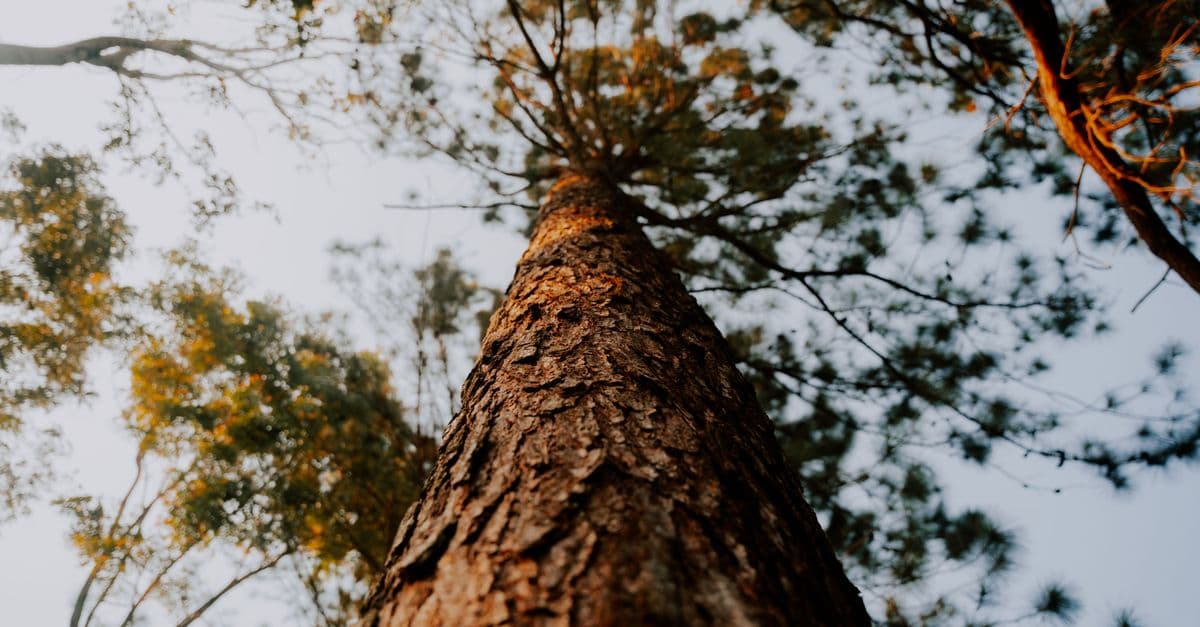
Photo: Hugo Martínez / Pexels
The tallest tree in the world is Hyperion, a coast redwood in California standing roughly 116.2 metres (381 feet) tall as of its most recent measurement — the tallest known living organism on Earth. Its exact location inside Redwood National Park is kept secret, and the National Park Service has closed the surrounding grove entirely: anyone caught trying to reach the tree now risks up to six months in jail and a $5,000 fine. Hyperion is also growing close to a limit that essentially no tree can exceed by much, because beyond a certain height, the laws of physics stop letting water reach the top.
This is not a record about a lucky seed that happened to grow big. It's a record about a species that has spent tens of millions of years solving one of the hardest engineering problems in biology: how to move water straight up, against gravity, through a living pipe hundreds of feet tall, without a pump. Coast redwoods are, by a wide margin, the best solvers of that problem that evolution has produced. Understanding why they win — and why even they eventually stop growing upward — is really a story about hydraulics, climate, and time.
The Short Answer: Tallest Trees on Record
| Rank | Tree | Height | Species | Location |
|---|---|---|---|---|
| 1 | Hyperion | ~116.2 m (381 ft) | Coast redwood (Sequoia sempervirens) | Redwood National Park, California, USA |
| 2 | Helios | ~114.1 m (374 ft) | Coast redwood | Redwood National Park, California, USA |
| 3 | Icarus | ~113.1 m (371 ft) | Coast redwood | Redwood National Park, California, USA |
| 4 | Centurion | ~96–100.9 m (315–331 ft) | Mountain ash (Eucalyptus regnans) | Tasmania, Australia |
| 5 | Doerner Fir | ~99.1 m (325 ft), reduced by 2025 fire damage | Coastal Douglas fir (Pseudotsuga menziesii) | Coos County, Oregon, USA |
| — | (Historical, unverified) | Reported up to ~150 m | Mountain ash (felled specimens) | 19th-century Victoria, Australia |
Table 1: The world's currently tallest verified living trees, by species and measured height. Heights for living record-holders shift slightly between remeasurements as trees grow, lose crown to storms, or are damaged by fire.
Coast redwoods own the entire top tier of this list. Nineteenth-century loggers in the Australian state of Victoria reported felling mountain ash trees they claimed exceeded 130 metres, with a handful of accounts claiming close to 150 metres, but none of those measurements were independently verified with modern methods, and no tree anywhere near that height has ever been confirmed since.
Hyperion: The Tallest Living Thing on Earth
Hyperion, a coast redwood (Sequoia sempervirens), was discovered on August 25, 2006, by naturalists Chris Atkins and Michael Taylor while they were exploring a remote, steep-sided valley in Redwood National Park, California (Wikipedia; Smithsonian Magazine). At roughly 116.2 metres, it stands taller than the Statue of Liberty measured from the ground to the tip of the torch, and it is the tallest known living organism on the planet, though it is not the largest living thing by volume (that title belongs to a giant sequoia) or the oldest (that belongs to a bristlecone pine, a completely different species).
For years after its discovery, Hyperion's approximate location leaked out anyway, first through word of mouth among tree enthusiasts, then through GPS coordinates shared online. A steady stream of visitors began bushwhacking off-trail to find it, trampling understory plants and compacting the soil above the tree's shallow root system. Coast redwood roots rarely go deeper than two to three metres, spreading wide instead of deep, which makes them unusually vulnerable to soil compaction from repeated foot traffic. By 2022, the damage was severe enough that the National Park Service formally closed the area, making unauthorized entry a federal offense punishable by up to six months in jail and a $5,000 fine (NPR; AccuWeather).
Coast redwoods like Hyperion are also remarkable for how long they persist once they reach great height. Individual coast redwoods routinely live well over 1,000 years, and some confirmed specimens exceed 2,000 years, placing them among the longest-living organisms on the planet, even though the outright age record belongs to a much smaller, gnarled species growing in a completely different kind of environment.
How a Tree Measures 116 Metres: The Method Behind the Number
Measuring a living tree that tall is harder than it sounds, and it's worth understanding why the numbers in this article carry qualifiers like "approximately" and shift slightly between sources. Ground-based laser rangefinders (hypsometers) can misjudge height by several meters when a tree's crown leans, when the topmost twig is obscured by neighboring foliage, or when the ground beneath the tree isn't level, which is almost always the case in the steep, folded terrain where redwoods and mountain ash grow.
The gold standard, pioneered largely by botanist Stephen Sillett and colleagues at Cal Poly Humboldt, combines a weighted line shot over the highest living twig with an arborist-style climb using ropes, harnesses, and pulleys, followed by a literal tape-drop measurement from the top of the tree straight down to the ground (Cal Poly Humboldt). That physical tape measurement is then cross-checked against ground-based laser scanning and increasingly against LiDAR (light detection and ranging), a remote-sensing technique that fires pulsed lasers from aircraft or drones to build a three-dimensional map of the forest canopy accurate to a few centimeters.
Why do tree height records change from year to year?
Trees are living structures, not fixed monuments, so their measured heights genuinely change over time. A tree can grow a few centimeters annually, lose meters of crown to lightning strikes, windstorms, or fire, or simply get remeasured more precisely with newer equipment. The Doerner Fir, for example, was measured at 100.3 metres in 1991, had already shed roughly a meter of crown by 2022, and then lost about 15 metres when a wildfire burned through its top in August 2025 (Live Science; OPB).
The Physics That Caps Tree Height
Trees cannot grow indefinitely tall, and the reason is water. A tree lifts water from its roots to its leaves through a process called transpiration: water evaporates out of tiny pores on the underside of leaves, and that evaporation pulls the entire column of water beneath it upward through microscopic tubes called xylem, much like sucking liquid up a very long, very thin straw. The water molecules stick to each other through a property called cohesion, which lets the whole column move as a continuous thread rather than breaking apart into droplets.
Think of it like a fire brigade passing buckets up an impossibly tall ladder, except there are no hands in between, only the water's own stickiness holding the chain together as gravity constantly tries to pull it back down. That analogy only gets you partway there, though, because unlike a bucket brigade, the "pull" in a tree comes entirely from the top: evaporating water at the leaves creates negative pressure, or tension, that yanks the column upward, a mechanism plant physiologists call the cohesion-tension theory.
Gravity resists that pull, and so does friction as water squeezes through the narrow xylem tubes. The taller the tree, the more tension is required at the leaves to keep water moving, and tension has a breaking point. Push it too far and the water column can rupture, forming a bubble of water vapor that blocks the tube entirely, a phenomenon called cavitation. That's not a hypothetical failure mode: researchers led by ecophysiologist George Koch measured leaf water potential at increasing heights in the tallest known redwoods and found the topmost leaves were already showing measurable water stress, comparable to a drought-stressed plant, even when the tree's roots sat in saturated, well-watered soil (Koch et al., Nature, 2004).
That 2004 study, published in Nature under the title "The limits to tree height," used regression analysis of how leaf structure changes with height to estimate a hard ceiling: somewhere between 122 and 130 metres, barring mechanical damage from wind or fire, is roughly as tall as a tree can physically grow (Koch et al., 2004; Northern Arizona University). That estimate lines up closely with the tallest trees ever reliably measured, living or historical, which is exactly what you would expect if the ceiling is a genuine physical constraint rather than a coincidence of which trees happened to survive logging.
Why don't taller trees just grow wider water tubes to compensate?
Wider xylem tubes do move water more efficiently, but they are also more prone to cavitation, the vapor-bubble failure described above, because a wider column of water under tension is mechanically less stable than a narrow one. Tall trees instead evolve progressively narrower, more numerous tubes near the crown, which trades raw flow rate for resistance to breaking, but that trade-off itself gets worse with every additional meter of height.
Why Coast Redwoods Win the Height Race
Coast redwoods dominate the global height record because they combine several advantages that rarely occur together in one species.
- A mild, wet, fog-drenched climate. The northern California coast where redwoods grow gets heavy summer fog rolling in off the Pacific almost daily. That fog condenses directly on redwood needles and drips into the soil, and needles can also absorb water straight from the moist air, which measurably eases the water-lifting burden on the tallest, most stressed leaves at the very top of the crown.
- Rot- and fire-resistant wood. Redwood heartwood is rich in tannins, plant compounds that make the wood distasteful to insects and resistant to fungal decay, which is a major reason coast redwoods can live more than a thousand years. More time alive means more decades of upward growth toward the physical ceiling.
- No killing winter freeze. Coastal northern California rarely drops below freezing for extended periods. Species growing in colder climates lose growing season to frost and risk having their water columns freeze and cavitate, which limits how tall they can practically get even if the underlying hydraulic physics would otherwise allow it.
- Deep, sheltered river valleys. Many of the tallest individual redwoods, including Hyperion, grow in narrow alluvial valleys that buffer them from the strongest coastal winds, reducing the mechanical stress and crown breakage that would otherwise cap their height long before hydraulics do.
Australia's mountain ash, the species behind Centurion, is both the tallest flowering plant on Earth and the tallest hardwood tree, and it thrives under a broadly similar formula: cool, consistently wet forest in Tasmania and Victoria, minimal frost damage, and centuries of undisturbed growth in sheltered valleys. The Pacific Northwest's Douglas firs, epitomized by the Doerner Fir, round out the list under the same general conditions: temperate rainforest, heavy winter rainfall, and old-growth stands old enough to have had the centuries required to approach their species' hydraulic ceiling.
Coast Redwood vs. Mountain Ash vs. Douglas Fir: A Side-by-Side Look
| Trait | Coast redwood | Mountain ash | Douglas fir |
|---|---|---|---|
| Tallest confirmed individual | Hyperion, ~116.2 m | Centurion, ~96–100.9 m | Doerner Fir, ~99.1 m (pre-2025 fire) |
| Native range | Coastal northern California and southern Oregon, USA | Tasmania and Victoria, Australia | Pacific Northwest, USA and Canada |
| Typical lifespan | 600–1,200+ years, some over 2,000 | 400–500 years | 500–1,000 years |
| Wood defense | Tannin-rich, rot- and fire-resistant | Prone to hollowing with age; highly flammable | Thick bark, moderately fire-resistant when mature |
| Fire relationship | Survives repeated ground fires via thick bark | Often regenerates from seed after stand-replacing fire | Vulnerable to crown fire when young; resistant when old |
| Climate driver | Coastal summer fog, mild winters | Cool, wet, temperate forest | Winter-wet, summer-dry temperate rainforest |
Table 2: Comparing the three species that hold every spot in the world's top tallest-tree rankings.
Tallest vs. Largest vs. Oldest: Three Different Crowns
"Biggest tree" is a phrase that hides three separate records, and a different species wins each one.
- Tallest: Hyperion, a coast redwood, at roughly 116.2 metres. Height is a measure of vertical reach, and it's overwhelmingly won by trees optimized for hydraulic efficiency in mild, wet climates.
- Largest by volume: General Sherman, a giant sequoia (Sequoiadendron giganteum) growing in California's Sierra Nevada, with a trunk volume estimated at roughly 1,487 cubic meters. Giant sequoias are shorter than coast redwoods but grow enormously thick trunks, so total wood volume, not height, is where they dominate.
- Oldest: a Great Basin bristlecone pine (Pinus longaeva), confirmed at 5,074 years old by ring counts, growing at high, harsh elevation in the White Mountains of California. Bristlecone pines are small, gnarled, and slow-growing precisely because they live in conditions so brutal that almost nothing else survives there, which is also what protects them from the fires, insects, and competition that kill faster-growing trees long before they reach that age. It's a different species from either record above, and it ranks among the oldest things on Earth in any category.
Height, trunk volume, and age are separate crowns, held by three different species growing in three very different environments, much like the largest living things on Earth record, where a sprawling fungal network, not a tree at all, arguably outweighs every individual tree on the planet once you count an organism's full connected mass.
Redwood Canopies: A Forest Hundreds of Feet in the Air
One of the more overlooked facts about the tallest trees is that their upper canopies function almost like a second forest floor, hundreds of feet above the ground. Botanist Stephen Sillett's research teams, climbing into old-growth redwood crowns using ropes and arborist harnesses, discovered thick mats of soil accumulating in the forks of high branches, built up over centuries from decomposing needles, bark, and windblown debris (Cal Poly Humboldt; Sillett et al., Ecological Monographs, 2007).
That canopy soil, in some of the oldest and largest redwood crowns, can be more than half a meter deep and hosts an entire hidden ecosystem: ferns growing directly out of branch forks, huckleberry shrubs rooted in the canopy soil itself, salamanders that appear to spend their entire lives without ever touching the ground, and dense mats of epiphytes, plants that grow attached to another plant for physical support rather than drawing nutrients from it. Sillett and colleague William Ellyson documented all vascular plants across 27 trees up to 101 metres tall in a single hectare of old-growth redwood forest and found the canopy supporting a surprisingly rich, self-contained plant community.
This matters for the height story too, because a tree that has grown tall enough to accumulate its own rooftop garden also has to lift water for that garden's residents, adding yet another hydraulic burden on top of an already stressed system. It's one more reason the very tallest individual trees tend to be exceptionally old: building and supporting that much structure, at that height, takes centuries.
What People Get Wrong About "Tallest Trees"
A few misconceptions come up constantly in discussions of record-height trees, and they're worth clearing up directly.
Historical claims of taller trees are usually unverifiable, not necessarily false. Nineteenth-century Australian timber workers reported felling mountain ash specimens well over 120 metres, with a small number of accounts claiming close to 150 metres. Measurement methods of the era were crude, often based on pacing out the length of a felled trunk lying on uneven, broken terrain, and no photographic or independently verified documentation survives for the tallest claims. Modern researchers treat these figures as plausible upper bounds on what the species could achieve under ideal, pre-industrial old-growth conditions, not as confirmed records, because the trees themselves were destroyed before anyone could remeasure them.
Tallest does not mean biggest, and biggest does not mean oldest. As covered above, these are three separate records held by three different species. A giant sequoia can outweigh a coast redwood many times over despite being shorter, because it grows a vastly thicker trunk. A bristlecone pine barely taller than a house can be older than the entire recorded history of most nations, because slow growth in a hostile environment, not size, is what drives longevity in that species.
Visiting the tallest known trees is often illegal or actively discouraged, not simply inconvenient. Hyperion's grove is legally closed with real criminal penalties attached, and several other record-height redwoods have undisclosed locations specifically to prevent the kind of root-damaging foot traffic that led to Hyperion's closure in the first place. The organizations that track these trees, including Save the Redwoods League and individual researchers, generally do not publish precise coordinates for exactly this reason.
Taller trees are not simply "healthier" or "more successful" trees. Extreme height comes with a real physiological cost: the topmost leaves of the tallest redwoods measurably experience chronic water stress, are smaller and thicker than leaves lower in the crown, and grow more slowly than they would at a less extreme height. A moderately tall tree with a large, well-hydrated crown may be reproducing and storing more energy overall than an extreme height-record specimen fighting gravity for every drop of water at its very top.
Frequently Asked Questions
Q: What is the tallest tree in the world? A: Hyperion, a coast redwood in Redwood National Park, California, measured at roughly 116.2 metres (381 feet) — the tallest known living organism on Earth. It was discovered in 2006 by Chris Atkins and Michael Taylor, and its exact location is now kept secret and legally protected after visitor traffic damaged its surroundings.
Q: How tall can a tree theoretically grow? A: Somewhere around 122 to 130 metres, according to a 2004 study published in Nature by George Koch and colleagues. Beyond that height, gravity and friction make it physically nearly impossible to pull water up to the highest leaves without the water column rupturing. The tallest redwoods already show measurable water stress in their topmost branches, meaning they are growing right up against this natural ceiling.
Q: Why are the tallest trees coast redwoods and not another species? A: Coast redwoods combine a mild, fog-drenched coastal climate that supplies moisture directly to high leaves, rot- and fire-resistant wood that lets them live over 1,000 years, sheltered river valleys that reduce wind-driven crown damage, and no killing winter freezes. That rare combination lets individual trees keep growing for centuries without interruption, giving them enough time to approach the physical height limit that applies to every tree species.
Q: Is the tallest tree also the oldest or the biggest tree in the world? A: No, these are three separate records held by three different species. The tallest is a coast redwood (Hyperion), the largest by trunk volume is a giant sequoia (General Sherman), and the oldest confirmed individual tree is a Great Basin bristlecone pine at 5,074 years old. Height, volume, and age depend on different biological strategies, so different species dominate each category.
Q: Can I visit Hyperion, the tallest tree? A: No. Its precise location is deliberately kept secret, and since 2022 the surrounding area in Redwood National Park has been formally closed to the public, with penalties of up to six months in jail and a $5,000 fine for entering. Years of heavy off-trail foot traffic from visitors seeking the tree compacted soil and damaged shallow root systems, so authorities closed the grove to preserve the tree.
Q: How is a tree's height actually measured? A: Researchers combine a physical tape drop from the highest living twig to the ground, measured by a climber using ropes and arborist gear, with ground-based laser scanning and increasingly with airborne LiDAR (light detection and ranging), which maps the forest canopy in three dimensions. Ground-only laser measurements from below can be off by several meters if the crown leans or the ground isn't level, which is why the most reliable height records rely on an actual climb.
Q: Why do coast redwood height records keep changing slightly? A: Because the trees are alive and constantly changing. A redwood can add a few centimeters of new growth each year, but it can also lose meters of crown to lightning strikes, windstorms, or wildfire, and remeasurement with more precise equipment sometimes revises earlier figures. The Doerner Fir, for example, lost roughly 15 metres of crown to a 2025 wildfire, dropping it out of the top tier of non-redwood height records.
Q: What is the tallest tree that isn't a redwood? A: The Doerner Fir, a coastal Douglas fir in Coos County, Oregon, historically measured near 99.1 to 100.3 metres before losing significant crown height to a 2025 wildfire. Before that fire, it was widely cited as the tallest known tree on Earth that isn't a coast redwood, edging out Australia's mountain ash specimens by a small margin depending on the measurement year.
Q: Do the tallest trees stop growing taller once they hit the water-transport limit? A: Effectively, yes, for practical purposes. A tree near the hydraulic height ceiling redirects most of its growth energy into thickening its trunk and expanding its crown outward rather than upward, because upward growth becomes disproportionately costly once the topmost leaves are already under chronic water stress. Wind and storm damage to the crown also becomes more likely at extreme heights, which further discourages continued vertical growth.
Q: Are there entire ecosystems living in the canopies of the tallest trees? A: Yes. Research led by botanist Stephen Sillett found that old-growth redwood crowns accumulate thick mats of organic soil in branch forks, built up over centuries, which support ferns, shrubs, epiphytes (plants that grow on other plants for support), and even salamanders that may spend their entire lives without touching the ground. These canopy ecosystems add extra biological weight and water demand to trees that are already fighting gravity at the outer edge of what physics allows.
The takeaway
Hyperion's roughly 116-metre frame is not an accident of luck or a random record set by whichever seed happened to fall in the right spot. It's the outcome of a species-wide strategy, refined over tens of millions of years, for solving one specific engineering problem: pulling water straight up against gravity through a living, unpowered pipe. Coast redwoods win that contest because they combine fog-fed moisture, rot-proof wood, centuries of uninterrupted growing time, and sheltered valleys that spare them the wind damage that stops most other trees short. But even Hyperion is running out of room, its topmost leaves already showing the water stress that marks the edge of what gravity and cohesion will allow any tree, anywhere, to achieve.
Read next:
Sources
- National Park Service — Redwood National Park closure and Hyperion protection order; NPR coverage
- Hyperion (tree) — Wikipedia
- Why Hyperion, the world's tallest redwood, is off-limits — AccuWeather
- The world's tallest tree is officially off-limits — Smithsonian Magazine
- Koch, G.W., Sillett, S.C., Jennings, G.M., & Davis, S.D. (2004). "The limits to tree height." Nature, 428, 851–854. nature.com/articles/nature02417
- Northern Arizona University — faculty profile of "The limits to tree height" study
- Centurion (tree) — Wikipedia; Monumental Trees database entry
- Doerner Fir — Wikipedia; 2025 wildfire damage — Live Science; OPB, August 2025
- Sillett, S.C., et al. (2007). "Trunk reiteration promotes epiphytes and water storage in an old-growth redwood forest canopy." Ecological Monographs. Wiley Online Library
- Stephen C. Sillett research profile — Cal Poly Humboldt
Bottom line: Hyperion is the tallest living thing on Earth, but it's also near the edge of what's biologically possible — every record-breaking tree on this list is quietly fighting gravity for the last drop of water at its crown.
Last verified: July 2026
Follow new articles
Add SciHub101 to your feed reader to see new science and technology stories.
About the Author
SciHub101 is an independent science and technology publication founded and edited by Buğra Sözeri, a software engineer and app developer based in Türkiye. AI tools assist with drafting and research. Source documentation in the existing archive is uneven, and articles are being reviewed and corrected. The Editorial Team byline identifies editorial responsibility; it does not certify specialist or independent human review. Where we compare products, anything built by our own team is labelled as such — see the editorial guidelines and About page for how corrections and disclosures work.
Related Articles
The Largest Countries in the World: Russia Spans Eleven Time Zones
Russia is so large that when the sun rises over its Pacific coast, much of the country is still in the previous day. At about 17 million square kilometres it covers more than an eighth of all the land on Earth — bigger than the surface of Pluto — and stretches across eleven time zones. The ranking of the world's biggest countries is a story of empires, frozen frontiers, and a map projection that quietly lies about who's really biggest.
The Oldest Living Trees in the World: A Pine Older Than the Pyramids
High in California's White Mountains grows a bristlecone pine that was already a thousand years old when the Egyptians built the Great Pyramid. Named Methuselah, it has been alive for over 4,850 years — a single organism that has witnessed the entire span of recorded human civilization. And it may not even be the oldest: some trees cheat death by cloning themselves, producing organisms that have lived, in a sense, for tens of thousands of years.
The Largest Living Things on Earth: From Blue Whales to Fungi
A single fungus in Oregon spans about 965 hectares of forest. An aspen grove in Utah is one genetic individual with roughly 47,000 stems. The blue whale is the largest animal known. Which one is the largest living thing on Earth depends on whether you measure mass, volume, area, or length, and on what you count as a single organism.
The Deadliest Animals in the World: The Tiny Killer That Beats the Lion
Ask which animal kills the most people and the mind jumps to sharks, lions, or crocodiles. The real answer is something you've swatted without a second thought: the mosquito, which killed an estimated 597,000 to 610,000 people in 2023 and 2024 alone — more than every large predator combined, many times over. The deadliest animals on Earth aren't the biggest or fiercest. They're the ones that carry disease, and the ranking overturns almost everything our instincts tell us.
The Longest-Living Animals on Earth: From 500-Year Clams to the Immortal Jellyfish
In 2006, researchers dredged a clam from the seabed off Iceland and counted the rings on its shell. The number stopped them cold: 507 years. The animal, later nicknamed Ming, had been alive since before Columbus sailed. It is the oldest individual animal ever reliably aged — but it isn't even the strangest entry on this list. One creature appears to cheat death entirely, reversing its own aging on demand.

The Largest Structures Ever Built: Towers, Bridges, Dams, and Walls
The Burj Khalifa in Dubai stands 828 meters tall — for context, you could stack almost two Empire State Buildings on top of each other and still not reach its antenna. But height is only one dimension of 'largest.' The world's longest bridge stretches 164.8 km across China. The Great Wall of China, including all branches, runs over 21,000 km. The largest building by floor area is a Boeing factory in Washington State that covers 398,000 square meters under a single roof. What engineering limits the next record depends on which dimension you're measuring and why physics makes every additional meter harder than the last.