Countries with the Most Coral Reefs (2025 Ranked)
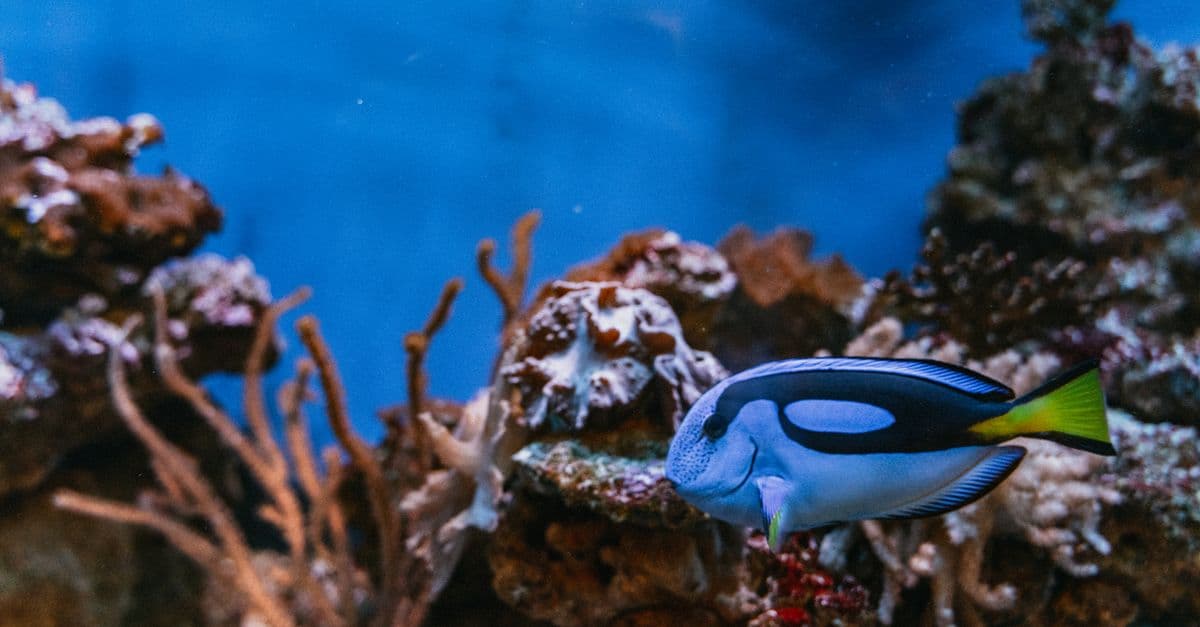
Photo: Siarhei Nester / Pexels
Coral reefs cover less than 1% of the ocean floor but support approximately 25% of all marine species — earning them the title "rainforests of the sea." They provide food security for 500 million people, protect coastlines from storm surge, generate $375 billion annually in goods and services, and represent some of the Earth's most biodiverse ecosystems.
Yet they are vanishing. The Global Coral Reef Monitoring Network estimates that 50% of the world's coral reefs have been lost since the 1950s, with climate change-driven bleaching events accelerating the pace of loss dramatically since 2015. The 2023–2024 bleaching event was the worst ever recorded.
Key takeaways
- Australia's Great Barrier Reef (348,000 km²) is the world's largest coral reef system — the largest living structure on Earth, visible from space.
- Indonesia has the greatest coral biodiversity — the Coral Triangle region contains 76% of all known coral species.
- 50% of the world's coral reefs have died since 1950, primarily from bleaching caused by ocean warming.
- The 2023–2024 mass bleaching event — the 4th global bleaching in recorded history — affected 60%+ of the world's reefs at once.
- Reefs can recover from bleaching if ocean temperatures return to normal — but successive events with insufficient recovery time are causing permanent die-offs.
Countries with the most coral reef coverage
(Reef area km², GCRMN / Coral Triangle Initiative data)
| Rank | Country | Reef area (km²) | Notable reefs |
|---|---|---|---|
| 1 | Australia | 348,000 | Great Barrier Reef, Coral Sea |
| 2 | Indonesia | 51,020 | Coral Triangle heart; Raja Ampat |
| 3 | Philippines | 25,060 | Tubbataha; Apo Reef |
| 4 | France (overseas) | 14,280 | New Caledonia, French Polynesia, Reunion |
| 5 | Papua New Guinea | 13,840 | Bismarck Archipelago |
| 6 | Fiji | 10,020 | Great Sea Reef |
| 7 | Maldives | 8,920 | Atolls; 1,200 islands |
| 8 | Saudi Arabia | 6,660 | Red Sea reefs |
| 9 | Marshall Islands | 6,110 | Bikini Atoll (nuclear test site) |
| 10 | India | 6,090 | Lakshadweep, Gulf of Mannar, Andaman |
| 11 | Solomon Islands | 5,750 | — |
| 12 | United States | 4,820 | Hawaii, Florida Keys, US territories |
| 13 | Tanzania | 3,580 | Zanzibar; Mafia Island |
| 14 | Brazil | 3,000 | Fernando de Noronha; Abrolhos |
| 15 | Cuba | 2,800 | — |
| 16 | Japan | 2,590 | Okinawa; Yaeyama |
| 20 | Egypt | 1,800 | Red Sea; Sharm el-Sheikh |
| 25 | Mexico | 1,450 | Mesoamerican Reef; Yucatán |
| 30 | Kenya | 1,000 | — |
Source: Global Coral Reef Monitoring Network (GCRMN, 2024), Coral Triangle Initiative monitoring, UNEP World Conservation Monitoring Centre — reef area and biodiversity data from satellite monitoring and underwater surveys.
Where This Data Comes From
Coral reef area figures come from the Global Coral Reef Monitoring Network (GCRMN), a collaboration of 300+ scientists that monitors reef status globally through satellite imagery and in-water surveys. The Coral Triangle Initiative (CTI), a coalition of six Southeast Asian nations, maintains the most comprehensive baseline of reef biodiversity in the region — 76% of all known coral species. Reef area is measured via satellite-based coral habitat mapping and underwater surveys using diving transects, which are labour-intensive and therefore limited in coverage. Satellite imagery can detect reef presence and approximate area but cannot differentiate between healthy and bleached coral at scale — underwater surveys remain the gold standard for health assessment but are costly and sparse. Bleaching statistics come from the Reef Environmental Education Foundation (REEF) and individual research institutions that document bleaching extent and severity in near-real-time through diver reports and satellite-derived ocean temperature data. One key limitation: many small island nations and developing coastal countries have minimal reef monitoring; remote reefs are under-surveyed, so global figures likely underestimate total reef area and may miss regions experiencing significant unmonitored decline.
What Coral Reef Distribution Reveals About Marine Biodiversity Geography and Vulnerability
The concentration of coral reefs in tropical and subtropical waters — particularly the Coral Triangle where 76% of coral species cluster in one region — reflects fundamental marine biology: corals thrive in warm, clear, nutrient-rich waters, and this geographic clustering creates both extraordinary biodiversity and extraordinary vulnerability. Australia's Great Barrier Reef being the largest structure masks a disturbing reality: size provides no protection against warming. Indonesia's coral-richness is also its vulnerability — the region contains species-rich endemism (many found nowhere else), so losses in the Coral Triangle are permanent global extinctions of biodiversity. The bleaching data embedded in the rankings reveals a shift from "coral reefs are resilient" to "coral reefs are collapsing faster than we model": the 2023–2024 event — affecting 60% of global reefs simultaneously — occurred despite international commitments to limit warming to 1.5°C. The grim insight: coral rankings now function as a countdown timer. At current warming trajectories, many of the reefs listed above will experience annual bleaching within 10 years, leaving no recovery time between events. Unlike forests that might regenerate, coral ecosystems destroyed by sustained heat do not come back on human timescales.
Australia: the Great Barrier Reef
The Great Barrier Reef is one of Earth's most extraordinary structures:
Scale: 348,000 km² — roughly the size of Germany. Composed of 2,900 individual reefs and 900 islands. Home to 1,500 species of fish, 4,000 species of mollusc, 134 species of sharks and rays, and 30 species of whales and dolphins.
UNESCO status: Listed as a World Heritage Site in 1981. UNESCO repeatedly threatened to list it as "in danger" due to bleaching damage — a designation Australia lobbied intensively against.
Bleaching history: Mass bleaching events occurred in 1998, 2002, 2016, 2017, 2020, 2022, and 2024 — each event damaging more reef than the last. The 2016 and 2017 back-to-back events killed approximately 50% of the northern Great Barrier Reef's shallow water coral.
The 2024 bleaching: The fourth global bleaching event (beginning late 2023) was the most extensive on record. 54% of the Great Barrier Reef experienced bleaching; large areas of previously healthy southern sections were affected for the first time.
Political context: Australia's reef management is complicated by its position as the world's largest coal exporter. Climate activists argue Australia's refusal to rapidly phase out coal is the single largest threat to the Great Barrier Reef — a reef in a country that profits enormously from the fuel that is killing it.
The Coral Triangle: the heart of marine biodiversity
The Coral Triangle — encompassing waters of Indonesia, Philippines, Malaysia, Papua New Guinea, Solomon Islands, and Timor-Leste — is the world's centre of marine biodiversity:
- 76% of all known coral species
- 37% of all coral reef fish species
- 6 of the world's 7 marine turtle species nest here
- 120 million people dependent on the region's fisheries
Raja Ampat (Indonesia): An archipelago in West Papua province containing perhaps the highest marine biodiversity on Earth — over 550 coral species (75% of the world's known species) and 1,700+ fish species in one relatively small area. It has become the world's premier scuba diving destination.
Threats: The Coral Triangle is also heavily threatened — by blast fishing (dynamite used to stun and collect fish, destroying coral structures), cyanide fishing (cyanide injected into reefs to stun fish for the live fish trade), and ocean warming bleaching events.
Coral bleaching: the mechanism
Coral bleaching occurs when water temperatures rise even 1–2°C above average for extended periods:
The symbiosis breakdown: Corals are animals that live in symbiosis with photosynthetic algae called zooxanthellae. The algae provide 90% of the coral's energy through photosynthesis and give coral its colour. When water is too warm, zooxanthellae produce harmful reactive oxygen species; the coral expels them as a stress response.
What "bleached" means: When zooxanthellae are expelled, coral turns white (the calcium carbonate skeleton is visible). The coral is alive but starving — surviving on stored energy. If temperatures return to normal within a few weeks, zooxanthellae can recolonise and the coral recovers.
When it becomes death: If temperatures remain elevated, the coral starves. The longer and hotter the bleaching, the higher the mortality. After death, algae rapidly colonises the carbonate structure, which then erodes — leaving rubble rather than reef structure.
The acceleration: Global average ocean temperatures have risen approximately 0.6°C since 1900. The frequency of bleaching events has increased dramatically — from once every 25–30 years in the 1980s to once every 6 years by 2016. At 1.5°C of global warming, most reefs will experience annual bleaching — leaving no recovery time.
Frequently asked questions
Can coral reefs recover from bleaching?
Yes — if conditions return to normal quickly enough. Corals can fully recover from mild bleaching events. Some reefs bleached in 1998 have substantially recovered. The problem is frequency: successive bleaching events every 2–3 years prevent full recovery. Additionally, some coral species are dying out while more heat-tolerant species partially replace them — maintaining reef structure but with far lower biodiversity.
What is coral reef gardening?
Coral restoration involves growing coral fragments in underwater nurseries and transplanting them onto degraded reefs. The Coral Restoration Foundation in Florida maintains the world's largest coral nursery. Challenges: cost ($100,000/acre), scale (the world's reefs cover 350,000 km²), and heat tolerance (restored corals may bleach in the same conditions that killed the originals). Scientists are selectively breeding and propagating heat-resistant coral strains that survive warming waters better than conventional corals.
How do reefs protect coastlines?
Coral reefs are extremely effective at dissipating wave energy — reducing wave height by 97% on average. This protection is worth an estimated $94 billion per year globally in avoided damages to coastal infrastructure and communities. The 2004 Indian Ocean tsunami demonstrated dramatically how mangroves and reefs reduced casualties in coastline areas where they survived, compared to areas where they had been removed.
The bottom line
Coral reefs are the ocean's most biodiverse and most threatened ecosystems simultaneously. The trajectory is stark: 50% lost in 70 years, with acceleration not deceleration. The 2023–2024 global bleaching event — affecting 60% of reefs simultaneously — was an event scientists had modelled but hoped wouldn't happen for another decade. It is happening now. The Great Barrier Reef, Coral Triangle, and Caribbean reefs face possible functional collapse within 30 years at current warming trajectories. Unlike forests (which can regrow in decades) or populations (which can rebound), coral reefs destroyed by warming are not coming back on human timescales. They are ecological treasures being lost in real time — and the primary driver is the same carbon emissions that every government acknowledges must be reduced but few are reducing fast enough.
Related Reading
Follow new articles
Add SciHub101 to your feed reader to see new science and technology stories.
About the Author
SciHub101 is an independent science and technology publication founded and edited by Buğra Sözeri, a software engineer and app developer based in Türkiye. AI tools assist with drafting and research. Source documentation in the existing archive is uneven, and articles are being reviewed and corrected. The Editorial Team byline identifies editorial responsibility; it does not certify specialist or independent human review. Where we compare products, anything built by our own team is labelled as such — see the editorial guidelines and About page for how corrections and disclosures work.
Related Articles
Countries with the Most Mountainous Terrain (2025 Ranked)
Bhutan is the world's most mountainous country — 98% of its territory is above 600m. Nepal has the world's highest peaks including Everest. The Himalayas, Andes, and Alps define some of Earth's most dramatic geography. Here's the full ranking of the world's most mountainous nations and what extreme altitude means for human life.
How AI Optimizes Renewable Energy Grids: What It Really Does
Solar and wind output swings with the weather, but a grid must balance supply and demand every second. Here is what machine learning actually does for grid operators, which claims are documented, and where the limits are.
Coral Reefs Explained — Rainforests of the Sea
How coral animals build reefs, their algae symbiosis, why bleaching happens, and what conservation can still save. Learn the science, key examples, and...
Countries with the Most Marine Protected Areas (2025 Ranked)
The United Kingdom protects 8.1 million km² of ocean — the most of any country. Australia's Great Barrier Reef Marine Park is the world's largest single MPA. The global target is 30% of oceans protected by 2030 (30x30). Currently only 8% is protected. Here's the full marine protection ranking.
Ocean Acidification Explained: What Lower pH Changes
Ocean acidification changes seawater chemistry as carbon dioxide dissolves. Learn what pH means, how shells are affected, and why local conditions matter.
The Amazon Rainforest: Earth's Lungs Explained by Science
The Amazon is not Earth's oxygen factory, but it stores vast carbon and recycles rain across a continent. Here is what the evidence says about deforestation, drought, and tipping points.