Countries with the Most Marine Protected Areas (2025 Ranked)
Photo: Vinícius Trindade / Pexels
Marine Protected Areas (MPAs) are legally defined zones where human activities — fishing, mining, drilling, or development — are restricted to protect marine ecosystems. They range from "no-take" zones (completely off-limits to fishing) to "multiple-use" areas that allow some activities.
The IUCN World Database on Protected Areas (WDPA) and Marine Conservation Institute's MPAtlas track global MPA coverage. The global community adopted a target of protecting 30% of the world's oceans by 2030 (the "30x30" target) at the COP15 biodiversity conference in Montreal (2022).
Key takeaways
- The United Kingdom has the world's largest total MPA coverage (~8.1 million km²) — primarily through protection of its vast overseas territories' waters.
- Australia's Great Barrier Reef Marine Park (344,000 km²) is the world's largest and most famous single MPA.
- Only ~8% of the world's oceans are currently protected — far short of the 30% target for 2030.
- Paper parks: Many MPAs are "protected" on paper but inadequately enforced — fishing and other damaging activities continue.
- The High Seas Treaty (2023) — the first international agreement to protect the open ocean — opens new possibilities for protecting the 60%+ of oceans outside national jurisdiction.
Where this data comes from
Marine Protected Area boundaries and coverage statistics come from two primary sources. The IUCN World Database on Protected Areas (WDPA) is maintained by the UN Environment Programme (UNEP) and tracks all marine areas with conservation designation. The Marine Conservation Institute's MPAtlas independently compiles MPA data with particular attention to enforcement and management effectiveness. Both databases compile data from national governments (which report their MPA designations), cross-referenced against satellite monitoring systems. Limitations: MPA areas can be disputed (as in the UK/Mauritius case over BIOT); some countries inflate MPA designation without enforcement capacity; definitions of "protected" vary widely (no-take zones vs. multiple-use areas with substantial fishing). The WDPA and MPAtlas data years typically lag 1–2 years behind current reality, as government reporting and verification takes time.
Source: IUCN World Database on Protected Areas (WDPA), Marine Conservation Institute's MPAtlas, 2023–2024.
Countries with the most marine protected area
(MPA coverage by country EEZ + overseas territories, WDPA 2023)
| Rank | Country | MPA area (km²) | % of EEZ protected | Notable MPAs |
|---|---|---|---|---|
| 1 | United Kingdom | 8,100,000 | ~57% | BIOT/Chagos, South Georgia, Pitcairn |
| 2 | United States | 2,500,000 | ~40% | Pacific Remote Islands, Papahānaumokuākea |
| 3 | France | 1,900,000 | ~23% | French Polynesia, Scattered Islands |
| 4 | Australia | 1,200,000 | ~38% | Great Barrier Reef, Coral Sea |
| 5 | Russia | 900,000 | ~7% | Arctic MPAs |
| 6 | New Zealand | 750,000 | ~30% | Kermadec, Antipodes |
| 7 | Chile | 600,000 | ~43% | Rapa Nui, Nazca-Desventuradas |
| 8 | Palau | 500,000 | ~80% | Palau National Marine Sanctuary |
| 9 | Cook Islands | 380,000 | ~50% | Marae Moana |
| 10 | Norway | 350,000 | ~17% | Svalbard |
| 11 | Canada | 340,000 | ~14% | — |
| 12 | Ecuador | 310,000 | ~45% | Galápagos, new Cocos Ridge |
| 13 | Mexico | 290,000 | ~22% | Revillagigedo |
| 14 | South Africa | 180,000 | ~20% | — |
| 15 | Portugal | 270,000 | ~23% | Azores, Madeira |
Source: IUCN World Database on Protected Areas (WDPA), 2023.
The UK: the overseas territory advantage
The UK's extraordinary MPA coverage reflects not its domestic waters but its vast network of Overseas Territories:
British Indian Ocean Territory (BIOT): The Chagos Archipelago — disputed between the UK and Mauritius — contains one of the world's largest and most pristine marine environments. The UK declared it a marine reserve in 2010. However, a 2024 agreement to transfer sovereignty to Mauritius placed the MPA's future in question.
South Georgia and the South Sandwich Islands: These remote sub-Antarctic islands are surrounded by some of the world's most productive and undisturbed waters — protecting feeding areas for albatrosses, seals, and whales.
Pitcairn Islands: The world's most remote inhabited islands — home to ~40 people, descendants of the Bounty mutineers — have a marine park covering 835,000 km².
The paradox: The UK's extraordinary marine protection statistics mask a significant gap between territorial claims and domestic sea. UK domestic waters are substantially under-protected — most fishing restrictions have been contentious and the post-Brexit fisheries management has been criticised by conservationists.
Australia: the Great Barrier Reef challenge
Australia's most famous MPA — the Great Barrier Reef Marine Park — is the world's most recognised marine conservation site:
The scale: The GBR Marine Park covers approximately 344,000 km² — roughly the size of Japan. It encompasses 2,900 individual reefs, 900 islands, and the world's largest coral ecosystem.
The threat: Despite its protected status, the GBR is under severe stress. Mass bleaching events in 2016, 2017, 2020, 2022, and 2024 have killed or damaged over 50% of the reef's coral cover. The primary cause is ocean warming from climate change — water temperatures 1–2°C above historical averages trigger bleaching.
The management paradox: The GBR Marine Park has robust zoning — ~33% is no-take zone, the rest allows recreational and commercial fishing. But marine protection alone cannot solve a climate-driven threat. The Australian government's 2022 decision to continue LNG approvals despite reef threats drew significant criticism.
The Coral Sea: Australia also protected the Coral Sea Commonwealth Marine Reserve (989,000 km²) — one of the world's largest fully protected ocean reserves. The reserve is zoned for minimal extractive use.
Palau: small nation, outsized ambition
Palau (population ~18,000) has declared 80% of its exclusive economic zone a marine sanctuary — an extraordinary commitment for a developing island nation:
The Palau National Marine Sanctuary: Established in 2020, the Sanctuary covers approximately 500,000 km² (an area roughly twice the size of the UK). Commercial fishing is prohibited; some subsistence and artisanal fishing is permitted in a smaller coastal zone.
The Palau Pledge: Palau requires visitors to sign an "Eco Pledge" stamped in their passports — committing to behave responsibly toward the environment. The pledge is a symbol of Palau's identity as an environmental leader.
The enforcement challenge: Policing 500,000 km² of ocean with Palau's limited resources requires international cooperation. The US provides some patrol support through its Compact of Free Association relationship. Satellite-based monitoring (Global Fishing Watch) has become essential for tracking illegal fishing.
The 30x30 target: where are we?
The COP15 Kunming-Montreal Biodiversity Framework (December 2022) set a global target of protecting 30% of land and ocean by 2030:
Current status: As of 2023, approximately 8% of the world's ocean and 17% of land is under some form of protection. Reaching 30% by 2030 requires tripling ocean protection in seven years.
Quality, not just quantity: Many existing "protected areas" are "paper parks" — designated on paper but with no enforcement, no management plan, and continuing extractive activity. A 2021 study found that 18% of nominally protected ocean was subject to levels of industrial fishing equivalent to unprotected waters.
The High Seas Treaty: Adopted at the UN in 2023 (UN High Seas Treaty / BBNJ Agreement), this historic agreement creates a framework for establishing MPAs in the high seas — the 60%+ of ocean outside any national jurisdiction. It took nearly 20 years of negotiations. Ratification and implementation will take additional years.
The effective protection standard: Conservation scientists argue that the 30x30 target should require "effectively and equitably managed" protection — not just paper designation. This higher bar narrows the progress even further.
The enforcement paradox: why MPA statistics are misleading
The countries with the largest MPA areas often have the least enforcement capacity relative to area. The UK's 8.1 million km² of protection is concentrated in remote overseas territories accessible only by warship or surveillance satellite; illegal fishing is pervasive because monitoring is sparse. Australia's Great Barrier Reef Marine Park has government enforcement capacity and scientific monitoring, but covers only 344,000 km² — far less than countries ahead of it on the rankings. Palau, Cook Islands, and small island nations have the highest commitment ratios (80% and 50% of EEZ protected) but lack resources for surveillance and must rely on satellite monitoring (Global Fishing Watch) and external support. The 2021 study showing that 18% of nominally protected ocean had industrial fishing equivalent to unprotected waters illustrates the gap between designation and reality. A truly effective MPA requires: legal designation, enforcement presence (patrols or satellite surveillance), prosecution of violations, and management planning that integrates local communities. Most MPAs globally meet perhaps one or two of these criteria. This means that actual effective marine protection is probably in the 2–3% range globally — far below both current claims (8%) and the 30% target. The path to meaningful ocean protection requires not just establishing new MPAs but dramatically increasing enforcement investment in existing ones.
Frequently asked questions
Do marine protected areas actually work?
When properly enforced, yes significantly. No-take MPAs consistently show recovery in fish biomass, species diversity, and ecosystem function within their boundaries. A 2020 meta-analysis of 1,800 MPAs found that fully protected areas had 6× more fish biomass than unprotected areas. The key qualifier is "when properly enforced" — poorly enforced MPAs show minimal difference from unprotected waters.
What is the difference between an MPA and a marine reserve?
The terms are used inconsistently. An MPA (Marine Protected Area) is the general category — any designated ocean zone with some restrictions. A marine reserve often implies stricter protection, typically no-take. A marine sanctuary is a term used in the US and some other countries for MPAs with significant restrictions and active management. "Fully protected MPA" or "no-take reserve" are the most precise terms for the strongest protection level.
Can fishing occur in MPAs?
Depends entirely on the MPA type. The UK's Marine Conservation Zones still permit some fishing. The US National Marine Sanctuaries generally allow fishing. Only "no-take" zones prohibit all fishing — these represent a small fraction of total MPA area globally. The tension between fisheries management and biodiversity conservation is the central political challenge in MPA policy.
The bottom line
Marine protection coverage has grown substantially over the past two decades but remains far short of the 30% target — and much of what exists is poorly enforced. The countries leading in MPA area — UK, US, France — benefit enormously from overseas territory waters; their domestic commitment to marine conservation is less impressive. Palau and Chile represent genuine political commitment in proportion to their size. The science is clear: functioning no-take MPAs restore fish populations and ecosystem health within 10–15 years. The barrier is political will and enforcement capacity — both of which require sustained investment in the face of fishing industry opposition. The 30x30 target is achievable; whether it will produce 30% protected or 30% paper-protected is the defining implementation question.
Related Reading
- Countries with the Most Coral Reefs
- Countries with the Most Biodiversity
- Countries with the Most Renewable Energy Capacity
- Countries with the Most Fish Consumption
- Countries with the Most Environmental Protection
Follow new articles
Add SciHub101 to your feed reader to see new science and technology stories.
About the Author
SciHub101 is an independent science and technology publication founded and edited by Buğra Sözeri, a software engineer and app developer based in Türkiye. AI tools assist with drafting and research. Source documentation in the existing archive is uneven, and articles are being reviewed and corrected. The Editorial Team byline identifies editorial responsibility; it does not certify specialist or independent human review. Where we compare products, anything built by our own team is labelled as such — see the editorial guidelines and About page for how corrections and disclosures work.
Related Articles
Countries with the Most Wind Power Capacity (2025 Ranked)
China has about 641 GW of installed wind capacity, nearly half of the world's roughly 1,291 GW. The United States, Germany, India, and Brazil follow. Denmark ranks 17th by capacity but gets about 59% of its electricity from wind. Here is the 2025 ranking, what it measures, and what it leaves out.
Countries with the Most National Parks and Protected Land (2025)
Nobody can rank countries by national park count fairly, because 'national park' means different things in different legal systems. Here is what the protected-area data actually shows, from Zambia's 41% to the 63 US parks, and what protection achieves.
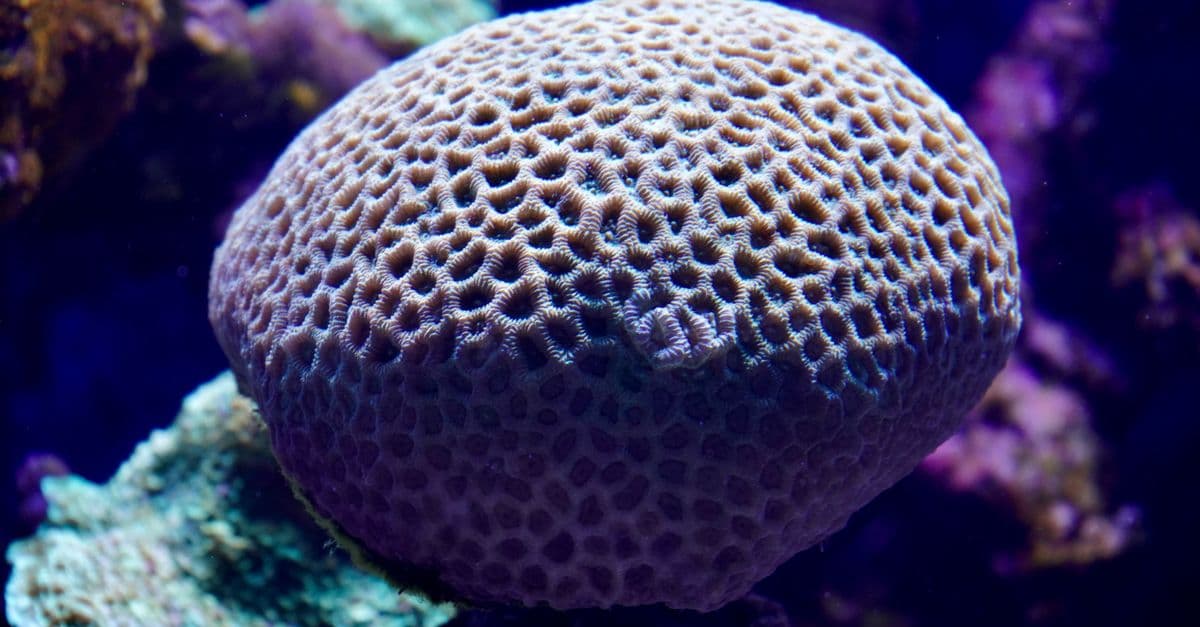
Coral Reefs Explained — Rainforests of the Sea
How coral animals build reefs, their algae symbiosis, why bleaching happens, and what conservation can still save. Learn the science, key examples, and...
AI & Biodiversity: Satellite Monitoring Protects Endangered Species
How neural networks detect endangered animals, track population decline, predict extinction.
Countries with the Most Coral Reefs (2025 Ranked)
Australia's Great Barrier Reef is the world's largest coral structure at 348,000 km². Indonesia has the most coral biodiversity. But 50% of the world's coral reefs have died since 1950 — bleaching events driven by ocean warming are accelerating. Here's the full coral reef ranking and the scale of the crisis.
Complete Sustainability Guide 2026 — Climate, Energy, and Conservation
The complete guide to sustainability in 2026: renewable energy, climate science, circular economy, conservation strategies, and actionable steps to reduce your impact.