Countries with the Most National Parks and Protected Land (2025)
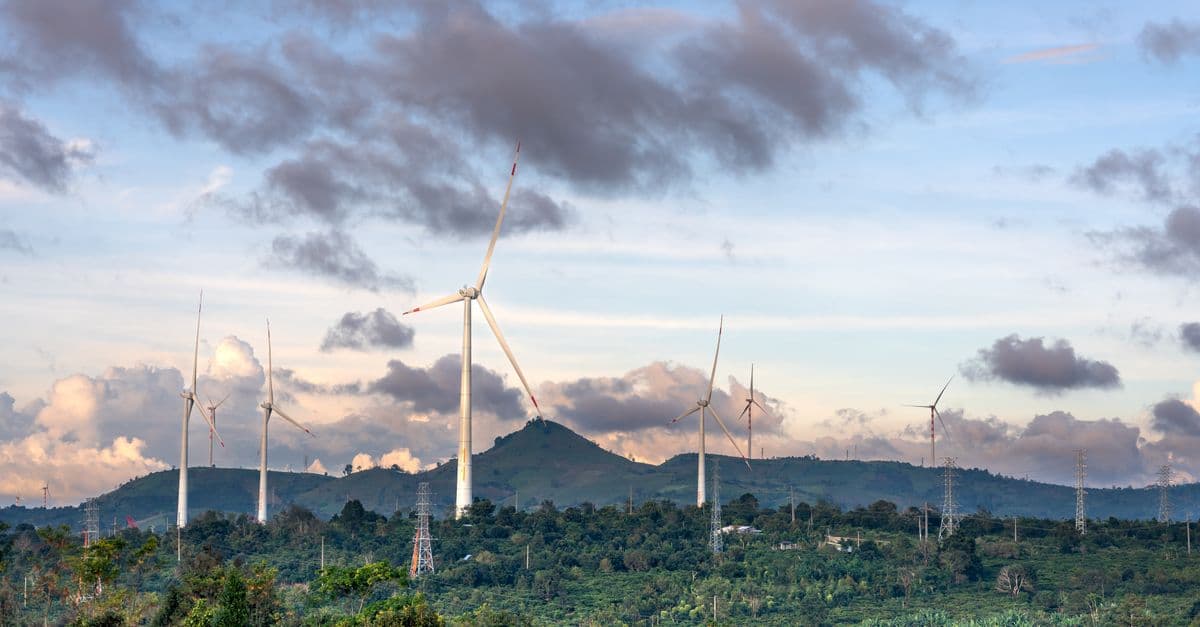
Photo: Quang Nguyen Vinh / Pexels
Which country has the most national parks? The honest answer is that the question has no clean answer, because a "national park" in the United States, Canada, Russia, and China are four different legal creatures. What can be measured is how much of each country's land sits inside some form of formal protection. In 2024 that share ran from under 5% in Algeria to 56.8% in Venezuela, while the global figure stood at 17.6%. This article ranks countries by what the data supports and explains what protection does and does not deliver.
Key takeaways
- By share of land under any protection (World Bank, 2024), Venezuela (56.8%), Zambia (41.3%), and Tanzania (40.0%) lead the countries in our comparison set.
- The United States has 63 units officially named National Parks, but the National Park Service manages 433 units in total.
- Canada lists 37 national parks and 11 national park reserves. Russia protects its most pristine land in strict reserves called zapovedniks, a separate legal category.
- Globally, 17.6% of land and 8.4% of the ocean were protected in 2024, against a goal of 30% each by 2030.
- Designation is not enforcement. Less than 5% of protected land worldwide has been formally assessed for management effectiveness.
Where this data comes from
Almost every protected-area statistic traces back to the World Database on Protected Areas (WDPA), compiled by UNEP-WCMC (the UN Environment Programme's World Conservation Monitoring Centre) and IUCN from national government submissions. The World Bank republishes the WDPA-derived indicator "terrestrial protected areas, % of total land area," which is the source of the country shares in this article. The global totals come from the Protected Planet Report 2024, published in October 2024 by UNEP-WCMC and IUCN.
Two cautions apply to any ranking built on this data. First, governments submit their own designations, so the database records what a country says is protected, not what an inspector found on the ground. Second, the percentages count every category of protected area together, from strict nature reserves to inhabited landscapes with farms and villages. A country that protects land by labeling working countryside as a "landscape park" can score higher than one that guards a smaller area very strictly.
Think of the database as a land registry rather than a fence inspection report. A registry tells you who holds the deed. It cannot tell you whether anyone is patrolling the boundary.
What "national park" actually means
IUCN (the International Union for Conservation of Nature) sorts protected areas into six management categories by what they are for, not by what governments call them. The national park label corresponds to Category II, but not every area called a national park meets that standard.
| IUCN category | Name | What it is for |
|---|---|---|
| Ia | Strict nature reserve | Near-total protection; science, monitoring, and education only |
| Ib | Wilderness area | Large, lightly managed land with minimal visitation and no modern infrastructure |
| II | National park | Protect functioning ecosystems while allowing managed tourism and recreation |
| III | Natural monument or feature | Protect one specific landform or feature and its immediate habitat |
| IV | Habitat or species management area | Active management of particular species or habitats |
| V | Protected landscape or seascape | Land shaped by long human use, combined with conservation |
| VI | Sustainable use area | Resource use at sustainable levels, with part of the area kept natural |
Source: IUCN protected area management categories, summarized from the IUCN guidelines for applying the categories (Dudley, ed., 2008).
The practical consequence is that a country with many "national parks" under a loose definition can protect less nature than a country with few parks held to a strict one. Counting parks is like counting restaurants without asking whether they are fast-food counters or three-star kitchens. The number is real, but it hides most of what you wanted to know.
Countries ranked by share of land protected
The cleanest cross-country comparison is the share of national land area inside protected areas of any category. The table below uses the World Bank's 2024 values for a broad set of countries, covering every continent and a range of sizes. It is a comparison set, not a complete world ranking.
| Rank | Country | Terrestrial protected area, % of land (2024) |
|---|---|---|
| 1 | Venezuela | 56.8 |
| 2 | Zambia | 41.3 |
| 3 | Tanzania | 40.0 |
| 4 | Namibia | 39.9 |
| 5 | Germany | 39.3 |
| 6 | New Zealand | 33.4 |
| 7 | Brazil | 30.6 |
| 8 | Japan | 29.5 |
| 9 | Botswana | 29.1 |
| 10 | France | 28.6 |
| 11 | Australia | 22.0 |
| 12 | Norway | 17.8 |
| 13 | Colombia | 17.0 |
| 14 | China | 15.6 |
| 15 | Canada | 12.9 |
| 15 | United States | 12.9 |
| 17 | Indonesia | 12.0 |
| 18 | Russia | 11.5 |
| 19 | South Africa | 9.5 |
| 20 | India | 7.7 |
| 21 | Algeria | 4.7 |
Source: World Bank indicator ER.LND.PTLD.ZS (terrestrial protected areas, % of total land area), derived from the World Database on Protected Areas, values for 2024, retrieved via the World Bank API.
Some of these figures differ from numbers you will see in older articles and on national government pages. Botswana, for example, is often quoted at around 45% in older articles, whereas the WDPA-based indicator shows 29.1%, and differences in what counts as protected explain gaps of that kind. Australia's own national database (CAPAD, the Collaborative Australian Protected Areas Database) reported 22.1% of land protected as of June 30, 2022, which is consistent with the 22.0% above. Always check which definition a number uses before comparing it.
The table also shows why wealth and protection do not line up neatly. High scorers include a densely settled European economy (Germany), two lightly populated southern African countries (Namibia and Zambia), and a tropical South American country (Venezuela). Low scorers include India, which is crowded and heavily farmed, and Algeria, where most of the land is Saharan desert.
Why a count of national parks misleads
Counting parks does produce numbers, but they do not travel across borders. The table below shows what the official sources for a handful of countries actually count.
| Country | What is officially counted | Figure | Source and year |
|---|---|---|---|
| United States | Units named National Park | 63 | National Park Service, 2025 |
| United States | All National Park System units (parks, monuments, seashores, battlefields, recreation areas) | 433 | National Park Service, 2025 |
| Canada | National parks and national park reserves | 37 and 11 | Parks Canada, 2025 |
| Russia | Strict nature reserves (zapovedniks) | 103 | IUCN, centenary statement |
| China | National parks (first batch, designated October 2021) | 5 | Government of China, 2021 |
An analogy helps here. Comparing "number of national parks" across these countries is like comparing the number of "universities" across countries where the word legally covers anything from a research institute to a driving school. You get a number, and then you spend the rest of the argument defining terms.
The commonly repeated claim that Australia has the most national parks, at around 685, is not backed by a single authoritative national count. Australia's parks are created and managed by individual states and territories, each with its own naming rules, and the national database tracks protected areas as a whole rather than park labels. For that reason this article does not rank countries by park count and instead uses land share, which is defined consistently.
The United States: the model and the stress test
The US National Park System began with Yellowstone. President Ulysses S. Grant signed the Yellowstone National Park Protection Act on March 1, 1872, barring the land from settlement or sale and dedicating it as a public park. The National Park Service itself was created more than four decades later, on August 25, 1916, when President Woodrow Wilson signed the Organic Act.
Today the Service manages 433 units across more than 85 million acres (roughly 344,000 square kilometers). Only 63 of those units carry the National Park name. The rest include national monuments, seashores, historic sites, battlefields, and recreation areas, each with different rules. National parks are created by Act of Congress, which makes the designation politically hard to reverse. That durability is a large part of why the US system is regarded as a benchmark.
The cost of that success is crowding. The National Park Service recorded about 332 million recreation visits in 2024, a record, and roughly 323 million in 2025, a decline of 2.7%. Great Smoky Mountains National Park is the most visited national park, with more than 12 million visits in 2024 according to press reports of the Service's count. Where visitors concentrate, the pressures are predictable: trail erosion, parking gridlock, and wildlife habituation to people.
Note also what the US figure in the table says. Only 12.9% of US land is protected in the WDPA, below the global average of 17.6%, despite the system's reputation. Much of the protected area is concentrated in Alaska and the western states, while the eastern and central landscape is largely unprotected private land.
Canada and Russia: two very different philosophies
Canada's Parks Canada agency reports 37 national parks and 11 national park reserves, together protecting about 343,377 square kilometers. A national park reserve is an area proposed as a national park where Indigenous land claims have not yet been settled, so the land is protected while negotiations continue. It is a reminder that in settler-colonial countries, protection and Indigenous rights are tangled together, a theme that returns below.
Russia built its conservation system around a different idea. The first zapovednik, Barguzinsky, was created in December 1916, and IUCN counts 103 of them today. These are strict nature reserves with tightly controlled human access, and IUCN states they correspond to its Categories Ia and Ib. The model is closer to a sealed laboratory than a public park: scientists work inside, ordinary visitors mostly do not. Russia also has national parks, which sit in a separate category. Counting only one of the two systems understates how much Russian land is protected, and counting them together overstates how many parks Russia has.
Australia: large reserve estate, severe threats
Australia protects 22.0% of its land by the World Bank's 2024 figure, and its government's own database showed 22.1% in mid-2022. Its protected estate includes Indigenous Protected Areas, where Aboriginal and Torres Strait Islander owners manage land for conservation by agreement with government.
Size has not meant safety. The government's Threatened Species Action Plan 2022 to 2032 states that Australia has lost more mammal species to extinction than any other continent, and conservation scientists widely identify feral cats as a major driver. Fire is the other pressure. A study led by Matthias Boer of Western Sydney University found that about 21% of Australia's temperate forests burned in the 2019-20 "Black Summer" season, compared with roughly 2% in earlier major fire years. The researchers called it a globally unprecedented scale of burning for any forest biome in the previous 20 years. Boundaries on a map do not stop either invasive predators or a continental fire.
Africa: high protected shares in wildlife country
After Venezuela, the three highest shares in the comparison set belong to African countries: Zambia (41.3%), Tanzania (40.0%), and Namibia (39.9%) all protect about two-fifths of their land. Botswana, at 29.1%, sits lower but still above the global figure. These totals reflect many kinds of designation, not national parks alone.
Zambia's largest park, Kafue, covers about 22,400 square kilometers, though sources give slightly different boundary figures depending on how the area is measured. Tanzania's protected network includes the Serengeti and Ruaha. These countries hold large wildlife populations that attract tourists from far away, which gives governments an economic reason to keep land set aside.
The high shares carry a caution, though. A big percentage can reflect a deliberate conservation choice, or it can reflect land that had few competing uses. The percentage alone cannot tell you which, and it cannot tell you whether the animals inside are safe.
China: a new national park system
China announced its first five national parks on October 12, 2021, through its National Forestry and Grassland Administration. The five are Three-River-Source (Sanjiangyuan), Giant Panda, Northeast China Tiger and Leopard, Hainan Tropical Rainforest, and Wuyishan. Together they cover more than 230,000 square kilometers and, according to the Chinese government, conserve nearly 30% of the country's key terrestrial wildlife species.
| Park | Area | What it protects |
|---|---|---|
| Three-River-Source (Qinghai, Tibet) | 190,700 km² | Headwaters of the Yangtze, Yellow, and Lancang (Mekong) rivers; wild yaks, snow leopards, Tibetan antelope |
| Northeast China Tiger and Leopard (Jilin, Heilongjiang) | 14,100 km² | Siberian tiger, Amur leopard |
| Giant Panda (Sichuan, Shaanxi, Gansu) | Not given in the source | Habitat linking fragmented panda ranges; more than 70% of China's wild pandas |
| Wuyishan (Fujian, Jiangxi) | Not given in the source | Mountain forest ecosystem |
| Hainan Tropical Rainforest (Hainan) | Not given in the source | Tropical rainforest on Hainan island |
Source: Government of China (english.www.gov.cn), October 14, 2021.
The Three-River-Source park alone is about twice the area of Portugal, and its remote high-plateau setting makes enforcement a real question. How well the new parks are managed, rather than how many exist, will decide whether the 2021 reform changes outcomes for the species they hold.
The largest parks on Earth
The largest national park in the world by area is Northeast Greenland National Park, at about 972,000 square kilometers. It was established in 1974 and expanded in 1988 and has no permanent settlements inside it. About 80% of it lies under the Greenland ice sheet, which is why it is both enormous and nearly empty, with a few hundred people living in the nearby settlement of Ittoqqortoormiit.
For comparison, Yellowstone, the original, covers 8,983 square kilometers. The largest park in the world is therefore more than a hundred times larger than the first one, yet it holds far less visible wildlife per square kilometer. Size alone, again, is a poor stand-in for conservation value.
How the national park idea spread
The designation is younger than most people assume, and its early history explains why definitions still differ. On June 30, 1864, President Abraham Lincoln signed the Yosemite Grant, which handed the Yosemite Valley and the Mariposa Grove of giant sequoias to the State of California to hold for public use. It was a state park, and Yosemite did not become a national park until 1890. Yellowstone followed in 1872 as the first area set aside under federal control and labeled a national park.
Australia's Royal National Park, south of Sydney, was dedicated in 1879. Historians still argue over which of these deserves the title of "first national park," and the answer depends on what you count: federal control, the new idea of public land held for everyone, or the formal label. The National Parks Association of NSW lays out the competing claims.
The point for a ranking is that each country adopted the idea at a different time, for different reasons, and wrote its own rules. The United States reserved scenery and then wildlife. Russia reserved land for science. Some African parks began as game reserves and were upgraded later. Tanzania's Serengeti, for instance, became a national park in 1951 after a period as a game reserve, covers roughly 14,750 square kilometers, and was added to the UNESCO World Heritage List in 1981. Our ranking of countries with the most UNESCO World Heritage Sites shows how many of the world's best-known parks also carry that second layer of recognition.
Measuring quality, not just quantity
If counting parks is unreliable and counting hectares ignores enforcement, what would a good measure look like? Conservationists have tried to build one. The IUCN Green List of Protected and Conserved Areas certifies individual sites against a published standard that covers governance, planning, and conservation outcomes, rather than just legal status. As of June 2024, IUCN recognized 76 Green Listed sites in 18 countries, and later announcements have added more, so check IUCN for the current total. The program is voluntary and small next to the vast number of areas recorded in the WDPA, which is exactly why it is informative: it shows that verified quality is still rare. IUCN describes the program on its news pages.
| Measure | What it tells you | What it hides |
|---|---|---|
| Number of parks | How a country names its sites | Size, rules, and strictness |
| Share of land protected | Legal ambition, on one definition | Enforcement and human pressure |
| Management effectiveness score | Whether staff and funding match the mandate | Biodiversity outcomes if the wrong places are protected |
| Green List certification | Verified governance and results at one site | Anything about the other sites in the country |
| Species or habitat trends inside the area | Whether the nature is actually surviving | The counterfactual, meaning what would have happened without the park |
The last row is the hardest to get and the most valuable. Researchers compare protected sites with unprotected ones that are similar in soil, slope, and distance to roads, because parks tend to be placed on land that was never going to be farmed. Without that matching, a park can look successful simply because it sits somewhere remote. This is the same selection problem that makes health claims about voluntary diets hard to read, a point we make in how correlation differs from causation.
Why protection and biodiversity loss coexist
A reader may reasonably ask why species keep declining in a world where nearly a fifth of the land is formally protected. The answer is that protected areas address one pressure, habitat conversion inside their boundaries, while several others cross boundaries freely. Climate change shifts the conditions inside a park whatever the law says. Invasive species, as in Australia, ignore fences. Rivers carry pollution in from upstream, and migratory animals leave the park to feed or breed. Our overview of the biodiversity collapse covers all five drivers that the Intergovernmental Science-Policy Platform on Biodiversity and Ecosystem Services (IPBES) identified, and explains why a map of green polygons cannot solve them alone.
Coral reefs show the mismatch clearly. A marine park can ban fishing, but it cannot stop a marine heat wave from bleaching the coral inside it. Our explainer on coral reefs describes the biology behind that vulnerability. The lesson is not that parks are pointless, since the evidence above shows measurable benefits, but that they work best as one layer in a wider strategy that also tackles emissions, farming, and fishing outside their borders.
Whose land is it? Indigenous territories and protected areas
One of the most important findings in conservation geography concerns people rather than parks. A 2018 study led by Stephen Garnett in Nature Sustainability estimated that Indigenous peoples hold ownership, use, or management rights over at least 38 million square kilometers in 87 countries, more than a quarter of the world's land surface. About two-thirds of that land is "essentially natural," and it overlaps roughly 40% of all terrestrial protected areas, an area of about 7.8 million square kilometers.
That overlap explains why the Kunming-Montreal Global Biodiversity Framework's Target 3 includes language about "recognizing indigenous and traditional territories where applicable" and requires "recognizing and respecting the rights of indigenous peoples and local communities." The history of national parks includes many cases in which the creation of a park meant the removal of the people who already lived there. Modern practice increasingly runs the other way, with co-management agreements and Indigenous-owned protected areas such as those in Australia and Canada.
The 30x30 target and the distance left to travel
Target 3 of the Kunming-Montreal framework calls for at least 30% of terrestrial, inland water, and coastal and marine areas to be conserved by 2030. Against that benchmark, the Protected Planet Report 2024 found 17.6% of land and inland waters and 8.4% of the ocean and coastal areas protected. Closing the gap would require protecting another 12.4 percentage points of land and 21.6 percentage points of the ocean in about six years.
The ocean number matters for the park debate because the country-level comparison above covers land only. A country's marine protection is tracked separately, and it depends heavily on the size of its exclusive economic zone, the belt of sea out to 200 nautical miles that it controls. Our ranking of countries with the largest exclusive economic zones shows why island and Pacific nations often dominate that table.
Progress between 2020 and 2024 was modest. The report found that coverage grew by less than half a percentage point in each realm. At that pace the target is out of reach, and expansion needs to be faster, better targeted, and better managed.
The conservation paradox: where biodiversity is versus where parks are
There is a geographic mismatch between where species live and where the most generous protection exists. Biodiversity is concentrated in the tropics: our ranking of countries with the most biodiversity is dominated by Brazil, Colombia, Indonesia, and the Democratic Republic of the Congo. Many tropical countries have fewer resources to guard land than wealthy temperate ones.
The mismatch is partly a quality-versus-quantity problem. A large park in a country that cannot staff it may protect less than a small, well-funded one. A 2020 review by Sean Maxwell and colleagues in Nature concluded that the expansion of protected areas by national governments since 2010 had only limited success in extending coverage across different elements of biodiversity, and pointed to persistent shortfalls in ecological representation and management effectiveness.
Similar logic applies to forests. A country can have a high protected share and still lose its forest outside park boundaries. Our look at countries with the most forest cover shows the largest forest nations, and the largest losses, are often not the ones with the highest park counts.
Does protection work? What the research shows
The evidence is more positive than skeptics suggest and less positive than headline percentages imply.
On the positive side, a 2016 analysis by Claudia Gray and colleagues in Nature Communications compared biodiversity samples inside and outside protected areas around the world. Species richness was about 10.6% higher and abundance about 14.5% higher inside. The authors found that most of the advantage came from differences in land use, since protected areas are more likely to remain forest or grassland rather than farmland, and that protection did not consistently benefit species with small ranges.
On the cautionary side, a 2018 Science study led by Kendall Jones used a global human footprint map and found that about 32.8% of protected land, roughly six million square kilometers, was under intense human pressure. Among areas designated before the Convention on Biological Diversity, 55% had experienced rising pressure since 1992. The smallest increases were in large, strict protected areas. The authors argued that governments overestimate how much land is effectively protected for nature.
The Protected Planet Report 2024 adds the missing context: fewer than 5% of protected land and 1.3% of protected marine area have been formally assessed for management effectiveness. Most of the world's parks, in other words, have never been scored.
Paper parks: what goes wrong
A "paper park" is a protected area that exists in law and on maps but not on the ground. The usual failures are mundane rather than dramatic:
- No staff, or too few rangers to patrol the boundary
- Legal loopholes that allow logging, mining, or road building inside the park
- Underfunded management that cannot pay for patrols, fencing, or community liaison
- Disputes with local communities who were never consulted when the boundary was drawn
- Boundaries drawn around land nobody wanted, so the park protects convenience rather than biodiversity
There is no single reliable global percentage for paper parks, and older claims that 50% to 75% of parks fall into this category cannot be traced to a single measured study. The defensible statement is narrower: protection quality varies enormously, most areas have never been formally assessed, and the evidence from human-pressure mapping suggests a large share of protected land is under significant stress.
What this means
The next time a list tells you which country "has the most national parks," ask what is being counted. A number of labeled parks tells you about a country's naming conventions and administrative structure. The share of land protected tells you about legal ambition, with the caveat that it mixes strict reserves with inhabited landscapes. Whether the nature inside survives depends on staffing, funding, enforcement, and the consent of the people living next to the boundary.
By that fuller measure, the countries doing best are not necessarily the ones at the top of any table. They are the ones where a boundary on the map is backed by rangers on the ground and local communities with a stake in the outcome. With 17.6% of land protected and 30% promised, the world's challenge over the next few years is as much about managing what exists as about drawing new lines.
Frequently asked questions
Q: Which country has the most national parks? A: There is no reliable answer, because countries define "national park" differently and no single authority counts them on a common standard. The United States has 63 units named National Parks, and Canada has 37 national parks plus 11 reserves. A fairer comparison is the share of land under protection, where Venezuela, Zambia, and Tanzania top the World Bank's 2024 figures in our comparison set.
Q: What is the world's largest national park? A: Northeast Greenland National Park, at about 972,000 square kilometers, is the largest. It was established in 1974, expanded in 1988, and is mostly covered by the Greenland ice sheet. Zambia's Kafue National Park, at about 22,400 square kilometers, is among the largest in Africa, but is a small fraction of the Greenland park's size.
Q: How much of the world is protected? A: The Protected Planet Report 2024 found 17.6% of land and inland waters and 8.4% of coastal and marine areas protected. The Kunming-Montreal Global Biodiversity Framework calls for at least 30% of each by 2030. Closing the gap needs about 12.4 percentage points more land and 21.6 more ocean.
Q: Do national parks actually protect wildlife? A: Generally yes, with limits. A 2016 global analysis found species richness about 10.6% higher and abundance about 14.5% higher inside protected areas than outside, largely because protected land stays in more natural condition. But a 2018 study found roughly one-third of protected land is under intense human pressure, so outcomes depend on management.
Q: What is a paper park? A: A paper park is a protected area that exists in law but lacks the staff, funding, or enforcement to stop damaging activities. No authoritative global count exists. The Protected Planet Report 2024 notes that fewer than 5% of protected land has been assessed for management effectiveness, so for most parks nobody knows how well they perform.
Q: How many national parks does the United States have? A: The United States has 63 units with the National Park designation, out of 433 units in the National Park System, according to the National Park Service. The other units include national monuments, seashores, battlefields, historic sites, and recreation areas. Yellowstone, established March 1, 1872, is regarded as the first national park in the world.
Q: Why do national parks matter for Indigenous peoples? A: Many parks were created on land Indigenous peoples had long used or owned, and some displaced them. A 2018 study estimated Indigenous peoples hold rights over at least 38 million square kilometers, overlapping about 40% of terrestrial protected areas. Target 3 of the 2022 global biodiversity framework now calls for recognizing Indigenous territories and rights.
Sources
- Protected Planet Report 2024, UNEP-WCMC and IUCN press release: iucn.org
- World Bank, terrestrial protected areas (% of total land area), WDPA-derived: api.worldbank.org
- National Park Service, National Park System: nps.gov; Yellowstone's establishment: nps.gov; visitation statistics: nps.gov
- Parks Canada, national parks: parks.canada.ca
- IUCN on Russia's zapovedniks: iucn.org
- Government of China, five national parks, October 2021: english.www.gov.cn
- Convention on Biological Diversity, Global Biodiversity Framework Target 3: cbd.int
- Gray et al. 2016, Nature Communications: ideas.repec.org
- Jones et al. 2018, Science, coverage: sciencedaily.com
- Garnett et al. 2018, Nature Sustainability, coverage: mongabay.com
- Boer et al., Australian forest fires 2019-20: westernsydney.edu.au
- National Parks Association of NSW, on which park was first: npansw.org.au
- IUCN Green List announcement (2024): iucn.org
- Maxwell et al. 2020, Nature, "Area-based conservation in the twenty-first century": pure.iiasa.ac.at
- Australian Government, Threatened Species Action Plan 2022-2032: PDF
Related Reading
Follow new articles
Add SciHub101 to your feed reader to see new science and technology stories.
About the Author
SciHub101 is an independent science and technology publication founded and edited by Buğra Sözeri, a software engineer and app developer based in Türkiye. AI tools assist with drafting and research. Source documentation in the existing archive is uneven, and articles are being reviewed and corrected. The Editorial Team byline identifies editorial responsibility; it does not certify specialist or independent human review. Where we compare products, anything built by our own team is labelled as such — see the editorial guidelines and About page for how corrections and disclosures work.
Related Articles
Countries with the Most Marine Protected Areas (2025 Ranked)
The United Kingdom protects 8.1 million km² of ocean — the most of any country. Australia's Great Barrier Reef Marine Park is the world's largest single MPA. The global target is 30% of oceans protected by 2030 (30x30). Currently only 8% is protected. Here's the full marine protection ranking.
Countries That Run on the Most Renewable Electricity (Ember Data)
A handful of countries already generate essentially all of their electricity from hydro, wind, solar, geothermal and bioenergy. This ranking uses Ember's generation data, with the year for every row, and explains why most leaders are hydro countries and what that means for everyone else.
AI & Biodiversity: Satellite Monitoring Protects Endangered Species
How neural networks detect endangered animals, track population decline, predict extinction.
The Amazon Rainforest: Earth's Lungs Explained by Science
The Amazon is not Earth's oxygen factory, but it stores vast carbon and recycles rain across a continent. Here is what the evidence says about deforestation, drought, and tipping points.
Countries with the Most Organic Farming (2023-24 Data)
Australia reports 53 million hectares of organic farmland, more than half the world total, much of it extensive grazing land. Austria, Uruguay, and Estonia lead on share of farmland. Here is who leads, how the numbers are counted, and what the yield gap means.
Deforestation Explained — Causes, Effects, and Real Solutions
The world clears about 10.9 million hectares of forest a year, slightly more than the area of Iceland. Here is what drives it, what it costs the climate, and which fixes have measurable results.