Countries With the Most UNESCO World Heritage Sites (2026)
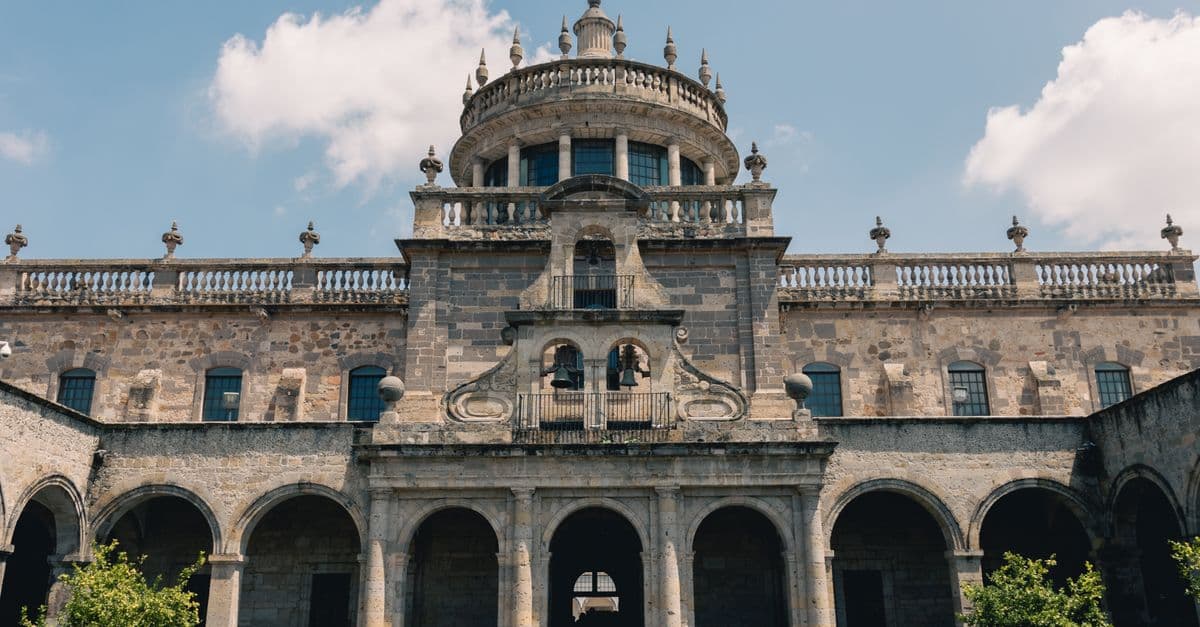
Photo: Roger Ce / Pexels
Italy has more UNESCO World Heritage Sites than any other country: 62, as of the World Heritage Committee's July 2026 session in Busan, South Korea. China is a close second with 61, then France with 56 and Germany with 55. The full List now holds 1,273 properties in 173 countries. This ranking shows the top 23 countries, explains why the same ranking can look different depending on how you count, and looks at what the numbers hide about culture, nature, and who gets nominated.
Key takeaways
- Italy (62), China (61), France (56), and Germany (55) are the top four, according to figures cross-checked against Guinness World Records, Business Today, and GeographyWorlds.
- The List held 1,273 properties in 173 countries after the July 2026 session: 991 cultural, 240 natural, and 42 mixed.
- Europe and North America hold 46.2 percent of all properties. Africa holds 9.0 percent (115 sites).
- China went from 6 sites in 1987 to 61 in 2026, an average of about 1.4 new inscriptions a year.
- Only three properties have ever been removed from the List: Oman's Arabian Oryx Sanctuary (2007), Germany's Dresden Elbe Valley (2009), and Liverpool's Maritime Mercantile City (2021).
The ranking: top 23 countries by World Heritage Sites (July 2026)
The table below gives each country's total number of inscribed properties. A property is counted for every country it touches, so shared sites appear in more than one national total. Every row was checked against at least two independent compilations of the UNESCO list.
| Rank | Country | Total sites | Sources checked |
|---|---|---|---|
| 1 | Italy | 62 | Guinness (29 Sept 2026), Business Today, GeographyWorlds |
| 2 | China | 61 | Guinness, Business Today, GeographyWorlds |
| 3 | France | 56 | Guinness, Business Today, GeographyWorlds |
| 4 | Germany | 55 | Guinness, Business Today, GeographyWorlds |
| 5 | Spain | 50 | Business Today, GeographyWorlds |
| 6 | India | 45 | Business Today, GeographyWorlds |
| 7 | Mexico | 36 | Business Today, GeographyWorlds |
| 8 | United Kingdom | 35 | Business Today, GeographyWorlds |
| 9 | Russia | 33 | Business Today, GeographyWorlds |
| 10 | Iran | 30 | Business Today, GeographyWorlds |
| 11 (tie) | Japan | 27 | Business Today, GeographyWorlds |
| 11 (tie) | United States | 27 | Business Today, GeographyWorlds |
| 13 | Brazil | 26 | Business Today, GeographyWorlds |
| 14 (tie) | Canada | 22 | Business Today, GeographyWorlds |
| 14 (tie) | Turkey | 22 | Business Today, GeographyWorlds |
| 16 (tie) | Australia | 21 | Business Today, GeographyWorlds |
| 16 (tie) | Greece | 21 | Business Today, GeographyWorlds |
| 18 | Poland | 18 | Business Today, GeographyWorlds |
| 19 (tie) | Czech Republic | 17 | Business Today, GeographyWorlds |
| 19 (tie) | Portugal | 17 | Business Today, GeographyWorlds |
| 19 (tie) | South Korea | 17 | GeographyWorlds |
| 22 | Belgium | 16 | GeographyWorlds |
| 23 | Sweden | 15 | GeographyWorlds |
Sources: Guinness World Records, "Most World Heritage Sites (country)," as of September 29, 2026; Business Today, September 14, 2026; GeographyWorlds, updated October 6, 2026. All reproduce the UNESCO World Heritage List as it stood after the July 2026 session.
The top 10 countries hold 463 of these country-level site counts, or about 36 percent of the 1,273 properties on the List. Because transnational properties are counted once per country, that share is indicative rather than exact. Even so, it shows how concentrated the List is: ten countries out of 173 account for more than a third of the entries.
Cultural, natural, and mixed splits for the countries where the data is published
Not every compilation breaks totals into UNESCO's three categories. The splits below come from the per-country World Heritage pages on Wikipedia, which cite the UNESCO list, plus the GeographyWorlds table for India and the United States.
| Country | Total | Cultural | Natural | Mixed |
|---|---|---|---|---|
| Italy | 62 | 56 | 6 | 0 |
| China | 61 | 42 | 15 | 4 |
| France | 56 | 47 | 7 | 2 |
| Germany | 55 | 52 | 3 | 0 |
| India | 45 | 37 | 7 | 1 |
| United States | 27 | 13 | 13 | 1 |
The contrast is easy to see. Italy and Germany are overwhelmingly cultural. China and France have a meaningful natural component. The United States is the only country in this group where natural sites match cultural ones.
How to read a World Heritage ranking
A ranking by site count looks simple, but three features of the system make it less comparable than it seems.
First, a "site" is not a standard unit. UNESCO inscribes properties, and a property can be a single building, a historic city center, a whole archipelago, or a collection of locations bundled into one entry. The Great Spa Towns of Europe, inscribed in 2021, is one property made of eleven towns in seven countries: Austria, Belgium, the Czech Republic, France, Germany, Italy, and the United Kingdom. Each of those seven countries gets one site added to its tally. Italy alone has seven transnational properties, according to its Wikipedia page.
At the other end of the scale, the Phoenix Islands Protected Area in Kiribati covers 408,250 square kilometers and was inscribed in 2010. It counts exactly the same as a single cathedral. IUCN describes it as the largest designated marine protected area in the world. Counting sites rewards countries that split their heritage into many nominations, and it does not reward countries that bundle it.
Second, the count includes overseas territories. France's total of 56 includes properties far from Europe, such as the Marquesas Islands (inscribed 2024) and the Volcanoes and Forests of Mount Pelée and the Pitons of Northern Martinique (2023). The United Kingdom's 35 is already net of Liverpool, the one property it lost from the List in 2021.
Third, the List is a political document as well as a scientific one. A country must first place a site on its Tentative List, then submit a Nomination File, which expert bodies evaluate before the Committee votes. Countries with more technical capacity and more experience with the process nominate more effectively. The ranking therefore partly measures heritage and partly measures administrative skill.
A useful analogy is a list of the world's best restaurants compiled from guidebook entries. A country can be well represented because it has outstanding food, or because it has many guidebook editors. The count cannot tell you which.
The world totals: 1,273 properties in 173 countries
After the 48th session of the World Heritage Committee, held in Busan in July 2026, the List grew by 25 properties to 1,273, spread across 173 States Parties (countries that have ratified the 1972 World Heritage Convention). The committee also placed six properties on the List of World Heritage in Danger, including Tyre in Lebanon and the historic inner city of Paramaribo in Suriname, according to reporting by The Peninsula.
The 1,273 properties divide as follows, according to the World Heritage Site statistics compiled on Wikipedia from the UNESCO list.
| Category | Properties | Share of List |
|---|---|---|
| Cultural | 991 | 77.9% |
| Natural | 240 | 18.9% |
| Mixed (both) | 42 | 3.3% |
| Total | 1,273 | 100% |
The regional breakdown shows how uneven the List is.
| Region | Cultural | Natural | Mixed | Total | Share | Countries with sites | Average per country |
|---|---|---|---|---|---|---|---|
| Europe and North America | 501 | 74 | 13 | 588 | 46.2% | 50 | 11.8 |
| Asia and the Pacific | 228 | 73 | 13 | 314 | 24.7% | 36 | 8.7 |
| Latin America and the Caribbean | 106 | 40 | 8 | 154 | 12.1% | 28 | 5.5 |
| Africa | 65 | 45 | 5 | 115 | 9.0% | 41 | 2.8 |
| Arab States | 91 | 8 | 3 | 102 | 8.0% | 18 | 5.7 |
The final column is our own arithmetic, dividing each region's properties by the number of its countries that have at least one. It makes the imbalance concrete: a European or North American country with any inscribed site has, on average, more than four times as many as an African one.
How a site gets on the List
Understanding the process explains many of the patterns in the ranking.
A country begins by listing candidate sites on its Tentative List. It may not nominate a property that has not been on that list first. From the Tentative List, the country prepares a Nomination File, a detailed dossier on the site's history, boundaries, protection, and management. Two advisory bodies review it: the International Council on Monuments and Sites (ICOMOS) for cultural properties and the International Union for Conservation of Nature (IUCN) for natural ones.
The World Heritage Committee then decides, meeting once a year. It has 21 member states. It can inscribe a site, refuse, or defer the decision and ask for more information. To be inscribed, a property must have "outstanding universal value" and meet at least one of ten selection criteria, six cultural and four natural, which UNESCO merged into a single list in 2005.
The 1972 Convention was adopted by UNESCO's General Conference on November 16, 1972, and entered into force on December 17, 1975. Its premise is that certain places matter to everyone, not only to the nation that happens to contain them.
Italy: 62 sites, the first in 1979
Italy's total of 62 comprises 56 cultural and 6 natural properties. The country's first inscription was the Rock Drawings in Valcamonica, listed in 1979 at the Committee's third session, held in Cairo and Luxor. Its most recent additions illustrate how long the pipeline can run: Via Appia. Regina Viarum (2024), the domus de janas prehistoric tombs of Sardinia (2025), and the system of Italian-style condominio theatres of the 18th and 19th centuries in central Italy (2026). The Dolomites, the natural landmark in the north, were inscribed in 2009, and Montecatini Terme entered the List in 2021 as one of the Great Spa Towns of Europe.
What produces a number like 62? Italy's peninsula hosted Etruscan settlements, Greek colonies, the Roman Empire, Byzantine and Lombard rule, and Renaissance city-states, and each layer left durable stone. A dense urban fabric also means that many historic city centers qualify. The effect compounds through nomination: Italy has been submitting steadily for more than four decades, and its heritage agencies know what the evaluators look for.
The pressure that follows is a management problem, not a scarcity problem. Venice, itself a World Heritage property, began charging day visitors a fee on April 25, 2024. The trial charged €5 for entry to the old town between 8:30 a.m. and 4:00 p.m. on 29 selected busy days, mostly weekends between May and July. Hotel guests, children under 14, and disabled visitors were exempt, and fines for non-payment ran from €50 to €300, according to The Local Italy. Councillor Simone Venturini said the aim was "to find a new balance between tourism and the city of its residents." The scheme shows the tension at the heart of a ranking like this one: a World Heritage listing can bring visitors, and visitors can erode what was listed. For the tourism side of the picture, see our article on countries with the most tourists per capita.
China: from 6 sites to 61
China's climb is the most dramatic in the top four. Its first six properties were inscribed in 1987: Mount Taishan, the Great Wall, the Imperial Palaces of the Ming and Qing Dynasties in Beijing and Shenyang, the Mogao Caves, the Mausoleum of the First Qin Emperor, and the Peking Man Site at Zhoukoudian. By 2026, with the addition of the Jingdezhen Handicraft Porcelain Industry Sites, the total reached 61, split into 42 cultural, 15 natural, and 4 mixed properties. A Xixia Imperial Tombs inscription came in 2025.
The arithmetic is simple. Adding 55 sites over 39 years averages about 1.4 inscriptions per year, which is steady rather than explosive. China did not leap past other countries in a single session. It kept nominating, year after year, a mix of cultural and natural properties.
The natural side of China's portfolio is substantial. Fifteen natural and four mixed sites give it 19 properties with natural value, more than any other country whose split we could verify. If you are interested in the ecological dimension, our ranking of countries with the most biodiversity covers that side of the same geography.
France and Germany: densely layered Europe
France's 56 properties break down as 47 cultural, 7 natural, and 2 mixed. The List includes prehistoric art, with the Decorated Cave of Pont d'Arc (the Chauvet cave) inscribed in 2014, and 20th-century architecture, with the Architectural Work of Le Corbusier added in 2016. A run of recent decisions shows how active the country remains: the Funerary and Memory Sites of the First World War (Western Front), the Maison Carrée of Nîmes, and the Mount Pelée area of Martinique in 2023; the Marquesas Islands in 2024; the Megaliths of Carnac and of the shores of Morbihan in 2025; and in 2026 both the Beaches of the D-Day Landings in Normandy and the Royal Capetian Fortresses of Languedoc.
Germany has 55 properties, 52 cultural and 3 natural. The natural three are the Wadden Sea, the Messel Pit Fossil Site, and the Ancient and Primeval Beech Forests of Europe. The most recent new inscription came in 2025 with the Palaces of King Ludwig II of Bavaria. A 2026 decision extended the Berlin Modernism Housing Estates to include Waldsiedlung Zehlendorf, which enlarges an existing property and does not add a new one to the count.
Germany also holds one of the most instructive stories in the List's history. The Dresden Elbe Valley was placed on the Danger List in July 2006 over plans for the Waldschlösschen Bridge, and removed from the List in June 2009 after court decisions allowed the bridge to go ahead. It is one of only three properties ever deleted. The other two were Oman's Arabian Oryx Sanctuary, deleted in 2007 after Oman cut the protected area by 90 percent, and Liverpool Maritime Mercantile City in the United Kingdom, deleted in July 2021 over development on the northern docks that caused what the Committee called irreversible loss of historical attributes.
The lesson for rankings is that a site is not permanently banked. A country's count can fall.
Beyond the top four: Spain, India, Mexico, and the rest
The next tier is tighter, and the order can shift with a single inscription. Spain has 50 and India 45, with India's total made up of 37 cultural, seven natural, and one mixed property. Mexico has 36, the United Kingdom 35, Russia 33, and Iran 30. Japan and the United States tie at 27.
A few details matter more than the order. The United States splits evenly: 13 cultural, 13 natural, and one mixed property. One plausible reading is that the country's best-known protected places, including its large national parks, were set aside for their landscapes, while its built heritage is younger than that of Europe or Asia. Russia, with 33 properties, has 11 natural ones, so about a third of its total is natural.
For readers interested in how these countries compare on other measures of culture, see our rankings of countries with the most museums and countries that border the most other countries. The second one is relevant here because shared borders produce shared heritage, and that is how transnational properties such as the Great Spa Towns happen.
The natural heritage gap
Only 240 of the 1,273 properties, 18.9 percent, are natural. A further 42 are mixed. The imbalance has several plausible causes, though we should be careful to label them as explanations and not as measured facts. The Convention itself was drafted to protect both culture and nature, but the cultural side attracts more nominations, because monuments are easier to define, map, and defend than ecosystems. Natural sites can also impose land-use limits that governments are reluctant to accept, since they can conflict with mining, farming, or development.
Natural properties also face threats that a cathedral does not. The Great Barrier Reef is the best-known case. At its 44th session on July 23, 2021, the World Heritage Committee declined to place the reef on the Danger List, despite a recommendation to do so. It adopted IUCN's call for urgent action and asked Australia to host a monitoring mission. The Committee noted that coral bleaching in 2016, 2017, and 2020 had caused damage affecting about two-thirds of the site, and IUCN's December 2020 outlook had downgraded the reef's prospects from "significant concern" to "critical," according to IUCN. The reef has therefore never been placed on the Danger List. For the biology behind the reef's troubles, see our explainer on coral reefs.
The Phoenix Islands Protected Area offers a second cautionary tale. IUCN's World Heritage Outlook says most of the protected area was degazetted in 2022, cutting the no-fishing zone to 3.12 percent of the site, which is the area within 12 nautical miles of the islands. Satellite data showed commercial fishing resumed by March 2023, and IUCN's 2025 assessment rated the site's outlook as "significant concern." In other words, the world's largest World Heritage Site by area is no longer fully protected in practice. See IUCN's assessment.
For a related look at climate exposure, our ranking of countries most vulnerable to climate change covers the pressures that affect both nature and cultural monuments.
Who is missing: the Global South on the List
The map above is a map of a regional imbalance. Europe and North America have 588 of the 1,273 properties, 46.2 percent, across 50 countries. Africa has 115, or 9.0 percent, across 41 countries, made up of 65 cultural, 45 natural, and 5 mixed properties.
UNESCO recognized the problem decades ago. Its Global Strategy for a Representative, Balanced and Credible World Heritage List, launched in 1994, was a response to a List that then stood at 410 properties, 304 cultural, 90 natural, and 16 mixed, most of them in developed regions and especially in Europe, according to UNESCO's description of the strategy. The strategy encourages more countries to ratify the Convention, prepare Tentative Lists, and nominate underrepresented types of heritage.
The average-per-country figures in the regional table show that the gap persists. Preparing a nomination dossier takes expertise and money, and countries with established conservation agencies have an advantage. Another cause is conceptual. Heritage that lives in oral tradition, in earthen architecture that must be rebuilt every few years, or in landscapes managed continuously by local communities can be harder to fit into a framework built around monuments and authenticity of material.
What counts and what doesn't: the ranking's limits
Because this is a ranking of counts, it helps to be explicit about what it cannot show.
- It does not measure quality. A single property such as the Great Wall of China counts as one, as does a small archaeological site.
- It does not measure condition. A site on the Danger List counts the same as a well-managed one. In 2026 the committee added six properties to the Danger List, including Tyre in Lebanon.
- It does not measure tourism. Heritage listing and visitor numbers are related, but different. For visitation data, see our list of the most visited tourist attractions.
- It double-counts shared sites. Country totals sum to more than the number of properties on the List.
- It is a snapshot. Every July the Committee can change the order, and every few years it does.
The takeaway
Italy's 62 and China's 61 are the headline numbers, but the more interesting story is how they were built. Italy accumulated its total slowly over 47 years from a country in which each historical era left durable monuments. China built its total quickly by nominating consistently, about 1.4 properties per year since 1987. Germany's and France's counts show what a long record of heritage protection looks like, and Germany's Dresden story shows that listing is conditional. The Global South gap is a reminder that the List is an instrument of selection, not a census. The ranking is useful for what it measures, which is how many properties a country has managed to get recognized, and misleading for anything else.
Frequently asked questions
Q: Which country has the most UNESCO World Heritage Sites? A: Italy, with 62 properties as of the July 2026 session, according to Guinness World Records (as of September 29, 2026), Business Today, and GeographyWorlds. China is second with 61, France third with 56, and Germany fourth with 55. Of Italy's 62, 56 are cultural and 6 are natural.
Q: How many World Heritage Sites are there in total? A: After the 48th session of the World Heritage Committee in Busan in July 2026, the List had 1,273 properties in 173 countries. Of these, 991 are cultural, 240 are natural, and 42 are mixed. The 2026 session added 25 properties.
Q: How does a site get inscribed on the List? A: The country first puts the site on its Tentative List, then submits a Nomination File. ICOMOS evaluates cultural properties and IUCN natural ones. The World Heritage Committee, made up of 21 member states, decides at its annual meeting whether to inscribe, refuse, or defer. The property must have outstanding universal value and meet at least one of ten selection criteria.
Q: Can a site be removed from the List? A: Yes, but it has happened only three times. Oman's Arabian Oryx Sanctuary was removed in 2007 after Oman cut the protected area by 90 percent. Germany's Dresden Elbe Valley was removed in 2009 after the Waldschlösschen Bridge was built, and Liverpool Maritime Mercantile City in the United Kingdom was removed in July 2021 over waterfront development. A different mechanism, the List of World Heritage in Danger, flags sites under threat without removing them.
Q: Why is Africa underrepresented? A: Africa has 115 of 1,273 properties, 9.0 percent, in 41 countries, an average of about 2.8 per country with sites, against 11.8 in Europe and North America. Contributing factors include limited resources for preparing nomination dossiers and a framework originally shaped around monuments and written records. UNESCO's Global Strategy, launched in 1994, aims to correct the imbalance.
Q: What is the largest World Heritage Site? A: By area, the Phoenix Islands Protected Area in Kiribati is the likely answer: inscribed in 2010 and covering 408,250 square kilometers, which IUCN calls the largest designated marine protected area in the world. IUCN's 2025 assessment notes that most of the protected area was degazetted in 2022 and that commercial fishing has resumed, so the area actually protected is now much smaller than the listed area.
Q: Was the Great Barrier Reef placed on the Danger List? A: No. In July 2021 the World Heritage Committee declined to place it on the Danger List despite a recommendation to do so, and asked Australia to host a monitoring mission. IUCN noted that bleaching in 2016, 2017, and 2020 had affected about two-thirds of the reef and rated its outlook "critical" in December 2020.
Sources
- Guinness World Records, Most World Heritage Sites (country), as of September 29, 2026
- Business Today, Countries with the most UNESCO World Heritage Sites in 2026, September 14, 2026
- GeographyWorlds, UNESCO World Heritage Sites by country, updated October 6, 2026
- Wikipedia, World Heritage Site (July 2026 category and regional totals, delisted sites)
- Wikipedia, per-country pages for Italy, China, France, and Germany
- The Peninsula, UNESCO World Heritage Committee inscribes 25 new sites, July 30, 2026
- IUCN, Great Barrier Reef: call for action backed despite no Danger listing
- IUCN World Heritage Outlook, Phoenix Islands Protected Area
- The Local Italy, Venice prepares to trial tourist tax, April 23, 2024
Related Reading
Follow new articles
Add SciHub101 to your feed reader to see new science and technology stories.
About the Author
SciHub101 is an independent science and technology publication founded and edited by Buğra Sözeri, a software engineer and app developer based in Türkiye. AI tools assist with drafting and research. Source documentation in the existing archive is uneven, and articles are being reviewed and corrected. The Editorial Team byline identifies editorial responsibility; it does not certify specialist or independent human review. Where we compare products, anything built by our own team is labelled as such — see the editorial guidelines and About page for how corrections and disclosures work.
Related Articles

Countries With the Most Top Universities (2025)
The United States has 58 universities in the top 200 of the 2025 Academic Ranking of World Universities, and mainland China now has 35, up from 7 a decade earlier. This ranking counts institutions from the official tables, explains how QS, THE and ARWU measure universities differently, and shows why their country totals disagree.

Countries With the Most Time Zones (2025)
France has 12 time zones — more than any other country — thanks to its scattered overseas territories from French Polynesia to the Caribbean. Russia and the USA follow with 11 each. This ranking explains how countries accumulate time zones, why China uses just one, and the surprising geography of global timekeeping.
Countries with the Most Museums Per Capita (2025 Ranked)
Finland has more museums per capita than any country — one museum for every 4,500 people. The United States has the most museums in absolute terms (35,000+). The UK's national museums are free — a unique public policy choice. Here's the global museum map and what it reveals about a country's relationship with culture and history.

Countries with the Most Tourist Arrivals (Ranked)
France received more international tourists than any other country in 2024 — approximately 102 million arrivals, making it the first country in history to surpass the 100 million annual mark. Spain ranked second with 93.8 million, the United States third with 72.4 million. Turkey and Italy round out the top five. But raw arrival numbers obscure important distinctions: the United States earns more tourism revenue than any other country despite ranking third in arrivals. This ranking covers the top 20 countries by international tourist arrivals using UN Tourism (UNWTO) 2024 data, with methodology, historical context, and revenue analysis.

Who Invented the Fork? The Surprising History of a Scandalous Utensil
No one invented the fork. Large forks cooked and carved food for thousands of years, the personal table fork emerged in the Byzantine world, and Western Europe took it up slowly, with a Byzantine bride's 1004 marriage into Venice's ruling family as the best-known early anecdote. Resistance was moral, social, and practical, and the fork only became everyday tableware across Britain and North America between the 17th and 19th centuries.

Countries Investing the Most in AI: 2026 Rankings
The US leads global AI investment by a massive margin, but Saudi Arabia and UAE are now committing percentages of GDP that rival Silicon Valley.