Countries with the Most Museums Per Capita (2025 Ranked)
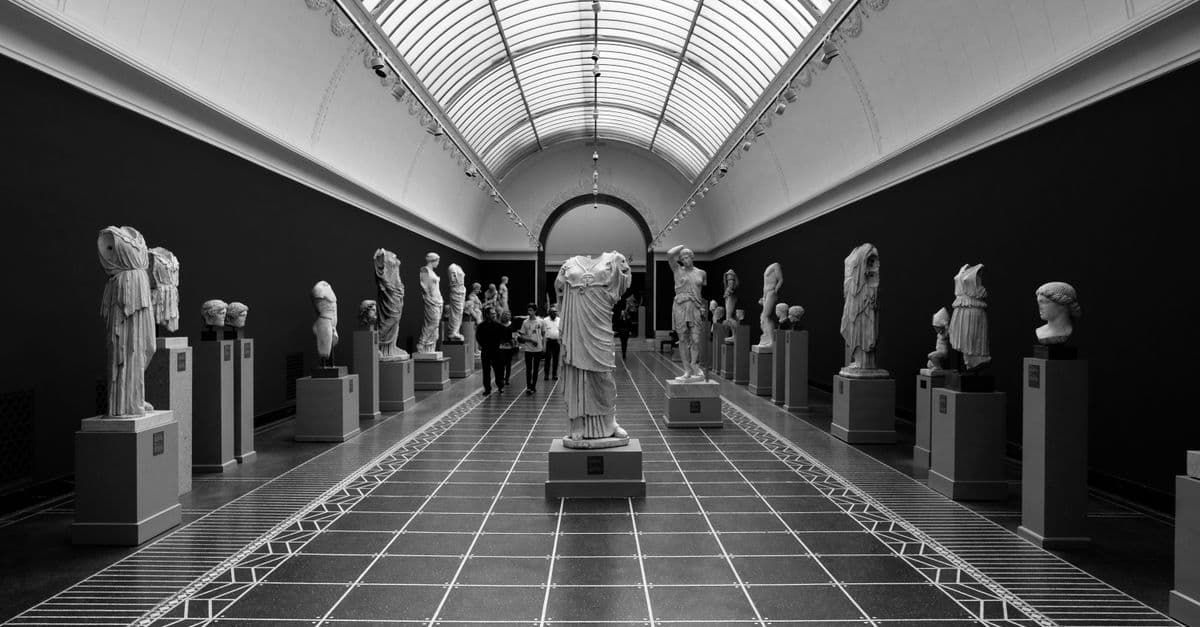
Photo: Shvets Anna / Pexels
Museums are among the most significant public cultural institutions a society can maintain: archives of human knowledge, art, natural history, and technology that make the past accessible to the present. They are also economic anchors. The Louvre attracts approximately 9 million visitors per year; the Smithsonian's collective institutions hold 155 million objects and draw over 20 million visits annually. Global museum attendance exceeds 1 billion visits per year. The geography of where museums exist — and how many — reflects both historical wealth concentration and contemporary policy choices about who culture is for.
How museum counts are measured: methodology note
Museum definitions vary substantially across national and international reporting, which makes country comparisons genuinely difficult.
The International Council of Museums (ICOM) definition — adopted in 2022 after a contentious multi-year debate — defines a museum as "a not-for-profit, permanent institution in the service of society that researches, collects, conserves, interprets and exhibits tangible and intangible heritage." This definition is broad enough to encompass traditional art museums, natural history museums, science centres, historic houses, archaeological sites with on-site interpretation, and open-air museums.
The US Institute of Museum and Library Services (IMLS) uses a narrower operational definition in its official count (~17,500 museums) but broader survey methodologies yield figures above 33,000. The US figure cited widely (35,000+) includes historic houses, nature centres, planetaria, and living history museums in addition to conventional museums.
Per-capita comparisons are most meaningful for assessing cultural access and investment. Finland's 217 museums per million people versus India's 0.7 per million tells a more revealing story than absolute counts alone.
Source: International Council of Museums (ICOM) — Museum Statistics and Global Figures 2022/23; UNESCO — Museums Around the World (2021 edition); IMLS Museum Universe Data File.
Countries with the most museums
(Total museum count and per-million-population density; various definitions)
Absolute leaders — total museum count
| Country | Total museums | Per million pop. | Notes |
|---|---|---|---|
| United States | 35,000+ | 105 | Broadest definition; includes historic sites, nature centres |
| China | 6,000+ | 4 | Rapid expansion; state-funded growth since 2010 |
| Germany | 7,000+ | 84 | Dense regional network; among world's highest density |
| Italy | 4,500+ | 76 | Highest heritage density per km² globally |
| Brazil | 3,800+ | 18 | Many under-resourced |
| Russia | 2,900+ | 20 | Soviet-era state museum infrastructure |
| United Kingdom | 2,500+ | 37 | Many free national museums |
| Canada | 2,500+ | 65 | — |
| France | 1,200+ | 18 | Including Paris concentration |
| Spain | 1,500+ | 32 | — |
Per-capita leaders — museums per million population
| Country | Per million pop. | Total museums | Notes |
|---|---|---|---|
| Finland | 217 | 1,200 | World's highest per capita; Museum Card system |
| Norway | 130 | 700+ | Strong regional identity museums |
| Switzerland | 115 | 1,000+ | Extraordinary per-capita density |
| United States | 105 | 35,000+ | Philanthropic culture drives volume |
| Germany | 84 | 7,000+ | — |
| Austria | 90 | 800+ | Vienna cultural concentration |
| Canada | 65 | 2,500+ | — |
| Sweden | 40 | 400+ | — |
| Netherlands | 40 | 700+ | Rijksmuseum, Van Gogh Museum |
| Australia | 39 | 1,000+ | — |
Source: UNESCO Museums Around the World 2021; ICOM membership and statistical data; national museum association reports.
Where This Data Comes From
This ranking aggregates data from three primary sources: the International Council of Museums (ICOM) membership database and museum statistics, UNESCO's Museums Around the World reports, and country-specific museum associations and cultural ministry data. Museum definitions and counting methodologies vary significantly — the US figure of 35,000+ includes historic houses, nature centres, and living history museums under the broadest definitions, while more restrictive IMLS counts yield approximately 17,500. Per-capita figures are calculated using UN population data for each country as of 2024.
The absolute museum counts are most reliable for countries with centralised cultural registries (Germany, Finland, the UK) and least reliable for large countries with decentralised cultural policy (China, India, Brazil). The per-capita rankings reflect a more meaningful comparison of cultural investment: Finland's 217 museums per million people requires both institutional infrastructure and government policy commitment, whereas China's low per-capita figure (4 per million) reflects the early stage of its museum expansion despite absolute growth from 1,000 to 6,000+ museums in two decades. The data excludes virtual-only museums, temporary exhibitions, and private collections not open to the public, which means the rankings capture formal institutional commitment rather than all cultural heritage infrastructure.
Historical context: from royal cabinet to public institution
The museum as a public institution is a relatively recent invention. For most of history, collections of art, antiquities, and natural curiosities were the private property of rulers, aristocrats, and the Church — visible to scholars, courtiers, and the well-connected, not to ordinary citizens. A related cultural-institution ranking is countries with the most libraries.
The cabinets of curiosities (16th–17th centuries). The immediate precursors to museums were the Wunderkammern (cabinets of wonder) — rooms or cabinets assembled by wealthy European patrons containing natural specimens, antiquities, works of art, scientific instruments, and exotic objects from distant lands. The goal was not public education but the demonstration of the collector's wealth, erudition, and access to the rare. Rudolf II's collection in Prague, the Medici collections in Florence, and the Ashmolean at Oxford (1683) — the first public museum in Britain — all grew from this tradition.
The Enlightenment and the public museum (18th century). The British Museum opened in 1753, founded on the collections of physician Hans Sloane (who left 71,000 objects to the nation). The Louvre opened as a public museum during the French Revolution in 1793 — the symbolism was deliberate: the royal palace's collection was now the people's collection. The Enlightenment conviction that knowledge should be accessible and classifiable, combined with the democratic impulse of the revolutionary era, produced the first museum infrastructure explicitly designed for the public good.
The 19th century: imperial accumulation and national identity. The great museums of the 19th century — the V&A (1852), the Natural History Museum (1881), Berlin's Museumsinsel (from 1830), the Smithsonian (1846) — were built by industrialising nations using the wealth of empire and the logic of national competition. Britain and France amassed collections through colonial expeditions that stripped archaeological sites across Egypt, Greece, India, and Africa. The Berlin museums competed with London and Paris for classical antiquities. These institutions were simultaneously archives of human culture and demonstrations of imperial reach.
The 20th century: democratisation and proliferation. The 20th century saw museum attendance become genuinely mass, driven by public education expansion, paid holidays, and improved transportation. Admission fees at major museums fell or were eliminated in many European countries. Local and regional museums proliferated — community history museums, industrial museums, open-air folk museums — as the model spread from elite art collections to every field of human activity.
Source: Tony Bennett, The Birth of the Museum (Routledge, 1995); Kenneth Hudson, The Social History of Museums (1975); ICOM institutional history.
United States: quantity and variety
America's 35,000+ museums span every conceivable subject and scale — from the Smithsonian's National Air and Space Museum, holding Apollo 11's command module Columbia and the Wright Brothers' Flyer, to single-town historical societies in wooden buildings. This diversity reflects American philanthropic culture, the absence of a centralised national museum policy, and a strong tradition of private collection-building followed by institutional gift.
The Smithsonian Institution is the world's largest museum complex: 19 museums and galleries in Washington DC and New York, all free to visitors, collectively holding approximately 155 million objects. Its mandate — "the increase and diffusion of knowledge" — is inscribed in the will of British scientist James Smithson, who left his estate to the US government in 1835 despite never having visited America. The Smithsonian's free admission is funded by Congressional appropriation and private donations.
US museums face structural funding challenges that their European counterparts mostly avoid. American museums are predominantly private nonprofits that rely on endowment income, donations, ticket sales, and event revenue. During economic downturns, endowment values fall, donation flows dry up, and museum budgets contract. The 2008 financial crisis forced major museums to cut staff and hours; COVID-19 caused temporary closures that cost US museums an estimated $33 billion in lost revenue in 2020.
The US also hosts significant cultural infrastructure inequality: while major urban museums have nine-figure endowments, thousands of small community museums operate on budgets under $50,000 per year, often entirely staffed by volunteers.
Source: IMLS Museum Universe Data File 2022; American Alliance of Museums (AAM) Museum Facts & Data 2023.
Finland: the per-capita champion
Finland's 217 museums per million people is the world's highest per-capita density, and it is not accidental. It reflects a deliberate combination of government arts funding philosophy, strong regional identity, and an innovative visitor access model.
Government arts funding as public infrastructure. Finland's Ministry of Education and Culture funds museums through a block grant system that treats cultural infrastructure the same way other governments treat roads or schools — as public goods that should not depend entirely on market income to survive. The Museum Act (2019) extended the grant system to a wider range of museums and introduced performance criteria for state funding, creating accountability while preserving the public-funding model.
Regional identity and the proliferation of local institutions. Finland has pronounced regional cultural identities — Finnish-speaking Finnish culture, Swedish-speaking coastal culture, Sámi culture in Lapland, Karelian culture (partly displaced by the 1940 Soviet-Finnish border settlement) — that generate demand for local museums. The open-air museum tradition, strong in all Nordic countries, contributes substantially to per-capita counts: Seurasaari in Helsinki (rescued historic wooden buildings from across Finland), Turkansaari in Oulu, and dozens of regional equivalents each count as museums and draw visitors.
The Finnish Museum Card. Introduced in 2015, the Museokortit (Museum Card) is a €99/year pass that provides unlimited free admission to over 300 museums across Finland. The card is issued by the Finnish Museums Association and has been transformative: card holders visit significantly more museums per year than non-holders; total museum attendance in Finland increased by over 40% in the years following the card's introduction. It functions like a subscription model applied to cultural access — making museum-going a default leisure activity rather than an occasional expensive outing.
Source: Finnish Museums Association (Suomen Museoliitto) — annual statistics; Ministry of Education and Culture Finland — Museum Act documentation; Museum Card attendance data.
Germany: regional density and cultural federalism
Germany's 7,000+ museums — equivalent to 84 per million population — reflect the country's federal structure, which places cultural policy primarily at the state (Länder) level rather than at the federal level. Germany has no single national museum; instead, it has 16 state governments, each funding and maintaining museum infrastructure for their region.
The Länder model. Because each German state is responsible for cultural policy, museum networks are distributed rather than Paris-model concentrated. Bavaria alone has over 1,000 museums; North Rhine-Westphalia has several hundred. The result is that Germany has world-class museum collections in cities that would not otherwise be global cultural destinations — Nuremberg's Germanic National Museum, Cologne's Museum Ludwig, Stuttgart's Staatsgalerie, and Dresden's extraordinary Gemäldegalerie Alte Meister compete with Munich and Berlin.
Prussian and royal collections. The German Idealist tradition — Hegel's conviction that art was the sensuous expression of Spirit (Geist), and museums the institutional form through which a nation's self-understanding was made concrete — gave museum-building a philosophical mandate in 19th-century Germany. Berlin's Museumsinsel (Museum Island), a UNESCO World Heritage Site and complex of five major museums on the Spree, was begun in 1830 under Friedrich Wilhelm III and reflects this conviction that the state's relationship to culture should be institutionalised and permanent.
Contemporary restitution. Germany has been among the most proactive European nations in returning objects acquired through colonial violence. In 2022, Germany returned the first tranche of Benin Bronzes — approximately 1,130 objects — to Nigeria, with commitments to return all holdings. The Humboldt Forum in Berlin, opened in 2021 in a reconstruction of the Berlin Palace, has become a focal point for debates about whether colonial collections can ethically be displayed in Europe while repatriation negotiations continue.
Source: German Museums Association (Deutscher Museumsbund) annual statistics; Stiftung Preußischer Kulturbesitz (Prussian Cultural Heritage Foundation) reports.
Italy: the heritage superpower
Italy has more UNESCO World Heritage Sites than any other country (58 as of 2024) and approximately 4,500 museums — a density of 76 per million people. More meaningfully, Italy has more significant archaeological, architectural, and artistic heritage per square kilometre than any other nation on earth. The challenge is not collecting or building — it is managing and maintaining what already exists.
The big sites. The Colosseum receives approximately 7 million visitors per year — the most visited paid attraction in Europe. The Vatican Museums (6 million), the Uffizi Gallery in Florence (approximately 2.5 million), and the archaeological park at Pompeii (approximately 3.5 million) are among the most visited cultural sites globally. These institutions generate substantial revenue, but the revenue is not proportional to Italy's heritage maintenance burden.
The long tail problem. Italy has thousands of smaller museums, churches, archaeological sites, and historic buildings that are technically open to the public but operate with minimal staff and hours. A significant number of Italy's smaller museums are periodically closed — not for renovation but from lack of staff. The culture of "chiuso per restauro" (closed for restoration) signs — which in many cases reflect chronic underfunding rather than active restoration — is well-documented and has historically frustrated heritage professionals and tourists alike.
Private investment and corporate patronage. Italy has increasingly turned to private funding for heritage restoration — the Fendi-funded restoration of the Trevi Fountain (completed 2015), Tod's restoration of the Colosseum arch, and Ferrero's support for archaeological projects in Piedmont represent a model of heritage sponsorship that partially offsets inadequate public funding. Critics argue that corporate branding on national monuments sets a problematic precedent; proponents argue it is preferable to deterioration.
Source: ISTAT (Italian National Statistics Institute) — cultural heritage reports; UNESCO World Heritage List 2024; Colosseum attendance data from Parco Colosseo.
The UK's free admissions revolution
The United Kingdom's decision in December 2001 to eliminate admission charges at all national museums — the British Museum, Natural History Museum, Science Museum, Victoria and Albert Museum, National Gallery, Tate galleries, and others — is among the most rigorously studied cultural policy interventions in history.
The attendance effect. Museum visits to national institutions increased by approximately 150% in the two years following free admission. The Natural History Museum went from 1.5 million visits per year to nearly 3 million. The Science Museum tripled attendance. The National Gallery saw visits increase by 75%.
The social effect. The social composition of museum visitors shifted measurably. Research by the Department for Culture, Media and Sport found that free admission particularly increased visits from households in lower socioeconomic groups and from ethnic minority communities that had previously been underrepresented in museum audiences. Museums that were perceived as for educated middle-class visitors became genuinely public in their composition.
The economic case. Free admission initially seemed economically costly — national museums lost approximately £40 million per year in admission revenue. However, economic analysis found that increased visitor numbers drove higher spending in museum shops, cafés, and London tourism more broadly. The multiplier effect on tourism and education was estimated to significantly outweigh lost admission revenue. The policy has remained in place through multiple governments of different parties.
The international contrast. Most European national museums are free at point of access. American national museums (Smithsonian) are free. Most private US museums charge $20–35 for general admission. The Louvre charges €22. The Met in New York has a suggested donation model that effectively costs visitors $25–35. The UK's national free museum model is not unique but is among the most comprehensive in terms of the range of institutions covered.
Source: DCMS — Visitors to Free National Museums 2004 evaluation report; Arts Council England museum attendance data; House of Commons Culture, Media and Sport Committee reports.
Colonial collections and the repatriation movement
The world's greatest museum collections — the British Museum, the Louvre, the Berlin Ethnological Museum, the Met's Egyptian and Greek collections — were assembled substantially through colonial extraction. Objects were taken from colonised territories without consent, through looting, unequal exchange, and the exercise of colonial authority.
The Elgin Marbles (British Museum): The Parthenon Sculptures — carved by Pheidias under Pericles' commission in the 5th century BCE — were removed from Athens between 1801 and 1812 by Thomas Bruce, 7th Earl of Elgin, with disputed permission from the Ottoman authorities then occupying Greece. Greece has formally requested their return since 1983. The British Museum's position — that the objects are held "in trust for humanity" and can be seen for free in London — has been consistent. Greece argues that displaying the sculptures separately from the Parthenon destroys their cultural and architectural meaning; the Acropolis Museum, built directly below the Parthenon and opened in 2009, includes a designated gallery for the sculptures if returned.
The Benin Bronzes: Over 3,000 bronze plaques, sculptures, and objects were looted from the Royal Palace of the Kingdom of Benin (in present-day Nigeria) during a British punitive expedition in 1897. They were distributed across European and American museums — approximately 900 in the British Museum alone, several hundred in the Berlin Ethnological Museum, and others scattered across Europe and North America. From 2021 onward, a wave of European institutions began returning objects: Germany committed to returning all its holdings in 2022, the Horniman Museum in London returned 72 objects, and the Smithsonian returned 29. The British Museum, constrained by the British Museum Act 1963 which prevents permanent disposal of objects in the collection, has not returned holdings but has discussed long-term loans.
The Rosetta Stone: The trilingual decree issued at Memphis in 196 BCE — which provided the key to deciphering Egyptian hieroglyphics — has been in the British Museum since 1802. Egypt has periodically requested its return; the British Museum considers it one of its most iconic objects. In 2022, Egypt renewed its request in the context of the Benin Bronzes returns momentum.
The 1970 UNESCO Convention on the Means of Prohibiting and Preventing the Illicit Import, Export and Transfer of Ownership of Cultural Property is the primary international legal framework. Most major museums now apply a 1970 cutoff — objects acquired after 1970 are subject to provenance review; pre-1970 acquisitions are treated differently. Critics argue the 1970 cutoff allows museums to retain colonial-era acquisitions that would clearly be considered looting under any contemporary ethical standard.
Source: UNESCO 1970 Convention status and implementation reports; British Museum governance documents; Nigeria Federal Ministry of Information — Benin Bronzes statements; Acropolis Museum — Parthenon Sculptures documentation.
China's museum expansion
China's museum growth from the 2000s onward represents one of the most dramatic museum infrastructure expansions in history. From approximately 1,000 museums in 2000, China has built to over 6,000 by the mid-2020s — largely state-funded, often architecturally spectacular, and concentrated in new urban developments and historic cities.
The National Museum of China in Beijing, renovated and expanded in 2011, is now one of the world's largest museums by floor area (approximately 200,000 m²) and holds over 1.4 million objects. The Shanghai Museum, West Bund Museum, and numerous provincial capitals have invested heavily in museum infrastructure as part of broader urbanisation and cultural prestige strategies.
The speed of China's expansion reflects top-down state investment rather than the organic accumulation of private collections that characterised European museum development. Some critics have noted that Chinese museums often hold impressive architecture but collections that are thinner than their buildings suggest — particularly for regions without pre-existing private collections to draw on. The Palace Museum (Forbidden City) in Beijing, with its 1.86 million objects from Chinese imperial collections, is the exception: among the world's richest collections by volume and historical significance.
Source: National Cultural Heritage Administration of China (NCHA) — annual museum statistics; ICOM China; Palace Museum (故宫博物院) official data.
Frequently asked questions
Q: What is the world's most visited museum? A: The Louvre in Paris typically leads global museum attendance rankings at approximately 8–9 million visitors per year, though COVID-era closures disrupted records. The Smithsonian's National Air and Space Museum in Washington DC has claimed the top spot in some years at approximately 7 million visits. The Vatican Museums (~6 million), the Metropolitan Museum of Art in New York (~5 million), and the National Museum of China (~7 million) are close competitors. Rankings shift year to year based on special exhibitions, tourism trends, and pricing.
Q: What is the most valuable object in any museum? A: This is genuinely contested because most museum objects are considered "priceless" and insurers use replacement cost rather than market value. The Mona Lisa (Louvre) was assessed at approximately $100 million for insurance purposes in 1962 and is considered far more valuable now — likely the world's most valuable portable artwork, though it is not for sale at any price. Other candidates: the Rosetta Stone (British Museum — irreplaceable historical significance), the Elgin Marbles, the Koh-i-Noor diamond (Tower of London). Private auction records exceed $400 million for individual works (Salvator Mundi, attributed to Leonardo, sold 2017), suggesting museum equivalents may be valued higher.
Q: Do museums make money? A: Most major art museums operate at a structural deficit, supplemented by endowment income, government grants, private philanthropy, and commercial revenue (shops, events, corporate hire). The Louvre earns approximately €100 million annually in admission revenue — insufficient for its ~€250 million operating budget. American museums rely more heavily on admission revenue and donor events; reduced endowment returns during market downturns can force service cuts. Museum shops are significant revenue generators: the British Museum's shop generates approximately £20 million per year.
Q: Why does Finland have so many museums per capita? A: Finland's per-capita density (217 per million) reflects government arts funding philosophy (museums as public infrastructure), strong regional cultural identities that generate local institutions, the open-air museum tradition that adds to counts, and the Museum Card subscription model that has increased both attendance and the economic viability of smaller institutions. Protestant cultural values emphasising education, heritage preservation, and public access also play a role.
Q: Are virtual museums counted? A: Virtual museums — online collections, digital exhibitions, institutions that exist only online — are not included in standard ICOM or UNESCO counts, which require physical premises and collections. The COVID-19 pandemic accelerated digital programming at physical museums, and some institutions now have substantial online visitor numbers. The British Museum's online collection database receives millions of searches per year; the Met's collection is fully browsable online with high-resolution images. These do not change the physical museum count but do change what "museum access" means.
Q: What happened to museums during COVID-19? A: Globally, museums were closed for an average of 5–6 months in 2020. US museums lost an estimated $33 billion in revenue; hundreds of smaller institutions closed permanently. European museums with higher proportions of government funding weathered the period better. The Louvre lost approximately €90 million in 2020. Post-COVID recovery was rapid for major tourist-dependent institutions in cities that reopened to international travel quickly; smaller community museums and science centres in less-visited regions recovered more slowly. The pandemic accelerated digital programming and forced a rethinking of the economic model for institutions too dependent on admission revenue.
The takeaway
Museums are among the most equalising cultural institutions a democratic society can maintain — archives of human achievement accessible to all, not only those with private collections or expensive educations. Finland's per-capita density shows what consistent public investment achieves; Italy's heritage wealth illustrates the maintenance challenge of what history bequeathed without proportional funding. The UK's free admissions revolution remains the clearest evidence that the economic and social case for free cultural access is stronger than the admission-revenue argument against it. And the repatriation movement is the most consequential restructuring of global collections since the colonial era assembled them — a process still in its early stages, with most major contested objects yet to move.
Sources
- ICOM — Museum Definition and Global Statistics
- UNESCO — Museums Around the World 2021
- IMLS — Museum Universe Data File
- Finnish Museums Association — Annual Statistics
- DCMS — Evaluation of Free Admission to National Museums
- American Alliance of Museums — Museum Facts & Data
Related Reading
Follow new articles
Add SciHub101 to your feed reader to see new science and technology stories.
About the Author
SciHub101 is an independent science and technology publication founded and edited by Buğra Sözeri, a software engineer and app developer based in Türkiye. AI tools assist with drafting and research. Source documentation in the existing archive is uneven, and articles are being reviewed and corrected. The Editorial Team byline identifies editorial responsibility; it does not certify specialist or independent human review. Where we compare products, anything built by our own team is labelled as such — see the editorial guidelines and About page for how corrections and disclosures work.
Related Articles

Countries That Consume the Most Chocolate Per Capita (2025 Ranked)
Switzerland consumes 10.3 kg of chocolate per person per year — the world's highest. Denmark, Austria, and Germany follow. The global chocolate market exceeds $130 billion. Meanwhile, cocoa-growing countries in West Africa — which produce 70% of the world's cocoa — consume almost none. Here's the strange geography of chocolate.

Countries with the Most Public Holidays (2025 Ranked)
Cambodia has 28 public holidays — the most of any country in the world. Sri Lanka has 25. India recognises 3 national and up to 39 regional public holidays. Here are the countries with the most public holidays and what drives the differences.

Who Invented the Fork? The Surprising History of a Scandalous Utensil
No one invented the fork. Large forks cooked and carved food for thousands of years, the personal table fork emerged in the Byzantine world, and Western Europe took it up slowly, with a Byzantine bride's 1004 marriage into Venice's ruling family as the best-known early anecdote. Resistance was moral, social, and practical, and the fork only became everyday tableware across Britain and North America between the 17th and 19th centuries.

Countries with the Most Libraries (2025 Ranked)
Russia has more libraries than any country — 130,000+ public, school, and special libraries. The United States has the world's largest library (the Library of Congress, with 173 million items). Finland has the highest library visit rate per capita of any country.
Countries With the Most UNESCO World Heritage Sites (2026)
Italy leads the UNESCO World Heritage List with 62 sites, followed by China with 61, France with 56, and Germany with 55. This ranking covers the top 23 countries as of the July 2026 session, with cultural versus natural splits and what the counts do and do not measure.

Countries That Publish the Most Books Per Year (2025 Ranked)
China publishes over 500,000 new book titles per year — the world's most. The United States publishes over 4 million including self-published titles. The UK publishes more books per capita than almost any large nation. Here's the global book publishing industry — who leads, what it's worth, and how digital is changing everything.