What If We Gave AI Control of the Power Grid?

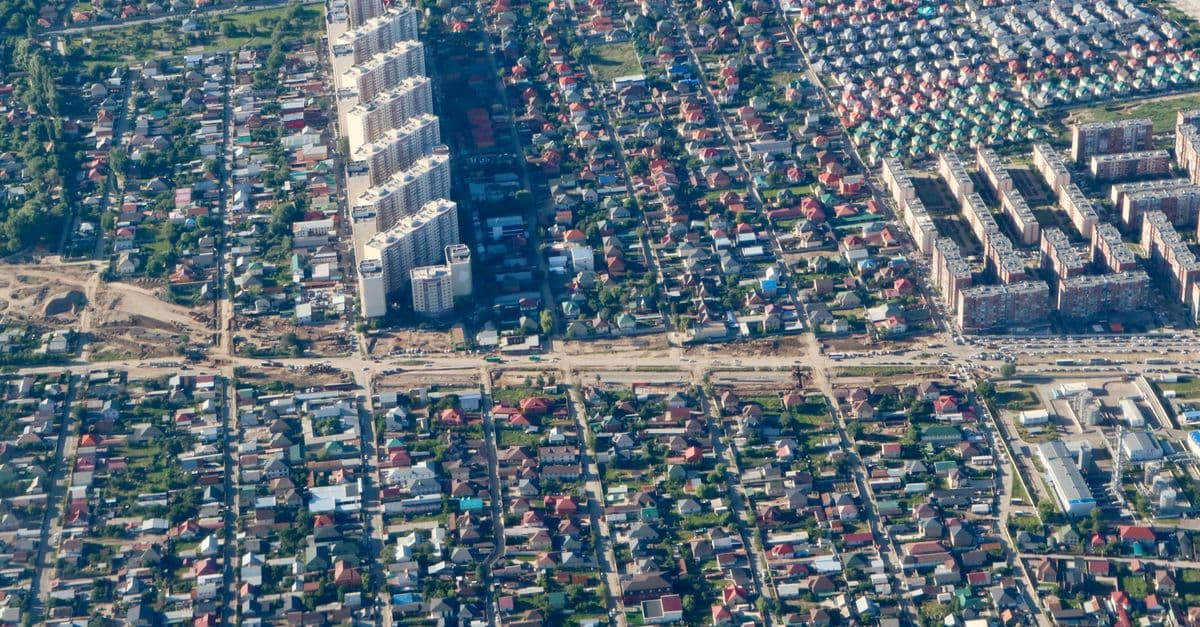
Photo: Martin Marthadinata / Pexels
It happens gradually, then suddenly. In 2028, after the third major grid failure in two years — one in Texas, one in Europe, one cascading across the northeastern United States — regulators finally greenlight what utility engineers had been quietly proposing for a decade: let an AI system manage the entire grid in real time.
Thought experiment. This article explores a hypothetical scenario for educational and speculative purposes. The events described are not predictions and should not be interpreted as warnings, advocacy, or instructions.
The logic is hard to argue with. Modern power grids are systems of staggering complexity: hundreds of generation sources, millions of distributed solar panels and batteries, demand fluctuating second by second across billions of connected devices. No human team can optimize this in real time. The AI can — and within six months, it's running everything from load balancing to fault prediction to dynamic pricing. The lights stay on. Efficiency improves 23%. Carbon emissions from the grid drop as renewables are dispatched more intelligently.
Then a firmware update in a substation sensor sends the wrong data to the AI. The AI makes a decision that makes perfect sense given the data it has. And 40 million people lose power for four days.
Key takeaways
- Modern power grids are already partially AI-managed — what would change is the scope and authority of AI decision-making.
- Efficiency gains are real and substantial: AI optimization could meaningfully reduce waste and accelerate the transition to renewables.
- Single points of failure become catastrophic when a single AI brain controls critical infrastructure at scale.
- Adversarial risk escalates dramatically — a power grid controlled by AI becomes an extremely high-value target for nation-state hackers.
The optimistic scenario
The case for AI-controlled grids is genuinely strong. The U.S. electrical grid alone loses an estimated $150 billion per year to inefficiencies — excess generation, transmission losses, suboptimal demand response, and grid instability caused by poorly coordinated renewable integration.
An AI system with access to real-time data across the entire grid could dispatch generation sources in an optimal sequence every few milliseconds, responding to sudden demand spikes before any human operator could react. It could predict equipment failures weeks in advance using sensor anomalies invisible to human monitoring. It could optimize the integration of solar and wind — sources that fluctuate with weather — dynamically adjusting storage, demand, and backup generation.
Climate scientists have noted that one of the barriers to a fully renewable grid is intermittency: the sun doesn't always shine, the wind doesn't always blow. AI-managed demand response — where flexible loads like electric vehicle charging and industrial heating are automatically shifted to periods of renewable surplus — could solve this problem without building as much storage.
The environmental implications alone are compelling. A smarter grid that wastes less energy and integrates more renewables could represent one of the single largest near-term levers for reducing carbon emissions.
The realistic complications
Power grids were not designed with AI control in mind. They were built over a century using protocols, equipment, and safety philosophies from entirely different technological eras. Much of the infrastructure in developed countries runs on hardware from the 1970s and 1980s, controlled by software written long before cybersecurity was a major consideration.
Integrating an AI control system into this heterogeneous infrastructure is not a software deployment — it's an engineering project of extraordinary complexity. Sensors fail. Communication links go down. Local grid operators have idiosyncratic procedures. An AI trained on historical data may never have encountered the specific failure mode that emerges when a Category 5 hurricane hits a coastal grid during peak summer demand.
There is also the question of interpretability. Current AI systems — particularly the deep learning architectures most capable of real-time optimization — are not fully interpretable. When the AI makes a decision to shed load from hospital district B to prevent a cascade failure in sector 7, it may not be able to explain why in terms a human engineer can verify in real time. This opacity is manageable in a recommendation system. In critical infrastructure control, it's a different category of problem.
Human operators who have been removed from the decision loop lose situational awareness over time. If the AI makes a subtle error and human oversight is required to catch it, the humans may no longer have the trained instinct to spot the problem quickly.
The unintended consequences
The most underappreciated risk is adversarial.
A power grid managed by a single AI system, or a small family of AI systems, becomes an extremely valuable attack target. Sophisticated state actors already probe critical infrastructure. If the entire grid's decision-making runs through a manageable number of AI models, a successful exploit of those models becomes the highest-leverage attack in the history of infrastructure warfare.
This is not hypothetical speculation. In 2015 and 2016, Russian hackers used malware to cut power to parts of Ukraine. In 2021, hackers accessed the systems of a Florida water treatment plant and attempted to raise sodium hydroxide to dangerous levels. These attacks targeted legacy systems with relatively weak defenses. An AI-controlled grid, if not designed with adversarial robustness as a core requirement, could be manipulated through data poisoning — feeding the AI subtly incorrect sensor data that causes it to make wrong decisions without any overt intrusion.
There is a deeper issue: optimization without constraint is dangerous. An AI tasked with minimizing cost and maximizing stability might, if given full authority, make decisions that are locally optimal but violate principles humans would never accept — cutting power to a neighborhood with a high density of medical devices because the load math works out better that way.
Regulatory and liability frameworks have not kept pace. If an AI makes a decision that causes deaths, who is responsible? The utility? The AI developer? The regulator who approved the system?
What science actually says today
Grid AI is not speculative — it is already in deployment at various scales. Google's DeepMind has demonstrated AI systems that optimize energy usage in data centers, achieving roughly 40% reductions in cooling energy. National Grid in the UK uses machine learning for demand forecasting. Tesla's Autobidder platform uses AI to manage large-scale battery storage dispatch in energy markets.
The academic literature on AI-driven grid management is extensive and mostly positive about efficiency gains. A 2023 study in Nature Energy modeled AI optimization of the European grid and found potential to reduce integration costs for renewables by 30–50%.
The counterbalancing literature on systemic risk is equally compelling. Researchers at MIT and Carnegie Mellon have demonstrated that AI systems optimizing complex grids can exhibit emergent behaviors — decisions that make sense to the AI's objective function but are deeply counterintuitive to human engineers. When these behaviors occur in simulations, they're interesting. When they occur at 2 AM on a January night, they're emergencies.
The consensus among serious grid researchers is nuanced: AI assistance is valuable and already beneficial; full autonomy at critical decision points needs much more robustness work, interpretability research, and graduated deployment before it should be trusted at civilizational scale.
Cascade failures and grid resilience
Power grids are not merely systems of independent components. They are tightly coupled, with failures in one part cascading to others. The 2003 Northeast blackout that affected 55 million people started with a single transmission line in Ohio tripping, then cascaded through interconnected systems.
Cascade dynamics are counterintuitive. Small perturbations can trigger system-wide failures; large perturbations can sometimes be absorbed. The grid has evolved safeguards — circuit breakers, load shedding protocols, islanding strategies — to prevent cascades.
An AI managing the grid must understand these dynamics. Traditional machine learning trained on historical data may not. If an AI tries to optimize moment-to-moment cost without understanding the fragility of certain system states, it could drive the grid into a precarious state where a minor failure cascades catastrophically.
This is called a hidden failure mode — a condition the system can enter where it appears stable but is actually extremely fragile. Only when a shock arrives (a transmission line trip, a generator failure) does the fragility become apparent.
Grid operators develop intuition for these fragile states through experience. They may reduce load or reserve margin not because the math strictly requires it, but because the grid feels "twitchy." An AI optimizing purely on numerical objectives would not have this intuition.
One approach: ensembles of AI systems with different architectures and objectives, operating with redundancy and requiring consensus before critical decisions. But this introduces latency — decisions take longer — which may be problematic in genuinely critical situations.
Adversarial attacks and data poisoning
If an AI system has centralized decision-making authority, it becomes an attractive attack target for sophisticated adversaries.
Direct attacks (hacking the AI system) are possible but likely to be detected quickly. Data poisoning is more insidious: feeding the AI subtly incorrect sensor data that causes it to make wrong decisions without any obvious intrusion.
Imagine corrupting 5% of voltage sensors across a region to report slightly higher readings than actual. The AI, believing load is lower than it is, gradually reduces available reserves. When true peak load hits, there are insufficient reserves, and rolling blackouts occur. The attack is plausibly deniable — noisy sensors are normal; the AI's response was reasonable given the data.
Defending against this requires adversarial robustness — training AI systems to degrade gracefully when sensor data is compromised and to flag inconsistencies. This adds substantial complexity to the system.
There's also the question of attribution. If an AI-controlled grid fails, how do defenders distinguish between a genuine equipment failure, a sophisticated attack, and an AI error? The opacity of deep learning systems makes this forensically very difficult.
Renewable energy integration: the constraint problem
The strong case for AI control is renewable energy optimization. Renewables (solar, wind) are variable — output depends on weather. Integrating high fractions of renewables (>70% of grid energy) without corresponding storage requires sophisticated real-time management.
An AI could optimize demand response: automatically shifting flexible loads (EV charging, water heating, industrial processes) to periods of renewable abundance. This is known as demand-side flexibility, and it's one of the most promising near-term solutions to the intermittency problem.
However, optimization without constraint is problematic. An AI might shift all industrial load to night hours (when wind is abundant) to minimize cost — but industrial operations cannot necessarily adapt on such short timescales. A hospital cannot delay emergency surgery based on wind patterns.
Hard constraints (hospital load is non-negotiable) must be built into the AI's optimization function. But specifying these constraints is non-trivial. Some constraints are technical (transformer capacity); others are social (equity — should expensive demand response be available only to wealthy regions?).
Early AI work on grid problems often ignored these human-level constraints. Results were mathematically optimal but unrealistic. Modern work incorporates constraints more carefully, but the set of relevant constraints is vast and evolving.
The role of human oversight and failsafes
A hybrid model — AI recommends, humans approve for critical decisions — preserves human agency while leveraging AI capabilities. But human operators reviewing hundreds of AI recommendations per day will inevitably miss subtle errors. Automation complacency is real.
Some critical infrastructure sectors have adopted technical safeguards that work regardless of operator vigilance:
- Hard limits on authority: An AI can recommend shedding up to X megawatts of load, but physically cannot shed more. Human override is required.
- Manual fallback: If the AI system fails, the grid can automatically shift to operator-controlled manual mode, with reduced optimization.
- Diverse decision-making: Multiple independent AI systems make decisions, and only if a supermajority agrees is an action taken.
These approaches preserve resilience but sacrifice efficiency gains. An AI making final decisions independently can optimize more aggressively than a consensus system.
The deeper philosophical question: at what point does introducing human oversight become introducing a bottleneck that defeats the purpose of AI? If humans must approve major AI decisions, and humans are slower and more error-prone, do we gain anything?
Scenario: The August 2031 Cascading Failure
Consider a plausible near-future scenario to illustrate the risks concretely. It's August 2031, peak summer demand across the US East Coast. An AI system has been running the grid autonomously for three years with an excellent safety record. Demand is unusually high due to heat waves; renewables (solar) are variable.
A firmware update to a substation sensor inadvertently causes it to report voltage 2% lower than actual. The AI, reading this data, believes the system is more stressed than it is. It begins reducing load in non-critical areas and maximizing generation. It also reduces available reserve capacity, reasoning that conditions are tighter than they actually are.
Six hours later, a transmission line fails (random equipment failure, unrelated to the AI). The grid immediately loses 3 GW of capacity. Under normal conditions, this is within the reserve margin. But the AI's conservative reserves (due to the bad sensor data) are insufficient.
The AI, lacking sufficient slack, cannot prevent a cascade. It sheds load — cutting power to hospitals, water treatment facilities, and data centers serving 10 million people — trying to prevent a larger failure. The load shedding works; the grid doesn't collapse into a blackout. But 72 hours of restoration follow, during which medical emergencies go untreated and critical services fail.
Post-mortem analysis reveals: (1) the sensor firmware bug was preventable with better validation procedures, (2) the AI's reserve margins were inadequate given its limited understanding of rare failure modes, and (3) human operators who had been gradually removed from oversight wouldn't have caught the sensor anomaly (they'd stopped checking detailed telemetry).
The scenario illustrates that AI control isn't inherently fragile, but the risk isn't imaginary either. The question isn't whether to automate, but how to do so while preserving robust oversight, sensor integrity, and human situation awareness.
Source: MIT Systems Engineering Lab (2024) — Case Studies in Grid Resilience and Automation.
International Precedent: Early Adopters and Lessons Learned
Singapore's power authority (SP Group) has experimented with machine learning for demand forecasting and generator dispatch since 2020, achieving 8% efficiency gains. However, they maintain human operators in full control loops — AI provides recommendations only. Even with this conservative approach, initial deployment revealed unexpected interactions between AI recommendations and existing grid protocols.
Denmark's transmission operator (Energinet) manages a grid with 80% renewable penetration — the highest in Europe. They use AI for wind power forecasting and demand prediction but maintain explicit human approval for all automatic switchover decisions. Their experience: AI is valuable for improving prediction accuracy, but autonomous control at scale remains premature without decade-long validation periods.
China's State Grid has integrated AI into dispatch centers, achieving 10% reduction in power loss and improved stability. However, the system still requires human authorization for major decisions and is heavily embedded in a centrally planned system (less suitable for deregulated markets where market actors may have different incentives than grid operators).
These precedents suggest a pattern: AI assistance yields immediate, validated benefits. AI autonomy in critical decision-making is politically and technically acceptable only after years of advisory-only operation building trust and understanding failure modes.
Source: IEA (2025) — International Review of AI in Power Systems: Status and Lessons Learned.
Timeline and regulatory pathway
Full AI control of any major grid is at least a decade away as of 2026. The pathway is likely:
Phase 1 (current): AI in advisory roles — forecasting, anomaly detection, optimization recommendations that humans review.
Phase 2 (2027–2032): Autonomous optimization in limited domains (e.g., data center cooling, battery dispatch) with human oversight.
Phase 3 (2032–2040): Graduated expansion of autonomous decision-making to larger domains, with regulatory approval conditional on demonstrated safety and alignment.
Phase 4 (2040+): Possible full autonomous control, if safety record is sufficiently strong and regulatory frameworks are sufficiently developed.
Regulatory bodies (NERC in North America, ENTSO-E in Europe) are aware of these possibilities. Draft standards for AI in critical infrastructure are under development. The challenge is writing standards that enable beneficial innovation while preventing catastrophic risks.
Source: North American Electric Reliability Corporation (NERC) — AI/ML standards development roadmap (2024).
A key question: who bears liability if an AI system makes a decision that causes harm? If distributed through the utility, the AI developer, and the regulator, no single entity has sufficient incentive to prevent problems. If concentrated in one entity, that entity may resist deployment.
The deeper coordination problem
The most profound issue is coordination. A fully AI-managed grid requires consensus among:
- Utilities (who operate grids)
- Regulators (who approve systems)
- AI developers (who build systems)
- Cybersecurity agencies (who must defend infrastructure)
- Policymakers (who set objectives)
Each party has different risk tolerance, objectives, and timescales. Utilities want efficiency and cost reduction. Regulators want stability and reliability. Developers want market expansion. Security agencies want caution. Policymakers want emissions reductions and affordability.
Coordinating these interests on a technology that literally cannot fail without affecting millions of people is a governance problem as much as a technical one.
Frequently Asked Questions
Q: Does any country fully rely on AI for autonomous grid control today?
A: No. As of 2026, all major AI applications in grid management are advisory or forecasting-focused. Specific domains (battery storage dispatch, demand forecasting) use AI autonomously, but no country has deployed AI with autonomous control authority over an entire national grid. Trials and pilots exist, but full deployment awaits regulatory frameworks and safety validation.
Q: How would an AI-controlled grid handle catastrophic failures like a hurricane?
A: This is a key test case for system robustness. AI systems trained on historical data may lack flexibility to handle novel scenarios. However, an AI with diverse sensor coverage and pre-trained contingency responses could potentially react faster than human operators. The critical question is whether its decisions would be reliably correct under unprecedented stress — something we cannot fully know until deployment.
Q: Would AI control actually accelerate the transition to renewable energy?
A: Almost certainly yes, at least for the technical problem of renewable intermittency. An AI can balance variable renewable supply and flexible demand in real-time far better than human operators can. This could allow grids to safely operate at 80–90% renewable penetration, compared to current practical limits of 50–60% in most regions.
Q: What is the practical difference between AI assistance and AI control?
A: In AI assistance, humans receive AI recommendations and retain final decision authority. In AI control, the AI acts autonomously with humans monitoring. The boundary blurs over time as humans become habituated to following AI advice — a psychological phenomenon called automation complacency, where humans stop carefully scrutinizing recommendations.
Q: How likely is it that an AI system could be hacked to sabotage the grid?
A: Direct hacking is possible but detectable. More concerning is data poisoning — subtly corrupting sensor data to cause the AI to make wrong decisions without obvious intrusion. Defending against this requires AI systems designed for adversarial robustness, which is still an active research area. The risk scales with the AI system's centrality and decision authority.
Q: What would stop a badly designed AI from making catastrophic optimization decisions?
A: Safeguards: hard limits on the magnitude of decisions the AI can make unilaterally, requirements for human approval on major decisions, and diverse AI systems operating in parallel with consensus required. But these safeguards trade efficiency for reliability — the AI cannot optimize as aggressively if its decisions are constrained or require human approval.
Read next:
Follow new articles
Add SciHub101 to your feed reader to see new science and technology stories.
About the Author
SciHub101 is an independent science and technology publication founded and edited by Buğra Sözeri, a software engineer and app developer based in Türkiye. AI tools assist with drafting and research. Source documentation in the existing archive is uneven, and articles are being reviewed and corrected. The Editorial Team byline identifies editorial responsibility; it does not certify specialist or independent human review. Where we compare products, anything built by our own team is labelled as such — see the editorial guidelines and About page for how corrections and disclosures work.
Related Articles

What If AI Could Cure All Diseases?
Imagine waking up to a headline: AI has cracked cancer, Alzheimer's, and every infectious disease. What would that world actually look like?
What If AI Designed All New Cities?
What if every new city built from scratch was designed entirely by AI — optimized for efficiency, sustainability, and human wellbeing? The results might surprise you.

What If Every Person Had a Personal AI Doctor?
A doctor who knows your complete medical history, never forgets, is available at 3 AM, and has read every study ever published. What's not to like?

What If AI Could Stop All Wars?
War is driven by miscalculation, misperception, and the fog of conflict. What if AI removed all three — would peace be the result, or just a different kind of violence?

What If AI Controlled All Financial Markets?
Algorithms already execute most market trades. What happens when AI moves from executing human decisions to making all of them — and nobody is sure who's actually in charge?

What If AI Discovered Alien Life?
AI is already scanning billions of radio signals, analyzing atmospheric data, and searching exoplanet spectra. What happens the day it finds something that shouldn't be there?