AI & Carbon Markets: Monetizing Climate Action Through Smart Trading
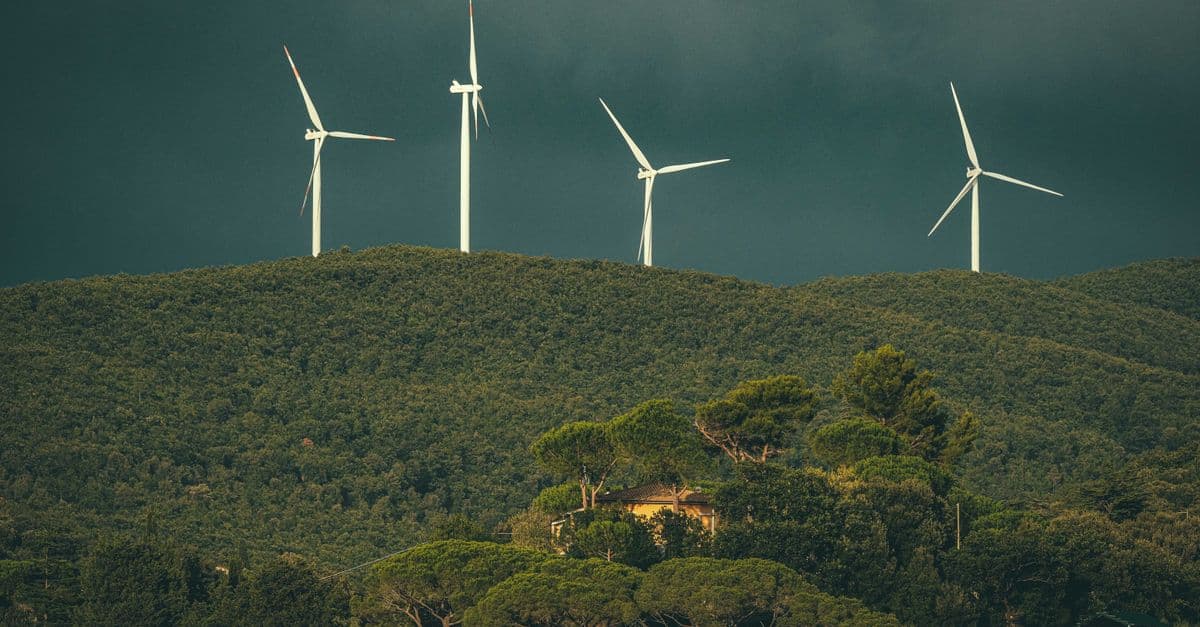
Photo: Francesco Ungaro / Pexels
Carbon markets run on a simple promise: pay for a ton of CO₂ that someone else avoided or removed, and you can call your own emissions "offset." In January 2023, a joint investigation by The Guardian, Die Zeit, and SourceMaterial found that more than 90% of rainforest offset credits certified by Verra, the world's largest voluntary carbon registry, likely did not represent real, additional carbon reductions (The Guardian, 2023). Machine learning is now being deployed across the carbon market's plumbing, from satellite-based project verification to automated pricing, to try to close that credibility gap. This article explains how those systems actually work, where they help, and where they still fall short.
Why carbon markets keep failing on trust
A carbon credit is a promissory note. One credit is supposed to represent one metric ton of CO₂-equivalent that would not have been avoided, reduced, or removed without the project that generated it. Buyers, mostly corporations trying to hit net-zero pledges, purchase credits to offset emissions they have not yet eliminated.
The problem is that "would not have happened otherwise" is a counterfactual, and counterfactuals are unverifiable by direct observation. You cannot photograph an emission that didn't occur. So the entire market depends on a chain of modeled assumptions: a baseline emissions rate, a claimed reduction against that baseline, and an independent verifier who checks the paperwork.
That chain has broken down repeatedly. The Guardian/Die Zeit/SourceMaterial analysis of Verra's REDD+ (Reducing Emissions from Deforestation and Degradation) rainforest projects found that only roughly a third of the projects showed evidence of meaningfully reduced deforestation, and that for many, deforestation threat levels had been overstated to inflate the baseline and, with it, the number of credits issued (The Guardian, 2023). Verra disputed the methodology of the analysis but has since committed to phasing out the older baseline approach (Verra statement, 2023).
Separately, forest-based credits face a physical durability problem that has nothing to do with fraud. Research on California's forest offset program found that six major wildfires between 2015 and 2021 released roughly 6 million tons of carbon from credited project areas, consuming a large share of the "buffer pool," the reserve of unsold credits set aside to insure against exactly this kind of loss (Badgley et al., bioRxiv/bark-beetle and wildfire loss studies, 2022–2024). If wildfires like California's 2020 season, which was unusually severe, recurred every four years, the buffer pool set aside for an entire century of insurance could be wiped out (Dialogue Earth, 2023).
Put those two failure modes together, permanence risk (the carbon comes back out) and additionality fraud (the reduction was never real), and you get a market where the U.S. voluntary segment traded at roughly $1.9 billion in 2022, down sharply from its 2021 peak near $2 billion, as buyers grew wary and transaction volumes nearly halved even as average prices rose (Ecosystem Marketplace, State of the Voluntary Carbon Markets 2023). That is a market losing volume specifically because trust collapsed, not because demand for climate action disappeared.
Compliance markets, the mandatory cap-and-trade systems like the EU Emissions Trading System, don't have the same additionality problem because governments allocate and retire allowances directly rather than relying on project-level counterfactuals. But they have their own volatility problem: EU allowance prices averaged roughly €65 per ton in 2024 and were projected to climb toward €80 per ton in 2025, with short-term spikes above €85 driven by policy news and weather-driven energy demand (Statista, EU ETS price data, 2024–2025; tradingeconomics.com, EU Carbon Permits). A compliance buyer trying to budget a year of emissions costs is essentially forecasting a commodity that can swing double digits in weeks.
How machine learning actually verifies a carbon credit
The most consequential application of AI in carbon markets isn't trading, it's verification: using models to check whether a claimed carbon reduction actually happened, at a scale no human auditor team could match.
Satellite-based monitoring, reporting, and verification (dMRV)
Traditional carbon credit verification relies on field surveys, sampled plots checked every few years by human foresters or auditors. That approach is slow, expensive, and covers a tiny fraction of most projects' actual land area.
Digital MRV (monitoring, reporting, and verification) systems instead train machine learning models on satellite imagery, radar, and LiDAR (a laser-based distance-measuring technology that can estimate forest canopy height and biomass from orbit) to estimate above-ground carbon stock continuously. Companies like Pachama, which has raised roughly $88 million across funding rounds including a 2023 extension, combine satellite imagery and LiDAR-trained models to independently estimate how much carbon a forest project is actually storing, compared against what the project developer claims (Crunchbase News, "AI + Carbon = Funded Startups"; Net Zero Compare, Pachama profile). Sylvera, a London-based ratings firm that raised $57 million in a 2023 Series B, applies similar geospatial modeling to independently score carbon projects rather than accepting the registry's own numbers at face value (Crunchbase News, 2023).
Think of it like the difference between an accountant who audits a company's books once a year from paper receipts, versus a bank that flags your card the moment a transaction pattern looks off. The satellite model doesn't wait for an annual site visit. It can, in principle, scan the same forest every few days and flag a drop in canopy cover before the project developer's next report is even due.
FactBox: independent verification versus self-reported data
The gap between what a project claims and what independent monitoring finds is the whole story. Pachama's stated purpose, according to its own materials, is to serve as an independent layer of verification precisely because project-reported numbers have proven unreliable often enough that buyers no longer trust them at face value.
What "fraud detection" actually means in practice
Framing this as ML that "catches fraudsters" overstates what's happening technically. Most systems don't detect intent, they detect discrepancy. A model trained on historical satellite time series for thousands of forest plots learns what normal canopy loss, regrowth, and seasonal variation look like. When a project's actual measured biomass diverges meaningfully from its claimed baseline or its reported sequestration rate, the model flags it for human review.
That distinction matters because it means the technology is good at catching measurement inflation (claiming more carbon than satellite data supports) and catastrophic loss events (a wildfire or logging operation the developer didn't disclose), but it is not a lie detector. A project that never intended fraud but simply used an outdated or overly generous baseline methodology, which was reportedly the core issue in the Guardian's Verra findings, gets caught by the same discrepancy-flagging logic even though no one necessarily acted in bad faith.
Pricing carbon with models instead of gut feel
Why carbon pricing has historically been erratic
Compliance carbon prices move on a mix of genuine supply-demand fundamentals (how many allowances the EU auctions, how fast industrial output grows) and factors that have nothing to do with the underlying physical value of a ton of avoided CO₂: speculative positioning, gas price swings that shift power generation from coal to gas or back, and political headlines about reform of the allocation system.
McKinsey's carbon market analyses model these regional price systems, including the EU ETS, California's cap-and-trade program, and the Regional Greenhouse Gas Initiative, to help corporate buyers time procurement rather than buying reflexively whenever a compliance deadline looms.
What a pricing model actually does
A carbon pricing model is a forecasting tool, not an oracle. It ingests historical price series, known regulatory triggers (like scheduled allowance auction volumes or free allocation phase-downs), energy market data, and, for voluntary credits, project-quality signals like the vintage year, project type, and independent rating scores from firms like Sylvera. It outputs a probability-weighted price range rather than a single number.
How is a fair carbon credit price determined?
There is no single "fair" price for a carbon credit because credits are not fungible the way barrels of oil are. A verified direct air capture ton and a disputed rainforest-avoidance ton both get called "one credit," but they carry very different permanence and additionality risk, which is why direct air capture credits have historically traded at a steep premium, often well over $100 per ton, compared to $5-$20 for lower-quality nature-based credits.
Where AI is genuinely being used today
Independent ratings agencies
Sylvera and BeZero Carbon both use machine learning models over satellite and geospatial data to issue independent letter-grade ratings (similar in spirit to a bond credit rating) for carbon projects, explicitly so buyers don't have to take a registry's self-reported numbers at face value (Sylvera company materials, 2023–2024).
Forest carbon monitoring platforms
Planet Labs, alongside Pachama and CTrees, applies machine learning to satellite time series to estimate forest biomass changes across millions of hectares at a fraction of the cost of ground survey teams (Planet.com, Forest Carbon product materials; PMC review, "Monitoring tropical forest carbon stocks and emissions using Planet satellite data," NCBI PMC6882785).
Buyer-side curation
Corporate offset buyers increasingly route purchases through platforms that pre-filter the credit universe using independent ratings rather than buying directly from project developers, precisely because the Guardian/Verra findings made "the registry approved it" feel insufficient as a due-diligence bar on its own. For other climate uses of AI, see AI and ocean plastic cleanup and AI and supply chain decarbonization.
Regulatory response
Because AI-based monitoring made large-scale discrepancies visible, regulators and registries have had to respond. Verra announced in 2023 that it would retire its older REDD+ baseline methodology and adopt a new consolidated methodology intended to produce more conservative, defensible baselines (Verra statement, 2023); the company also cut roughly a quarter of its staff amid the fallout and restructuring that followed (Carbon Market Watch/REDD Monitor coverage, 2023–2024).
| Function | Traditional approach | AI-assisted approach | What changes |
|---|---|---|---|
| Forest carbon measurement | Sampled field plots, checked every 3-5 years | Continuous satellite + LiDAR-trained biomass models | Coverage jumps from sample points to near-total land area |
| Project rating | Registry self-certification | Independent third-party ML ratings (Sylvera, BeZero) | Buyer gets a second opinion, not just the seller's word |
| Price discovery | OTC broker quotes, thin public data | Model-based forecasts incorporating regulatory and market signals | Narrower, more defensible price ranges, still not precise |
| Fraud/discrepancy flagging | Manual audit sampling | Automated satellite-vs-claim comparison at scale | Catches large discrepancies fast; misses subtle methodology gaming |
Table: How AI-assisted tools change carbon market functions compared to legacy manual processes, based on public materials from Sylvera, Pachama, Planet Labs, and Ecosystem Marketplace reporting.
What AI cannot fix in carbon markets
It cannot resolve the additionality problem, only narrow it
Additionality, proving a reduction wouldn't have happened anyway, is fundamentally a counterfactual claim. Better satellite data can catch a project that claimed forest was being cleared when it demonstrably wasn't. It cannot tell you with certainty whether a wind farm would have been built without carbon revenue, because that depends on financing decisions, policy incentives, and business judgment that leave no remote-sensing footprint.
It cannot make political risk disappear
A carbon tax repealed by an incoming government, or a compliance scheme's allowance cap loosened under industry pressure, collapses credit values regardless of how good the underlying monitoring data is. No model trained on historical prices reliably predicts a legislative vote. This is a case where the appropriate response is portfolio diversification across jurisdictions and project types, not better forecasting.
It cannot guarantee permanence
Even a perfectly monitored, perfectly verified forest carbon project can burn down. The wildfire research on California's buffer pool shows the insurance mechanism itself, not the measurement technology, is what's undercapitalized relative to actual climate-driven risk (bioRxiv, 2024). AI can tell you faster when a reversal has happened. It can't stop the fire.
It inherits the biases and blind spots of its training data
A model trained primarily on well-monitored regions, temperate forests with dense historical satellite coverage, may perform worse in data-sparse regions, which happen to include many of the tropical forests where deforestation risk and carbon value are highest. This is analogous to a credit-scoring algorithm trained mostly on applicants with long credit histories: it works well for the population it learned from and worse for everyone else.
Common confusions about AI in carbon markets
Is a "fraud detection score" the same as a fraud conviction?
No. A discrepancy flag from a satellite monitoring model means measured data diverges from claimed data. It triggers human review, potential credit adjustment, or registry investigation. It is evidence, not a legal finding of fraud, and reputable platforms present it that way.
Does AI pricing mean carbon credits trade like stocks now?
Not yet, and not close. Public carbon credit markets remain far less liquid and far more fragmented than equities. Model-based price forecasts help institutional buyers and traders make better-informed decisions, but voluntary market credits in particular still trade largely over-the-counter, through brokers, with far less price transparency than a listed security.
Do AI ratings replace the need for registries like Verra?
No. Ratings agencies like Sylvera and BeZero sit on top of registry-issued credits, they don't issue credits themselves. They provide a second, independent opinion on quality. The registry (Verra, Gold Standard, American Carbon Registry) still issues and tracks the credit itself.
Why did carbon credit demand hold up even after the Guardian findings?
Because compliance markets, where governments mandate participation, are structurally insulated from voluntary buyer sentiment. The EU ETS didn't lose volume after the Verra story because EU-regulated companies are legally required to hold allowances. The damage was concentrated in the voluntary segment, where participation is discretionary and reputational risk directly affects whether a company keeps buying.
Can small companies afford AI-vetted carbon credits?
Independent ratings and satellite-verified credits often carry a price premium over unrated, self-certified credits, since higher measured confidence commands a higher price, similar to how a rated bond typically trades differently than an unrated one. Cost-sensitive buyers face a real trade-off between credit price and verification confidence.
Does better monitoring technology reduce total emissions, or just reduce fraud?
Only the latter, directly. Monitoring technology improves the integrity of the offset accounting layer. It does nothing to reduce the emissions a company generates in the first place. Reduced fraud can indirectly support more climate finance flowing to genuinely effective projects, but offsetting, however well-verified, is not a substitute for cutting emissions at the source.
What's the difference between compliance and voluntary carbon markets?
Compliance markets (EU ETS, California cap-and-trade) are government-mandated systems where regulated entities must hold allowances to cover their emissions, and trading happens between those entities. Voluntary markets let any company buy credits to offset emissions on its own initiative, with no legal requirement, which is why voluntary credits face a much higher trust burden.
Are direct air capture credits more reliable than forest-based credits?
They carry substantially lower permanence and additionality risk because captured CO₂ is typically stored underground in verifiable geological formations rather than relying on a living forest's decades-long survival, which is one reason direct air capture credits have historically priced at a significant premium over forest-based nature credits.
Beyond offsets: AI-powered methane detection from orbit
Everything above concerns verifying credits after a project claims a reduction. A newer and arguably more consequential use of AI in climate finance skips the offset framework entirely: satellites that use machine learning to find and measure methane leaks directly, at the source, before anyone has issued a credit for anything.
Methane is a far more potent greenhouse gas than CO₂ over a 20-year window, and a large share of oil-and-gas methane emissions come from a small number of "super-emitter" leaks that are cheap to fix once located but hard to find from the ground. In October 2024, the nonprofit Carbon Mapper released its first public detections from the Tanager-1 satellite, which is designed to pinpoint individual methane and CO₂ plumes down to the facility level rather than reporting only regional averages (Planet.com/Carbon Mapper, "Carbon Mapper Releases First Emissions Detections from the Tanager-1 Satellite," 2024). MethaneSAT, launched by the Environmental Defense Fund in March 2024, covers wider areas at basin and national scale and applies machine learning to separate genuine methane plumes from background noise and to track how emissions from a given region change over time (MethaneSAT project materials, 2024).
Both feed into Climate TRACE, a coalition of research groups and companies training machine learning models to estimate greenhouse gas emissions from individual facilities worldwide using satellite imagery rather than relying on self-reported national inventories, which are often years out of date and easy to underreport (Carbon Mapper, "Two New Methane Satellite Programs Join the Climate Fight," 2024). This is a fundamentally different role for AI than the credit-verification work described above: instead of scoring whether a voluntary offset claim holds up, it produces an independent emissions estimate that regulators, investors, or journalists can compare against what a company or country has actually disclosed, with no offset transaction required at all.
The catch is the same one that runs through the rest of this article: detection is not enforcement. A satellite can identify a leaking valve at a specific facility with high confidence, but whether that gets fixed depends on regulatory pressure, operator cost incentives, and public disclosure norms, none of which the satellite controls. Both Carbon Mapper and MethaneSAT publish their non-commercial data openly specifically so that outside parties, not just the emitting company, can act on it (MethaneSAT, 2024).
The takeaway
AI is not rescuing carbon markets by making them trustworthy in some absolute sense. It's making the gap between what a project claims and what independently measurable evidence shows visible at a scale human auditors never could reach, which is precisely the gap that a 2023 investigation showed had been quietly hollowing out the market's credibility for years. That's a real, measurable improvement in market integrity, not a marketing gloss. But satellite models can't resolve counterfactual additionality claims, can't predict a repealed carbon tax, and can't stop a wildfire from releasing carbon a project promised was locked away for a century. Better measurement is necessary for functioning carbon markets. It was never going to be sufficient on its own, and treating a fraud-discrepancy score as proof of legitimacy would be trading one kind of overconfidence for another.
Read next:
Follow new articles
Add SciHub101 to your feed reader to see new science and technology stories.
About the Author
SciHub101 is an independent science and technology publication founded and edited by Buğra Sözeri, a software engineer and app developer based in Türkiye. AI tools assist with drafting and research. Source documentation in the existing archive is uneven, and articles are being reviewed and corrected. The Editorial Team byline identifies editorial responsibility; it does not certify specialist or independent human review. Where we compare products, anything built by our own team is labelled as such — see the editorial guidelines and About page for how corrections and disclosures work.
Related Articles
AI & Ocean Cleanup: Autonomous Robots Battle Plastic Pollution
How machine learning powers ocean cleanup robots to detect, route toward, and remove plastic from rivers and open water, and where the technology still falls short.
AI & Environmental Impact Assessments: Automating Sustainability Reviews
How machine learning speeds up environmental impact assessments for infrastructure projects, from satellite-based biodiversity scans to supply-chain carbon models.
AI & Biodiversity: Satellite Monitoring Protects Endangered Species
How neural networks detect endangered animals, track population decline, predict extinction.
Real-Time Emissions Tracking: AI Makes Carbon Visible
How AI, satellites, and grid-data APIs turn a once-a-year carbon estimate into a live number companies and regulators can act on today.
Smart Buildings & AI: How Machine Learning Cuts HVAC Energy Use
How machine learning forecasts occupancy, tunes HVAC setpoints, and flags failing equipment early, and why measured savings in offices are smaller and harder to prove than the headline numbers suggest.
AI & Sustainable Agriculture: Feeding 10 Billion Without Destroying the Planet
How machine learning cuts fertilizer and herbicide use, catches disease early, and pushes yield up without expanding farmland.