Why Does the Moon Have Phases? The Science Explained
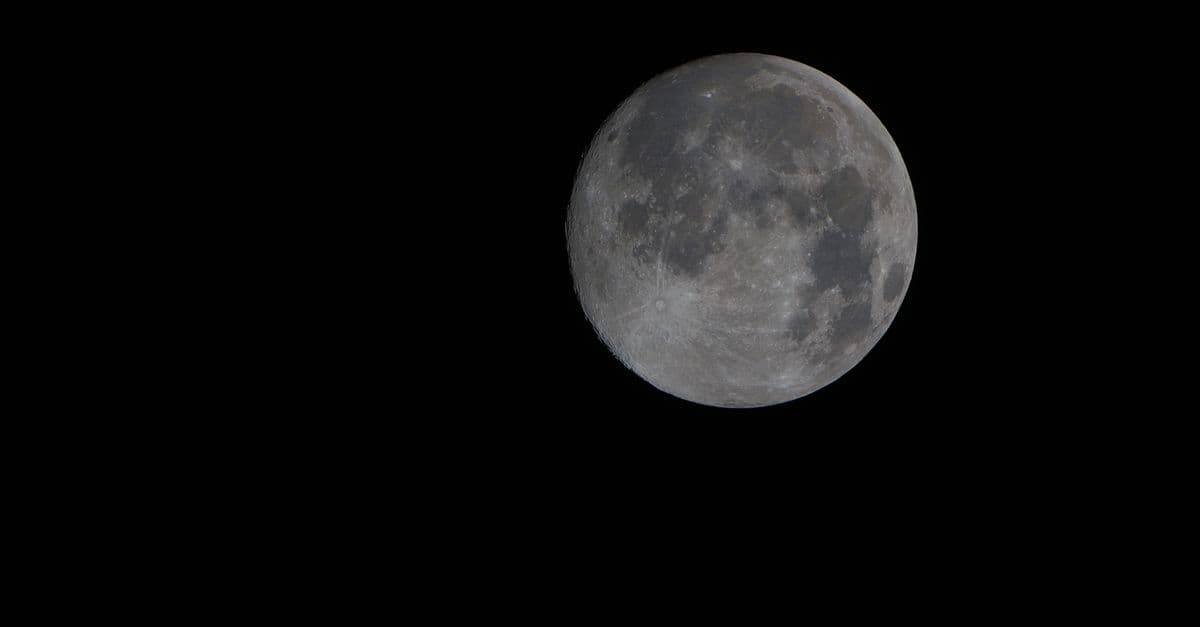
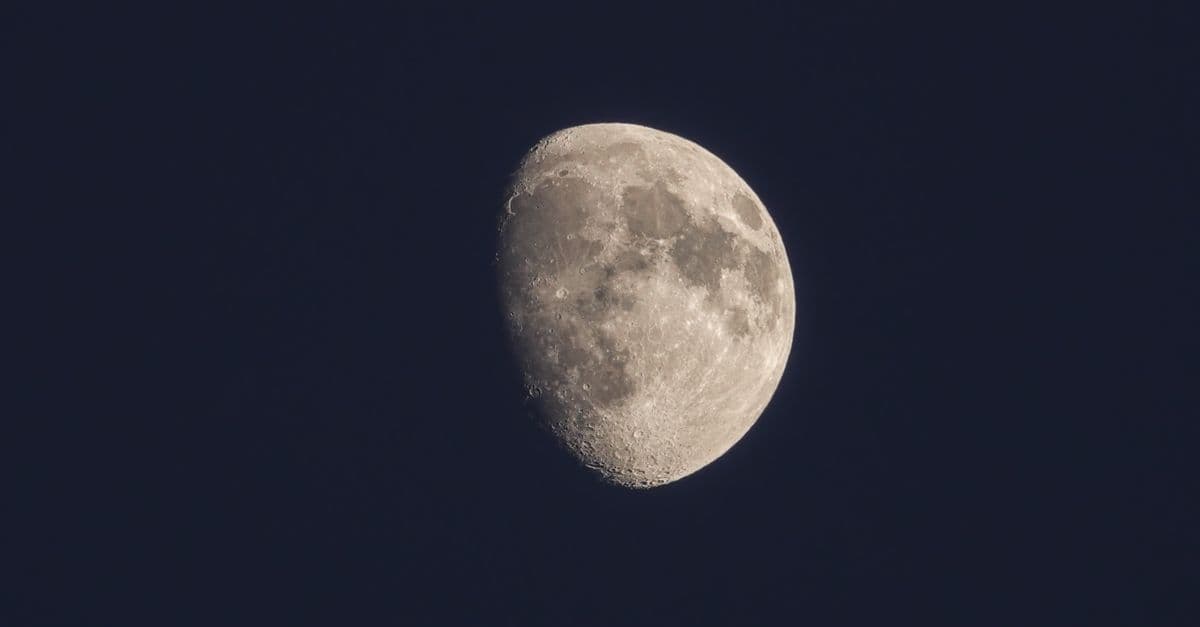
Photo: Jose Gabriel Ortega Castro / Pexels
The Moon does not generate its own light—it reflects sunlight. Half of the Moon's surface is always illuminated by the Sun, and half is always dark. What changes is not the Moon's brightness, but our view of it. As the Moon orbits Earth over a 29.5-day period called the synodic month, the angle between the Sun, Earth, and Moon constantly shifts. This changing angle determines what fraction of the Moon's illuminated hemisphere we see from our planet. The phases are pure geometry: a celestial dance of orbital mechanics and reflected light. Understanding this geometry requires abandoning one of astronomy's most persistent myths—that Earth's shadow causes the Moon to darken. In reality, the phase cycle reflects the Moon's position in its orbit, independent of any shadow, until a rare alignment during a lunar eclipse occurs. This article explains the mechanics behind lunar phases, the eight named phases and their order, why the synodic month differs from the Moon's orbital period, the tidal locking that keeps the same face toward us, and how phases shaped human calendars and still influence tides on our oceans.
How the Sun Illuminates the Moon
Solar illumination — the process by which light from the Sun strikes the Moon's surface, reflecting diffusely across its rocky terrain and into space. At any moment, the Sun illuminates exactly half of the Moon's globe, creating a terminator line between day and night on the lunar surface. This lit half is called the illuminated hemisphere.
The Moon orbits Earth while Earth orbits the Sun. From our vantage point on Earth, what matters is the relative angle between the Sun, Earth, and Moon. When the Moon is on the far side of Earth from the Sun, we see its fully illuminated face: the full moon. When the Moon sits between Earth and the Sun, we see only the dark side: the new moon. In between these extremes, we see partial illumination: a crescent, a quarter, or a gibbous shape, depending on the exact angle.
Imagine a globe in a dark room lit by a lamp. As you walk around the globe, the lamp always shines on half of it, but the amount of the lit half you see changes with your position. When you stand opposite the lamp, you see the entire lit hemisphere. When you stand between the lamp and the globe, you see only darkness. From the side, you see a half-lit crescent. The Moon works identically, except we stay fixed on Earth while the Moon orbits around us.
Source: NASA Goddard Space Flight Center (2024), Moon Phases and Mechanics, NASA Technical Publication — explains the geometry of lunar illumination and phase mechanics.
This is the core principle: the Moon has no internal light source. It is a reflector. The phases are never about the Moon dimming or brightening; they are about how much of the lit hemisphere faces Earth at any given moment.
The Eight Lunar Phases and Their Order
Astronomers recognize eight major phases, defined by the Moon's position relative to the Sun and Earth. These phases recur in a fixed order over the synodic month.
New Moon occurs when the Moon is between Earth and the Sun. The near side of the Moon faces away from the Sun and into shadow; we see a dark disk (or no visible disk at all). Waxing Crescent begins as the Moon starts to move away from this alignment. A thin sliver of light appears on the Moon's western edge. As the Moon continues eastward in its orbit, more of the illuminated hemisphere rotates into view, and the crescent grows thicker. First Quarter arrives when the Moon is 90 degrees ahead of the Sun in its orbit (as seen from Earth). Exactly half of the Moon's near side is illuminated, creating the classic half-moon shape. "Quarter" refers to the Moon being one-quarter of the way through its cycle, not the shape itself—a common source of confusion.
Waxing Gibbous follows as the Moon moves further along, and more than half of the disk becomes illuminated. The term "gibbous" means "humped" or "swollen." Full Moon occurs when Earth sits between the Sun and Moon, and the entire near side of the Moon is illuminated. The Moon reaches peak brightness and rises as the Sun sets, dominating the night sky. Waning Gibbous then begins as the Moon moves past the Earth-Sun line. It remains more than half-illuminated but begins to darken. Last Quarter appears when the Moon is 270 degrees through its cycle—three-quarters of the way around. Again, half the disk is lit, but the opposite half from First Quarter: the eastern edge glows while the western edge is dark. Waning Crescent follows as the crescent narrows, returning toward the new moon position where the cycle begins again.
| Phase | Fraction Illuminated | Position Relative to Sun | Angle from Sun (°) |
|---|---|---|---|
| New Moon | 0% | Moon between Earth and Sun | 0 |
| Waxing Crescent | 0–50% | Moon east of Sun | 0–90 |
| First Quarter | 50% | Moon 90° ahead of Sun | 90 |
| Waxing Gibbous | 50–100% | Moon approaching opposite side | 90–180 |
| Full Moon | 100% | Earth between Sun and Moon | 180 |
| Waning Gibbous | 50–100% | Moon past opposite side | 180–270 |
| Last Quarter | 50% | Moon 270° around | 270 |
| Waning Crescent | 0–50% | Moon approaching Sun | 270–360 |
Source: United States Naval Observatory (2025), Lunar Phases and Astronomical Phenomena, USNO Circular — authoritative reference for phase definitions and astronomical positions.
The terms "waxing" and "waning" describe direction of change. "Waxing" means the illuminated fraction is growing (from new toward full); "waning" means it is shrinking (from full back toward new). The complete cycle—from new moon through full moon and back to new moon—takes 29.53 days, a period called the synodic month.
The Synodic Month vs. the Orbital Period
The Moon orbits Earth every 27.32 days, a period called the sidereal month. Yet the phase cycle lasts 29.53 days, the synodic month. Why the difference?
The sidereal month is the time for the Moon to complete one full orbit relative to the distant stars. During those 27.32 days, Earth has also moved. Earth orbits the Sun, advancing roughly 1 degree per day along its orbital path. By the time the Moon has returned to the same point relative to the stars, Earth has moved about 27 degrees along its orbit around the Sun. The Sun and Moon are no longer aligned from Earth's perspective.
To achieve the same alignment with respect to the Sun—the condition for a new moon or full moon—the Moon must travel an additional distance in its orbit. It takes the Moon about 2.2 additional days to catch up to this new Earth-Sun geometry. Thus, 27.32 days plus roughly 2.2 days equals 29.53 days: the synodic month.
Think of runners on a circular track. Runner A completes a lap in 27 seconds. Runner B (on an inner loop, like Earth around the Sun) completes a lap in 10 seconds. After Runner A's lap, Runner B has lapped them. For A and B to align again, A must run partway through a second lap. The time from alignment to alignment is longer than A's single-lap time.
Source: Meeus, J. (1998), Astronomical Algorithms, Second Edition, Willmann-Bell — the definitive reference for lunar orbital mechanics and synodic period calculations.
This distinction between sidereal and synodic periods is crucial for understanding both lunar phases and calendars. The Islamic lunar calendar uses synodic months (12 per year, 354.36 days), which causes the calendar to drift relative to the solar year. The Hebrew calendar intercalates extra lunar months to keep in sync with seasons. The Gregorian calendar, used in most of the modern world, is solar (365.24 days per year) and largely ignores the lunar cycle, though Easter's date is still determined partly by lunar phases.
Phases Are Not Earth's Shadow: The Eclipse Myth Debunked
The most widespread misconception about lunar phases is that they result from Earth's shadow falling on the Moon. This is false. Earth's shadow plays a role only during a lunar eclipse, a rare event that occurs roughly twice per year and lasts a few hours. Phases occur regardless of whether Earth's shadow is involved.
A lunar eclipse happens when the Sun, Earth, and Moon are nearly perfectly aligned, with Earth directly between the Sun and Moon. In this configuration, Earth's shadow sweeps across the Moon's face, darkening it. This is a special event, not the regular rhythm of phases. During most new moons, Earth's shadow is not on the Moon; the Moon simply lies between Earth and the Sun and we cannot see its far side, which is the only side illuminated.
The phase cycle is entirely due to orbital geometry and the changing angle between Sun, Earth, and Moon. As the Moon orbits, it is always half-illuminated by the Sun. The phases simply reveal or conceal that illuminated hemisphere depending on our viewing angle. Earth's shadow is too small and too far away to block significant sunlight at the Moon's distance (384,400 km away) except in the rare, geometrically precise moment of a lunar eclipse. For the other 354 days of the lunar year, phases are determined purely by the Moon's orbital position, not by any shadow.
Source: Pasachoff, J.M. & Filippenko, A.V. (2013), The Cosmos: A Travelers Guide to the Universe, Fourth Edition, Pearson Education — a comprehensive college astronomy text clarifying lunar phases vs. eclipses.
Why is this myth so persistent? Intuitively, people associate "dimming" with "shadow," so a darkening Moon seems to suggest Earth's shadow. In fact, the darkening is a perspective effect: as the Moon moves away from the point where we see full illumination, less of the lit hemisphere faces us. No actual shadow movement is involved. A lunar eclipse would involve actual shadow, but it is a distinct and much rarer phenomenon, occurring only when alignments are nearly perfect.
Tidal Locking: Why We Always See the Same Face
We always see the same face of the Moon. This is not accident; it is the result of tidal locking, a gravitational phenomenon that has shaped the Moon over billions of years.
When the Moon formed (roughly 4.5 billion years ago), it rotated on its axis much faster than it does today. But Earth's gravity exerts a tidal force on the Moon, pulling it in ways that depend on the Moon's position in its orbit and its rotation. Over time, these tidal forces acted as a brake, slowing the Moon's rotation. Eventually, the Moon's rotation period (the time for one spin on its axis) synchronized with its orbital period (the time to orbit Earth). This is tidal locking.
Once locked, the Moon presents the same face toward Earth perpetually. From Earth's perspective, the Moon spins while remaining stationary—we see the same mountains, craters, and valleys night after night. The far side of the Moon, invisible from Earth until spacecraft photographed it in 1959, was a mystery for all of human history.
This tidal locking is not unique to the Moon. Large moons throughout the solar system are tidally locked to their host planets. Ganymede and Europa, moons of Jupiter, are locked. Titan, moon of Saturn, is locked. Many exoplanets are believed to be tidally locked to their host stars, meaning one side eternally faces the star (and is scorched) while the other side eternally faces away (and is frozen). Tidal locking is a natural consequence of gravity and orbital mechanics.
Source: Murray, C.D. & Dermott, S.F. (1999), Solar System Dynamics, Cambridge University Press — the authoritative text on orbital mechanics and tidal forces.
Despite tidal locking, we can see slightly more than exactly 50% of the Moon's surface over time. A phenomenon called libration—a gentle rocking of the Moon relative to Earth—allows us glimpses of about 59% of the lunar surface across many months or years. Libration occurs because the Moon's orbit is slightly elliptical, so its distance and orbital speed vary. When the Moon moves faster in its orbit but its rotation remains constant, we see a bit more of the far side (and vice versa). But at any given moment, tidal locking ensures the same face is centered toward us.
How Lunar Phases Drive Tides on Earth
Lunar phases and ocean tides are often confused as cause-and-effect, but the relationship is more subtle. The phases do not cause the tides; instead, the Moon's gravity causes the tides, and the phases reflect the Moon's position in orbit.
The Moon's gravity pulls on Earth's oceans, creating a tidal bulge on the side of Earth nearest the Moon. Simultaneously, by Newton's third law and the geometry of gravity, another bulge forms on the far side of Earth. As Earth rotates beneath these two bulges, most coastal areas experience two high tides per day. The magnitude of the tide—how high the high tide is and how low the low tide is—depends on the positions of both the Moon and the Sun.
At full moon and new moon, the Sun and Moon are aligned on the same side of Earth (full) or opposite sides (new). In either alignment, their gravitational pulls reinforce each other, producing especially pronounced tides called spring tides. The word "spring" here means "to spring forth" or surge upward, not the season. Spring tides occur roughly every 14 days.
At first quarter and last quarter, the Sun and Moon are at right angles as seen from Earth. Their tidal forces partially cancel each other out, producing smaller tides called neap tides. Neap tides are also roughly 14 days apart, occurring halfway between spring tides.
Source: Brown, E.W. (1919), An Introductory Treatise on the Lunar Theory, Dover Publications (reissued 1960) — foundational work on lunar orbital mechanics and tidal theory.
This tidal rhythm shapes life in coastal ecosystems. Intertidal organisms time their reproductive cycles to spring tides, when high water extends furthest up the shore and low water recedes furthest, creating favorable conditions. Human cultures in coastal regions—from medieval monasteries to modern port cities—have synchronized activities to tidal patterns. The phrase "many hands make light work" may derive from medieval tidal mills, which operated only at certain tide phases.
How Lunar Phases Shaped Human Calendars and Culture
For most of human history, the Moon was the primary timekeeping reference. Its phases are visible to the naked eye, occur on a predictable schedule, and provided a natural month-long unit for organizing life.
The word "month" derives from "Moon." Most human cultures developed lunar or lunisolar calendars. The Islamic calendar, still in use by nearly 2 billion people, is purely lunar: 12 months of 29 or 30 days, totaling 354 or 355 days per year. This means the calendar drifts backward through the solar seasons, so Ramadan, the 9th month, occurs at different times of year over a 33-year cycle. The Hebrew calendar, used in Judaism, is lunisolar: months are lunar (beginning with the new moon), but intercalated leap months are added to keep the calendar aligned with solar seasons and agricultural cycles.
The ancient Egyptians, Babylonians, and Greeks all used lunar or lunisolar calendars. The Gregorian calendar, adopted in 1582 and now the international standard, is solar (based on Earth's year around the Sun), but even so, the date of Easter is determined partly by lunar phases: it is the first Sunday after the first full moon following the spring equinox. This hybrid calculation preserves a lunar influence on the most important Christian holiday.
Many cultures marked major events by lunar months. Pregnancy is dated by lunar months (40 weeks, or roughly 9 lunar months). The word "lunatic" derives from a belief that the full moon influenced madness, a notion without biological basis but psychologically influential for centuries. Modern medicine discounts lunar influence on human psychology or behavior, yet the cultural association persists.
Source: Duncan, D.E. (1998), Calendar: Humanity's Epic Struggle to Determine a True and Accurate Year, Avon Books — comprehensive history of how lunar phases shaped timekeeping.
The phase cycle is also tied to human language. "Crescent" adorns flags and religious symbols across Islamic cultures (Islam being lunar-calendar-based). "Gibbous" is less commonly used in everyday speech but remains standard astronomical terminology. "Wax" and "wane" are poetic metaphors—"waxing enthusiastic" still means growing in enthusiasm, derived from the Moon's waxing phase.
The Takeaway
The Moon's phases are not magical or mysterious; they are straightforward consequences of orbital geometry and reflected light. The Sun always illuminates half of the Moon. As the Moon orbits Earth over 29.5 days, the angle between the Sun, Earth, and Moon changes continuously, revealing different amounts of that illuminated hemisphere. When the Moon is between Earth and the Sun, we see darkness (new moon). When Earth is between them, we see full illumination (full moon). The crescent, quarter, and gibbous shapes occur in between. The synodic month (29.53 days) differs from the sidereal month (27.32 days) because Earth moves in its orbit around the Sun, forcing the Moon to "lap" us to reach the same phase alignment. Tidal locking keeps the same face turned toward us, so despite the Moon's orbit, we see a constant near side. Eclipses—true shadows—are separate, rare events. And finally, the phase cycle, visible for millennia before telescopes or spacecraft, shaped human timekeeping, language, and culture so deeply that lunar influence lingers in calendars and metaphors to this day.
Frequently Asked Questions
Q: Why can't we see the new moon?
A: During a new moon, the Moon is positioned between Earth and the Sun. The only side of the Moon that is illuminated—the side facing the Sun—is directed away from us. We see the dark, unlit side of the Moon, which reflects no sunlight. Occasionally, a thin sliver of the new moon becomes faintly visible near sunset or sunrise because of sunlight refracted through Earth's atmosphere or scattered from Earth's surface—a phenomenon called earthshine that also illuminates the dark side slightly.
Q: Is the full moon really brighter than other phases?
A: Yes, the full moon is roughly 9 times brighter than a half-moon and is the brightest lunar phase. This is because we see the entire sunlit hemisphere. Additionally, at full moon, the Moon is fully lit and positioned opposite the Sun, so it receives unobstructed sunlight and reflects it directly back at Earth. The brightness scales with the illuminated fraction, so a crescent moon, only about 5–10% illuminated, is faint enough to be invisible in twilight.
Q: Does the Moon really affect tides?
A: Yes, the Moon's gravity is the primary driver of ocean tides. The Moon pulls on Earth's oceans, creating a bulge on the side nearest the Moon and (by orbital mechanics) another on the far side. The Sun contributes to tides as well, but its effect is about 46% as strong as the Moon's because the Sun is much farther away. The tidal effect is strongest (spring tides) when the Sun and Moon are aligned and weakest (neap tides) when they are perpendicular.
Q: Why do we always see the same side of the Moon?
A: Tidal locking occurred billions of years ago. Earth's gravity slowed the Moon's rotation until it matched the Moon's orbital period (29.5 days). Now the Moon rotates once per orbit, so the same face always points toward Earth—just as the same face of a tennis ball would point toward you if it spun exactly once while revolving around you. This is not unique to the Moon; large moons and many exoplanets are tidally locked.
Q: What is the difference between a lunar eclipse and a new moon?
A: Both involve the Moon positioned between Earth and the Sun, but the difference is crucial. At a new moon, the Moon is between Earth and the Sun but not aligned perfectly. Earth's shadow misses the Moon entirely. At a lunar eclipse, the alignment is nearly perfect: Earth's shadow sweeps across the Moon, and we see the Moon darken (or turn reddish during a total lunar eclipse). Lunar eclipses occur 2–4 times per year; new moons occur roughly 12 times per year. Phases are ordinary; eclipses are special.
Q: Can we see lunar phases on other planets' moons?
A: Yes, and we do through telescopes and spacecraft cameras. Jupiter's moons (particularly Io, Europa, Ganymede, and Callisto) show clear phases as seen from Earth. These are smaller and dimmer than our Moon, so they are harder to observe with the naked eye, but Galileo saw them with his early telescope and recognized them as moons orbiting Jupiter, not Earth. The phases work identically: the amount of the sunlit hemisphere we see depends on the moon's orbital position relative to the Sun and the planet.
Read next:
Follow new articles
Add SciHub101 to your feed reader to see new science and technology stories.
About the Author
SciHub101 is an independent science and technology publication founded and edited by Buğra Sözeri, a software engineer and app developer based in Türkiye. AI tools assist with drafting and research. Source documentation in the existing archive is uneven, and articles are being reviewed and corrected. The Editorial Team byline identifies editorial responsibility; it does not certify specialist or independent human review. Where we compare products, anything built by our own team is labelled as such — see the editorial guidelines and About page for how corrections and disclosures work.
Related Articles
Why Is Mars Red? The Science of the Red Planet
Mars looks red because iron in its dust and surface rocks has oxidized into rust-colored minerals. A 2025 study argues the main pigment is ferrihydrite, a water-bearing iron mineral, and that planet-wide winds spread the fine powder that gives Mars its color.
Why Do We Have Seasons? The Science of Earth's Tilt
Earth's 23.5-degree axial tilt, not its elliptical orbit, is why we have seasons. The tilt means each hemisphere receives more direct sunlight and longer daylight hours for part of the year (summer), then less direct light and shorter days for another part (winter). The two hemispheres always experience opposite seasons simultaneously. Solstices and equinoxes mark the extremes and midpoints of this tilt cycle.
What If Earth Had Two Moons? The Science of a Twin-Moon World
A second moon would change tides, eclipses, calendars, and possibly life itself. Here's exactly what would happen — based on real orbital physics — if we suddenly had two moons.
What Causes Tides? Moon, Sun, and Earth
What causes ocean tides? The Moon's differential gravity, why there are two high tides daily, spring and neap tides, and tidal locking — explained.
What If Earth Had No Moon?
The Moon is more than a nightlight. It holds Earth's tilt steady, drives our tides, and may have made complex life possible.
Why Do Stars Twinkle? The Science of Atmospheric Seeing
Stars twinkle because Earth's turbulent atmosphere bends starlight in constantly shifting ways. Because stars are infinitely distant, they act as point sources, so even tiny bends in light rays cause dramatic brightness and color flickers. Planets, being much closer, show a small disk that averages out the jitter. Twinkling is worst near the horizon and is why the best observatories sit on mountaintops or in orbit.