How the Solar System Formed: From Spinning Dust to Eight Planets
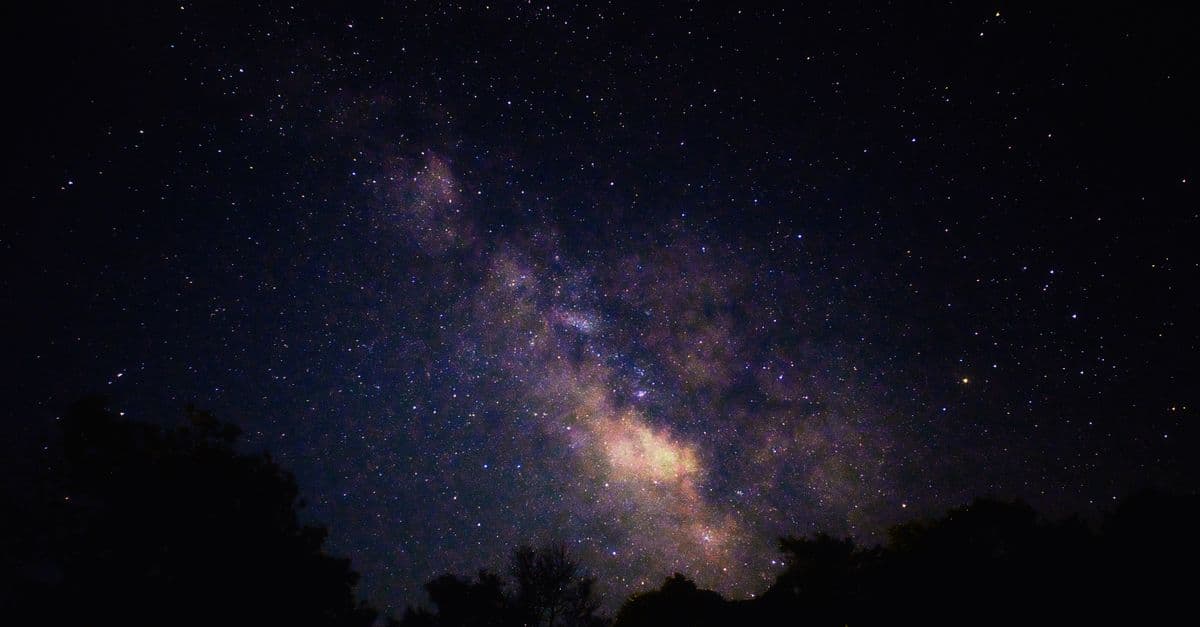
Photo: shota legashvili / Pexels
The solar system is about 4.57 billion years old, a figure read from the oldest solid grains preserved in meteorites. In that time a cloud of gas and dust became a star, eight planets, and countless smaller bodies. How the solar system formed is a chain of steps, from collapse to pebbles to planets to rearrangement, and some links are still argued over. This piece lays out the chain, the evidence for each step, and where that evidence runs out.
Key takeaways
- Solar nebula hypothesis: The Sun and planets formed from a rotating disk of gas and dust left over when a cloud collapsed. Images of young stars with disks, such as HL Tauri, show the same process in other systems.
- The clock: The oldest dated solids in meteorites, calcium-aluminum-rich inclusions, are about 4,567 million years old.
- Snow line: Beyond a distance of a few AU, water ice could survive. That boundary separated small rocky planets from giant planets that could grab gas.
- A race against time: Giant planets had to form before the gas disk vanished, which took roughly 3 to 10 million years.
- Rearrangement: The Grand Tack and the Nice model propose that the giant planets moved after they formed. Both are still debated, and the evidence for a "Late Heavy Bombardment" is weaker than textbooks once suggested.
How old is the solar system, and how do we know?
No rock on Earth is old enough to date the solar system's beginning, because plate tectonics and erosion have recycled the planet's early crust. Meteorites are different. Many are fragments of small bodies that never grew into planets, and they preserve the first solids that condensed from the disk. The oldest of these are calcium-aluminum-rich inclusions (CAIs), pale, irregular grains found in carbon-rich meteorites. They contain minerals that condense at very high temperatures, which makes them the first things to freeze out of the hot nebula.
Dating relies on the slow radioactive decay of uranium into lead, measured by comparing two uranium-to-lead decay chains in the same sample. In a widely cited 2012 study in Science (Connelly and colleagues), CAIs were dated to 4567.30 plus or minus 0.16 million years. The same study found that chondrules, the small rounded droplets that make up most of a common meteorite type, formed from about 4567.3 down to about 4564.7 million years ago, a span of roughly three million years. That overlap refuted an older view that chondrules formed millions of years after CAIs. The CAI value is the standard reference but not the last word. A 2022 reanalysis argued that a different statistical treatment pushes the time zero back to about 4568.4 million years, so the first-solids age is still being tuned at the level of a million years (Desch et al., arXiv:2212.00390).
For a rough sense of how this works, think of the meteorites as a stratified archive: the CAIs are the bottom drawer and the chondrules are the next. The planets, which melted and reworked themselves, tell us much less about the first million years. Our guide to how scientists measure the age of Earth explains why the planet itself gives a slightly younger answer.
| Time after the first solids | Event | Evidence |
|---|---|---|
| 0 | Calcium-aluminum-rich inclusions condense | Pb-Pb ages of about 4567.3 million years |
| About 0.1 million years | Inner-disk embryos reach about 0.05 Earth masses and stop growing | Planet-formation models |
| Under 1 million years | Jupiter's core reaches about 20 Earth masses | Mo and W isotopes in iron meteorites (Kruijer et al. 2017) |
| 1 to 4 million years | Two separate reservoirs of disk material stay apart, probably walled off by Jupiter | Same isotope work |
| 3 to 10 million years | Solar wind clears the leftover gas | Observations of young stars |
| Under 100 million years | Rocky planets finish growing; Moon-forming impact | Simulations; lunar samples |
| Disputed: early, or hundreds of millions of years in | Giant-planet instability (Nice model) | Dynamical simulations |
How a cloud collapsed into a disk
The idea that the planets condensed from a rotating cloud is old. Emanuel Swedenborg, Immanuel Kant, and Pierre-Simon Laplace developed versions of it in the 18th century, and it survived because the alternatives, such as planets torn from the Sun by a passing star, could not explain the evidence. The modern version starts with a cold, dense core inside a larger molecular cloud, a kind of stellar nursery. The presolar cloud had a mass just over one Sun and was about 98 percent hydrogen and helium, with roughly 2 percent heavier elements, which had been forged in earlier generations of stars (Wikipedia, "Formation and evolution of the Solar System").
What set off the collapse is not settled. One clue is iron-60, a radioactive isotope with a half-life of about 2.6 million years that is made mainly in massive stars and their explosions. Its presence in ancient meteorites indicates that at least one nearby supernova occurred around the time of formation, and a shock wave from one may have helped squeeze the cloud. Aluminum-26, another short-lived isotope, is a harder case. Whether it points to a birth cluster that contained massive stars is under debate, and it is not safe to say that a supernova definitely triggered the collapse.
Gravity does the rest. As the cloud contracted, conservation of angular momentum made it spin faster, the same way a figure skater spins faster when pulling in her arms. Rotation resists collapse sideways but not along the spin axis, so the cloud flattened into a disk. In one standard account the process took about 100,000 years and produced a disk roughly 200 AU across. An astronomical unit (AU) is the average distance from Earth to the Sun, about 150 million kilometers (93 million miles).
The Sun took almost everything. Using NASA's planetary fact sheet, the Sun's mass is about 332,900 times Earth's, and the planets together add up to roughly 447 Earth masses, which is about 0.13 percent of the Sun's. Jupiter alone is 317.8 Earth masses, so the Sun is about 1,048 Jupiters. Everything else in the system, planets, moons, asteroids, and comets, is a rounding error in the budget (NASA Planetary Fact Sheet, mass ratios). Even so, that rounding error is where all the interesting chemistry lives.
What young stars show us: HL Tauri
None of this is only theory. The strongest check on the picture is to look at other young stars. In November 2014, the European Southern Observatory released an image of HL Tauri, a star about 450 light-years away, taken with the ALMA array in Chile. The star is at most about a million years old, yet its disk already shows a series of concentric bright rings separated by dark gaps. The astronomers called the gaps "almost certainly the result of young planet-like bodies that are being formed in the disc." The resolution, about 35 milliarcseconds, was sharper than Hubble routinely achieves, and the image suggested that planet formation may start faster than earlier models assumed (ESO press release eso1436).
Not every ring means a planet, and some may come from other effects, so HL Tauri is a good example of how evidence is read cautiously. Still, observations of many young disks agree that they are flat, rotating, and made mostly of gas with a small fraction of dust. For a closer look at the structure of these disks, see our explainer on protoplanetary disks and how planets form.
Why the snow line split the planets in two
Temperature fell with distance from the young Sun. Close in, it was too hot for volatile compounds such as water, ammonia, and methane to freeze, so only metals and silicates could form solids. The region inside about 4 AU was too warm for volatile ices. Beyond the snow line (also called the frost line), water ice could condense. The exact distance depends on the model and changed as the disk evolved, but it lay somewhere between roughly 3 and 5 AU.
Ice matters because it is abundant. Water ice is one of the most plentiful solids a disk can offer, so crossing the snow line meant a sizable jump in the amount of solid material available to build planets. Think of it as a lumber yard that suddenly gets a much larger delivery: beyond the line, cores could grow big enough to attract the surrounding hydrogen and helium.
| Planet | Distance from Sun (AU) | Mass (Earth = 1) | Type |
|---|---|---|---|
| Mercury | 0.387 | 0.0553 | Rocky |
| Venus | 0.723 | 0.815 | Rocky |
| Earth | 1.00 | 1.00 | Rocky |
| Mars | 1.52 | 0.107 | Rocky |
| Jupiter | 5.20 | 317.8 | Gas giant |
| Saturn | 9.57 | 95.2 | Gas giant |
| Uranus | 19.17 | 14.5 | Ice giant |
| Neptune | 30.18 | 17.1 | Ice giant |
Source: NASA Planetary Fact Sheet, ratios to Earth (NASA NSSDCA). The pattern is plain in the table: four small planets inside the snow line, and four planets beyond it that are 14 to 318 times Earth's mass. The leap in mass from Mars to Jupiter is more than a factor of 2,900.
For the rest of the solar system's contents, our guide to the planets of the solar system covers each world in turn.
From dust to planetesimals, and the meter barrier
Building a planet starts with grains of dust a fraction of a micrometer across. Gentle collisions at low speeds let them stick, probably through weak electrostatic forces, forming fluffy aggregates that grow to millimeters or centimeters. These are the pebbles of the disk.
Then comes a hard problem called the meter barrier. Gas in the disk orbits slightly slower than a solid body would, because gas is partly supported by its own pressure. A boulder-sized object feels this as a headwind, loses orbital energy, and spirals toward the Sun in far less time than it would take to grow bigger. At the same time, collisions between larger objects at higher speeds tend to bounce or shatter them. A body would have to grow through that size range faster than it can drift away or fall apart.
The leading way around this is the streaming instability, a feedback loop between gas and pebbles. Where pebbles are slightly denser, they drag the gas along with them and reduce the headwind for their neighbors, so more pebbles accumulate into clumps. If a clump becomes dense enough, it collapses under its own gravity into a planetesimal, a body tens to hundreds of kilometers across, skipping the boulder stage. A related process, pebble accretion, lets a growing body sweep up the drifting pebbles that pass by, which speeds growth greatly compared to collecting planetesimals one by one. Both are active research areas, and neither has been observed in action directly.
Once planetesimals exist, gravity takes over from stickiness. Larger bodies attract smaller ones, a process called runaway growth, and the biggest gain mass fastest. In the inner disk, models show planetary embryos reaching about 0.05 Earth masses and ceasing to accumulate about 100,000 years after the Sun formed (Wikipedia, "Formation and evolution of the Solar System"). The leftover planetesimals, preserved in places where no planet formed, are what we now call asteroids, comets, and meteors.
How the rocky planets finished: giant impacts
The last stage of rocky-planet building was messy. A swarm of embryos, each somewhere between the size of the Moon and Mars, pulled on each other and collided. Computer simulations typically produce a handful of rocky planets from such a swarm, though the details of each run differ because the outcome is chaotic. Collisions and mergers that completed terrestrial growth took less than 100 million years.
These impacts were not gentle. They melted whole planets, which let heavy iron sink to form cores and left lighter silicate rock above. The best-supported example is the Earth-Moon system: a Mars-sized body probably struck the proto-Earth near the end of this period, and the debris coalesced into the Moon.
How the giant planets won a race against time
Giant planets had a deadline. The hydrogen and helium they needed was available only while the gas disk lasted, and observations of young stars indicate the gas was cleared by the solar wind and radiation after about 3 to 10 million years. A core had to reach a critical mass before then.
The leading explanation is core accretion. A rocky and icy core grows first. When the core reaches roughly 10 Earth masses, gas begins to pile onto it faster and faster, in a runaway that ends when the nearby gas runs out or the disk disperses. Imagine building a sandcastle below the tide line: the castle must be finished before the water arrives, because once the tide comes in, you can only build what fits in the time left. Jupiter finished early.
Evidence for Jupiter's speed comes from meteorites. In 2017, Kruijer and colleagues measured molybdenum and tungsten isotopes in iron meteorites and found two chemically distinct populations that coexisted but stayed separate from about 1 to 3 or 4 million years after the solar system's start. They argued that a growing Jupiter opened a gap in the disk that blocked mixing between the inner and outer regions. On this reading, Jupiter's core was about 20 Earth masses within 1 million years and about 50 Earth masses by 3 to 4 million years, which makes it the oldest planet (Münster/Kruijer et al., PNAS 2017, summarized by Phys.org).
Saturn followed, then Uranus and Neptune, whose cores grew more slowly in the sparse outer disk. By the time the gas was gone, Uranus and Neptune had each captured no more than about one Earth mass of hydrogen and helium, which is why they are classed as ice giants with mostly rock and ices by mass. Together the four giants make up just under 99 percent of the mass that orbits the Sun, so the solar system is essentially a Sun, plus Jupiter, plus a long list of minor parts.
Did the giant planets move? The Grand Tack
The planets did not necessarily form where we see them. Two influential models, built to explain different puzzles, say they migrated.
The first, the Grand Tack, deals with an inner-system problem. Early simulations tended to produce a Mars far more massive than the real one, which is only 0.107 Earth masses. In a 2011 Nature paper, Walsh, Morbidelli, Raymond, O'Brien, and Mandell proposed that Jupiter formed near 3.5 AU and migrated inward with the gas disk, down to about 1.5 AU. Saturn migrated faster, was captured into a resonance with Jupiter, and the pair reversed course and moved outward, a turn the authors compared to a sailboat tacking around a buoy.
On the way in, Jupiter would have truncated the planetesimal disk near 1 AU, leaving little material for Mars, and the simulated mass ratio of Earth to Mars came out consistent with the real one. The same journey would have emptied the asteroid belt and then refilled it, with material from both sides of Jupiter's original orbit. That mixture matches the dry rocky asteroids and the primitive, carbon-rich ones now found side by side (Walsh et al. 2011, summarized at SwRI/ScienceDaily).
The Grand Tack is not universally accepted. Later work argued that a fading disk would favor capture of Saturn in a different resonance, which does not reverse migration, and the model largely ignores the continuing growth of the giants. Other explanations for a small Mars include a sparse inner disk because solids drifted inward early, or an early instability that removed mass from that region (Wikipedia, "Grand tack hypothesis").
The Nice model: a later reshuffle
The second model concerns the outer system. Published in three papers in Nature in 2005 by Gomes, Levison, Tsiganis, and Morbidelli, and named for the French city of Nice, the Nice model begins with the four giant planets on nearly circular orbits, closer to the Sun and tighter together than they are now, surrounded by a disk of icy planetesimals totaling about 35 Earth masses. Encounters with those planetesimals made the planets drift slowly. After hundreds of millions of years, Jupiter and Saturn crossed a mean-motion resonance, which means their orbital periods fell into a simple ratio. That boosted their eccentricities and destabilized the whole system.
Saturn's pull sent Uranus and Neptune onto wide, elongated orbits, and they plowed through the outer disk, scattering most of it. In about half of the original simulations, the two ice giants swapped places. The model offered a unified explanation for the structure of the Kuiper belt, the capture of Trojan asteroids, and some irregular moons, and it linked the instability to a surge of impacts on the inner planets (Wikipedia, "Nice model"). For more on the distant debris, see the Oort cloud and Kuiper belt. Neptune's largest moon is also thought to be a captured body, as described in Triton: Neptune's captured moon.
The model has changed a great deal since 2005. "Nice 2" proposed that the instability came late, triggered by interactions with Pluto-sized bodies. A "jumping Jupiter" version has an ice giant scatter first off Saturn and then off Jupiter, so that the two big planets separate in steps rather than smoothly, which protects the inner planets from being disturbed too much. A five-planet version, with an extra ice giant that was ejected, puts the instability early, before the terrestrial planets finished forming. If that is right, the instability cannot have caused a late bombardment. Critics point to mismatches with the asteroid belt's orbits, and one summary concludes that no computer model yet satisfactorily explains the full architecture of the solar system. The Nice model is best described as a productive framework still under revision.
Was there a Late Heavy Bombardment?
The idea comes from the Moon. Apollo missions brought back impact-melt rocks whose ages cluster between about 3.8 and 4.1 billion years ago. A 1974 paper by Tera and colleagues interpreted the clump as a sharp spike in impacts about 3.9 billion years ago, a "terminal lunar cataclysm." The Nice model's instability seemed to provide a cause. The hypothesis was attractive because it linked rocks on the Moon to a dynamic story about giant planets (Wikipedia, "Late Heavy Bombardment"). For the cratering record itself, see why the Moon has so many craters and the Apollo program's science legacy.
The trouble is sampling. The Apollo 15, 16, and 17 sites were picked near the Imbrium, Nectaris, and Serenitatis basins, and many melt rocks may simply be debris from one giant impact, Imbrium, rather than records of many. Others argue that the lack of older melt ages reflects resetting of the older samples rather than a quiet early period. In 2016, Boehnke and Harrison showed how losing argon from a steadily declining impact rate could produce an apparent cluster near 3.9 billion years. By 2018 an article in Nature described the debate as unresolved. A more cautious reading today is that heavy bombardment of the Moon was real and declined with time, but that a sudden late spike is not established.
The question matters for life. If a global storm of impacts hit Earth around 3.9 billion years ago, it could have sterilized the surface repeatedly. Early claims of chemical traces of life in the oldest rocks have been disputed, and models suggest microbes might have survived near hydrothermal vents. In short, the bombardment debate leaves the timing of life's origin open rather than closing it.
Why the asteroid belt never became a planet
Between Mars and Jupiter orbits a belt of rocky debris whose combined mass is only about 3 to 4 percent of the Moon's. Ceres, the largest body, holds roughly a third of it, and the four largest bodies, Ceres, Vesta, Pallas, and Hygiea, account for about 60 percent. Despite its popular image, the belt is mostly empty space.
Jupiter is the usual suspect. Its gravity created orbital resonances in the belt that stirred up velocities, turning collisions from gentle mergers into destructive impacts. The Grand Tack adds a second effect: Jupiter's journey inward and back out would have scattered and depleted the original population. In that picture, the belt is a thin remnant, not a failed planet in the sense of a planet that was assembled and then smashed. The fragments are now studied through meteorites and sample-return missions, as described in how asteroid samples reveal solar system history.
Where did Earth's water come from?
Earth formed inside the snow line, where water ice was unstable, so its building blocks might have been dry. For decades the standard answer was that wet asteroids or comets delivered the oceans later. A 2020 study in Science by Piani and colleagues challenged that. They measured hydrogen in 13 enstatite chondrites, a rare group of meteorites that formed in the inner solar system and have an isotopic makeup like Earth's mantle, and found that they held enough hydrogen to supply at least three times the water in today's oceans. The isotopes of Earth's seawater fit a mixture of about 95 percent water from such material and 5 percent from comets or water-rich asteroids.
The caveats are significant. Enstatite chondrites make up under 2 percent of meteorites, and of the 13 samples only 11 kept their original water content, so the sample is small. The 95-to-5 split is an inference from isotope mixing, not a direct measurement (CNRS). The result does not rule out later deliveries, and Earth probably got water from more than one source.
Sample returns provide a second line of evidence. Two papers in January 2025, in Nature and Nature Astronomy, reported on material that NASA's OSIRIS-REx brought from the asteroid Bennu. They found 14 of the 20 amino acids that life on Earth uses to build proteins, traces of 11 salt minerals that form as brine evaporates, and a high abundance of ammonia. None of this is evidence for life, but it shows that small primitive bodies carried water and organic compounds, which suggests such raw materials were widespread early in the solar system (Sci.News summary of the papers). Mars is a useful comparison for what happens to an inner planet's water over time, covered in why Mars lost most of its atmosphere.
How the solar system compares with other planetary systems
For most of history there was only one example. Now there are thousands. NASA announced on September 17, 2025, that its count of confirmed exoplanets had reached 6,000, and the catalog includes hot Jupiters that orbit closer to their stars than Mercury orbits the Sun, planets orbiting two stars, and worlds around dead stars (EarthSky). The arrangement of our own system, with small rocky planets inside, giants outside, and nearly circular orbits, is therefore one outcome among many, not a template.
One feature that stands out is that our system has no planet orbiting closer than Mercury, while compact systems of planets in tight orbits are a common sight around other stars. The Grand Tack has been proposed as one explanation: Jupiter's migration may have driven planetesimals into a grinding collisional cascade, with debris spiraling into the Sun. That remains a proposal. Our explainer on what exoplanets are covers the worlds in this catalog, and the Read next list links to the detection methods that built it.
What people get wrong about solar system formation
"A supernova definitely triggered it." The iron-60 evidence is strong for a nearby supernova, but the aluminum-26 evidence is contested, and the trigger is better described as likely than proven.
"The planets formed where they are now." Both the Grand Tack and the Nice model argue otherwise, though each has critics. The only safe statement is that the system was probably more dynamic than its tidy present-day appearance suggests.
"The Late Heavy Bombardment is established fact." It is a hypothesis with real support and real problems, and some recent reviews favor a steady decline in impacts without a late spike.
"Planet formation is a finished subject." The meter barrier, the origin of the Kuiper belt's structure, and the timing of the giant-planet instability are open. The picture here is detailed, but several steps rest on simulations that could not be tested directly.
"Kant and Laplace were right all along." Their core idea, a rotating disk, was correct. The mechanisms, from pebble accretion to migration, are 21st-century work.
FAQ
Q: How do we know how old the solar system is? A: The most precise ages come from calcium-aluminum-rich inclusions in primitive meteorites, the first solids to condense in the nebula. Uranium-lead dating puts them at 4567.30 plus or minus 0.16 million years (Connelly et al. 2012), and some reanalyses argue for a time zero slightly older, near 4568.4 million years.
Q: Where did Earth's water come from? A: The question is not settled. A 2020 study of enstatite chondrite meteorites found enough hydrogen in them to supply at least three oceans, and isotope matching suggested most of Earth's water came from material like them. Later delivery by water-rich asteroids and comets probably contributed, and samples from Bennu show such bodies carried water and organics.
Q: Why is Mars so small? A: Mars has about 10.7 percent of Earth's mass. In the Grand Tack model, Jupiter's early migration inward cut off the supply of material near 1 AU, starving Mars. Alternatives include a sparse inner disk because solids drifted inward early, or an early giant-planet instability. Some simulations also produce a small Mars by chance.
Q: Did other planetary systems form the same way? A: Probably by the same basic steps, a disk, solids that grow, and gas capture, but the outcomes differ widely. NASA's count passed 6,000 confirmed exoplanets in September 2025, with hot Jupiters, circumbinary planets, and compact rocky systems among them, so migration and disk conditions must vary.
Q: Could the solar system look different without Jupiter? A: Almost certainly. Jupiter's early growth appears to have split the disk into two reservoirs, shaped the asteroid belt, and, in the Grand Tack picture, limited Mars. Without a giant planet there, the inner system would likely have formed from a different supply of material.
Q: Why do the planets orbit in nearly the same plane and direction? A: They formed from a spinning disk, and a disk is flat. Material in the disk orbited in a single direction and plane because the original cloud's angular momentum was conserved as it collapsed. Collisions and migration have added small tilts since, but the underlying flatness is a fossil of the disk.
Q: How long did it take for the planets to form? A: Different bodies took different times. Jupiter's core formed within about a million years, according to meteorite isotopes. The gas disk was gone by about 3 to 10 million years, and the rocky planets finished growing in under 100 million years, with the Moon-forming impact near the end.
The takeaway
The solar system is best understood as a sequence of bottlenecks. Dust had to become pebbles, pebbles had to dodge the meter barrier, and giant cores had to finish before the gas disappeared. Each step has a strong theory behind it, and each leaves a trace in meteorites, in the Moon's craters, or in the orbits of the planets. What looks like a neat arrangement is, on the evidence, a snapshot of a system that was rearranged at least once.
The most useful habit for reading headlines about the subject is to ask which step is being described and how it was measured. A meteorite age is a laboratory measurement good to a few hundred thousand years. A model of Jupiter migrating to 1.5 AU is a simulation that matches some data and fails others. Both matter, but they carry different weight, and the field's open questions sit almost entirely in the second category.
Sources
- Desch et al., Statistical Chronometry of Meteorites I, arXiv:2212.00390 (also cites the Connelly et al. 2012 Science CAI age)
- ESO press release eso1436, HL Tauri imaged by ALMA
- NASA Planetary Fact Sheet, planetary ratios to Earth
- Kruijer et al. 2017 on the age of Jupiter, summary at Phys.org
- Walsh et al. 2011, Grand Tack, summary at ScienceDaily
- CNRS on Piani et al. 2020, Earth's water
- Sci.News on Bennu sample papers, 2025
- EarthSky on NASA's 6,000 confirmed exoplanets
- Encyclopedia references for model histories: Formation and evolution of the Solar System, Nice model, Grand tack hypothesis, Late Heavy Bombardment
Read next:
Follow new articles
Add SciHub101 to your feed reader to see new science and technology stories.
About the Author
SciHub101 is an independent science and technology publication founded and edited by Buğra Sözeri, a software engineer and app developer based in Türkiye. AI tools assist with drafting and research. Source documentation in the existing archive is uneven, and articles are being reviewed and corrected. The Editorial Team byline identifies editorial responsibility; it does not certify specialist or independent human review. Where we compare products, anything built by our own team is labelled as such — see the editorial guidelines and About page for how corrections and disclosures work.
Related Articles
How Gravity Works: From Newton to Einstein's General Relativity
For two centuries, Newton's gravity was the gold standard. Then Einstein showed that gravity isn't a force at all — it's the curvature of spacetime itself. Here's what that actually means, and how it has been tested.
Mars Explained: Geology, Water, Atmosphere, and the Challenge of Colonization
Mars is the most explored planet beyond Earth: home to the largest volcano in the solar system, a canyon system thousands of kilometers long, and clear evidence that it once hosted flowing water. Here is what science has revealed.
How the Moon Was Formed: Evidence for a Giant Impact
The Moon's origin is reconstructed from rocks, its interior, and orbital models. A giant impact leads the explanation, but the precise scenario is uncertain.
What Are Pulsars? Rotating Neutron Stars and Cosmic Clocks
Pulsars produce repeating signals as neutron stars rotate. Their timing helps researchers study binary orbits and search for gravitational-wave backgrounds.
Hubble Deep Field: Revealing the Universe's True Scale
December 1995: Hubble stared at one blank patch of sky for about 10 days and found roughly 3,000 galaxies, changing how astronomers count the universe.
James Webb Space Telescope: First Images Transform Our Universe View
July 2022: JWST's first images revealed galaxies 13.6 billion light-years distant, formed just 100 million years after the Big Bang, reshaping cosmology.