The Apollo Program's Science Legacy: What 842 Pounds of Moon Rocks Revealed
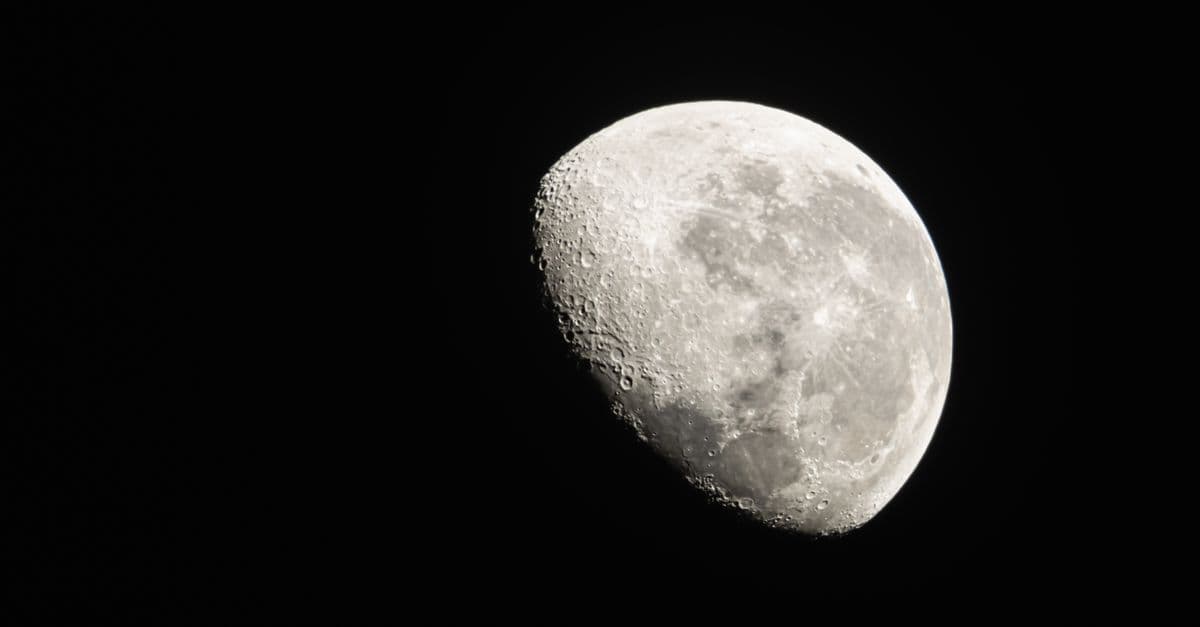
Photo: fish socks / Pexels
Between 1969 and 1972, twelve astronauts collected 382 kilograms (842 pounds) of rock, soil, and core samples from six sites on the Moon's surface. That mass of material sits today in temperature-controlled vaults at NASA's Johnson Space Center and the Lunar Sample Curation Facility — and it is still being analyzed. New techniques, unavailable in 1972, continue to extract information from those samples that their collectors could not have anticipated. The science they produced was not a chapter in history. It is an ongoing laboratory.
The Samples Themselves: What Was Collected and Where
The six Apollo landing sites were not chosen at random. Each was selected to sample different geological provinces of the Moon's nearside, building up a picture of compositional and age diversity.
Apollo 11 landed in Mare Tranquillitatis — a flat, dark basaltic plain formed by ancient volcanic flooding. The samples were fine-grained basalts roughly 3.7 billion years old, coated in regolith (pulverized rock and glass formed by billions of years of micrometeorite impacts). Apollo 12 landed in Oceanus Procellarum and returned younger basalts around 3.2 billion years old, confirming that mare volcanism spanned a range of ages.
Apollo 14 sampled the Fra Mauro highlands, a thick blanket of ejecta thrown from the Imbrium basin impact — likely the largest basin-forming impact in the Moon's visible history. Apollo 15 collected material from the edge of Hadley Rille, a sinuous channel carved by ancient lava flows, and returned some of the most compositionally diverse samples of the program. Apollo 16 landed in the Cayley Plains of the highlands — the only mission to sample a high-albedo (bright) highland terrain directly. Apollo 17 targeted the Taurus-Littrow valley, chosen specifically because pre-mission orbital imagery suggested both ancient highland material and young volcanic deposits might coexist there.
Source: NASA Curation Office (2022) — current holdings database: 2,196 samples totaling 382.0 kg returned by Apollo 11, 12, 14, 15, 16, and 17.
In total, 842 pounds. By comparison, all subsequent lunar sample return missions combined — Soviet Luna 16, 20, and 24, plus China's Chang'e 5 in 2020 — returned approximately 1.6 kg total. Apollo's sample mass advantage is not marginal; it is roughly 240 to one.
What Oxygen Isotopes Told Us About How the Moon Formed
Before Apollo, three competing models for the Moon's origin existed: co-accretion (Moon and Earth formed together from the same disk of material), capture (the Moon formed elsewhere and was gravitationally captured), and fission (the Moon spun off from a rapidly rotating early Earth). All three had serious dynamical problems. None of them predicted the specific chemical composition of the returned samples.
The key measurement came from oxygen isotopes. Oxygen has three stable isotopes — ¹⁶O, ¹⁷O, and ¹⁸O — and their ratios vary systematically across the solar system. Different planetary bodies have distinct oxygen isotope fingerprints, because they formed from material at different distances from the Sun where the isotopic mix was slightly different. Mars meteorites have a distinct oxygen fingerprint. Asteroid families have their own. If the Moon had formed from captured debris from a different part of the solar system, or if it was a captured body, its oxygen isotope ratio would differ from Earth's.
The lunar samples showed that Earth and the Moon have essentially identical oxygen isotope compositions — far more similar than Earth is to any known meteorite class or to Mars.
Source: Wiechert et al., Science (2001) — high-precision oxygen isotope measurements of Apollo samples showing Earth-Moon composition match to within measurement precision, ruling out simple capture or fission scenarios.
This result was the observational foundation for the Giant Impact hypothesis, proposed in 1975 by William Hartmann and Donald Davis, and independently by Alastair Cameron and William Ward. The hypothesis: roughly 4.5 billion years ago, a Mars-sized body called Theia struck the proto-Earth at a glancing angle. The collision melted and vaporized much of both bodies. The debris was so well mixed that the resulting Moon inherited Earth's oxygen isotope signature. A disk of hot vaporized and molten rock orbited Earth; within perhaps 100 to 1,000 years, it accreted into the Moon.
Giant Impact hypothesis — the currently favored model for lunar origin, proposing that the Moon formed from debris ejected by a collision between the proto-Earth and a Mars-sized impactor approximately 4.5 billion years ago.
The samples also showed that the Moon had been entirely or largely molten during its early history, covered by a global magma ocean potentially several hundred kilometers deep. As this magma ocean cooled over tens to hundreds of millions of years, lighter minerals (plagioclase feldspar) floated to the surface, forming the bright, ancient highlands. Denser minerals sank, forming the mantle. The distinctive bright and dark hemispheric patchwork of the Moon's surface is a direct record of this differentiation process.
Source: Wood et al., Proceedings of the Apollo 11 Lunar Science Conference (1970) — first proposal of the lunar magma ocean hypothesis based on Apollo 11 anorthosite samples.
The Ages Hidden in the Rock
One of the most direct deliverables from the samples was radiometric dating. Decay systems — particularly uranium-lead, rubidium-strontium, and samarium-neodymium — allow geochemists to determine when a rock solidified from melt, with precisions sometimes better than one million years on rocks four billion years old.
The mare basalts span ages from roughly 3.9 billion years (oldest) to about 3.1 billion years (youngest sampled), establishing that volcanic activity continued for hundreds of millions of years after the Moon formed. The highland anorthosites — the pale material of the lunar highlands — date to around 4.4 to 4.5 billion years, reflecting the magma ocean crystallization.
Perhaps the most important age constraint was the clustering of large impact ages. Multiple samples from highland sites, particularly the Fra Mauro formation sampled by Apollo 14, showed impact melts clustering around 3.9 billion years. This was interpreted as evidence for a Late Heavy Bombardment — a spike in impact flux about 600 to 700 million years after the solar system formed, when the giant planets' migration destabilized a reservoir of small bodies and sent them raining down on the inner solar system.
Late Heavy Bombardment — a hypothesized period of intensified asteroid and comet impacts on the inner planets roughly 3.9 billion years ago, evidenced by impact-melt ages clustering in Apollo highland samples.
The Late Heavy Bombardment hypothesis has become controversial. More recent reanalysis suggests the clustering of ages might reflect sampling bias — all the highland sites may be drawing from the same impact event (the Imbrium impact), not a global bombardment spike. The debate is ongoing, and resolving it requires samples from impact basins not contaminated by Imbrium ejecta.
Source: Fassett & Minton, Nature Geoscience (2013) — reanalysis of Apollo sample age distributions suggesting the apparent Late Heavy Bombardment spike may be an artifact of Imbrium ejecta dominating highland sample collections.
The Seismometers That Listened to the Moon
Apollo 12, 14, 15, and 16 each deployed a Passive Seismic Experiment as part of the Apollo Lunar Surface Experiments Package (ALSEP). Together they formed a seismic network spanning roughly 1,200 km across the nearside, and they ran continuously from deployment through September 30, 1977, when NASA shut them down due to budget cuts. The RTG power packs could no longer simultaneously run the transmitter and instruments, and the control infrastructure was needed for other programs.
In those eight years, the network recorded approximately 12,000 seismic events — shallow and deep moonquakes, meteorite impacts, and the deliberately orchestrated impacts of spent rocket stages jettisoned by later missions. The Moon turned out to be seismically very different from Earth.
Moonquakes fall into four categories:
| Moonquake Type | Typical Depth | Magnitude Range | Frequency | Cause |
|---|---|---|---|---|
| Deep moonquakes | 700–1,200 km | M 1–2 | ~28-day cycle | Tidal stress from Earth |
| Shallow moonquakes | 50–200 km | Up to M 5.5 | ~5–8/year | Tectonic stress in cool lithosphere |
| Meteorite impacts | Surface | Variable | ~1,700/year | Micrometeorite/meteorite flux |
| Thermal moonquakes | Near surface | M < 1 | Day/night cycle | Thermal expansion and contraction |
The tidal correlation of deep moonquakes — they cluster at specific lunar orbital phases — was a striking discovery. The Moon's interior is deformed rhythmically by Earth's gravitational gradient, and that deformation releases stress in the deep lithosphere on a ~28-day cycle. Nothing analogous happens on Earth; we have no tidally synchronized earthquake catalog.
Shallow moonquakes were more alarming in their implications. The largest recorded had magnitudes around 5.5, and their waveforms were bizarrely different from Earth earthquakes: the coda (the long, slowly decaying tail of seismic energy) lasted tens of minutes rather than a few seconds. This happens because the Moon's cold, dry, fractured near-surface scatters seismic energy extremely efficiently, ringing like a bell rather than damping quickly like Earth's water-saturated, plastically deforming crust.
Source: Nakamura et al., Journal of Geophysical Research (1979) — catalog of all moonquake events recorded by the ALSEP network 1969–1977, classifying types and analyzing the tidal periodicity of deep events.
The data have not been exhausted. In 2011, reanalysis using modern signal processing techniques revealed the structure of the lunar core more precisely than the original analyses allowed — a solid inner core of about 240 km radius, a fluid outer core of about 330 km radius, and a partially molten layer above it. The ALSEP network shut down in 1977, but the dataset it produced is still yielding structural information in 2026.
The Laser Retroreflectors That Are Still in Use
Four reflector arrays sit on the Moon's surface: three placed by Apollo astronauts (Apollo 11, 14, 15) and two deployed by Soviet Lunokhod rovers (Lunokhod 1 and 2). Each is a collection of corner-cube prisms — optical elements that reflect light back precisely in the direction it came from, regardless of angle. They require no power, have no moving parts, and will not degrade for millions of years.
The technique is simple in principle: a powerful pulsed laser at a ground station fires a beam at the Moon. The beam spreads to a spot roughly 7 km across by the time it arrives. The fraction that hits a retroreflector bounces back. The ground station detects the returning photons — typically a handful per pulse — and measures the round-trip travel time with picosecond precision. Distance follows from half the round-trip time multiplied by the speed of light.
This is Lunar Laser Ranging (LLR), and it has been operating continuously since 1969. The current best measurements determine the Earth-Moon distance to within a few millimeters.
Source: Dickey et al., Science (1994) — 25-year review of LLR results, including lunar orbital evolution, gravitational physics tests, and Earth orientation measurement, demonstrating the continuing scientific productivity of Apollo retroreflectors.
The scientific deliverables from LLR are diverse and genuinely impressive:
- Lunar recession rate: The Moon is moving away from Earth at 3.8 cm per year, a direct measurement of tidal dissipation in Earth's oceans transferring angular momentum to the lunar orbit.
- Tests of general relativity: LLR provides the best tests of the equivalence principle in the solar system, constraining violations to better than one part in 10¹³. Einstein's prediction that the Earth and Moon fall identically in the Sun's gravitational field — despite their different compositions — is confirmed at the highest precision available.
- Lunar librations: The Moon wobbles slightly as it orbits; LLR measures this with enough precision to constrain the lunar interior's moment of inertia and the properties of the core-mantle boundary.
- Geodesy: LLR contributes to the International Terrestrial Reference Frame, helping calibrate measurements of Earth's rotation and polar motion.
No other single instrument from any space mission continues to produce this density of fundamental physics results 55 years after deployment. The retroreflectors outlasted every other Apollo experiment by decades.
What the Samples Have Not Yet Settled
The Giant Impact hypothesis is well-supported, but recent high-precision isotope measurements have introduced complications that the original model did not anticipate.
If Theia was a distinct solar system body formed at a different heliocentric distance, its tungsten, titanium, and oxygen isotope ratios should differ measurably from Earth's. Yet lunar samples match Earth's composition with extraordinary precision — more closely than meteorites from any known body match any other known body. Several explanations have been proposed: Theia happened to form at the same heliocentric distance as Earth and therefore had the same isotopic composition; the impact was so violent that the debris disk was homogenized before accretion; or Earth and Theia were so thoroughly mixed during the collision that the surviving Moon carries essentially Earth's composition. Each scenario requires somewhat different impact geometries or progenitor configurations, and current dynamical models do not cleanly distinguish them.
Source: Herwartz et al., Science (2014) — high-precision triple oxygen isotope measurements of Apollo samples showing a small but potentially real difference between lunar and terrestrial compositions, suggesting incomplete mixing during the Giant Impact.
A second open question concerns water. Early Apollo-era thinking held that the Moon was essentially bone dry — the high-energy Giant Impact would have vaporized all volatiles, and the samples from the 1970s showed no hydrous minerals. In 2008, Alberto Saal and colleagues re-analyzed Apollo volcanic glass beads using modern ion microprobe techniques and found water contents of up to 260 parts per million — far above the detection threshold that was considered null in the 1970s. Subsequent work confirmed this finding and extended it to lunar apatite (a mineral that retains hydrogen). The Moon has water in its interior.
Source: Saal et al., Nature (2008) — detection of indigenous water in Apollo volcanic glass beads at concentrations 100 times higher than previous estimates, revising the canonical "dry Moon" model.
This matters for the Giant Impact hypothesis because a dry impact model predicts complete volatile loss. A wet Moon requires either that some water survived the impact (in which case impact temperatures and energetics must be revised) or that water was delivered later by comets and asteroids (the same flux that brought water to the early Earth).
Third: the asymmetry problem. The Moon's nearside is geologically, compositionally, and topographically different from its farside. The nearside is dominated by mare basalts and has a thin crust; the farside is mostly ancient highlands with a thicker crust. The origin of this asymmetry — called the lunar dichotomy — is not explained by the standard Giant Impact model. Proposed explanations include a second, smaller impactor hitting the Moon's farside during the Hadean era, asymmetric tidal heating, and differential crystallization of the magma ocean.
The Takeaway
The Apollo sample collection is the most scientifically productive single act of retrieval in the history of exploration. The rocks confirmed that the Moon formed from an impact, ended the era of co-accretion and capture hypotheses, revealed that planetary bodies undergo global magma ocean phases, established the timing and nature of the late heavy bombardment, and provided samples of materials that have not been significantly altered in 4.4 billion years. The laser retroreflectors placed in 1969 are still producing fundamental physics results that no other instrument can replicate. And the samples themselves — 382 kilograms stored in nitrogen-purged cabinets at Johnson Space Center — continue to yield new science as measurement techniques improve. The questions they have opened are as interesting as the ones they closed.
Q: How many lunar samples did the Apollo missions return?
A: Six Apollo missions returned a total of 2,196 individual samples totaling 382 kilograms (842 pounds). Apollo 15 returned the most by mass (approximately 77 kg), while Apollo 11 returned the least (21.6 kg). The samples are curated at NASA's Johnson Space Center and are made available to researchers worldwide.
Q: What is the Giant Impact hypothesis and what evidence supports it?
A: The Giant Impact hypothesis proposes that the Moon formed when a Mars-sized body called Theia struck the proto-Earth about 4.5 billion years ago. Apollo sample evidence includes the near-identical oxygen isotope ratios of Earth and Moon (ruling out capture or fission), evidence of a global lunar magma ocean consistent with post-impact melt, and ages placing lunar formation roughly 60 million years after the solar system began.
Q: Are the Apollo seismometers still operating?
A: No. The ALSEP seismometers were shut down on September 30, 1977, for budgetary reasons. They recorded 12,000 seismic events over eight years. Analysis of that archived dataset continues to this day with modern signal processing tools, and in 2011 a re-analysis revealed new details about the lunar core's structure.
Q: Are the Apollo laser retroreflectors still used today?
A: Yes. All three Apollo retroreflector arrays (Apollo 11, 14, and 15) are still actively used for Lunar Laser Ranging. Ground stations fire pulsed lasers at the Moon and detect the returning photons, measuring the Earth-Moon distance to within a few millimeters. The experiment continues to produce results in general relativity, lunar science, and geodesy.
Q: What questions about the Moon remain unanswered?
A: Key open questions include the precise source and survival of lunar water (inconsistent with a simple dry Giant Impact), the exact isotopic match between Earth and Moon (which requires specific impact geometries), the origin of the nearside-farside asymmetry, and whether the Late Heavy Bombardment was a real global spike or an artifact of Apollo sampling the Imbrium ejecta blanket.
Q: Has any other mission returned comparable lunar samples?
A: No. All post-Apollo sample return missions combined — Soviet Luna 16, 20, and 24, and China's Chang'e 5 in December 2020 — have returned approximately 1.6 kilograms total. Chang'e 5's 1.73 kg was the largest single non-Apollo return, and it targeted a geologically young volcanic region (~1.96 billion years old) not sampled by Apollo. China's Chang'e 6 returned the first farside samples in 2024, a crucial complement to the Apollo nearside collection.
Read next:
Follow new articles
Add SciHub101 to your feed reader to see new science and technology stories.
About the Author
SciHub101 is an independent science and technology publication founded and edited by Buğra Sözeri, a software engineer and app developer based in Türkiye. AI tools assist with drafting and research. Source documentation in the existing archive is uneven, and articles are being reviewed and corrected. The Editorial Team byline identifies editorial responsibility; it does not certify specialist or independent human review. Where we compare products, anything built by our own team is labelled as such — see the editorial guidelines and About page for how corrections and disclosures work.
Related Articles
The Cassini Grand Finale: What 22 Death Dives Taught Us About Saturn
In 2017, NASA deliberately destroyed the Cassini spacecraft by plunging it into Saturn. Before it died, it made 22 passes through a region no spacecraft had ever entered — the 2,000-kilometer gap between Saturn and its innermost rings. The data it collected upended what scientists thought they knew about the rings' age, mass, and origin, and revealed a magnetic field so perfectly symmetrical it has no right to exist.
Stellar Nurseries: How Stars Are Born in the Dark
The Pillars of Creation are not killing stars — they are building them. Inside those towering columns of cold gas, dense knots called Bok globules are collapsing under their own weight, heating up toward nuclear ignition. The James Webb Space Telescope, in 2022, showed us the newborn stars Hubble never could.
Lunar Seismic Experiments: Listening to Moonquakes
Apollo seismometers left on the Moon revealed extensive seismic activity, proving the Moon is geologically dynamic with thousands of moonquakes annually—surprising findings about our satellite.
Apollo Laser Ranging Retroreflectors: Measuring the Moon's Distance
Apollo astronauts left reflectors on the Moon allowing scientists to measure Earth-Moon distance with millimeter precision—revealing the Moon's orbital evolution.
Lunar Magnetometer Discoveries: Evidence of the Moon's Magnetic Past
Apollo magnetometers revealed anomalous magnetic fields on the Moon surface, proving the Moon once possessed a magnetic field—a surprising discovery about our satellite's geological history.
Lunar Soil Analysis: What We Learned from Moon Dust
Apollo lunar soil samples revealed the Moon's weathering processes, mineral composition, and the effects of cosmic rays—knowledge essential for future lunar settlement.