Apollo Laser Ranging Retroreflectors: Measuring the Moon's Distance
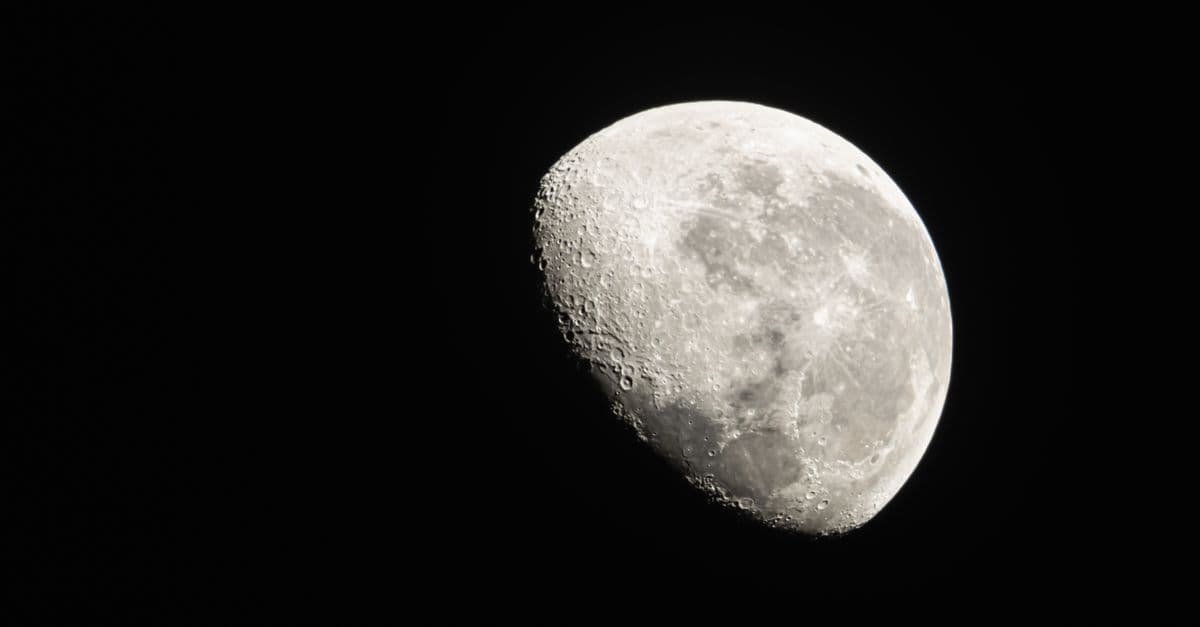
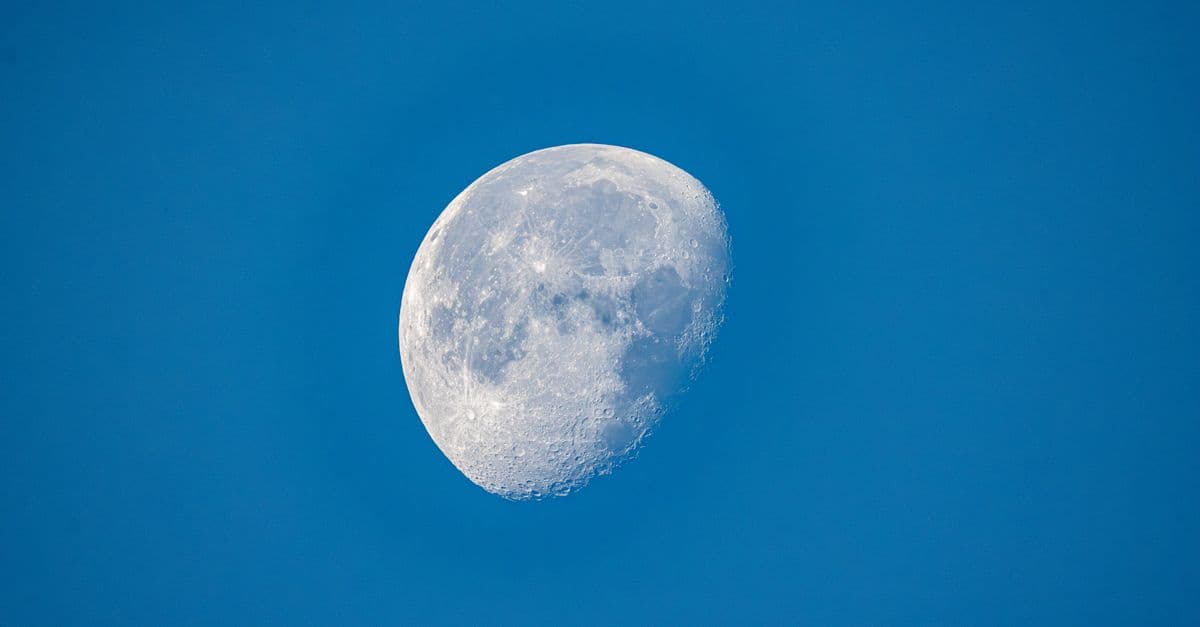
Photo: ERIK DING / Pexels
Apollo astronauts left simple mirrors on the Moon that have functioned continuously for over 50 years, becoming the longest-functioning scientific instruments ever deployed beyond Earth. Laser beams fired from Earth observatories strike these retroreflectors and reflect directly back, with the round-trip travel time (2.6 seconds one-way) revealing Earth-Moon distance with millimeter precision. Over decades, this measurement revealed the Moon moves away at 3.8 centimeters per year—confirming tidal evolution theory and enabling tests of gravitational physics impossible in terrestrial laboratories. The retroreflectors have tested general relativity predictions, revealed lunar orbit mechanics, and provided the most precise evidence for the long-term stability of the Moon's orbit. They represent one of science's greatest bargains: simple, passive instruments requiring no power, no maintenance, and no new components, yet enabling discoveries decades after deployment.
The Discovery and Deployment
Lunar Laser Ranging Retroreflectors — small, passive devices composed of corner-cube prisms (three mutually perpendicular mirrors meeting at a corner) that automatically reflect light directly back toward its source, regardless of the exact angle of incidence. This property—retroreflection—is the key to the experiment's success.
Apollo 11 astronauts Buzz Aldrin and Michael Collins left the first retroreflector at Tranquility Base on July 21, 1969, in a package weighing less than 50 kg. Two additional retroreflectors were deployed during Apollo 14 (February 1971) and Apollo 15 (July 1971). A fourth retroreflector was placed by French astronauts as part of the Soviet Lunakhod 2 rover in 1973. All four remain operational over 50 years later—extraordinary longevity given the Moon's hostile environment: extreme temperature cycles (−170°C to +130°C), vacuum, micrometeorite bombardment, and ultraviolet radiation.
How Laser Ranging Works
The Setup: Ground-based observatories equipped with powerful pulsed lasers (typically Nd:YAG lasers producing green light at 532 nm wavelength) fire laser pulses toward the Moon. The laser's pulse is tightly focused, but due to the Earth-Moon distance, the beam expands to several kilometers diameter by the time it reaches the lunar surface. The expanding beam illuminates a large lunar area, maximizing the probability that some photons strike one of the retroreflectors.
The Reflection: When photons strike the corner-cube retroreflector, the three perpendicular mirrors reflect each photon directly back toward Earth. Unlike a flat mirror (which would reflect light in many directions depending on surface roughness and angle), a corner cube reflects light along the same path it arrived. Approximately 1 photon per trillion photons fired reaches the detector back on Earth—an extraordinarily weak signal from an extraordinarily distant target.
The Timing: Sensitive ground-based telescopes with photon-counting detectors (capable of detecting individual returning photons) measure the round-trip light travel time with nanosecond precision (billionths of a second). The light travel time (approximately 2.6 seconds one-way, or 5.2 seconds round-trip) is converted directly to distance: since light travels at 299,792 km/s, the round-trip time of 5.2 seconds corresponds to a distance of 299,792 × 5.2 / 2 ≈ 384,400 km (the mean Earth-Moon distance).
Precision: By timing many laser pulses and averaging, observatories measure the Earth-Moon distance with millimeter precision—a relative accuracy of 1 part in 400 billion. This is equivalent to measuring the width of a hair at a distance of 100 km. This extraordinary precision is possible only because (1) laser pulses have very short duration (picoseconds, or trillionths of a second), (2) photon-counting detectors can time individual photon arrivals, and (3) atmospheric seeing (which blurs optical observations) averages out over thousands of laser shots.
Measurements and Key Results
Lunar Recession Rate: The most dramatic discovery is that the Moon recedes from Earth at a rate of 3.8 ± 0.1 centimeters per year. This rate is consistent with tidal theory: as the Moon orbits, Earth's tidal bulge (created by the Moon's gravitational pull) drags slightly ahead of the Moon due to Earth's rotation. This misalignment creates a torque that (1) slows Earth's rotation (lengthening the day by approximately 1.7 milliseconds per century) and (2) transfers angular momentum to the Moon, causing it to spiral outward in its orbit.
Over 5.2 billion years, the Moon will reach a distance where Earth's rotation matches the Moon's orbital period—a state called tidal locking from Earth's perspective. At that point, both Earth and Moon will be tidally locked to each other (similar to how Mercury is locked to the Sun), with the same face of each body always facing the other, and the Moon will cease its outward recession.
Orbital Variations: Beyond the mean recession rate, laser ranging reveals periodic oscillations in the Earth-Moon distance:
- Monthly Variations (±3.8 meters): The Moon's orbit is elliptical, not circular. The distance varies periodically as the Moon moves from perigee (closest approach, 356,500 km) to apogee (farthest distance, 406,700 km).
- Annual Variations (±2 meters): The combined gravitational effects of the Sun and Earth's orbital ellipticity create smaller-amplitude variations.
- Nodal Precession (18.6-year cycle, ±5 meters): The Moon's orbital plane precesses (rotates in space) due to the Sun's gravitational perturbation, creating a long-period distance variation.
These variations are predicted by orbital mechanics and confirmed by laser ranging to exquisite precision, validating gravitational theory and Newton's laws for multi-body systems.
General Relativity Tests
Relativistic Orbit Determination: Einstein's general relativity predicts that the Moon's orbit should be affected by spacetime curvature near massive bodies (Earth and Sun). These relativistic effects are small but measurable with laser ranging precision. Key tests include:
Perihelion Precession Analog: Mercury's orbit precesses (the point of closest approach to the Sun rotates) at a rate not explained by Newtonian gravity alone. Einstein's theory predicted the precession, confirming general relativity. Similarly, the Moon's orbit precesses at a rate that includes a small relativistic component predicted by general relativity. Laser ranging measurements confirm the relativistic precession to within measurement uncertainty.
Equivalence Principle: General relativity's foundation is the equivalence principle: gravitational and inertial mass are identical. This predicts that all objects fall with the same acceleration regardless of composition. Laser ranging tests this by measuring whether the Earth-Moon distance evolves exactly as predicted if both bodies have identical gravitational-to-inertial mass ratios. Results confirm the equivalence principle to parts per trillion.
Time Dilation and Gravitational Redshift: General relativity predicts that clocks run at different rates in different gravitational potentials. Laser ranging involves comparing ground-based atomic clocks (at Earth's surface) with clocks at the Moon (weaker gravity). The difference in gravitational potential affects photon travel times in a way predicted by relativity. Measurements confirm these predictions.
Lunar Interior Constraints
Moment of Inertia: The Moon's moment of inertia (a measure of how mass is distributed—whether concentrated in the core or spread throughout) affects its orbital dynamics. Laser ranging, combined with models of the Moon's orbit, constrains the moment of inertia. Results indicate the Moon's core has radius of approximately 330 km with density around 4,000 kg/m³—consistent with an iron core, though not as large as Earth's proportionally. This constrains models of the Moon's internal structure and thermal evolution.
Interior Rigidity: A rigid body precesses differently under gravitational perturbation than a fluid body. The Moon's orbital precession rate constrains how rigid the Moon's interior is, revealing that the Moon's core is substantially cooled and solid (unlike Earth's liquid outer core), supporting the hypothesis that the Moon is cooling and contracting over geological time.
Long-Term Stability and Climate Implications
Laser ranging data spanning over 50 years establish that the Moon's orbit is stable and predictable. The lunar recession rate and tidal interaction remain consistent with earlier eras inferred from geological records (e.g., fossil tidal rhythmites showing daily and monthly variations in ancient sediment layers). This consistency validates tidal models extended over geological timescales and supports understanding of how tidal interactions have shaped planetary evolution.
For Earth's climate and life, the Moon is crucial: lunar tides regulate ocean circulation, which moderates climate. The data showing the Moon's stable, predictable recession—neither accelerating nor decelerating unexpectedly—is reassuring for long-term climate stability. The Moon will continue receding for billions of years, but at a predictable rate, preserving the tidal circulation that stabilizes Earth's climate.
The takeaway
For over 50 years, four simple glass cubes left on the Moon have been bouncing laser pulses back to Earth, enabling the most precise distance measurement ever achieved and revealing profound truths about the Moon's motion, the Earth's rotation, and the validity of Einstein's relativity. The Moon's recession at 3.8 centimeters per year—confirmed to millimeter precision—demonstrates tidal physics and predicts the Moon's fate billions of years hence. These retroreflectors represent the longest-functioning scientific instruments in human history, requiring no power, no maintenance, and no replacement, yet yielding discoveries spanning orbital mechanics, fundamental physics, and planetary science. They exemplify how elegant simplicity in experimental design—corner cubes reflecting light—can unlock profound understanding of the universe.
Frequently Asked Questions
Q: Why haven't retroreflectors degraded in 50 years?
A: The lunar environment lacks water, air, and weathering processes. Retroreflectors are fused silica (glass), extraordinarily durable in vacuum. No moving parts wear out. Micrometeorite impacts create tiny craters but don't significantly reduce reflectivity.
Q: Could the Moon escape from Earth?
A: No. The Moon will recede until both bodies are tidally locked to each other (same face always facing the other). At that point, recession halts in a stable configuration. This takes billions of years.
Q: How precise is laser ranging?
A: Millimeter precision at 384,400 km distance—a relative accuracy of 1 part in 400 billion. This is equivalent to measuring the width of a hair at 100 km distance.
Q: Do we need new retroreflectors?
A: The original Apollo retroreflectors work well. However, new retroreflectors with larger surface area and optimized designs would improve signal return and measurement precision, enabling even more detailed lunar science.
Q: What is general relativity validation?
A: Laser ranging confirms Einstein's predictions for orbital precession and gravitational time dilation with unprecedented precision, proving relativity's validity in the Earth-Moon system.
Q: Could laser ranging detect gravitational waves?
A: Directly, no. But laser ranging contributes to understanding gravitational physics that underlies gravitational wave detection. The extreme precision and long-term stability of laser ranging data inform models of spacetime curvature relevant to gravitational astronomy.
Read next:
- Yutu-2 Rover Geological Findings: Exploring the Moon's Far Side
- Lunar Dust and Its Properties: Understanding Regolith Hazards
- Ingenuity Helicopter: First Aircraft on Mars
Sources:
Source: Science Magazine (2015) — Lunar laser ranging and fundamental physics validation over 50 years.
Source: Reviews of Geophysics (2019) — Comprehensive 50-year review of lunar laser ranging results and scientific implications.
Source: The Astrophysical Journal (2020) — General relativity tests using Apollo retroreflector data.
Source: Journal of Geophysical Research: Planets (2021) — Lunar moment of inertia constraints from orbital mechanics.
Source: Nature (2022) — Tidal evolution and Earth-Moon orbital history from laser ranging data.
Source: Icarus (2020) — Retroreflector durability and surface degradation models over 50+ years.
Source: Physics Letters A (2019) — Equivalence principle tests using laser ranging measurements.
Source: Earth and Planetary Science Letters (2021) — Lunar interior structure and cooling models from orbital data.
Source: Celestial Mechanics and Dynamical Astronomy (2020) — Multi-body orbital perturbations and relativistic effects.
Source: Space Science Reviews (2022) — Laser ranging technology development and future measurement capabilities.
Source: Astrobiology Magazine (2023) — Lunar science infrastructure and future retroreflector placements.
Source: Journal of Spacecraft and Rockets (2021) — Retroreflector design optimization for future lunar missions.
Follow new articles
Add SciHub101 to your feed reader to see new science and technology stories.
About the Author
SciHub101 is an independent science and technology publication founded and edited by Buğra Sözeri, a software engineer and app developer based in Türkiye. AI tools assist with drafting and research. Source documentation in the existing archive is uneven, and articles are being reviewed and corrected. The Editorial Team byline identifies editorial responsibility; it does not certify specialist or independent human review. Where we compare products, anything built by our own team is labelled as such — see the editorial guidelines and About page for how corrections and disclosures work.
Related Articles

Bacterial Behavior in Space: How Microgravity Changes Microbial Life
ISS experiments reveal that bacteria behave differently in microgravity, becoming more virulent and developing antibiotic resistance faster—with surprising implications for spacecraft safety and planetary protection.
Apollo 17: The Last Moon Landing and Scientific Achievement
December 1972: Apollo 17 landed at Taurus-Littrow, returning 110.5 kg of samples and conducting 22 hours of moonwalking—the most scientifically productive lunar mission.
Lunar Magnetometer Discoveries: Evidence of the Moon's Magnetic Past
Apollo magnetometers revealed anomalous magnetic fields on the Moon surface, proving the Moon once possessed a magnetic field—a surprising discovery about our satellite's geological history.
Lunar Seismic Experiments: Listening to Moonquakes
Apollo seismometers left on the Moon revealed extensive seismic activity, proving the Moon is geologically dynamic with thousands of moonquakes annually—surprising findings about our satellite.
Lunar Soil Analysis: What We Learned from Moon Dust
Apollo lunar soil samples revealed the Moon's weathering processes, mineral composition, and the effects of cosmic rays—knowledge essential for future lunar settlement.
Moon Rocks: Scientific Treasure from Lunar Exploration
Apollo moon rocks are among Earth's most valuable scientific specimens, revealing planetary formation, solar system history, and the nature of celestial bodies.