Moon Rocks: Scientific Treasure from Lunar Exploration
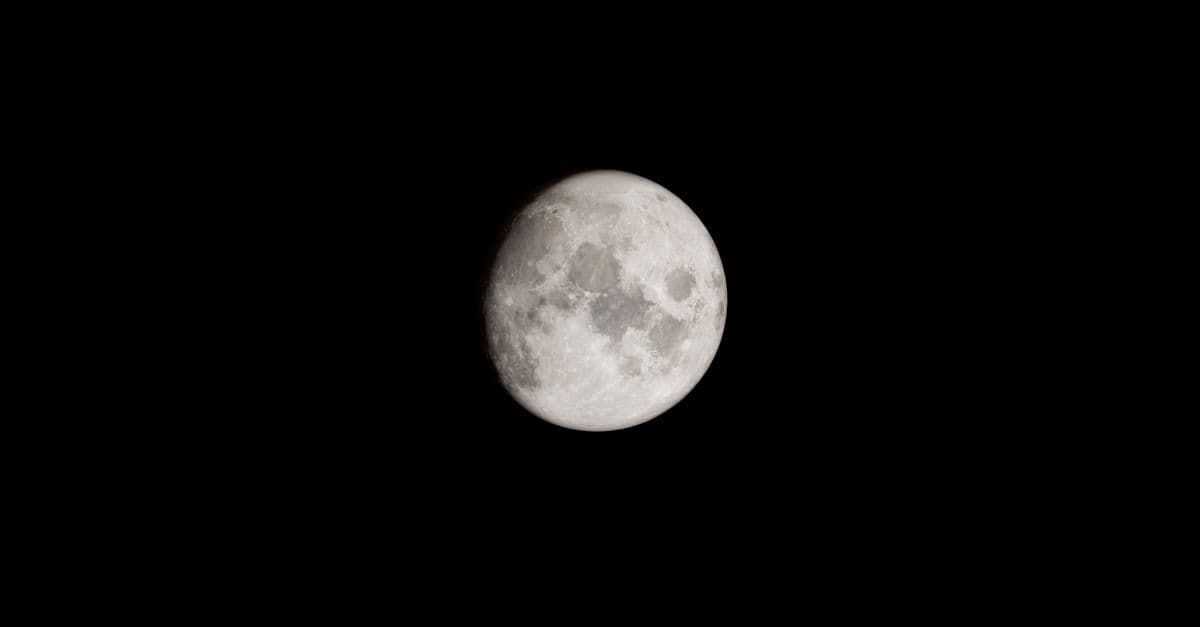
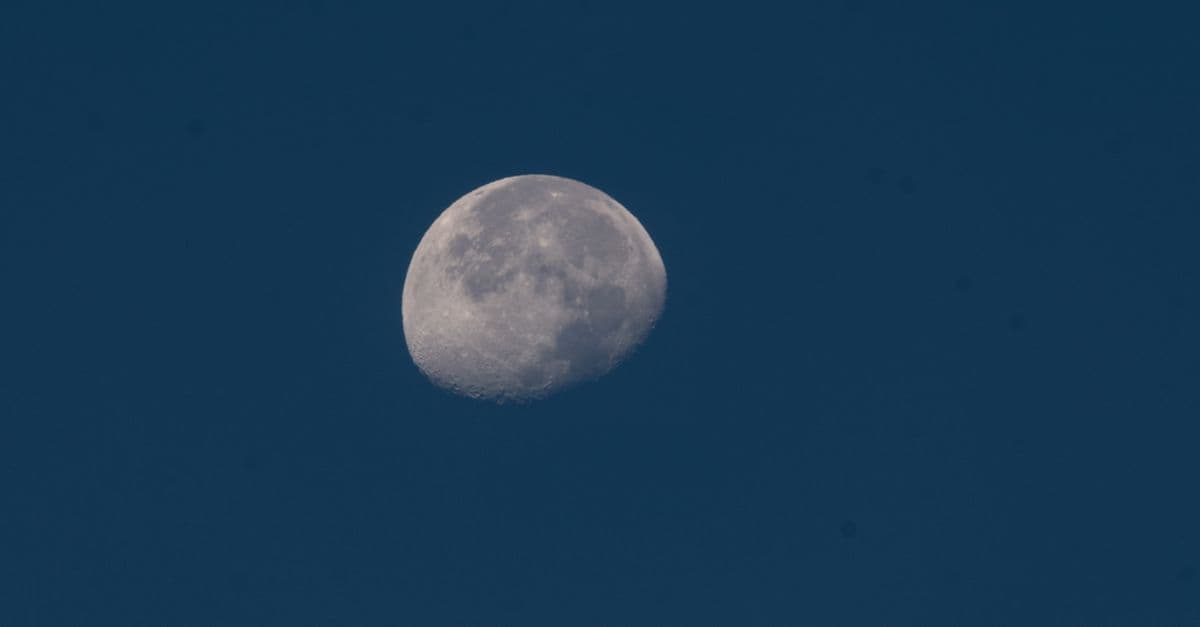
Photo: Zelch Csaba / Pexels
Between 1969 and 1972, six Apollo missions brought back 382 kilograms (842 lb) of lunar rock, core, pebble, sand, and dust samples, split into roughly 2,200 individually catalogued specimens (NASA JSC Curation). None of that mass has any value as raw material. Its worth is scientific: these are the only planetary samples humans have ever collected, returned, and studied with full knowledge of exactly where on another world each piece came from. More than five decades later, scientists are still opening sealed tubes and finding things Apollo-era instruments could never have detected.
Key Takeaways
- 382 kg (842 lb) of Apollo lunar samples, split across roughly 2,200 specimens, remain the primary ground-truth dataset for lunar and early solar system science.
- Moon rocks supply direct, dated evidence for planetary differentiation, volcanic history, and the impact bombardment record.
- Isotopic dating of lunar anorthosite and volcanic glass anchors the Giant Impact Hypothesis and the Moon's magma ocean model.
- NASA deliberately kept some Apollo samples sealed for decades specifically so future instruments could analyze them — the ANGSA program began doing exactly that in 2019.
- Artemis missions plan to return the first new lunar samples since 1976, this time from the geologically distinct south polar region.
The Problem: Why Remote Observation Wasn't Enough
Before Apollo, planetary scientists worked with three imperfect sources: Earth rocks, meteorites, and telescopic observation. Each had a fatal limitation for understanding how planets form and evolve.
Earth rocks are constantly reworked. Plate tectonics recycles crust, water and wind erode surfaces, and life alters chemistry. The oldest intact Earth rocks are rare and heavily weathered, erasing much of the record of the planet's first billion years.
Meteorites offered unprocessed material from small bodies, but almost always with no known parent body and no geological context. A meteorite tells you its own composition; it says almost nothing about the larger world it came from, because that world is usually long destroyed.
Telescopes and spacecraft flybys, meanwhile, could measure surface reflectance, crater counts, and rough composition from orbit, but none of that substitutes for a rock in a laboratory. You cannot run a mass spectrometer on a photograph. This is the same reason planetary scientists lean so heavily on radiometric dating — measuring the ratio of a radioactive isotope to its decay product to calculate a rock's age — a method explained in depth in How Radiometric Dating Works. Radiometric dating only works on physical samples you can put in an instrument, which is precisely what the Moon had never offered until Apollo.
How Moon Rocks Are Analyzed
Lunar sample analysis is less like cracking open a rock and more like interrogating it with a dozen different specialized instruments, each extracting a different layer of history.
Sample characterization comes first. Curators at NASA's Lunar Sample Laboratory in Houston examine rock type, mineral composition under a microscope, physical texture, and how much the sample has been altered by micrometeorite bombardment or solar wind exposure on the lunar surface. This step decides which of the roughly 2,200 catalogued samples is worth allocating to a given research proposal — scientists apply competitively for tiny slivers of material, often a few hundred milligrams at a time.
Isotopic dating follows, using several independent decay systems so results can cross-check one another:
| Dating System | Parent-Daughter Pair | What It Reveals |
|---|---|---|
| Potassium-argon | K-40 → Ar-40 | Crystallization age of volcanic rock |
| Rubidium-strontium | Rb-87 → Sr-87 | Whole-rock formation age |
| Samarium-neodymium | Sm-147 → Nd-143 | Mantle source composition |
| Uranium-lead | U-238/235 → Pb-206/207 | High-precision solar system chronology |
| Oxygen isotopes | O-16/17/18 ratios | Formation environment, source-body match |
Table: Common isotopic systems used in lunar sample analysis, each measuring a different radioactive decay pair to independently verify a rock's age and origin.
Elemental composition analysis then measures major elements (oxygen, silicon, iron, magnesium, aluminum), trace elements including rare earths, and — critically, as later research showed — volatile elements like hydrogen and carbon that Apollo-era scientists initially assumed the Moon lacked almost entirely.
Mineral structure work goes deeper still, using electron microscopy and X-ray diffraction to examine crystal structure, lattice defects, and thermal history indicators baked into individual mineral grains. Finally, every result gets compared against terrestrial samples, meteorites, and theoretical models of planetary formation. No single measurement means much in isolation; the value comes from triangulating dozens of independent lines of evidence pointing at the same conclusion.
How is a moon rock's age actually determined?
Scientists measure the ratio of a radioactive parent isotope to its stable daughter isotope within a mineral grain. Because the decay rate (half-life) is constant and known, that ratio converts directly into an age. Cross-checking with two or more decay systems, such as rubidium-strontium and samarium-neodymium, confirms the result and rules out contamination.
The Results: What Five Decades of Analysis Revealed
Moon rock analysis reshaped planetary science in ways that go well beyond the Moon itself. Apollo astronauts also ran experiments on the Moon itself, including collecting solar wind particles and listening for moonquakes.
Solar system age. Meteorite dating — particularly calcium-aluminum-rich inclusions in the Allende meteorite — pins the solar system's formation at approximately 4.567 billion years ago, one of the most precisely known numbers in science (Amelin et al., Science, 2002). Lunar samples independently corroborate this timeline and extend it into the Moon's own formation history, because the oldest lunar crust rocks crystallized within roughly 100–200 million years of that date.
Moon formation age. The Apollo 15 "Genesis Rock" (sample 15415), a ferroan anorthosite collected by astronauts David Scott and James Irwin at Spur Crater, dates to roughly 4.1–4.4 billion years old and helped anchor the Giant Impact Hypothesis — the leading model holding that the Moon formed from debris ejected when a Mars-sized body struck the young Earth (NASA Science, "Genesis Rock"). Near-identical oxygen isotope ratios between lunar and Earth rocks are one of the strongest pieces of physical evidence for that impact origin.
Lunar differentiation. Anorthosite samples like the Genesis Rock show that the young Moon was covered by a molten magma ocean. As it cooled, dense minerals sank while lighter, calcium-rich plagioclase feldspar floated to form the crust — the same way ice floats on water, except here it was low-density rock floating on an ocean of molten rock instead of water floating on itself. That single mechanism explains why the lunar highlands are anorthosite-rich and lighter in color than the darker basalt plains.
Volcanism duration. Dating basalt samples from six different landing sites shows lunar volcanism ran from roughly 3.8 to 3.1 billion years ago, meaning the small, rapidly cooling Moon stayed internally active for hundreds of millions of years longer than early thermal models predicted.
Impact bombardment timeline. Crater density data cross-referenced against dated impact-melt samples let scientists reconstruct how bombardment intensity changed over time, including evidence debated among researchers for a "Late Heavy Bombardment" spike roughly 3.9 billion years ago. This chronology underpins crater-counting age estimates used across the solar system on surfaces where no samples exist at all, from Mars to Mercury.
Water evidence. In 2008, a team led by Alberto Saal at Brown University used secondary ion mass spectrometry to detect trace water — up to 46 parts per million — inside volcanic glass beads from Apollo 15 and 17, overturning the long-standing assumption that the Moon was bone dry (Saal et al., Nature, 2008; Brown University, 2017 follow-up). Later work on melt inclusions trapped inside olivine crystals found water concentrations comparable to some Earth basalts, though roughly 95 percent of the original water was lost to the near-vacuum during the eruptions that produced the glass.
Composition variation by site. Comparing samples across the six Apollo and three robotic Luna landing sites revealed clear geological zoning: calcium-rich anorthosite dominates the bright highlands, iron- and titanium-rich basalt dominates the dark maria, reflecting genuinely different formation histories rather than random local variation.
Real-World Impact Beyond the Moon
Planetary science methodology. The protocols developed to catalogue, allocate, and analyze lunar samples without contamination became the template NASA and other agencies use for every subsequent sample-handling effort, including the OSIRIS-REx asteroid Bennu samples and the Mars Sample Return campaign now in planning.
Radiometric dating advancement. Because lunar samples demanded unprecedented precision — distinguishing ages a few million years apart within a 4.5-billion-year-old rock — the isotope-ratio mass spectrometry techniques refined for Apollo samples fed directly back into terrestrial geochronology and archaeology.
Understanding planetary evolution generally. The Moon's small size meant it cooled, differentiated, and went volcanically quiet on a timescale short enough to observe in the rock record — a compressed preview of processes that took Earth, Mars, and Venus far longer and are harder to reconstruct on those larger, more geologically active worlds.
Asteroid and meteorite context. Understanding a body with confirmed origin and known geological history gave scientists a calibration point for interpreting meteorites of unknown parentage, sharpening estimates of asteroid formation and differentiation.
Airless-body climate analogs. Tracking how the lunar surface has changed via micrometeorite gardening and solar wind exposure over billions of years informs models of space weathering that apply to Mercury, asteroids, and other airless bodies, an indirect but genuine link to how researchers model long-term surface change on planetary timescales.
Common Confusions About Moon Rocks
"Moon rocks prove the solar system's age." Not quite — the most precise solar system age comes from meteorites, specifically calcium-aluminum-rich inclusions in chondrites like Allende, not lunar samples. Moon rocks corroborate and extend that timeline into lunar-specific events like differentiation and the giant impact, but the headline 4.567-billion-year figure is a meteorite result.
"All Apollo samples have been fully studied." Far from it. Only a fraction of the collection has been extensively analyzed. Many samples remain in their original 1970s condition, and a portion was deliberately never opened. The Apollo Next Generation Sample Analysis (ANGSA) program didn't crack open the first of these — an Apollo 17 drive tube collected at Taurus-Littrow — until November 2019, using extraction tools and instrumentation that simply didn't exist during the Apollo program itself (NASA JSC / ANGSA).
"You can legally buy a moon rock." You cannot, at least not one from a government space program. Apollo and Soviet Luna samples are owned by their respective national space agencies and loaned only to vetted researchers and museums. Privately circulating "moon rocks" are either meteorites of confirmed lunar origin (a legitimate but separate category found on Earth's surface) or outright fraud; genuine Apollo material trading hands outside official channels is illegal to possess.
"Moon rocks look like ordinary gray rocks, so there's not much to them." Visually, yes — most lunar samples are unremarkable gray or black rock and dust. The value is entirely in what instruments can extract: isotope ratios, trace water, crystal defects, and thermal history invisible to the eye. It is the analytical process, not the specimen's appearance, that makes these rocks scientifically singular.
Why does NASA still keep some samples sealed after 50-plus years?
Because analytical techniques keep improving, and once you open a sample and expose it to Earth's atmosphere, some information is lost permanently. NASA reserves a portion of the Apollo collection specifically so scientists with tools not yet invented can extract data that today's instruments cannot.
Could analyzing a moon rock damage or destroy it?
Yes. Certain techniques, such as mass spectrometry that vaporizes a portion of the sample, are inherently destructive. Researchers weigh the scientific value of a measurement against the small, irreplaceable quantity of material available before approving destructive testing.
Are new lunar sample collections planned?
Yes. NASA's Artemis program aims to return samples from the lunar south polar region, an area geologically distinct from the equatorial Apollo landing sites and home to permanently shadowed craters believed to hold water ice. These would be the first new lunar samples collected by astronauts since Apollo 17 in December 1972.
Why does the Moon's south pole matter for future sampling?
The south polar region includes the South Pole-Aitken Basin, one of the largest and oldest impact basins in the solar system, potentially excavating material from deep in the lunar mantle. Combined with permanently shadowed craters that may preserve billions of years of water ice, south polar samples would fill major gaps the equatorial Apollo sites never could.
The Goodwill Rocks Nobody Can Find
Not every moon rock stayed under NASA's lock and key, and the ones that left tell a messier story than the samples still sitting in Houston vaults.
In 1970, the Nixon Administration gave away small fragments of Apollo 11 and Apollo 17 lunar material — mounted in acrylic and presented on wooden plaques — to roughly 135 countries and all fifty US states as diplomatic "goodwill" gifts. Around 270 of these goodwill displays went out in total, and today roughly 180 of them are unaccounted for, according to tracking compiled on Wikipedia's stolen-and-missing moon rocks record and corroborated by NASA Office of Inspector General reporting (Wikipedia; Space.com). Some were simply lost in government storage as administrations changed. Ireland's Apollo 11 fragment was accidentally thrown out with debris after a 1977 fire at Dunsink Observatory in Dublin and has never been recovered. Others were stolen outright: a Malta goodwill rock, donated in 1973 and valued at roughly $5 million, vanished from the Museum of Natural History in Mdina sometime before a routine 2004 inventory check discovered it missing, in part because the museum had no security cameras or dedicated custodian at the time.
Recovering these rocks became enough of a problem that NASA's Office of Inspector General ran a formal sting operation. Special Agent Joseph Gutheinz led "Operation Lunar Eclipse" in 1998, in which undercover agents posed as buyers to flush out people illegally selling what they claimed were authentic lunar fragments. The operation's highest-profile success was recovering Honduras's missing Goodwill Moon Rock, a purchase reportedly bankrolled by businessman and former presidential candidate H. Ross Perot after one of Gutheinz's agents asked him to put up the money (Wikipedia).
The largest theft of actual research-grade Apollo material happened from the inside. In July 2002, NASA interns Thad Roberts and Tiffany Fowler used their building access and security knowledge to remove a 272-kilogram (600 lb) safe from a laboratory at Johnson Space Center's Building 31 North, containing roughly 101 grams of lunar samples along with a piece of the Martian meteorite ALH 84001 — the same meteorite once controversially linked to possible ancient microfossils. Roberts, Fowler, and two accomplices tried to sell the material to a Belgian collector named Axel Emmermann, who instead alerted the FBI. Agents arrested the group during a sting at a Florida restaurant on July 20, 2002, and Roberts was later sentenced to more than eight years in federal prison (Wikipedia). NASA's own Inspector General has since concluded the agency "lacks sufficient controls over its loans of moon rocks and other astromaterials," a finding that still shapes how strictly research samples are tracked today (Space.com).
How China's Chang'e 5 Samples Complement Apollo's
Apollo's 382 kilograms were not the last word on lunar sample science. On December 16, 2020, China's Chang'e 5 mission returned 1,731 grams (61.1 oz) of lunar material to Earth, making China the third nation to pull off a lunar sample return after the United States (Apollo 11, 1969) and the Soviet Union (Luna 16, 1970), and the first sample return of any kind since the USSR's Luna 24 mission in 1976 (The Planetary Society).
What makes Chang'e 5's haul scientifically valuable isn't its size, which is modest next to Apollo's total, but its location and age. The spacecraft landed near Mons Rümker in northern Oceanus Procellarum, at 43.1°N latitude, a mid-latitude mare region roughly 1,000 kilometers (620 mi) from the nearest Apollo or Luna landing site. Every Apollo and Luna sample ever collected came from a narrow band near the lunar equator, so Chang'e 5 handed scientists their first physical samples from meaningfully different lunar terrain. Its collection method also differed: alongside a scoop for surface soil, the lander used a drill to extract material from roughly one meter (3.3 ft) below the surface, sampling a vertical slice of regolith history that a scoop alone cannot reach.
The age gap turned out to matter more than the location. Radiometric dating of Chang'e 5's basalt fragments puts them at approximately 2 billion years old, with some of the youngest flows dated to around 1.21 billion years — making them the youngest lunar volcanic rocks ever directly measured (NCBI/PMC). Every Apollo and Luna basalt sample dates to between roughly 3.8 and 3.1 billion years old, which meant that before Chang'e 5, planetary scientists had no ground-truth data for how the Moon's volcanic activity evolved over its final 2 billion years — they were extrapolating models across a two-billion-year gap with zero physical samples inside it. Chang'e 5 closed that gap directly, showing that some regions of the lunar mantle stayed warm enough to erupt basalt roughly 1 to 2 billion years longer than Apollo-era thermal models predicted, which forced a reassessment of how quickly a small rocky body like the Moon should be expected to cool.
China followed up in 2024 with Chang'e 6, which returned the first-ever samples from the Moon's far side, adding a third geologically distinct dataset alongside the Apollo equatorial belt and the Chang'e 5 mid-latitude near-side site. Where Apollo answered "how old is the Moon and how did it form," Chang'e 5 and 6 are filling in "what happened to it afterward, and does the far side tell a different story than the near side" — questions the original Apollo sample set was never positioned to answer on its own, simply because of where its material came from.
The Takeaway
Moon rocks matter not because of what they are made of, but because of what they let scientists ask and answer with certainty: how old is this, how did it form, and how does that compare to a rock collected 2,000 kilometers away on the same world. That precision is something no telescope, meteorite, or computer simulation can match on its own. Five decades after Apollo, roughly a third of the returned material still sits unopened or lightly studied, and Artemis is set to add an entirely new, geologically distinct dataset from the lunar south pole. The scientific value of these 382 kilograms has not depreciated with time; if anything, better instruments keep making it worth more.
Read next:
- Apollo 11: First Steps on the Moon and the Dawn of Lunar Science
- How Radiometric Dating Works
- Why the Moon Has So Many Craters
- Why Does the Moon Have Phases? The Science Explained
Sources:
- NASA JSC Astromaterials Curation, Lunar Sample Program
- NASA Science, "Genesis Rock"
- Saal et al., "Volatile content of lunar volcanic glasses and the presence of water in the Moon's interior," Nature (2008)
- Amelin et al., "Lead Isotopic Ages of Chondrules and Calcium-Aluminum-Rich Inclusions," Science (2002)
- Brown University, "Scientists spy new evidence of water in the Moon's interior" (2017)
- Apollo Next Generation Sample Analysis (ANGSA) Program, LPI/NASA
- Wikipedia, "Stolen and missing Moon rocks"
- Space.com, "NASA Has Lost Hundreds of Its Moon Rocks, New Report Says"
- The Planetary Society, "Chang'e-5: China's Moon sample return mission"
- Che et al., "Age and composition of young basalts on the Moon, measured from samples returned by Chang'e-5," Science (2021), via NCBI/PMC
Follow new articles
Add SciHub101 to your feed reader to see new science and technology stories.
About the Author
SciHub101 is an independent science and technology publication founded and edited by Buğra Sözeri, a software engineer and app developer based in Türkiye. AI tools assist with drafting and research. Source documentation in the existing archive is uneven, and articles are being reviewed and corrected. The Editorial Team byline identifies editorial responsibility; it does not certify specialist or independent human review. Where we compare products, anything built by our own team is labelled as such — see the editorial guidelines and About page for how corrections and disclosures work.
Related Articles

Muon Decay: Testing Particle Physics Theory
How muon decay experiments validate quantum field theory predictions
Mendeleev's Periodic Table: Predicting Elements
How Dmitri Mendeleev organized elements and predicted undiscovered elements
Lunar Magnetometer Discoveries: Evidence of the Moon's Magnetic Past
Apollo magnetometers revealed anomalous magnetic fields on the Moon surface, proving the Moon once possessed a magnetic field—a surprising discovery about our satellite's geological history.
Lunar Soil Analysis: What We Learned from Moon Dust
Apollo lunar soil samples revealed the Moon's weathering processes, mineral composition, and the effects of cosmic rays—knowledge essential for future lunar settlement.
Apollo 11: First Steps on the Moon and the Dawn of Lunar Science
July 20, 1969: Neil Armstrong and Buzz Aldrin landed on the Moon, returning 21.5 kg of lunar samples that revealed the Moon's geological history and transformed planetary science.
Lunar Seismic Experiments: Listening to Moonquakes
Apollo seismometers left on the Moon revealed extensive seismic activity, proving the Moon is geologically dynamic with thousands of moonquakes annually—surprising findings about our satellite.