Lunar Seismic Experiments: Listening to Moonquakes
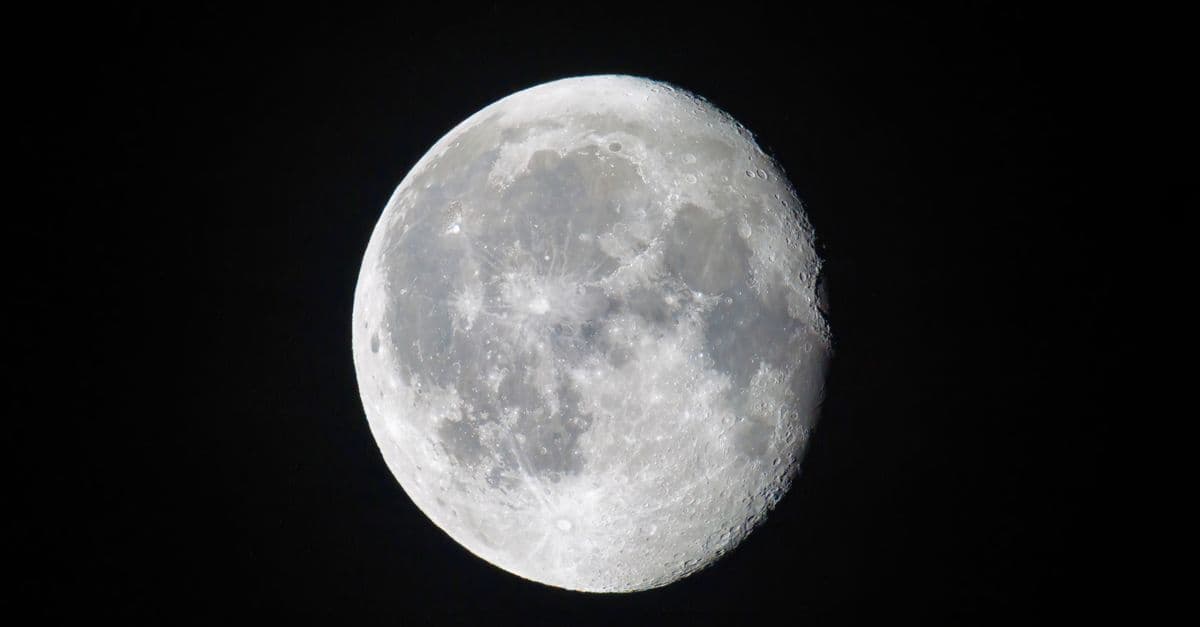
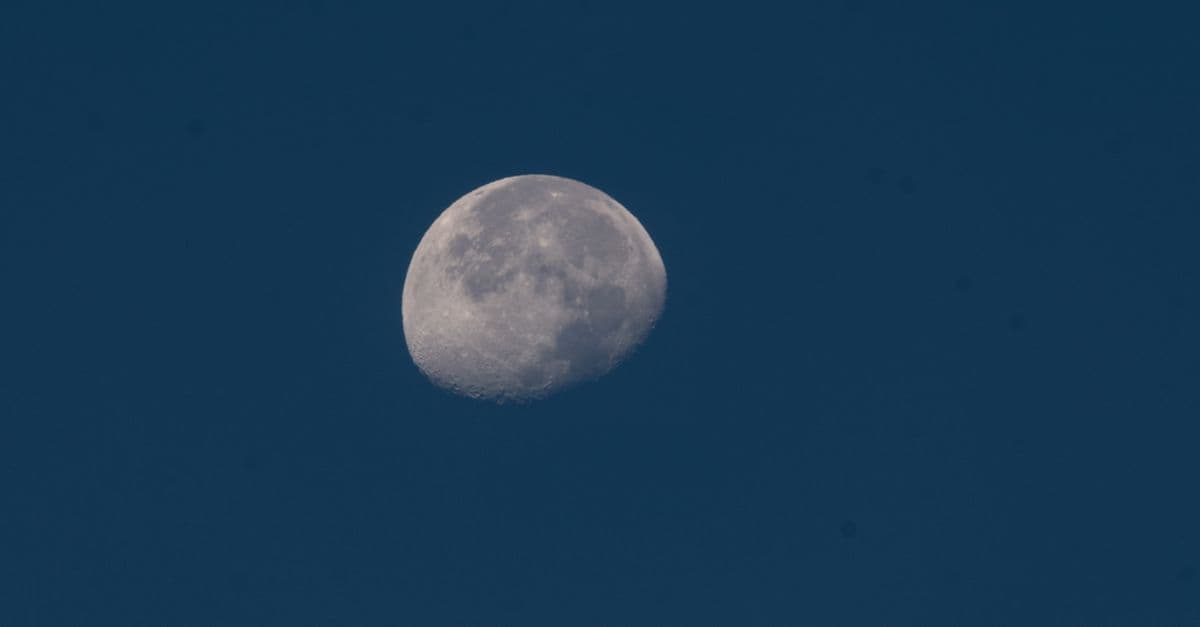
Photo: David Kanigan / Pexels
Before Apollo, most planetary scientists assumed the Moon was geologically dead: a cold, static rock that had stopped changing billions of years ago. Apollo seismometers left on the lunar surface between 1969 and 1977 overturned that assumption. Over eight years of continuous recording, five instruments detected thousands of seismic events a year, including deep moonquakes clustered at 700 to 1,200 kilometers depth, shallow crustal quakes strong enough to worry engineers planning permanent bases, and meteoroid impacts recorded from across the surface. This is how a handful of suitcase-sized instruments, dropped off by six missions, rewrote what scientists thought they knew about the Moon's interior.
Why anyone thought to bring seismometers to the Moon
By the late 1960s, seismology had already transformed how scientists understood Earth's interior. Reading how seismic waves bend, slow, and disappear at different depths let researchers map the crust, mantle, and core without drilling a single hole past a few kilometers down. NASA planners reasoned the same method should work on the Moon, and it was cheap to test: a seismometer is passive. It doesn't need to blast anything or dig; it just has to sit still and listen.
The Passive Seismic Experiment (PSE) became part of the Apollo Lunar Surface Experiments Package (ALSEP), a kit of scientific instruments astronauts deployed at each landing site after the flag and photos were done. Apollo 11 carried a short-lived seismometer in July 1969 that operated for three weeks before overheating. Apollo 12, 14, 15, and 16 deployed longer-lived instruments that, together, ran until NASA shut the network down in September 1977 for budget reasons, not equipment failure (NASA Science: Apollo 11 Seismic Experiment).
That "bell-ringing" quality is worth pausing on, because it explains why the experiments worked so well. On Earth, groundwater and fractured, weathered rock absorb seismic energy quickly, which is why an earthquake's shaking dies down within a minute or two. The Moon has essentially no water and very little near-surface fracturing from erosion, so scattered seismic waves keep bouncing around the interior for a long time before fading. That low attenuation made even small moonquakes detectable and let scientists study the same wave train for tens of minutes, extracting far more information per event than an equivalent Earth earthquake would offer.
How the instruments worked and what they measured
Each PSE unit was a set of three orthogonal seismometers, sensitive enough to detect ground displacements smaller than the width of an atom, paired with a radioisotope thermoelectric generator (RTG) that used the heat from decaying plutonium-238 to keep the instrument running through two-week lunar nights when temperatures drop below −150°C (−238°F). No solar panels, no batteries to replace, no astronaut maintenance after deployment. That design choice is why the network survived years instead of the days a battery-powered instrument would have managed.
Data traveled by radio to Earth-based receiving stations, arriving with roughly a 1.3-second delay, the time light (and radio waves) take to cross the Earth-Moon distance. Because the events couldn't be analyzed in real time, ground teams built an enormous archive of raw seismograms that researchers are still mining decades later using modern signal-processing techniques the original 1970s computers couldn't run (A New Archive of Apollo's Lunar Seismic Data, Planetary Science Journal).
How many seismometers were actually running at once?
Four PSE stations operated simultaneously for a multi-year stretch: Apollo 12, 14, 15, and 16. A fifth, short-lived Apollo 11 instrument ran for three weeks in 1969 before its RTG's thermal design caused it to overheat and fail. Having four stations running together mattered enormously, because a single seismometer can tell you an event happened but not precisely where. Triangulating arrival times across four separated stations let Yosio Nakamura and colleagues at the University of Texas pin down moonquake source locations with reasonable confidence (UT Institute for Geophysics).
What kinds of events did the network actually record?
The catalog splits into four broad categories, each with a distinct depth, timing pattern, and inferred cause: deep moonquakes tied to tidal stress, shallow moonquakes tied to crustal faulting, thermal moonquakes tied to the two-week day-night cycle, and impacts from meteoroids and deliberately crashed spacecraft hardware. The next section breaks down what distinguishes each.
Four kinds of moonquakes, and what causes each one
Deep moonquakes. These were by far the most numerous category. Nakamura's reanalysis of the full Apollo dataset identified 1,743 deep moonquakes originating between 700 and 1,200 kilometers below the surface, with failures concentrated in the 800–1,000 km range, clustering into 28 distinct recurring source regions (UT Institute for Geophysics). Crucially, these sources didn't fire randomly. They activated in step with the Moon's orbital position, specifically near perigee and apogee, the points in its elliptical orbit where Earth's tidal pull on the lunar interior is strongest. That correlation is the single strongest piece of evidence that Earth's gravity is physically flexing and fracturing rock deep inside the Moon on a roughly monthly cycle.
Shallow moonquakes. Rarer but far more energetic, shallow moonquakes originate less than 200 kilometers down and can register up to magnitude 5.5, a size that on Earth would be felt broadly but rarely cause serious damage to well-built structures. Twenty-eight shallow moonquakes were cataloged by the Apollo network between 1972 and 1977 (NASA Science: Apollo Samples, LRO Help Scientists Forecast Moonquakes). Near the Apollo 15 landing site, researchers now think ancient magma intrusions cracked the brittle crust as they pushed upward billions of years ago, and today's slow global cooling and contraction of the Moon is putting those old fault lines back into motion, this time as the crust shrinks rather than expands.
Thermal moonquakes. Every lunar sunrise and sunset triggers small quakes as surface rock, with no atmosphere to buffer the swing, heats or cools by roughly 250°C (450°F) over hours and expands or contracts accordingly. These are the most predictable events in the catalog: they happen on the Moon's 29.5-day day-night cycle, near the terminator line between light and dark, and they were common enough that Apollo scientists could essentially set a clock by them.
Impacts. Meteoroid strikes and, in a handful of cases, deliberately steered Apollo hardware produced sharp, distinctive seismic signatures. Between 1969 and 1972 NASA intentionally crashed spent lunar module ascent stages and Saturn V third stages into the Moon as calibrated seismic sources, including the Apollo 12 impact that rang the Moon for nearly an hour. Analysis of natural meteoroid impact signals let researchers estimate strike energies down to objects with masses of roughly a kilogram, giving planetary scientists a rare direct read on how often small objects hit an airless world (LROC: Rocket impacts recorded by the Apollo seismic network).
Comparison with Mars. For context on scale, NASA's InSight lander recorded more than 1,300 marsquakes on Mars between 2019 and the mission's end in 2022, using a seismometer design later adapted for the Moon (NASA JPL: NASA to Measure Moonquakes With Help From InSight Mars Mission). Marsquake signals are so faint that researchers amplify them by a factor of ten million before they're perceptible against background noise, roughly the same amplification used for the quietest recorded moonquakes, which shows how sensitive planetary seismometers have to be compared to the instruments used for Earth's much larger, more energetic quakes.
Table: The Apollo Passive Seismic Experiment network at a glance
| Landing site | Deployed | Operating span | Notable role |
|---|---|---|---|
| Apollo 11 | July 1969 | 3 weeks | First lunar seismometer; overheated and failed |
| Apollo 12 | November 1969 | 1969–1977 | Recorded the LM ascent-stage impact "ringing" |
| Apollo 14 | February 1971 | 1971–1977 | Long-term deep moonquake monitoring |
| Apollo 15 | July 1971 | 1971–1977 | Near source region for major shallow moonquakes |
| Apollo 16 | April 1972 | 1972–1977 | Completed the four-station triangulation array |
Table: Deployment and operating history of the Apollo Passive Seismic Experiment network. Source: NASA NSSDCA experiment records (NSSDCA: Passive Seismic Experiment).
Reading the waves: what seismic data revealed about the Moon's interior
Seismic waves change speed and direction when they cross a boundary between materials of different density, temperature, or state (solid versus partially molten). By timing how long P-waves (compression waves) and S-waves (shear waves, which can't travel through liquid) took to arrive at each of the four stations from different events, researchers built a layer-by-layer model of the interior without drilling anywhere.
The picture that emerged: a crust roughly 60 to 70 kilometers thick that is drier and more rigid than Earth's, overlying a mantle extending down toward 1,400 kilometers that is hot enough to be partially molten in its lower portion. Below that, a 2011 reanalysis of the Apollo data using modern array-processing techniques, led by Renee Weber and colleagues, found direct seismic evidence of a core with a solid inner portion surrounded by a liquid outer layer, with the outer core making up roughly 60% of the core's volume by their model, and containing less than 6% by weight of lighter alloying elements, consistent with iron mixed with a small amount of lighter material (Weber et al., Science, 2011). That paper only became possible because NASA had archived the raw 1970s seismograms rather than discarding them; the core detection came more than three decades after the last instrument stopped transmitting.
How do scientists tell moonquakes apart from meteoroid impacts on a seismogram?
Impacts produce a sharp, high-frequency spike that arrives and decays relatively quickly, similar to a hammer strike. Moonquakes, especially deep ones, tend to build more gradually and ring for longer because the rupture itself takes time and low attenuation lets the resulting waves reverberate. Analysts also cross-check timing against known spacecraft impact events and orbital position for suspected tidal moonquakes.
Why do moonquakes last so much longer than earthquakes?
Earth's crust is fractured and saturated with water, both of which scatter and absorb seismic energy quickly, so shaking from a given earthquake typically dies out within a minute or two. The Moon is extremely dry and its rock is less fractured near the surface, so seismic waves scatter without losing much energy, letting some moonquake signals ring for tens of minutes to, in the Apollo 12 impact case, nearly an hour (SpaceDaily).
Why this data mattered beyond lunar science
It validated planetary seismology as a method. Before Apollo, no one had proven you could deploy a passive instrument on another world and reconstruct its internal layering the way seismologists do on Earth. That proof of concept directly informed NASA's InSight mission to Mars, which used a seismometer lineage descended from the same design philosophy and detected over 1,300 marsquakes before its 2022 conclusion (NASA JPL).
It reshaped models of tidal heating across the solar system. The clear correlation between deep moonquakes and the Moon's orbital position around Earth gave planetary scientists concrete evidence that gravitational flexing can generate internal stress and heat in a body long after its formation. That same mechanism, tidal heating, is now central to explaining why icy moons like Jupiter's Europa and Saturn's Enceladus may harbor liquid water oceans beneath frozen shells, even at distances from the Sun where surface ice should be permanently frozen solid.
It changed how engineers think about building on the Moon. A magnitude 5.5 shallow moonquake sounds moderate by Earth standards, but unlike an Earth earthquake that shakes for tens of seconds, a moonquake's low attenuation means shaking can persist far longer, long enough to potentially destabilize a structure, tip over equipment, or interrupt delicate operations rather than cause the sudden, sharp jolt that engineers on Earth design against (Smithsonian Magazine: Thousands of Moonquakes Rocked the Apollo Landing Sites). NASA's Artemis program, which plans long-duration surface habitats, is treating this as a real engineering constraint rather than a curiosity.
It sharpened impact-crater physics. Because researchers knew the exact mass, velocity, and timing of several deliberately crashed spacecraft, they could calibrate how impact energy translates into seismic signal strength, then apply that calibration to natural meteoroid strikes recorded across the network, extending it down to objects as small as roughly a kilogram. That calibration feeds directly into models of how craters form and how often small impacts strike airless bodies, including the Moon's role as a record-keeper for the inner solar system's impact history.
Where the old assumptions broke down, and what people still get wrong
The biggest misconception left over from the pre-Apollo era is that the Moon is a geologically finished, unchanging object. It isn't. It's cooling and slowly contracting, and that contraction is actively producing new shallow moonquakes along ancient fault scarps that NASA's Lunar Reconnaissance Orbiter has since photographed directly, some of which appear geologically young enough to still be forming (NASASpaceFlight: Scientists investigate moonquakes using Apollo 17 samples, LRO observations).
A second common mix-up is treating "moonquake" as a synonym for "earthquake, but smaller." The mechanisms are largely different. Earth's earthquakes are overwhelmingly driven by plate tectonics, the sliding and colliding of large crustal plates riding on a mobile mantle. The Moon has no plate tectonics; its quakes come from tidal flexing at depth, slow global contraction near the surface, and thermal expansion and contraction from the day-night cycle. Comparing the two by magnitude alone misses why they happen at all.
A third misconception, one that circulates in pseudoscientific corners of the internet, holds that the "bell-ringing" seismic signature after the Apollo 12 impact implies the Moon is hollow. It doesn't. The long ring-down is fully explained by low seismic attenuation in extremely dry, relatively unfractured rock, the same property that makes small moonquakes detectable at all, and it's consistent with a solid, layered, differentiated interior confirmed independently by the 2011 core detection using array-seismology methods (Weber et al., Science, 2011).
What comes after Apollo: the next generation of lunar listening
No seismometer has operated on the Moon since the Apollo network was shut down in 1977 for budget reasons. That gap is about to close. NASA's Farside Seismic Suite, built around two seismometers adapted directly from the InSight Mars lander design, including one of the most sensitive seismometers ever built for spaceflight, is scheduled to land in the Schrödinger basin on the lunar far side, roughly 500 kilometers from the South Pole, to record the first seismic data from that hemisphere in decades (NASA JPL: Farside Seismic Suite). Other lunar science topics include lunar ice detection methods and solar wind experiments on the Moon.
That far-side vantage matters scientifically because every Apollo station sat on the Moon's near side, the hemisphere permanently facing Earth due to tidal locking. A near-side-only network can't fully triangulate events on the far side or resolve the deepest interior structure with confidence, the same way a handful of microphones clustered in one corner of a stadium can't localize sound everywhere in the building. Data from the far side should also sharpen models of the core-mantle boundary and test whether tidal moonquake source regions exist on that hemisphere too.
Beyond Farside Seismic Suite, NASA's Artemis program has flagged expanded seismic monitoring as a priority for planned surface habitats, partly for pure science and partly, as noted above, because moonquake risk is now a recognized engineering constraint for any structure meant to last years rather than days.
Frequently asked questions
Q: How many seismometers did Apollo deploy on the Moon? A: Six instruments across six missions, though only four (Apollo 12, 14, 15, and 16) ran for years as a coordinated network; the Apollo 11 unit failed after three weeks in 1969 (NASA Science).
Q: How did the Apollo seismometers stay powered for years without solar panels? A: Radioisotope thermoelectric generators (RTGs) converted heat from decaying plutonium-238 into electricity, letting the instruments run continuously through two-week lunar nights when solar power would have been useless.
Q: Do moonquakes pose a real risk to future lunar bases? A: Shallow moonquakes reaching magnitude 5.5 are moderate by Earth standards, but their unusually long duration, sometimes hours rather than seconds, is a genuine engineering concern for long-duration Artemis-era structures, according to NASA researchers studying the Apollo 17 and LRO data (Smithsonian Magazine).
Q: Does the Moon "ringing like a bell" mean it's hollow? A: No. The long ring-down after impacts, including the nearly hour-long signal from the Apollo 12 lunar module impact, is explained by low seismic attenuation in the Moon's dry, relatively unfractured rock, not an empty interior. Independent seismic evidence points to a solid, layered core.
Q: What is the difference between a deep moonquake and a shallow moonquake? A: Deep moonquakes originate 700 to 1,200 kilometers down and are triggered by Earth's tidal pull as the Moon moves through its elliptical orbit. Shallow moonquakes originate less than 200 kilometers down, are rarer, and are linked to crustal faulting from the Moon's slow contraction as it cools.
Q: Did Apollo seismic data prove the Moon has a core? A: A 2011 reanalysis of Apollo seismograms by Renee Weber and colleagues, using signal-processing methods unavailable in the 1970s, found seismic evidence for a solid inner core surrounded by a liquid outer core, roughly 60% liquid by volume (Science, 2011).
Q: How does lunar seismology compare to Mars seismology? A: NASA's InSight lander recorded more than 1,300 marsquakes on Mars between 2019 and 2022, using a seismometer design later adapted for the Moon's Farside Seismic Suite. Marsquake signals are faint enough that researchers amplify them roughly ten-millionfold to analyze them.
Q: Why haven't there been lunar seismometers since 1977? A: NASA shut down the Apollo Lunar Surface Experiments Package network in 1977 for budget reasons, not equipment failure; the instruments were still functioning. No replacement seismic network has operated on the Moon since.
Q: What's replacing the Apollo network? A: NASA's Farside Seismic Suite, built from seismometer technology adapted from the Mars InSight mission, is scheduled to land in the Schrödinger basin near the lunar South Pole to collect the first far-side seismic data in the Moon's history (NASA JPL).
Q: Can meteoroid impacts really be detected by seismometers on the Moon? A: Yes. The Apollo network detected impact signatures from both natural meteoroid strikes and deliberately crashed spacecraft hardware, with researchers estimating detectable impact masses down to roughly a kilogram based on calibration from known spacecraft impacts (LROC).
The takeaway
Apollo's seismometers did something almost no other instrument sent to the Moon accomplished: they kept working and kept teaching scientists new things for decades after the missions ended, right up through a 2011 core detection built entirely on archived 1970s data. The core lesson isn't just that the Moon turned out to be seismically active rather than dead. It's that a passive instrument, left running quietly for years, can out-perform a single dramatic flyby or sample-return mission when it comes to understanding what's happening deep inside a world you can't drill into. That's exactly the bet NASA is making again with the Farside Seismic Suite, and why the gap since 1977 has been treated as a genuine scientific loss rather than a footnote.
Read next:
- How the Seismograph Made Earthquakes Measurable
- How Scientists Know What Is Inside Earth
- Why the Moon Has So Many Craters
Sources:
- NASA Science: Apollo 11 Seismic Experiment
- NASA NSSDCA: Passive Seismic Experiment (PSE)
- A New Archive of Apollo's Lunar Seismic Data, Planetary Science Journal (2022)
- UT Institute for Geophysics: Remembering the Apollo Moon Landings — Yosio Nakamura and the Birth of Planetary Seismology
- NASA Science: NASA's Apollo Samples, LRO Help Scientists Forecast Moonquakes
- Smithsonian Magazine: Thousands of Moonquakes Rocked the Apollo Landing Sites in Less Than a Decade
- NASASpaceFlight: Scientists Investigate Moonquakes Using Apollo 17 Samples, LRO Observations (2025)
- Weber, R.C. et al., "Seismic Detection of the Lunar Core," Science 331, 309-312 (2011)
- SpaceDaily: When NASA Deliberately Crashed Apollo Hardware Into the Moon, the Seismometers Recorded Vibrations for Nearly an Hour
- LROC: Rocket Impacts Recorded by the Apollo Seismic Network
- NASA JPL: NASA to Measure Moonquakes With Help From InSight Mars Mission
- NASA JPL: Farside Seismic Suite
Follow new articles
Add SciHub101 to your feed reader to see new science and technology stories.
About the Author
SciHub101 is an independent science and technology publication founded and edited by Buğra Sözeri, a software engineer and app developer based in Türkiye. AI tools assist with drafting and research. Source documentation in the existing archive is uneven, and articles are being reviewed and corrected. The Editorial Team byline identifies editorial responsibility; it does not certify specialist or independent human review. Where we compare products, anything built by our own team is labelled as such — see the editorial guidelines and About page for how corrections and disclosures work.
Related Articles
Lunar Soil Analysis: What We Learned from Moon Dust
Apollo lunar soil samples revealed the Moon's weathering processes, mineral composition, and the effects of cosmic rays—knowledge essential for future lunar settlement.
Lunar Magnetometer Discoveries: Evidence of the Moon's Magnetic Past
Apollo magnetometers revealed anomalous magnetic fields on the Moon surface, proving the Moon once possessed a magnetic field—a surprising discovery about our satellite's geological history.
Moon Rocks: Scientific Treasure from Lunar Exploration
Apollo moon rocks are among Earth's most valuable scientific specimens, revealing planetary formation, solar system history, and the nature of celestial bodies.
Apollo 11: First Steps on the Moon and the Dawn of Lunar Science
July 20, 1969: Neil Armstrong and Buzz Aldrin landed on the Moon, returning 21.5 kg of lunar samples that revealed the Moon's geological history and transformed planetary science.
Apollo Laser Ranging Retroreflectors: Measuring the Moon's Distance
Apollo astronauts left reflectors on the Moon allowing scientists to measure Earth-Moon distance with millimeter precision—revealing the Moon's orbital evolution.
Lunar Ice Detection Methods: Finding Water on the Moon
Remote sensing and direct exploration revealed water ice at the Moon's poles—a discovery changing lunar science and enabling future settlement through resource utilization.