Why the Moon Has So Many Craters
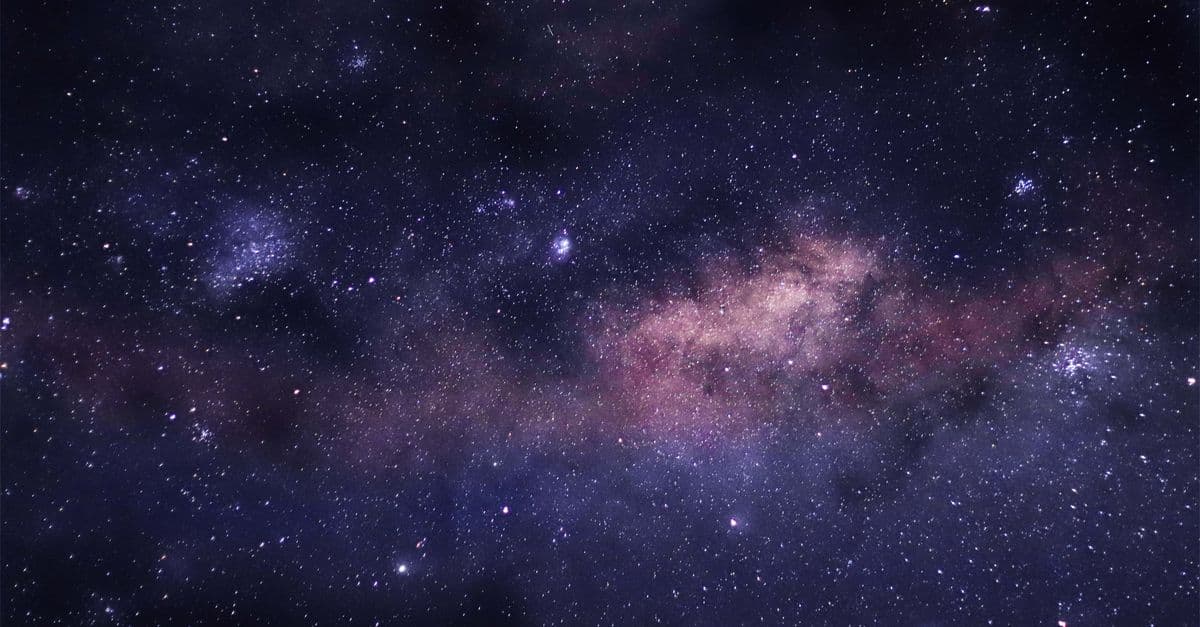
Photo: Francis Glenn Marciano / Pexels
The moon's surface preserves impact scars from more than 4 billion years of bombardment, including basins that formed before complex life existed on Earth, because it lacks every mechanism that normally erases such scars: no atmosphere to burn up incoming debris, no liquid water or wind to erode features, and no active plate tectonics to recycle its crust. Earth has almost certainly been struck by just as many objects over its history, but nearly none of those ancient scars survive on its surface today. What looks like a moon uniquely abused by the solar system is, in reality, a moon that simply never got the chance to heal.
No atmosphere means no shield and no erosion
Earth's atmosphere is roughly 100 kilometers (62 miles) thick with substantial density near the surface, and it burns up the vast majority of small incoming meteoroids through atmospheric friction before they ever reach the ground. The fireballs people call "shooting stars" are usually pebble-sized objects disintegrating 80 to 100 kilometers up, and even survivors that do reach the ground are quickly weathered by wind, rain, and chemical processes once they land. The moon has no meaningful atmosphere at all. Its surface pressure is roughly one-trillionth (10⁻¹²) of Earth's sea-level air pressure, thin enough that planetary scientists classify it as a surface boundary exosphere rather than a true atmosphere.
That distinction matters more than it sounds like it should. An exosphere is a layer so tenuous that its molecules rarely collide with one another; they behave more like individual particles on ballistic trajectories than like a gas. A layer that thin cannot generate friction, cannot support combustion, and cannot slow anything down. Every object that approaches the moon, from dust-sized micrometeorites to boulder-sized fragments, strikes the surface at essentially its full interplanetary velocity, with nothing to ablate, decelerate, or vaporize it before impact. On Earth, only objects large enough to survive the trip through 100 kilometers of increasingly dense air reach the ground intact; on the moon, size stops being the deciding factor, because there is no gauntlet to run.
Once a crater forms on the moon, there is also nothing to erode it afterward. There is no wind to sandblast a rim smooth, no rain to carve gullies into a crater wall, no rivers to fill a basin with sediment, and no freeze-thaw cycling to crack a slope apart the way it does in terrestrial mountains. Earth's oldest confirmed impact structure, the Vredefort crater in South Africa, formed roughly 2 billion years ago and was originally estimated at somewhere between 180 and 300 kilometers (112 to 186 miles) across, making it one of the largest impact structures ever identified on Earth. Today it survives mainly as a subtle ring of uplifted, deformed rock studied through geophysical surveys and shock-metamorphosed mineral evidence, not as a visible bowl-shaped crater, because 2 billion years of erosion and tectonic deformation have worn its original topography down to almost nothing. A lunar crater of comparable age, by contrast, still shows a raised rim, a bowl-shaped floor, and a debris blanket (called an ejecta blanket) in something close to the geometry it had on the day it formed, because nothing on the moon has ever come along to smooth it out.
No plate tectonics to recycle the surface
Earth's outer shell is broken into moving tectonic plates that continuously destroy old crust at subduction zones, where one plate slides beneath another and sinks into the mantle, while generating brand-new crust at mid-ocean ridges, where magma wells up and solidifies. This cycle, called plate tectonics, is the single biggest reason Earth's impact record is so incomplete. Oceanic crust on Earth is rarely older than about 200 million years, because the seafloor is essentially a conveyor belt: new crust forms at a ridge, spreads outward over tens of millions of years, and eventually gets subducted and destroyed at a trench. Any impact crater that ever formed on ocean floor older than roughly 200 million years has, quite literally, been swallowed by the planet and melted back into the mantle. Continental crust survives longer because it is too buoyant to subduct easily, which is why Earth's oldest confirmed craters, including Vredefort, sit on ancient continental shields rather than ocean floor. Even those survivors are still degraded almost beyond recognition by the erosional forces described above.
The moon never developed this recycling system. With roughly one-fourth of Earth's diameter and a much smaller internal heat budget, it cooled and solidified into a single rigid outer shell (called a lithosphere) within roughly the first billion years of its existence, and it has had no plate tectonics for essentially its entire subsequent history. There is no subduction to destroy old lunar crust and no seafloor spreading to replace it, so the crust that formed early in the moon's history, cratered face and all, has simply stayed where it was, largely undisturbed, for eons. This is also why the moon has no ongoing mountain-building the way Earth does along its plate boundaries; without moving plates colliding or pulling apart, there is no mechanism to fold, uplift, or bury large stretches of crust the way Earth constantly does to its own surface.
The Apollo missions, which returned lunar samples to Earth between 1969 and 1972, let scientists date lunar rocks directly using radiometric dating of impact melt (rock that was liquefied by the heat and pressure of an impact and then re-solidified). Those dates confirmed that the moon's heavily cratered highland regions correspond to a period called the Late Heavy Bombardment, when the inner solar system experienced an apparent surge in large impacts. NASA's own lunar science pages describe this episode as having occurred roughly between 4.1 and 3.8 billion years ago, based largely on the ages clustering in Apollo-returned impact melt samples (NASA Science, "What Is the Late Heavy Bombardment?").
| Surface-Erasing Process | Present on Earth | Present on the Moon |
|---|---|---|
| Atmosphere burning up small impactors | Yes, ~100 km (62 mi) thick | No, negligible exosphere only |
| Weathering by wind and liquid water | Yes, continuous | No, no wind or liquid water |
| Plate tectonics recycling crust | Yes, active, oceanic crust <200 Myr old | No, single rigid shell for billions of years |
| Volcanic resurfacing | Ongoing in places (e.g., Hawaii, Iceland) | Effectively ceased roughly 1 billion years ago (mare basalts) |
| Biological/soil processes reshaping surface | Yes, extensive | No |
Earth has almost every mechanism needed to erase an impact scar; the moon has almost none of them, which is the entire explanation for why its craters look untouched.
The Late Heavy Bombardment, and why it's still debated
The Late Heavy Bombardment (sometimes abbreviated LHB) is one of the more contested chapters in solar system history, and it is worth being precise about what is solid and what is still argued over. The solid part is observational: when Apollo astronauts collected rock samples from the lunar highlands, and later missions and robotic sample-return efforts added to that collection, a striking number of impact melt ages clustered in the range of roughly 4.1 to 3.8 billion years ago rather than spreading evenly across the moon's 4.5-billion-year history. That clustering is real and it has been reproduced across multiple sample sets, which is why NASA describes it as a documented feature of the lunar rock record rather than pure speculation.
What remains genuinely debated is the interpretation. One camp argues the clustering reflects a real, sudden spike in impact rates across the inner solar system, possibly triggered by gravitational upheaval among the outer planets. The best-known version of this idea is the Nice model (named for the French city where it was developed), which proposes that Jupiter, Saturn, Uranus, and Neptune migrated significantly from their original orbits early in the solar system's history, and that this migration gravitationally scattered a reservoir of small bodies inward, producing a temporary surge of impacts on the Moon, Mercury, and early Earth. A competing view, sometimes called the "sample bias" hypothesis, argues that the clustering of ages is partly an artifact of where and what the Apollo missions happened to sample. Because most Apollo landing sites were chosen for engineering and scientific accessibility rather than as a random geographic survey of the whole moon, and because a handful of the largest, most recent impact basins likely reset the ages of rocks across huge areas through their own ejecta and secondary heating, some researchers argue the "spike" may be exaggerated or partly an artifact of sampling a small, basin-dominated set of locations rather than the whole lunar surface.
This is an area where honest science writing has to resist the temptation to pick a winner. Both interpretations are represented in current peer-reviewed literature, and the debate is exactly the kind of open question that future sample-return missions, especially from regions like the South Pole-Aitken basin that Apollo never visited, are designed to help settle. What is not in dispute is that the moon's cratered highlands are ancient by any standard, dating back to a period roughly contemporaneous with the earliest known evidence of a habitable, if not yet inhabited, Earth.
How scientists actually use craters as a clock
Crater density is not just a curiosity: it is one of the primary tools planetary scientists use to estimate the relative age of a surface anywhere in the solar system, from the moon to Mars to icy moons of the outer planets. The underlying logic, called crater counting, is straightforward. Assuming impacts have struck a given world at a roughly steady average rate over long timescales, a surface that has accumulated more craters per unit area has simply been exposed longer than a surface with fewer craters. A lava-flooded lunar mare with relatively few large craters is younger than a heavily pockmarked highland region nearby, because the mare's basalt cooled and paved over the older cratered terrain more recently, essentially resetting its "crater clock" to zero at the moment the lava solidified.
In practice, researchers don't just eyeball crater counts; they build what are called crater size-frequency distributions (SFDs), tallying how many craters of each size class exist within a mapped area, then compare that distribution to models calibrated against the handful of lunar regions with known absolute ages from radiometric dating of returned samples. Because Apollo and Luna sample-return missions gave scientists actual rock ages for specific patches of the lunar surface, researchers could tie a given crater density to a real number of years, then extend that calibration to any other region of the moon, and by extension to other cratered bodies like Mercury or Mars, using crater counts alone. This is what turns craters from scars into a stopwatch: without the Apollo-era ground truth, crater density would only ever tell you which surfaces are relatively older or younger, not how many actual years separate them.
The method has real limits worth naming honestly. Crater counting assumes the impact rate has stayed roughly constant over the relevant time period, an assumption that breaks down precisely during episodes like the debated Late Heavy Bombardment, when the rate may have temporarily spiked. It also struggles with heavily cratered ancient terrain, where new craters start overlapping and erasing older ones (called crater saturation), making it hard to count accurately once a surface gets crowded enough. And it depends on distinguishing primary craters, formed by objects arriving from space, from secondary craters, formed by debris thrown out of a nearby primary impact, since counting secondaries as if they were independent impacts would make a surface look artificially old. Despite these caveats, crater counting remains the workhorse dating tool for any planetary surface scientists cannot physically sample, which is most of them.
Would Earth's crater record look like the moon's if it could?
It's worth being explicit about a claim that's easy to state loosely: Earth was very likely struck about as often as the moon was, not less. Both worlds share the same orbital neighborhood, and Earth's substantially stronger gravity, roughly six times the moon's surface gravity, should if anything have pulled in a higher relative share of nearby debris rather than a lower one. The visible difference between the two worlds isn't a difference in how much each one was hit; it's a difference in how much of that history each one was able to keep.
This is the point where the atmosphere-and-tectonics explanation earns its keep as more than trivia: it predicts specific, checkable patterns, and those patterns show up. If erosion and tectonics are really what erase Earth's craters, older Earth craters should be systematically shallower, more degraded, and confined mostly to old continental interiors rather than ocean floor, and that is exactly what the geological record shows. It also predicts that any world sharing the moon's lack of atmosphere and tectonics, regardless of its size or composition, should show a similarly preserved cratering record, and rocky, airless bodies like Mercury and many asteroids do show exactly that kind of retained impact history. The explanation isn't just plausible after the fact; it makes forward-looking predictions that keep checking out across other bodies in the solar system, which is a large part of why planetary scientists treat it as settled rather than merely likely.
Common misconceptions about lunar craters
A persistent myth holds that the moon simply sits in a more dangerous part of space, catching debris that would otherwise miss Earth, or even that the moon somehow shields Earth from impacts like a cosmic bodyguard. Neither idea holds up well. The moon's gravitational influence on incoming debris destined for Earth is modest given its distance and mass, and there is no credible mechanism by which the moon meaningfully reduces the number of objects that strike Earth over geological timescales. The far more mundane explanation, that Earth gets hit just as often but erases the evidence, fits the physical evidence far better and requires no special pleading about orbital mechanics.
Another common confusion conflates crater age with crater size. It's tempting to assume the biggest craters must be the oldest, since they seem the most dramatic, but that isn't how the record actually works. Some of the moon's largest basins, like Imbrium and Orientale, are ancient, but some of its most visually striking large craters, like Tycho, are comparatively young, roughly 108 million years old based on Apollo 17 sample analysis, and stand out precisely because their bright ray systems (the pale streaks of ejected material radiating outward) haven't yet been dulled by billions of years of micrometeorite bombardment darkening the surface. Age on the moon is read from crater density, sharpness, and ray-system brightness together, not from size alone.
A third misconception treats the moon's cratered appearance as evidence that impacts are somehow more common today than in Earth's deep past. In reality, both the moon and Earth experience a comparatively low, steady background rate of large impacts today relative to the solar system's chaotic first several hundred million years, when far more debris was still orbiting uncleared. The moon's crowded appearance isn't a sign of an ongoing storm; it's an archive of a storm that mostly ended billions of years ago and simply never got swept up afterward.
The takeaway
The moon has so many visible craters not because it was struck more often than Earth, but because it lacks every process that normally erases impact scars: no atmosphere to burn up or slow incoming objects, no weather to erode existing craters, and no plate tectonics to recycle its ancient crust. Earth experienced a comparable bombardment history, but almost all of that record has been erased or buried, leaving the moon as the best-preserved archive of the inner solar system's violent early history, still legible more than 4 billion years later. That is also exactly why crater counting works as a dating tool on the moon and other airless worlds: without erosion or resurfacing to reset the clock, crater density genuinely reflects the passage of time. Related reading: why Mars lost most of its atmosphere, how asteroid samples reveal solar system history, and what makes a planet habitable.
FAQ
Q: Why doesn't the moon have craters erased over time like Earth does?
The moon lacks an atmosphere to burn up incoming objects or weather existing craters, and it has no active plate tectonics to recycle its crust, so impact scars from billions of years ago remain essentially unchanged in shape and depth.
Q: Was Earth hit by as many objects as the moon?
Yes. Earth's larger size and stronger surface gravity mean it was very likely struck at least as often as the moon over its history, but plate tectonics, weathering, and its atmosphere have erased nearly all of that ancient impact record from view.
Q: How old are the moon's oldest craters?
Many of the moon's heavily cratered highland regions date to the Late Heavy Bombardment period, roughly 4.1 to 3.8 billion years ago, based on radiometric dating of impact melt rock samples returned by the Apollo missions, according to NASA's lunar science program.
Q: Does the moon have any atmosphere at all?
The moon has an extremely thin exosphere with surface pressure roughly one-trillionth of Earth's, far too tenuous to burn up incoming meteoroids or support wind and weather, which is a major reason lunar craters remain so well preserved.
Q: What is the Late Heavy Bombardment?
The Late Heavy Bombardment refers to a period, roughly 4.1 to 3.8 billion years ago, during which impact melt ages from Apollo samples cluster, suggesting the inner solar system experienced elevated impact activity. Whether this reflects a true spike in impact rate or partly a sampling artifact remains debated among planetary scientists.
Q: How do scientists use craters to date a planetary surface?
Scientists count crater density across a mapped surface region, called crater counting, and compare it to size-frequency models calibrated against lunar regions with known ages from radiometric dating. Denser cratering generally indicates an older, longer-exposed surface, while sparser cratering indicates a more recently resurfaced one.
Q: Are all large lunar craters ancient?
No. Crater size alone doesn't indicate age. Some of the moon's most visually prominent craters, like Tycho, are comparatively young at roughly 108 million years old, identifiable by their still-bright ray systems that haven't yet been darkened by billions of years of micrometeorite bombardment.
Follow new articles
Add SciHub101 to your feed reader to see new science and technology stories.
About the Author
SciHub101 is an independent science and technology publication founded and edited by Buğra Sözeri, a software engineer and app developer based in Türkiye. AI tools assist with drafting and research. Source documentation in the existing archive is uneven, and articles are being reviewed and corrected. The Editorial Team byline identifies editorial responsibility; it does not certify specialist or independent human review. Where we compare products, anything built by our own team is labelled as such — see the editorial guidelines and About page for how corrections and disclosures work.
Related Articles
How the Moon Formed — Theia Impact Theory
The giant impact hypothesis explains how a Mars-sized body called Theia struck the proto-Earth and formed the Moon ~4.5 billion years ago.
2I/Borisov: The First Confirmed Interstellar Comet
In August 2019, an amateur astronomer in Crimea spotted a faint smudge moving at impossible speed. It turned out to be a comet from another star system — only the second interstellar object ever confirmed in our solar system, and the first one to look genuinely familiar.
Jupiter's Auroras: The Most Powerful Light Show in the Solar System
Jupiter's auroras are not scaled-up versions of Earth's. They run mostly on plasma from the volcanic moon Io and on the planet's own rapid spin, and they glow in ultraviolet, infrared, and X-rays whether or not the Sun is active.