How Asteroid Samples Reveal Solar System History
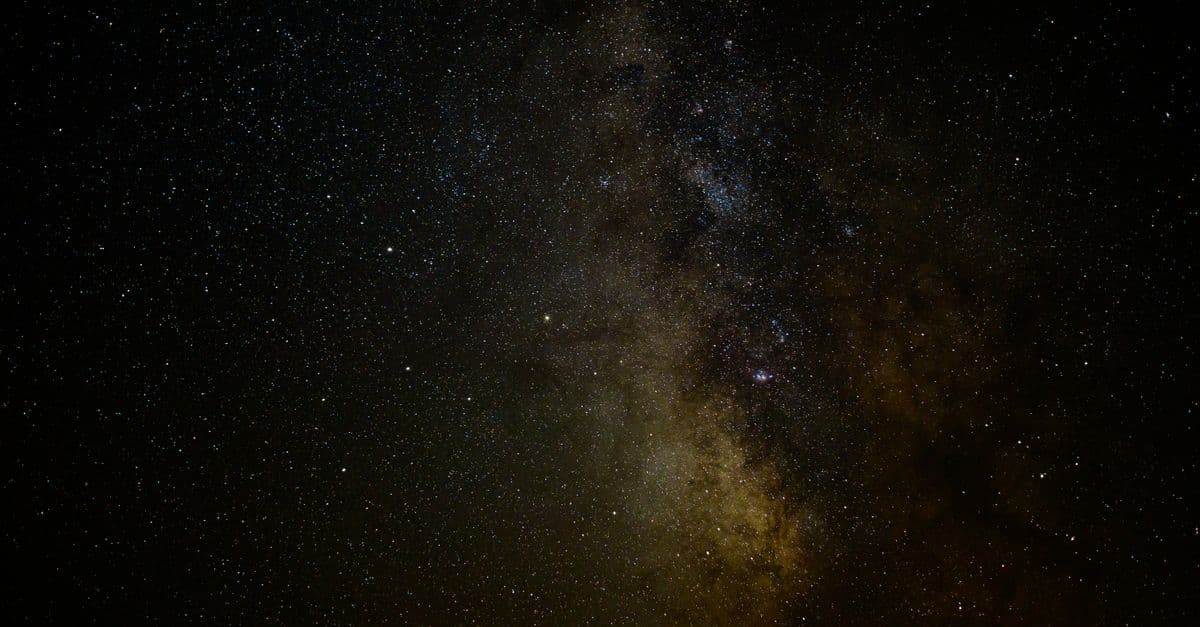
Photo: Brett Sayles / Pexels
On December 6, 2020, Japan's Hayabusa2 mission dropped a capsule into the South Australian outback carrying about 5.4 grams of material from asteroid Ryugu. Less than three years later, on September 24, 2023, NASA's OSIRIS-REx delivered roughly 121.6 grams of material from asteroid Bennu, the largest asteroid sample ever brought back to Earth. Together, these two hauls, plus the far smaller sample JAXA's original Hayabusa mission returned from asteroid Itokawa in 2010, are giving scientists their clearest direct look yet at the chemistry that built the solar system roughly 4.6 billion years ago, and possibly some of the raw ingredients life used to get started.
Asteroids are often described as time capsules, and that is not exaggeration. Most planets, including Earth, have spent billions of years being reshaped by volcanism, plate tectonics, erosion, and atmospheric chemistry, processes that erase the original material a planet was built from the way a river erases footprints in sand. Small asteroids, especially the ones that never grew large enough to melt and differentiate into a metal core and rocky mantle, skipped that erasure. Their interiors have sat largely undisturbed since the solar system's first few million years, making them one of the only physical archives of what the material feeding planet formation actually looked like.
Why pristine, spacecraft-collected samples beat meteorites
Meteorites fall to Earth for free, roughly 500 confirmed meteorite falls are recovered worldwide each decade, and scientists have studied them for well over a century. But every meteorite has already been compromised twice before a researcher ever touches it. First, atmospheric entry heats its outer layers to temperatures of several thousand degrees Celsius, driving off or altering volatile compounds and water-bearing minerals near the surface. Second, once it lands, it sits exposed to Earth's oxygen, humidity, and microbial life, sometimes for weeks or months before anyone recovers it, giving terrestrial contamination time to work its way into cracks and pore spaces.
A spacecraft-collected sample skips both problems. Hayabusa2 and OSIRIS-REx each sealed their asteroid material inside a nitrogen-purged or vacuum-sealed canister within hours of collection, while still in space, and that seal was not broken until the sample reached a clean room on Earth. JAXA's curation facility and NASA's Johnson Space Center curation lab both process asteroid material inside glove boxes flushed with inert nitrogen gas, so oxygen and ambient moisture never touch it. That is the difference between reading a document that has been faithfully preserved in an archive and reading one that was left out in the rain and only recovered afterward: the words might be similar, but you cannot fully trust that what you are reading is the untouched original.
This distinction matters most for the most fragile category of compounds scientists care about: organic molecules and hydrated minerals, both of which react readily with terrestrial oxygen and water vapor. A meteorite's organic chemistry by the time it reaches a lab has usually already been altered to some degree. An asteroid sample, collected and sealed in space, has not.
Why carbonaceous, or C-type, asteroids are the ones that matter
Both Ryugu and Bennu belong to a class of asteroids known as carbonaceous, or C-type, asteroids, a category rich in carbon compounds and, in many cases, minerals that formed in the presence of liquid water. C-type asteroids are thought to represent some of the least-altered leftover material from the solar system's earliest, coldest, most primitive regions, likely originating farther from the sun than Earth or Mars, in a zone where water ice was abundant when the solar system was forming.
That distinction is not cosmetic. The solar system's rocky planets, Mercury, Venus, Earth, and Mars, formed closer to the sun, where temperatures were too high for ice to survive as a solid building material. Carbonaceous asteroids, by contrast, likely accreted from a mix of rock and ice farther out, then some were scattered inward over billions of years by gravitational interactions with Jupiter and other planets. Bennu and Ryugu are both believed to be fragments knocked off larger parent asteroids that broke apart in ancient collisions, exposing interior material that had been shielded from space weathering and solar radiation for eons.
What makes an asteroid "primitive"
Primitive, in planetary science, describes a body whose bulk chemical composition has changed little since it first accreted from the solar nebula, the swirling cloud of gas and dust that formed the sun and planets. Primitive asteroids never got hot enough, or large enough, to melt and separate into distinct layers the way Earth did, so their original mineralogy and chemistry survive largely intact.
What Ryugu and Bennu samples have already revealed
The scientific payoff from both missions has come faster than many researchers expected. Analysis of the Ryugu samples, led by the Hayabusa2 science team and published across multiple papers in Nature Communications and other peer-reviewed journals starting in 2022, confirmed the presence of racemic amino acids, the building blocks proteins are made from, along with vitamin B3 and, in a 2023 paper published in Nature Communications, uracil, one of the five nucleobases used to build RNA, present at concentrations of roughly 6 to 32 parts per billion. A follow-up study by Japanese researchers went further, confirming that all five canonical nucleobases, adenine, guanine, cytosine, thymine, and uracil, are present somewhere across the Ryugu sample set.
NASA's Bennu results, published January 29, 2025, in the journals Nature and Nature Astronomy, told a strikingly similar story. Researchers identified 14 of the 20 amino acids that life on Earth uses to build proteins, including tryptophan, an amino acid not previously detected in any meteorite or returned asteroid sample. They also confirmed all five DNA and RNA nucleobases, unusually high concentrations of ammonia, and phosphate compounds, plus mineralogical evidence, in the form of hydrated clay minerals and evaporite salts, that briny liquid water once existed inside Bennu's parent body and slowly evaporated away, leaving behind a mineral residue similar to what forms when a salt lake dries out on Earth.
None of this is proof that asteroids created life, and NASA's own release was explicit on that point: the findings don't show evidence of life itself. What they show is that the chemical ingredients recognized as prerequisites for life, amino acids, nucleobases, and liquid water chemistry, were common and stable across the early solar system's asteroid belt, not some rare accident unique to Earth.
What the mineral and isotope evidence says about water and heat
Amino acids and nucleobases get the headlines, but the mineralogy inside both samples tells an equally important story about conditions in the early solar system. Both Ryugu and Bennu contain hydrated clay minerals, minerals such as phyllosilicates that only form when rock reacts chemically with liquid water over extended periods. Their presence means water was not just present as ice on these parent bodies, it was chemically incorporated into the rock itself, likely within the solar system's first several million years, while radioactive isotopes like aluminum-26 embedded in the original dust were still decaying and generating enough internal heat to melt ice into liquid water inside a body only tens of kilometers across.
Isotope ratios of elements including nitrogen, hydrogen, and carbon in the returned grains give scientists a second, independent line of evidence. Different formation temperatures and radiation environments leave measurably different isotopic signatures, ratios of heavier to lighter isotopes of the same element, that survive largely unchanged over billions of years once locked into a mineral crystal. By measuring those ratios precisely with mass spectrometers, researchers can estimate how cold, how wet, and how radiation-exposed the material was before the parent asteroid ever formed, essentially reading a chemical thermometer and clock that has been running since before Earth existed.
What is the "exogenous delivery" hypothesis?
The exogenous delivery hypothesis proposes that some of the organic chemistry needed for life on early Earth arrived from space via asteroid and comet impacts, particularly during the Late Heavy Bombardment, a period of intense impact activity roughly 4.1 to 3.8 billion years ago. The Ryugu and Bennu findings support the idea that the raw materials for such delivery existed and were chemically stable, without proving that this delivery actually seeded life.
How sample-return missions compare
Spacecraft sample-return missions differ enormously in scale, ambition, and what they were technically able to bring home. The table below lines up the major asteroid and comet sample-return efforts by target, technique, and what came back to Earth.
| Mission | Agency | Target | Sample mass returned | Return date |
|---|---|---|---|---|
| Hayabusa | JAXA | Asteroid Itokawa (S-type) | Under 1 milligram (dust grains) | Jun 13, 2010 |
| Hayabusa2 | JAXA | Asteroid Ryugu (C-type) | ~5.4 grams | Dec 6, 2020 |
| OSIRIS-REx | NASA | Asteroid Bennu (C-type) | ~121.6 grams | Sep 24, 2023 |
| Stardust | NASA | Comet Wild 2 (dust only) | Microgram-scale grains | Jan 15, 2006 |
OSIRIS-REx's Bennu haul dwarfs every prior sample-return mission by mass, but even Hayabusa's fraction-of-a-milligram of Itokawa dust was enough to prove the technique could work and to identify the asteroid's mineralogy for the first time.
The jump in scale between missions is not incidental. Hayabusa's sampling horn malfunctioned at Itokawa, and the mission nearly failed to return any sample at all; JAXA engineers only recovered dust that had been kicked up by the spacecraft's impact with the surface. Hayabusa2 fixed that mechanism and additionally fired a small projectile into Ryugu to expose and collect subsurface material never touched by space weathering. OSIRIS-REx used an entirely different method, a pogo-stick-style contact arm called TAGSAM that briefly touched Bennu's surface and fired pressurized nitrogen gas to stir up and capture loose regolith, collecting so much material that NASA curators had trouble closing the sample head for return.
What people get wrong about asteroid sample science
The most common misunderstanding is treating "amino acids found on an asteroid" as equivalent to "asteroids proved life came from space." Amino acids are simple organic molecules, and non-biological, purely chemical processes are well documented to produce them, including inside laboratory experiments that simulate the cold vacuum and radiation of space. Finding amino acids on Bennu or Ryugu establishes that such molecules can form and survive naturally in space; it says nothing about whether Earth's actual biology descended from extraterrestrial chemistry, versus arising entirely from chemistry already present on the young planet.
A second, related misconception treats every asteroid as equally informative. S-type and M-type asteroids, the rocky and metallic categories that make up much of the asteroid belt, have been altered by heat and impacts far more than C-type asteroids and generally carry little of the volatile, water-rich chemistry that makes Ryugu and Bennu so valuable. Even Hayabusa's original Itokawa target, an S-type asteroid, was scientifically important mainly for proving that most stony meteorites found on Earth originate from S-type parent bodies, a link researchers had suspected but could not confirm until they had matched sample and source directly.
A third confusion involves timelines. Sample analysis does not happen overnight. Ryugu's uracil detection took roughly two and a half years of laboratory work after the capsule landed in December 2020, and Bennu's flagship results were not published until January 2025, more than a year after the September 2023 landing. Curating, subdividing, and running dozens of independent analytical techniques, mass spectrometry, X-ray diffraction, electron microscopy, and more, on milligram-scale material without contaminating or exhausting the supply takes careful, deliberate time, since curators also have to preserve most of the sample untouched for future scientists using instruments that do not exist yet.
Inside the curation labs that keep samples pristine for decades
Collecting an uncontaminated sample in space solves only half the problem. The other half is keeping it uncontaminated on Earth, for years, while dozens of laboratories around the world request fragments for study, and that job falls to specialized curation facilities that treat asteroid material more like a hazardous, irreplaceable relic than a rock sample.
NASA's Bennu material is curated inside a purpose-built cleanroom suite at Johnson Space Center in Houston, where researchers built entirely new gloveboxes specifically for OSIRIS-REx rather than reusing older lunar-sample equipment (NASA, "NASA's OSIRIS-REx Asteroid Sample Will Have New Home in Houston"). Every step of processing, from opening the sample-return canister to subdividing individual grains for outside researchers, happens inside sealed glovebox cabinets purged with gaseous nitrogen kept below 1 part per million of oxygen. Integrated sensors continuously monitor oxygen and moisture levels inside the active processing gloveboxes, and curators work through built-in rubber gloves rather than ever opening the chamber to room air (Righter et al., "Curation planning and facilities for asteroid Bennu samples," Meteoritics & Planetary Science, 2023). It's a workflow closer to handling a biosafety-level pathogen than sorting rocks: the entire point is to prevent Earth's atmosphere and Earth's own organic chemistry from touching a sample whose scientific value depends entirely on it never having been touched.
That obsessive control matters because contamination doesn't have to be dramatic to ruin an experiment. A single fingerprint's worth of oil, a whiff of humid Houston air, or dust from a lab coat can introduce amino acids or hydrated minerals of terrestrial origin, and because researchers are hunting for exactly those compounds at trace concentrations, even a minuscule contamination event could get mistaken for a genuine finding from the asteroid itself. Curators address this by running parallel "witness plates," blank material processed alongside the real sample using identical equipment and exposure, so any contamination that does slip through leaves a traceable fingerprint researchers can subtract out later.
JAXA follows a closely related protocol for its share of the Bennu sample, which NASA distributed internationally as part of a longstanding partnership; a 2026 study in Meteoritics & Planetary Science details JAXA's own curation of the Bennu material at its extraterrestrial sample curation center in Japan, built on lessons the agency learned curating its own Hayabusa2 samples from Ryugu (Tahara et al., "JAXA curation for Bennu samples returned by the NASA's OSIRIS-REx mission," Meteoritics & Planetary Science, 2026). Splitting a single asteroid's material across two independently run, nitrogen-purged facilities on opposite sides of the Pacific also gives scientists a built-in cross-check: if a compound shows up identically in samples processed at both Johnson Space Center and JAXA's curation center despite completely separate handling chains, that's strong evidence the finding is real chemistry from Bennu rather than an artifact of one lab's equipment.
Perhaps the most conservative choice curation teams make is how little of the sample they actually use. NASA deliberately reserves the majority of the Bennu material, more than 70 percent by mission planning documents, in long-term storage untouched by any current analysis, specifically so scientists decades from now can apply techniques that don't exist yet, the same strategy NASA used with Apollo-era Moon rocks that are still yielding new results with modern instruments more than 50 years after collection.
What comes next: Tianwen-2 and the next generation of sample returns
Ryugu and Bennu are not the end of the asteroid sample-return era. China's Tianwen-2 mission, launched by the China National Space Administration on May 28, 2025, is headed for 469219 Kamo'oalewa, a small, roughly 20-meter-wide near-Earth asteroid that is also one of Earth's seven known quasi-satellites, meaning it loops around the Sun in a rhythm that keeps it gravitationally tethered near Earth's orbit without actually orbiting the planet (China National Space Administration mission updates; The Planetary Society, 2026). Tianwen-2 reached the asteroid in 2026 and is designed to attempt sample collection using three different techniques, including a touch-and-go method similar to OSIRIS-REx's and an anchoring approach unique to the mission, before returning its capsule to Earth.
Kamo'oalewa is scientifically interesting for a reason that has nothing to do with organic chemistry: its light spectrum closely resembles lunar silicate rock, leading some researchers to hypothesize it may be a fragment blasted off the Moon by an ancient impact rather than a leftover asteroid from the solar system's formation (Nature Communications, 2026 study on Kamo'oalewa's Itokawa-like, space-weathered surface composition). If that hypothesis holds up once Tianwen-2's sample reaches Earth, expected around late 2027, it would make Kamo'oalewa the first "sample-return" mission to potentially bring back a piece of the Moon by way of an asteroid rather than a lunar lander, adding a genuinely new category of primitive material to the small but growing collection of spacecraft-curated solar system samples sitting in cleanrooms in Houston, Sagamihara, and eventually, Beijing.
The takeaway
Asteroid samples matter because they arrive at Earth uncontaminated by the atmosphere and biosphere that compromise every naturally fallen meteorite, letting scientists study organic molecules, hydrated minerals, and isotope ratios exactly as they existed when the solar system was assembling itself roughly 4.6 billion years ago. The amino acids, nucleobases, and water-altered minerals found in the Ryugu and Bennu samples show that the chemical ingredients associated with life were common and stable across the early asteroid belt, not a rare accident confined to Earth, even though neither mission found evidence of life itself. As sample curation continues for decades, researchers will keep running new analytical techniques on the same tiny, carefully rationed grains, meaning the story these two missions are telling is far from finished.
Related reading: why Mars lost most of its atmosphere, what makes a planet habitable, and how gravitational lensing magnifies galaxies.
FAQ
Q: What did NASA find in the asteroid Bennu sample?
NASA's January 2025 analysis of the roughly 121.6-gram Bennu sample, published in Nature and Nature Astronomy, found 14 of the 20 amino acids used in Earth proteins (including tryptophan, never before detected in a meteorite or returned sample), all five DNA and RNA nucleobases, high ammonia concentrations, and mineral evidence of past liquid brine inside the parent asteroid.
Q: Why are spacecraft-collected samples better than meteorites?
Meteorites are heated during atmospheric entry, which alters volatile compounds near the surface, and then sit exposed to Earth's oxygen, moisture, and microbes, sometimes for weeks, before recovery. Spacecraft samples are sealed in inert, nitrogen-purged containers within hours of collection, in space, preserving the original chemistry untouched.
Q: What is a carbonaceous, or C-type, asteroid?
A carbonaceous (C-type) asteroid is a class of asteroid rich in carbon compounds and, often, hydrated minerals, believed to represent some of the most primitive, least-altered material left over from the solar system's formation roughly 4.6 billion years ago.
Q: Does finding amino acids on asteroids mean they created life on Earth?
Not directly. It confirms that key organic building blocks, amino acids and nucleobases, form naturally and survive in asteroids, supporting the idea that impacts could have delivered some of life's chemical ingredients to early Earth. It does not prove asteroids caused life to begin, and non-biological chemistry alone can produce amino acids.
Q: How much sample did Hayabusa, Hayabusa2, and OSIRIS-REx each return?
Hayabusa returned under a milligram of dust from asteroid Itokawa in June 2010, Hayabusa2 returned about 5.4 grams from asteroid Ryugu in December 2020, and OSIRIS-REx returned roughly 121.6 grams from asteroid Bennu in September 2023, the largest asteroid sample mass ever brought back to Earth.
Q: Why do scientists study asteroids instead of just studying planets directly?
Planets like Earth have been reshaped by billions of years of volcanism, plate tectonics, and erosion, erasing much of their original formation-era material. Small, primitive asteroids never melted or differentiated, so their interiors preserve chemistry and minerals largely unchanged since the solar system's first few million years.
Q: How do curation facilities prevent asteroid samples from getting contaminated on Earth?
Curators at NASA's Johnson Space Center and JAXA's curation center process asteroid material inside sealed gloveboxes continuously purged with nitrogen gas kept below 1 part per million of oxygen, work through built-in rubber gloves rather than opening the chamber to room air, and run parallel blank "witness plates" alongside real samples to catch and subtract out any trace contamination that does occur.
Q: What is China's Tianwen-2 mission and what asteroid is it sampling?
Tianwen-2, launched by the China National Space Administration on May 28, 2025, is a sample-return mission targeting 469219 Kamo'oalewa, a roughly 20-meter-wide near-Earth asteroid and Earth quasi-satellite whose spectrum resembles lunar rock, suggesting it may be debris from an ancient Moon impact. The mission is expected to return its sample to Earth around late 2027.
Follow new articles
Add SciHub101 to your feed reader to see new science and technology stories.
About the Author
SciHub101 is an independent science and technology publication founded and edited by Buğra Sözeri, a software engineer and app developer based in Türkiye. AI tools assist with drafting and research. Source documentation in the existing archive is uneven, and articles are being reviewed and corrected. The Editorial Team byline identifies editorial responsibility; it does not certify specialist or independent human review. Where we compare products, anything built by our own team is labelled as such — see the editorial guidelines and About page for how corrections and disclosures work.
Related Articles


Most Earth-Like Planets Discovered So Far
TRAPPIST-1e, Proxima b, LHS 1140 b, TOI-700 d and more: how the most Earth-like planets compare, and what each has and has not shown about air and water.