Why Red Dwarf Stars Matter For Life Searches
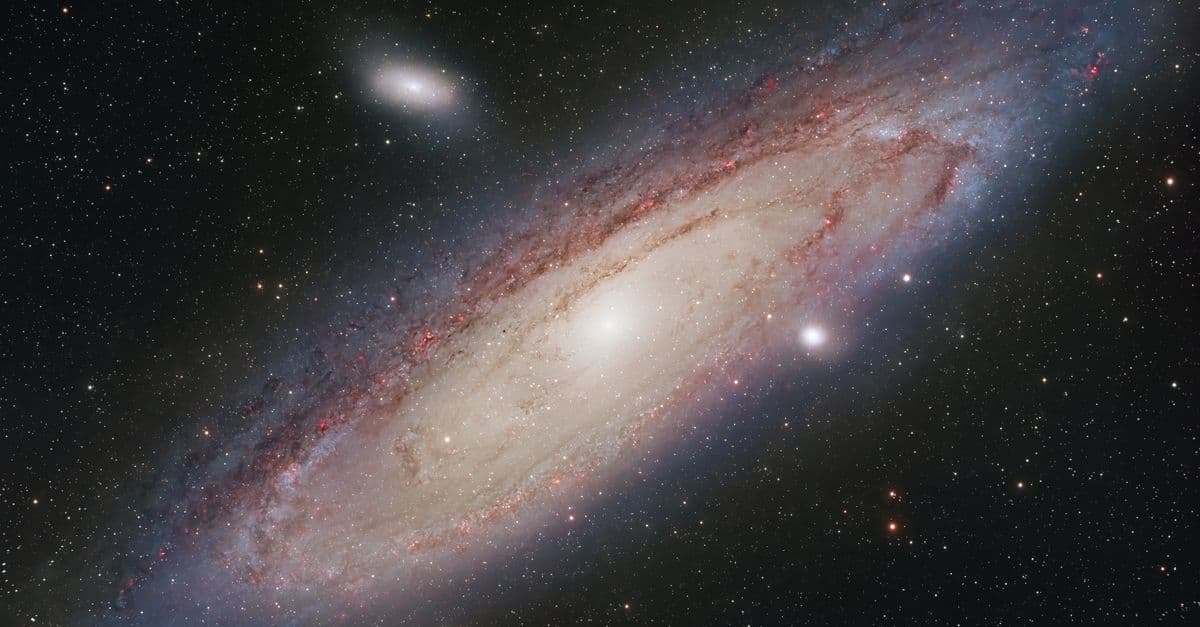
Photo: Luis Felipe Alburquerque Briganti / Pexels
Red dwarfs make up roughly 73 to 75 percent of all stars in the Milky Way, according to NASA's stellar population estimates, yet not one is visible to the naked eye from Earth because they are so faint and small. That overwhelming abundance is the main reason they dominate modern searches for potentially habitable exoplanets, even though the planets orbiting them face conditions that are dramatically different from Earth's comfortable relationship with the Sun. Understanding why astronomers keep circling back to these dim, common stars, despite their well-documented hazards, explains a lot about how the search for life beyond Earth actually works in practice.
What a red dwarf actually is
A red dwarf — the common name for an M-type main-sequence star — is smaller, cooler, and far dimmer than the Sun. Red dwarfs typically have masses between about 8 and 60 percent of the Sun's mass, surface temperatures around 2,500 to 3,900 kelvin (compared to the Sun's roughly 5,800 kelvin), and luminosities that can be thousands of times fainter than our own star. They are the smallest stars capable of sustaining hydrogen fusion in their cores; anything smaller simply cannot ignite and becomes a brown dwarf instead, a body that glows faintly from residual heat but never runs true nuclear fusion in the way a star does.
The word "dwarf" in this context has nothing to do with rarity. It refers to size and luminosity class, the same word used for the Sun itself, which is classified as a G-type "dwarf" star relative to giants and supergiants. Red dwarfs are, by an overwhelming margin, the most common outcome of star formation in the galaxy, because the initial mass function, the statistical distribution describing how many stars of each mass form from a given cloud of gas, strongly favors low-mass stars over high-mass ones. Massive, bright stars like blue giants are rare and short-lived; small, dim red dwarfs are the default product of star formation and, once formed, they essentially never stop shining on any timescale relevant to human history.
That longevity is the first reason red dwarfs matter so much to astrobiology, the study of the origin, evolution, and distribution of life in the universe. Because red dwarfs burn hydrogen so slowly and so efficiently, models put their main-sequence lifespans at trillions of years, some estimates run into the tens of trillions, compared to the Sun's roughly 10-billion-year total lifespan on the main sequence. The practical consequence is startling: since the universe itself is only about 13.8 billion years old, no red dwarf that has ever formed has had time to die of old age. Every single one that has ever ignited is, in principle, still burning today. Sun-like G-type stars, by contrast, are a comparatively fleeting phenomenon on cosmic timescales, living roughly a hundredth as long before swelling into red giants and shedding their outer layers.
Why red dwarfs are the practical default target for exoplanet surveys
Longevity alone would make red dwarfs interesting, but the real reason they dominate exoplanet detection campaigns is more mundane: they are simply easier to study. Both major planet-detection methods produce a stronger, more measurable signal when the host star is small and dim rather than large and bright.
The transit method works by measuring the tiny dip in a star's brightness as a planet passes directly in front of it from Earth's point of view. The size of that dip depends on the ratio of the planet's disk area to the star's disk area. Around a Sun-sized star, an Earth-sized planet blocks only about 0.008 percent of the star's light, a signal that is difficult to measure reliably. Around a red dwarf, which can have a diameter a fifth or less of the Sun's, that same Earth-sized planet blocks a much larger fraction of the available light, making the transit dip proportionally easier to detect with the same instrument sensitivity.
The radial velocity method, sometimes called the Doppler wobble method, measures how a star's own light shifts slightly toward blue and then red as an orbiting planet's gravity tugs it back and forth. That wobble is larger, relative to the star's own motion, when the star is less massive, because a given planet exerts proportionally more gravitational influence on a lightweight star than on a heavyweight one. Both effects compound: small, dim, lightweight red dwarfs make their planets easier to find and easier to characterize than the planets of brighter, heavier, Sun-like stars, using instruments astronomers already have.
There is a third practical advantage that is easy to overlook: red dwarfs are close by, in astronomical terms, simply because they are so common. Roughly three-quarters of all stars within a few dozen light-years of Earth are red dwarfs, which means many of the best planet-hunting targets sit at distances where follow-up observation, including atmospheric study, is actually feasible with current telescopes. Proxima Centauri, the closest star to the Sun at about 4.24 light-years away, is a red dwarf, and its planet Proxima Centauri b, discovered in 2016, orbits within its host star's habitable zone, making it one of the nearest known potentially habitable exoplanet candidates.
The habitable zone problem: too close for comfort
Because red dwarfs emit so little energy compared to the Sun, the habitable zone, the orbital distance range where a planet could theoretically maintain liquid water on its surface given a suitable atmosphere, sits much closer to the star than Earth's distance from the Sun. Around a typical red dwarf, that zone might sit at just a few percent of an astronomical unit (the average Earth-Sun distance, roughly 150 million kilometers), rather than the roughly 0.95 to 1.4 astronomical units that bracket the Sun's habitable zone. That proximity, while convenient for detection, creates two serious complications astronomers have to account for before calling any red dwarf planet genuinely habitable.
Why does tidal locking happen so often around red dwarfs?
Tidal locking occurs when a planet's rotation period matches its orbital period, so the same side of the planet always faces its star, similar to how the Moon always shows the same face to Earth. This happens because gravitational tidal forces are much stronger at short orbital distances, and habitable-zone planets around red dwarfs orbit so close in that tidal locking becomes likely, sometimes on timescales far shorter than the age of the system.
A tidally locked planet could end up with one hemisphere baked in permanent daylight and the other frozen in permanent darkness, an asymmetry Earth's climate system has never had to contend with. Climate modelers studying these worlds have found the outcome is not necessarily fatal to habitability. Atmospheric or oceanic circulation, if thick and dynamic enough, can redistribute heat from the perpetually lit dayside to the perpetually dark nightside, potentially keeping a band near the terminator, the line separating day from night, within a survivable temperature range. Whether real exoplanet atmospheres actually achieve this kind of heat redistribution is one of the open questions driving current research, rather than a settled conclusion either way.
Why do stellar flares matter so much more for red dwarf planets?
Red dwarfs, especially younger ones, are prone to powerful and frequent flares and stellar wind activity relative to their size and overall luminosity. Because habitable-zone planets orbit so close in, they receive a much higher dose of ultraviolet and X-ray radiation from those flares than Earth ever receives from the comparatively calm Sun. Over long timescales, that radiation exposure, combined with a stronger and more variable stellar wind, is one of the leading mechanisms astronomers propose for stripping away a planet's atmosphere entirely, a concern directly relevant to the innermost planets of systems like TRAPPIST-1.
Flare activity is not constant across a red dwarf's lifetime. Younger red dwarfs, typically under a few hundred million to a billion years old, tend to be far more magnetically active and flare-prone than older ones, which settle into calmer behavior as they age and their rotation slows. That means a planet's fate may depend heavily on how much atmospheric erosion it survives during its star's stormy youth, before conditions calm down later in the system's multi-billion-year history.
TRAPPIST-1: the system that made red dwarfs a research priority
No single system illustrates the promise and the difficulty of red dwarf habitability better than TRAPPIST-1, a red dwarf star located about 40 light-years from Earth in the constellation Aquarius. Its discovery announcement in 2017, led by astronomer Michaël Gillon and collaborators using the TRAPPIST telescope in Chile along with follow-up observations from the Spitzer Space Telescope, revealed a system of seven roughly Earth-sized rocky planets, an unusually compact and information-rich system by exoplanet standards. Three of those seven planets, designated TRAPPIST-1e, f, and g, sit in or near the star's habitable zone, giving researchers several habitable-zone candidates to compare within a single, well-characterized system rather than relying on scattered individual detections spread across the galaxy.
TRAPPIST-1's tightly packed architecture is itself a useful natural laboratory. All seven planets orbit closer to their star than Mercury orbits the Sun, with orbital periods ranging from roughly 1.5 to about 19 days, and the planets are close enough to each other that they exhibit measurable gravitational interactions, allowing astronomers to calculate their masses with unusual precision using a technique called transit-timing variation, which tracks tiny shifts in the timing of each planet's transit caused by the gravitational tug of its neighbors.
The James Webb Space Telescope (JWST) has been directly studying TRAPPIST-1 planets' atmospheres since shortly after its 2021 launch, and the results so far paint a mixed picture. Early findings pointed to the innermost planets, TRAPPIST-1b and TRAPPIST-1c, most likely lacking a substantial atmosphere, consistent with the theory that intense stellar radiation strips thin atmospheres from close-orbiting planets around active red dwarfs (Greene et al., 2023; Zieba et al., 2023). More recent JWST observations reported in 2025 found tentative, still-debated hints of an atmosphere, possibly containing methane, on TRAPPIST-1e, the planet considered the strongest habitable-zone candidate in the system, though researchers caution the methane signal could originate from the host star itself rather than the planet, and a larger follow-up campaign of additional transit observations was underway with results expected through 2026. JWST observations of the outer planets, TRAPPIST-1f, g, and h, remain ongoing as well.
How red dwarfs compare to Sun-like stars for the life search
Putting the tradeoffs side by side makes clear why red dwarfs remain the practical default even with their drawbacks. The comparison below focuses on the three factors that matter most for astrobiology: how long a star burns, how many of them exist, and how far away its habitable zone sits.
| Star Type | Typical Mass (Solar Masses) | Main-Sequence Lifespan | Share of Milky Way Stars | Habitable Zone Distance | Key Habitability Risk |
|---|---|---|---|---|---|
| Red dwarf (M-type) | 0.08–0.6 | Trillions of years | ~73–75% | ~0.01–0.4 AU | Tidal locking, flare-driven atmosphere stripping |
| Orange dwarf (K-type) | 0.6–0.9 | 15–30 billion years | ~13% | ~0.3–0.7 AU | Moderate flare activity, slower detection signal |
| Sun-like (G-type) | 0.9–1.1 | ~10 billion years | ~7–8% | ~0.95–1.4 AU | Comparatively rare; short cosmic search window |
Red dwarfs trade a friendlier, farther-out habitable zone for sheer abundance, extreme longevity, and easier detectability — a tradeoff that keeps them at the center of near-term life-search strategy despite their known hazards.
Orange dwarfs, or K-type stars, occupy a middle ground that some astronomers argue deserves more attention than it currently gets. They are dimmer and more common than the Sun but far less numerous than red dwarfs, live substantially longer than the Sun without the extreme flare activity of the smallest red dwarfs, and have habitable zones set at a more moderate distance that reduces (without eliminating) tidal-locking risk. The tradeoff is that K-type stars are rarer and their planets produce a weaker detection signal than red dwarf planets do, which is one reason the current generation of surveys still leans so heavily toward M-type targets.
Why astronomers keep searching red dwarfs anyway
Despite the well-documented hazards, red dwarfs remain the most practical near-term targets for habitability searches for a straightforward reason: statistics favor going where the numbers are largest and the observations are cheapest. With three-quarters of all stars in the galaxy being red dwarfs, and their planets producing outsized, easier-to-detect transit and radial-velocity signals, mission planners and ground-based survey teams get more return per hour of expensive telescope time by focusing there first.
There is also a scientific argument beyond convenience. Because red dwarfs are so long-lived, planets orbiting them have had, in principle, far more total time for any biological or geological processes to unfold than planets around shorter-lived Sun-like stars have had. If a red dwarf planet can survive its star's violent youth with an atmosphere intact, that planet then sits in a remarkably stable radiation and luminosity environment for a genuinely enormous span of time, a stability that Sun-like systems, with stars aging and brightening measurably over billions of years, do not offer in quite the same way.
None of this means astronomers have abandoned Sun-like stars. Missions and instruments capable of directly imaging Earth-like planets around Sun-like stars, rather than relying on the indirect transit and radial-velocity signals that dominate red dwarf research, remain a long-term goal precisely because a G-type star's habitable zone avoids the tidal-locking and flare problems that complicate the red dwarf case. But those direct-imaging missions are technologically harder and years away from full deployment, while red dwarf surveys can be run today with existing instruments like JWST, ground-based spectrographs, and dedicated transit-survey telescopes such as TESS, NASA's Transiting Exoplanet Survey Satellite. That gap in readiness is the practical reason red dwarfs sit at the center of the search right now, not a claim that they are the best possible place to find life, only the best place to look given current technology.
Common misconceptions about red dwarf habitability
A frequent misunderstanding treats "in the habitable zone" as equivalent to "confirmed habitable." Being in the zone only means liquid water could theoretically exist on the surface given the right atmosphere and surface conditions. Tidal locking, stellar flares, and atmospheric stripping around red dwarfs mean many habitable-zone planets there may still turn out to be inhospitable once their atmospheres, or lack thereof, are actually measured, which is exactly why the ongoing JWST atmosphere campaigns matter so much: they turn a geometric zone-based estimate into an actual data-driven habitability assessment.
Another common error is assuming red dwarfs are rare, exotic stars because they are invisible to the naked eye and rarely discussed outside astronomy circles. They are, by a wide margin, the most common type of star in the galaxy; it is Sun-like stars that are comparatively unusual, making up perhaps 7 to 8 percent of the galaxy's stellar population. Popular imagination tends to treat Sun-like stars as the cosmic default and red dwarfs as an exotic exception, when the statistical reality runs the other way entirely.
A third misconception conflates tidal locking with automatic uninhabitability. Current climate modeling suggests tidally locked planets with sufficiently thick atmospheres or global oceans could redistribute heat well enough to support a habitable band, particularly near the terminator zone, rather than being uniformly scorched on one side and frozen on the other. This remains an active modeling question rather than a settled fact, since no tidally locked exoplanet atmosphere has yet been directly measured in enough detail to confirm which scenario actually plays out in nature.
What astronomers still don't know
Honest assessment of red dwarf habitability research requires naming the real gaps rather than papering over them. Astronomers do not yet have a confirmed, unambiguous detection of a genuine atmosphere on any rocky red dwarf habitable-zone planet; the TRAPPIST-1e methane hints reported in 2025 remain provisional, and researchers explicitly flagged the possibility that the signal originates in the star rather than the planet. Whether red dwarf planets can retain enough atmosphere to become or remain habitable after billions of years of flare exposure is a question current models can estimate but not yet answer definitively, because it depends on variables, such as a planet's initial volatile inventory and magnetic field strength, that remain difficult to measure from tens of light-years away.
It is also worth being explicit that finding an atmosphere is not the same as finding life. Even a confirmed, stable atmosphere on a red dwarf planet would only clear one of many hurdles; detecting biosignatures, chemical or spectral signs consistent with biological activity, such as unusual combinations of gases that would not persist without ongoing replenishment, is a substantially harder and still-developing area of exoplanet science that sits well beyond what current instruments, including JWST, can reliably deliver for planets at these distances.
The takeaway
Red dwarfs matter for life searches mainly because of sheer numbers and observational convenience: they make up roughly three-quarters of all stars in the Milky Way, live for enormously long timescales measured in trillions of years, and make orbiting planets easier to detect and study with existing instruments than planets around brighter, rarer Sun-like stars. The tradeoff is real and well documented: habitable-zone planets around red dwarfs face tidal locking and intense flare activity that Earth's history with the calmer Sun never had to contend with, which is exactly why systems like TRAPPIST-1 have become priority targets for direct atmosphere measurement rather than simple confirmations that a planet merely exists in the right orbital range. The search is not over, and the honest state of the science in 2026 is that astronomers have ruled atmospheres out on some red dwarf planets, found tentative and still-unconfirmed hints on others, and are actively working to close that gap one transit observation at a time.
Read next:
- How astronomers detect water on exoplanets
- How Lagrange points hold space telescopes in place
- Why galaxies have spiral arms
FAQ
Q: Why do astronomers focus so much on red dwarf stars in the search for life?
Red dwarfs make up roughly 73 to 75 percent of all stars in the galaxy, live for trillions of years, and make orbiting planets easier to detect through the transit and radial velocity methods because of their small size and low mass, making them practical, abundant, and observationally cheap targets compared to Sun-like stars.
Q: What is tidal locking and why does it matter for red dwarf planets?
Tidal locking means a planet's rotation matches its orbital period so the same side always faces its star, which is likely for planets close enough to sit in a red dwarf's habitable zone, potentially creating permanent extreme temperature differences between hemispheres unless atmospheric or oceanic circulation redistributes heat effectively.
Q: Why are red dwarf flares a bigger problem than solar flares from the Sun?
Habitable-zone planets around red dwarfs orbit much closer to their star than Earth orbits the Sun, and red dwarfs, especially young ones, are prone to frequent and powerful flares, so those close-orbiting planets receive a proportionally much higher dose of ultraviolet and X-ray radiation that can strip away their atmospheres over time.
Q: Is TRAPPIST-1 the best-known system for this kind of research?
It is one of the most closely studied, since it is a red dwarf with seven roughly Earth-sized planets, three in or near the habitable zone, discovered in 2017 and now being examined directly by JWST, which has ruled out substantial atmospheres on the innermost planets and found tentative, unconfirmed hints of one on TRAPPIST-1e.
Q: Does being in a red dwarf's habitable zone guarantee a planet is actually habitable?
No. The habitable zone only indicates the orbital distance where liquid water could theoretically exist given a suitable atmosphere; factors like tidal locking, stellar flares, and atmospheric stripping mean many red dwarf habitable-zone planets may still be inhospitable in practice, which is why direct atmosphere measurement remains necessary.
Q: How does a red dwarf compare to the Sun in terms of lifespan and abundance?
A red dwarf can live for trillions of years compared to the Sun's roughly 10-billion-year main-sequence lifespan, and red dwarfs outnumber Sun-like G-type stars by roughly ten to one in the Milky Way, making them both the longest-lived and most common category of star.
Follow new articles
Add SciHub101 to your feed reader to see new science and technology stories.
About the Author
SciHub101 is an independent science and technology publication founded and edited by Buğra Sözeri, a software engineer and app developer based in Türkiye. AI tools assist with drafting and research. Source documentation in the existing archive is uneven, and articles are being reviewed and corrected. The Editorial Team byline identifies editorial responsibility; it does not certify specialist or independent human review. Where we compare products, anything built by our own team is labelled as such — see the editorial guidelines and About page for how corrections and disclosures work.
Related Articles


Most Earth-Like Planets Discovered So Far
TRAPPIST-1e, Proxima b, LHS 1140 b, TOI-700 d and more: how the most Earth-like planets compare, and what each has and has not shown about air and water.

Nearest Exoplanets That Could Host Life
A guide to the nearest potentially habitable exoplanets, from Proxima b to TRAPPIST-1e, what JWST has found, and why 'habitable' rarely means confirmed.
The Exoplanet Atmosphere Revolution: What JWST Has Found So Far
For most of the history of exoplanet science, astronomers could detect planets but not smell them. They could measure orbital periods, estimate masses, and infer temperatures — but the chemical composition of another world's atmosphere was almost entirely out of reach. JWST changed that. In its first two years, it detected carbon dioxide on a gas giant 700 light-years away, found evidence of methane and CO₂ on a possible ocean world 120 light-years out, and ruled out thick atmospheres on the rocky TRAPPIST-1 planets — all using a technique called transmission spectroscopy that is as elegant as it is precise.