Why Galaxies Have Spiral Arms
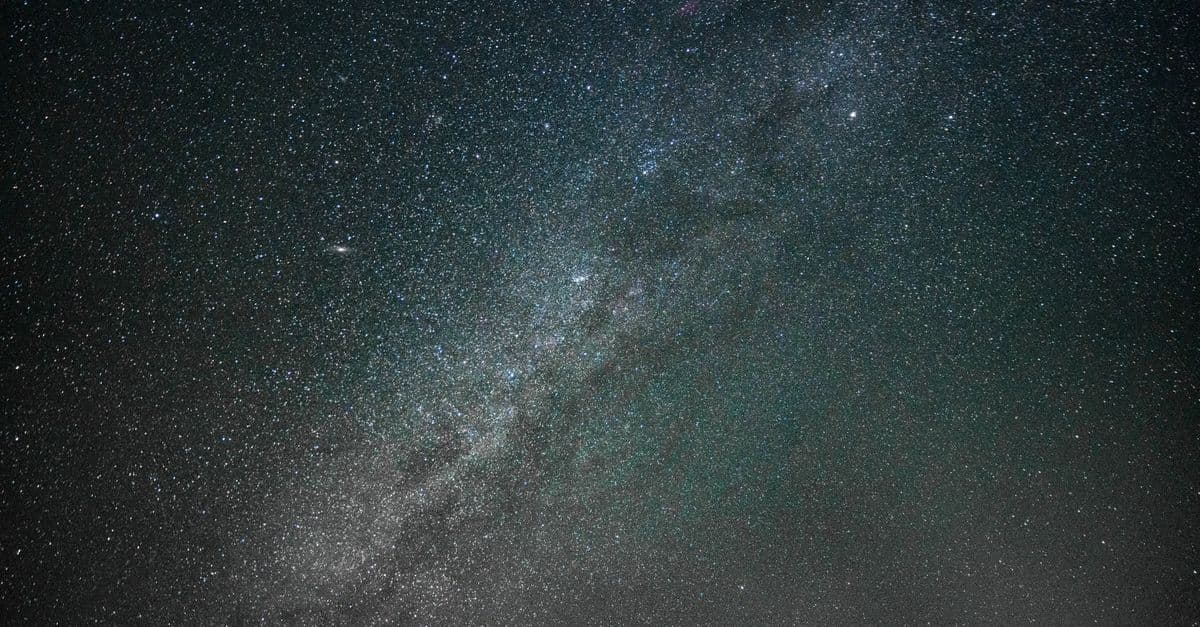
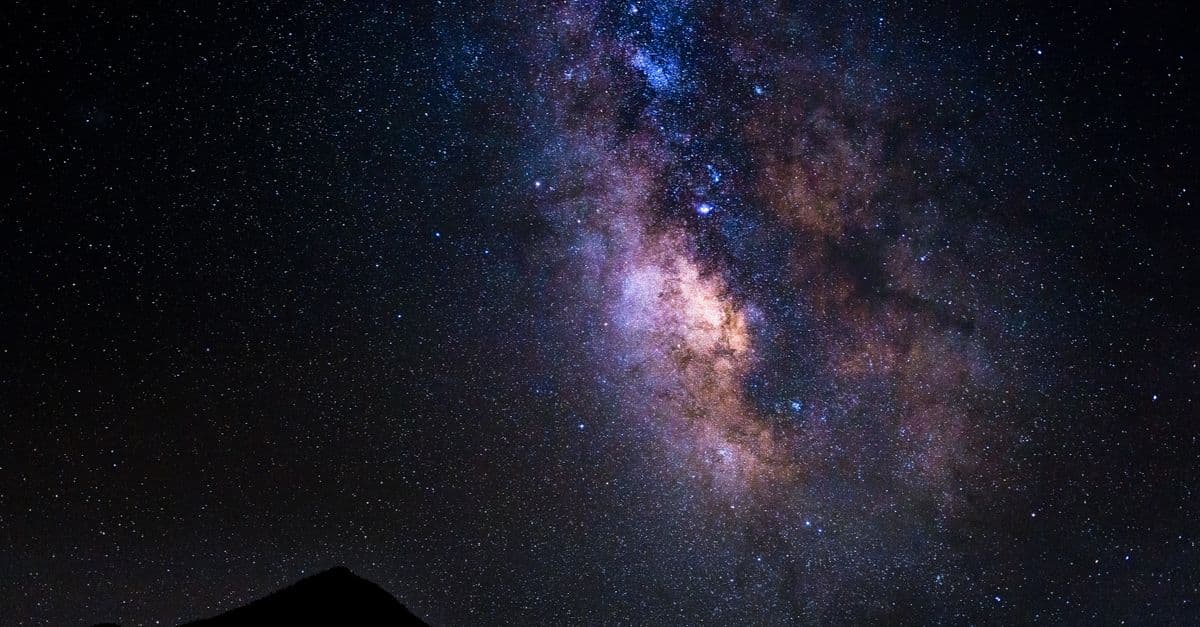
Photo: Aarin Husain / Pexels
If spiral galaxies rotated like a solid pinwheel, their arms would wind into a tight, indistinguishable blur within a few hundred million years, a puzzle astronomers call the "winding problem." Yet the Milky Way, Andromeda, and hundreds of billions of other spiral galaxies have kept open, well-defined spiral structure for most of cosmic history. The resolution, developed by astronomers C.C. Lin and Frank Shu in 1964, treats spiral arms not as fixed collections of stars but as traveling density waves that stars, gas, and dust pass through, compress inside, and exit on the other side.
The winding problem that broke the obvious explanation
A spiral galaxy's disk does not rotate the way a vinyl record does, with every point moving at the same angular speed. It rotates differentially: stars closer to the galactic center complete an orbit faster than stars farther out, because orbital speed and orbital radius trade off under gravity in a predictable way. This is the same physics that makes Mercury circle the Sun in 88 days while Neptune takes 165 years, just applied to the collective gravity of a hundred billion stars instead of a single central mass.
If a spiral arm were literally the same group of stars physically bound together and dragged around as the galaxy spins, differential rotation would be catastrophic for it. The inner part of the arm, moving faster, would race ahead of the outer part, wrapping the arm tighter and tighter around the galactic center with every rotation. A galaxy like the Milky Way completes one rotation roughly every 220 to 250 million years at the Sun's location, so over its roughly 13-billion-year history it has rotated more than 50 times. If the arms were fixed material structures, even a handful of rotations, let alone 50, would smear any spiral pattern into a tightly wound, visually undetectable smudge.
That is not what astronomers observe. Grand-design spirals like the Whirlpool Galaxy (M51) and flocculent spirals across the observable universe show crisp, open arms billions of years after their disks formed. Something in the disk had to be preventing the winding, and for decades after Bertil Lindblad's earlier theoretical groundwork in the 1920s and 1940s, that "something" remained an open problem in galactic dynamics.
The breakthrough came from separating two things that intuition tends to merge: the motion of individual stars, and the motion of the pattern the stars trace out. Lin and Shu's 1964 paper proposed that a spiral arm is a quasi-stationary density wave, a self-sustaining pattern of gravitational compression that rotates at its own steady angular rate, distinct from and generally slower than the orbital speed of the stars moving through it (Lin & Shu, 1964, Astrophysical Journal).
Density waves: traffic jams, not fixed objects
The clearest way to grasp density wave theory is the traffic-jam analogy that astronomers themselves use in teaching it. Picture a highway with a slow-moving obstruction somewhere ahead, maybe a lane closure. Cars approach the closure, bunch up, slow down, and pack more densely together, then accelerate again once they clear it and spread back out. From above, the jam looks like a stationary, or slowly crawling, dense clump on the highway, even though every single car inside it is moving forward the entire time. The jam is a pattern in the traffic, not a fixed set of cars.
Spiral arms work on the same principle, just with stars, gas, and dust instead of cars, and gravity instead of a lane closure. As material in the galactic disk orbits the center, it periodically passes through a region of slightly higher gravitational density, the density wave. That extra gravity slows the orbiting material down and compresses it, exactly the way cars bunch up entering a jam. The material spends a bit longer in that denser zone, then continues on its orbital path and exits the other side, resuming its normal speed. The density wave pattern itself, meanwhile, rotates at its own separate, generally slower angular rate, sweeping around the disk over a longer period than the material passing through it takes to complete an orbit.
This decoupling of pattern speed from orbital speed is the entire solution to the winding problem. Because the arm is not made of the same stars staying locked together, there is nothing to wind up. New material constantly enters the density wave from behind, gets compressed, and exits ahead, while the overall spiral shape of the wave stays geometrically stable for a much longer time than any individual star's transit through it.
Why do spiral arms look so much brighter than the rest of the galaxy?
Spiral arms appear bright mainly because the gas compressed by a passing density wave collapses more readily into new stars, producing short-lived, extremely luminous blue-white stars concentrated along the arm. Massive O and B-type stars burn through their fuel in just a few million years and never travel far from their birthplace before dying, so the arm stays lit by successive generations of newly triggered star formation rather than by a genuinely higher total star count.
How does compression actually trigger star formation?
Interstellar gas clouds, mostly hydrogen, are held up against their own gravity by internal pressure and turbulence. When a density wave sweeps through, it raises the local gas density enough to push marginal clouds past the threshold where self-gravity wins, a condition astronomers describe using the Jeans instability criterion. Clouds that cross that threshold collapse and fragment into new stars, which is why star-forming nebulae and young star clusters cluster so visibly along spiral arms rather than scattering evenly across the disk.
Why this mechanism reshaped how astronomers model galaxies
Recognizing spiral arms as density waves rather than fixed structures did more than resolve a decades-old paradox; it changed how astronomers build simulations of galactic evolution and interpret what they see when they look at a galaxy's disk. Once pattern speed and stellar orbital speed were understood as separate quantities, researchers could explain why individual stars cycle in and out of arms repeatedly over a galaxy's lifetime instead of staying trapped inside one forever, and why the compression a star experiences varies depending on where in its orbit it crosses the wave.
The theory also predicted, and observations later confirmed, that there should be a specific radius in a galactic disk called the corotation radius, where the orbital speed of stars exactly matches the pattern speed of the density wave. Inside that radius stars orbit faster than the wave and catch up to it from behind; outside it, stars orbit slower and the wave sweeps past them from behind instead. This detail matters because it shapes exactly how gas gets funneled and compressed at different distances from the galactic center, and it is the kind of quantitative, testable prediction that separates a real physical theory from a loose descriptive metaphor.
Modern high-resolution N-body simulations and large photometric surveys mapping star ages across nearby galaxies have since shown that the clean Lin-Shu picture of one long-lived, galaxy-wide density wave is not the whole story for every galaxy. Some spiral structure appears to be triggered or reinforced by tidal interactions with a companion galaxy, visible in systems where the arms are dramatically stretched or distorted by a close gravitational encounter. Other galaxies display short-lived, patchy "flocculent" spiral arms that seem to form and dissolve locally through the combined effect of many smaller, transient density fluctuations rather than a single coherent wave sweeping the whole disk. The current consensus among galactic dynamicists is that real spiral structure likely arises from a mix of mechanisms, with density waves as the dominant, longest-standing framework and additional local and tidal effects layered on top depending on the galaxy.
The Milky Way's own spiral structure, seen from the inside
Mapping the Milky Way's spiral arms is harder than mapping any other spiral galaxy in the universe, for a simple reason: we live inside the disk we are trying to chart, roughly 26,000 light-years from the galactic center, embedded in a thick layer of gas and dust that blocks visible light along most sight lines through the plane. Astronomers cannot simply take a picture of the whole structure the way they can for Andromeda or the Whirlpool Galaxy; they have to infer it indirectly, using radio and infrared observations that can penetrate the dust, combined with distance measurements to individual star-forming regions, masers, and young star clusters.
Early radio surveys in the mid-20th century mapped hydrogen gas emission and suggested four major arms: the Norma, Scutum-Centaurus, Sagittarius, and Perseus arms, plus a smaller nearby structure that includes the Sun, sometimes called the Orion Spur or Local Arm. Then in 2008, NASA's Spitzer Space Telescope, using infrared observations that traced the distribution of older, cooler, more numerous stars rather than young, rare, luminous ones, found evidence that only two of those, the Scutum-Centaurus and Perseus arms, stood out as major stellar structures, while Norma and Sagittarius appeared as comparatively minor features (NASA/JPL, 2008).
That finding did not settle the question; it complicated it. Subsequent surveys targeting massive young stars and star-forming regions, which trace where active compression is happening right now rather than where the bulk of older stellar mass sits, found renewed support for a four-armed structure. The discrepancy exists because the two kinds of surveys are measuring genuinely different populations: infrared surveys of old stars trace the galaxy's total stellar mass distribution, while radio and star-forming region surveys trace where gas is currently being compressed and turned into new stars, and those two things do not have to line up perfectly in either count or exact position. Astronomers studying the Milky Way's structure still describe the precise number, pitch angle, and continuity of its spiral arms as an active area of research rather than a settled fact, an honest limitation worth stating plainly given how confidently spiral galaxies are often depicted in illustrations.
How spiral arms compare across the Hubble classification scheme
Not every galaxy has spiral arms, and among those that do, the arms themselves vary enormously in shape, symmetry, and how tightly they wind. Edwin Hubble's 1926 classification scheme, still used as the baseline vocabulary for describing galaxy shapes today, sorts galaxies into a few broad structural families based on how prominent their disk, bulge, bar, and arms are.
| Galaxy type | Defining structure | Typical arm appearance | Star formation rate | Example |
|---|---|---|---|---|
| Spiral (S) | Rotating disk with a central bulge, no bar | Two or more well-defined arms winding from center to edge | High, concentrated along arms | Andromeda (M31) |
| Barred spiral (SB) | Straight bar of stars through the nucleus, arms emerge from bar ends | Arms often start abruptly at the bar tips | High, funneled through the bar into arms | Milky Way |
| Elliptical (E) | Smooth, featureless ellipsoid, little to no disk or gas | No arms; uniform light distribution | Very low, gas mostly depleted | M87 |
| Irregular (Irr) | No defined symmetric structure | No coherent arms; patchy, chaotic distribution | Variable, sometimes locally intense | Large Magellanic Cloud |
| Lenticular (S0) | Disk galaxy with a bulge but little gas or star formation | Faint or absent arms despite disk shape | Very low | NGC 5866 |
Spiral structure is not universal even among disk galaxies; it depends on the presence of enough cool gas to sustain the compression cycle that keeps a density wave visible.
The Milky Way itself is classified as a barred spiral, meaning it has a straight bar of stars running through its central bulge, with spiral arms emerging from the two ends of that bar rather than winding directly out from a round central bulge the way an unbarred spiral's arms do. Roughly two-thirds of nearby spiral galaxies observed by large surveys show at least some bar structure, and the bar itself plays an active dynamical role, funneling gas inward toward the galactic center and helping organize where the density wave compression concentrates as it moves outward into the arms.
Elliptical and lenticular galaxies show why spiral arms are not an automatic consequence of having a rotating disk of stars. Both density wave compression and the bar-driven funneling that reinforces it depend on there being enough cool interstellar gas left in the disk to respond to gravitational compression. Elliptical galaxies have largely used up or lost their gas, often through galaxy mergers or gas stripping in dense galaxy clusters, leaving nothing left to compress into visible, star-lit arms even if some residual density-wave-like dynamics were still technically present.
Common misconceptions about spiral arms
A frequent misunderstanding is that a spiral arm is a permanent trail of the same stars, essentially painted onto the galaxy and dragged around as it spins, the way a pinwheel's blades are physically continuous with its hub. In reality the arm is a density pattern, not a physical object; individual stars pass through it and continue on their own orbital path, similar to how individual cars pass through and exit a traffic jam while the jam itself persists as a pattern on the road, unrelated to which specific vehicles happen to be inside it at any given moment.
A second common error is assuming every spiral galaxy forms its arms through an identical process. Grand-design spirals with two clear, highly symmetric arms, like the Whirlpool Galaxy, are frequently linked to gravitational interaction with a nearby companion galaxy, whose tidal pull helps organize and reinforce a coherent, galaxy-wide density wave. Flocculent spirals with patchy, less organized, discontinuous arms more often arise from a collection of localized, shorter-lived density fluctuations rather than one dominant wave sweeping the entire disk, meaning "spiral galaxy" describes a family of related but mechanistically distinct outcomes rather than one single process producing one single look.
A third misconception worth addressing directly is the assumption that our own galaxy's spiral structure is precisely mapped and settled science, the way it often appears in illustrations. As the Spitzer results and the later star-forming-region surveys show, astronomers are still actively reconciling different lines of evidence about how many major arms the Milky Way has and exactly where they run, a genuine reminder that studying a spiral galaxy from inside its own disk is a fundamentally harder observational problem than studying one from millions of light-years away.
What this means for how we picture galaxies
Understanding spiral arms as density waves changes more than a technical detail in an astronomy textbook; it reframes what a spiral galaxy actually is. A galaxy's visible spiral shape is less like a fixed architectural structure and more like a slow-motion weather pattern moving across an ocean of stars, gas, and dust, a pattern that persists over billions of years precisely because it is not tied to any single group of particles staying together. The stars that light up an arm today are not the same stars that lit it up a hundred million years ago, and they will not be the ones lighting it up a hundred million years from now.
The takeaway
Spiral arms persist not because the same stars stay locked together for billions of years, but because the arms are density waves, temporary zones of gravitational compression that stars, gas, and dust pass through and exit, the way cars flow through and out of a highway traffic jam. Lin and Shu's 1964 theory solved the winding problem by separating a wave's pattern speed from the orbital speed of the material moving through it, a distinction later observations, from Spitzer's infrared surveys of the Milky Way to studies of tidally triggered grand-design spirals like the Whirlpool Galaxy, have both confirmed and complicated. That a galaxy as familiar as our own still has an actively debated arm count is a useful reminder that some of astronomy's most visually iconic structures remain genuinely open questions up close.
Read next:
- How radio telescopes see the invisible universe
- How astronomers detect water on exoplanets
- Why meteor showers happen every year
FAQ
Q: Why don't spiral galaxy arms wind up tighter over time given differential rotation?
Because spiral arms are density waves, not fixed groups of stars, they rotate as a pattern at a different rate than the individual stars passing through them, avoiding the tight winding that would occur if the same stars stayed locked together for billions of years.
Q: Are the stars in a spiral arm always the same stars?
No. Individual stars, including our Sun, pass through spiral arms and continue orbiting outward, spending most of a roughly 100-million-year cycle in the space between arms rather than permanently embedded inside one.
Q: Why do spiral arms look brighter than the rest of a galaxy's disk?
Gas compressed by the passing density wave triggers concentrated bursts of new star formation, producing short-lived, extremely bright blue-white stars along the arm, which is why arms stand out visually even though the total star count elsewhere in the disk is comparable.
Q: Do all spiral galaxies form their arms through the same process?
Not entirely. Grand-design spirals with clean, symmetric arms are often linked to gravitational interaction with a companion galaxy, while flocculent, patchy spirals may arise from more localized and short-lived density fluctuations rather than one galaxy-wide wave.
Q: Who developed the density wave explanation for spiral arms?
Astronomers C.C. Lin and Frank Shu developed density wave theory in a 1964 paper published in the Astrophysical Journal, providing the framework that resolved the winding problem by treating spiral arms as moving patterns rather than fixed collections of stars.
Q: How many spiral arms does the Milky Way actually have?
The exact number remains debated. Radio surveys historically suggested four major arms, NASA's Spitzer Space Telescope infrared survey in 2008 found stronger evidence for two dominant arms based on the distribution of older stars, and later surveys of massive young stars have reaffirmed support for four, because the two survey types trace different stellar populations.
Q: Is the Milky Way a barred or unbarred spiral galaxy?
The Milky Way is classified as a barred spiral galaxy, meaning it has a straight bar of stars running through its central bulge, with spiral arms emerging from the two ends of that bar rather than winding directly outward from a round central bulge.
Follow new articles
Add SciHub101 to your feed reader to see new science and technology stories.
About the Author
SciHub101 is an independent science and technology publication founded and edited by Buğra Sözeri, a software engineer and app developer based in Türkiye. AI tools assist with drafting and research. Source documentation in the existing archive is uneven, and articles are being reviewed and corrected. The Editorial Team byline identifies editorial responsibility; it does not certify specialist or independent human review. Where we compare products, anything built by our own team is labelled as such — see the editorial guidelines and About page for how corrections and disclosures work.
Related Articles
How Spacecraft Survive Extreme Temperature Swings
How spacecraft survive extreme temperature swings: coatings, multi-layer insulation, radiators, heaters, and coolant loops, from the ISS to the Webb telescope.
Sagittarius A*: The Black Hole at the Heart of the Milky Way
Four million solar masses packed into a region smaller than our solar system, sitting 27,000 light-years from Earth. For three decades, astronomers tracked stars swinging around it at nearly 3% of the speed of light. Then, in 2022, they photographed it.
The Central Molecular Zone: The Milky Way's Turbulent Heart
Within 500 parsecs of the Milky Way's center lies a region unlike anything else in the galaxy — the Central Molecular Zone. It contains roughly 10% of the entire galaxy's molecular gas compressed into less than 0.1% of its volume. Star formation there should be rampant, but it is strangely quiet. Giant molecular clouds orbit at velocities that defy simple physics. A cloud called the Brick should have already collapsed into thousands of stars, yet it has not. Understanding the CMZ means understanding what keeps the center of our galaxy from exploding with new stars — and what occasionally makes it erupt instead.
What Are Globular Clusters? Ancient Cities of Stars
Globular clusters are the oldest and densest stellar systems in the universe — spherical swarms of hundreds of thousands of stars bound together for billions of years. Here's how they form, what they reveal about galactic history, and why they remain one of astronomy's most productive laboratories.
Biggest Black Holes Ever Found
The most massive black holes challenge galaxy formation models. This article explains ultramassive black holes, how mass is measured, and why records change.