What Are Globular Clusters? Ancient Cities of Stars
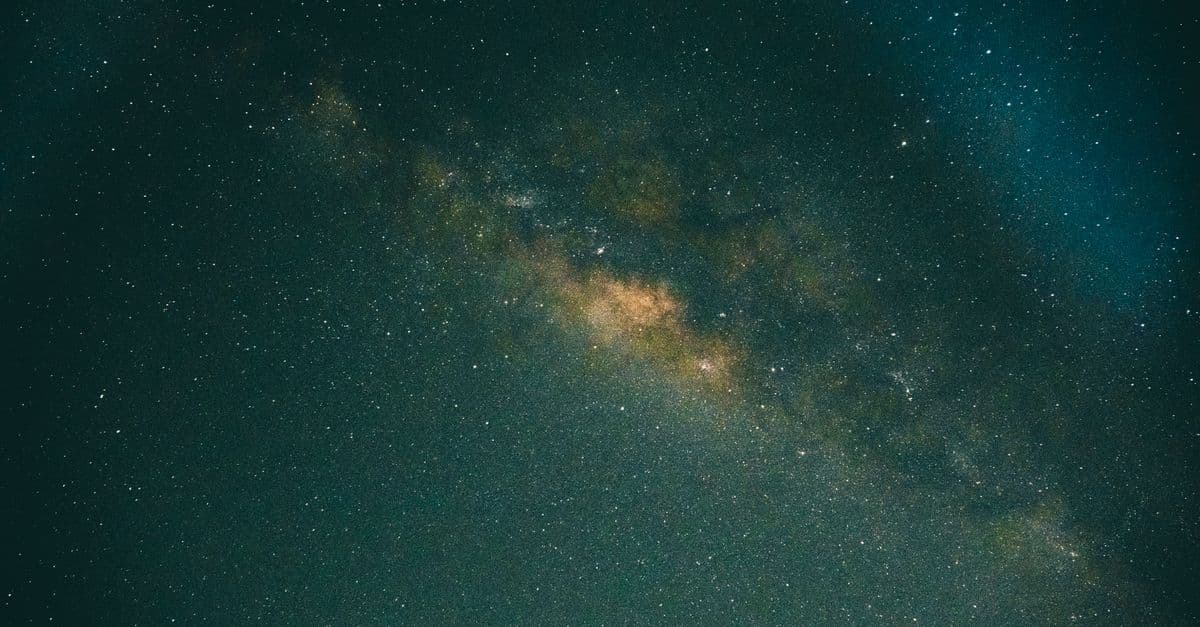
Photo: Marcelo Mora / Pexels
Look at the night sky through a moderate telescope and you might see what appears to be a fuzzy star. Increase the magnification and the fuzz resolves into a dense, spherical swarm of tens of thousands to several million individual stars — packed so tightly at the center that they appear to merge into a continuous glow. These are globular clusters: the oldest, densest, and most beautiful stellar systems in the universe.
Globular clusters are time capsules. Most formed between 11 and 13.5 billion years ago, less than 2 billion years after the Big Bang, during the earliest epoch of star formation. They orbit their host galaxies as relics of a cosmos that no longer exists — a universe before most heavy elements had been forged, before planets were common, and before the Milky Way itself had taken its present shape. Understanding globular clusters means peering into the infancy of galactic structure.
What Exactly Is a Globular Cluster?
A globular cluster is a gravitationally bound, roughly spherical collection of stars that orbits a galaxy as a satellite system. Unlike the loose associations of young stars called open clusters (which contain a few hundred to a few thousand stars and disperse over hundreds of millions of years), globular clusters are compact, massive, and extraordinarily old.
Key properties of typical globular clusters:
- Number of stars: 10,000 to several million, with a median around 200,000
- Total mass: 10⁴ to 10⁶ solar masses
- Half-light radius: 3–10 parsecs (10–30 light-years), meaning half the cluster's visible light comes from within this radius
- Central stellar density: up to 10⁶ stars per cubic parsec in the densest cores — compared to 0.003 stars per cubic parsec in the Sun's neighborhood
- Age: typically 10–13 Gyr, with the oldest approaching the age of the universe itself
- Metallicity: generally low, with [Fe/H] ranging from −2.5 to −0.5, meaning iron abundances 0.3% to 30% of solar (a reflection of their ancient formation)
The Milky Way's Globular Cluster System
Our galaxy hosts approximately 157 known globular clusters, though the total may be 180–200 once accounting for clusters hidden behind the galactic bulge. They occupy a roughly spherical halo extending to 40 kiloparsecs from the galactic center, with their distribution tracing the dark matter halo rather than the thin disk of the galaxy.
Famous examples include:
Omega Centauri (NGC 5139): The largest and most massive globular cluster of the Milky Way, containing roughly 10 million stars and spanning 150 light-years. Unusually, Omega Centauri has multiple stellar populations with a spread in metallicity — a signature that it is almost certainly the stripped nucleus of a dwarf galaxy swallowed by the Milky Way billions of years ago. It may harbor an intermediate-mass black hole of ~40,000 solar masses at its core, detected via stellar dynamics and X-ray sources.
47 Tucanae (NGC 104): The second most massive Milky Way globular cluster and one of the brightest in the sky. It contains several dozen millisecond pulsars — rapidly rotating neutron stars spun up by mass accretion from companions — making it a natural laboratory for pulsar physics.
M13 (Great Globular Cluster in Hercules): The showpiece cluster of the northern hemisphere, 22,000 light-years away, containing ~300,000 stars in a volume 150 light-years across.
NGC 3201: Notable for hosting a stellar-mass black hole of ~4.4 solar masses detected via the orbital motion of a companion star — one of the first confirmed detections of a black hole inside a globular cluster through this method.
Stellar Populations: Windows into Galactic History
One of the most powerful concepts in stellar astronomy is the division of stars into Population I and Population II (with a theoretical Population III for the first stars).
Population II stars dominate globular clusters. They are old (>10 Gyr), metal-poor ([Fe/H] < −0.5), and formed when the universe had not yet been enriched by generations of stellar death and supernova nucleosynthesis. Their low metal content means they have fewer planets (heavy elements make planets) and their internal opacity differs from metal-rich stars, affecting their evolution.
The α-element enhancement of globular cluster stars is particularly diagnostic. Stars in globular clusters show elevated ratios of oxygen, magnesium, calcium, and silicon relative to iron compared to solar neighborhood stars of similar metallicity. This is the chemical fingerprint of rapid star formation dominated by Type II supernovae (which produce α elements in abundance) before Type Ia supernovae (which produce iron but evolve on longer timescales) had time to contribute. In practice, this means the original burst of star formation in these clusters was extraordinarily fast — perhaps lasting only 100 million years — then ceased.
The Hertzsprung-Russell Diagram of Globular Clusters
Plot the stars of a globular cluster on a color-magnitude diagram (the observational equivalent of the HR diagram) and you see a characteristic structure that is the primary tool for measuring stellar age:
Main Sequence Turnoff Point: Stars burn hydrogen on the main sequence for a time that scales inversely with the cube of their mass (roughly): τ ∝ M/L ∝ M⁻²·⁵. The most massive main-sequence stars exhaust their hydrogen fastest and evolve off the main sequence first. At any given cluster age, there is a characteristic turnoff point — the hottest, most luminous star still on the main sequence. Measuring the luminosity of this turnoff point gives the cluster's age directly.
For a cluster with a turnoff at spectral type F (about 1.0–1.2 solar masses), the age is roughly 10–12 Gyr. The oldest globular clusters, with turnoffs at ~0.8 solar masses, have ages of 13.0 ± 0.5 Gyr, remarkably close to the age of the universe (13.8 Gyr). This provides an independent lower bound on the universe's age that is completely separate from cosmological measurements.
The Subgiant Branch (SGB): Stars just past the turnoff are crossing the subgiant branch as their hydrogen-burning shells expand and their cores contract.
The Red Giant Branch (RGB): As cores heat and hydrogen-shell burning intensifies, stars ascend the red giant branch, cooling and expanding. At the tip of the RGB, the helium flash ignites helium core burning.
The Horizontal Branch (HB): After the helium flash, stars settle onto the horizontal branch, burning helium in their cores. The color distribution along the horizontal branch (how hot vs. how cool the HB stars are) depends sensitively on age, metallicity, and other factors — sometimes called the "second parameter problem" because metallicity alone does not fully explain HB morphology.
The Asymptotic Giant Branch (AGB): After core helium exhaustion, stars ascend the AGB, eventually losing their envelopes and becoming white dwarfs.
Multiple Stellar Populations: A Major Puzzle
A discovery that revolutionized globular cluster science in the 2000s is that most globular clusters contain multiple stellar populations — distinct groups of stars with different chemical compositions formed in separate bursts.
High-precision photometry and spectroscopy reveal that globular clusters commonly show:
- Light element anticorrelations: Stars show a Na–O anticorrelation (sodium high when oxygen is low, and vice versa), as well as Mg-Al anticorrelations in massive clusters. These patterns arise from hydrogen-burning at high temperatures (via the CNO cycle and NeNa/MgAl cycles) in a first generation of stars that polluted the gas from which a second generation formed.
- Helium abundance spread: Some clusters (particularly massive ones like Omega Centauri and NGC 2808) have stars with significantly enhanced helium (Y up to ~0.38 vs. the primordial ~0.25), producing a split main sequence visible in sensitive photometry.
- Age spreads: Most clusters show no significant age spread (less than ~200 Myr for the two populations), though Omega Centauri is again an exception with a wide age range reflecting its complex accretion history.
The source of pollution that created second-generation stars is debated. Candidates include asymptotic giant branch stars, rapidly rotating massive stars (spinstars), massive binary stars, and even supermassive stars of 10³–10⁴ solar masses. No single model satisfactorily explains all observations — the multiple population problem remains one of the most active research areas in stellar astronomy.
Globular Clusters as Relics of Galaxy Formation
The distribution and properties of globular clusters encode the formation history of their host galaxies. The Milky Way's globular cluster system can be divided into distinct sub-populations:
Metal-poor, outer halo clusters ([Fe/H] < −1.5): These are the oldest and most spatially extended, likely formed very early in the universe before galaxies had assembled. Many were probably accreted along with dwarf galaxies consumed by the Milky Way.
Metal-rich, bulge/disk clusters ([Fe/H] > −1): These have hotter kinematics correlated with the galactic bulge and thick disk, suggesting formation during the early phases of disk assembly.
Kinematic substructure: The Gaia satellite has revolutionized understanding by providing 6D phase-space information (position + velocity) for globular clusters. Clusters group into kinematic streams that reveal past accretion events:
- Gaia-Enceladus/Sausage merger: A major merger ~10 Gyr ago deposited a significant fraction of the outer halo, including dozens of globular clusters on highly eccentric orbits.
- Sagittarius dwarf: The ongoing disruption of the Sagittarius dwarf spheroidal galaxy has deposited clusters including Palomar 12, Terzan 7, Arp 2, and NGC 6715 (M54, which is the cluster at Sagittarius' core).
- Kraken progenitor: Statistical analysis suggests another major merger ~11 Gyr ago, possibly the most massive merger in the Milky Way's history, contributed ~20 globular clusters.
In external galaxies, globular cluster systems scale with galaxy mass: giant elliptical galaxies like M87 host thousands of globular clusters. The specific frequency (number of clusters per unit galaxy luminosity) is highest in elliptical galaxies and lowest in late-type spirals, reflecting different formation efficiencies.
Open Clusters: The Young Counterparts
Open clusters (also called galactic clusters) are the antithesis of globular clusters in almost every way:
| Property | Open Cluster | Globular Cluster |
|---|---|---|
| Stars | 10 – 10,000 | 10,000 – 10,000,000 |
| Mass | 10² – 10⁴ M☉ | 10⁴ – 10⁶ M☉ |
| Age | <10 Myr to ~10 Gyr | 10–13.5 Gyr |
| Location | Galactic disk | Galactic halo |
| Binding | Loosely bound | Tightly bound |
| Shape | Irregular | Spherical |
| Metallicity | Solar to super-solar | Sub-solar |
| Lifetime | 10 Myr to ~1 Gyr | 10+ Gyr |
Open clusters form from giant molecular clouds in the galactic disk and typically disperse within a few hundred million years as gravitational perturbations from passing molecular clouds, disk tides, and internal two-body relaxation gradually evaporate their membership.
Famous open clusters include:
The Pleiades (M45): 440 light-years away, ~100 Myr old, containing ~800 stars including the famous hot blue stars and surrounded by a reflection nebula. Still young enough that hot B-type stars dominate.
The Hyades: The nearest open cluster to Earth at only 46 light-years, ~625 Myr old, used as a cornerstone of the cosmic distance ladder (the Hipparcos and Gaia parallaxes directly measured its distance).
The Beehive Cluster (Praesepe/M44): ~730 light-years, ~730 Myr old, known to host hot Jupiters.
M67: One of the oldest known open clusters at ~4 Gyr, making it unusually long-lived. Its solar-metallicity stars of solar age make it a key comparison for understanding solar evolution.
Westerlund 1: A massive young (~5 Myr) super star cluster containing hundreds of evolved massive stars including luminous blue variables, yellow hypergiants, and Wolf-Rayet stars. Contains a magnetar (CXOU J164710.2-455216) — a rare neutron star with an enormous magnetic field.
Internal Dynamics: Relaxation, Core Collapse, and Stellar Exotica
The high stellar densities in globular clusters create gravitational environments without parallel elsewhere in the galaxy. Two-body gravitational encounters between stars gradually exchange energy, driving the cluster toward energy equipartition — a process called relaxation.
Core Collapse: As heavy stars (and stellar remnants like neutron stars and black holes) sink to the center by dynamical friction and light stars are flung outward (mass segregation), the core contracts. The timescale for core collapse in the densest clusters is shorter than the age of the universe, meaning some clusters have already undergone this process. Post-core-collapse clusters are identified by their steeply rising, power-law surface brightness profiles rather than the flat King profiles of more diffuse clusters.
Binaries as Energy Source: Binary star systems act as "batteries" in dense stellar environments. When a third star passes close to a hard binary (one with orbital energy exceeding the typical kinetic energy of cluster stars), the binary tends to harden (shrink its orbit) while the intruder is ejected with high velocity. This process, called the Heggie-Hills law, transfers energy from binaries to the surrounding stars, halting core collapse and "heating" the core — a fascinating example of gravitational statistical mechanics.
Stellar Exotica from Stellar Collisions: The extreme densities in globular cluster cores make stellar collisions and close encounters frequent enough to produce rare objects:
- Blue Straggler Stars (BSS): Stars that appear younger (bluer and more luminous) than the main-sequence turnoff, having gained mass by merging with a companion or accreting from a binary companion. They literally rejuvenate themselves by consuming a neighbor.
- Millisecond Pulsars (MSPs): Neutron stars spun up to rotational periods of 1–30 ms by accreting matter from companion stars in binaries. Globular clusters have a disproportionately high MSP population — 47 Tuc alone has 25+ confirmed. They are so stable they rival atomic clocks in rotational regularity.
- Low-Mass X-ray Binaries (LMXBs): Accreting neutron stars or black holes with low-mass companions, formed through dynamical encounters. Per unit stellar mass, globular clusters have ~100× more LMXBs than the galactic field.
- Intermediate-Mass Black Holes (IMBHs): Objects of 100–100,000 solar masses predicted to form in cluster cores through repeated stellar mergers or direct collapse. Their existence is contested — claimed detections via velocity dispersions in NGC 6624, Omega Centauri, and 47 Tuc are debated as dynamical signatures are complex. JWST and upcoming gravitational wave observatories may resolve this.
Globular Clusters in Other Galaxies
Globular clusters are not unique to the Milky Way. They are found around virtually every large galaxy and even in galaxy groups and clusters.
M87's Globular System: The giant elliptical galaxy M87 in the Virgo Cluster hosts approximately 13,000 globular clusters — a system that traces M87's violent merger history over billions of years. The cluster system has a characteristic bimodal color distribution corresponding to the metal-poor and metal-rich sub-populations seen in the Milky Way, but at vastly larger scale.
Ultra-Compact Dwarf Galaxies (UCDs): Objects in the mass range 10⁷–10⁹ solar masses intermediate between globular clusters and dwarf galaxies. Many are believed to be the stripped nuclei of dwarf galaxies — essentially giant globular clusters or small nucleated dwarfs stripped of their outer envelopes by tidal forces from a massive host galaxy.
Super Star Clusters: Young, massive star clusters forming today in starburst galaxies (like the Antennae merger system or the Magellanic Clouds) have masses and densities comparable to globular clusters. They are the present-day analogs of globular cluster precursors — if they survive disruption, they will evolve into globular clusters over billions of years.
Globular Clusters and the Distance Ladder
Globular clusters play a role in measuring cosmic distances through their luminosity function (the distribution of absolute magnitudes). The Globular Cluster Luminosity Function (GCLF) has a characteristic turnover (peak) at an absolute magnitude of M_V ≈ −7.4 in the V-band, which appears to be nearly universal across different galaxies. By observing this turnover in distant galaxy clusters, astronomers can estimate distances extending to ~100 Mpc.
The horizontal branch of globular clusters at a known absolute magnitude (M_V(HB) ≈ 0.7 at [Fe/H] = −1.5) serves as another standard candle for measuring distances within the Local Group and setting the distance to key calibrators like the Large Magellanic Cloud.
What Globular Clusters Tell Us About the Early Universe
The oldest globular clusters, with ages of 13.0–13.5 Gyr, formed when the universe was less than ~1 billion years old. At that epoch:
- The universe was ~10 times smaller in linear scale (a factor of ~10 in the scale factor compared to today)
- The cosmic star formation rate was near its rising phase but not yet at its z ≈ 2 peak
- The intergalactic medium was completing its reionization by ultraviolet radiation from the first stars and quasars
- Metal enrichment was just beginning — the first Population III stars had lived and died, but only a few generations of supernovae had occurred
The environments that formed globular clusters were probably galaxy protoclusters — dense regions of the cosmic web where matter was assembling into the first generation of massive structures. Some globular clusters may even represent "failed galaxies" — halos that assembled early but had their gas stripped or used up before they could grow to galaxy scales.
JWST has now begun to directly observe candidate proto-globular clusters at redshifts z > 6, before reionization was complete. Young star clusters with masses of 10⁶–10⁷ solar masses are found as compact, intensely star-forming knots within the first galaxies — the progenitors of today's ancient globular clusters caught in the act of formation.
Key Observational Programs
Hubble Space Telescope: Resolved stellar photometry of globular clusters across the Local Group, measuring proper motions, color-magnitude diagrams, and luminosity functions with extraordinary precision. The HST Treasury Program "ACS Survey of Galactic Globular Clusters" obtained uniform photometry for 65 clusters.
Gaia: Measured proper motions and parallaxes for hundreds of thousands of stars in nearby globular clusters, revolutionizing understanding of their internal kinematics and enabling detection of tidal tails.
JWST: Penetrating the dust-obscured galactic center to observe globular clusters near Sgr A*, and imaging globular cluster analogs in high-redshift galaxies with unprecedented resolution.
LIGO/Virgo/KAGRA: Merging black holes in globular cluster cores may be a major source of gravitational wave events. The mass and spin distributions of detected binary black holes carry signatures of dynamical formation in dense clusters versus isolated binary star evolution.
The Future of Globular Clusters
Globular clusters are not immortal. They are being gradually disrupted by:
- Tidal stripping as they orbit the galaxy — tidal tails of stars lost from clusters like Palomar 5 can be traced for tens of degrees across the sky
- Two-body relaxation and stellar evaporation slowly leaking stars through the tidal boundary
- Dynamical friction causing massive clusters to spiral inward and eventually merge with the galactic bulge over timescales of ~10 Gyr
The least massive and most diffuse globular clusters (like the Palomar "fluffies") may dissolve entirely within the next few billion years, leaving their stars scattered through the halo as kinematic streams. The most massive clusters like Omega Centauri and 47 Tuc will survive for tens of billions of years — long enough to outlive the Sun itself.
Related Reading
- What Is the Milky Way? Structure, Spiral Arms, and the Galactic Center
- What Is Stellar Classification? The Hertzsprung-Russell Diagram
- What Is Stellar Evolution? The Complete Life Cycle of Stars
- What Is a Neutron Star? The Densest Objects in the Universe
- What Are Variable Stars? Cepheids, RR Lyrae, and Stellar Pulsations
Follow new articles
Add SciHub101 to your feed reader to see new science and technology stories.
About the Author
SciHub101 is an independent science and technology publication founded and edited by Buğra Sözeri, a software engineer and app developer based in Türkiye. AI tools assist with drafting and research. Source documentation in the existing archive is uneven, and articles are being reviewed and corrected. The Editorial Team byline identifies editorial responsibility; it does not certify specialist or independent human review. Where we compare products, anything built by our own team is labelled as such — see the editorial guidelines and About page for how corrections and disclosures work.
Related Articles
What Are Wolf-Rayet Stars? The Universe's Most Extreme Suns
Wolf-Rayet stars are massive, extremely hot stars that have blown away their outer layers in winds of thousands of kilometers per second. They show us the inside of a star, they seed space with dust and heavy elements, and many will end as supernovae or black holes.
What Are Cosmic Rays? High-Energy Particles Raining Down from Space
Cosmic rays are atomic nuclei and subatomic particles accelerated to extraordinary energies by the most violent events in the universe. Some arrive with energies exceeding anything a particle accelerator can produce, yet their sources remain one of astrophysics' great unsolved mysteries.
Galactic Cannibalism: The Milky Way's History of Mergers
The Milky Way did not grow peacefully. It reached its current size by absorbing smaller galaxies — tearing them apart with tidal forces, stripping their stars into long streams, and incorporating their material into the disk and halo. One major collision 10 billion years ago reshaped the Milky Way's entire inner halo. Another is happening right now. A third, larger one is coming in 4 billion years, and there is nothing that can stop it.
The Central Molecular Zone: The Milky Way's Turbulent Heart
Within 500 parsecs of the Milky Way's center lies a region unlike anything else in the galaxy — the Central Molecular Zone. It contains roughly 10% of the entire galaxy's molecular gas compressed into less than 0.1% of its volume. Star formation there should be rampant, but it is strangely quiet. Giant molecular clouds orbit at velocities that defy simple physics. A cloud called the Brick should have already collapsed into thousands of stars, yet it has not. Understanding the CMZ means understanding what keeps the center of our galaxy from exploding with new stars — and what occasionally makes it erupt instead.
What Is the Milky Way? Structure, Spiral Arms, and the Galactic Center
The Milky Way is a barred spiral galaxy with roughly 200 to 400 billion stars. Its disk, central bar, bulge, stellar halo, and dark matter halo are mapped from the inside by Gaia and radio surveys. At the center sits Sagittarius A*, a black hole of about 4.3 million solar masses, imaged by the Event Horizon Telescope in 2022. The Sun orbits about 26,000 to 27,000 light-years out, completing a lap in roughly 200 to 230 million years.