What Are Variable Stars? Cepheids, RR Lyrae, and Stellar Pulsations
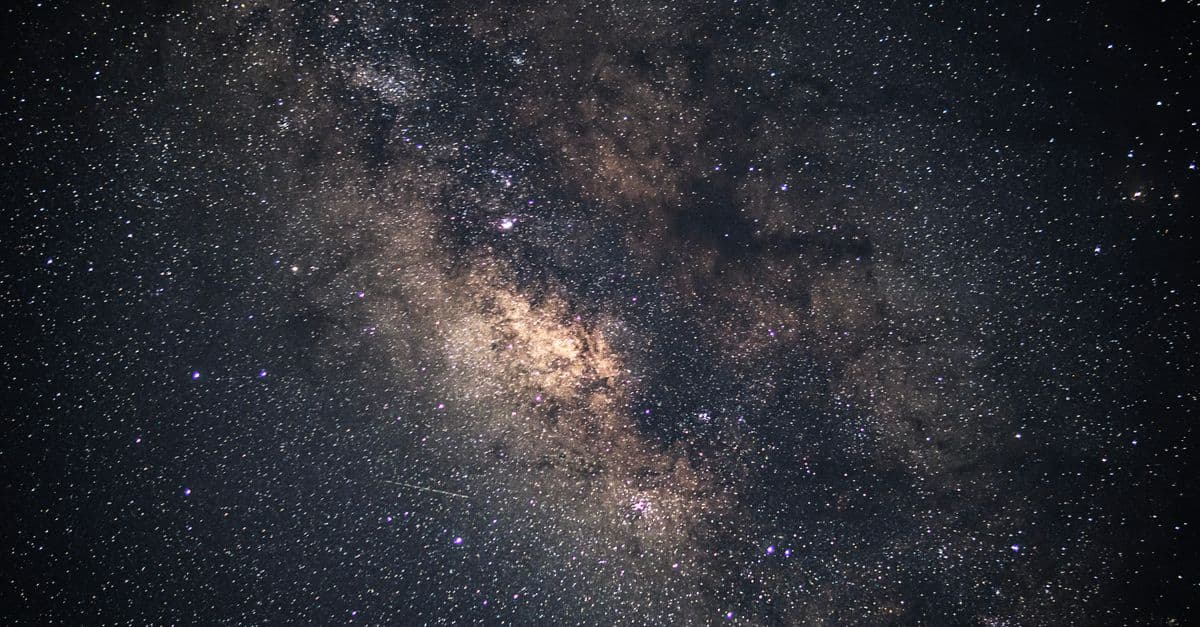
Photo: Nothing Ahead / Pexels
Not every star shines steadily. Some swell and shrink on a clockwork schedule, some dim whenever a companion crosses in front of them, and some flare without warning. A variable star is any star whose brightness, as seen from Earth, changes over time. That sounds like a curiosity, but it turned out to be one of astronomy's most useful tools, because the rhythm of certain variable stars reveals how luminous they really are.
In 1908, Henrietta Swan Leavitt, a "computer" at Harvard College Observatory who measured photographic plates, reported that Cepheid variables in the Magellanic Clouds followed a rule: the longer the pulsation period, the brighter the star. This article explains why stars pulsate, how Cepheids and RR Lyrae stars became distance markers, and what other types of variables reveal.
Two reasons a star's brightness changes
Variable stars split into two broad families, and the split is worth getting straight. Intrinsic variables really change: their size, temperature, or output varies. Pulsating stars, eruptive stars, and exploding stars belong here. Extrinsic variables only appear to change because of geometry, such as an eclipsing binary pair or a spinning star with bright and dark patches (Wikipedia: Variable star).
The scale of the field is large. The 2008 edition of the General Catalogue of Variable Stars lists more than 46,000 variable stars in the Milky Way, plus about 10,000 in other galaxies and more than 10,000 suspected variables (Wikipedia: Variable star). Pulsating stars make up the largest single group.
| Type | Why it varies | Typical period | Typical use |
|---|---|---|---|
| Classical Cepheid | Pulsation | 1 to 100 days | Distance ladder |
| Type II Cepheid | Pulsation | roughly 1 to 50 days | Distances to old populations |
| RR Lyrae | Pulsation | under 1 day | Mapping the Milky Way halo |
| Mira | Pulsation, giant star | typically 200 to 450 days | Distances in dusty regions |
| Delta Scuti | Pulsation, many modes | hours | Asteroseismology |
| Eclipsing binary | Companion passes in front | hours to years | Direct stellar masses and radii |
| Nova | Thermonuclear outburst on a white dwarf | one-off or recurring | Studying accretion |
Periods for classical Cepheids and Mira stars are from Wikipedia's Cepheid and variable star articles.
Why stars pulsate: the Eddington valve
A pulsating star behaves like a heat engine. For the engine to run, something has to trap heat when the star is compressed and release it when the star expands, the same way the valves in an engine time the push. The process is called the kappa mechanism, after the Greek letter used for opacity, a measure of how strongly gas blocks radiation. It is also nicknamed the Eddington valve, after Arthur Eddington, who proposed the basic idea.
In most stellar gas, squeezing the gas makes it more transparent, so heat leaks out and the pulsation dies. But in a layer where helium is partly ionized, which means electrons are being stripped from helium atoms, compression does the opposite. The gas becomes more opaque, traps energy, and the extra pressure pushes the layer back outward. When the layer expands it becomes more transparent and releases the heat, and the star falls back. In 1953, S. A. Zhevakin identified ionized helium as the likely valve, and doubly ionized helium is more opaque than singly ionized helium (Wikipedia: Cepheid variable).
The valve only works if the ionization layer sits at the right depth. If it is too deep, the gas is too dense for the cycle to matter. If too shallow, there is not enough mass to drive the oscillation. Stars of the right surface temperature, roughly 5,000 to 7,500 K, fall into a narrow band on the Hertzsprung-Russell diagram called the instability strip. Stars that cross it as they evolve pulsate while they are inside it, and then settle down.
A guitar string gives a second analogy. A plucked string rings and fades, but a bowed string keeps sounding because the bow feeds energy in at the right moment of each cycle. The kappa mechanism is the bow, and the star's whole outer envelope is the string.
Classical Cepheids: the supergiants that keep time
Classical Cepheids are young, massive, yellow supergiants. Wikipedia's summary lists their periods as typically 1 to 100 days, luminosities of up to about 100,000 times the Sun's, masses of 4 to 20 solar masses, and spectral classes of F6 to K2 (Wikipedia: Cepheid variable). They live in the disk of the Milky Way and in other galaxies' disks, where massive stars form.
The prototype is Delta Cephei, whose variability was spotted by the young, deaf English astronomer John Goodricke in October 1784. It cycles every 5.37 days (5.366249 days), changing from visual magnitude 3.48 to 4.37, and it shines at about 1,950 times the Sun's luminosity (Wikipedia: Delta Cephei). Its parallax distance is about 890 light-years, though a reanalysis of Hipparcos satellite data gave a closer value of roughly 800 light-years.
What the star is doing during a cycle
Cepheids pulsate mostly in a "breathing" mode in which the whole star swells and shrinks. For long-period examples like I Carinae, the radius changes by about 25%, a difference of millions of kilometers over each cycle (Wikipedia: Cepheid variable). Because temperature and radius both change, the brightness curve is not simply "biggest means brightest." The light curve has a characteristic shape, a quick rise to maximum and a slower decline, and the shape itself helps astronomers identify the type.
Polaris, the North Star, is a classical Cepheid, and it is one of the objects used to calibrate the distance scale with parallax, along with RS Puppis (Wikipedia: Cepheid variable).
Henrietta Leavitt and the period-luminosity law
At Harvard College Observatory, Leavitt cataloged variable stars on photographic plates. Her 1908 paper, "1777 variables in the Magellanic Clouds," listed the stars she had found. In 1912, a paper under Edward Pickering's name, prepared by Leavitt, gave periods for 25 Cepheids in the Small Magellanic Cloud and showed that brighter ones had longer periods (Wikipedia: Henrietta Swan Leavitt).
The trick was a shortcut. Leavitt assumed that all the stars in the Small Magellanic Cloud were about the same distance from us, so differences in apparent brightness had to reflect real differences in luminosity. Like comparing a row of streetlamps down a long road, the nearest ones look brightest only if the distances differ. In a cluster of lamps all at the same distance, brightness differences reveal true wattage. She did not need to know the distance to the cloud, only that it was the same for each star.
The missing piece was a calibration, a few Cepheids with distances known by another route. Ejnar Hertzsprung supplied distances to several Milky Way Cepheids in 1913, a year after her report, which let the law be put on an absolute scale (Wikipedia: Henrietta Swan Leavitt). Leavitt died on December 12, 1921, at 53. In 1924, the Swedish mathematician Gösta Mittag-Leffler tried to nominate her for a Nobel Prize without knowing she had died, and the prize is not awarded posthumously.
How to turn a period into a distance
The method has four steps:
- Observe the star over days or weeks and measure its pulsation period from the light curve.
- Use the period-luminosity relation to find the star's true luminosity.
- Measure the star's apparent brightness.
- Compare the two. The dimmer it looks compared with what it should be, the farther away it is, following the inverse-square law.
Here is a rough worked example with Delta Cephei, and the numbers are approximate. Its mean visual magnitude is about 3.9. A luminosity of about 1,950 Suns corresponds to an absolute magnitude near -3.4. The difference, the distance modulus, is about 7.3, which converts to roughly 290 parsecs. That is close to the measured parallax distance of 273 parsecs. The gap comes from ignoring dust and the exact conversion between total and visual light, which real analyses handle carefully.
Why astronomers prefer infrared light
Cepheid distances are most reliable in the near-infrared. Interstellar dust dims and reddens visible light, so a Cepheid behind dust looks fainter than it is, and a naive calculation would place it too far away. Infrared light passes through dust far more easily, and the period-luminosity relation is also tighter there because temperature changes over the cycle matter less. That is one reason Hubble's infrared camera and the James Webb Space Telescope are used for modern Cepheid work.
Other systematic issues remain. Cepheids with different amounts of heavy elements may follow slightly different relations. In distant galaxies, a Cepheid's light can blend with nearby stars that the telescope cannot separate, which makes it look brighter. And the slope and zero point of the relation need continued calibration, which is where parallax measurements from the Gaia satellite and eclipsing binaries come in.
How Cepheids showed that the Milky Way is not the universe
In the early 1920s, astronomers argued about whether the "spiral nebulae" were small clouds inside the Milky Way or entire separate star systems. The question was the center of the 1920 "Great Debate" between Harlow Shapley and Heber Curtis. The decisive evidence came from Edwin Hubble, who found Cepheids in the Andromeda Nebula using the 100-inch telescope at Mount Wilson Observatory. Wikipedia dates his distance determination to 1924 (Wikipedia: Cepheid variable).
His first distance, about 900,000 light-years, was much smaller than today's value of roughly 2.5 million light-years, but it was still far outside the Milky Way, so Andromeda had to be a galaxy in its own right. The universe suddenly contained many such "island universes." Leavitt's rule had become a ruler for the cosmos.
The early underestimate had a cause. Cepheids come in two kinds that follow different relations. In the 1940s, Walter Baade recognized separate populations of classical and Type II Cepheids, and his work roughly doubled the estimated distance to Andromeda (Wikipedia: Cepheid variable). It is a good reminder that a standard candle is only as good as the confidence that you are looking at the right kind of candle.
Type II and anomalous Cepheids
Type II Cepheids pulsate in the same part of the instability strip but are different stars. They are old, metal-poor, low-mass stars of about half the Sun's mass, found in the Milky Way's halo, bulge, and globular clusters, and they run about 1.5 magnitudes fainter than classical Cepheids at the same period (Wikipedia: Cepheid variable). Their periods are typically 1 to 50 days. Astronomers split them into BL Herculis stars with the shortest periods, W Virginis stars, and the RV Tauri stars, which have alternating deep and shallow minima and periods of 30 to 150 days and brightness swings of up to 3 magnitudes (Wikipedia: Variable star).
Anomalous Cepheids have periods under two days and are brighter than RR Lyrae stars. Their masses are larger than Type II Cepheids, RR Lyrae stars, and the Sun, and their origin is unclear: they may be young stars on a "turned-back" horizontal branch, products of mass transfer in binaries, or a mix.
RR Lyrae stars: the old, steady candles
RR Lyrae variables are old, metal-poor stars burning helium in their cores, located on the horizontal branch of the Hertzsprung-Russell diagram, which is a stage after the red giant phase. Their periods are typically less than a day, sometimes as short as about seven hours. Their average absolute magnitude is about +0.75, or roughly 40 to 50 times the Sun's brightness (Wikipedia: RR Lyrae variable).
Because RR Lyrae stars all have similar luminosities, they work as standard candles without needing a period-luminosity law, though a metallicity correction helps. They are common. The Pan-STARRS survey identified about 45,000, and some estimates put about 85,000 in the Milky Way. Gaia's catalog mapped 140,784 RR Lyrae, of which 50,220 were not previously known to be variable (Wikipedia: RR Lyrae variable).
About 91% of observed RR Lyrae are the "RRab" type with steep brightness rises, and about 9% are the shorter-period, more sinusoidal "RRc" type. A subset shows the Blazhko effect, a slow modulation of the amplitude and phase of the cycle, in which the cause is still debated. RR Lyrae in dense globular clusters can pick up light from unresolved neighbors, which makes them look too bright and biases the distance, a concern for the distance ladder.
RR Lyrae stars map the oldest parts of the galaxy. Because they are old, they trace the halo and the bulge, and their positions in globular clusters give cluster distances. Cepheids, by contrast, trace young stars in the spiral disk.
Mira variables: red giants in their last act
Mira (omicron Ceti) is the prototype of long-period variables, which are red giants in their late life. David Fabricius recorded its variability beginning on August 3, 1596, though Johannes Holwarda is often credited with establishing its variability in 1638. Its period is about 332 days, and at maximum it ranges from about magnitude 2.0 to 4.9 and averages about 3.5, while at minimum it falls to about magnitude 8.6 to 10.1 (Wikipedia: Mira). At about 300 light-years away, it is close enough to study in detail.
Infrared interferometry puts Mira's radius between 332 and 402 times the Sun's over a pulsation cycle. It has a white dwarf companion, Mira B, about 70 AU away, and the star moves through space at about 130 km per second, leaving a tail of shed gas 13 light-years long (Wikipedia: Mira). The tail holds material lost over roughly 30,000 years.
Mira stars are late-stage objects of the type covered in asymptotic giant branch stars. Their pulsations are large and drive strong stellar winds that carry dust and heavy elements into space, which feed later generations of stars. Wikipedia describes Mira-class variables as changing by up to 8 magnitudes in brightness. They also obey their own period-luminosity relation, best seen in the infrared, which lets astronomers use them as distance markers in dusty regions where Cepheids are hard to see.
Eclipsing binaries: variability by geometry
Not all variables pulsate. In an eclipsing binary, two stars orbit each other in a plane that happens to lie edge-on to us, so each periodically hides the other. The light curve shows dips, and the depth and shape tell the story.
The famous example is Algol, in the constellation Perseus. It dims from about magnitude 2.1 to 3.4 every 2.87 days (2.867328 days), with each partial eclipse lasting about 10 hours. John Goodricke presented the explanation to the Royal Society in May 1783, proposing that a dark body passing in front of the star caused the dimming, and he was awarded the Copley Medal. Italian astronomer Geminiano Montanari had noted the variation in 1667 (Wikipedia: Algol). Algol is about 94 light-years away and is actually a triple system, with a third star orbiting the eclipsing pair every 680 days.
The Algol paradox
Algol also posed a puzzle. The more massive star should evolve faster, but in Algol the less massive star is the more evolved subgiant while the more massive one is still on the main sequence. The resolution is mass transfer: when the originally more massive star swelled enough to fill its Roche lobe, the teardrop-shaped region of gravitational control around it, much of its mass flowed to its companion (Wikipedia: Algol). The roles reversed. Binary evolution can rewrite the usual rules for how stars age.
Eclipsing binaries as a direct ruler
Eclipsing binaries can also give distances that do not depend on the Cepheid relation. Light curves give relative sizes, and spectra give orbital velocities, which together give physical sizes. Compare the star's true brightness with its apparent brightness and the distance follows. In 2019, Grzegorz Pietrzyński and colleagues used 20 eclipsing binaries to measure the distance to the Large Magellanic Cloud as 49.59 kiloparsecs, with a statistical uncertainty of 0.09 kpc and systematic uncertainty of 0.54 kpc, about 1% overall (Pietrzyński et al. 2019). That distance anchors the Cepheid scale.
The distance ladder and the Hubble tension
Cepheids are the first rung on a ladder. Parallax measures the nearest stars. Cepheids and other markers then give distances to nearby galaxies, which calibrate Type Ia supernovae, which are bright enough to be seen across billions of light-years. The ladder's output is the Hubble constant, the present expansion rate of the universe, discussed in Hubble's law and the expanding universe.
Current measurements disagree in a way astronomers take seriously. The SH0ES team's full Hubble Space Telescope sample gives H0 = 73.2 ± 0.9 km/s/Mpc. A smaller sample of galaxies observed with the James Webb Space Telescope gives 72.6 ± 2.0, consistent with the Hubble result (Riess et al. 2024). The Planck satellite's analysis of the cosmic microwave background, assuming the standard cosmological model, gives 67.4 ± 0.5 (Planck 2018).
| Method | H0 (km/s/Mpc) | Source |
|---|---|---|
| Cepheid-calibrated supernovae, Hubble | 73.2 ± 0.9 | Riess et al. 2024 |
| Same, Webb subset, three methods | 72.6 ± 2.0 | Riess et al. 2024 |
| Tip of the red giant branch, Hubble plus Webb | 70.39 ± 1.22 (stat) ± 1.33 (sys) | Freedman et al. |
| Cosmic microwave background (Planck) | 67.4 ± 0.5 | Planck 2018 |
The tip-of-the-red-giant-branch result comes from a different team, the Chicago-Carnegie Hubble Program, which also finds values lower than SH0ES (Freedman et al., arXiv). Riess and colleagues attribute the roughly 2.5 km/s/Mpc difference between the programs to how the supernova samples were chosen. The disagreement between late-universe and early-universe values is the "Hubble tension," and whether it signals new physics or hidden errors is open. Published values from different calibrations of the distance ladder differ by several km/s/Mpc, which is why the tension is among the foremost problems in cosmology.
Delta Scuti and the stars that sing in many notes
Many pulsators are neither Cepheids nor RR Lyrae. Delta Scuti stars are main-sequence or subgiant stars slightly hotter and more massive than the Sun, found in the lower part of the instability strip. They pulsate in many modes at once, with amplitudes of 0.01 to 0.03 magnitude in fast rotators and 0.20 to 0.30 magnitude in slow rotators (Wikipedia: Variable star). Their periods are short, on the scale of hours.
Because each mode probes a different depth, these stars are targets for asteroseismology, the study of stellar interiors from their oscillations, much as geologists use earthquakes to learn about the inside of the Earth. Space telescopes designed to find planets, including Kepler and the Transiting Exoplanet Survey Satellite described in TESS exoplanet discovery, double as asteroseismology machines because they record brightness continuously for months.
Related classes include SX Phoenicis stars, the old-population counterparts of Delta Scuti, Gamma Doradus stars that pulsate in gravity modes, rapidly oscillating Ap stars with strong magnetic fields, and Beta Cephei stars, which are massive B-type stars. All of them sit near the same Hertzsprung-Russell territory, where small differences in mass and age change which modes the star can sustain. For the classification scheme behind that diagram, see types of stars.
Eruptive and exploding variables
Some variability is not periodic at all.
Flare stars, low-mass red dwarfs such as Proxima Centauri, brighten for minutes when magnetic energy is released. T Tauri stars are young stars still contracting toward the main sequence, and they vary irregularly as gas falls onto them from surrounding disks.
Novae occur in close binary systems where gas from a companion piles onto a white dwarf. When the layer gets dense and hot enough, hydrogen fuses in a runaway reaction, and the star brightens suddenly. Wikipedia notes that recurrent novae brighten by about 9 magnitudes while classical novae can brighten by more than 12. The white dwarf survives, and about 1/10,000 of a solar mass is ejected. Astronomers theorize that most classical novae recur on timescales of 1,000 to 100,000 years (Wikipedia: Nova). The recurrent nova T Coronae Borealis has known eruptions in 1217, 1787, 1866, and 1946, spaced 79 to 82 years apart, and the next eruption is widely anticipated; readers should check current AAVSO or NASA alerts for its status.
Novae differ from supernovae, which destroy the star. If a white dwarf gains enough mass to approach the Chandrasekhar limit, it can explode as a Type Ia supernova instead, the kind used on the distance ladder. The end states of massive stars are described in supernova types and what happens when a star dies. Dwarf novae, a related type, have smaller and more frequent outbursts caused by instabilities in the accretion disk, and R Coronae Borealis stars drop suddenly in brightness when carbon-rich dust condenses and blocks their light.
Citizen science: who watches the variable stars
Variable stars are an area where amateurs make real contributions. Because there are far more variable stars than professional telescopes can monitor continuously, amateurs with small telescopes and cameras supply long runs of observations. The American Association of Variable Star Observers (AAVSO), founded in 1911, collects those observations into the AAVSO International Database, which holds many millions of brightness measurements.
The work matters because many variables change slowly, and long baselines catch changes that a short survey misses, such as a Mira star's shifting period or the first brightening of a nova. Today professional surveys and amateur networks complement each other: space missions provide precise, continuous data for a limited number of stars, and amateurs provide wide, long-term coverage. Variability is not limited to ordinary stars, either. The collapsed remnants called pulsars flash with extreme regularity for a completely different reason, because they spin.
What we still do not know
Several questions remain open. Why do some Cepheids pulsate in overtone modes, and some in more than one mode at a time? Why do certain RR Lyrae stars show the Blazhko modulation? How much do metallicity and binary companions bias Cepheid distances? And is the Hubble tension real, or does it reflect an unrecognized systematic effect in one of the ladders?
Stellar age is another thread. Pulsation periods and luminosities depend on mass and evolutionary stage, so variable stars also constrain stellar ages, a subject covered in how the age of stars is determined. The energy source that keeps a star going in the first place is explained in how the Sun works, and astronomers decode a star's temperature and composition with spectroscopy.
The takeaway
A star that pulsates on a regular schedule is a clock, and Leavitt's discovery showed that for Cepheids the clock also reads out the star's wattage. That is a rare thing in astronomy: a direct way to turn something we can easily measure, a period, into something we cannot, a distance. It turned a catalog of oddities into a measuring stick that reached Andromeda, then other galaxies, then the expansion of the universe. The same rhythm now sits at the center of the Hubble tension, which makes variable stars not a finished chapter but a live argument about how fast the universe is growing.
Frequently asked questions
Q: What is a variable star? A: A variable star is one whose brightness changes over time as seen from Earth. Intrinsic variables change because the star itself pulsates or erupts, while extrinsic variables change because of geometry, such as an eclipsing companion or a spinning star with bright and dark patches.
Q: What is the Cepheid period-luminosity relation? A: It is the observation, first reported by Henrietta Leavitt, that classical Cepheids with longer pulsation periods are intrinsically more luminous. Measuring a Cepheid's period gives its true brightness, and comparing that with its apparent brightness gives its distance.
Q: Why do stars pulsate? A: In Cepheids and RR Lyrae stars, a layer of partly ionized helium acts like a valve. It becomes more opaque when compressed and traps heat, which pushes the star outward, and then releases heat as it expands. This is called the kappa mechanism.
Q: How are RR Lyrae stars different from Cepheids? A: RR Lyrae stars are old, metal-poor stars with periods under a day and nearly uniform luminosity of about 40 to 50 Suns. Classical Cepheids are young supergiants with periods of 1 to 100 days and luminosities up to about 100,000 Suns.
Q: How did Cepheids prove Andromeda is a galaxy? A: In the 1920s, Edwin Hubble found Cepheids in Andromeda and used their periods to estimate its distance at roughly 900,000 light-years. That was far beyond the Milky Way's size, so Andromeda had to be a separate galaxy.
Q: What is the Hubble tension? A: It is a disagreement between Hubble constant values from the distance ladder, about 73 km/s/Mpc, and from the cosmic microwave background with the standard model, about 67 km/s/Mpc. Other methods give intermediate values, and the cause is not settled.
Q: Can amateurs contribute to variable star research? A: Yes. Groups such as the AAVSO, founded in 1911, collect brightness estimates from amateurs, and the long-term coverage they provide is valuable for slowly changing stars and for catching sudden outbursts like novae.
Sources
- Wikipedia contributors, Cepheid variable, Henrietta Swan Leavitt, Delta Cephei, RR Lyrae variable, Mira, Algol, Nova, and Variable star, which summarize the primary literature cited there.
- Pietrzyński et al., A distance to the Large Magellanic Cloud that is precise to one per cent, Nature 2019.
- Riess et al., JWST Validates HST Distance Measurements, 2024; Freedman et al., Status Report on the Chicago-Carnegie Hubble Program; Planck Collaboration, Planck 2018 results. VI. Cosmological parameters.
Related reading
Follow new articles
Add SciHub101 to your feed reader to see new science and technology stories.
About the Author
SciHub101 is an independent science and technology publication founded and edited by Buğra Sözeri, a software engineer and app developer based in Türkiye. AI tools assist with drafting and research. Source documentation in the existing archive is uneven, and articles are being reviewed and corrected. The Editorial Team byline identifies editorial responsibility; it does not certify specialist or independent human review. Where we compare products, anything built by our own team is labelled as such — see the editorial guidelines and About page for how corrections and disclosures work.
Related Articles
What Is Dark Energy? Why the Universe Is Accelerating
In 1998, two teams studying distant Type Ia supernovae found that cosmic expansion is speeding up. The cause, dark energy, makes up about 68% of the universe's energy budget, and nobody knows what it is.
What Is the Milky Way? Structure, Spiral Arms, and the Galactic Center
The Milky Way is a barred spiral galaxy with roughly 200 to 400 billion stars. Its disk, central bar, bulge, stellar halo, and dark matter halo are mapped from the inside by Gaia and radio surveys. At the center sits Sagittarius A*, a black hole of about 4.3 million solar masses, imaged by the Event Horizon Telescope in 2022. The Sun orbits about 26,000 to 27,000 light-years out, completing a lap in roughly 200 to 230 million years.
How Do We Measure Cosmic Distances? The Distance Ladder Explained
From parallax to supernovae, astronomers chain overlapping methods together to measure distances from the nearest stars to galaxies billions of light-years away. Here is how each rung of the cosmic distance ladder works, and why its top rung is now in dispute.
Kepler's Three Laws: Why Planets Speed Up Near the Sun
Kepler's three laws explained with NASA data: why orbits are ellipses, why planets speed up near the Sun, and how P² = a³ weighs planets and finds exoplanets.
Mercury Explained: Iron Core, Polar Ice, Odd Orbit
Mercury has an oversized iron core, ice at its poles, and a day longer than its year. What MESSENGER found and what BepiColombo is due to do in November 2026.
What Are the Van Allen Belts? Earth's Trapped Radiation
The Van Allen belts are zones where Earth's magnetic field traps radiation. How Explorer 1 found them, how they work, and how Apollo and Artemis crossed them.