How Do We Know How Old Stars Are? The Science of Stellar Ages
Photo: Felix Mittermeier / Pexels
Unlike rocks, stars cannot be dated by their radioactive isotopes — we can't collect samples from distant suns. Unlike trees, they have no rings. And unlike people, they don't carry identifying documents.
Yet astronomers can determine stellar ages — sometimes to better than 10% accuracy. The methods are indirect, subtle, and require deep understanding of stellar physics. They tell us that the Sun is 4.6 billion years old, that the oldest stars in the Milky Way are 13.5 billion years old (barely younger than the universe), and that the most massive stars live less than a million years — briefer, on cosmic timescales, than the geological period that produced the Sahara.
Understanding stellar ages is fundamental to understanding galaxy evolution, the history of the Milky Way, and the chemical enrichment of the universe over cosmic time.
Why stellar ages matter
Before the methods: why do we care?
Galactic archaeology: The ages of stars in different parts of the Milky Way trace the history of star formation across the galaxy's 13+ billion years. Thick disk stars are generally older than thin disk stars; halo stars are the oldest. Mapping stellar ages throughout the galaxy reconstructs its formation history — when the bulge formed, when the disk settled, when star formation occurred in different regions.
Exoplanet habitability: A star's age determines how long it has been on the main sequence — and therefore how long any orbiting planet has had to develop life. A 4.5-billion-year-old planet around a 4.5-billion-year-old star (our situation) has had roughly the time needed for complex life to evolve, based on Earth's example.
Chemical evolution: The metallicity (heavy element content) of stars correlates with their age — older stars formed from less enriched gas (fewer heavy elements; the universe started with only hydrogen and helium). Age-metallicity relations trace how successive generations of stars enriched the ISM.
Physics validation: Stellar age determinations test stellar evolution models. If ages from different independent methods agree, we can trust the underlying physics.
Method 1: Main-sequence turnoff in star clusters
The most reliable method for dating star clusters (groups of stars that formed together from the same molecular cloud) is the main-sequence turnoff in a Hertzsprung-Russell (HR) diagram.
The principle: When a star cluster forms, all stars begin their lives on the zero-age main sequence (ZAMS) — the luminosity-temperature locus where hydrogen burning first begins. Stars of different masses evolve at different rates: more massive stars burn hydrogen faster and leave the main sequence sooner (in millions of years for the most massive; billions for stars like the Sun). As time passes, the "turnoff point" — the hottest, most luminous star still on the main sequence — moves progressively toward lower masses (cooler, dimmer stars).
The method: Plot the stars of a cluster in a colour-magnitude diagram (the observational equivalent of an HR diagram). Compare the observed turnoff point to stellar evolution models that predict where the turnoff should be for a given age. The age that produces a model turnoff matching the observed turnoff is the cluster's age.
Accuracy: For globular clusters (old, metal-poor clusters in the galactic halo), this method gives ages accurate to ~5–10%. Major uncertainties include:
- Distance to the cluster (needed to convert apparent magnitudes to absolute magnitudes)
- Chemical composition (metallicity affects stellar evolution rates)
- Stellar physics assumptions (convection, helium abundance, overshooting, rotation)
Results:
- Open clusters (young clusters in the disk): ages from ~1 million years to ~10 billion years
- Globular clusters (ancient halo clusters): ages from ~10 billion to ~13.5 billion years. The oldest confirmed globular cluster, Methuselah cluster (NGC 6752 members) and HD 140283 (individual halo star), have ages near 13.5 billion years — within 300 million years of the Big Bang.
Method 2: Radioactive isotope ratios (nucleochronology)
For individual old stars (particularly metal-poor halo stars that are relatively simple), ratios of radioactive isotopes provide direct age measurements.
The principle: Radioactive elements decay at known rates (half-lives). The ratio of a radioactive element to its stable decay product (or to another stable element produced in the same nucleosynthetic process) encodes how long ago the elements were formed.
The most useful pair for stellar ages is thorium-232 (half-life 14.05 billion years) and europium-151/153 (stable). Both thorium and europium are primarily r-process elements (produced in supernova. About 20 km wide but containing more mass than the Sun.">neutron star mergers or certain supernovae). In very metal-poor stars, the initial Th/Eu ratio can be predicted from r-process nucleosynthesis calculations; comparing the predicted initial ratio to the observed ratio (after thorium decay) gives the star's age.
Example: The star CS 31082-001, a very metal-poor halo star, shows Th/Eu ratios consistent with an age of ~12.5 billion years — nearly as old as the universe.
Challenges: The initial r-process ratio must be predicted from models — introducing systematic uncertainties. Also, uranium-238 (half-life 4.47 billion years) can also be measured in some stars, providing an independent chronometer.
Method 3: Asteroseismology — listening to stars ring
Asteroseismology is the study of oscillations in stars — the stellar equivalent of seismology. Stars oscillate in complex patterns (p-modes, driven by convection; g-modes, driven by buoyancy). These oscillations have frequencies that depend on the star's internal structure: density profile, sound speed as a function of depth, convective zone extent.
Key observable quantities:
- Δν (large frequency separation): Related to the mean stellar density (Δν ∝ √ρ̄). Denser (older, evolved) stars have smaller Δν.
- νmax (frequency of maximum oscillation power): Related to surface gravity and effective temperature.
From Δν and νmax, stellar mass and radius can be inferred. Combined with spectroscopic temperature and metallicity (from spectra), stellar age can be derived from stellar models — a technique called grid-based modelling.
Accuracy: Asteroseismology provides ages accurate to ~10–20% for individual stars, better than most other individual-star methods.
Space missions: The Kepler and K2 missions detected oscillations in thousands of stars, enabling population studies of stellar ages. The TESS mission (ongoing) continues this work. The PLATO mission (ESA, planned ~2026) is specifically designed for high-precision asteroseismology of solar-type stars — targeting age precision of ~10% for 1,000+ stars.
The Sun: Helioseismology (asteroseismology of the Sun) is the most precise application — thousands of oscillation modes have been measured. The Sun's age from helioseismology: 4.57 ± 0.02 billion years — consistent with radioactive dating of meteorites.
Method 4: Gyrochronology — stellar spin-down
Stars slow their rotation as they age. The mechanism: the stellar magnetic field drives a stellar wind that carries away angular momentum. As the star loses angular momentum, it spins more slowly. This "magnetic braking" produces a tight relationship between a star's age and its rotation rate — gyrochronology.
The gyrochronology relation: For solar-type stars on the main sequence, rotation period P relates to age t by: P = f(B-V) × t^(1/2)
where f(B-V) is a function of the star's colour (spectral type). The relation has been calibrated using star clusters of known ages.
Measurement: Stellar rotation periods are measured from periodic brightness variations as star spots (cooler, darker regions) rotate in and out of view. Kepler measured rotation periods for tens of thousands of stars with exquisite precision.
Advantages: Gyrochronology can date individual main-sequence stars that are not in clusters — particularly valuable for exoplanet host star ages, which affect assessments of planetary habitability.
Limitations:
- Only applicable to main-sequence solar-type stars (not giants, young stars, or very old stars)
- Doesn't work well for stars older than ~2–3 billion years (the spin-down relationship becomes less reliable — "gyrochronology breakdown" for old stars, possibly because the internal structure changes affect how angular momentum is redistributed)
- Binary stars can be tidally spun up, confusing the relation
Method 5: Chromospheric activity
Young stars are magnetically active — they have stronger magnetic fields, more surface star spots, more UV and X-ray emission. Stellar activity declines with age (as rotation slows due to magnetic braking — activity and rotation are correlated). The strength of chromospheric emission lines (particularly the calcium H and K lines at 393 and 397 nm — the "Ca II H&K" emission) reflects stellar magnetic activity and therefore age.
This activity-age relation is an additional age indicator, particularly for identifying young stars (high activity) or old, quiet stars (low activity). It has larger scatter than gyrochronology and is mainly used as a consistency check or for statistical population studies.
Method 6: Lithium depletion
Lithium is destroyed in stellar interiors at relatively low temperatures (~2.5 million K). In young stars, the convection zone is deep — lithium from the photosphere is convected down to regions where it is destroyed. As stars age and the convection zone recedes, this lithium depletion slows or stops.
Young star clusters (like the Pleiades, ~135 million years old) show a "lithium depletion boundary" — the lowest-mass stars that retain photospheric lithium. The exact mass at this boundary depends on age (lower-mass stars deplete lithium faster). Comparing the lithium depletion boundary in a cluster to models gives the cluster's age.
This method is most powerful for young clusters (ages 20–200 million years) and is independent of distance (which plagues the main-sequence turnoff method).
Method 7: White dwarf cooling sequences
In a star cluster, the oldest white dwarfs are the coolest (they've been cooling longest). The sequence of white dwarf temperatures in a cluster gives an independent age estimate — comparing the luminosity of the coolest white dwarfs in the cluster to white dwarf cooling models.
This method is independent of the main-sequence turnoff method and provides a valuable cross-check. For globular clusters, white dwarf cooling ages agree well with main-sequence turnoff ages.
Field white dwarfs: The coolest white dwarfs known (temperature ~4,000–5,000 K) are estimated to be ~10–12 billion years old — consistent with having formed shortly after the first stars. The white dwarf luminosity function (the distribution of white dwarf brightnesses) encodes the star formation history of the galaxy.
Combining methods: the age of the oldest stars
The oldest known stars are in the galactic halo — metal-poor main-sequence stars and globular clusters that formed in the Milky Way's earliest history.
- Methuselah star (HD 140283): A sub-giant halo star ~190 light-years away. Initial age estimates placed it at ~14.5 billion years — older than the universe, which would be physically impossible. Refined measurements give 13.7 ± 0.7 billion years — within the (large) uncertainty range consistent with the universe's age of 13.8 billion years.
- Oldest globular clusters (e.g., NGC 6752, NGC 6553, M92): Ages of 13.0–13.5 billion years, based on main-sequence turnoff.
- Field halo stars with thorium/europium ratios: Ages of 12–14 billion years.
The near-equality between the age of the oldest stars and the age of the universe is consistent with star formation beginning within the first few hundred million years of the Big Bang — exactly as modern galaxy formation models predict.
The Sun's age: the most precisely known stellar age
The Sun's age is uniquely well-determined because we can date meteorites — rocky samples from the early solar system, preserved almost unchanged since their formation 4.567 billion years ago. Radiometric dating of calcium-aluminum-rich inclusions (CAIs) in primitive meteorites gives the age of the solar system's solid material.
This age is consistent with:
- Helioseismology: 4.57 ± 0.02 Gyr
- Solar models: 4.56 Gyr
- Radiometric dating of CAIs: 4.5682 ± 0.0001 Gyr (the most precise)
The Sun is currently about halfway through its main-sequence life.
Related Reading
Follow new articles
Add SciHub101 to your feed reader to see new science and technology stories.
About the Author
SciHub101 is an independent science and technology publication founded and edited by Buğra Sözeri, a software engineer and app developer based in Türkiye. AI tools assist with drafting and research. Source documentation in the existing archive is uneven, and articles are being reviewed and corrected. The Editorial Team byline identifies editorial responsibility; it does not certify specialist or independent human review. Where we compare products, anything built by our own team is labelled as such — see the editorial guidelines and About page for how corrections and disclosures work.
Related Articles
How Do We Detect Exoplanet Atmospheres — and What Are Biosignatures?
Telescopes can read the chemical fingerprints of atmospheres on planets hundreds of light-years away using transmission spectroscopy — splitting light into a spectrum that reveals which molecules are present. Finding oxygen, ozone, or methane in the right combination could indicate life, but interpreting these signals without false positives is enormously complex.
What Is Spectroscopy? How Light Reveals Everything About the Universe
Spectroscopy, the analysis of light spread out by wavelength, is the most productive tool in astronomy. From a single beam of starlight it can reveal temperature, composition, speed, rotation, and magnetic field strength. Doppler shifts of spectral lines exposed the expansion of the universe, and the fingerprints of atoms identify every element the light has passed through.
AGB Stars: The Carbon Factories That Seed the Universe
Most of the carbon in your body was not made in a supernova. It was made in the bloated outer layers of a dying star on the asymptotic giant branch — a phase of stellar evolution so chemically productive that a single AGB star can enrich the surrounding interstellar medium with more carbon than a thousand supernovae. These stars pulse, dredge up nuclear-processed material from their interiors, and blow it into space in slow, dense winds that eventually become planetary nebulae.
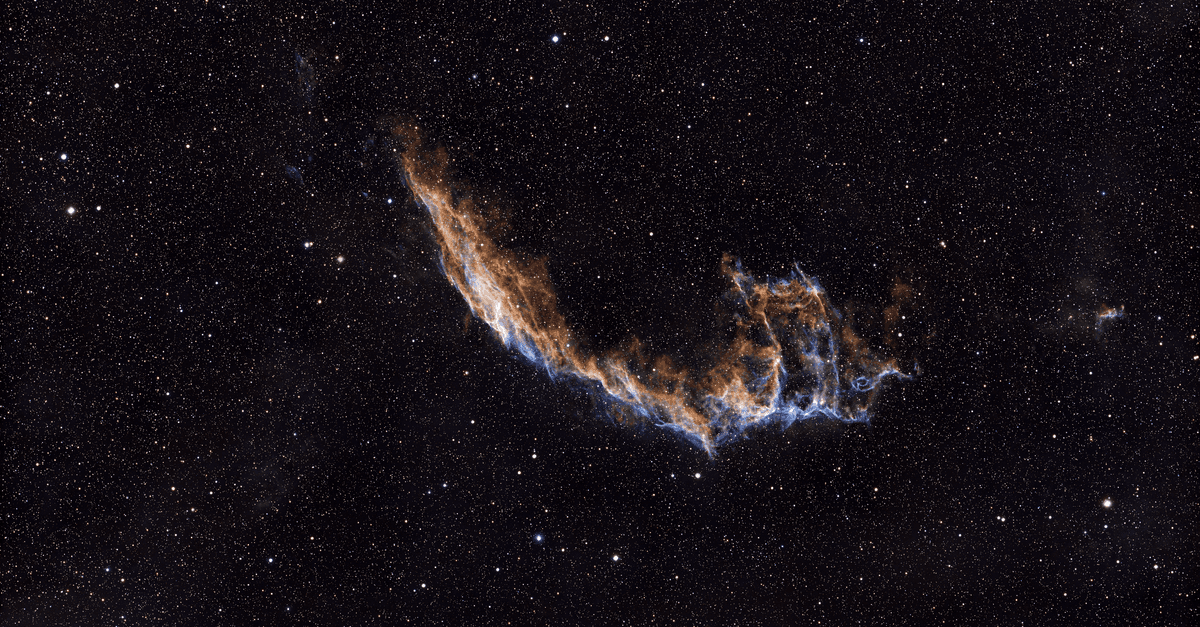
Cassiopeia A: The Youngest Supernova Remnant in the Milky Way
Cassiopeia A is the expanding debris field of a star that exploded around 1680 CE — yet almost no one on Earth recorded it. Today, X-ray and infrared telescopes reveal a forensic masterpiece: shock waves, newly minted heavy elements still glowing from the blast, and a neutron star cooling at the center. Cas A is not just a beautiful object. It is the best laboratory we have for understanding what supernovae actually do to the universe.
The Last Stars: What the Universe Looks Like in a Trillion Years
The Sun has about 5 billion years left. The last stars in the universe will burn for 10 trillion. After they go out, the cosmos enters an era so dark and cold that physics itself may eventually dissolve the matter we're made of.
White Dwarfs: The Fate of 97% of All Stars
When the Sun dies, it will leave behind a white dwarf — a city-sized object containing half the Sun's mass, supported not by nuclear fusion but by quantum mechanics. White dwarfs are already the most common stellar remnants in the galaxy, and every star you see in the night sky under 8 solar masses will eventually become one. Some will detonate as the universe's most reliable distance markers. Others will crystallize into diamond-like spheres and cool for trillions of years.