What Is a Binary Star System? When Two Suns Orbit Each Other
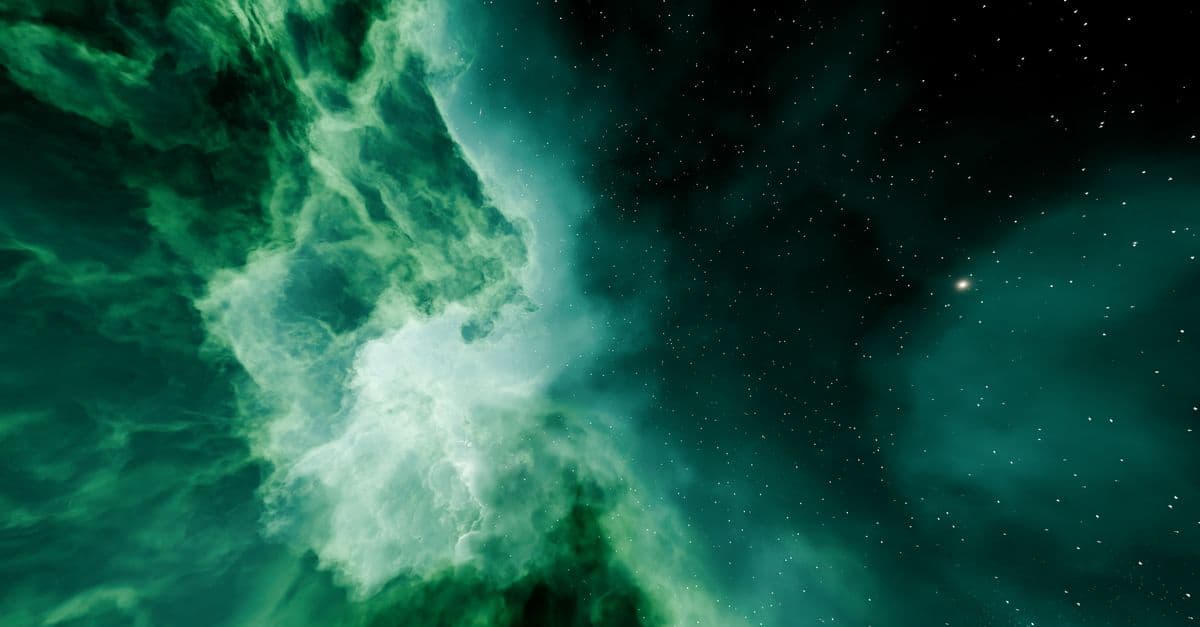
Photo: Marek Pavlík / Pexels
In Star Wars, Luke Skywalker watches two suns set over Tatooine, a scene that has become shorthand for an alien world. In real astronomy, a sky with two suns is not unusual at all. A binary star system is two stars bound by gravity and circling a shared center of mass, and for stars heavier than the Sun, having a companion is the norm rather than the exception. Binaries are also the only direct way to weigh a distant star, and they are the engines behind novae, Type Ia supernovae, millisecond pulsars, and the black hole mergers that LIGO hears.
What is a binary star?
Two stars in a binary do not orbit each other's surface. They orbit their common center of mass, also called the barycenter, which is the balance point of the pair. If you imagine two children on a seesaw, the heavier child sits closer to the pivot, and the lighter one swings through the larger arc. The same is true here: the more massive star traces a small loop near the barycenter, and the lighter star sweeps a much bigger one.
For two equal stars, the barycenter lies exactly halfway between them. For a star and a planet, it lies almost inside the star, which is why exoplanet hunters can detect a faint stellar wobble. Real binaries fall anywhere in between.
Four numbers describe almost every binary:
- Orbital period: the time for one full orbit, ranging from hours for the tightest pairs to many thousands of years for the widest.
- Semi-major axis: the average separation, usually quoted in astronomical units (AU, the Earth-Sun distance of about 150 million km).
- Eccentricity: how stretched the orbit is, where 0 is a circle and values near 1 are long, narrow ellipses.
- Mass ratio: the lighter star's mass divided by the heavier star's mass, which sets how far each star moves around the barycenter.
How binaries let us weigh the stars
Mass is the single most important property of a star because it sets its brightness, lifetime, and fate. But you cannot put a star on a scale. For a single star, mass has to be inferred from models. For a binary, it can be measured with Newton's form of Kepler's third law: if the separation is in AU and the period is in years, the combined mass in solar masses equals the separation cubed divided by the period squared.
Alpha Centauri gives a clean worked example. According to the orbital solution cited by Wikipedia's Alpha Centauri article (from Akeson et al. 2021), the two bright stars have a semi-major axis of 23.299 AU and an orbital period of 79.762 years. Cube 23.299 to get about 12,650, square 79.762 to get about 6,362, and divide: the pair weighs about 1.99 solar masses. The published individual masses, 1.0788 and 0.9092 solar masses, add up to 1.988. The method works, and it is how astronomers calibrate nearly every stellar model.
How common are binary stars?
Common, but it depends strongly on the type of star. In 2010, Deepak Raghavan and colleagues surveyed 454 Sun-like stars and found that about 56% are single, 33% are double, 8% are triple, and 3% belong to higher-order systems. The distribution of orbital periods peaks near 300 years, so a typical companion to a Sun-like star is a very slow, distant partner. Those results are in the Raghavan et al. survey on arXiv.
The picture changes with mass. A later review by Gaspard Duchene and Adam Kraus, summarized in the Wikipedia article on binary stars, put the multiplicity frequency (the fraction of stars that have at least one companion) at these values:
| Mass of primary star | Multiplicity frequency | Average companions per star |
|---|---|---|
| 0.1 solar masses or less | about 22% | 0.22 |
| 0.1 to 0.5 solar masses (red dwarfs) | about 26% | 0.33 |
| 0.7 to 1.3 solar masses (Sun-like) | about 44% | 0.62 |
| 1.5 to 5 solar masses | 50% or more | 1.00 |
| 8 to 16 solar masses | 60% or more | 1.00 |
| 16 solar masses or more | 80% or more | 1.30 |
The pattern is steady: the heavier the star, the more likely it has company. Massive stars form in dense, turbulent clouds that fragment into several cores, and low-mass stars with wide companions are easier to pull apart in a close encounter later. The same review says roughly a third of all star systems in the Milky Way are binary or multiple, because the abundant red dwarfs mostly live alone.
Two things follow. First, the Sun is not an oddball: about half of Sun-like stars are single. Second, the stars that dominate the night sky to the naked eye, the bright, massive ones, are disproportionately members of multiple systems, which is why so many familiar "stars" turn out to be pairs under a telescope.
Types of binary systems
Astronomers classify binaries in two ways: by how we detect them, and by how close the stars are.
By detection method
Visual binaries can be split into two points of light in a telescope. Alpha Centauri A and B are the closest example, and Mizar in the Big Dipper's handle was recorded as a double by Giovanni Riccioli in 1650.
Astrometric binaries reveal themselves by a wobble. Friedrich Bessel concluded in 1844 that Sirius had an unseen companion from the wavy path of the bright star across the sky, a technique related to the one used for exoplanets. Alvan Graham Clark spotted the companion, Sirius B, in 1862. In 1915 it was identified as the first known white dwarf, and Hubble measurements in 2005 gave it a diameter of about 12,000 km and a mass of about 98% of the Sun's, per the Wikipedia article on binary stars.
Spectroscopic binaries are too close to resolve, but their light gives them away. As one star moves toward us and the other away, spectral lines shift blue and red in turn through the Doppler effect, and the cycle of the shifts reveals the orbital period. Most known binaries are found this way.
Eclipsing binaries are the lucky ones whose orbit is edge-on to us, so each star periodically passes in front of the other and the combined light dips. If an eclipsing binary is also spectroscopic and its distance is known, its stellar masses and sizes can be determined very precisely. Eclipsing binaries in the Large Magellanic Cloud and other nearby galaxies have been used to measure their distances to an accuracy of about 5%.
Algol (Beta Persei) is the textbook case. Its two inner stars eclipse each other every 2.87 days, dropping its brightness from about magnitude 2.1 to about 3.4 for roughly 10 hours, which is easy to see with the naked eye. A third star orbits the pair about every 680 days, and the system lies about 94 light-years away. John Goodricke proposed in the 1780s that a dark body passes in front of it, and Hermann Vogel's spectroscopy in 1889 confirmed that Algol is an eclipsing binary.
By physical configuration
Every star in a binary is surrounded by a Roche lobe, a teardrop-shaped region within which matter is gravitationally bound to that star. Its narrow tip points at the companion, and the tip is the first Lagrange point, L1, a saddle point where gravity and rotational effects cancel (the term is named for the French astronomer Edouard Roche). The relationship between each star and its lobe sets the type.
| Type | Roche lobe status | What happens | Example |
|---|---|---|---|
| Detached | Both stars inside their lobes | Stars evolve almost independently; most binaries | Alpha Centauri A and B |
| Semi-detached | One star fills its lobe | Gas flows through L1 to the companion | Algol |
| Contact | Both fill their lobes | Share a common envelope; may merge | W Ursae Majoris |
| Cataclysmic variable | Donor fills lobe; white dwarf accretes | Disk forms; nova outbursts | Many known |
| X-ray binary | Donor feeds a supernova. About 20 km wide but containing more mass than the Sun.">neutron star or black hole | Hot disk emits X-rays | Cygnus X-1 |
Contact binaries are especially strange. The two stars touch, share an outer layer, and often orbit in less than a day, and friction can brake the orbit until the stars merge. A cataclysmic variable is a semi-detached pair where a white dwarf pulls gas from a companion into a disk and onto its surface. Periodically the hydrogen piled on the white dwarf ignites in a thermonuclear flash, which we see as a nova. A nova is not a supernova: the white dwarf survives and can erupt again.
An X-ray binary is the same idea with a denser accretor. Cygnus X-1 was found in 1964 by X-ray detectors on a sounding rocket and became the first X-ray source widely accepted as a black hole. Its black hole, with a mass estimated at about 21 solar masses in a 2021 analysis, orbits the blue supergiant HDE 226868 every 5.6 days, roughly 6,000 to 7,300 light-years away depending on the method. The supergiant's wind feeds a disk in which matter reaches millions of degrees and emits X-rays. In 1975, Stephen Hawking bet Kip Thorne that Cygnus X-1 was not a black hole, and he conceded in 1990.
How do binary stars form?
The details are still being worked out, but the main route is clear: stars are born together. A cloud of gas collapses, and as it contracts it spins, forming a disk. The cloud or the disk can break into pieces, called fragmentation, and each piece collapses into a separate star. The result is a bound pair, or a trio or quartet.
Two flavors of this are discussed. In core fragmentation, a large dense clump splits while it is still falling inward. In disk fragmentation, a massive, rotating disk around a newborn star becomes unstable and forms companions. Some systems are then reshuffled: in a three-body encounter within a young cluster, one star can be ejected while the other two settle into a stable pair. Pure capture of two separate stars is generally considered too unlikely to be the main process, because two stars passing each other normally just keep going.
That is why binaries tend to be found in the same places stars form. For how those nurseries work, see our deep dive on stellar nurseries. What decides the final separations and mass ratios, and why the odds of a companion rise so steeply with mass, remain active research topics.
When stars interact: mass transfer and its consequences
A single star lives out its life alone: it burns hydrogen on the main sequence, swells into a giant, and ends as a white dwarf, neutron star, or black hole depending on its mass. See how stars are born and die for that standard story. In a close binary, that script gets rewritten, because each star's evolution changes the other.
The more massive star runs out of hydrogen first and swells. If it grows large enough to overflow its Roche lobe, gas spills through L1 onto its companion. Astronomers sort this into cases by when it happens: Case A during the donor's main-sequence life, Case B after hydrogen is exhausted in the core but before helium ignites, and Case C later still. Transfer can be stable, with the orbit adjusting as angular momentum shifts around, or unstable, and the difference decides whether the pair settles down or spirals together.
The Algol paradox
Algol shows why this matters. The more massive star in the pair is still on the main sequence, yet its lighter companion is already an evolved subgiant. That seems backward, since heavier stars live shorter lives. The resolution is mass transfer: the star that is now lighter was originally the heavier one, evolved first, and handed most of its mass to its partner. The paradox is resolved by remembering that the stars once swapped roles.
Common envelope evolution
Sometimes the transfer is too fast for the companion to swallow. Then the gas engulfs both stars in a common envelope, a shared cloud that rotates differently from the pair. Drag from this gas pulls the stars together, and the orbital energy released can blow the envelope away. The outcome is either a much tighter binary or a merger into a single star.
This process is thought to build many of the tight pairs we observe: cataclysmic variables, X-ray binaries, and close double white dwarfs or neutron stars. In each, the compact object was once the core of a much larger star, which could not have fit inside the current orbit. The prediction of what happens is still uncertain, and it is one of the main weak points in models of binary evolution.
Type Ia supernovae: binaries and the accelerating universe
Type Ia supernovae are among the most useful objects in cosmology, and they happen only in binaries. They start with a carbon-oxygen white dwarf, the dense remnant of a Sun-like star. A white dwarf that grows toward about 1.44 solar masses, the Chandrasekhar limit, can no longer be supported by electron degeneracy pressure, and carbon fusion runs away. The star is destroyed.
There are two main routes to that point:
- Single degenerate: a white dwarf pulls matter from a normal companion until it nears the limit.
- Double degenerate: two white dwarfs spiral together, because their orbit loses energy to gravitational waves, and merge.
Which route dominates is not settled. One summary notes that the single-degenerate channel is estimated to produce no more than about 20% of all Type Ia events. For one nearby explosion, SN 2011fe, archival Hubble images showed no red giant at the location, and any surviving companion must have been smaller than the Sun, which points to a white dwarf pair.
Because these explosions peak at nearly the same absolute magnitude, about -19.3, roughly 5 billion times the Sun's luminosity, and because the small variations can be corrected using the shape of the light curve (the Phillips relation), they work as "standard candles." Compare a Type Ia's apparent brightness to its known luminosity and you have its distance. In 1998 two teams, the Supernova Cosmology Project and the High-z Supernova Search Team, found that distant Type Ia explosions were fainter than expected, meaning that the expansion of the universe is accelerating. Saul Perlmutter, Brian Schmidt, and Adam Riess shared the 2011 Nobel Prize in Physics for it. That finding is the first evidence for what we now call dark energy. The physics of the explosion is covered in our articles on supernova types and white dwarfs.
Millisecond pulsars: recycled stars
A normal pulsar is a spinning neutron star that slows down over millions of years as it radiates away energy. But some spin hundreds of times per second. Those are millisecond pulsars, and they are thought to be old neutron stars that were "recycled" by a binary partner.
The recipe: a neutron star in a close binary pulls gas from a companion. The infalling matter carries angular momentum and spins the star up. When the companion has lost most of its mass, accretion stops and what is left is a fast, stable pulsar, often orbiting a white dwarf, which is the remnant of the donor.
The first millisecond pulsar, PSR B1937+21, was found in 1982 and spins about 641 times per second. As of 2025 the fastest known, PSR J1748-2446ad, spins about 716 times per second. Because millisecond pulsars are such stable clocks, networks of them can be used as a galaxy-sized detector: in 2023 several pulsar timing array collaborations, including NANOGrav, reported the first evidence for a background of gravitational waves. For the pulsar side of the story, see what pulsars are and how pulsars keep such accurate time.
Binary mergers and gravitational waves
The last chapter of many binaries is a merger. If two compact objects, white dwarfs, neutron stars, or black holes, end up close, they lose orbital energy as gravitational waves and spiral together.
The first direct detection was GW150914, recorded by the two LIGO detectors on September 14, 2015, and announced on February 11, 2016. It came from two black holes of about 35 and 30 solar masses that merged into a single black hole of about 62 solar masses, roughly 1.3 billion light-years away. About 3 solar masses of mass-energy were radiated as gravitational waves in a fraction of a second. The 2017 Nobel Prize in Physics went to Rainer Weiss, Barry Barish, and Kip Thorne for the detector and the discovery. The Related Reading list at the end links to our explainer on how the detectors work.
How two black holes get close enough to merge within the age of the universe is not settled. One route is the common envelope phase described above, and another is that the pair formed through dynamical interactions in a dense star cluster. Both are being tested against the growing catalog of mergers.
Alpha Centauri: the nearest star system is a triple
Our closest stellar neighbor is a triple system.
Alpha Centauri A is a Sun-like star of about 1.08 solar masses. Alpha Centauri B is a cooler, slightly smaller star of about 0.91 solar masses. The two circle each other every 79.762 years on an orbit whose separation swings from about 11.2 AU at closest approach to 35.6 AU at its farthest, according to the sources summarized in Wikipedia's article. For scale, the Sun-Saturn distance is about 9.5 AU and the Sun-Neptune distance is about 30 AU. The pair lies about 4.34 light-years from the Sun.
Proxima Centauri is a red dwarf of about 0.12 solar masses that sits slightly closer to us, at about 4.25 light-years, making it the closest known star to the Sun. It is bound to the A-B pair, but loosely: it lies roughly 13,000 AU (0.21 light-years) from them, and published orbital periods fall in the range of roughly 510,000 to 550,000 years.
Planets around Proxima and Alpha Centauri
Proxima b, with a minimum mass of about 1.17 Earth masses, orbits at about 0.049 AU in the habitable zone, the range of distances where liquid water could exist on a rocky surface. Whether such a planet could really be habitable is questionable, partly because red dwarfs produce strong flares; our piece on red dwarfs and the search for life covers that debate. A smaller planet, Proxima d, was detected in 2022 and confirmed in 2025, while the proposed Proxima c has not been confirmed. Around Alpha Centauri A itself, JWST observations in August 2024 found a point source at about 2 AU that could be a giant planet, but it was not recovered in a follow-up and remains a candidate. You can find more on the nearest candidates in nearest exoplanets that could host life.
Planets in binary star systems
Planets can exist in binaries in two basic arrangements, and the stability rules for each are different.
S-type orbits (named for "satellite"): a planet circles one star, and the other star is a distant perturber. This works only if the planet stays well inside the binary separation. Holman and Wiegert showed in 1999 that the stable zone is a fraction of the binary separation that depends on the mass ratio and the eccentricity of the stars' orbit.
P-type orbits (for "planetary"): a planet circles both stars, the "Tatooine" case. The planet must be far enough out that the two stars act roughly like a single mass. The minimum stable distance is about 2 to 4 times the binary separation.
The first planet detected orbiting both stars of an ordinary eclipsing pair was Kepler-16b, announced on September 15, 2011. The stars are a K-type and an M-type dwarf, and the planet circles them in about 229 days. Earlier, PSR B1620-26 b, reported in 1993, was a planet around a pulsar and white dwarf pair. Dozens of circumbinary planets are now catalogued, and some sit only just outside the stability limit, which is often taken to suggest that they formed farther out and migrated inward.
How migration works is explained in our article on planetary migration. The broader question of how planets are discovered is covered in how we find exoplanets.
Binary stars you can see yourself
You do not need a telescope for the first of these.
- Mizar and Alcor: in the handle of the Big Dipper, a pair visible to the naked eye. In a telescope, Mizar splits into two stars, and each of those is itself a binary, so the whole group contains six stars.
- Algol: watch it dim from magnitude 2.1 to about 3.4 and back every 2.87 days. An eclipse lasts about 10 hours.
- Albireo: the head of Cygnus the Swan, a showpiece in a small telescope for its gold and blue colors.
- Epsilon Lyrae: near Vega, the "double double," in which a wide pair resolves further into two tight pairs in a moderate telescope.
Common misconceptions
"A binary means two stars close together." Not necessarily. The median orbital period for Sun-like stars is around 300 years, and some companions are thousands of AU away. Many "binaries" are only identified by their shared motion across the sky.
"Stars in a binary orbit each other." Strictly, they orbit their shared center of mass, which only coincides with one star when its partner is negligible.
"A nova is a small supernova." A nova is a surface explosion on a white dwarf that survives and can repeat. A Type Ia supernova destroys the white dwarf.
"Planets can't survive in binaries." They can, and they have been found in both S-type and P-type orbits. They need a stable orbit, but that is a matter of geometry, not an absolute barrier.
What comes next in binary star research
Three tools are expanding the field. Gravitational-wave detectors are building up a census of merging pairs, with each event revealing masses and spins. ESA's LISA, formally adopted on January 25, 2024 and planned to launch around 2035, will use arms about 2.5 million km long to study tens of thousands of compact binary systems in the Milky Way in low-frequency gravitational waves. And population synthesis, computer models that evolve millions of simulated binaries, are being tested against all of this to tighten the uncertain steps such as common envelope evolution.
FAQ
Q: What is a binary star system? A: A binary star system is two stars bound by gravity that orbit their shared center of mass. Some systems have three or more stars. Orbital periods range from hours for the tightest pairs to many thousands of years for the widest, and the stars can be separated by less than their own diameters or by thousands of AU.
Q: How common are binary stars? A: It depends on mass. About 44% of Sun-like stars have a companion, according to Raghavan and colleagues' survey, and the share is about 26% for red dwarfs, 50% or more for stars of 1.5 to 5 solar masses, and 80% or more for the most massive stars. Roughly a third of Milky Way star systems are binary or multiple.
Q: Is the Sun part of a binary? A: No. The Sun is a single star. About half of Sun-like stars are single, so that is not unusual. Q: Why are binary stars important to astronomers? A: They give direct measurements of stellar mass using Kepler's third law, and eclipsing binaries also give radii. Interactions between the stars create novae, Type Ia supernovae, X-ray binaries, millisecond pulsars, and gravitational-wave sources, so many of the most informative objects in astronomy depend on binary evolution.
Q: Can planets orbit binary stars? A: Yes. S-type planets orbit one star in a binary, and P-type planets orbit both. Kepler-16b, announced in September 2011, orbits a K dwarf and an M dwarf every 229 days. Stability requires the planet to stay inside a limited zone near one star or well outside the pair, at roughly 2 to 4 times the binary separation.
Q: What is the nearest binary star system to Earth? A: Alpha Centauri, about 4.34 light-years away, which is actually a triple. Alpha Centauri A and B orbit each other every 79.762 years, and Proxima Centauri, about 4.25 light-years away, circles the pair at a distance of roughly 13,000 AU.
Q: Do binary stars cause supernovae? A: Some do. Type Ia supernovae happen in binary systems, when a white dwarf grows toward 1.44 solar masses by accreting from a companion or merging with another white dwarf. Other supernovae, from the collapse of massive single stars, do not need a companion, although binary interactions can change how those stars die.
What this means
For most of the history of astronomy, the Sun's solitary state looked like the default, and stars with partners looked like curiosities. The data say the opposite for the stars that matter most for chemistry and cosmology. A large share of massive stars have partners, and those partners exchange gas, share envelopes, merge, and explode in ways that no single star can.
That is why binaries do more than add double suns to the sky. They give the only direct scale for stellar mass, they set the supply of Type Ia explosions used to measure the expansion of the universe, they spin up the pulsars used as cosmic clocks, and they are the progenitors of the mergers that make ripples in spacetime. A system with two suns is not exotic. It is one of the main ways the universe builds its most extreme objects.
Sources
- Raghavan et al. (2010), A Survey of Stellar Families: Multiplicity of Solar-Type Stars (arXiv)
- Binary star, multiplicity by mass after Duchene (2013), Roche lobes, Sirius (Wikipedia)
- Alpha Centauri system data, including Akeson et al. (2021) orbital solution (Wikipedia)
- Type Ia supernova (Wikipedia)
- Algol (Wikipedia)
- Cygnus X-1 (Wikipedia)
- GW150914 (Wikipedia)
- Millisecond pulsar (Wikipedia)
- Circumbinary planet (Wikipedia)
- Common envelope (Wikipedia)
- Roche lobe (Wikipedia)
- ESA: LISA factsheet
Related Reading
Follow new articles
Add SciHub101 to your feed reader to see new science and technology stories.
About the Author
SciHub101 is an independent science and technology publication founded and edited by Buğra Sözeri, a software engineer and app developer based in Türkiye. AI tools assist with drafting and research. Source documentation in the existing archive is uneven, and articles are being reviewed and corrected. The Editorial Team byline identifies editorial responsibility; it does not certify specialist or independent human review. Where we compare products, anything built by our own team is labelled as such — see the editorial guidelines and About page for how corrections and disclosures work.
Related Articles
How Do Radio Telescopes Work? Listening to the Universe at Every Frequency
Radio telescopes collect faint radio waves from pulsars, galaxies, hydrogen gas, and black holes. Because radio waves are long, sharp images need either a giant dish like China's 500-meter FAST or an array of dishes combined by interferometry, like the VLA.

What Is Dark Flow? The Mysterious Motion of Galaxy Clusters
Dark flow is the claimed observation that galaxy clusters across the observable universe are moving in the same direction, toward a region beyond what we can see. If real, it could indicate a gravitational pull from structures outside the observable universe. The claim is controversial and not accepted by most cosmologists.
Cassiopeia A: The Youngest Supernova Remnant in the Milky Way
Cassiopeia A is the expanding debris field of a star that exploded around 1680 CE — yet almost no one on Earth recorded it. Today, X-ray and infrared telescopes reveal a forensic masterpiece: shock waves, newly minted heavy elements still glowing from the blast, and a neutron star cooling at the center. Cas A is not just a beautiful object. It is the best laboratory we have for understanding what supernovae actually do to the universe.
How Do Black Holes Form? Every Pathway, From Stars to Seeds
Black holes form through several distinct pathways: massive stars collapsing after fusion ends, neutron star mergers that exceed the mass limit, direct collapse of gas clouds in the early universe, and possibly primordial black holes from density fluctuations just after the Big Bang. Supermassive black holes remain partly mysterious in origin, but likely grew through a mix of heavy seeds, mergers, and accretion.

What Is Nucleosynthesis? How Atoms Are Forged in Stars and Stellar Explosions
Nucleosynthesis is the process by which atomic nuclei are built from simpler components. Hydrogen and helium were made in the first three minutes after the Big Bang. Every heavier element was forged inside stars or in their violent deaths. Much of the gold and platinum is made in neutron star mergers — cosmic events detected as gravitational waves.
Neutron Stars: The Most Extreme Objects in the Universe
Neutron stars pack more mass than the Sun into a sphere about the size of a city. This guide covers how they form, what lies inside them, how heavy they can get, and why pulsars, magnetars and neutron star mergers matter to physics.