What Are Pulsars? Rotating Neutron Stars and Cosmic Clocks
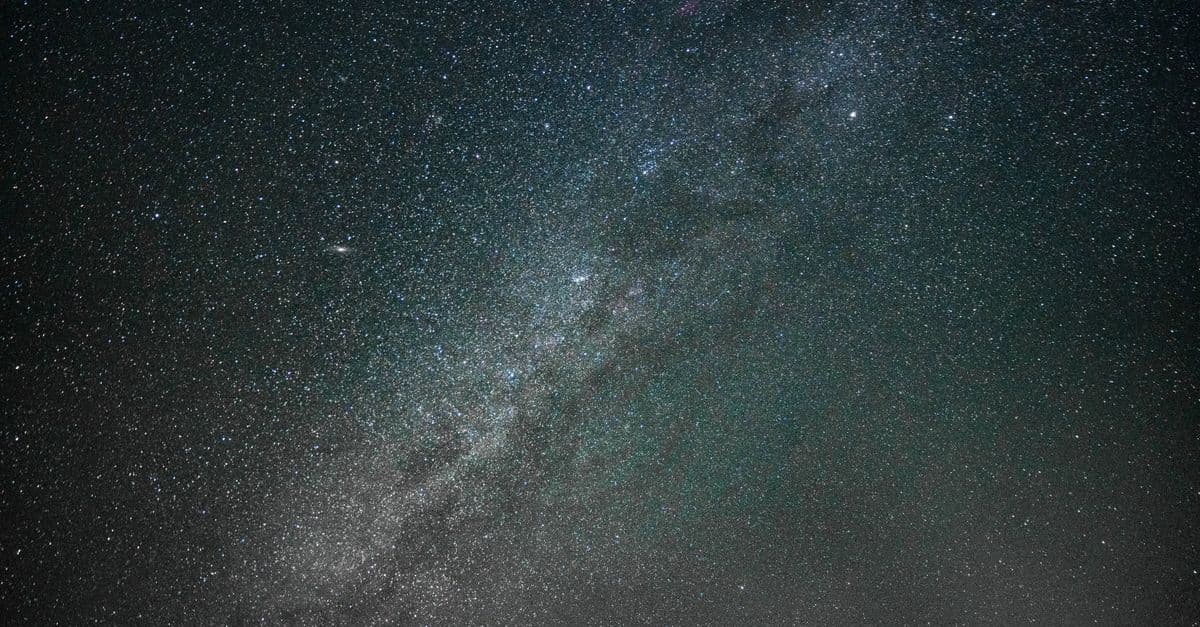
Photo: Aarin Husain / Pexels
Pulsars are rotating neutron stars observed through regularly repeating radiation. The repetition usually tells us about rotation, rather than a star swelling and shrinking with every pulse. Their signals let astronomers measure orbital motion and search for small departures from expected arrival times. The practical challenge is turning a repeating flash into a reliable timing record. That requires understanding the beam, the star's changing rotation, the path to Earth, and the clocks used to record it. NASA Fermi's pulsar explanation
Why a spinning star can look like a flashing light
A pulsar's radiation is associated with its strong magnetic field and energetic particles. When the rotation carries a beam across our line of sight, we observe a pulse. The lighthouse analogy captures the geometry: a continuously rotating source can produce repeated flashes for one observer. NASA's Hubble explanation of pulsars
The important distinction is between what the source does and what the observer receives. A lighthouse does not need to switch its lamp off between sweeps. Similarly, a gap in a pulsar's observed pulses does not imply that the entire supernova. About 20 km wide but containing more mass than the Sun.">neutron star stops emitting radiation.
The analogy also has limits. A real pulsar is not a lamp bolted onto a pole, and radiation at different wavelengths can arise in different parts of its environment. The simple model explains why rotation produces repetition. It should not be mistaken for a complete account of the emission physics.
A neutron star can exist without being detected as a pulsar by a particular observer. Whether a beam crosses the observer's direction matters. This is one reason a census of observed pulsars cannot simply be equated with a census of all neutron stars. NASA's discussion of pulsar viewing geometry
What astronomers measure when they time a pulsar
Timing begins with pulse arrival times and a model that predicts them. Researchers compare the observations with that prediction; differences are called timing residuals. The task resembles checking a train against a timetable, except the deviations may encode information about the source, its surroundings, or spacetime. NANOGrav's description of pulsar timing
A late arrival does not have only one possible explanation. A changing pulsar, a changing path, and imperfections in a timing model can all matter. The measurement is therefore most useful as part of a series, with uncertainties and other effects accounted for.
The timetable analogy explains the logic without making an assertion about a particular pulsar's performance. A schedule can be predictable even when it includes a gradual change. Similarly, precision timing does not require the simplistic assumption that every star turns at an absolutely constant rate forever.
In a hypothetical example, imagine expecting a pulse at a particular instant but recording it slightly later. That one difference is a residual, not a discovery of a gravitational wave. A pattern across observations, and the ability to rule out competing explanations, is what turns differences into scientific evidence.
How a companion can recycle a neutron star
Some pulsars rotate with periods of milliseconds. Their rapid rotation is commonly explained by recycling, in which a neutron star gains matter and angular momentum from a companion. Angular momentum describes rotational motion; the incoming material can spin the neutron star up. NASA Fermi's account of millisecond pulsars
Picture a spinning wheel receiving repeated pushes in the direction it already turns. The wheel speeds up because the pushes add rotational motion. Accretion, the accumulation of incoming matter, plays that role for the star. The process involves orbital material and gravity rather than a hand giving mechanical shoves.
The word “recycled” can be misleading if read too literally. It does not mean that the star becomes ordinary again or reverses the collapse that produced it. It describes a later change to its rotation and observable behavior. A history involving a companion can therefore produce a different timing source from an isolated young remnant.
Researchers connect these observations with models of binary evolution. The model should explain not only why the star can spin rapidly, but also how material is transferred and how the companion changes. A label such as millisecond pulsar identifies a useful class; it does not provide every member's full biography.
How a binary pulsar tested gravitational waves indirectly
Russell Hulse and Joseph Taylor discovered a binary pulsar in 1974. Precision measurements showed that its orbit lost energy in agreement with the gravitational-radiation prediction of general relativity. The result provided indirect evidence for gravitational waves and led to their 1993 Nobel Prize in Physics. The Nobel committee's explanation
The distinction between indirect and direct evidence matters. The pulsar measurements tracked orbital consequences of energy loss. They did not record a wave passing through a terrestrial interferometer, the instrument used by LIGO. Both approaches can test the same theory through different observables.
A useful comparison is inferring a leak from a reservoir's changing level versus catching water at the leak itself. The first method can be powerful when other causes are understood. It simply makes a different measurement. Pulsar timing helped show that relativity's prediction had a real astronomical consequence.
The binary was especially useful because repeated pulses gave researchers a way to track motion over time. A single photograph of two objects would not carry the same timing information. Continued observation made the orbit a laboratory for gravitational physics.
How many pulsars can act as one detector
A pulsar timing array monitors a set of pulsars in different sky directions. A gravitational-wave background would produce a characteristic pattern of relationships among their timing residuals. Comparing multiple sources is essential because it can separate a shared spacetime signal from effects peculiar to one star. NANOGrav's evidence announcement
In 2023, NANOGrav reported evidence for a background of very low-frequency gravitational waves in its 15-year data set. The title and analysis explicitly describe evidence for a background. This should not be restated as a resolved observation of one named pair of black holes. Agazie and colleagues, Astrophysical Journal Letters (2023)
An array is like a network of separated clocks whose departures from their schedules are compared. If one clock shifts, its local behavior may be responsible. If the shifts follow a predicted relationship across the network, a shared cause becomes more plausible. The analogy explains why correlations matter rather than mere irregularity.
Identifying the background's sources is a further inference. NANOGrav has also searched for signals from individual supermassive black-hole binaries and reported limits. Evidence for a background and evidence for an individual source answer related but different questions. Agazie and colleagues, individual-binary search (2023)
The takeaway
Pulsars convert rotation into observable repetition. Recycling can make a neutron star a useful timing source, while long observations turn its pulses into a test of motion and gravity. Networks of these sources extend the idea from one system to a shared signal across the sky. Their scientific power rests on comparing precise predictions with patterns in measured arrivals.
Correction note, October 15, 2026: Reframed this article around observation, recycling, and timing. Removed unsupported magnetic-field ranges, universal pulsar lifetimes, exact timing superiority claims, and overstatements of gravitational-wave source identification.
Read next:
Follow new articles
Add SciHub101 to your feed reader to see new science and technology stories.
About the Author
SciHub101 is an independent science and technology publication founded and edited by Buğra Sözeri, a software engineer and app developer based in Türkiye. AI tools assist with drafting and research. Source documentation in the existing archive is uneven, and articles are being reviewed and corrected. The Editorial Team byline identifies editorial responsibility; it does not certify specialist or independent human review. Where we compare products, anything built by our own team is labelled as such — see the editorial guidelines and About page for how corrections and disclosures work.
Related Articles
How Long Would It Take to Travel to Other Stars?
Proxima Centauri is 4.24 light-years away. With our fastest spacecraft today, the journey would take 70,000 years. Here's what it would actually take to get there faster.
How Gravity Works: From Newton to Einstein's General Relativity
For two centuries, Newton's gravity was the gold standard. Then Einstein showed that gravity isn't a force at all — it's the curvature of spacetime itself. Here's what that actually means, and how it has been tested.
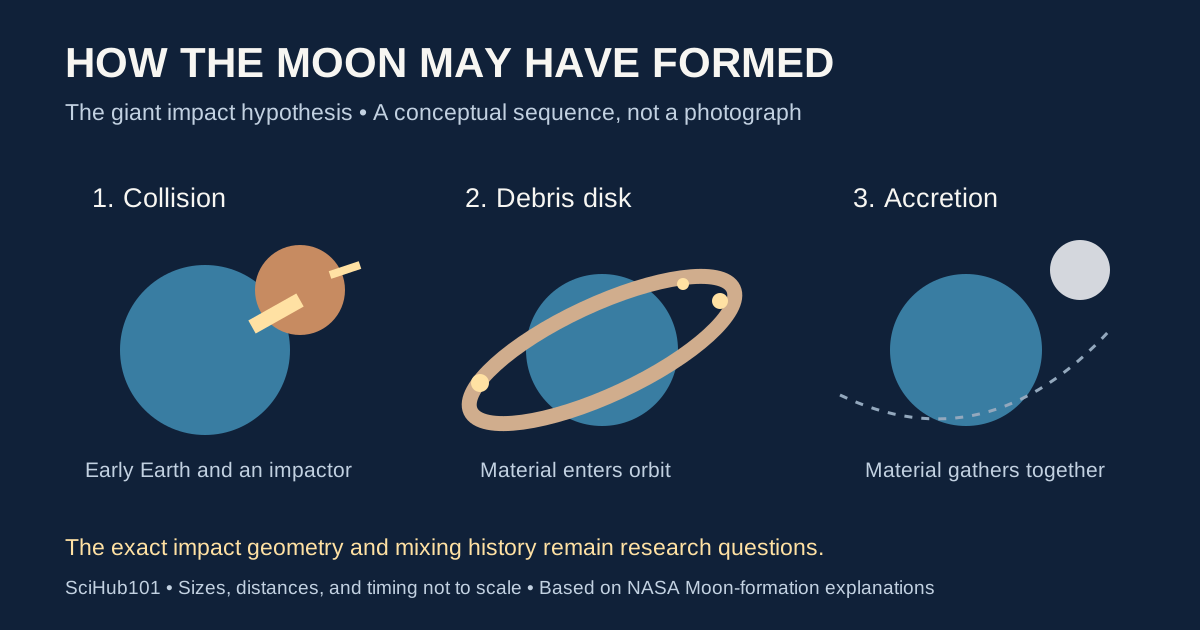
How the Moon Was Formed: Evidence for a Giant Impact
The Moon's origin is reconstructed from rocks, its interior, and orbital models. A giant impact leads the explanation, but the precise scenario is uncertain.
Mars Explained: Geology, Water, Atmosphere, and the Challenge of Colonization
Mars is the most explored planet beyond Earth: home to the largest volcano in the solar system, a canyon system thousands of kilometers long, and clear evidence that it once hosted flowing water. Here is what science has revealed.
How the Solar System Formed: From Spinning Dust to Eight Planets
About 4.57 billion years ago, a cloud of gas and dust collapsed under its own gravity. Out of the disk it left behind came the Sun, eight planets, hundreds of moons, and the debris belts of our cosmic neighborhood.
Hubble Deep Field: Revealing the Universe's True Scale
December 1995: Hubble stared at one blank patch of sky for about 10 days and found roughly 3,000 galaxies, changing how astronomers count the universe.