The Last Stars: What the Universe Looks Like in a Trillion Years
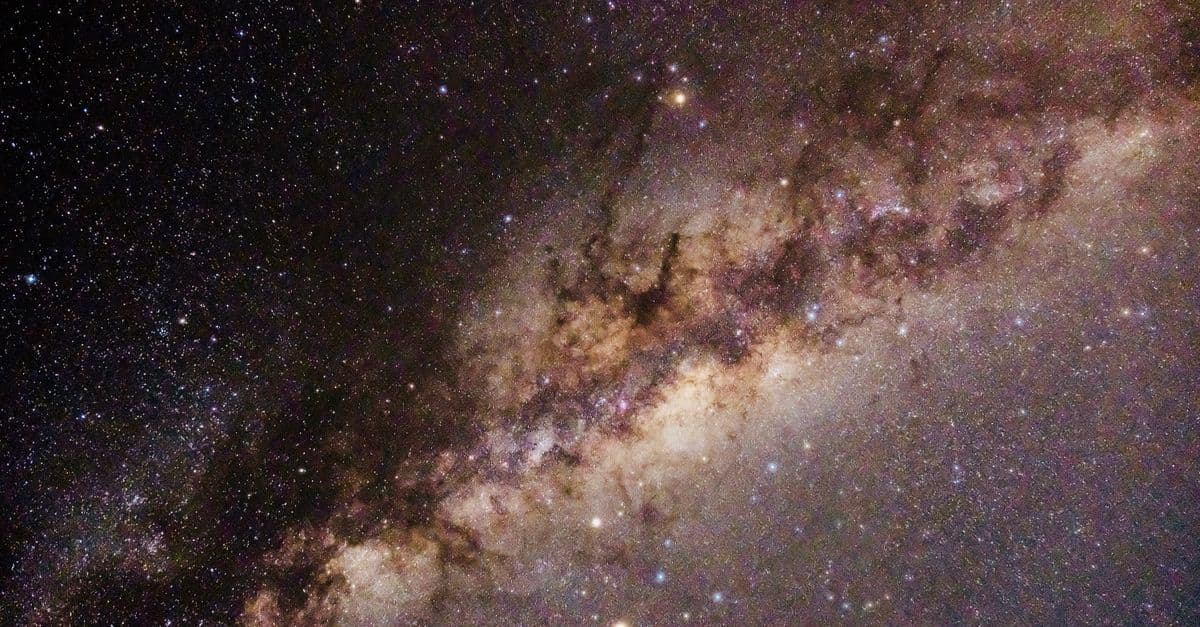
Photo: Jobert Enamno / Pexels
The Sun has already spent about half its fuel. In roughly 5 billion years it will swell into a red giant, engulf the inner planets, and eventually collapse into a dim white dwarf. This feels like an enormous span of time — and by human standards it is. But in the universe's full budget, the Sun's death is scheduled before the party has even properly started. The smallest stars alive today will still be burning hydrogen 10 trillion years from now, in a universe so utterly transformed that no remnant of what we see tonight will survive.
The Stellar Lifespan Rule: Mass Is Destiny
To understand why some stars outlast others by factors of a million, you need one principle: more massive stars burn hotter and faster, exhausting their fuel long before their smaller cousins have gotten started.
Main sequence — the stable phase of a star's life when it fuses hydrogen into helium in its core, generating enough outward radiation pressure to balance the inward pull of gravity.
The Sun, with a mass of about 1 solar mass and a surface temperature of about 5,778 K, will spend roughly 10 billion years on the main sequence. A star like Rigel, with about 20 solar masses, burns through its hydrogen in only about 8 million years — 1,250 times faster. The relationship is steep: luminosity scales roughly as the fourth power of mass, so doubling a star's mass increases its fuel consumption by about 16 times while only doubling the fuel supply, resulting in a main sequence lifetime eight times shorter.
At the other end of the scale, the universe's most abundant stars — the red dwarfs — have masses between about 0.08 and 0.5 solar masses. Their cores are cool enough that hydrogen fusion proceeds at a leisurely pace. A 0.1 solar mass red dwarf will spend an estimated 10 trillion years on the main sequence. The universe is currently only about 13.8 billion years old, which means not a single red dwarf in existence today has come close to exhausting its hydrogen.
Source: Adams & Laughlin, Reviews of Modern Physics (1997) — Comprehensive quantitative framework for stellar lifetimes across the mass spectrum, establishing the Five Ages of the Universe timeline.
The Stelliferous Era: Stars Are the Brief Act
Astronomers Fred Adams of the University of Michigan and Greg Laughlin (then at the University of California, Santa Cruz) formalized the long-term future of the universe in a 1997 paper in Reviews of Modern Physics, later expanded into the 1999 book "The Five Ages of the Universe." Their framework divides cosmic time into five eras on a logarithmic scale, where the exponent of time in years is called the "cosmological decade."
We are currently in the Stelliferous Era (from the Latin for "star-bearing"), which Adams and Laughlin define as roughly from cosmological decade 6 (one million years after the Big Bang, when the first stars formed) through cosmological decade 14 (ten trillion years from now, when the last red dwarfs burn out).
Put another way: the era of stars — the kind of universe we live in, with light-producing nuclear engines scattered across galaxies — occupies only about cosmological decades 6 through 14 on this scale. Everything that happens before and after is, in different ways, profoundly darker.
The Stelliferous Era itself is already past its peak. Star formation rates in the universe were highest about 10 billion years ago, at what astronomers call cosmic noon: a period around redshift 2–3 when galaxies were actively assembling and colliding, gas was abundant, and new stars were forming at roughly 10 times the current rate. Since then, the universe's star formation rate has declined steadily as gas is consumed and galaxies redshift apart from each other.
Source: Madau & Dickinson, Annual Review of Astronomy and Astrophysics (2014) — Definitive observational compilation of the cosmic star formation rate history, establishing the peak at z ≈ 2 and the subsequent decline.
Red Dwarfs: The Last Survivors
The last act of the Stelliferous Era belongs entirely to the red dwarfs. These are the M-type main sequence stars, designated by the letter M in the stellar classification system. They are so faint that not a single one is visible to the naked eye from Earth despite the fact that they make up roughly 70–75% of all stars in the Milky Way. The nearest star to the Sun, Proxima Centauri, is a red dwarf at magnitude 11.1 — about 100 times too faint to see without a telescope.
Red dwarfs have a structural feature that gives them their extraordinary longevity: they are fully convective. In the Sun, only the outer envelope mixes by convection; the core's hydrogen is not efficiently replenished from the reserves outside it, which is why the Sun will exhaust its core hydrogen long before using its total hydrogen supply. In the smallest M dwarfs, the entire star mixes by convection. Nearly all of the star's hydrogen is available as fuel, not just the core fraction.
The result is a main sequence lifetime that scales with total hydrogen mass divided by the extremely slow fusion rate. For a 0.1 solar mass red dwarf, this works out to approximately 10 trillion years (10¹³ years). For comparison, the current age of the universe is 1.38 × 10¹⁰ years — about 730 times shorter.
When the last red dwarf finally exhausts its hydrogen, it will not have enough mass to become a red giant. It will simply contract, cool, and become a helium white dwarf: a dense, degenerate ball of helium supported not by fusion but by quantum mechanical electron degeneracy pressure. No red dwarf has yet had time to complete this transition; the universe is not old enough.
Source: Laughlin, Bodenheimer & Adams, Astrophysical Journal (1997) — Detailed models of red dwarf stellar evolution including estimates of main sequence lifetimes and final remnant types for stars between 0.08 and 0.25 solar masses.
The Degenerate Era: A Universe of Ghosts
After the last red dwarfs burn out — roughly 10¹⁴ years from now — the Stelliferous Era ends. What replaces it is the Degenerate Era, which Adams and Laughlin estimate will persist from cosmological decade 15 through cosmological decade 37 (10¹⁵ to 10³⁷ years).
During this era, the universe contains no nuclear-burning stars. What remains are stellar remnants:
| Remnant Type | Origin | Composition | Approximate Lifespan |
|---|---|---|---|
| White dwarf | Low/medium mass stars | Carbon/oxygen or helium | Becomes black dwarf after ~10¹⁵ years |
| supernova. About 20 km wide but containing more mass than the Sun.">Neutron star | Massive star supernovae | Neutrons, some exotic matter | Slowly cools; lasts trillions of years |
| Black hole | Very massive stars, galactic centers | Singularity + event horizon | Evaporates via Hawking radiation ~10⁶⁷–10¹⁰⁰ years |
| Brown dwarf | Sub-stellar objects below 0.08 solar masses | Hydrogen/helium, unfused | Cools indefinitely |
White dwarf — a stellar remnant, roughly Earth-sized, supported against further collapse by electron degeneracy pressure rather than nuclear fusion. It contains no active energy source and simply radiates away its residual thermal energy.
The Degenerate Era is not completely dark. Compact objects occasionally interact. A white dwarf and a brown dwarf might form a binary, with mass transfer from the brown dwarf occasionally triggering hydrogen fusion on the white dwarf's surface — a faint echo of the stars that came before. But these events are rare, and the dominant characteristic of this era is gradual, relentless cooling.
White dwarfs, left to cool in isolation, will eventually lose all their thermal energy and become black dwarfs: cold, inert masses of crystallized carbon and oxygen, approximately Earth-sized, supported only by electron degeneracy pressure. The cooling timescale for a white dwarf to reach cosmic microwave background temperatures (which by that era will themselves be inconceivably cold due to continued cosmic expansion) is estimated at roughly 10¹⁵ to 10²⁵ years, depending on mass and initial temperature.
Source: Adams & Laughlin, Reviews of Modern Physics (1997) — Timescales for white dwarf cooling and transition to black dwarf state in the far future.
The Blue Dwarf Interlude: Stars That Do Not Yet Exist
Before leaving the far future of red dwarfs, there is a phenomenon worth noting that does not exist anywhere in the observable universe today: the blue dwarf.
When a fully convective red dwarf slowly exhausts its hydrogen, its composition shifts from hydrogen-rich to helium-rich. The star becomes gradually more luminous and hotter as the mean molecular weight of its core material increases. Depending on mass, a dying red dwarf may pass through a brief phase as a blue-white main sequence star — more luminous and hotter than it was in the red dwarf phase — before contracting into a white dwarf.
These blue dwarfs are theoretical objects, predicted by stellar evolution models for fully convective stars, that simply have not had time to form yet. The universe is too young for any red dwarf to have completed its main sequence life. When they eventually appear, in many trillions of years, they will be the last nuclear-burning stars the universe produces.
Source: Laughlin, Bodenheimer & Adams, Astrophysical Journal (1997) — Prediction of blue dwarf phase in the terminal evolution of low-mass fully convective stars.
Proton Decay and the Dissolution of Matter
The Degenerate Era ends not with a bang but with a gradual dissolution. If the proton — long thought to be an absolutely stable particle — eventually decays, then all matter made of baryons (protons and neutrons) has a finite lifespan.
Proton decay — the hypothetical spontaneous disintegration of a proton into lighter particles such as a positron and a neutral pion. Predicted by many Grand Unified Theories (GUTs) but not yet observed experimentally.
The current experimental lower bound on the proton's half-life, from detectors like Super-Kamiokande in Japan, is roughly 10³⁴ years. Theoretical predictions from various GUT models range from about 10³⁰ to 10³⁶ years for specific decay channels.
If the proton decays at around 10³⁴ to 10³⁷ years, then all the dead stars and planets of the Degenerate Era slowly evaporate. Neutron stars dissolve over the proton decay timescale. Black dwarfs crumble. Even rocky planets are eventually consumed, atom by atom, each proton silently radiating away into gamma rays and positrons. By roughly 10³⁷ years, assuming proton decay happens, ordinary matter no longer exists in any concentrated form.
If the proton is perfectly stable — which remains theoretically possible — black dwarfs and neutron stars survive until they are disrupted by gravitational encounters or by quantum tunneling events that take place on timescales far longer than the proton decay era.
Source: Nishino et al. (Super-Kamiokande Collaboration), Physical Review Letters (2009) — Experimental lower bound on proton lifetime for the p → e⁺π⁰ decay channel at 8.2 × 10³³ years.
The Black Hole Era and Hawking Radiation
Whether or not protons decay, black holes remain. The Black Hole Era spans from roughly 10³⁸ to 10¹⁰⁰ years — after all ordinary stellar remnants have either decayed or been disrupted. The universe at this stage contains essentially only black holes, separated by unimaginably large voids.
But black holes are not permanent either. Stephen Hawking showed in 1974 that quantum mechanical effects near the event horizon cause black holes to slowly emit thermal radiation — now called Hawking radiation — at a temperature inversely proportional to their mass. A stellar-mass black hole radiates at a temperature of about 60 nanokelvin — far colder than the cosmic microwave background today, which is why black holes in the current universe absorb radiation rather than emitting it net.
As a black hole slowly loses mass through Hawking radiation, it heats up and radiates faster, eventually evaporating completely in a final burst of high-energy particles. The evaporation time for a solar-mass black hole is roughly 2 × 10⁶⁷ years. For a supermassive black hole of 10 billion solar masses (like the ones found at galactic centers), the evaporation time is approximately 2 × 10¹⁰⁰ years.
After the last black hole evaporates, the universe enters the Dark Era — a state of maximum entropy containing only diffuse photons, electrons, positrons, and neutrinos, all at a temperature effectively indistinguishable from zero, expanding apart forever.
Source: Hawking, Nature (1974) — Theoretical derivation of black hole thermal radiation from quantum field theory in curved spacetime; the foundational paper on Hawking radiation.
Heat Death: The Final State
Heat death (also called the Big Freeze) is the ultimate thermodynamic fate of the universe in most current cosmological models. It is not a violent ending. It is the opposite: the universe reaches a state of maximum entropy, minimum free energy, and complete thermal equilibrium.
In the heat death scenario, no further work can be extracted from any process because there are no temperature or energy gradients left to exploit. Thermodynamics forbids useful energy generation without a temperature difference. Once everything reaches the same temperature — effectively absolute zero — the universe is, in the thermodynamic sense, dead.
The timeline, combining the epochs above, looks roughly like this:
| Era | Timescale | Dominant Content |
|---|---|---|
| Primordial Era | < 10⁶ years | Radiation, elementary particles |
| Stelliferous Era | 10⁶–10¹⁴ years | Nuclear-burning stars, galaxies |
| Degenerate Era | 10¹⁵–10³⁷ years | White dwarfs, neutron stars, brown dwarfs |
| Black Hole Era | 10³⁸–10¹⁰⁰ years | Black holes (all other matter decayed or scattered) |
| Dark Era | > 10¹⁰⁰ years | Photons, leptons, maximum entropy |
The numbers in the "timescale" column are not just large — they are incomprehensibly larger than anything in ordinary experience. The current age of the universe, 1.38 × 10¹⁰ years, is smaller than the Degenerate Era by a factor of roughly 10 million. The Black Hole Era dwarfs that by a further factor of roughly 10⁶³. We are, by any cosmic reckoning, absurdly early in the universe's story.
Source: Adams & Laughlin, The Five Ages of the Universe (Basic Books, 1999) — Comprehensive timeline from the Big Bang through heat death.
What This Means for Galactic Structure
The far future is not just about individual stars dying. Galaxies themselves transform over these timescales.
Over the next several tens of billions of years, galaxies continue merging. The Milky Way and Andromeda are on a collision course, expected to merge in roughly 4.5 billion years to form a single large elliptical galaxy astronomers have nicknamed Milkomeda. This merger will trigger a burst of star formation as gas clouds collide, but eventually the merged galaxy will run out of gas and star formation will cease.
Over trillions of years, gravitational interactions within the merged galaxy scatter stars out into the intergalactic void. A few percent of stars are ejected entirely from the galaxy by close encounters — a process like a slow-motion gravitational pinball machine. The rest gradually spiral inward toward the central supermassive black hole, which grows as it accretes material. On timescales around 10¹⁸ to 10²⁰ years, essentially all stellar remnants in a galaxy either fall into the central black hole or are ejected into intergalactic space.
Source: Adams & Laughlin, Reviews of Modern Physics (1997) — Estimates of galactic disruption timescales via stellar ejection and infall.
Frequently Asked Questions
Q: Are any red dwarfs visible to the naked eye?
A: No. The nearest red dwarf, Proxima Centauri, has an apparent visual magnitude of about 11.1 and requires a telescope to see from Earth's surface. The nearest naked-eye star, Alpha Centauri A, is a G-type star similar to the Sun. Red dwarfs are intrinsically faint — a 0.1 solar mass M dwarf has a luminosity roughly 0.001 times the Sun's, meaning it would need to be within about 1.4 light-years of Earth to be visible without optical aid.
Q: Has proton decay ever been observed?
A: No. Experiments including Super-Kamiokande (Japan) and earlier detectors have searched for proton decay for decades without a confirmed detection. The current lower bound on the proton's half-life for the most common predicted decay channel (p → e⁺ + π⁰) is about 10³⁴ years. Many Grand Unified Theories predict decay on timescales just above current experimental sensitivity, meaning improved detectors could find it.
Q: What is the difference between a white dwarf and a black dwarf?
A: A white dwarf is a hot, luminous stellar remnant still radiating thermal energy accumulated during its stellar lifetime. A black dwarf is what a white dwarf becomes after cooling completely to the temperature of its surroundings — an inert, dark object supported by electron degeneracy pressure with no energy source. No black dwarfs exist yet because the cooling timescale exceeds the current age of the universe.
Q: Could life survive in the far future?
A: Physicist Freeman Dyson argued in a 1979 paper that life could, in principle, survive indefinitely by metabolizing ever-smaller energy differentials and entering increasingly long hibernation periods. However, Dyson's analysis predates modern observations showing that the cosmological constant (dark energy) causes the universe to expand exponentially, eventually making even intergalactic communication impossible. Under accelerating expansion, the energy budget available to any civilization converges to a finite total, likely ruling out infinite survival.
Q: What is a cosmological decade?
A: A cosmological decade is the logarithm (base 10) of the age of the universe in years. Cosmological decade 10, for example, corresponds to an age of 10¹⁰ years — roughly the current age of the universe. The concept was introduced by Adams and Laughlin as a convenient way to talk about timescales that span many orders of magnitude. It is like the Richter scale for time rather than earthquake magnitude.
Q: Will the Milky Way and Andromeda collision destroy the solar system?
A: Almost certainly not. Galaxies are mostly empty space; the stars themselves are so small relative to their separations that direct stellar collisions during a galactic merger are extraordinarily rare. The Sun is far more likely to be flung into a different orbital trajectory within the merged galaxy than to physically collide with another star. Radiation from the increased star formation triggered by the merger may affect Earth's climate over millions of years, but the solar system will most likely survive structurally intact.
The Takeaway
We live in the Stelliferous Era, a narrow window in cosmic time — roughly cosmological decades 6 through 14 — when the universe is filled with nuclear-burning stars. The last of those stars, the smallest red dwarfs, will outlive the Sun by a factor of 2,000. After they burn out, the universe passes through the Degenerate Era of dead stellar remnants, the Black Hole Era, and finally the Dark Era of maximum entropy. The full timeline from Big Bang to heat death spans at least 10¹⁰⁰ years. We are, at 13.8 billion years, barely past the opening credits.
Read next:
Follow new articles
Add SciHub101 to your feed reader to see new science and technology stories.
About the Author
SciHub101 is an independent science and technology publication founded and edited by Buğra Sözeri, a software engineer and app developer based in Türkiye. AI tools assist with drafting and research. Source documentation in the existing archive is uneven, and articles are being reviewed and corrected. The Editorial Team byline identifies editorial responsibility; it does not certify specialist or independent human review. Where we compare products, anything built by our own team is labelled as such — see the editorial guidelines and About page for how corrections and disclosures work.
Related Articles
The Central Molecular Zone: The Milky Way's Turbulent Heart
Within 500 parsecs of the Milky Way's center lies a region unlike anything else in the galaxy — the Central Molecular Zone. It contains roughly 10% of the entire galaxy's molecular gas compressed into less than 0.1% of its volume. Star formation there should be rampant, but it is strangely quiet. Giant molecular clouds orbit at velocities that defy simple physics. A cloud called the Brick should have already collapsed into thousands of stars, yet it has not. Understanding the CMZ means understanding what keeps the center of our galaxy from exploding with new stars — and what occasionally makes it erupt instead.
The Hubble Constant Tension: A Crisis in Cosmology
Two independent, rigorously cross-checked methods of measuring the universe's expansion rate keep producing answers that disagree by 8–10% — a gap now exceeding 5 sigma. Either measurement is wrong in ways no one can find, or standard cosmology is missing something fundamental.
White Dwarfs: The Fate of 97% of All Stars
When the Sun dies, it will leave behind a white dwarf — a city-sized object containing half the Sun's mass, supported not by nuclear fusion but by quantum mechanics. White dwarfs are already the most common stellar remnants in the galaxy, and every star you see in the night sky under 8 solar masses will eventually become one. Some will detonate as the universe's most reliable distance markers. Others will crystallize into diamond-like spheres and cool for trillions of years.
How Stars Are Born and Die: The Complete Story of Stellar Evolution
Every atom of iron in your blood was forged inside a dying star. Here's the full life cycle that made you possible.

How Civilisations Could Survive the Death of the Universe
The universe will eventually end — stars will burn out, black holes will evaporate, and entropy will win. But a sufficiently advanced civilisation might not go quietly. Here are the strategies that could extend intelligence far beyond the death of the last star.
How Will the Universe End? Heat Death, Big Rip, and Big Crunch Explained
The universe began 13.8 billion years ago and will end — eventually. But how? Heat death, the Big Rip, the Big Crunch, and vacuum decay are all on the table. Here's what physics actually predicts for the final fate of everything.