How Civilizations Could Survive the Death of the Universe

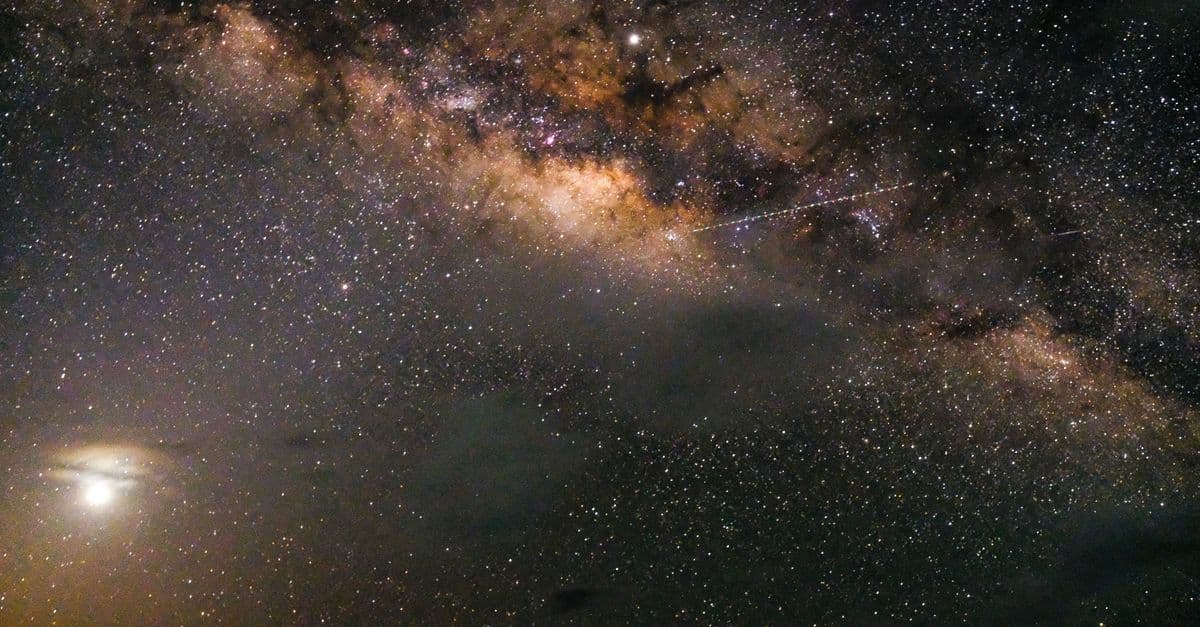
Photo: Steve A Johnson / Pexels
This is a thought experiment, not a forecast. If a civilization lasted long enough to see the last stars go out, what could it actually do about it? Physicists have worked on that question seriously since the 1970s, and the answers fall into a few categories: stretch the fuel supply, find new fuel, spend less per thought, or leave. Each one buys time. None, on current physics, buys forever. This article walks through the timeline of the long dark, then each survival strategy and the specific physical limit that eventually stops it.
The timeline of the long dark
The far future of an expanding universe was first mapped in detail by Fred Adams and Gregory Laughlin in a 1997 review, A Dying Universe, which covers the fate of planets, stars, galaxies, and the universe as a whole over timescales far beyond the current age. The numbers below come from that work and from Don Page's 1976 calculations of black hole lifetimes, as collected in Wikipedia's summary of the far future. All of these dates assume the laws of physics stay as we know them, which is itself a big assumption.
| Era | Approximate time from now | What happens |
|---|---|---|
| End of star formation | About 10^14 years (100 trillion) | The gas needed to make new stars runs out |
| Last red dwarfs | Over 10^13 years for a 0.08 solar-mass star | The longest-lived stars exhaust their fuel |
| Remnant era | After the last stars | Mostly white dwarfs (about 90 percent of the stellar remnant mass), plus neutron stars and black holes |
| Possible proton decay | At least 10^35 years if it happens at all | Experiments set a lower limit; no decay has been seen |
| Solar-mass black hole evaporates | About 2 × 10^67 years | Hawking radiation finishes the job |
| 10^11 solar-mass black hole evaporates | About 2 × 10^93 years | Page's 1976 estimate |
| Largest black holes (up to 10^14 solar masses) | About 10^109 to 10^110 years | Frautschi's 1982 estimate |
Two notes on reading that table. First, each number is a theoretical estimate, not a measurement, and the black hole lifetimes scale with the cube of mass, so a hundredfold heavier black hole lives a million times longer. Second, the era boundaries are fuzzy. Star formation does not stop on one date; it tapers off over trillions of years as galaxies use up their gas.
A red dwarf is a small, cool star that burns hydrogen very slowly. Adams and Laughlin find that stars near the minimum mass, about 0.08 solar masses, last more than 10 trillion years. That is roughly 1,000 times the Sun's lifetime. For readers who want the full sequence of how stars wind down, the last stars in the far future covers it, and how the universe ends compares the different possible endings.
Why entropy is the real enemy
People often say the universe will "run out of energy." That is not quite right, and the difference matters for every strategy below. Energy is conserved. What runs out is free energy, meaning energy that is organized in a way you can use.
A waterfall is a good analogy. The water at the bottom has just as much mass as the water at the top, but only the drop between them can turn a wheel. Once the pool is level, the water is all still there and none of it can do work. Heat death is the universe becoming a level pool: everything at the same temperature, nothing flowing from hot to cold, so no machine, brain, or computer can run.
That is the second law of thermodynamics at work, and it is why every plan to survive is really a plan about gradients. You need a hot place and a cold place, and the cold place has to stay colder than the hot one. Our explainers on entropy and why the universe keeps running down and on the broader laws of thermodynamics cover the basics.
A civilization does not need energy so much as it needs a temperature difference, and a temperature difference is exactly what a cooling universe is quietly erasing.
Strategy 1: Stretch the stars (stellar husbandry)
The first and most conservative idea is to make existing stars last longer. It sounds wild, but it follows from ordinary stellar physics.
A star's lifetime depends on how much fuel it has and how fast it burns it. Big stars burn far faster, which is why they die young. In many stars, the outer layers hold a lot of hydrogen that never reaches the core, because there is little mixing between layers. The fuel is there and goes unused.
Proposals for stellar husbandry use that fact in two ways. One is to remove mass, an idea usually called star lifting. According to the Wikipedia article on star lifting, the term was apparently coined by David Criswell, and it describes hypothetical processes by which a very advanced civilization could pull a large part of a star's matter away. Taking mass out lowers the pressure in the core and slows fusion, so the star burns dimmer and lasts longer. The other is to somehow mix the star's fuel, a notion that appears in the same literature but is much less worked out.
Lifting is the more developed idea, and it comes with sobering numbers. The same article estimates that using 10 percent of the Sun's power output could lift about 5.9 × 10^21 kg of material per year, which is roughly 8 percent of the Moon's mass. That sounds like a lot until you compare it with the Sun's mass of about 2 × 10^30 kg. By my arithmetic, removing most of the Sun at that rate would take a few hundred million years, and that is before you ask what to do with the lifted material.
What stellar husbandry could buy
Here is why the idea is attractive. Because a star near the minimum mass of 0.08 solar masses lasts more than 10^13 years, trimming a star toward that range trades brightness for longevity. A Sun-like star lifted to a fraction of its mass could, in principle, shine dimly for a vastly longer span.
The ceiling is firm, though. The stellar era is limited by how much hydrogen exists in the universe's stars, and even a perfectly efficient husbandry program would end by the time the gas is used up. The Wikipedia entry itself is tagged as needing better citations and notes that handling lifted material (storage, cooling, purification) "has not been extensively explored." So this is a concept, not an engineering plan.
For the energy side of this picture, the Dyson sphere is the usual way to imagine a civilization capturing a star's output.
Strategy 2: Mine the black holes
After the stars are gone, the biggest reservoirs of usable energy left are black holes. There are two very different ways to tap them.
The Penrose process
A spinning black hole is surrounded by a region called the ergosphere, where space itself is dragged around so strongly that nothing can stand still. In the Penrose process, you send an object into that region on a carefully chosen path, split it so one piece falls in with negative energy, and let the other piece escape with more energy than the original had. The black hole pays the difference out of its rotation.
This is real physics in the sense that it follows from the equations of general relativity. It has never been demonstrated, and the energy available is limited to the black hole's spin, which is a fraction of its mass. Once a black hole has been spun down, that source is gone.
Hawking radiation
The second way is slower. In 1974, Stephen Hawking showed that black holes emit thermal radiation (Hawking, "Black Hole Explosions?", Nature 248, 30-31, 1974). Bigger black holes are colder. Using the standard formula T = ħc³ / (8πGMk_B), a black hole of one solar mass has a temperature of only around 60 nanokelvin. That is far colder than the cosmic microwave background, now at about 2.7 K.
This leads to a counterintuitive point. A black hole colder than its surroundings absorbs more energy than it radiates, so stellar-mass black holes cannot begin to evaporate until the background cools below their temperature. The universe has to get colder first. Our article on Hawking radiation goes into the mechanism, and the piece comparing stellar and supermassive black holes explains how their masses differ.
Once evaporation begins, it is both extremely slow and extremely dim. A solar-mass black hole lasts about 2 × 10^67 years, and a 10^11 solar-mass black hole about 2 × 10^93 years. The power output is tiny for most of that time and then rises sharply at the very end. A civilization using black holes as a power plant would be sipping from a source that gives off almost nothing for an unimaginably long period.
The cost-benefit problem
A black hole used as a power source has to be fed or harvested, and each approach has a catch. Harvesting Hawking radiation means building collectors in a very cold environment where the radiation is almost undetectable. Feeding a black hole with matter and capturing the accretion light, as quasars do, works, but only while there is matter to feed it. You can read about this kind of engine in nature in what quasars are. In the far future, matter will be scarce and widely spread out, so the cost of gathering it climbs.
Strategy 3: Think slowly in the cold
If energy is the limiting resource, the obvious response is to use less of it per thought. This is where the physics gets elegant.
Landauer's limit
In 1961, Rolf Landauer of IBM argued that erasing one bit of information must release a minimum amount of heat, E = k_B T ln 2, where T is the temperature of the surroundings. At room temperature (300 K), that is about 2.9 × 10^-21 joules. The principle has been tested: Bérut and colleagues measured the heat from erasing a single bit in a 2012 Nature experiment, and later experiments have approached the bound (Wikipedia, Landauer's principle). As of 2012, ordinary computers used roughly a billion times more energy per operation than this limit, so there is plenty of room before it bites.
The crucial detail is that the limit is proportional to temperature. By my arithmetic, at 1 K the minimum cost per bit erased falls to about 10^-23 joules, and in a colder universe it falls further. Cold is a discount on computation. A cooler computer is not just a more efficient machine; it is a cheaper way to think.
Dyson's eternal intelligence
In 1979, the physicist Freeman Dyson published "Time without end: Physics and biology in an open universe" in Reviews of Modern Physics (volume 51, pages 447-460). He considered an open universe that expands forever and asked whether life could persist. His conclusion was that, if certain scaling assumptions about how biological systems and communication behave at low temperatures hold, life and communication could continue indefinitely on a finite store of energy.
The trick is a duty cycle. The civilization hibernates for longer and longer stretches, running its thoughts more slowly as the universe cools, so that its energy budget never runs out even though its operating time never ends. The total number of thoughts could in principle be infinite while the energy used stays finite. It is a clever result, and it depends on assumptions that later work has questioned.
The pushback: Krauss and Starkman
In 1999, Lawrence Krauss and Glenn Starkman published Life, the Universe, and Nothing (Astrophysical Journal, 2000). They argued that the evidence points to either a nonzero cosmological constant or an open universe. If dark energy dominates, distant sources fade from view. Even if the universe expands forever, they argue, a civilization's total conscious experience would be finite, though it could be extremely long. Assuming consciousness has a physical computational basis, they conclude that information processing, and therefore life, cannot continue indefinitely, unless some exotic and uncertain strong-gravity effects intervene.
In short, Dyson's plan needs the civilization to keep collecting energy and keep communicating, and an accelerating expansion cuts both off.
Wait for the cold: the aestivation idea
A more recent twist is that the best time to compute might be later, not now. In a 2017 paper, That is not dead which can eternal lie, Anders Sandberg, Stuart Armstrong, and Milan Cirkovic argue that a civilization wanting to maximize computation might rationally go dormant, or "aestivate," until the far future, when low temperatures make each operation cheaper. They estimate this could yield a multiplier of about 10^30 in achievable computation.
They also tie it to a famous puzzle. If advanced civilizations were sitting dormant, waiting for cooler eras, we would see little sign of them today, which could be one resolution of the Fermi paradox. The paper itself examines the assumptions behind the idea and how physics and observation limit it, so it is a hypothesis, not a conclusion.
The Bekenstein bound
One more limit applies. In 1981, Jacob Bekenstein derived that any region of given size and energy can hold only a finite amount of information: S ≤ 2πkRE / (ħc) (Wikipedia, Bekenstein bound). For a 1.5 kg object that fits in a sphere of radius 0.1 m, my calculation from that formula gives roughly 4 × 10^42 bits, vastly more than any real device stores. The bound matters because it says computation is limited not only by energy per operation but by how much you can pack into a space.
Dark energy changes the rules
Everything above leans on one assumption about dark energy: that it is a constant, a property of empty space that does not change. The famous consequence is an accelerating expansion that carries distant galaxies beyond a cosmic horizon, after which no signal can ever reach them. Krauss and Starkman describe that horizon as shrinking a civilization's accessible world. As summarized on the Wikipedia page, they calculated that in about 150 billion years all galaxies outside the Local Supercluster will pass behind it.
That means a civilization in the far future is effectively confined to its own gravitationally bound group of galaxies. It cannot collect energy from the rest of the cosmos and cannot talk to anyone beyond. Dyson's slow-communication strategy loses much of its force in that situation.
The assumption of constant dark energy is now under pressure. In March 2025, the DESI collaboration published its second data release of baryon acoustic oscillation measurements (DESI DR2 Results II). Combined with cosmic microwave background data, the results prefer a dark energy that changes over time at the 3.1 sigma level, and adding supernova datasets gives a range of 2.8 to 4.2 sigma depending on which sample is used. The authors note that the result stands unless an unknown systematic error affects one or more datasets. Independent groups dispute how robust it is, and a 3-sigma preference is not a discovery by the usual physics standard of 5 sigma.
Why does this matter for survival? If dark energy weakens, the universe could eventually stop accelerating and even recollapse, which would change what a civilization can do, for better or worse. For a primer, see our article on what dark energy is and why the universe is accelerating. The honest summary is that the long-term fate of the cosmos is less settled than it looked a decade ago.
Strategy 4: Leave the universe
If you cannot beat the heat death, you could try not to be there. The ideas here are the most speculative in this article, and nothing about them is established physics.
Baby universes. Some theories allow new universes to bud off from existing ones, for instance through black holes. If that were true and controllable, a civilization might seed a successor universe. No such process has been observed, and nobody has a mechanism for controlling it. Our overview of multiverse theory covers the status of these ideas.
Vacuum decay. The vacuum of our universe might be metastable, meaning a lower-energy state could exist, and a bubble of that state could spread at the speed of light and rewrite local physics. As a survival strategy, it is dangerous: a bubble of different physics would likely destroy anyone nearby. It appears here mainly as a warning that the stable-vacuum assumption is not proven.
Wormholes. A traversable wormhole would need exotic matter with negative energy density, and none has been found. Wormholes in physics remain solutions on paper.
Escape to another region of this universe. The most modest version is simply to move to a place with more fuel, and it runs into the horizon problem above. Our scenario article on humanity becoming an interstellar civilization explores the closer-range version of that question.
The strategies compared
| Strategy | What it gains | What stops it | Status |
|---|---|---|---|
| Stellar husbandry | Longer-lived stars, up to the red dwarf scale of over 10^13 years | Finite hydrogen; star lifting energy cost | Hypothetical concept |
| Penrose process | Extracts black hole spin energy | Spin is a limited fraction of mass | Follows from relativity; never demonstrated |
| Hawking radiation | Power until black holes evaporate | Extremely low output for most of the time | Theory, never directly observed |
| Cold computation | Cheaper operations at low temperature (Landauer limit scales with T) | Finite energy, dark energy horizons | Landauer's principle tested; strategy hypothetical |
| Aestivation | Up to a 10^30 multiplier in computation (Sandberg et al.) | Assumptions about motives and physics | Published hypothesis |
| Leaving the universe | Escape the endpoint | No known mechanism | Speculative |
What a civilization would still be up against
Even the best-case plan has to cope with several hard problems.
Matter may not last. If protons decay, ordinary matter, including the bodies and machines of any civilization, eventually dissolves. Experiments have not seen it, and the half-life must be at least about 10^35 years, but some theories predict it. A civilization built on something other than ordinary atoms would need a different design.
Hardware has to survive. Computation needs physical structure. Over the timescales discussed here, even tiny error rates add up, and repair requires energy and spare parts.
The numbers get absurd. The black hole evaporation times, 10^67 to 10^110 years, are so far beyond the current age of the universe, about 1.4 × 10^10 years, that they are not predictions in any ordinary sense. They are consequences of equations applied well beyond where anyone has tested them.
Physics could change. All of the above assumes our current laws hold unchanged. An unknown phenomenon, such as a different kind of dark energy, might make the whole analysis irrelevant.
If you want a sense of how old the universe already is, and how small that number looks next to these, our piece on how old the universe is and how we know gives the starting point.
A worked example: how many thoughts is one kilogram worth?
Numbers make the trade-offs easier to feel, so here is a rough budget. All of this is my own arithmetic from the formulas above, meant to show scale rather than to predict anything.
Suppose a civilization converted one kilogram of matter entirely into usable energy. Einstein's E = mc² gives about 9 × 10^16 joules. Now suppose it spends that energy erasing bits at the Landauer limit. At room temperature, with a cost of about 2.9 × 10^-21 joules per bit, the budget works out to roughly 3 × 10^37 bit erasures. At 1 K, where the cost drops to about 10^-23 joules, the same kilogram supports roughly 10^40. Each factor of ten in temperature is a factor of ten in thinking.
Now compare that with the Bekenstein bound. A 1.5 kg object inside a sphere of radius 0.1 m can encode at most about 4 × 10^42 bits. So even at 1 K, the energy budget, not the storage limit, would be the tighter constraint in this example. Pushing the temperature lower narrows the gap, which is exactly why cold matters so much in these proposals.
There are two caveats. First, real systems are nowhere near the ideal. As of 2012, computers used about a billion times more energy per operation than Landauer's limit, and cooling a machine to low temperatures itself costs energy, which the simple calculation ignores. Second, the universe cannot be cooled below its own background temperature for free. Today that background is about 2.7 K, and in an expanding universe it keeps falling, which is the reason waiting looks attractive in the aestivation argument.
How solid is the "heat death" date?
You will often see heat death quoted as "about 10^100 years." That number is a convenient round figure, not a measured date. The black hole calculations above give a spread: roughly 10^67 years for a solar-mass black hole, about 10^93 years for 10^11 solar masses, and up to 10^109 to 10^110 years for the largest conceivable ones. Which of these you call "the end" depends on whether you mean the last star, the last black hole, or the moment nothing at all can happen.
Several things could move the date or change the ending altogether.
- Dark energy may not be constant. The 2025 DESI results hint at change, though the evidence is disputed.
- Protons may decay. If they do, the lower limit on their half-life is at least 10^35 years, which would remove ordinary matter well before the black holes finish.
- The vacuum may be metastable. If so, a bubble of different physics could end things abruptly, on a timescale nobody can currently estimate.
- The physics may be incomplete. Black hole evaporation depends on combining quantum mechanics with gravity in a regime no experiment has probed.
None of this makes the basic picture wrong. It means the details beyond roughly the first 10^14 years are extrapolations, and responsible versions of the story say so.
Common misconceptions
"Heat death means the universe gets hot." It does the opposite. The word "heat" refers to energy being spread out evenly, not to high temperature. The late universe is extremely cold and extremely dilute.
"Black holes live forever." They do not, according to Hawking's 1974 result, but their lifetimes are so long that for practical purposes they outlast everything else.
"Entropy means disorder, so organized life is impossible." Life is organized now and entropy is rising now; both are true. Living things stay organized by exporting entropy to their surroundings. The question is whether any region will keep a gradient large enough to do that.
"A sufficiently advanced civilization can do anything." This is the weakest assumption in the literature. Physical limits like Landauer's principle and the Bekenstein bound apply to every civilization, however advanced.
"This is settled science." It is not. The well-tested parts are thermodynamics, relativity, and quantum field theory. The extrapolation to 10^100 years and to civilizational engineering is theoretical.
Frequently asked questions
Q: How long until the last stars go out? A: Star formation is expected to end around 10^14 years from now, or 100 trillion years, according to Adams and Laughlin. The longest-lived red dwarfs, near 0.08 solar masses, last more than 10^13 years, so the final stars would fade on a similar scale.
Q: Can a civilization survive heat death? A: Not forever, on current physics. Strategies such as stellar husbandry, black hole mining, and low-temperature computing could extend a civilization's lifetime enormously, but analyses such as Krauss and Starkman's conclude that information processing cannot go on indefinitely if dark energy dominates.
Q: What is Landauer's principle? A: It is the rule, proposed by Rolf Landauer in 1961, that erasing a bit of information must release at least k_B T ln 2 of heat. Since it scales with temperature, computing in a colder environment costs less energy per operation.
Q: How long do black holes last? A: Page's estimate is about 2 × 10^67 years for a solar-mass black hole and about 2 × 10^93 years for one of 10^11 solar masses. The largest could take up to 10^109 to 10^110 years. Lifetime scales with the cube of mass.
Q: Could dark energy save or doom a civilization? A: Both are possible. If dark energy is constant, accelerating expansion isolates regions of the universe. Recent DESI results hint that it may be weakening, at 2.8 to 4.2 sigma depending on supernova data, but the result is disputed and not yet a firm detection.
Q: Is the aestivation hypothesis proven? A: No. Sandberg, Armstrong, and Cirkovic propose that advanced civilizations might go dormant to compute more efficiently later, with a possible 10^30 gain. It is a hypothesis about alien behavior and has no direct evidence.
The takeaway
Every survival strategy in the literature converts a hard limit into a longer schedule. Reshaping stars pushes the dark age back by factors, black holes provide a dim power source for an absurdly long span, and cold computation makes each thought cheaper as the universe cools. What none of them removes is the underlying requirement for a temperature difference, and that difference is exactly what the expanding, cooling cosmos erodes. The most interesting result is not the escape plans but the arguments over them: Dyson saw an opening for indefinite life, Krauss and Starkman closed it, and new dark energy data are now reopening the question of what the end state really is. A civilization asking whether it can outlast the universe is, in the end, asking physics a question physics has only partly answered.
Sources
- Adams, F. C., and Laughlin, G. (1997). A Dying Universe: The Long Term Fate and Evolution of Astrophysical Objects.
- Krauss, L. M., and Starkman, G. D. (2000). Life, the Universe, and Nothing: Life and Death in an Ever-Expanding Universe. Astrophysical Journal.
- Sandberg, A., Armstrong, S., and Cirkovic, M. M. (2017). That is not dead which can eternal lie: the aestivation hypothesis for resolving Fermi's paradox.
- Dyson, F. J. (1979). Time without end: Physics and biology in an open universe. Reviews of Modern Physics, 51, 447-460.
- DESI Collaboration (2025). DESI DR2 Results II: Measurements of Baryon Acoustic Oscillations and Cosmological Constraints.
- Wikipedia, Future of an expanding universe (collects Page 1976, Frautschi 1982, and Adams and Laughlin 1997).
- Wikipedia, Hawking radiation
- Wikipedia, Landauer's principle
- Wikipedia, Bekenstein bound
- Wikipedia, Star lifting
Related Reading
Follow new articles
Add SciHub101 to your feed reader to see new science and technology stories.
About the Author
SciHub101 is an independent science and technology publication founded and edited by Buğra Sözeri, a software engineer and app developer based in Türkiye. AI tools assist with drafting and research. Source documentation in the existing archive is uneven, and articles are being reviewed and corrected. The Editorial Team byline identifies editorial responsibility; it does not certify specialist or independent human review. Where we compare products, anything built by our own team is labelled as such — see the editorial guidelines and About page for how corrections and disclosures work.
Related Articles
How Long Would It Take to Travel to the Nearest Star?
The nearest star, Proxima Centauri, is 4.24 light-years away. At Voyager 1's speed the trip would take roughly 75,000 years. Here is what faster propulsion concepts could achieve, and what stops them.
What Happens Inside a Black Hole — Beyond the Event Horizon
The event horizon is the point of no return — beyond it, not even light can escape. But what actually happens inside? The physics gets strange fast: time and space swap roles, the singularity may not be what we think, and quantum mechanics breaks everything.
How Will the Universe End? Heat Death, Big Rip, and Big Crunch Explained
The universe began 13.8 billion years ago and will end — eventually. But how? Heat death, the Big Rip, the Big Crunch, and vacuum decay are all on the table. Here's what physics actually predicts for the final fate of everything.
The Last Stars: What the Universe Looks Like in a Trillion Years
The Sun has about 5 billion years left. The last stars in the universe will burn for 10 trillion. After they go out, the cosmos enters an era so dark and cold that physics itself may eventually dissolve the matter we're made of.
What Are Quasars — The Brightest Objects in the Universe?
Quasars outshine entire galaxies from a region smaller than the solar system. They powered the early universe, shaped galaxy formation, and are now our most powerful probes of cosmic history. Here's what they actually are.

The Most Massive Objects in the Universe: Stars, Black Holes, and Cosmic Walls
Stephenson 2-18 is a star so large that if it replaced the Sun, its surface would engulf Saturn's orbit. The black hole at the center of galaxy TON 618 contains 66 billion solar masses — more than the combined mass of every star in the Milky Way. The Hercules-Corona Borealis Great Wall spans 10 billion light-years, a structure so enormous that its very existence challenges the standard cosmological model. Mass in the universe operates at scales that have no human analogy, and each record reveals a different physical constraint — or its violation.