How Will the Universe End? Heat Death, Big Rip, and Big Crunch Explained
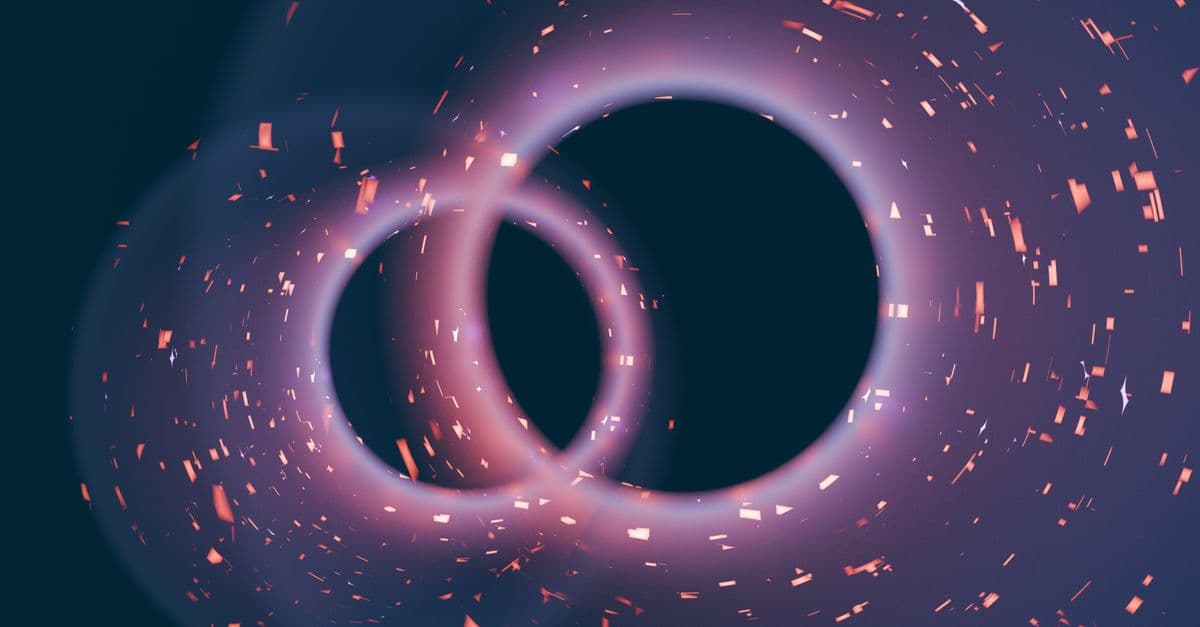
Photo: Adrien Olichon / Pexels
The universe began with the Big Bang 13.8 billion years ago, in a state of extraordinarily low entropy, high density and high temperature. Since then it has been expanding, cooling and increasing in entropy. Every star that burns, every planet that forms, every life that lives and dies is a step in a one-way journey away from that initial ordered state.
Where does that journey end?
Physics offers several answers, and which one is right depends mostly on a single unknown: how dark energy behaves over cosmic time. For about two decades the standard answer was simple — dark energy is a constant, so the universe ends in a slow, cold fade. Since April 2024 that answer has become less certain, because the Dark Energy Spectroscopic Instrument (DESI) has reported hints that dark energy may be changing. This article walks through each scenario, the evidence for and against it, and what the newest data do and do not tell us.
Key takeaways
- The most widely expected fate, given a constant dark energy, is heat death: a state of maximum entropy where no further work or structure is possible.
- If dark energy grows stronger over time (a "phantom" equation of state, w < −1), the Big Rip tears apart galaxies, planets and finally atoms.
- If dark energy weakens and eventually turns attractive, gravity could win and produce a Big Crunch.
- Vacuum decay is a wildcard tied to the measured Higgs boson and top quark masses; the best calculation puts the expected lifetime of our vacuum at around 10^139 years.
- DESI's 2024–25 results prefer a weakening dark energy at 2.8–4.2 sigma depending on the datasets combined — interesting, but short of the 5-sigma discovery standard.
The quantity that decides everything: dark energy
To see why the ending is still open, start with what drives the expansion. In 1998 two teams measuring distant Type Ia supernovae found that the expansion of the universe is speeding up, not slowing down. The cause was given a placeholder name, dark energy, and it now appears to make up roughly 70% of the universe's total energy content. Our explainer on dark matter and dark energy covers how those fractions are measured.
Cosmologists describe dark energy with an equation of state parameter, w: the ratio of its pressure to its energy density.
| Value of w | What it means | Long-term consequence |
|---|---|---|
| w = −1 exactly | Cosmological constant: energy density never changes as space expands | Accelerating expansion forever → heat death |
| −1 < w < −1/3 | "Quintessence": dark energy slowly dilutes | Expansion still accelerates, but less; still likely heat death unless w later rises further |
| w < −1 | "Phantom energy": density increases as space expands | Big Rip in finite time |
| Dark energy decays and turns negative | Effective attraction | Expansion stops and reverses → Big Crunch |
The simplest model, called ΛCDM (Lambda cold dark matter), assumes w = −1. It has fit an enormous range of observations — the cosmic microwave background, galaxy clustering, supernova distances — remarkably well. Every end scenario other than heat death requires w to differ from −1 or to change with time. That is exactly why the DESI measurements matter.
What DESI found in 2024 and 2025 — and why caution is warranted
DESI is a 5,000-fibre spectrograph on the Mayall Telescope at Kitt Peak, Arizona, run by an international collaboration led by Lawrence Berkeley National Laboratory. It measures the redshifts of millions of galaxies and quasars to map baryon acoustic oscillations (BAO) — a frozen-in pattern of sound waves from the early universe that acts as a standard ruler. By measuring that ruler at different distances, DESI reconstructs how fast the universe expanded at different epochs.
April 2024 (Data Release 1): The first-year analysis, built on a catalogue of 18.7 million objects with good redshifts (13.1 million galaxies, 1.6 million quasars and 4 million stars), was broadly consistent with ΛCDM but, when combined with supernova and CMB data, hinted that dark energy might be evolving.
March 19, 2025 (Data Release 2): The three-year analysis used more than twice the data, nearly 15 million galaxies and quasars in the BAO sample. According to Berkeley Lab, combining DESI with the CMB, weak lensing or different supernova compilations gives a preference for evolving dark energy of 2.8 to 4.2 sigma, depending on the combination. In the best-fitting models, dark energy was somewhat stronger in the past and is weakening today.
Several cautions belong next to that headline:
- No discovery yet. Physicists reserve "discovery" for 5 sigma. Berkeley Lab notes that a 3-sigma result has about a 0.3% chance of being a statistical fluke, and many 3-sigma results have faded with more data.
- DESI alone is consistent with ΛCDM. The tension appears when DESI is combined with other datasets — and the strength depends on which supernova compilation is used, which raises the possibility of systematic errors in one of them.
- The parameterisation is simple. The standard fits use a two-parameter form (w₀, wₐ). Some best fits imply w dipped below −1 in the past and rose above it later, which is hard to achieve with the simplest physical models, so theorists are debating what kind of field could do this.
- Blinding helps but is not a guarantee. The analysis was blinded to reduce unconscious bias, which strengthens the result's credibility but cannot rule out an unknown systematic.
For the end of the universe, the implication is subtle. A dark energy that is weakening today argues against the Big Rip (which needs strengthening) and opens a door — not a certainty — to scenarios in which expansion eventually slows. If dark energy keeps decaying and becomes negative, a recollapse becomes possible. If it merely settles at a lower positive value, the long-term fate is still a cold, expanding heat death, just on a different schedule. DESI's five-year dataset, plus results from ESA's Euclid mission and the Vera C. Rubin Observatory's supernova surveys, should sharpen the picture over the next few years.
The fate of stars: the far-future timeline
Before the end scenarios, it helps to see what happens over vast timescales in an ever-expanding universe even without a dramatic finale. The timeline below follows the framework laid out by Fred Adams and Gregory Laughlin in "A Dying Universe" (Reviews of Modern Physics, 1997), which divides the future into eras. All numbers are order-of-magnitude.
| Time from now | Event | Confidence |
|---|---|---|
| ~5 billion years | The Sun leaves the main sequence, becomes a red giant, then a white dwarf | High |
| ~10 billion years | Roughly 50% chance the Milky Way has merged with Andromeda (Sawala et al., Nature Astronomy, 2025) | Moderate |
| ~10^12–10^13 years | The longest-lived red dwarfs exhaust their hydrogen | Moderate |
| ~10^14 years | End of the "stelliferous era": star formation stops, the last stars fade | Moderate |
| ~10^15–10^20 years | Close encounters eject most planets and stellar remnants from galaxies | Model-dependent |
| > 10^34 years (if at all) | Proton decay, if it occurs, dissolves white dwarfs and neutron stars | Speculative |
| ~10^67 years | Stellar-mass black holes evaporate by Hawking radiation | Theory-based |
| ~10^100 years | The largest supermassive black holes evaporate | Theory-based |
A note on the galactic merger: for years the popular figure was a head-on collision with Andromeda in about 4.5 billion years. A 2025 study led by Till Sawala of the University of Helsinki, which included the pull of the Large Magellanic Cloud and the measurement uncertainties, put the odds of a merger in the next 10 billion years at roughly 50% and in the next 5 billion years at under 2%. Merging galaxies are common, as our piece on galactic cannibalism explains, but our own merger is no longer a sure thing.
The red-dwarf numbers deserve a word too. Small M-dwarf stars burn their fuel so slowly, and mix it so thoroughly through convection, that they can shine for trillions of years — far longer than the current age of the universe. That is one reason red dwarfs matter for life searches: they will be the last stars standing. The broader story of how the final generation of stars fades is told in The Last Stars.
Proton decay is marked "speculative" because it has never been seen. Some grand unified theories predict it, but the Super-Kamiokande detector in Japan has pushed the lower limit on the proton's lifetime in its most-studied decay channel beyond 10^34 years. If protons are completely stable, white dwarfs instead cool into cold "black dwarfs" that persist far longer.
After the last black hole evaporates, what is left? The answer depends on the scenario.
Scenario 1: Heat death (the leading expectation)
After the last black hole radiates its final particle, the universe contains only a diffuse, cold, nearly uniform sea of photons, neutrinos, electrons and positrons, spread across an unimaginably large volume. Everything approaches the same temperature, close to absolute zero. This is thermodynamic equilibrium on a cosmic scale.
The second law of thermodynamics says the total entropy of an isolated system never decreases. Heat death is the endpoint of that law: a state from which no further work can be extracted, no new structure built and no gradients exploited. Our explainer on entropy covers why the second law points in only one direction.
No gradients means no energy flow, no processes and no change on any macroscopic scale. This is not an explosion or a collapse. It is a silent, cold, effectively eternal equilibrium, sometimes called the "Big Freeze." Time does not stop, but nothing measurable happens to mark its passage.
Why an expanding universe never quite reaches zero
There is a subtlety. In a universe dominated by a cosmological constant, each observer is surrounded by a cosmological event horizon, a boundary beyond which light can never reach them. Much like a black hole horizon, it is expected to emit faint thermal radiation, the de Sitter temperature. For our universe that temperature is about 10^-30 kelvin. So the far future does not become perfectly cold; it settles at an extraordinarily small but non-zero temperature, set by the dark energy itself.
The timescale
Heat death is effectively complete after about 10^100 years, once the largest black holes are gone. The current age of the universe, 1.38 × 10^10 years, is a vanishingly small fraction of that. Written out, 10^100 is a 1 followed by a hundred zeros; the time elapsed so far would need about ninety more zeros to catch up.
Scenario 2: The Big Rip
The Big Rip was put forward by Robert Caldwell, Marc Kamionkowski and Nevin Weinberg in a 2003 paper titled "Phantom Energy and Cosmic Doomsday" (Physical Review Letters 91, 071301). It asks: what if w is below −1?
In that phantom regime, dark energy density rises as the universe expands. The repulsion grows without limit, and the scale factor of the universe becomes infinite in a finite time. Structures held together by any force are eventually overwhelmed, in order of how weakly bound they are:
- Galaxy clusters are dispersed first.
- The Milky Way is torn apart.
- The Solar System comes unbound.
- Earth is ripped apart once expansion beats its self-gravity and chemical bonds.
- Molecules, atoms, nuclei and nucleons are torn apart in the final instants.
- Spacetime ends in a singularity.
In the illustrative example in the 2003 paper, which assumed w = −1.5, the Big Rip arrives about 22 billion years in the future. In that example the Milky Way is destroyed roughly 60 million years before the end, the Solar System about three months before, Earth about 30 minutes before, and atoms in the last 10^-19 seconds.
How likely is this? Not very, on current evidence. Supernova and CMB data have long favoured w close to −1, and the DESI results actually point the opposite way — towards dark energy that is weakening today. The Big Rip is not ruled out, but if the DESI trend holds it becomes less plausible, not more.
Scenario 3: The Big Crunch
Before 1998 the Big Crunch was a serious contender for the default ending. The logic was straightforward: if the universe contained enough matter, gravity would eventually halt the expansion and reverse it. The deciding quantity was the density relative to a "critical density." Above it, the universe recollapses; below it, it expands forever.
The discovery of accelerating expansion changed that. With dark energy present, matter density alone no longer decides the fate. A crunch now requires dark energy itself to weaken and eventually become negative (attractive).
That is why the DESI hints reopened the conversation. Several theorists have shown that, if dark energy is a slowly evolving field and if its potential allows it to go negative, the expansion could stop and reverse tens of billions of years from now. These are model-dependent projections built on a 3–4-sigma hint, not predictions, and many plausible evolving-dark-energy models still expand forever.
If a crunch did happen, it would look like the Big Bang run in reverse, with one major difference. Expansion slows, halts and reverses. Galaxies draw together. The cosmic microwave background is blueshifted into visible light, then X-rays and gamma rays, until the sky is hotter than stellar surfaces and stars are cooked from the outside. Eventually everything is crushed towards extreme density.
The difference is entropy. The second law does not reverse, so a collapsing universe would be much more disordered than the smooth early universe described in our Big Bang explainer. Black holes would merge into ever larger ones, and the final state would be a lumpy, high-entropy collapse rather than a mirror image of the beginning.
Cyclic and bouncing universes
Would a crunch be followed by another bang? Some models propose exactly that. The ekpyrotic and cyclic models developed by Paul Steinhardt, Neil Turok and colleagues invoke collisions between higher-dimensional "branes." Roger Penrose's Conformal Cyclic Cosmology takes a different route: it argues that the infinitely expanded, massless heat-death state of one "aeon" is mathematically equivalent to the Big Bang of the next. These ideas are speculative. Penrose and collaborators have claimed to see faint signatures of previous aeons in the CMB, but other analyses have not confirmed them. Related ideas about many universes are discussed in our article on multiverse theory.
Scenario 4: Vacuum decay
This is the most unsettling scenario, because unlike the others it does not need trillions of years of buildup. In principle it could begin at any moment.
Quantum field theory describes the contents of the universe as excitations of fields. The vacuum is the lowest-energy configuration of those fields. The question is whether our vacuum is the true lowest state or a false vacuum: a state that is stable for practical purposes but sits higher than some other configuration, like a ball resting in a dip on a hillside rather than at the bottom of the valley.
If ours is a false vacuum, quantum mechanics allows it to tunnel, very rarely, to the lower state somewhere in space. Quantum tunnelling is the same effect that powers radioactive alpha decay, applied to the whole vacuum. The result would be a bubble of true vacuum expanding at nearly the speed of light. Inside it the masses of particles and the strengths of forces would be different; atoms and chemistry as we know them could not exist. Because the wall moves at light speed, no warning would arrive before it did.
What the Higgs mass says
The shape of the vacuum energy depends on the Higgs field, so the measured masses of the Higgs boson (about 125 GeV, discovered at CERN in 2012) and the top quark matter enormously. With current values, Standard Model calculations put our vacuum in the metastable zone — not absolutely stable, but extraordinarily long-lived.
In 2018 Anders Andreassen, William Frost and Matthew Schwartz at Harvard published what they described as the first complete calculation of the Standard Model vacuum's lifetime (Physical Review D 97). Their central estimate is about 10^139 years, with 95% confidence that it exceeds 10^58 years. The biggest uncertainty comes from the top quark mass. Two caveats are important: any new physics beyond the Standard Model — new particles, a modified Higgs sector, or the influence of gravity at very high energies — could stabilise the vacuum entirely, and the calculation is so sensitive to inputs that small revisions in the top quark mass shift the answer by many orders of magnitude.
Even taken at face value, 10^139 years is enormously longer than the 10^100-year heat-death timescale. On the Standard Model's own terms, the universe is far more likely to fade out than to be overwritten.
Comparing the scenarios
| Scenario | What has to be true | Approximate timescale | Status (as of 2025 data) |
|---|---|---|---|
| Heat death | Dark energy stays constant or stays positive | ~10^100 years to final equilibrium | Default expectation under ΛCDM |
| Big Rip | w < −1 (phantom energy) | ~22 billion years in the 2003 w = −1.5 example | Disfavoured; DESI trend points the other way |
| Big Crunch | Dark energy decays and turns attractive | Tens of billions of years in some models | Reopened as a possibility by DESI hints; unconfirmed |
| Vacuum decay | Our vacuum is metastable and nothing beyond the Standard Model stabilises it | Central estimate ~10^139 years | Possible in principle; extremely unlikely on human or stellar timescales |
| Cyclic / bounce | New physics connects one cycle to the next | Model-dependent | Speculative; no confirmed observational signature |
Common misconceptions
"The universe will end soon because expansion is accelerating." Acceleration only changes the very-long-term picture. On timescales relevant to Earth and the Sun, expansion has no effect on bound systems like the Solar System or the Milky Way.
"Heat death means the universe gets hot." The name refers to thermodynamic "heat" spread out evenly, not to high temperature. The heat-death universe is extremely cold.
"DESI proved dark energy is changing." It has not. It reported a statistically interesting preference, strongest in certain dataset combinations, that has not reached the 5-sigma level physicists use for discovery.
"The Large Hadron Collider could trigger vacuum decay." Cosmic rays have been striking the Moon, planets and stars at energies far above those of the LHC for billions of years. If such collisions could trigger decay, it would already have happened.
"Black holes last forever." According to Stephen Hawking's 1974 prediction, black holes slowly lose mass through quantum radiation. That process is far too weak to observe for astrophysical black holes, but it is the reason they are not the universe's final state. Our piece on Hawking radiation explains the mechanism.
The heat-death paradox: Boltzmann brains
In a heat-death universe, the story might not quite be over. Over sufficiently long times, random thermal or quantum fluctuations could briefly assemble any structure at all — even, in principle, a self-aware brain complete with false memories. This is the Boltzmann brain thought experiment, named after the 19th-century physicist Ludwig Boltzmann, who first considered whether our ordered world might itself be a fluctuation.
The puzzle is statistical. If a universe produces vastly more fluctuating observers than evolved ones over its whole history, a randomly chosen observer should expect to be a fluctuation. Yet our observations of a coherent, 13.8-billion-year-old cosmos suggest we are not. Many cosmologists treat this as a test: a model of the far future that predicts Boltzmann brains dominate is suspected to be missing something. Whether the de Sitter vacuum really produces such fluctuations is itself debated.
What would change our minds?
The open questions are measurable, which is what makes this a scientific topic rather than pure speculation.
- More BAO data. DESI's full five-year survey will test whether the evolving-dark-energy signal grows or fades.
- Independent supernova samples. The Vera C. Rubin Observatory's Legacy Survey of Space and Time is expected to discover huge numbers of Type Ia supernovae with consistent calibration, reducing the systematic errors behind current disagreements.
- Euclid and Roman. ESA's Euclid mission (launched 2023) and NASA's Nancy Grace Roman Space Telescope will map galaxy shapes and clustering over large volumes, measuring the growth of structure as a second test of dark energy.
- Particle physics. Better measurements of the top quark and Higgs masses at the LHC and future colliders sharpen the vacuum-stability question.
- Proton decay searches. Hyper-Kamiokande in Japan is designed to improve sensitivity to proton decay, testing grand unified theories that set the timescale for matter's long-term survival.
Frequently asked questions
Q: Which end scenario is most likely? A: Under the standard ΛCDM model, with dark energy as a constant, heat death is the expected outcome. DESI's 2024–25 results hint that dark energy may be weakening, which would make a Big Rip less likely and keep a Big Crunch possible, but the hint has not reached discovery-level confidence.
Q: When will the universe end? A: In the heat-death picture, the last stars fade around 10^14 years from now and the largest black holes evaporate around 10^100 years. A Big Rip or Big Crunch could come much sooner — tens of billions of years in some models — but only if dark energy behaves very differently from a constant.
Q: Will the universe actually last forever? A: In the heat-death scenario, space keeps existing and expanding indefinitely, but nothing of interest happens after equilibrium is reached. Whether that counts as "lasting forever" is partly a question of definition.
Q: Could the universe recycle itself? A: Cyclic models such as Penrose's Conformal Cyclic Cosmology and the ekpyrotic models propose repeated cycles. They are mathematically developed but lack confirmed observational evidence.
Q: Is the Big Crunch the opposite of the Big Bang? A: Only loosely. A crunch reverses expansion, but entropy keeps increasing, so a collapsing universe would be far lumpier and more disordered than the smooth early universe.
Q: Should we worry about vacuum decay? A: No. The best Standard Model estimate puts the expected lifetime of our vacuum around 10^139 years, and new physics could make it fully stable. Particle colliders cannot trigger it, because natural cosmic-ray collisions are far more energetic.
Q: What happens to information in heat death? A: This connects to the black hole information paradox. Hawking's original analysis suggested evaporation destroys information, conflicting with quantum mechanics. Calculations since 2019 that reproduce the "Page curve" suggest information escapes in the radiation, but the full mechanism is still debated.
The bottom line
The universe will most likely end not with a bang but with a long fade: stars burning out over trillions of years, black holes evaporating over 10^100 years, and a cold, uniform equilibrium after that. The alternatives — a Big Rip, a Big Crunch, vacuum decay or a cyclic rebirth — each require dark energy or the Higgs field to behave differently from the simplest assumptions. The DESI results of 2024 and 2025 are the first serious observational hint in two decades that the simplest assumption might be wrong. They are not yet a discovery, but the next few years of data from DESI, Euclid, Rubin and Roman should tell us whether the ending of the cosmic story needs rewriting.
Sources
- Berkeley Lab News Center, "New DESI Results Strengthen Hints That Dark Energy May Evolve" (19 March 2025): https://newscenter.lbl.gov/2025/03/19/new-desi-results-strengthen-hints-that-dark-energy-may-evolve/
- DESI Collaboration, DR2 results guide (19 March 2025): https://www.desi.lbl.gov/2025/03/19/desi-dr2-results-march-19-guide/
- Caldwell, Kamionkowski & Weinberg, "Phantom Energy and Cosmic Doomsday," Phys. Rev. Lett. 91, 071301 (2003): https://arxiv.org/abs/astro-ph/0302506
- Adams & Laughlin, "A Dying Universe," Rev. Mod. Phys. 69, 337 (1997): https://arxiv.org/abs/astro-ph/9701131
- University of Western Australia, report on Sawala et al. 2025 Milky Way–Andromeda study: https://www.uwa.edu.au/news/article/2025/june/astronomers-thought-the-milky-way-was-doomed-to-crash-into-andromeda
Related Reading
Follow new articles
Add SciHub101 to your feed reader to see new science and technology stories.
About the Author
SciHub101 is an independent science and technology publication founded and edited by Buğra Sözeri, a software engineer and app developer based in Türkiye. AI tools assist with drafting and research. Source documentation in the existing archive is uneven, and articles are being reviewed and corrected. The Editorial Team byline identifies editorial responsibility; it does not certify specialist or independent human review. Where we compare products, anything built by our own team is labelled as such — see the editorial guidelines and About page for how corrections and disclosures work.
Related Articles
Why the Moon Is More Valuable Than You Think
The Moon holds oxygen-rich soil, polar water ice, and a trace of helium-3. Here is what has actually been measured, what is still speculation, and why the rules for using it remain unsettled.
What Is the Kardashev Scale — And Could Humanity Ever Reach Type III?
In 1964, Soviet astronomer Nikolai Kardashev proposed ranking civilizations by the power they command. Type III means a whole galaxy. Humanity sits near 0.73, and the arithmetic of getting from here to Type III is humbling.
What If Cosmic Expansion Suddenly Reversed?
The universe has been expanding for 13.8 billion years, and dark energy is currently accelerating that expansion. If it suddenly reversed and the universe began contracting, we would be heading toward a 'Big Crunch' — but the change would be too slow for any individual to notice.
How Civilizations Could Survive the Death of the Universe
Stars will fade, black holes will evaporate, and entropy will win. Here is what physics says a very advanced civilization could do to stretch its lifetime, and where each strategy runs out.
The Hubble Constant Tension: A Crisis in Cosmology
Two carefully checked ways of measuring how fast the universe expands disagree by roughly 8 to 10 percent, a gap near 5 sigma. Either a hidden error remains, or standard cosmology is incomplete.
The Last Stars: What the Universe Looks Like in a Trillion Years
The Sun has about 5 billion years left. The last stars in the universe will burn for 10 trillion. After they go out, the cosmos enters an era so dark and cold that physics itself may eventually dissolve the matter we're made of.