Why the Moon Is More Valuable Than You Think
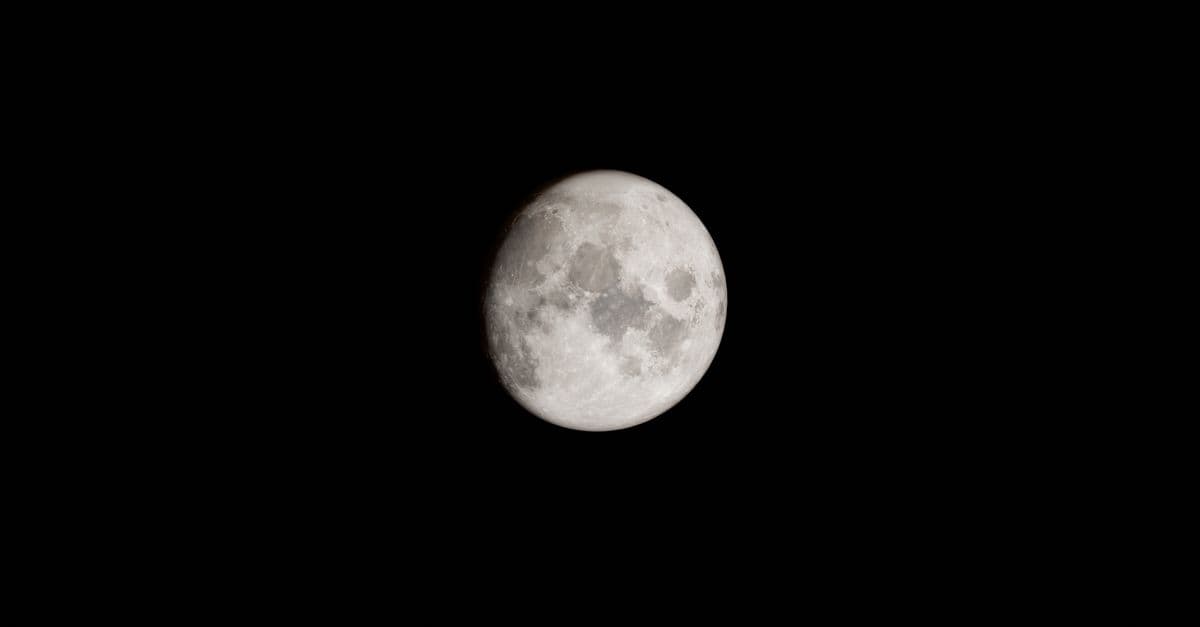
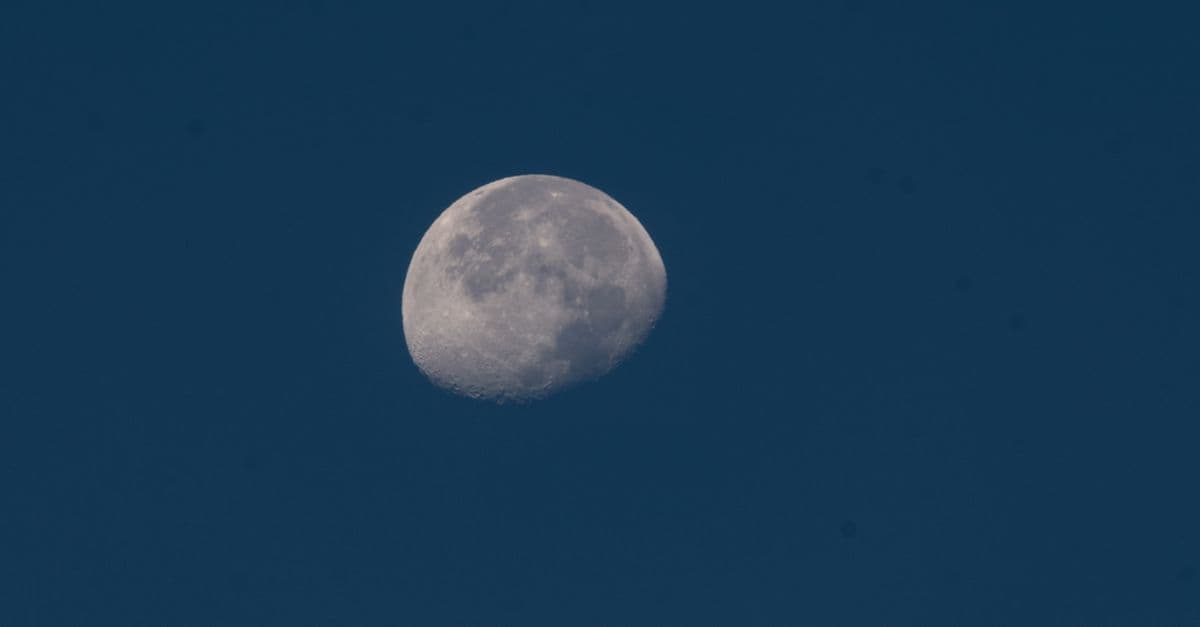
Photo: Zelch Csaba / Pexels
For most of human history the Moon was a calendar and a nightlight. Now space agencies and private companies treat it as a place with something to sell: oxygen bound into its soil, water ice in craters that never see sunlight, and a faint dusting of a rare helium isotope. Some of that value is measured and some is a business plan. This article separates the two, explains why the Moon's location matters more than its minerals, and describes the legal gap that every lunar miner would have to work inside.
Key takeaways
- Oxygen is the most abundant lunar resource. Lunar regolith (the loose, dusty surface layer) is roughly 45% oxygen by weight, locked inside minerals rather than present as a gas.
- Water ice exists at the poles, but not in the quantity or form once imagined. NASA's LCROSS impactor measured about 5.6% water by mass in one polar crater's debris plume, yet radar and imaging data suggest ice mixed into soil rather than thick frozen sheets.
- Helium-3 is real but sparse. Concentrations run from about 1.4 to 50 parts per billion, so more than 150 tonnes of regolith must be processed for a single gram.
- The rare-earth case is weak. Current evidence suggests rare-earth elements are less abundant on the Moon than on Earth.
- The law has a gap. The 1967 Outer Space Treaty bans national claims to the Moon but is ambiguous about extracting and owning resources, and the 2020 Artemis Accords, now signed by 77 countries, are one attempt to fill it.
Why the Moon's location is worth more than its minerals
Think of the Moon less as a mine and more as a harbor. A harbor town does not get rich on the stone it is built from. It gets rich because ships stop there to resupply. The Moon sits at the edge of Earth's gravity well, the energy barrier any spacecraft must climb to leave our planet, and almost everything bound for deeper space has to pay a steep fuel price to get out of that well first.
That price is the core economic fact. At SpaceX's listed Falcon 9 price of about $74 million and a payload of at least 17,400 to 22,800 kilograms to low Earth orbit, simple division gives roughly $3,200 to $4,300 per kilogram. These are list-price upper bounds from published vehicle specifications, not what every customer pays, but they show the scale. Anything that can be made on the Moon instead of lifted from Earth avoids that bill, which is the entire premise of lunar resource use.
For context on why those costs have dropped and where they might go, see why rocket launches cost so much. The short version is that reuse changed the arithmetic, but launching mass from Earth is still expensive enough that making propellant and oxygen elsewhere is attractive on paper.
The cheapest resource is the dirt itself
Before anyone digs for ice or isotopes, there is the regolith. Apollo astronauts brought home 842 pounds (382 kilograms) of lunar rock and soil across six landings, and those samples have been analyzed for more than half a century. Elemental oxygen makes up an estimated 45% of the regolith by weight, according to the summary of lunar resources that cites Larson (2012) and Bennett (2001).
That oxygen is not free. It is chemically bound with silicon, iron, aluminum, and other metals in minerals, much as rust binds oxygen to iron. Prying it loose takes energy, typically by heating the soil or running an electric current through it. The reward is large, though, because oxygen is most of the mass of a rocket's propellant and everything an astronaut breathes. The same processes leave behind metals as by-products. Our explainer on how electrolysis splits water covers the same basic chemistry in a simpler setting.
One mineral stands out. Ilmenite, an iron-titanium oxide, makes up roughly 5 to 8% of the regolith by weight in the cited estimates and is found especially in the high-titanium mare basalts (the dark volcanic plains) sampled by Apollo 11 and Apollo 17. Ilmenite has been targeted for extracting water and oxygen: heat it in a stream of hydrogen and it yields water vapor, which can then be split into hydrogen and oxygen. Titanium oxide averages about 3.9% of the surface in the maria and just 0.6% in the highlands, so where you land matters.
Roughly 45% of the Moon's soil by weight is oxygen. The hard part is not finding it. The hard part is getting it out.
Water ice: what has been measured and what has not
The case for lunar water has been built up slowly, from many instruments that did not always agree. The table summarizes the main detections that are documented in the lunar water record.
| Year | Mission or instrument | What it found |
|---|---|---|
| 1998-1999 | Lunar Prospector | Enhanced hydrogen at both poles, consistent with ice |
| 2008 | Chandrayaan-1 Moon Impact Probe | Water recorded in 650 mass spectra during descent toward Shackleton crater |
| 2009 | Chandrayaan-1 M3 instrument | Hydroxyl (a hydrogen-oxygen group) bound to soil over wide areas at low concentrations |
| 2009 | LCROSS | About 5.6 ± 2.9% water by mass in the plume from Cabeus crater |
| 2010 | Mini-SAR radar | More than 40 permanently dark north-pole craters estimated to hold about 600 million tonnes of ice |
| 2020 | SOFIA airborne telescope | Molecular water on the sunlit surface at about 100 to 400 parts per million |
The LCROSS result is the headline. On October 9, 2009, NASA's spent Centaur rocket stage struck the permanently shadowed floor of Cabeus crater near the south pole, and a following spacecraft flew through the debris. NASA reports the impact excavated roughly 350 metric tons of material and that the data showed the mission had uncovered water. The later, more careful analysis by Colaprete and colleagues in Science (2010) put the concentration at 5.6 ± 2.9% water by mass in the ejecta.
A frozen crater floor is easy to picture as a skating rink. The evidence points to something closer to wet gravel: LCROSS results suggest ice in small pieces, less than about 10 centimeters across, mixed into the regolith. At Shackleton crater, 13-centimeter-wavelength radar images show no evidence of thick ice deposits, and Japan's Kaguya orbiter found no significant exposed ice in 10-meter-per-pixel imaging. Interpretation of the radar data is still debated.
How cold is cold enough to keep ice?
Ice survives on the Moon only where the Sun never reaches. Shackleton crater is about 21 kilometers wide and 4.2 kilometers deep, and its floor stays near 88 to 90 kelvin (about minus 185 degrees Celsius). The cited estimates for permanently shadowed terrain total 31,059 square kilometers, with 13,361 in the north and 17,698 in the south. Small "micro cold traps" may add about 40,000 square kilometers, according to the SOFIA analysis.
The Moon has almost no tilt, so sunlight at the poles arrives at a grazing angle. Crater floors can sit in shade for billions of years while peaks on the rim catch light for 80 to 90% of each lunar orbit. Those "peaks of eternal light" matter because they are places where solar panels can run nearly continuously within a short distance of the ice. Our piece on lunar ice detection methods explains how orbiters sense hydrogen from above.
Why the uncertainty matters for money
Mining a thin, patchy resource in the dark at roughly 90 kelvin is a different problem from scooping up a frozen lake. Machinery stiffens, lubricants fail, and dust clings to everything. Several recent attempts to test the ground truth have not delivered. The PRIME-1 drill mission launched on February 26, 2025, but sample extraction and analysis were not completed, and the Lunar Trailblazer orbiter lost contact shortly after its February 2025 launch and was ended by NASA in July 2025. The honest summary is that water exists, its form varies from place to place, and no one has yet measured a mineable deposit on site.
Why polar water matters: the rocket-equation tax
Water matters because it is made of hydrogen and oxygen, and that pair is the combination burned in high-performance rocket engines. Split water with electricity and you have propellant. You also have breathable oxygen and, with a little more chemistry, drinking water.
To see why this is valuable, consider the rocket equation, the rule that a rocket must carry fuel to lift its own fuel. Every extra kilogram of propellant demands more propellant to lift it, so mass piles up exponentially. If a spacecraft can refuel at the Moon, it does not have to carry its return fuel all the way out and back, and the rocket that leaves Earth can be smaller. It is like a desert crossing where you can bury water caches along the route instead of carrying every liter from the start.
This is the logic behind the idea of a lunar "gas station," and it is why NASA's robotic landing program has favored the south pole, where most commissioned landers are headed. India's Chandrayaan-3 touched down on August 23, 2023, near 69.4 degrees south latitude, not at the pole itself but closer than any previous lander. Its thermal probe measured a surface peak of 355 kelvin on a sun-facing slope, a reminder that the same region can swing from baking to deep freeze within a short walk. For a closer look at the heavy-lift rocket that might make refueling pay off, see our explainer on SpaceX Starship.
Be careful with the gas-station picture, though. A station needs customers, and in 2026 there is no fleet of deep-space vehicles waiting to buy lunar propellant. The refueling case depends on demand that does not yet exist, plus mining and processing equipment that has never operated on the Moon. Plenty of terrestrial resource ventures have stalled on exactly that chicken-and-egg problem.
Helium-3: a scarce isotope with a complicated future
Helium-3 gets most of the Moon's headlines, so it deserves a careful look. It is a lighter cousin of ordinary helium, with two protons and one neutron instead of two of each. On Earth it is extremely scarce. Nearly all of it used in industry comes from the radioactive decay of tritium, which has a half-life of 12.3 years, and aging nuclear weapons stockpiles have been a main source. Smaller warhead inventories have reduced that supply.
The Moon has a different supply route. The solar wind (the stream of charged particles flowing from the Sun) has been implanting helium-3 into the lunar surface for billions of years, because the Moon has no magnetic field or thick atmosphere to deflect it. Wittenberg and colleagues estimated in 1992 that more than 1 million tons were deposited. The catch is dilution:
| Fact | Value | Source |
|---|---|---|
| Concentration in sunlit regolith | About 1.4 to 15 ppb | Crawford (2015), as summarized |
| Concentration in permanently shadowed regions | Up to 50 ppb | Cocks (2010), as summarized |
| Regolith to process for one gram | More than 150 tonnes | Helium-3 overview |
| Industrial demand, U.S., 2008 peak | About 70,000 liters (roughly 8 kg) | Helium-3 overview |
| Auction price range | About $100 to $2,000 per liter | Helium-3 overview |
Do the arithmetic and the scale becomes clear. Eight kilograms spread over 70,000 liters means about 0.11 grams per liter, so a single liter of helium-3 gas would take on the order of 17 tonnes of regolith, based on those figures. The Moon may hold a large total, but each gram sits inside an enormous volume of dirt that has to be dug, heated, and sorted.
Fusion fuel or cryogenic coolant?
The popular pitch is fusion. Deuterium-helium-3 fusion would, in principle, release most of its energy in charged particles instead of neutrons, which could reduce reactor-wall damage. But it needs much higher temperatures than deuterium-tritium fusion because of a higher electrical barrier between the nuclei. No reactor has demonstrated net energy from even the easier fuel at commercial scale; see our update on nuclear fusion in 2026 for where that stands. Critics such as Dwayne Day have called lunar helium-3 for fusion unproven, and that is a fair reading.
The nearer-term use is more modest. Helium-3 is a primary coolant for superconducting quantum computers, where dilution refrigerators mix helium-3 and helium-4 to reach a few thousandths of a kelvin. It also serves in neutron detectors, which absorb thermal neutrons strongly. Interlune, a U.S. startup that plans to harvest helium-3 on the Moon, states on its website that it has secured more than $500 million in binding purchase orders. That is the company's own claim and no volumes or delivery dates are public on the page, so treat it as a signal of interest, not a proven supply chain.
Rare earths and titanium: the weakest part of the story
Older pitches for lunar mining leaned on rare-earth elements, the 17 metals used in magnets, electric motors, and defense electronics. Rare earths do exist on the Moon, concentrated in a chemically distinctive rock type called KREEP (named for potassium, rare earth elements, and phosphorus), which also carries several parts per million of thorium. But current evidence suggests rare-earth elements are less abundant on the Moon than on Earth, which undercuts the idea of the Moon as a richer ore body.
The supply-chain argument is real on Earth. The International Energy Agency reports China is the dominant refiner for 19 of 20 energy-related minerals, with an average market share of around 70%. But that is a processing and politics problem on Earth, and shipping ore back from the Moon would be far costlier than building refineries elsewhere. Our analysis of asteroid mining economics applies the same test: a resource has to beat the cost of what you can already buy.
Titanium has a similar problem. High-titanium mare basalts exist, but titanium is not scarce on Earth, so lunar titanium makes sense mainly if it is used on the Moon, for example to build structures there. The strongest economic case for any lunar material is to use it in place, not export it.
The cost problem nobody can wave away
Return trips are hard. Apollo cost about $25.4 billion in 1973 dollars, roughly $257 billion in 2020 dollars, for six landings and 382 kilograms of samples. That is a political-prestige price, not a commercial one. Any business that depends on shipping lunar material back to Earth must beat what the same material costs from Earth.
The pattern most analysts point to is "in-situ resource utilization," or ISRU: use lunar resources on the Moon or in lunar orbit. The three main near-term markets would be breathable oxygen for crews, propellant for vehicles, and radiation shielding or construction material made from regolith. All of them are customers on the Moon, not on Earth. Our overview of the Apollo program's science legacy shows how much was learned from a tiny sample, and why returning more of it remains useful even when no mine is involved.
Projections of the broader space economy are large. A figure of $1.8 trillion by 2035 is often cited in commercial-space reports, as summarized here. Treat it cautiously: most space-economy revenue today comes from satellites in low Earth and geostationary orbit, including communications, imagery, and navigation, not from the Moon. Lunar activity is a small slice of a far larger market.
Who is going to the Moon, and when
The early race is about positioning rather than extraction. Four national programs matter most, and their schedules have already slipped more than once.
| Program | Key milestone | Date |
|---|---|---|
| NASA Artemis II | Crewed flyby: launched April 1, 2026, splashed down April 11, 2026; reached 406,771 km from Earth | 2026 |
| NASA Artemis III | Currently planned as a low-Earth-orbit docking test with commercial landers, not a landing | Late 2027 |
| NASA Artemis IV | First planned crewed landing | Early 2028 |
| China Chang'e-6 | Launched May 3, 2024; landed June 1, 2024; returned 1,935.3 g of far-side samples June 25, 2024 | 2024 |
| India Chandrayaan-3 | Landing near 69.4 degrees south | August 23, 2023 |
| China-Russia ILRS | Construction planned 2026-2035; use from 2036 | 2026-2036 |
These dates come from the Artemis program summary and the pages for Chang'e 6 and Chandrayaan-3, so check agency announcements for updates. Notably, the Artemis summary lists the Lunar Gateway, the planned crewed outpost in lunar orbit, as canceled. Older articles, including earlier versions of this one, described Gateway as central to Artemis, so that part of the strategy has changed. For the program's origins and goals, our primer on the Artemis program gives the background.
China's Chang'e-6 is a useful example of scientific value that is not about mining. It was the first mission to return samples from the Moon's far side, from the South Pole-Aitken basin, an enormous impact scar that may expose deep crustal or mantle rock. Learning how the Moon formed and evolved is a form of value that does not need a spreadsheet. Our explainer on how the Moon formed covers the giant-impact idea those samples help test.
The China-Russia International Lunar Research Station was announced through a memorandum of understanding on March 9, 2021, with a roadmap presented that June. Its listed partners include Venezuela, South Africa, Azerbaijan, Pakistan, Belarus, Egypt, Thailand, Nicaragua, Serbia, Kazakhstan, and Senegal. No station site has been formally designated in the cited summary. For readers following the competition, that is the important point: there are now two organized groupings of countries planning lunar infrastructure.
Who owns what: the legal gap
Nobody can own the Moon. Article II of the Outer Space Treaty, opened for signature on January 27, 1967, and in force since October 10, 1967, says celestial bodies cannot be appropriated by sovereignty claim, by use or occupation, or "by any other means." The treaty has 118 parties as of October 2025, according to the cited summary.
What it does not say clearly is whether taking material from the Moon counts as appropriation. The treaty also makes states responsible for their private companies: Article VI requires that non-governmental activities receive authorization and continuing supervision from the appropriate state. The result is a regime where a company can plan an operation but needs a government behind it.
Four instruments try to fill the gap, in different ways:
| Instrument | Date | What it says about resources | Status |
|---|---|---|---|
| Outer Space Treaty | 1967 | No sovereignty claims; silent on extraction | 118 parties (Oct 2025) |
| Moon Agreement | 1979 (in force 1984) | Article 11 declares lunar resources not subject to national appropriation and invokes "common heritage of mankind" | 17 parties as of May 2024; U.S., Russia, and China have not ratified |
| U.S. Commercial Space Launch Competitiveness Act | 2015 | Recognizes the right of U.S. citizens to own space resources they obtain | Several other countries, including Luxembourg and Japan, have adopted similar laws |
| Artemis Accords | 2020 | Includes principles on extracting resources safely and sustainably and on safety zones | 77 signatories as of October 19, 2026 |
The Moon Agreement is the most restrictive and the least adopted, which tells you how much appetite major spacefaring states have for sharing proceeds. The Artemis Accords are non-binding political commitments, with principles that include peaceful purposes, sharing plans and scientific data, preserving historic sites, and planning for debris. Their supporters argue that they set practical norms for coordination. Their critics argue that they let a group of like-minded countries set rules first.
A common comparison is fishing in international waters: you can own the fish you catch without owning the ocean. The analogy is imperfect. The Moon's good sites, such as a crater rim with near-constant sunlight beside a shadowed ice trap, are few and small, so claims about "safety zones" around operating equipment could look like territory in practice even if no one calls it that.
The cislunar economy: what is real
"Cislunar" means the space between Earth and the Moon, including lunar orbit and the surface. Most of the activity that exists today is not mining. It is scientific landers, communications and navigation experiments, and the contracts that fund them. NASA buys delivery services from private landers under its Commercial Lunar Payload Services program, and most of those robotic landings target the south pole.
Where might revenue come from first? Roughly in this order, according to most analyses:
- Government payments for delivering instruments and cargo to the surface.
- Communications and navigation services in lunar orbit and on the surface.
- Oxygen and water for crews, sold to space agencies that are already on site.
- Propellant for vehicles departing the Moon, if a deep-space fleet appears.
- High-value exports such as helium-3, which is the most speculative of all.
Most of the early demand comes from governments, which makes the Moon's economy partly a policy decision. A change in a budget or a canceled program, as with Gateway, can alter the market faster than any technical advance.
What people get wrong about lunar value
"The Moon is full of gold and platinum." There is no solid evidence of rich metal ore bodies of that kind. The documented minerals are ordinary rock-forming ones plus ilmenite.
"Helium-3 will solve the energy crisis." Helium-3 fusion would need a working fusion industry first, and the fuel is diluted to parts per billion. The nearer markets are cooling for quantum computers and neutron detection.
"Water means a lake." The measured form is ice crystals mixed into soil in some places and possibly purer ice crystals in others, not a standing reservoir.
"The Moon is unowned and free to grab." National claims are barred, but a company working there needs a sponsoring government under Article VI, and the practical rules are being written now.
"It's a race to the finish line." It is closer to a race to be first in the best few places. A site with continuous sunlight and nearby shadowed craters is limited, which is why the south pole draws so many missions. That scarcity, not the total resource, is what makes timing matter.
FAQ
Q: Is there really water on the Moon? A: Yes. NASA's LCROSS mission measured about 5.6 ± 2.9% water by mass in the debris plume from Cabeus crater in 2009, and SOFIA detected molecular water on the sunlit surface in 2020 at about 100 to 400 parts per million. What remains unknown is how much exists in mineable concentrations.
Q: How much helium-3 is on the Moon? A: One estimate from 1992 puts more than 1 million tons in the surface layer, but it is spread thin, at about 1.4 to 15 parts per billion in sunlit areas and up to 50 parts per billion in permanently shadowed regions. Recovering one gram would require processing more than 150 tonnes of regolith.
Q: Can a company own resources it mines on the Moon? A: The 1967 Outer Space Treaty bars sovereignty claims but is ambiguous on extraction. U.S. law since 2015 recognizes the right of American citizens to own space resources they obtain, and other countries have passed similar laws, but there is no binding global agreement on the question.
Q: Why do so many missions go to the Moon's south pole? A: The poles hold permanently shadowed craters that can trap ice, and nearby rim areas receive sunlight for 80 to 90% of each lunar orbit, which is useful for solar power. Most robotic landings under NASA's commercial program also target the south pole.
Q: Is NASA landing astronauts on the Moon again? A: Artemis II flew a crewed lunar flyby in April 2026. Artemis III is currently planned as a low-Earth-orbit docking test in late 2027 rather than a landing, and the first crewed landing is currently planned for early 2028. Schedules have changed repeatedly, so check NASA for the latest.
Q: Why not mine the Moon for rare earths? A: Current evidence suggests rare-earth elements are less abundant on the Moon than on Earth, and shipping ore back would be very expensive. Processing capacity on Earth, not ore, is the main supply bottleneck.
The takeaway
The Moon's most valuable features are the ones that cut the cost of doing things in space: oxygen in its soil, ice in its polar shadows, and a gravity well shallow enough to leave cheaply. Those resources serve customers who are already off Earth, which is why the near-term market is small and tied to government budgets. The glamorous export stories, from helium-3 fusion fuel to rare earths, rest on technology or geology that has not been demonstrated.
The deepest uncertainty is not scientific. It is institutional. Whoever builds the first working infrastructure near a polar ice trap will shape the practical norms for everyone who follows, and the legal framework is still being written by two competing groupings of countries. The Moon is valuable, but in the way a strategic port is valuable, not the way a gold mine is.
Sources
- NASA, LCROSS mission and Artemis Accords
- Colaprete et al., "Detection of Water in the LCROSS Ejecta Plume," Science 330 (2010), doi:10.1126/science.1186986
- International Energy Agency, Global Critical Minerals Outlook 2025
- Interlune, company website
- Reference summaries used for dates and figures: Lunar water, Lunar resources, Helium-3, Outer Space Treaty, Moon Agreement, Artemis program
Related Reading
- The Artemis Program Explained — NASA's Return to the Moon
- Why Does the Moon Change Shape? Lunar Phases Explained
- Why Rocket Launches Cost So Much — And How SpaceX Is Changing That
- How Space Suits Work — The $12 Million Garment Keeping Astronauts Alive
- What Is the Great Attractor? The Mysterious Force Pulling Our Galaxy
- Why the Moon Has So Many Craters
Follow new articles
Add SciHub101 to your feed reader to see new science and technology stories.
About the Author
SciHub101 is an independent science and technology publication founded and edited by Buğra Sözeri, a software engineer and app developer based in Türkiye. AI tools assist with drafting and research. Source documentation in the existing archive is uneven, and articles are being reviewed and corrected. The Editorial Team byline identifies editorial responsibility; it does not certify specialist or independent human review. Where we compare products, anything built by our own team is labelled as such — see the editorial guidelines and About page for how corrections and disclosures work.
Related Articles
Solar Storms and Space Weather Explained — The Threat From the Sun
Solar flares, coronal mass ejections, and geomagnetic storms are not science fiction. They have knocked out power grids before, and the next big one could be far worse.
How Will the Universe End? Heat Death, Big Rip, and Big Crunch Explained
The universe began 13.8 billion years ago and will end — eventually. But how? Heat death, the Big Rip, the Big Crunch, and vacuum decay are all on the table. Here's what physics actually predicts for the final fate of everything.
The Artemis Program Explained — NASA's Return to the Moon
Artemis is NASA's plan to return humans to the Moon — for the first time in over 50 years — and use it as a stepping stone to Mars. Here's how the program works and what's next.
Apollo 11: First Steps on the Moon and the Dawn of Lunar Science
July 20, 1969: Neil Armstrong and Buzz Aldrin landed on the Moon, returning 21.5 kg of lunar samples that revealed the Moon's geological history and transformed planetary science.
Apollo 17: The Last Moon Landing and Scientific Achievement
December 1972: Apollo 17 landed at Taurus-Littrow, returning 110.5 kg of samples and conducting 22 hours of moonwalking—the most scientifically productive lunar mission.
Lunar Ice Detection Methods: Finding Water on the Moon
Remote sensing and direct exploration revealed water ice at the Moon's poles—a discovery changing lunar science and enabling future settlement through resource utilization.