The Artemis Program Explained — NASA's Return to the Moon
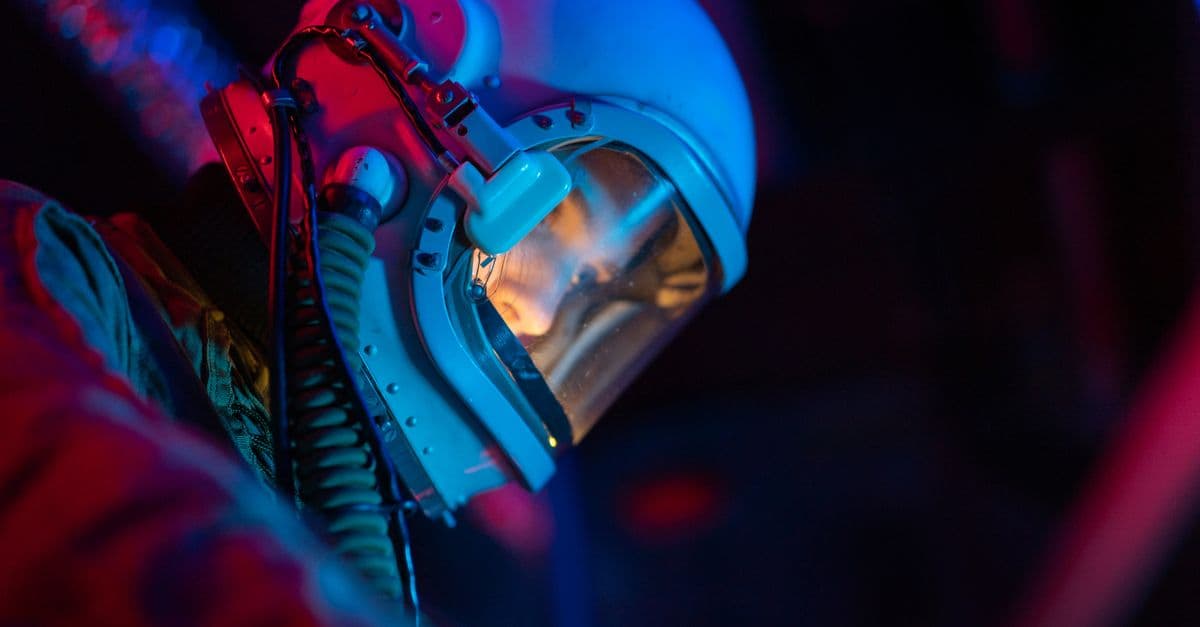
Photo: Mikhail Nilov / Pexels
After the Apollo missions ended in 1972, no human walked on the Moon for over 50 years. NASA's Artemis program is set to change that. Named after the Greek goddess of the Moon (and Apollo's twin sister), Artemis aims to land the first woman and the next man on the lunar surface, build a permanent presence around the Moon, and use that experience as a stepping stone to Mars. Here's how the program works and where it stands.
Key takeaways
- Artemis is NASA's plan to return humans to the Moon, beginning with Artemis 1 (uncrewed, 2022) and progressing to crewed missions.
- The architecture uses NASA's SLS rocket, the Orion spacecraft, the Lunar Gateway space station, and SpaceX's Starship as the lander.
- Artemis 3 will be the first crewed lunar landing since Apollo 17 in 1972.
- The long-term goal is sustained lunar presence and eventual human Mars exploration.
- The program is a major international collaboration involving the European Space Agency, JAXA (Japan), and the Canadian Space Agency.
Why go back to the Moon?
Several reasons:
Scientific
The lunar south pole, where Artemis missions are heading, contains permanently shadowed craters with water ice preserved for billions of years. Studying it could tell us about early Solar System chemistry, Earth's history, and resources for future missions.
Strategic
The Moon is a stepping stone to Mars. Crews need to learn how to live and work off-world; the Moon is much more accessible for testing systems than Mars.
International cooperation
Artemis is a coalition program with major partners. The Artemis Accords — an international framework for peaceful lunar exploration — has been signed by over 50 nations.
Geopolitical
China and Russia are jointly planning a lunar research station. The US is racing to maintain technological leadership in deep space.
Economic
Lunar resources (water, minerals, rare elements) could support future space industry. Companies are positioning for a lunar economy.
The major components
SLS — Space Launch System
NASA's heavy-lift rocket. Each launch uses a 98-metre-tall vehicle producing 4,000 tonnes of thrust at liftoff. SLS evolved from Space Shuttle technology and shares major components with that program.
Each SLS costs roughly $4 billion per launch. Critics argue it's too expensive; supporters note it's NASA-owned, NASA-operated, and immediately available.
Orion spacecraft
The crew capsule, about 5 metres in diameter, designed for lunar missions. It carries up to 4 astronauts on missions lasting up to 21 days. Built by Lockheed Martin, with the European Service Module (life support, propulsion) provided by ESA.
Orion launched on Artemis 1 (uncrewed test flight, 2022) and successfully returned. Future missions will carry crews.
Lunar Gateway
A small space station in lunar orbit, planned for completion in the 2030s. About one-tenth the size of the ISS, with crew quarters, laboratories, and docking ports. It serves as a transfer point between Earth-launched vehicles and lunar landers.
International partners are contributing modules:
- ESA → habitat module, refuelling
- JAXA → habitation
- Canada → robotic arm (similar to ISS Canadarm)
Lunar lander — SpaceX Starship HLS
NASA selected SpaceX's modified Starship as the Human Landing System (HLS) — the vehicle that takes astronauts from lunar orbit to the surface and back. A second contractor (Blue Origin) was selected for later missions.
Starship HLS is much larger than Apollo's lunar module — capable of carrying far more cargo and crew. The trade-off: it requires orbital refuelling before lunar descent, a complex logistical process.
Lunar surface infrastructure
Future Artemis missions will deploy:
- Pressurised rovers
- Habitats for extended surface stays
- Power systems
- Communication relays
- ISRU (in-situ resource utilisation) experiments
The mission timeline
Artemis 1 (2022) — completed
Uncrewed test flight. SLS launched Orion on a 25-day journey around the Moon and back. Tested heat shield, navigation, life support. Considered a major success.
Artemis 2 (planned)
First crewed mission. 4 astronauts will fly Orion around the Moon (no landing) — the first humans beyond low Earth orbit since 1972.
Artemis 3 (planned)
First crewed lunar landing. Crew will travel to lunar orbit on Orion, transfer to Starship HLS, descend to the lunar south pole, and explore for ~6.5 days before returning.
Artemis 4 onwards
Sustained presence. Missions to deploy Gateway components, expand surface infrastructure, and conduct extensive science.
2030s+
Mars-relevant testing. Lunar base operations. Eventual transition to crewed Mars missions.
Why the south pole?
Apollo landings were near the lunar equator. Artemis is targeting the south pole because:
- Water ice in permanently shadowed craters can be mined for drinking water, oxygen, and rocket propellant.
- Continuous sunlight on certain ridges (peaks of "eternal light") provides reliable solar power.
- Cooler conditions make some equipment easier to operate.
- Scientific interest — south pole regions have been less explored.
How Artemis compares to Apollo
| Feature | Apollo (1969-72) | Artemis (2020s+) |
|---|---|---|
| Landings | 6 (12 astronauts walked on Moon) | Multiple planned, sustained |
| Lunar surface duration | Up to 3 days | Up to ~6.5 days initially |
| Crew composition | All white men | Diverse, including first woman |
| Architecture | One-shot mission | Sustained presence |
| Lander | Lunar Module (small) | Starship HLS (huge) |
| Launch vehicle | Saturn V | SLS + Starship |
| Goal | Geopolitical / science | Science + economic + Mars stepping stone |
Apollo was a sprint. Artemis is meant to be a marathon.
Challenges
The program has faced significant issues:
Cost and schedule
SLS development cost over $20 billion and took longer than planned. The whole program has slipped multiple years.
Coordination
Multiple contractors, multiple international partners, and multiple new vehicles all have to work together. Delays in one part cascade.
Starship dependency
Artemis 3 depends on Starship being ready, which depends on SpaceX's own development timeline.
Political support
NASA's budget depends on Congressional appropriations. Programs can be cancelled or scaled back with administration changes.
Spacesuit development
New lunar surface spacesuits are being developed by Axiom Space and Collins Aerospace. Late delivery could delay missions.
Lunar Water Ice and In-Situ Resource Utilization (ISRU)
The scientific prize at the lunar south pole is water ice—billions of tons preserved in permanently shadowed craters. Unlike the lunar equator (where Apollo landed), the south pole never sees sunlight in deep craters, meaning water ice sublimated early in the Moon's history is preserved. Neutron signatures from orbital spacecraft (NASA's LRO, India's Chandrayaan) confirm water-ice concentrations of 1–30% by mass in south-polar regolith, with some estimates suggesting 100 million to 1 billion tons.
Why does this matter? Water is not just a life-support consumable. Electrolysis splits H₂O into hydrogen and oxygen — both are rocket propellant. A lunar base that manufactures propellant in-situ (ISRU) can refuel rockets without Earth-launched resupply. This transforms the Moon from a destination to a logistics hub. Future deep-space missions could launch from Earth with minimal fuel, refuel at the Moon, and proceed to Mars or beyond.
Artemis 3 will test initial ISRU. Later missions will deploy water-prospecting rovers, drilling equipment, and prototype electrolysis units. By the 2030s, if successful, the first small-scale lunar propellant production facility could be operational.
Source: NASA Lunar Reconnaissance Orbiter (LRO) datasets (2009–2026) — water ice maps at south pole showing concentrated deposits >1% by mass, accessible in near-surface regolith.
International Partnership and the Artemis Accords
Artemis is not a US-only program. It represents a reorientation of spacefaring nations toward shared lunar goals, codified in the Artemis Accords — a set of principles signed by 50+ nations (as of 2026) governing peaceful lunar exploration.
Key partners and contributions:
- ESA (European Space Agency): Orion Service Module (life support, propulsion), habitation modules for Lunar Gateway, in-situ resource experiments
- JAXA (Japan): Habitation modules, life-support research, resource utilization experiments
- CSA (Canadian Space Agency): Lunar Gateway robotic arm (Canadarm successor)
- UKSA (UK Space Agency), ASA (Australian Space Agency), and others: Scientific instruments, rovers, communications systems
This multilateral approach distributes costs and risks. It also ensures that if the US faces budget pressures, partner nations can advocate for continued funding.
The Artemis Accords establish principles:
- Peaceful use of the Moon (military activity forbidden)
- Safety zones around landing sites and infrastructure (implicit resource rights without formal "ownership")
- Debris mitigation and long-term sustainability norms
- Transparency in lunar activities
The Accords do not resolve all legal ambiguities—commercial mining rights, for instance, remain partly undefined—but they signal consensus that the Moon is a shared resource with norms-based governance.
Source: NASA Artemis Accords (2020 onwards) — diplomatic framework signed by 54 nations as of August 2026, published at NASA.gov.
Spacesuit Technology and Human Factors
Apollo astronauts wore spacesuits developed in the 1960s—essentially pressurized suits with limited mobility. Modern Artemis extravehicular activity (EVA) suits are far more capable but present new challenges.
xEMU (Extravehicular Mobility Unit) for Artemis, being developed by NASA with contractors Axiom Space and Collins Aerospace, features:
- Advanced materials: Fabric layers providing pressure, insulation, and micrometeorite protection
- Integrated heating and cooling: The lunar south pole can reach –230°C in shadow and +120°C in sunlight; suits must manage extreme temperature swings
- Improved mobility: Joints allowing greater range of motion for science and maintenance work
- Heads-up displays (HUD): Data overlays visible inside the helmet
- Enhanced gloves: Fine motor control for instrument operation while pressure-suited
The old Apollo suits weighed ~82 kg on Earth (13 kg on the Moon at 1/6 gravity). Artemis xEMU weighs ~135 kg on Earth (22.5 kg on the Moon), but offers far greater capability—critical for 6–7 day surface missions vs. Apollo's 3-day limit.
Timeline: xEMU development has faced delays; Artemis 3 spacesuit readiness is a critical path item.
Radiation Shielding and Crew Safety in Deep Space
Apollo missions lasted a few days and never ventured far from Earth's magnetic field. Artemis missions to the Moon and eventual Mars missions face severe radiation hazards:
- Van Allen belts (Earth's magnetosphere): Charged particles concentrated in toroidal regions. Apollo passed through these; Artemis will too, accumulating roughly 1–2 millisieverts (mSv) during transit.
- Galactic cosmic rays: Beyond Earth's magnetosphere, high-energy protons and heavy ions continuously bombard spacecraft. A 6-month Artemis mission to the Moon and back accumulates ~50–100 mSv from cosmic rays—significant but manageable.
- Solar particle events (SPEs): Occasional solar flares eject energetic protons, potentially delivering lethal doses in minutes without shielding.
Orion uses a combination:
- Mass shielding: Aluminum hull, water tanks, polyethylene layers
- Passive shielding: Arranging denser materials (water, equipment) to absorb radiation
- Active magnetic shielding (under study): Superconducting magnets creating artificial magnetic fields—promising but not yet operational
Long-term lunar base and Mars missions will require:
- Underground habitat modules: Covering facilities with regolith reduces dose by 90%+
- Storm shelter bunkers: Rapid-access reinforced spaces for SPE events
- Pharmaceutical countermeasures: Antioxidants, gene therapy (under investigation) to mitigate radiation-induced cancer risk
Career exposure limits (per NASA) are ~1000 mSv lifetime; a 3-year Mars mission approaches this limit even with shielding.
Source: NASA Human Research Program (2023) — "Evidence Book: Risk of Radiation Carcinogenesis," comprehensive review of space radiation effects and mitigation strategies.
Long-Term Lunar Infrastructure Vision (Post-Artemis 3)
If Artemis 3 succeeds, NASA envisions evolving lunar presence through the 2030s and 2040s:
2026–2030: Foundation
- Artemis 3-4: Initial landings and south polar reconnaissance
- Deploy power systems (solar + nuclear thermal)
- Establish Gateway as functioning orbital station
- Test ISRU (water extraction) at small scale
2030–2040: Expansion
- Artemis 5-6+: Regular crewed missions with longer surface stays (weeks)
- Build pressurized habitats for extended occupancy
- Ramp up ISRU production (hundreds of kg/day of propellant)
- Conduct extensive geological and resource surveys
- Deploy communication and navigation infrastructure
2040+: Utilization
- Lunar base as operational spaceport and research hub
- Commercial lunar tourism and resource extraction
- Training ground for Mars crewed missions
- International lunar research stations
This vision requires sustained funding (~$8–10 billion/year, as budgeted) and political will across multiple administrations. Any major budget cut or policy shift could drastically alter the timeline.
Global Space Race Context: China, Russia, and Private Industry
Artemis operates in a complex geopolitical and commercial landscape.
China's CNSA:
- 2022: Tianwen-1 Mars rover (operational)
- 2026: Chang'e-7 lunar south pole mission (uncrewed)
- 2028: Chang'e-8 surface station prototype
- ~2030: Crewed landing planned (possibly same south polar region as Artemis)
Russia's Lunar Ambitions:
- Luna program: Restarting crewed lunar missions (post-Soviet era, Russia focused on ISS)
- Partnership: Russia + China = ILRS (International Lunar Research Station) alternative to Artemis
- Political complication: US-Russia cooperation stalled due to geopolitical tensions (Ukraine 2022+)
Private Lunar Industry:
- SpaceX: Starship for Artemis and eventual independent lunar missions
- Blue Origin: Blue Moon lander (backup for Artemis), lunar gateway contributions
- Axiom Space: Commercial space station modules
- Intuitive Machines, Astrobotic: Cargo landers for landing science instruments
The Moon is becoming crowded—by 2035, multiple national programs and commercial entities will likely have active operations. This raises resource-sharing, debris, and safety concerns, but also accelerates capability development.
Budget Reality and Political Risk
The Artemis program's estimated cost through Artemis 3 is $93+ billion (NASA, 2021 estimate; actual may be higher). Ongoing operations estimated at $8–10 billion annually. For context:
- Apollo cost ~$280 billion (2024 dollars adjusted) for 1969–1972
- ISS costs ~$150 billion over 25 years
- Artemis is mid-scale in cost but spread over a longer timeframe
Political risks:
- Congressional budget battles: NASA funding competes with other priorities; a new administration could prioritize differently
- Technology delays: If SLS or Starship slip, costs balloon and support erodes
- International partner fatigue: Partners may reduce contributions if benefits aren't clear
- Public perception: Artemis lacks Apollo's geopolitical urgency; sustaining public support for 10–15 year timescale is difficult
Mitigation factors:
- Bipartisan support for Artemis has remained stable
- NASA has diversified contractors (SLS + SpaceX), reducing single-point-of-failure
- International partners committed multi-year funding
- Early missions will demonstrate tangible progress
What about China?
China's CNSA has a parallel program:
- 2022: Tianwen-1 Mars rover (operational)
- 2026: Chang'e-7 lunar south pole mission
- 2028: Chang'e-8 establishing surface station prototype
- ~2030: First crewed lunar mission planned
Combined with Russia's stated lunar ambitions, this is the closest the Moon has come to Cold War-style geopolitical competition since Apollo. However, unlike Apollo-era antagonism, today's landscape includes private companies (SpaceX, Blue Origin), international partnerships (ESA, JAXA, Canada), and shared scientific interest—making the dynamic more complex than pure geopolitical rivalry.
What This Means
Artemis is humanity's transition from brief, exceptional missions (Apollo 1969–1972) to sustained presence beyond Earth. It is geopolitical (US demonstrating space leadership), scientific (water ice, geology), economic (future lunar industry), and foundational for Mars. Success on the Moon between 2026–2030 will determine whether humans reach Mars by 2040 or remain confined to Earth-Moon space.
Budget Realities and Program Risk
Artemis has not been a smooth ride financially. NASA's Office of Inspector General has repeatedly flagged the Space Launch System (SLS) and Orion capsule as running billions over original projections, with a single SLS launch now estimated at over $2 billion when development costs are amortized across the program's flight cadence. That price tag has become the central argument for shifting more of the architecture toward commercial partners: SpaceX's Starship HLS and Blue Origin's Blue Moon lander are both funded on fixed-price contracts specifically because NASA wants predictable costs after the SLS experience.
The dependency on Starship HLS is itself a major schedule risk. Before Starship can land astronauts, SpaceX must first demonstrate orbital propellant transfer — filling one Starship's tanks from another in orbit — a technique that has never been attempted at this scale by any space program. Early uncrewed test flights have made progress on reentry and booster catch maneuvers, but the orbital refueling demonstration remains pending, and NASA's own schedule assessments have pushed the crewed landing date back multiple times as a result. Congress has taken note: some members have pushed for a second, parallel lander competition to reduce reliance on a single contractor, which is part of why Blue Origin's Blue Moon MK1 lander was added to the program.
Program risk isn't just financial. The Orion capsule's heat shield experienced unexpected char loss and cracking during the uncrewed Artemis I reentry in 2022, a problem NASA engineers spent nearly two years investigating before clearing Orion for crewed flight. The fix involved adjusting the capsule's reentry trajectory rather than redesigning the heat shield itself — a reminder that even well-tested Apollo-heritage technology behaves differently at the higher reentry velocities a lunar return trajectory requires compared to a low-Earth-orbit return.
Source: NASA Office of Inspector General (2023) "NASA's Management of the Artemis Missions" — details SLS/Orion cost growth and schedule risk. Source: NASA (2024) "Artemis I Heat Shield Investigation" — technical findings on Orion's char loss anomaly and reentry trajectory adjustment.
Frequently Asked Questions
Q: When will the first crewed Artemis landing happen?
A: Artemis 3 is the planned first crewed lunar landing. Original target was 2024; delays in SLS development and Starship testing pushed it to 2026 or later. The exact date depends on continued progress and no new major delays.
Q: Will Artemis truly lead to crewed Mars missions?
A: Artemis is intended as a stepping stone—testing life support, radiation shielding, power systems, and in-situ resource utilization that Mars will require. Whether it actually leads to Mars depends on sustained funding, international cooperation, and technology development through the 2030s-2040s.
Q: How much does Artemis cost, and is it worth it?
A: Estimated $93+ billion through 2025, roughly $8–10 billion annually ongoing. Critics argue robots could do much of the science cheaper. Supporters emphasize inspiration, technology spinoffs (materials, robots, medicine), and the strategic importance of human spacefaring capability.
Q: Who owns the Moon if multiple countries land there?
A: International law (Outer Space Treaty 1967) prohibits national appropriation, but is silent on commercial exploitation. The Artemis Accords (signed by 50+ nations) establish norms for resource use and safety, but the legal framework for commercial mining and property rights is still evolving.
Q: What if SpaceX Starship fails as the lunar lander?
A: NASA funded Blue Origin's Blue Moon lander as a backup Human Landing System for later Artemis missions. If Starship fails, Blue Moon could carry forward lunar landings. Multiple contractors reduce single-point-of-failure risk, following commercial spaceflight lessons.
Q: How does Artemis compare to China's lunar program?
A: China plans crewed landings ~2030, after Artemis. The combined US-China Moon presence mirrors early Cold War space competition (1960s). Cooperation between the programs is minimal; both are pursuing national capability and geopolitical prestige alongside science.
The bottom line
The Artemis program is humanity's serious return to the Moon — not as a brief Apollo-style sprint, but as the foundation for sustained lunar presence and, eventually, Mars exploration. It combines NASA's heavy-lift capability with private innovation (Starship), international partnerships, and a long-term vision. The first crewed landing is delayed but increasingly imminent. Whether Artemis leads to a true space-faring civilisation or remains a flagship program of the early 21st century is one of the most important open questions in spaceflight.
Read next:
Follow new articles
Add SciHub101 to your feed reader to see new science and technology stories.
About the Author
SciHub101 is an independent science and technology publication founded and edited by Buğra Sözeri, a software engineer and app developer based in Türkiye. AI tools assist with drafting and research. Source documentation in the existing archive is uneven, and articles are being reviewed and corrected. The Editorial Team byline identifies editorial responsibility; it does not certify specialist or independent human review. Where we compare products, anything built by our own team is labelled as such — see the editorial guidelines and About page for how corrections and disclosures work.
Related Articles
Kepler's Three Laws: Why Planets Speed Up Near the Sun
Kepler's three laws explained with NASA data: why orbits are ellipses, why planets speed up near the Sun, and how P² = a³ weighs planets and finds exoplanets.

Can Humans Live on Mars? Terraforming and the Body's Limits
Two questions decide whether Mars can ever be a real second home: can we re-engineer the planet, and can the human body survive years of radiation and low gravity? The science on both is more sobering than the pitch decks suggest.
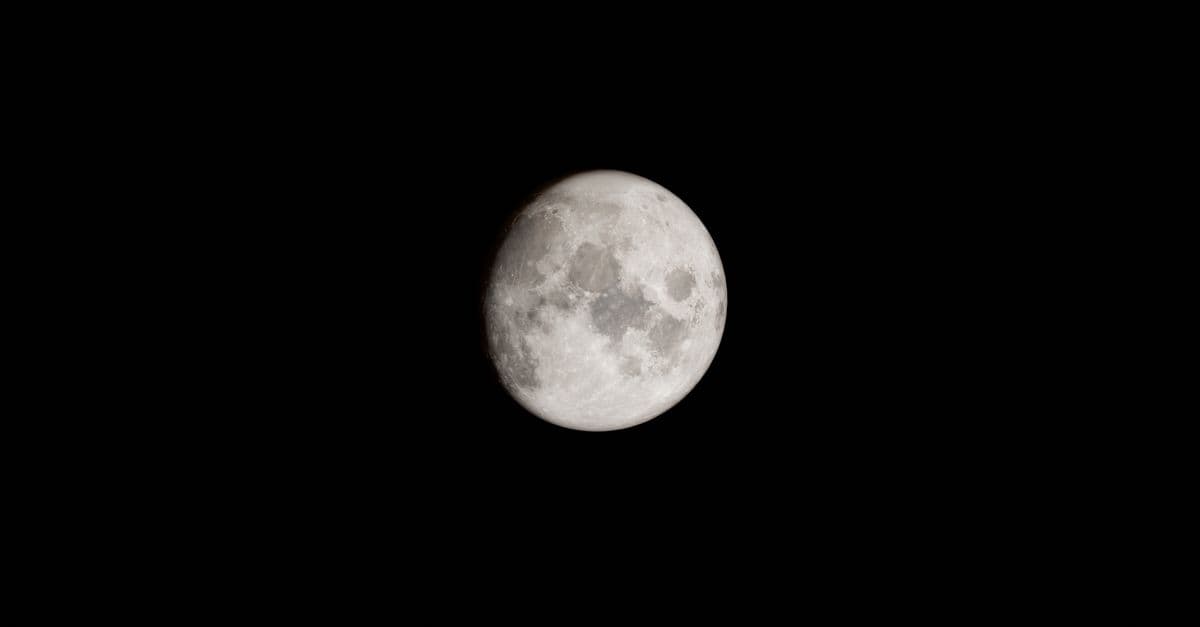
Why the Moon Is More Valuable Than You Think
The Moon holds oxygen-rich soil, polar water ice, and a trace of helium-3. Here is what has actually been measured, what is still speculation, and why the rules for using it remain unsettled.
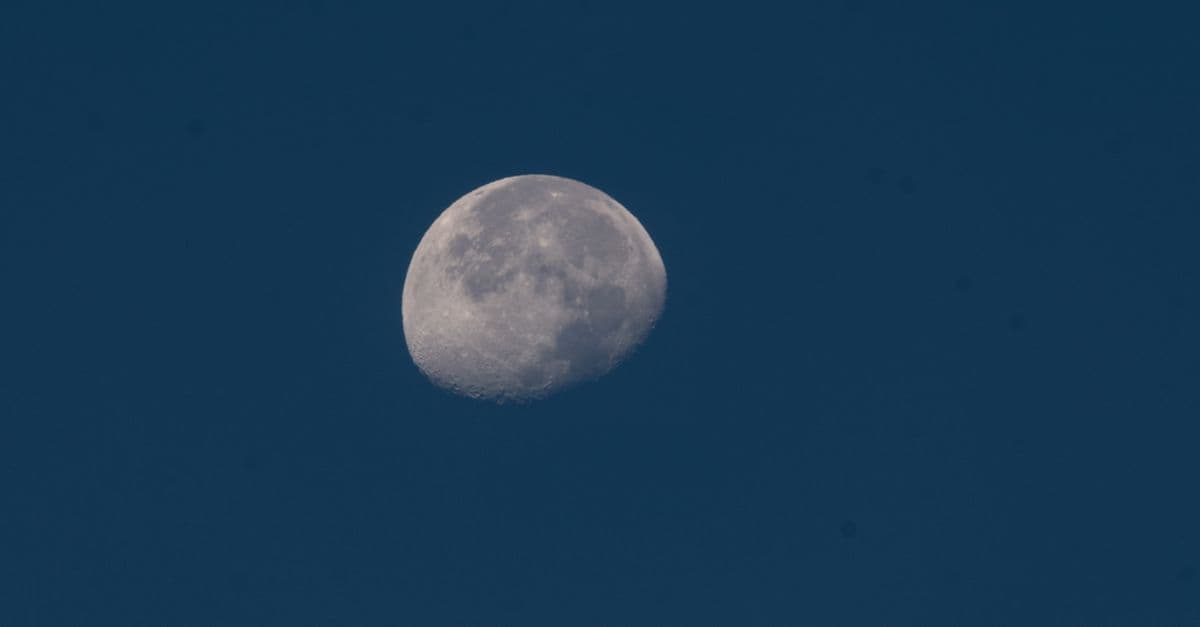
Apollo 11: First Steps on the Moon and the Dawn of Lunar Science
July 20, 1969: Neil Armstrong and Buzz Aldrin landed on the Moon, returning 21.5 kg of lunar samples that revealed the Moon's geological history and transformed planetary science.

How Space Exploration Works — and What's Next
Orbit demands about 7.8 km/s of sideways speed, the Moon is 384,000 km away, and Mars is at least 55 million km. Here is the physics of getting to space, the history of exploration, and where Artemis, Starship, and Mars stand as of October 2026.

AI and Autonomous Spacecraft Navigation: How Mars Rovers Think for Themselves
Mars rovers like Perseverance use onboard AI to navigate treacherous terrain, select science targets, and survive a 20-minute communication delay from Earth.