Can Humans Live on Mars? Terraforming and the Body's Limits
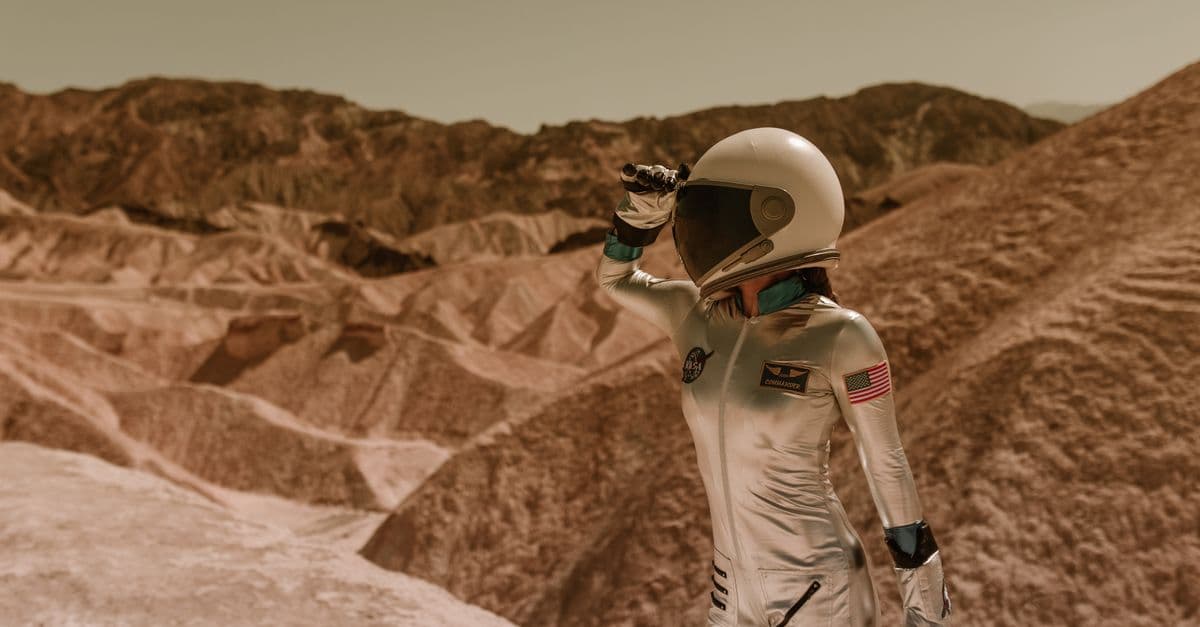
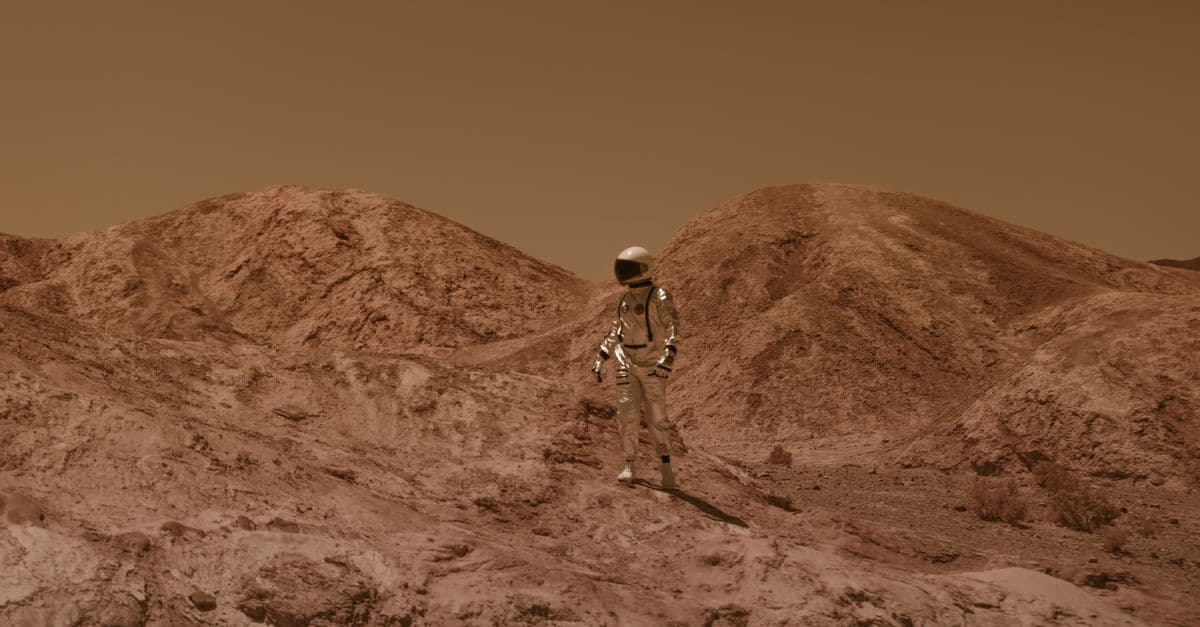
Photo: RDNE Stock project / Pexels
Mission studies for the first crewed Mars landing, as summarized by the National Academies, describe two very different shapes. One is a short-stay trip of 400 to 750 days in total, with about 30 days on the surface. The other is a long-stay design lasting around 900 days, with 500 days or more on the ground. Neither describes a city. The gap between those plans and the idea of a settled world is the distance between two unsolved problems: whether Mars itself can be re-engineered into something more habitable, and whether the human body can endure the trip and the stay long enough for that to matter.
The planet you would have to live on
Mars looks almost Earth-like from orbit and turns out to be nothing like Earth on the ground. According to NASA's planetary fact sheet, the atmosphere is 95.1% carbon dioxide at a mean surface pressure of 6.36 millibars, about 0.6% of Earth's sea-level pressure. Surface gravity is 3.73 meters per second squared, or about 38% of Earth's (0.38 g). The mean temperature is roughly -59°C, and NASA lists extremes from about 20°C at the warmest to about -153°C at the coldest.
A day on Mars, called a sol, lasts about 24.6 hours, and a Martian year is 687 Earth days. Signals between the planets take roughly 3 minutes one way when Mars is closest to Earth and about 22 minutes when it is farthest, a calculation based on NASA's listed distances of 54.6 million and 401.4 million kilometers. That delay matters later, when we get to isolation.
None of that is news to anyone who has followed Mars coverage. The harder questions sit underneath the obvious ones. Can the planet's climate be changed enough to make life easier? What does a human body do, not for six months but for years, in a place with 0.38 g and almost no atmosphere to filter radiation? Those are the threads this article follows. For the engineering side of a first outpost, see our piece on Mars settlement engineering.
Terraforming: the idea and the arithmetic
Terraforming means deliberately altering a planet's atmosphere, temperature, and surface conditions to make it more Earth-like: thicker air, a warmer surface, eventually liquid water and perhaps an open biosphere. For Mars, the classic proposal is to release enough carbon dioxide trapped in the polar caps and the regolith (the loose rock and dust covering the surface) to trigger a greenhouse effect, the same physics that makes Venus so hot, dialed down enormously.
The problem is supply. In 2018, planetary scientists Bruce Jakosky and Christopher Edwards published an inventory of every known reservoir of Martian CO₂, drawing on about 20 years of data from NASA's Mars Reconnaissance Orbiter, Mars Odyssey, and MAVEN, the mission that measures how fast Mars loses gas to space. Their conclusion, in Nature Astronomy, was blunt. Stable liquid water at the surface needs a CO₂ pressure roughly equal to Earth's total atmospheric pressure. The polar ice caps, if vaporized, would roughly double Mars's pressure to about 1.2% of Earth's. CO₂ bound in soil could supply up to 4% of the pressure needed, near-surface carbon minerals less than 5%, and any water-ice clathrates (cage-like ice structures that can trap gas) probably less than 5%. All accessible sources combined would raise Mars's pressure to about 7% of Earth's, far short of what is needed (Jakosky & Edwards, Nature Astronomy, 2018; summary of the NASA release).
Their headline: "terraforming Mars is not possible using present-day technology" (ScienceDaily). Deep carbonate deposits might hold enough carbon, but their extent is unknown and recovering the CO₂ would take temperatures above 300°C. Outgassing from the interior would need about 10 million years to double the present atmosphere, and delivering volatiles by redirecting comets and asteroids would take "many thousands" of impacts.
The optimistic counter-proposal
Not everyone treats this as the end of the discussion. Robert Zubrin, founder of the Mars Society, has argued for a different path that does not depend on native CO₂ alone. As Universe Today describes it, his scenario has four stages: about a century to establish colonists and an industrial base, about half a century of manufacturing fluorocarbon greenhouse gases such as CF₄ to warm the planet by roughly 10°C, and another half century of CO₂ outgassing from the soil to thicken the atmosphere to 0.2 to 0.3 bar and add roughly 40°C more. Plants would then need about a thousand years to build roughly 150 millibars of oxygen. Zubrin adds that future technology could make the process much faster.
Even in that version, the timeline runs to a century before the planet is warm enough to matter and a millennium before anyone breathes without a mask. A 2026 paper by Slava Turyshev, "Terraforming Mars: Mass, Forcing, and Industrial Throughput Constraints," published in APS Open Science, used order-of-magnitude arithmetic to test the problem from the other direction (arXiv:2603.00402). It found that human-relevant pressures would require atmospheric inventories on the scale of 10¹⁸ kilograms, that accessible endogenous CO₂ is likely only a resource of tens of millibars, and that a 20-millibar case would warm Mars by less than 10 K. It also concluded that regional "paraterraforming," meaning covered and pressurized enclosures, is plausible at near-term industrial scales, while identifying no credible pathway to an open, breathable atmosphere.
The reasonable summary is a scientific one rather than a prediction: with current or near-term technology, Mars is not terraformable on any timescale a person alive today would see the middle of. Anyone living there in the coming decades will be inside pressurized structures. For a long-term thought experiment about what would follow if it somehow worked, see What If We Terraformed Mars. To understand why the planet is thin-aired in the first place, see why Mars lost most of its atmosphere.
Why not pressurize just part of it?
Paraterraforming skips the planet and builds an enclosed world: a dome over a crater, or a sealed lava tube with a pressurized floor. It is far more achievable because you manage a building-sized atmosphere, not a planetary one. It still requires making breathable air, resisting pressure differences that would burst a badly sealed structure, and shielding inhabitants from radiation, which brings us to the problem that most limits any stay.
Radiation: the dose you cannot take with you
Mars has no global magnetic field today, and its thin atmosphere offers little shielding compared with Earth's. The best measurements come from the Radiation Assessment Detector (RAD) on NASA's Curiosity rover, which measured radiation both during the 2011-2012 cruise to Mars and on the surface.
RAD recorded an average galactic cosmic ray dose-equivalent rate of 0.67 millisieverts per day on the surface, and 1.8 millisieverts per day inside the spacecraft during the journey (Hassler et al., Science, 2014, as summarized by Sci.News). A sievert is a unit for the biological effect of radiation, so the numbers are best read as relative. Transit, with only a spacecraft hull for protection, was the larger problem than the surface.
The researchers estimated about 0.66 sieverts for the outbound and return transit phases combined, and roughly 1 sievert for a mission with a 500-day surface stay, assuming current propulsion, solar activity similar to the measurement period, and shielding provided only by the spacecraft. About 1 sievert is associated with a 5% increase in fatal cancer risk. NASA has a career limit for low Earth orbit, and no limit yet exists for deep-space missions.
Think of it as a slow sunburn you cannot see: a steady dose rather than one dramatic event, accumulating whether anyone notices or not. The surface adds less per day than the trip, which is why both short-stay and long-stay architectures try to cut transit time or shield the crew. For more on how space radiation affects living tissue, see our article on radiation effects on living organisms.
Mission length: short stay or long stay?
Because radiation and weightlessness both accumulate in transit, mission design matters more than any single piece of hardware. The National Academies describe two main families of Mars trajectories.
| Mission class | Time on Mars | Total mission time | Main trade-off |
|---|---|---|---|
| Short stay (opposition class) | 30 to 90 days (baseline 30) | 400 to 750 days | Higher propellant needs; trajectory passes about as close to the Sun as Venus's orbit, adding thermal and radiation challenges |
| Long stay (conjunction class) | About 500 days or more | About 900 days | Lowest propellant needs; about 180 to 210 days of transit each way |
Source: National Academies of Sciences, Engineering, and Medicine, Space Nuclear Propulsion for Human Mars Exploration (2021).
The table explains why Mars is not "the Moon, but farther." A lunar crew can be home in days. A Mars crew commits to hundreds of days of microgravity or reduced gravity, radiation, and isolation, with very limited options for turning back once the trip is under way. For the way NASA is building experience toward that commitment, see the Artemis program explained, and for the vehicle most often discussed for carrying cargo and crew, see SpaceX Starship explained.
What 0.38 g does to a human body
Radiation gets most of the attention, but a second problem is arguably less understood and harder to fix. No human has lived in Mars-level gravity for more than a few seconds, during parabolic flight arcs. Everything we know about long-duration low gravity comes from weightlessness aboard the Space Shuttle, Mir, and the International Space Station (ISS), and then extrapolating.
Zero-g is not 0.38 g, but it is the closest real dataset we have, and it is not reassuring. NASA's Johnson Space Center review of spaceflight osteoporosis reports that astronauts on long-duration missions before 2009 lost bone mineral density at roughly 1% to 1.5% per month, concentrated in weight-bearing bones such as the spine, pelvis, and legs. It adds that it is unclear whether those losses stabilize over time in space or keep declining (Sibonga et al., NASA Technical Reports Server, 2017).
Bones are a living tissue that constantly breaks down and rebuilds in response to load. Weightlessness removes the load, so the rebuilding side slows while breakdown continues. It is like a muscle in a cast, except the cast is the whole body. (For how loading normally keeps bone strong, see how bones remodel throughout life and our piece on bone loss in weightlessness.)
Recovery after returning to Earth is incomplete. A 2022 study in Scientific Reports by Gabel and colleagues followed 17 astronauts with high-resolution CT scans of the lower leg and wrist, before flight, at return, and at 6 and 12 months after landing. One year later, tibial bone strength, density, and microarchitecture were still 0.9% to 2.1% below preflight group medians. Missions shorter than six months recovered failure load (a measure of strength) by 12 months, with a median deficit of 0.4%, but longer missions did not, with a 3.9% deficit. Nine of the 17 astronauts had not fully recovered total tibial density, and the authors compared the residual deficit with a decade or more of age-related bone loss on Earth (Gabel et al., Scientific Reports, 2022, via DOAJ).
Muscle shows its own losses; see muscle atrophy in space for the ISS data. Both effects are relevant to Mars, where an astronaut would need to climb out of a lander and work in a heavy suit after months of weightlessness in transit.
Would lower gravity on Mars be safer than zero gravity in orbit?
Probably somewhat, but nobody knows how much. Mars's 0.38 g gives bones and muscles something to work against, so loss should be slower than on the ISS. But no long-duration human data exist at any gravity level between zero and one g. The entire Mars range is inferred, not measured, and the first stay at that gravity will itself be the experiment.
What did the NASA Twins Study find about long-duration spaceflight?
NASA's Twins Study compared astronaut Scott Kelly, after a 340-day mission aboard the ISS, with his identical twin Mark, who stayed on Earth. The study brought together ten teams of researchers. Most of the changes in Scott's gene expression (about 91.3%) reverted to baseline after he returned, though a small subset persisted after six months. His telomeres, the protective caps on chromosome ends, showed a change in length dynamics during flight and within days of landing. His gut microbiome returned to its preflight state after landing, and three strong indications of inflammation appeared during the mission (Sci.News summary of the NASA Twins Study). Cognition was largely stable in orbit, but speed and accuracy dropped after landing and stayed lower for six months.
A single pair of twins proves nothing on its own, and the findings cannot be generalized to all astronauts. It remains the most detailed look at what a year in space does to a human genome. A Mars mission would run well over twice as long. For more on how space changes gene activity, see genetic expression in microgravity.
Vision changes: the surprise finding nobody predicted
For decades, spaceflight medicine focused on bones and muscles. Then astronauts began returning from long missions with blurred near vision, and imaging revealed swelling of the optic disc, flattening of the back of the eyeball, and folds in the retina and the tissue behind it. The condition is now called Spaceflight Associated Neuro-Ocular Syndrome (SANS).
How common is it? A 2020 review in npj Microgravity by Lee, Mader, and colleagues reports that about 15% of astronauts had clinically significant optic disc swelling after long-duration missions (a figure the authors say came from personal communication, not a published dataset), and that over 20% had choroidal folds. In the original 2011 cohort of seven astronauts, five had optic disc swelling, five had choroidal folds, and six showed a farsighted shift of +0.50 to +1.75 diopters. The authors also note that OCT scans (a type of retinal imaging) showed some swelling in nearly all astronauts when preflight and in-flight scans were compared, which may mean subclinical SANS occurs in most (Lee et al., npj Microgravity, 2020). Some astronauts had refractive changes lasting several years. Most of these numbers come from small samples, and many astronauts had prior flights, which complicates baselines.
The leading explanation is a headward fluid shift: without gravity pulling blood and cerebrospinal fluid toward the legs, more of it pools in the head, raising pressure inside the skull and pushing on the back of the eye. NASA describes what it calls Visual Impairment Intracranial Pressure syndrome as its leading spaceflight-related health risk (NASA Glenn). Whether the changes plateau on a mission three times as long, or keep progressing, is unknown.
Living off the land: air, water, and a toxic soil
A crew staying 500 days cannot carry everything it needs, so Mars missions depend on in-situ resource utilization (ISRU), meaning making supplies from local materials. The first test came from MOXIE, a toaster-sized experiment aboard NASA's Perseverance rover that split oxygen from the CO₂ in the Martian air. Its first run in April 2021 produced about 5.4 grams of oxygen, about ten minutes of breathing for one person, and by August 2023 it had made 122 grams across 16 runs, at 98% purity or better and a peak rate of 12 grams per hour (NASA/JPL; Gulf News report on the final totals).
Scale is the issue. NASA says a surface crew would use about one metric ton of oxygen between them over a year, but lifting four astronauts off Mars would take about 25 metric tons of oxygen plus around 7 metric tons of rocket fuel. A one-ton converter, a larger cousin of MOXIE, could in principle make the 25 tons, which is far cheaper than hauling that oxygen from Earth. So the technology works in principle, but 122 grams in total is orders of magnitude short of what a crew needs, and no system has run for years at a time on Mars.
Then there is the soil. NASA's Phoenix lander found traces of perchlorate, a reactive chemical salt, in Martian dirt (NASA Phoenix mission page). How much that complicates growing food in Martian regolith is an open engineering question, and greenhouses at crew scale are not yet a solved problem.
Reproduction and development off-Earth
If Mars is ever to be more than a research outpost, someone eventually has to ask whether mammals can reproduce and develop normally away from Earth's gravity. The first experimental data came from Japanese researchers led by Teruhiko Wakayama at the University of Yamanashi, working with the Japan Aerospace Exploration Agency (JAXA). They sent frozen two-cell mouse embryos to the ISS in August 2021, where astronauts thawed and cultured them for four days under three conditions: microgravity, a centrifuge simulating Earth gravity on board the station, and a ground control.
The embryos in microgravity developed into blastocysts, an early embryonic stage, and the authors concluded that gravity had no significant effect on blastocyst formation and initial differentiation. Analysis of the returned blastocysts found no significant changes in DNA or gene expression. Survival aboard the station was lower than on the ground in both ISS groups, though embryos that did survive developed normally (Wakayama et al., iScience, 2023; Space.com coverage). The embryos were never implanted, so whether they could produce live offspring is unknown, and the team said it would need to transplant ISS-cultured blastocysts into mice to find out.
That is a useful, cautiously optimistic result for the earliest developmental stage. It is nowhere near a full pregnancy, let alone the years of skeletal and cardiovascular development a child would go through growing up at 0.38 g.
Would a child raised on Mars develop differently from one raised on Earth?
Almost certainly, but the specifics are unknown because no human has gestated or grown up outside Earth's gravity. Based on bone loading physiology, researchers expect differences in bone density and possibly limb proportions, and SANS suggests altered eye development is plausible. It remains one of the major open questions in space medicine, not a settled prediction.
Isolation, distance, and the people factor
The human body is not the only system under stress. A Mars crew would live in a small habitat for between 400 and 900 days, with signals taking roughly 3 to 22 minutes each way, which rules out real-time conversation with mission control, family, or doctors.
The closest ground analog is Mars500, a simulation run by ESA and Russian partners. Six crew members (three Russian, two European, and one Chinese) were sealed in a mock spacecraft from June 2010 and emerged on November 4, 2011, after 520 days. Communications with the simulated control center carried a built-in 20-minute delay, and email was the only link with the outside world (ESA Mars500 overview). The study was designed to identify the psychological and physiological effects of long confinement and to support countermeasures and astronaut selection. The overview page does not summarize the findings, but it shows how seriously agencies treat the problem. A simulation cannot reproduce radiation, low gravity, or real danger, however, and every participant knew the door would open.
Comparing what we know versus what we are guessing
The state of Mars habitability research is a mix of solid data from Earth orbit, some data from robotic probes, and extrapolation for the actual Mars environment.
| Question | What we know | Where it comes from |
|---|---|---|
| Can Mars's atmosphere be thickened to breathable levels? | No, not with known technology. All accessible CO₂ gives about 7% of Earth's pressure | Jakosky & Edwards, 2018 |
| How much radiation does a Mars mission deliver? | About 0.67 mSv/day on the surface, 1.8 mSv/day in transit; about 1 Sv for a 500-day stay | Hassler et al., 2014 |
| How fast do bones weaken in zero-g? | About 1 to 1.5% per month in weight-bearing bones | NASA JSC review, 2017 |
| How fast do bones weaken at 0.38 g? | Unknown, since no human has spent long durations at partial gravity | Open research question |
| Does long spaceflight affect vision? | Yes. About 15% show clinically significant disc swelling, and over 20% show choroidal folds | Lee et al., 2020 |
| Can we make oxygen on Mars? | Yes, in small amounts: 122 g total by MOXIE | NASA/JPL |
| Can mammalian embryos develop normally without gravity? | Early development to blastocyst appears normal | Wakayama et al., 2023 |
| Does full-term mammalian pregnancy work off-Earth? | Untested | No data |
Table: Mars habitability, what is confirmed versus open, as of October 2026.
What people get wrong about living on Mars
The most common misconception is treating terraforming and colonization as the same timeline. Popular coverage often implies that once humans land and set up a base, an Earth-like Mars follows within a lifetime or two. The 2018 inventory and the 2026 mass-and-energy analysis both point the other way. Even the most optimistic industrial proposals take a century just to warm the planet and a thousand years to build oxygen. Colonization in the sense of people living in pressurized habitats, mining ice, and growing food under cover does not require terraforming and could happen on a much shorter clock. They are two projects on two clocks.
The second misconception is treating "we survived six months on the ISS" as proof the body handles space. ISS research shows real, only partly reversible costs in bone, vision, and gene expression, and those costs accumulate over exactly the timeframes a Mars mission requires. Mars's gravity should reduce some of that damage compared with zero-g, but "should" is an inference, not a measurement.
A third misconception is that radiation is the single deal-breaker. It is a major risk with real numbers attached, but it interacts with the others. The same crew that absorbs about 1 sievert is also coping with bone loss, eye changes, and confinement. The risks stack rather than take turns.
The takeaway
No crewed Mars landing has a firm date, and sealed, ice-mining, greenhouse-fed outposts remain a plausible long-term goal if the funding holds. What is not plausible on any timeline currently backed by data is an open-air, Earth-like Mars, or confident answers about what low gravity and cosmic radiation do to a human body across a full lifetime or a full pregnancy.
The gap between "we can land there" and "we can live there, generation after generation" is not a gap of ambition. It is a gap of missing experiments: partial-gravity bone data, years-long closed-loop life support, shielding that works in deep space, and anything resembling a pregnancy beyond Earth. Until those experiments happen at Mars gravity and over years rather than months, the honest answer to "can humans live on Mars" is partially, with serious unknowns, and not yet for very long. For another view of the practical obstacles, see Can Humans Live on Mars? The Real Challenges and how astronauts survive in space.
Frequently asked questions
Q: Is it possible to terraform Mars with current technology? A: No. A 2018 NASA-funded study found that polar ice would only double Mars's pressure to about 1.2% of Earth's, and all accessible CO₂ together would reach about 7%. The authors concluded that terraforming cannot be done with present-day technology. Even optimistic proposals run a century or more for partial warming.
Q: How much radiation would astronauts receive on a Mars mission? A: Curiosity's detector measured 0.67 millisieverts per day on the surface and 1.8 millisieverts per day during the cruise. A mission with a 500-day surface stay would deliver roughly 1 sievert, which is associated with about a 5% increase in fatal cancer risk. No career dose limit yet exists for deep-space missions.
Q: How much bone density do astronauts lose in space? A: Long-duration astronauts before 2009 lost about 1% to 1.5% of bone mineral density per month in weight-bearing bones, according to NASA. A 2022 study of 17 astronauts found tibial strength, density, and microarchitecture still 0.9% to 2.1% below preflight medians a year after return.
Q: What is Spaceflight Associated Neuro-Ocular Syndrome? A: SANS is a set of eye changes seen after long missions, including optic disc swelling, retinal and choroidal folds, flattening of the back of the eye, and a farsighted shift. About 15% of astronauts had clinically significant disc swelling and over 20% had choroidal folds, per a 2020 review. There is no direct treatment.
Q: Can mammals reproduce successfully in space? A: Only partly answered. Mouse embryos cultured on the ISS for four days developed to the blastocyst stage with no significant effect from microgravity, and no DNA or gene expression differences were found. The embryos were never implanted, and full-term mammalian pregnancy in microgravity or partial gravity has never been attempted.
Q: Can Mars's gravity solve the problems seen in zero gravity? A: It should reduce them, since 0.38 g gives muscles and bones something to work against, but that is an inference, not a measurement. No human has lived at Mars gravity for more than a few seconds during parabolic flights. The actual rates of bone and vision changes at 0.38 g are still an open research question.
Q: Can people make oxygen on Mars? A: Yes, in small amounts. The MOXIE experiment on Perseverance produced 122 grams across 16 runs by 2023, at up to 12 grams per hour. NASA says a surface crew would use about a metric ton between them over a year, and lifting four astronauts off would take about 25 tons, so a far larger system would be needed.
Sources
- Jakosky, B. M. & Edwards, C. S. (2018). Inventory of CO₂ available for terraforming Mars, Nature Astronomy. Summaries: ScienceDaily, Sci.News
- Turyshev, S. G. (2026). Terraforming Mars: Mass, Forcing, and Industrial Throughput Constraints, APS Open Science
- NASA Space Science Data Coordinated Archive, Mars Fact Sheet and NASA Mars facts
- National Academies (2021), Space Nuclear Propulsion for Human Mars Exploration
- Hassler et al. (2014), Mars surface radiation environment, Science, as summarized by Sci.News
- Sibonga et al. (2017), Risk of early onset osteoporosis due to spaceflight, NASA Technical Reports Server
- Gabel et al. (2022), Incomplete recovery of bone strength after long-duration spaceflight, Scientific Reports
- Garrett-Bakelman et al. (2019), NASA Twins Study, Science, as summarized by Sci.News
- Lee et al. (2020), Spaceflight associated neuro-ocular syndrome review, npj Microgravity
- NASA/JPL, Perseverance extracts first oxygen; Gulf News on MOXIE totals
- NASA, Phoenix mission
- Wakayama et al. (2023), mouse embryos on the ISS, iScience
- ESA, Mars500 study overview
Read next:
Follow new articles
Add SciHub101 to your feed reader to see new science and technology stories.
About the Author
SciHub101 is an independent science and technology publication founded and edited by Buğra Sözeri, a software engineer and app developer based in Türkiye. AI tools assist with drafting and research. Source documentation in the existing archive is uneven, and articles are being reviewed and corrected. The Editorial Team byline identifies editorial responsibility; it does not certify specialist or independent human review. Where we compare products, anything built by our own team is labelled as such — see the editorial guidelines and About page for how corrections and disclosures work.
Related Articles
The Artemis Program Explained — NASA's Return to the Moon
Artemis is NASA's plan to return humans to the Moon — for the first time in over 50 years — and use it as a stepping stone to Mars. Here's how the program works and what's next.
What Are Black Holes Made Of? Peering into the Universe's Darkest Mystery
Black holes aren't made of "stuff" in the normal sense — they're regions of spacetime where matter has been crushed past every known state. Here's what physics actually says is inside.
Mars Rovers Explained — Perseverance and Curiosity
From Sojourner to Perseverance, every Mars rover explained — missions, discoveries, and the race to bring samples back to Earth.
The Mars Viking Life Detection Experiments
NASA's Viking landers ran the first direct biology tests on Mars. The results were provocative, disputed, and still important.
Most Earth-Like Planets Discovered So Far
TRAPPIST-1e, Proxima b, LHS 1140 b, TOI-700 d and more: how the most Earth-like planets compare, and what each has and has not shown about air and water.
Olympus Mons — Solar System's Biggest Volcano
Olympus Mons on Mars: 21.9 km tall, 600 km base diameter, fed by a stationary hotspot for 4 billion years. Why Mars's gravity and lack of plate tectonics enable giants.