Galactic Cannibalism: The Milky Way's History of Mergers
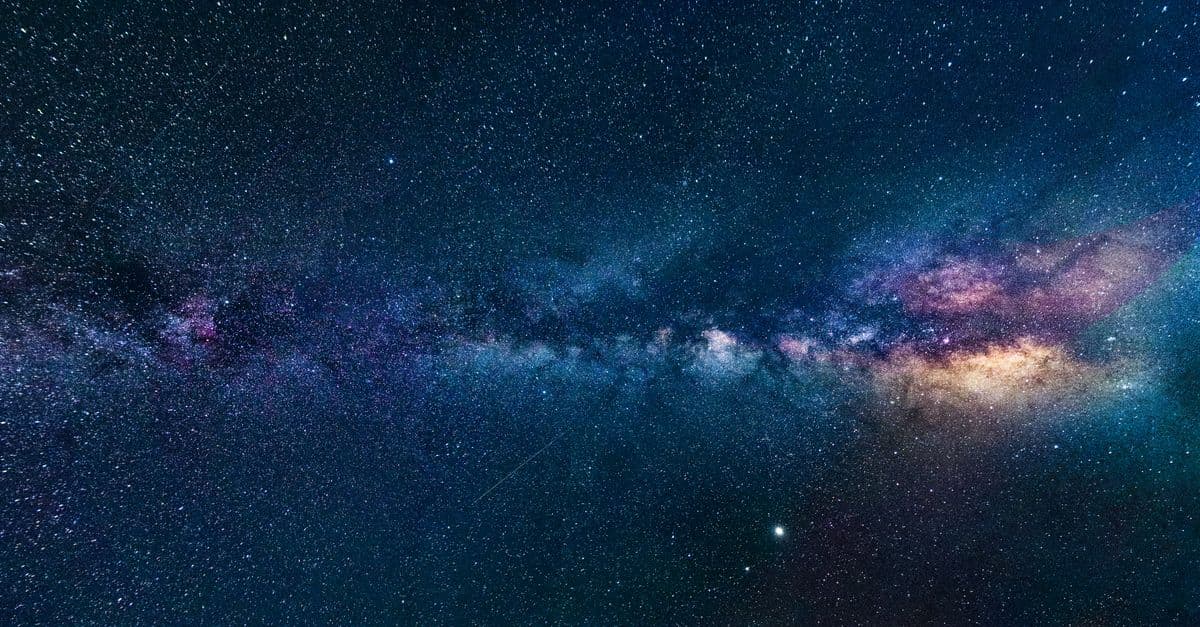
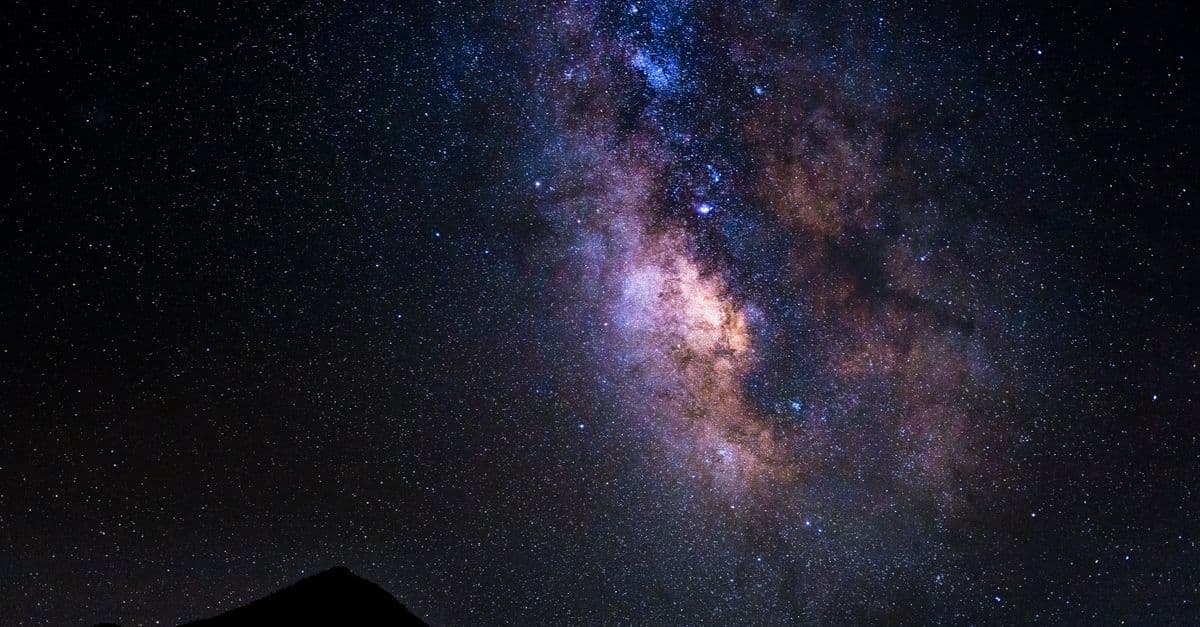
Photo: Felix Mittermeier / Pexels
Ten billion years ago, a galaxy roughly the size of the Small Magellanic Cloud fell into what would become the Milky Way. It was torn apart. Its stars were scattered through the inner halo; its dark matter mixed with the Milky Way's own. The collision was energetic enough that its shockwaves may have thickened the entire galactic disk. We know all of this not from watching it happen — we cannot; 10 billion years is longer than Earth's existence — but from reading the fingerprints left in the positions and velocities of billions of stars today, provided by the Gaia satellite. The Milky Way is not a stable, pristine structure. It is a graveyard of consumed galaxies, and it is still feeding.
How Galaxies Grow: The Hierarchical Model
The standard model of cosmological structure formation predicts that galaxies do not form all at once. Instead, small dark matter halos collapse first, accumulating gas and forming the first small galaxies. Over time, these small galaxies merge, gradually building up the larger galaxies we observe today. This is the hierarchical model of galaxy formation, and it predicts that every large galaxy should contain the disrupted remnants of many smaller ones.
Hierarchical galaxy formation — the cosmological model in which galaxies build up over time through mergers of smaller progenitor systems, with structure growing from small scales to large; the Milky Way's current state reflects approximately 13 billion years of this process.
The Milky Way, at roughly 200–400 billion stars and total mass around 10¹² solar masses, is a large spiral galaxy that should have consumed dozens to hundreds of satellite galaxies over its lifetime. The challenge is reconstructing which mergers happened, when, and with what progenitors — especially for ancient events where the accreted stars have had billions of years to mix through the galaxy.
This reconstruction is now possible using stellar archaeology: reading the chemical abundances and orbital kinematics of individual stars as fossil records of their origin. Stars formed in a small galaxy before it merged have different alpha-to-iron ratios (reflecting the smaller galaxy's star formation history) and different kinematic properties (reflecting the orbit the galaxy was on when it merged) than stars born in the Milky Way itself. Gaia's precise measurements of positions, parallaxes, and proper motions for over a billion stars have made this kind of analysis possible at galactic scales.
Source: Helmi, Annual Review of Astronomy and Astrophysics (2020) — Review of the Milky Way merger history as reconstructed from stellar kinematics and chemical abundances, particularly using Gaia data.
The Gaia-Enceladus Merger: The Collision That Shaped the Halo
In 2018, two independent teams using Gaia data published papers that identified a previously unknown major merger in the Milky Way's history. The evidence came from a peculiar feature in stellar velocity space: a population of stars in the inner halo with highly radial orbits — meaning they move mostly toward and away from the galactic center rather than circling it — forming an elongated, sausage-like structure in the plot of radial versus tangential velocity. This kinematic signature was dubbed the Gaia Sausage.
Subsequent analysis revealed that these stars have chemical abundances — particularly their alpha-element-to-iron ratios — consistent with having formed in a separate galaxy before merging with the Milky Way. The progenitor galaxy, now named Gaia-Enceladus (sometimes just Gaia-Enceladus/Sausage, or GES), is estimated to have had a stellar mass of roughly 10⁸–10⁹ solar masses — comparable to the Small Magellanic Cloud today — and merged with the Milky Way approximately 8–11 billion years ago, most likely around 10 billion years ago.
Gaia-Enceladus — the large dwarf galaxy that merged with the proto-Milky Way approximately 10 billion years ago, contributing a significant fraction of the inner stellar halo and possibly triggering the formation of the thick disk through dynamical heating; its stars are identified by their highly radial orbits and alpha-enhanced chemical compositions.
Source: Belokurov et al., Monthly Notices of the Royal Astronomical Society (2018) — Discovery of the "Gaia Sausage" kinematic structure and identification of the major ancient merger event responsible; initial characterization using Gaia DR1 and spectroscopic data.
Source: Helmi et al., Nature (2018) — Independent identification of the Gaia-Enceladus merger event using Gaia DR2 data, estimating the progenitor mass and merger epoch.
The collision was a relatively head-on, radial merger — the galaxy fell into the Milky Way on a plunging orbit rather than a circular one, which is why the resulting stellar population has such radial kinematics. The merger was not a gentle blending: it was violent enough that the Gaia-Enceladus stars were deposited throughout the inner halo within roughly a billion years. Some of its stars were flung into highly eccentric orbits extending to over 20 kiloparsecs from the galactic center; others settled into the inner halo and thick disk region.
One of the most significant proposed consequences of the Gaia-Enceladus merger is the formation of the Milky Way's thick disk. Before the merger, the Milky Way had a thin, gas-rich proto-disk. The infalling Gaia-Enceladus galaxy would have gravitationally "heated" this disk — increasing the vertical velocities of disk stars, puffing it up into the thicker, kinematically hotter structure we observe today as the thick disk. After the merger, fresh gas from both galaxies settled into a new thin disk — the disk in which the Sun now orbits, which is younger than the thick disk.
The Sagittarius Dwarf: A Disruption Happening Now
Gaia-Enceladus is ancient history, reconstructed from kinematic fossils. The Sagittarius Dwarf Spheroidal Galaxy (Sgr dSph) offers a front-row view of galactic cannibalism in progress.
Discovered in 1994 by Rodrigo Ibata, Mike Irwin, and Gerard Gilmore, the Sagittarius Dwarf was found on the opposite side of the galactic center from the Sun — a small galaxy that had the misfortune of approaching the Milky Way on an orbit that passes through the disk. It is currently being tidally disrupted: the Milky Way's gravitational field exerts differential forces across the Sagittarius Dwarf's body, stretching it into a long stream of stars that wraps around the entire sky.
Tidal stream — a long, narrow ribbon of stars torn from a satellite galaxy or globular cluster by the differential gravitational force (tidal force) of a larger galaxy; the stars in the stream share approximately the same orbit as the original system and are spread along that orbit.
The Sagittarius Stream is the most prominent tidal stream in the sky. Traced in surveys including SDSS, 2MASS, and Gaia, it winds around the sky in a great circle, with both the trailing arm (stars stripped off the back of the galaxy) and the leading arm (stars stripped off the front) detected on opposite sides. The stream wraps multiple times, with different wraps corresponding to different orbital passages over the past several billion years.
The Sagittarius Dwarf has made several passes through the Milky Way's disk, each time losing more stars to tidal stripping. It has lost an estimated 80–90% of its original stellar mass, which is now distributed through the halo. What remains of the galaxy's core is a compact, dense remnant still falling inward, with a nucleus containing about 100 million solar masses — a small fraction of its original mass.
Source: Majewski et al., Astrophysical Journal (2003) — 2MASS mapping of the Sagittarius tidal stream across the full sky, demonstrating that the stream wraps around the galaxy and quantifying the disruption.
The Sagittarius stream has had real effects on the Milky Way. Each disk passage perturbs the outer disk, and simulations suggest that the ripples in the disk's vertical structure observed by Gaia — wavelike patterns in the stellar density that extend thousands of light-years — may be the wake of Sagittarius disk passages over the past few billion years. The Milky Way's disk is not perfectly flat; it vibrates, and at least part of that vibration comes from the Sagittarius Dwarf hammering through it.
| Merger Event | Epoch | Progenitor Mass | Current Status |
|---|---|---|---|
| Gaia-Enceladus | ~10 Gya | ~5 × 10⁸ M☉ stars | Fully disrupted; stars in inner halo |
| Sequoia | ~9 Gya | ~5 × 10⁷ M☉ stars | Disrupted; retrograde halo stars |
| Sagittarius Dwarf | Ongoing | ~10⁹ M☉ (original) | ~10% remains; active tidal stream |
| Large Magellanic Cloud | ~2 Gya (future) | ~1.5 × 10¹⁰ M☉ | Infalling; direct merger predicted |
Other Ancient Mergers: Sequoia and the Building Blocks
Gaia-Enceladus was not the only significant ancient merger. Gaia data has revealed multiple distinct populations in the stellar halo that appear to have separate origins.
Sequoia is the name given to a population of halo stars with retrograde orbits (orbiting the galactic center in the opposite direction to most disk stars) and chemical abundances distinct from Gaia-Enceladus stars. Retrograde halo stars are strong evidence for an external origin: a galaxy falling into the Milky Way on a retrograde orbit would deposit its stars with net retrograde angular momentum. Sequoia is estimated to have been a dwarf galaxy with perhaps 5 × 10⁷ solar masses in stars, merging somewhat before Gaia-Enceladus or around the same epoch.
The Kraken (or Heracles) is proposed to be an even older, more massive merger — possibly the most massive merger in the Milky Way's history, occurring around 11–13 billion years ago and contributing a substantial fraction of the inner bulge population. The evidence for Kraken is more indirect: chemical modeling of the inner stellar populations and predictions from semi-analytic galaxy formation models suggest a massive early merger that shaped the galactic center. Its stars have had the most time to mix through the galaxy and are therefore hardest to cleanly separate observationally.
Then there is the ancient Aurora population: metal-poor stars ([Fe/H] < -1.5) in the inner galaxy thought to represent the Milky Way's own original building blocks — the first stars that formed in the proto-Milky Way before any significant mergers. Aurora predates Gaia-Enceladus and Kraken; these stars are the oldest indigenous material in the galaxy, formed in the first billion years of cosmic history.
Source: Kruijssen et al., Monthly Notices of the Royal Astronomical Society (2020) — Reconstruction of the Milky Way's merger tree from globular cluster ages and chemical properties, identifying Kraken as the most massive ancient merger progenitor.
Reading History in Chemical Abundances
The key to distinguishing accreted stars from stars born in the Milky Way is chemistry. Alpha elements (oxygen, magnesium, silicon, sulfur, calcium, titanium) are produced primarily in Type II supernovae — the explosions of massive, short-lived stars — and released on timescales of tens of millions of years. Iron is produced in Type Ia supernovae (white dwarf explosions in binary systems), which take roughly 1–2 billion years to occur after star formation begins.
A small galaxy that forms stars rapidly and then is disrupted before it can form many Type Ia supernovae will have stars with high alpha-to-iron ratios ([α/Fe] > 0). Stars formed in a large galaxy with prolonged, continuous star formation will show lower [α/Fe] as iron from Type Ia supernovae accumulates. The Milky Way's thin disk stars — formed continuously over 8 billion years — have solar or slightly sub-solar [α/Fe]. Gaia-Enceladus stars have elevated [α/Fe], consistent with rapid, early star formation in a small galaxy.
Surveys like APOGEE (which has measured chemical abundances for over 500,000 stars throughout the Milky Way) and GALAH (an Australian survey targeting 1 million stars with high spectral resolution) have mapped this chemical landscape in three dimensions. They reveal a bimodal distribution of disk stars in [α/Fe] vs. [Fe/H] space — the "high-alpha" thick disk sequence and the "low-alpha" thin disk sequence — consistent with the two-phase disk formation story: ancient thick disk formed in a burst, disrupted by Gaia-Enceladus, followed by thin disk formation from settled gas.
Source: Hayden et al., Astrophysical Journal (2015) — APOGEE survey mapping the bimodal chemical distribution of Milky Way disk stars across different galactocentric radii, demonstrating the spatial structure of the alpha-enhanced thick disk and low-alpha thin disk populations.
This is stellar archaeology: reading the history of a galaxy not from written records but from the chemical composition of stars that formed billions of years ago in galaxies that no longer exist.
The Large Magellanic Cloud: The Merger Still to Come
The Milky Way's merger history is not finished. The Large Magellanic Cloud (LMC) — currently a satellite galaxy about 160,000 light-years away, visible to the naked eye from the Southern Hemisphere as a detached piece of the Milky Way — is falling toward us.
The LMC is the most massive satellite galaxy of the Milky Way, with a stellar mass of roughly 1.5 × 10¹⁰ solar masses (about 3% of the Milky Way's stellar mass) and a total mass including dark matter of perhaps 1.5 × 10¹¹ solar masses. It is currently receding at about 321 km/s but at a distance that puts it within the Milky Way's gravitational sphere of influence.
Recent work has revised upward the LMC's mass estimate (earlier values placed it at roughly 2 × 10¹⁰ M☉ total; newer measurements suggest it is heavier, around 1.5 × 10¹¹ M☉ including dark matter) and the implications are significant. A more massive LMC would be decelerating more strongly by dynamical friction (the gravitational drag from the Milky Way's dark matter halo slowing the LMC's orbit), shortening the timescale before merger.
Simulations predict the LMC will not simply fly past. It is on a first-infall orbit — this is likely the first time it has approached the Milky Way at such close range — and within roughly 1–2 billion years it will pass within a few kiloparsecs of the galactic center. At that point, the merger begins in earnest: tidal disruption, gas transfer, and potentially a starburst episode in the Milky Way as the LMC's gas reservoir triggers star formation.
Source: Cautun et al., Monthly Notices of the Royal Astronomical Society (2019) — Revised LMC mass estimate of approximately 1.5 × 10¹¹ M☉ and orbital integration showing a first-infall trajectory with a merger timescale of ~1–2 billion years.
The consequences for the Milky Way will be significant. Simulations suggest:
- The LMC merger will disturb the outer disk, producing warps and kinematic disturbances detectable for billions of years.
- The LMC's dark matter halo will merge with the Milky Way's, shifting the galactic center of mass and potentially disturbing the Milky Way's current satellite system.
- Gas from the Magellanic Stream (the huge trail of neutral hydrogen gas following the LMC and SMC) will be deposited into the Milky Way, potentially triggering a burst of star formation in the inner disk.
- The LMC merger may destabilize the orbit of Andromeda's satellites, with complex long-term consequences.
None of this is catastrophic for individual stars. Galaxies are mostly empty space; stellar collisions in a galaxy merger are vanishingly rare. But the Milky Way after the LMC merger will be a structurally different galaxy from what it is today.
The Andromeda Collision: The Final Chapter
The LMC merger is large but survivable for the Milky Way as a recognizable structure. The Andromeda Galaxy (M31) merger is not.
Andromeda is the Milky Way's nearest large galactic neighbor at about 2.5 million light-years and is approaching at roughly 110 km/s. HST proper motion measurements have confirmed that Andromeda is on a collision course: the most likely scenario is a head-on or near-head-on collision in approximately 4.5 billion years, followed by a second pass and eventual coalescence into a single, merged, elliptical-like galaxy within about 6 billion years. This merged galaxy is sometimes called "Milkomeda" in popular writing.
The Andromeda Galaxy is comparable in mass to the Milky Way — possibly slightly more massive — so this is not galactic cannibalism in the same sense as the smaller mergers. It is a collision of near-equals. Both galaxies will be gravitationally disrupted; their spiral structures will be erased; the merged system will likely become a large elliptical galaxy over several billion years as the combined stellar populations mix and the gas is consumed in a starburst.
For context, none of the structures described in this article — the thin disk, the spiral arms, the Sagittarius tidal stream — will survive the Andromeda collision in recognizable form.
Source: van der Marel et al., Astrophysical Journal (2012) — HST proper motion measurements of Andromeda confirming a head-on collision trajectory and estimating the merger timeline using N-body simulations.
What Gaia Has Changed
The Gaia satellite, launched in 2013 and through its third data release in 2022, has transformed our ability to read the Milky Way's merger history. By providing parallaxes (distances) and proper motions for 1.5 billion stars at precisions of microarcseconds, Gaia has enabled the construction of genuine 6D phase-space maps (3 position coordinates + 3 velocity components) for hundreds of millions of stars.
This is the prerequisite for stellar archaeology. To know whether a star was born in the Milky Way or accreted from a satellite, you need its orbit — and an orbit requires both position and velocity. Gaia provided both, at unprecedented scale, allowing the identification of discrete substructures (Gaia-Enceladus, Sequoia, the Sagittarius stream, dozens of stellar streams from disrupted globular clusters) as kinematically coherent populations against the more mixed background of in-situ Milky Way stars.
Gaia has also enabled the identification of "stellar streams" — long, thin ribbons of stars from disrupted globular clusters — with over 100 now catalogued. Each stream traces a tidally disrupted object and constrains the gravitational potential of the Milky Way along its path: different stream shapes correspond to different potential shapes, allowing the dark matter halo structure to be mapped indirectly.
For a deep dive into the Milky Way's current structure — the spiral arms, the galactic bar, and the central region housing Sagittarius A* — the foundations laid by these ancient mergers are visible in the thick disk and halo that surround the thin disk where the Sun now orbits.
The gravitational waves from future galactic mergers, and from the dense stellar remnants those mergers produce, connect to how gravitational wave observatories listen to the universe — the same physics that governs the compact object binaries that Gaia-Enceladus's early star formation helped produce.
The Takeaway
The Milky Way is a record of violence rendered invisible by time. Its inner halo contains the scattered ashes of Gaia-Enceladus — a galaxy consumed 10 billion years ago, whose disruption may have built the thick disk we live above. Its outer halo is being seeded right now with the torn remains of the Sagittarius Dwarf, one disk passage at a time. The Large Magellanic Cloud is falling inward and will merge in a billion to two billion years. Andromeda is four billion years away and unavoidable. The Milky Way's history of galactic cannibalism is not background context; it is the dominant process that made the galaxy what it is, and it is far from over.
Frequently Asked Questions
Q: What is the Gaia-Enceladus merger and when did it happen?
A: Gaia-Enceladus was a dwarf galaxy roughly the size of the Small Magellanic Cloud — with stellar mass around 10⁸ to 10⁹ solar masses — that merged with the proto-Milky Way approximately 10 billion years ago. Its stars were deposited into the inner stellar halo on highly radial (elongated, plunging) orbits. The event was discovered in 2018 using Gaia satellite kinematic data, identified by the distinctive "sausage" shape its stars make in velocity space.
Q: Is the Milky Way currently merging with another galaxy?
A: Yes. The Sagittarius Dwarf Spheroidal Galaxy has been falling through the Milky Way's disk for several billion years and is currently being tidally disrupted. Its stars form the Sagittarius Stream — a ribbon wrapping around the entire sky — and what remains of the galaxy's core is a compact remnant still orbiting through the halo. About 80–90% of its original stellar mass has already been stripped away.
Q: Will the Large Magellanic Cloud merge with the Milky Way?
A: Simulations strongly suggest yes. The LMC is on a first-infall trajectory — likely approaching the Milky Way for the first time at close range — and its orbit will bring it to within a few kiloparsecs of the galactic center in roughly 1–2 billion years. Its total mass (including dark matter) is now estimated at around 1.5 × 10¹¹ solar masses, making this a substantial merger event that will structurally alter the outer Milky Way.
Q: How does stellar archaeology work?
A: Stellar archaeology uses the chemical abundances and orbital kinematics of individual stars as fingerprints of their origin. Stars formed in a different galaxy before merging with the Milky Way carry that galaxy's chemical history (often alpha-enhanced, reflecting rapid early star formation) and maintain orbital properties (like radial orbits or retrograde motion) tracing the merger geometry. Gaia's precise 3D velocity measurements for over a billion stars have made it possible to identify accreted populations against the background of in-situ Milky Way stars.
Q: When will the Milky Way collide with Andromeda?
A: The most likely scenario, based on Hubble Space Telescope proper motion measurements, is a close encounter in approximately 4.5 billion years followed by coalescence into a merged, elliptical-like galaxy within about 6 billion years from now. Both the Milky Way's thin disk structure and its spiral arms will be destroyed in this process.
Q: What is a tidal stream?
A: A tidal stream is a ribbon of stars torn from a satellite galaxy or globular cluster by the differential gravitational pull (tidal force) of a larger galaxy. Stars on the side of the satellite closest to the large galaxy feel a stronger pull; stars on the far side feel a weaker pull. Over time, these differential forces stretch the satellite, peeling off stars that spread along the satellite's orbit. The Sagittarius Stream is the most prominent example, wrapping around the entire Milky Way sky.
Q: How many galaxies has the Milky Way consumed?
A: Estimates from hierarchical formation models suggest the Milky Way has accreted the equivalent of several large dwarf galaxies (Gaia-Enceladus, Kraken, Sequoia are the best-identified) and dozens to hundreds of smaller satellite galaxies over 13 billion years. The current Milky Way halo contains stars from multiple distinct progenitors, and Gaia has identified over 100 tidal streams from disrupted globular clusters and dwarf galaxies. The full merger history is still being reconstructed.
Read next:
Follow new articles
Add SciHub101 to your feed reader to see new science and technology stories.
About the Author
SciHub101 is an independent science and technology publication founded and edited by Buğra Sözeri, a software engineer and app developer based in Türkiye. AI tools assist with drafting and research. Source documentation in the existing archive is uneven, and articles are being reviewed and corrected. The Editorial Team byline identifies editorial responsibility; it does not certify specialist or independent human review. Where we compare products, anything built by our own team is labelled as such — see the editorial guidelines and About page for how corrections and disclosures work.
Related Articles
Ganymede: The Largest Moon Is Also an Ocean World
Ganymede is bigger than Mercury, has its own magnetic field, and hides a saltwater ocean containing more water than all of Earth's surface oceans combined. It took a Hubble telescope observation of auroral lights rocking back and forth to prove it.
Enceladus's Hydrothermal Vents and the Case for Life
Saturn's tiny moon Enceladus shoots plumes of water vapor and hydrogen gas into space from cracks in its icy crust. Those plumes carry direct evidence of 90°C hydrothermal vents on the ocean floor — the same kind of environment where life on Earth may have started.
Sagittarius A*: The Black Hole at the Heart of the Milky Way
Four million solar masses packed into a region smaller than our solar system, sitting 26,000 light-years from Earth. For three decades, astronomers tracked stars swinging around it at 3% of the speed of light. Then, in 2022, they photographed it.

The Fermi Bubbles: Two Giant Lobes Hiding Above Our Galaxy
In 2010, NASA's Fermi telescope found two colossal gamma-ray structures erupting from the center of the Milky Way, each 25,000 light-years tall. In 2020, an X-ray telescope found even larger versions of the same structures. Nobody fully agrees on what made them.
The Central Molecular Zone: The Milky Way's Turbulent Heart
Within 500 parsecs of the Milky Way's center lies a region unlike anything else in the galaxy — the Central Molecular Zone. It contains roughly 10% of the entire galaxy's molecular gas compressed into less than 0.1% of its volume. Star formation there should be rampant, but it is strangely quiet. Giant molecular clouds orbit at velocities that defy simple physics. A cloud called the Brick should have already collapsed into thousands of stars, yet it has not. Understanding the CMZ means understanding what keeps the center of our galaxy from exploding with new stars — and what occasionally makes it erupt instead.
How Galaxies Form and Evolve: From the First Stars to Today
Galaxies are not eternal — they are born, grow through mergers, and eventually die. Here's how the universe built these island universes.