Why Meteor Showers Happen Every Year
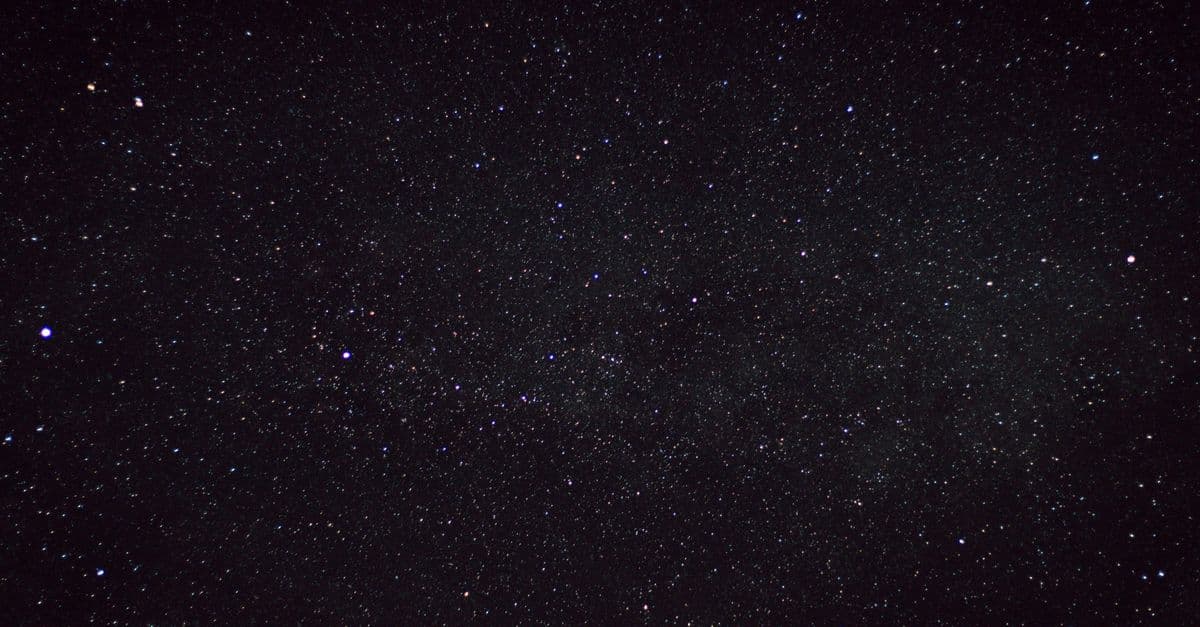
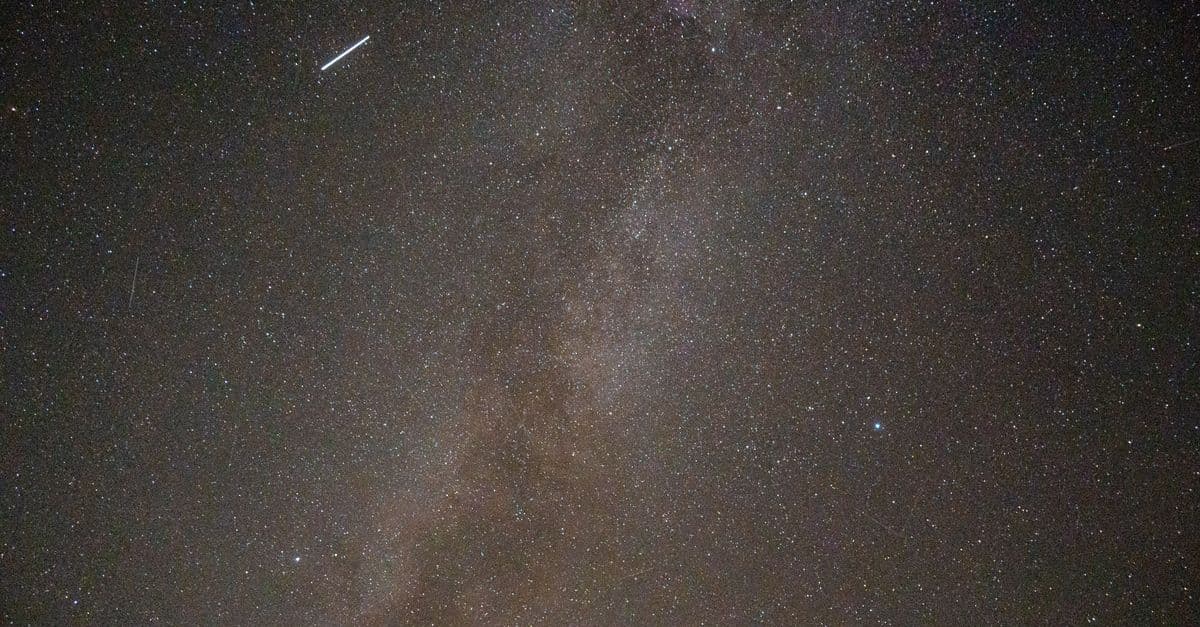
Photo: Jonas Von Werne / Pexels
Every August, without fail, the Perseid meteor shower peaks around August 12 or 13. That reliability is not a coincidence. Earth's orbit around the Sun is a fixed, repeating ellipse, and it crosses the debris trail shed by comet 109P/Swift-Tuttle at essentially the same point every year, producing the same shower on the same calendar dates (NASA, 2025). A meteor shower is, at its core, Earth driving through a stationary field of ancient dust that happens to sit directly across our annual path.
That single mechanism, orbital intersection with a fixed debris trail, explains nearly everything about how meteor showers behave: why they land on the same dates, why some are stronger than others, why they're named after constellations that have nothing to do with where the debris actually comes from, and why astronomers can forecast a shower's peak years, even decades, in advance. Understanding it also clears up the most common misconception about shooting stars, which is that they signal a comet or asteroid bearing down on Earth. They don't.
Where meteor shower debris actually comes from
Comets are often described as "dirty snowballs," loose mixtures of ice, dust, and rocky grains that orbit the Sun on long, elongated paths. Most take decades to centuries to complete one lap, swinging from the outer solar system in toward the Sun and back out again. As a comet closes in on the Sun, solar heat vaporizes some of its surface ice in a process called sublimation, releasing trapped dust and small rocky fragments that had been locked in the ice for millions of years.
That released material doesn't fly off into random directions. It drifts away slowly enough that it stays roughly on the comet's own orbital path, spreading out along the length of that path over many returns. Over centuries, a comet's repeated passes near the Sun build up a long, thin ribbon of debris, sometimes called a meteoroid stream, that traces the comet's orbit through space almost like a chalk line. The comet itself might be nowhere near this ribbon anymore, having moved on to a different part of its 133-year orbit, but the debris it shed decades or centuries ago just keeps circling the Sun on that same track.
This is the detail most people miss: a meteor shower does not require the parent comet to be nearby. Comet 109P/Swift-Tuttle, the parent body of the Perseids, takes about 133 years to complete one orbit and last passed near Earth in 1992 (NASA, 2025). It won't return until roughly 2126. Yet the Perseids still peak every single August, because Earth isn't intersecting the comet, it's intersecting material the comet left behind on previous passes, sometimes over 2,000 years ago.
Not every debris stream comes from a classic icy comet. The Geminids, one of the strongest annual showers, trace back to 3200 Phaethon, an object that orbits more like a comet but looks and behaves more like a rocky asteroid. Researchers still debate exactly how Phaethon sheds enough material to sustain a major meteor shower, since it lacks the water ice that powers a typical comet's dust release, but its debris trail is dense enough to produce one of the year's best displays regardless of the mechanism behind it.
Why the same shower falls on the same dates, year after year
Earth's orbit is not a wandering, unpredictable path. It's a fixed ellipse that repeats once every 365.25 days, shaped by the Sun's gravity and largely undisturbed on human timescales. Comet debris trails are similarly fixed in space, spread along the comet's own stable orbital path. When you have two fixed geometric paths, the points where they cross each other stay essentially the same from one cycle to the next.
Picture a train that runs the same route every day, crossing a specific set of tracks at a rail junction partway through its route. If the train departs at the same time each morning and the junction never moves, the train will cross that junction at close to the same clock time every single day. Earth works the same way with meteor showers: it departs from the same point in its orbit every January 1st (metaphorically speaking), follows the same path, and crosses the same debris-trail junction at close to the same calendar date every year, which is why the Perseids reliably show up in mid-August and the Geminids reliably show up in mid-December.
Minor shifts do occur. Jupiter's gravity nudges comet debris trails slightly over centuries, and a trail's exact density and position at the crossing point can vary year to year depending on how recently the parent body refreshed it. That's why astronomers give a shower's peak as a date range, not a single fixed moment, and why the single best night can drift by a day or two from one year to the next even though the shower always falls within the same window.
Why are meteor showers named after constellations?
A shower's name comes from its radiant, the point in the sky the meteors appear to streak from. The Perseids radiate from Perseus and the Geminids from Gemini not because the debris originates there, but because of the geometry of Earth's motion through the debris field, similar to how snowflakes seen through a moving car's windshield seem to radiate outward from a single point ahead of you even though they aren't actually converging on that spot.
The major annual meteor showers, side by side
Dozens of minor meteor showers occur throughout the year, but a handful produce reliably strong displays that skywatchers plan around. Their peak dates and parent bodies are catalogued and published annually by organizations including NASA and the International Meteor Organization.
| Shower | Parent Body | Typical Peak Date | Typical Peak Rate |
|---|---|---|---|
| Quadrantids | Asteroid 2003 EH1 | January 3–4 | 60–120 meteors/hour |
| Perseids | Comet 109P/Swift-Tuttle | August 12–13 | 50–100 meteors/hour |
| Geminids | Asteroid 3200 Phaethon | December 13–14 | 100–120 meteors/hour |
| Leonids | Comet 55P/Tempel-Tuttle | November 17–18 | ~10–15 meteors/hour (storms rarely) |
Peak hourly rates assume dark, moonless skies away from light pollution; actual visible counts under typical suburban skies run well below these figures. Data drawn from NASA meteor shower fact sheets (NASA, 2025).
The Quadrantids, despite producing one of the year's highest peak rates, are often overlooked because their peak window lasts only a few hours rather than the day or two typical of other major showers, and their parent body, asteroid 2003 EH1, was only formally linked to the shower in 2003 after decades of the debris trail's origin remaining unclear (Jenniskens, 2004). The Leonids, by contrast, are famous less for their typical modest rates and more for their history of producing true meteor storms, thousands of meteors per hour, when Earth happens to pass through an unusually dense, recently deposited clump within comet 55P/Tempel-Tuttle's trail, as it did dramatically in 1833 and 1966.
Why some showers are so much stronger than others
Shower intensity depends on how dense the debris trail is exactly where Earth crosses it, and that density is a function of two things: how recently the parent body passed through and refreshed the trail, and how spread out the debris has become since it was released. A comet that passed near the Sun recently leaves a denser, more concentrated ribbon of fresh material. A comet that hasn't returned in over a century leaves a trail that has had more time to disperse under the gentle influence of solar radiation pressure and the gravity of nearby planets, particularly Jupiter.
This is also why some showers strengthen or weaken gradually over decades. The Leonids' association with comet 55P/Tempel-Tuttle, which orbits roughly every 33 years, means Earth periodically crosses a comparatively fresh, dense filament of debris shortly after the comet's own pass, producing the storm-level rates seen in 1833, 1966, and to a lesser extent 1999 and 2001. In years when Earth crosses the trail far from a recent comet passage, the debris has thinned out enough that Leonid rates drop to a modest 10 to 15 meteors per hour.
Debris particle size also matters. Most meteoroids that produce visible "shooting stars" are no larger than a grain of sand to a pea, vaporizing instantly in Earth's atmosphere at altitudes around 80 to 120 kilometers (50 to 75 miles) due to friction with air molecules at speeds that can exceed 70 kilometers per second (43 miles per second) for the fastest showers. A denser trail simply means more of these small particles crossing our atmosphere per hour, which directly translates to a higher observed meteor count.
Why meteor shower forecasting matters beyond stargazing
Predicting a shower's timing and intensity has practical value that extends well past recreational skywatching. Spacecraft operators track meteor shower forecasts closely, because even a millimeter-sized particle can strike a satellite or the International Space Station at velocities exceeding 60 kilometers per second (over 130,000 miles per hour), fast enough for a fragment barely larger than a grain of sand to pit a solar panel, crack a viewport, or, in a worst case, puncture a pressurized module. NASA and other space agencies monitor known debris trails and can adjust spacecraft orientation, shield exposure, or activity timing during particularly dense showers as a precaution (see how spacecraft survive extreme temperature swings for more on how engineers design around orbital hazards more broadly).
Meteor shower observations also serve as an indirect way to map comet debris trails that are otherwise invisible to telescopes, since the material is far too diffuse and dark to observe directly in space. By tracking the timing, intensity, and particle-size distribution of a shower's meteors from the ground, astronomers can reconstruct details about a parent comet's history, including roughly how much material it has shed and how that material has spread out since being released. This same debris-tracing logic connects to how astronomers study related small bodies, including the irregular, evolving shapes of comets and asteroids that shed this material in the first place, and to broader questions of how galactic-scale structures also arise from particles following shared, predictable orbital paths on a vastly larger scale.
Common misconceptions about meteor showers
The most persistent misunderstanding is that a meteor shower signals a large object, a comet or asteroid, approaching Earth. In reality, the material burning up as visible streaks is almost always dust-to-pebble-sized debris that has been drifting in space for years, decades, or centuries, and the parent comet itself is typically nowhere near Earth during the shower. Comet 109P/Swift-Tuttle, for example, is currently over a century away from its next close pass, yet the Perseids fire off reliably every August regardless.
A second common mix-up is confusing a shower's named radiant constellation with the physical source of the debris. The constellation only describes the direction in the sky the meteors appear to streak from, which is a consequence of the geometry of Earth's direction of travel through the debris field, not the origin of the particles themselves. The particles are ancient comet or asteroid material, spread out across an orbital path that has nothing to do with the distant background stars that happen to line up behind the radiant point from our vantage point on Earth.
A third misconception is that meteor showers are dangerous events to be nervous about. While the space debris hazard to spacecraft and satellites is real and taken seriously by mission planners, individual meteoroids that reach Earth's atmosphere burn up completely at altitudes far above where aircraft fly, let alone where people stand. The visible "shooting star" is the meteoroid disintegrating, not approaching; virtually none of the particles in an annual shower reach the ground intact.
Why do meteor showers look better after midnight?
The side of Earth facing forward in its orbit, roughly the pre-dawn hemisphere, plows directly into the debris stream, while the trailing side after sunset only catches meteors that manage to catch up to Earth from behind. That geometry means observers typically see two to three times more meteors in the hours after midnight than in the evening, independent of which shower is active.
Can you predict exactly how many meteors you'll see?
Not precisely. Published rates like "50 meteors per hour" describe the zenithal hourly rate (ZHR), a theoretical maximum assuming a perfectly dark sky with the radiant directly overhead. Real-world counts are almost always lower due to light pollution, moonlight, local horizon obstructions, and the radiant's actual position in your sky.
Do all meteor showers come from comets?
Most do, but not all. The Geminids and Quadrantids, two of the year's strongest showers, both trace back to asteroids rather than classic icy comets, specifically 3200 Phaethon and 2003 EH1, both of which are thought to be either "rock comets" or extinct, no-longer-active comet nuclei that have lost most of their surface ice.
How amateur astronomers turn a night of watching into real data
Professional observatories mostly ignore meteor showers, their instruments are built to stare at one fixed point for hours, the opposite of what tracking bright, unpredictable streaks across the whole sky requires. That gap is filled almost entirely by amateur observers, and their counts are not just a hobby byproduct; they are the primary dataset astronomers use to measure how a shower's strength changes from year to year.
The International Meteor Organization (IMO), a nonprofit founded in Belgium in 1988, standardized how that counting gets done so that a count from an observer in rural Australia can be compared meaningfully to one from an observer in the Netherlands (International Meteor Organization). Observers log the time, brightness, and constellation of origin of every meteor they see during a fixed session, along with how much of the sky was obstructed by clouds or trees and how faint a star they could still see with the naked eye, a measure called limiting magnitude. That last detail matters enormously: a suburban observer who can only see stars down to magnitude 4 will report a far lower raw count than a rural observer under a magnitude-6.5 sky watching the exact same shower at the exact same time, even though the actual meteor activity overhead is identical.
To make those wildly different raw counts comparable, the IMO's methodology converts each observer's tally into a standardized zenithal hourly rate (ZHR), a mathematical correction that estimates how many meteors a single observer would see per hour if the shower's radiant sat directly overhead and the sky were dark enough to show stars down to magnitude 6.5 (International Meteor Organization; Wikipedia, "Zenithal hourly rate"). The correction accounts for the radiant's actual altitude, since meteors are foreshortened and partially blocked by the horizon when the radiant sits low in the sky, and for the observer's limiting magnitude, since faint meteors go uncounted under light-polluted or moonlit conditions. Feed thousands of these standardized reports from observers worldwide into the IMO's Visual Meteor Database, and the aggregate reveals real-time shifts in a shower's strength that a single observatory, watching one patch of sky, could never detect on its own.
When and where to watch for the best view
Three factors determine whether a given night delivers a strong personal count, and none of them is luck. First, radiant altitude: a shower's radiant needs to sit reasonably high in the sky, ideally well above 30 degrees, because meteors radiating from a point near the horizon get foreshortened and many burn up below the horizon before ever becoming visible, which is part of why the pre-dawn hours favor most Northern Hemisphere showers. Second, Moon phase: a bright Moon, especially a nearly full one, washes out the sky's natural darkness the same way city light pollution does, and the IMO and NASA both publish each year's shower forecasts alongside that year's Moon phase specifically because a shower peaking near a full Moon can see its effectively visible rate cut by more than half compared to a new-Moon year (NASA, 2025). Third, genuine sky darkness away from artificial light matters as much as the other two combined, since limiting magnitude drops sharply within even a few kilometers of a city's light dome.
The takeaway
Meteor showers repeat annually because two independently fixed, predictable orbits intersect at the same geometric point every year: Earth's own path around the Sun and a debris trail a comet or asteroid left scattered along its own orbital path, sometimes centuries ago. The shower's calendar date, its strength, and even its radiant constellation are all direct consequences of that geometry rather than anything mysterious, which is why astronomers can forecast a shower's peak years in advance with a confidence that few other astronomical events allow. The next time a "shooting star" streaks overhead, it's worth remembering that you're not watching a random cosmic event. You're watching Earth, on schedule, drive through the same patch of ancient debris it has crossed at that same point in its orbit for as long as the debris has existed.
Read next:
- Why galaxies have spiral arms
- Why moon dust is dangerous
- How spacecraft survive extreme temperature swings
FAQ
Q: Why does the Perseid meteor shower happen on the same dates every year?
Earth's orbit is fixed and repeats annually, and it crosses the debris trail left by comet 109P/Swift-Tuttle at essentially the same orbital point each year, producing a predictable calendar date, typically August 12–13, for the shower's peak.
Q: Does a meteor shower mean a comet is passing close to Earth?
No. The debris burning up as meteors was shed by the comet on past orbital passes and has been spreading along its orbital path for years or centuries; the comet itself, such as 109P/Swift-Tuttle, is typically decades from its next close pass during the shower.
Q: Why are meteor showers named after constellations like Perseus or Gemini?
The named constellation, called the radiant, describes only the direction in the sky the meteors appear to radiate from due to the geometry of Earth's motion through the debris field, not where the debris particles physically originate.
Q: Why do some showers, like the Leonids, occasionally produce meteor storms?
Meteor storms occur when Earth passes through an unusually dense, recently deposited clump of debris within a comet's trail rather than the more diffuse material it crosses in typical years, as happened dramatically with the Leonids, tied to comet 55P/Tempel-Tuttle, in 1833 and 1966.
Q: Can meteor shower debris actually damage satellites or spacecraft?
Yes. Debris particles can strike spacecraft at speeds exceeding 60 kilometers per second (over 130,000 miles per hour), which is why space agencies track shower forecasts and sometimes adjust spacecraft orientation or shielding exposure during particularly dense showers.
Q: Do all major meteor showers come from comets?
No. Most do, including the Perseids and Leonids, but the Geminids and Quadrantids, two of the strongest annual showers, come from asteroids, 3200 Phaethon and 2003 EH1 respectively, both thought to be "rock comets" or extinct comet nuclei.
Q: Why do meteor showers appear stronger after midnight?
After midnight, the observer's location on Earth faces directly into the planet's direction of orbital travel, so it plows head-on into the debris stream, producing noticeably more meteors than the evening hours before midnight, when only debris catching up from behind is visible.
Q: How do astronomers use amateur observations to measure a meteor shower's strength?
The International Meteor Organization standardizes visual counts from observers worldwide into a zenithal hourly rate (ZHR) that corrects for each observer's sky darkness and the radiant's altitude, then aggregates thousands of these standardized reports into its Visual Meteor Database, revealing real-time shifts in a shower's strength that no single observatory could detect alone.
Follow new articles
Add SciHub101 to your feed reader to see new science and technology stories.
About the Author
SciHub101 is an independent science and technology publication founded and edited by Buğra Sözeri, a software engineer and app developer based in Türkiye. AI tools assist with drafting and research. Source documentation in the existing archive is uneven, and articles are being reviewed and corrected. The Editorial Team byline identifies editorial responsibility; it does not certify specialist or independent human review. Where we compare products, anything built by our own team is labelled as such — see the editorial guidelines and About page for how corrections and disclosures work.
Related Articles
What Is Tidal Locking? Why We Only See One Side of the Moon
Tidal locking occurs when a body's rotation period equals its orbital period, so one hemisphere permanently faces its partner. The Moon is locked to Earth, which is why we always see the same face, and the same effect probably shapes planets around red dwarf stars.