Pluto: What New Horizons Found in 2015 and What We Still Don't Know

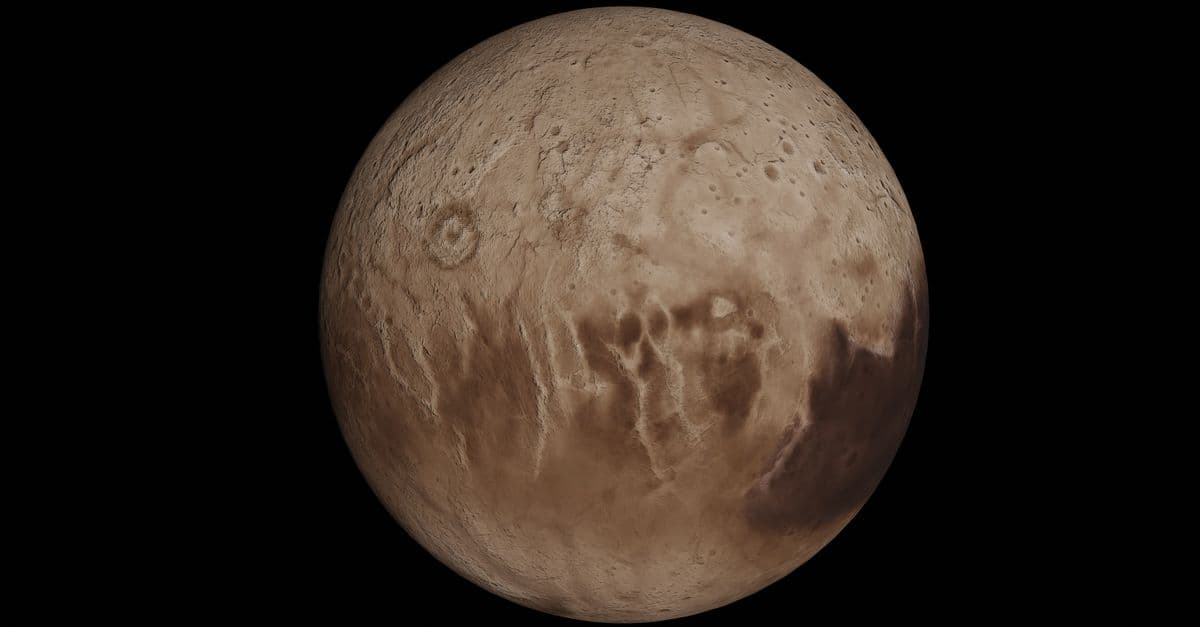
Photo: Ndumiso Mvelase / Pexels
Clyde Tombaugh discovered Pluto on February 18, 1930, by blinking two photographic plates and noticing a point of light that shifted position. For the next 85 years, Pluto was a dot — its surface completely unknown, its atmosphere inferred from occultation measurements, its geology a complete blank. New Horizons launched on January 19, 2006, the fastest spacecraft ever launched at that time, and reached Pluto nine and a half years later traveling at 49,600 km/h (30,800 mph). The flyby itself lasted about 72 hours. What it revealed in those three days overturned nearly every assumption planetary scientists had made about the outer solar system.
The Mission: Fastest Spacecraft, Tightest Flyby
New Horizons is about the size of a grand piano and weighs 478 kg (1,054 pounds). It carries seven science instruments: cameras (LORRI narrow-angle and Ralph color/infrared), spectrometers (Alice UV spectrograph and LEISA infrared), a plasma analyzer (SWAP), an energetic particle detector (PEPSSI), and a dust counter (SDC) that remained active during the interplanetary cruise.
The mission constraint that shaped everything was speed. To reach Pluto in under a decade, New Horizons had to travel fast enough that it could not brake into Pluto orbit — there was not enough fuel for that even if the spacecraft had been three times heavier. So New Horizons flew through, with one chance, taking measurements as it zipped by. Its closest approach was 12,550 km (7,800 miles) above Pluto's surface — about the distance from New York to Perth, Australia.
Because the spacecraft was oriented toward Pluto with its antenna pointing away from Earth during the flyby, scientists had to wait until the pass was complete before data started transmitting. The transmission rate was painfully slow: 1–4 kilobits per second over 4.7 billion km (29 AU). Full data transmission took 16 months. The last bits of flyby data reached Earth in October 2016.
Source: Stern, S.A. et al. (2015) — "The Pluto system: Initial results from its exploration by New Horizons," Science; NASA New Horizons Mission Overview.
Tombaugh Regio: The Heart That Stopped Everyone
On July 13, 2015, the day before closest approach, New Horizons was close enough to resolve surface features. What appeared in the images — first shared publicly during a NASA press conference — was a vast, bright, heart-shaped feature stretching across nearly a quarter of Pluto's visible disk. Mission scientists named it Tombaugh Regio, honoring Clyde Tombaugh, who had died in 1997. The informal nickname "Pluto's heart" spread instantly.
Tombaugh Regio — a large bright region on Pluto approximately 1,600 km across, composed of the nitrogen and carbon monoxide ice plain Sputnik Planitia (the western lobe) and a highland terrain to the east; it is one of the most prominent surface features in the outer solar system.
The heart shape is slightly asymmetric: the western lobe is the brighter, lower-altitude nitrogen ice plain called Sputnik Planitia, and the eastern lobe is a highland of older, more complex terrain at slightly higher elevation. Both are covered in nitrogen ice (N₂) and carbon monoxide ice (CO), which are bright and highly reflective, giving Tombaugh Regio its distinctive appearance against Pluto's darker surroundings.
The reflectivity (albedo) of Sputnik Planitia is approximately 0.98 — meaning it reflects 98% of incident sunlight, making it nearly as bright as fresh snow. This is the highest albedo of any major surface feature in the outer solar system. The reason it stays so bright is an active nitrogen cycle: nitrogen sublimates from warm areas during Pluto's long summer (which lasts about 60 Earth years), moves through the thin atmosphere, and re-condenses as frost in cooler regions. This process constantly refreshes the surface.
Source: NASA New Horizons (2015) — First surface images; Grundy, W.M. et al. (2016) — "Surface compositions across Pluto and Charon," Science.
Sputnik Planitia: A Nitrogen Glacier That Churns Like a Lava Lamp
The western lobe of Tombaugh Regio, Sputnik Planitia, sits in a large basin roughly 1,000 km across and 3–4 km deep relative to surrounding terrain. The basin predates the nitrogen ice — it is almost certainly an ancient impact crater, now filled and obliterated by hundreds of millions of years of nitrogen ice accumulation.
New Horizons images at the highest resolution (80 meters per pixel near closest approach) showed that the floor of Sputnik Planitia is divided into irregular polygonal cells, typically 20–40 km across, separated by narrow troughs. These cells have slightly raised, older, darker centers and younger, brighter margins. The pattern is almost perfectly analogous to convection cells in a heated fluid.
Convection cell — a circulation pattern in a fluid or gas where warm material rises from below, spreads laterally at the top, cools, and sinks back down; the pattern creates a characteristic polygonal structure visible from above.
The mechanism: Pluto's interior still retains some residual radiogenic heat from its formation. This heat warms the base of the thick nitrogen ice layer. Warm nitrogen ice is buoyant relative to cold nitrogen ice, so it rises slowly — over timescales of hundreds of thousands of years — carries its heat to the surface where it radiates away into Pluto's thin atmosphere, then cools and sinks back down. The polygonal cells are the surface expression of this circulation, exactly as predicted by numerical models.
Estimates place the convection overturn timescale at around 500,000 years. The youngest surface features in Sputnik Planitia (the narrow troughs between cells) appear geologically fresh — essentially zero craters — confirming that the surface is actively renewing itself even today.
Source: McKinnon, W.B. et al. (2016) — "Convection in a volatile nitrogen-ice-rich layer drives Pluto's geological vigour," Nature.
Water-Ice Mountains: A Structural Surprise
Along the margins of Sputnik Planitia, New Horizons found mountain ranges rising 3,000–3,500 meters (about 10,000–11,500 feet) above the surrounding plains. These mountains — named the Hillary Montes and Tenzing Montes after Edmund Hillary and Tenzing Norgay — are not made of nitrogen or carbon monoxide ice. They are made of water ice.
This was a structural surprise. At Pluto's surface temperature of approximately –230°C (43 K), water ice is rigid as granite — harder than most rocks. Mountains of water ice at Pluto's temperatures are mechanically viable in a way that nitrogen-ice mountains are not: nitrogen ice at 43 K is so weak that it flows under its own weight and cannot support significant relief. The mountains had to be water ice to stand up.
| Feature | Composition | Height | Location |
|---|---|---|---|
| Sputnik Planitia (plain) | Nitrogen ice (N₂), CO ice | ~3–4 km below rim | Western Tombaugh Regio |
| Hillary Montes | Water ice | ~3,000 m above plain | SW margin of Sputnik Planitia |
| Tenzing Montes | Water ice | ~3,500 m above plain | S margin of Sputnik Planitia |
| Tartarus Dorsa | Methane ice bladed ridges | ~500 m tall blades | Eastern hemisphere |
| Wright/Piccard Montes | Water ice (cryovolcanic?) | ~3,000–4,000 m | Southern Pluto |
The methane-ice bladed terrain of Tartarus Dorsa, in Pluto's eastern hemisphere, is another extraordinary feature: vertical blades of methane frost, 100–500 meters tall, separated by narrow valleys, resembling a comb or the spine of a dinosaur. Models suggest these blades form by sublimation — methane ice preferentially erodes in flat areas while standing structures are sheltered from solar heating by their own shadows.
Source: Moore, J.M. et al. (2016) — "The geology of Pluto and Charon through the eyes of New Horizons," Science.
The Possible Subsurface Ocean
Perhaps the most debated discovery from New Horizons data is not a direct observation but an inference: Pluto may harbor a liquid water ocean beneath its icy crust.
The key evidence comes from Sputnik Planitia's location. The basin sits almost exactly on Pluto's anti-Charon point — the side of Pluto that perpetually faces away from its large moon. This is not likely a coincidence. If Sputnik Planitia is a large mass anomaly (dense material concentrated in a basin), gravity would cause it to reorient toward the Charon-facing or anti-Charon side over millions of years through true polar wander — the rotation of the entire crust and mantle relative to the spin axis.
For Sputnik Planitia to be a positive mass anomaly (denser than surroundings), there must be something dense beneath the relatively light nitrogen ice. The most natural candidate: a subsurface ocean of liquid water. Water is denser than ice; a liquid water layer beneath the basin would create the mass excess needed to explain the basin's rotational positioning.
True polar wander — the reorientation of a planetary body's crust (and sometimes mantle) relative to its spin axis, driven by a redistribution of mass; it differs from tectonic plate motion and can shift surface features toward equatorial or polar positions based on their mass.
Additional evidence comes from the orientation and geometry of Pluto's tectonic fracture systems — long extensional faults that indicate Pluto's crust has been stretching, consistent with a freezing subsurface ocean expanding against the overlying ice shell. A 2019 study found evidence of possible cryovolcanic structures (Wright and Piccard Montes) that could have been sources of subsurface liquid water erupted onto the surface.
The catch: Pluto is 39 AU from the Sun, where temperatures at the surface are only 43 K. Maintaining liquid water requires either residual radiogenic heat, antifreeze solutes (ammonia in the water would depress freezing point significantly), or both. Models suggest a water-ammonia ocean at 150–200 km depth could persist for billions of years under these conditions.
Source: Nimmo, F. et al. (2016) — "Reorientation of Sputnik Planitia implies a subsurface ocean on Pluto," Nature; Keane, J.T. et al. (2016) — true polar wander modeling.
Pluto's Atmosphere and 12 Layers of Haze
Before New Horizons, Pluto's atmosphere was known to exist — nitrogen-dominated, thin, with surface pressure roughly 10–15 microbars (about 100,000 times less than Earth's). Occultation measurements from ground-based telescopes had even detected atmospheric growth as Pluto approached perihelion in 1989.
New Horizons confirmed the nitrogen atmosphere and found it much more complex than expected. The Alice UV spectrograph detected nitrogen, methane, carbon monoxide, acetylene, ethylene, and ethane. More striking: the backlit images taken during the flyby's departure showed not one but approximately 12 distinct haze layers extending up to 200 km above the surface.
These haze layers are produced by photochemical reactions that turn methane and nitrogen into complex organic molecules — tholins — similar to those in Titan's atmosphere. The layers form at different altitudes because different photochemical reactions occur at different pressure and UV-flux levels. The haze scatters blue light preferentially, giving Pluto's sky a blue tint — analogous to Earth's blue sky, for the same Rayleigh scattering physics, but in a near-vacuum.
Source: Gladstone, G.R. et al. (2016) — "The atmosphere of Pluto as observed by New Horizons," Science; Cheng, A.F. et al. (2017) — haze layer characterization.
Charon: Tectonic Scars and a Red Polar Cap
Pluto's largest moon, Charon, is half Pluto's diameter (1,212 km vs. 2,377 km), making the Pluto-Charon pair the closest thing to a binary dwarf planet in the solar system. New Horizons imaged both bodies during the flyby.
Charon's most striking features were not volcanoes or glaciers but its tectonic record: a network of canyons and fractures stretching across the equatorial zone, including the Argo Chasma, which reaches depths of 9 km — deeper than the Grand Canyon by a factor of more than five. These fractures indicate that Charon's interior expanded, stretching its crust — consistent with a subsurface ocean that froze and expanded early in Charon's history.
The northern polar region of Charon bears a large, dark reddish cap that the New Horizons team named Mordor Macula (a reference to the dark land in Tolkien's work). Its color is reddish-brown, similar to the tholins seen elsewhere in the outer solar system.
Mordor Macula — the dark, reddish polar region on Charon's northern hemisphere; its coloration is attributed to complex organic molecules (tholins) formed when methane that escapes from Pluto's atmosphere freezes onto Charon's cold winter pole and is then processed by ultraviolet radiation and cosmic rays.
The mechanism: during Charon's long winters (each lasting about 120 Earth years), the polar region drops to ~25 K — cold enough to freeze methane gas that has migrated from Pluto across the narrow space between the two worlds. Once frozen, this methane layer is irradiated by cosmic rays and UV, converting it to a reddish tholins cap. When summer returns and temperatures rise, the methane sublimates away — but the tholins are too heavy to escape and remain, building up over billions of years.
Source: Grundy, W.M. et al. (2016) — Charon surface composition; Cruikshank, D.P. et al. (2019) — Mordor Macula tholins formation model.
What We Still Don't Know
For all of New Horizons' revelations, the flyby covered only one face of Pluto in high resolution — the encounter geometry meant that roughly half of Pluto was in shadow or at unfavorable geometry during closest approach. Maps of the anti-encounter hemisphere have lower resolution, and many surface features are still poorly characterized.
Key open questions:
- Does Pluto actually have a liquid subsurface ocean today, or did it freeze long ago? The tectonic evidence is suggestive but indirect. A future orbiter with a seismometer would be definitive.
- What is the composition of the dark red material (tholins) coating Pluto's non-polar terrain? The visible and near-infrared spectroscopy from New Horizons is consistent with tholins but cannot uniquely identify specific compounds.
- How has Pluto's atmosphere evolved? During the 2015 flyby, Pluto was post-perihelion. As it recedes from the Sun over the next century, atmospheric pressure is predicted to drop by a factor of 100–1,000 as nitrogen freezes onto the surface. No spacecraft will be there to watch.
- Are the putative cryovolcanic structures (Wright and Piccard Montes) geologically active? If cryovolcanism is ongoing, it would be the most direct evidence of a subsurface liquid reservoir.
Source: Stern, S.A. et al. (2022) — "The Pluto System After New Horizons," review article in Annual Review of Earth and Planetary Sciences.
FAQs
Q: What did New Horizons discover on Pluto in 2015?
A: New Horizons found a geologically active world with a nitrogen-ice plain (Sputnik Planitia) showing active convection cells, water-ice mountains rising 3,500 meters, 12 atmospheric haze layers, possible cryovolcanoes, and evidence pointing to a subsurface liquid water ocean. Charon showed deep canyon systems and a mysterious red polar cap (Mordor Macula) made of tholins.
Q: Why are there mountains on Pluto if it is so cold?
A: The mountains along the edge of Sputnik Planitia are made of water ice. At Pluto's surface temperature of about –230°C, water ice is as rigid as rock and can support mountain relief. Nitrogen ice and methane ice are too weak at that temperature to form mountains — they would flow under their own weight.
Q: Does Pluto have a subsurface ocean?
A: The evidence is indirect but suggestive. Sputnik Planitia sits almost exactly on Pluto's anti-Charon pole, which implies it is a positive mass anomaly — denser than surroundings. A subsurface layer of liquid water (denser than ice) beneath the basin would explain this. Extensional faults across Charon also suggest an interior that froze and expanded, consistent with ocean freezing. No direct confirmation exists yet.
Q: What is Mordor Macula on Charon?
A: Mordor Macula is the dark reddish polar cap on Charon's northern hemisphere. It forms when methane escaping from Pluto's atmosphere condenses onto Charon's cold winter pole (which drops to ~25 K during Charon's 120-year winter) and is then converted to tholins (complex organic molecules) by UV radiation and cosmic rays. The tholins are too heavy to escape and accumulate over billions of years.
Q: How long did it take New Horizons to send back all the data?
A: The flyby data transmission took 16 months, completing in October 2016. The spacecraft transmitted at 1–4 kilobits per second over a distance of 4.7 billion km, limited by the small size of its radio antenna and the inverse-square law of signal strength over distance.
Q: Is New Horizons still operating after the Pluto flyby?
A: Yes. After passing Pluto, New Horizons continued into the Kuiper Belt and flew past Arrokoth (2014 MU69), a contact binary Kuiper Belt object, on January 1, 2019 — the most distant object ever explored by a spacecraft at the time. The spacecraft continues transmitting data as of 2026, now more than 57 AU from the Sun.
The Takeaway
New Horizons did not find a frozen, dead world. It found a dwarf planet with active convection in its nitrogen ice, water-ice mountains that imply a rigid interior, a possible underground ocean that may have been liquid for billions of years, and a companion moon whose polar cap records billions of years of material transferred from Pluto's own atmosphere. What we still lack is an orbiter that can map the entire surface, measure the subsurface with seismology, and watch what happens to Pluto's atmosphere as it freezes out over the coming decades. That mission does not yet have a launch date. Until it does, Pluto will remain the most intriguing world in the solar system that humanity has visited exactly once.
Read next:
Weekly digest
Stay ahead of the curve
Get the best science, AI, and tech stories delivered to your inbox every week. No spam — unsubscribe any time.
About the Author
SciHub101 is an independent science and technology publication founded and edited by Buğra Sözeri, a software engineer and app developer based in Türkiye. Articles are drafted against peer-reviewed literature and primary sources, fact-checked, and edited by a human before publication. Where we compare products, anything built by our own team is labelled as such — see the editorial guidelines and About page for how corrections and disclosures work.
Related Articles

The Great Red Spot: Science Behind Jupiter's 350-Year Storm
Jupiter's Great Red Spot has been spinning continuously for at least 350 years — longer than the United States has existed. It reaches 500 km deep, its color comes from chemistry that scientists still argue about, and it has been shrinking for a century. But it is not dying. Here is what we actually know.

'Oumuamua: The First Interstellar Visitor and the Mystery of Its Acceleration
On October 19, 2017, astronomers detected the first object ever confirmed to have originated outside our solar system. It was moving too fast, tumbling in an unusual way, accelerating when it shouldn't have been, and appeared to emit no gas despite behaving like a comet. Scientists have proposed it was a hydrogen iceberg, a nitrogen shard, or an alien probe. Here is what the evidence actually shows.

Pluto and the Kuiper Belt: The Solar System's Outer Frontier
Pluto was reclassified as a dwarf planet in 2006, but the New Horizons spacecraft revealed it as a geologically active world with nitrogen glaciers, water-ice mountains taller than the Rockies, and a possible subsurface ocean. Beyond Pluto lies the vast Kuiper Belt — a ring of icy bodies that dwarfs the asteroid belt in mass and volume.
Pluto's Extreme Seasons: How a Dwarf Planet's Atmosphere Grows and Disappears
Pluto has an atmosphere. In 2015, New Horizons measured its surface pressure at about 1 Pascal — roughly 1/100,000th of Earth's at sea level. That atmosphere is not stable. Over Pluto's 248-year orbit, it inflates and then freezes entirely out onto the surface, cycling between a thin gaseous envelope and nothing at all. We arrived just in time to see it while it still existed.

Why Pluto Is Not a Planet — IAU Reclassification Explained
Why Pluto was demoted in 2006: the IAU's three-part planet definition, the discovery of Eris, New Horizons data, and the ongoing scientific debate.

Oort Cloud and Kuiper Belt Explained
Oort Cloud vs Kuiper Belt: two icy reservoirs at the edge of the solar system. Sources of comets, Planet Nine, interstellar visitors, and Voyager.