Oort Cloud and Kuiper Belt Explained
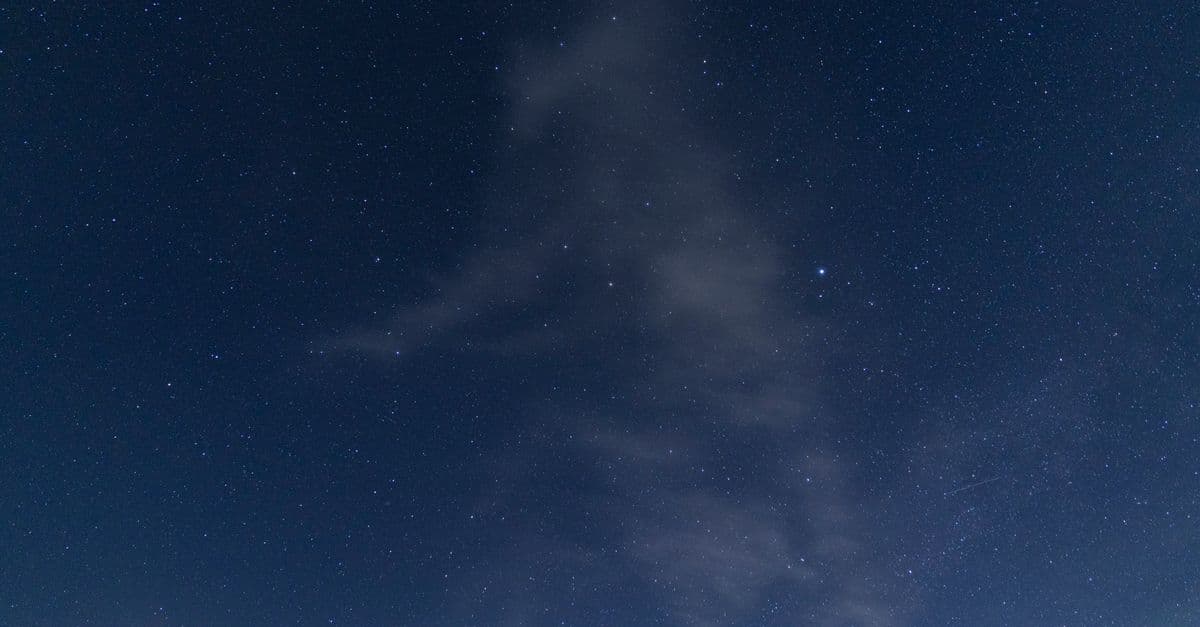
Photo: Joy Xu / Pexels
Beyond Neptune, the solar system thins out — but it doesn't end. Two vast reservoirs of icy bodies surround the Sun: the Kuiper Belt, a flat torus just past Neptune, and the Oort Cloud, a spherical shell extending most of the way to the nearest stars. They are often confused, but they are profoundly different objects with different origins, different geometries, and different fates.
The Kuiper Belt — Pluto's Neighborhood
The Kuiper Belt is a donut-shaped region of icy bodies stretching roughly 30 to 50 astronomical units (AU) from the Sun. (One AU is the Earth–Sun distance.) It is the source of short-period comets — those with orbital periods under 200 years, like Halley's Comet, which tend to orbit close to the ecliptic plane of the solar system.
The belt was hypothesized in the 1940s and 1950s (by Kenneth Edgeworth and Gerard Kuiper) and confirmed in 1992 with the discovery of the first Kuiper Belt Object (KBO) other than Pluto — 1992 QB1. Since then, more than 120,000 KBOs larger than 100 km have been catalogued.
Pluto, demoted from "planet" by the IAU in 2006, is the most famous KBO. The IAU's reasoning was straightforward: Pluto shares its orbital region with many other similar bodies — Eris, Makemake, Haumea, Sedna, Quaoar — so it doesn't "clear its neighborhood" the way the eight major planets do. All of these are now classified as dwarf planets.
In January 2019, NASA's New Horizons spacecraft flew past Arrokoth (formerly 2014 MU69), a small primitive KBO at about 44 AU — the most distant object ever visited by a human spacecraft. Its bilobed "snowman" shape revealed how planetesimals likely formed via gentle accretion in the early solar system.
The Oort Cloud — The Edge of the Solar System
The Oort Cloud is a different beast entirely. Proposed by Dutch astronomer Jan Oort in 1950 to explain the origin of long-period comets, it is a spherical shell of icy bodies surrounding the Sun at distances of roughly 2,000 to 200,000 AU — extending up to about a quarter of the way to the nearest star, Proxima Centauri (about 268,000 AU away).
Astronomers usually split it into two regions:
- Inner Oort Cloud (Hills Cloud): ~2,000 to 20,000 AU, somewhat torus-shaped, more bound to the Sun.
- Outer Oort Cloud: ~20,000 to 200,000 AU, fully spherical, weakly bound — its members can be perturbed by passing stars or galactic tides.
The Oort Cloud has never been directly observed. It's too distant, and its members are too small and too dark, to be seen with any current telescope. We know it exists because of the long-period comets (orbital periods over 200 years, random inclinations) that periodically fall inward from it. Comet Hale-Bopp (1997) and Comet C/2023 A3 Tsuchinshan-ATLAS (which graced the autumn sky in late 2024) are classic examples.
Estimates put the total number of Oort objects in the trillions, with combined mass perhaps a few times Earth's.
Side-by-Side Comparison
| Feature | Kuiper Belt | Oort Cloud |
|---|---|---|
| Distance from Sun | 30–50 AU | 2,000–200,000 AU |
| Shape | Flat torus / disk | Spherical shell (outer); torus (inner) |
| Number of objects | ~10^5–10^6 (>100 km) | ~10^12 estimated |
| Comet type produced | Short-period (<200 yr) | Long-period (>200 yr) |
| Directly observed? | Yes (since 1992) | No — inferred only |
| Famous members | Pluto, Eris, Makemake, Arrokoth | None observed directly |
| Spacecraft visited? | Yes (New Horizons → Arrokoth) | No (Voyagers won't reach inner edge for ~300 years) |
| Origin | Primordial Neptune-region planetesimals | Scattered outward early in solar system formation |
What Disturbs the Oort Cloud?
Because the outer Oort Cloud is so far from the Sun, its members are barely bound. Three effects regularly nudge objects into Sun-falling orbits:
- Galactic tides — the differential gravity of the Milky Way disk.
- Passing stars — every few million years a star comes close enough to perturb Oort objects significantly. Scholz's Star passed within ~52,000 AU about 70,000 years ago.
- Giant molecular clouds — rarer, but powerful gravitational disturbers.
These perturbations send a steady trickle of long-period comets toward the inner solar system.
Planet Nine
In 2016, Caltech astronomers Konstantin Batygin and Mike Brown noticed that the most distant detached KBOs (like Sedna) cluster suspiciously in their orbital orientations. They proposed a hidden massive planet — "Planet Nine" — at perhaps 400–800 AU, shepherding these bodies.
A decade of searching has not found it. Several candidate signals have been ruled out (a 2024 analysis of Wide-field Infrared Survey Explorer data eliminated several solar-mass planet candidates in key sky regions). The hypothesis remains alive but unconfirmed; the Vera C. Rubin Observatory's full survey (now in operation) is expected to settle the question one way or the other within a few years. For more on the planets we have found, see our planets of the solar system explained article.
Interstellar Visitors
In 2017, an object called 'Oumuamua sliced through the inner solar system on a clearly hyperbolic, unbound trajectory — the first confirmed interstellar object. Two years later, 2I/Borisov followed, the first interstellar comet. Both came from somewhere else and are now leaving the solar system forever.
These objects pass through the Oort Cloud and Kuiper Belt en route. Their existence suggests that interstellar wanderers are far more common than once thought — probably a constant trickle drifting through, most of them too faint to detect.
What About Voyager?
NASA's two Voyager probes are the most distant human-made objects. As of mid-2026, Voyager 1 is about 165 AU from the Sun and Voyager 2 about 140 AU — both well past Pluto, past the heliopause (the edge of the Sun's magnetic bubble), and officially in interstellar space. But they are nowhere near the Oort Cloud. Voyager 1 won't reach the inner edge of the Oort Cloud for roughly 300 years, and it will take 30,000 years to fully cross it.
The Oort Cloud is, in a real sense, the gravitational frontier of the solar system. Anything inside it is still bound to the Sun. Anything beyond it has truly left.
For the broader picture of how all these bodies fit into our cosmic neighborhood, see our solar system formation article.
The Origin and Formation of the Kuiper Belt and Oort Cloud
Both the Kuiper Belt and Oort Cloud are remnants of the solar system's violent birth roughly 4.6 billion years ago. Modern planetary migration theory — developed in the 1990s and 2000s — fundamentally changed our understanding of how these structures formed.
In the early solar system, the four giant planets (Jupiter, Saturn, Uranus, Neptune) did not orbit where we see them today. According to the Nice model (named after the French city where the theory was developed), Jupiter and Saturn formed closer to the Sun, inside of where Uranus and Neptune were located. A primordial disk of planetesimals — small bodies a few kilometers to thousands of kilometers across — surrounded the young Sun.
Between roughly 1 and 4 million years after solar system formation, gravitational interactions caused the giant planets to migrate dramatically. Jupiter and Saturn migrated outward, while Uranus and Neptune moved further out still. This "Grand Tack" and subsequent migration scattered planetesimals in all directions. Most were ejected from the solar system entirely (probably explaining the abundance of free-floating planets discovered by surveys like WISE). Others were flung into crossing orbits with the inner terrestrial planets — the Late Heavy Bombardment, recorded in lunar craters, was the result. A subset of these planetesimals, particularly those in stable zones beyond Neptune's current orbit, coalesced into the Kuiper Belt we observe today.
The Oort Cloud formed differently. Objects scattered far beyond the giant planets' original orbits — distances of thousands of AU — experienced the gravitational pull of nearby stars and galactic tides. These perturbations randomized their orbits, converting them from a disk-like distribution into the spherical halo we see today. This process likely took millions of years and involved continuous dynamical evolution.
Comets: Messengers from the Outer Solar System
Comets — icy bodies of rock, dust, and frozen volatiles (water, methane, ammonia, CO₂) — are the most dramatic products of the Kuiper Belt and Oort Cloud. When a comet's orbit brings it close to the Sun, solar radiation vaporizes its surface, releasing gas and dust into space. The pressure of the solar wind shapes this ejected material into the famous tail, which always points away from the Sun regardless of the comet's direction of motion.
Short-period comets from the Kuiper Belt appear regularly and predictably. Halley's Comet, for example, returns every 75–76 years; its last apparition was in 1986, and it will return in 2061. These comets have been known since antiquity and were long viewed as omens. They are gravitationally bound to the Sun and will continue orbiting indefinitely (or until they fragment or are perturbed out of the solar system).
Long-period comets from the Oort Cloud are far more unpredictable. They arrive from random directions with no fixed schedule. Comet Hale-Bopp (1997), visible to the naked eye for over a month, was one of the brightest comets of the past century and came from the Oort Cloud. Comet C/2020 F3 NEOWISE (2020) was another naked-eye visitor. These comets are typically on their first or second passage through the inner solar system; many will eventually be ejected from the solar system entirely by close encounters with planets.
The volatile content of comets — particularly water ice — has profound implications. Some scientists propose that Earth's oceans were partially or entirely delivered by comet bombardment in the Late Heavy Bombardment (~3.9 billion years ago). Isotopic signatures in water from comets and asteroids are consistent with a mixed origin, although the debate continues. See our article on how the solar system formed for more context.
The Architecture of the Outer Solar System
The Kuiper Belt is not uniformly populated. It has substructures and dynamical resonances — orbital zones where objects preferentially accumulate due to gravitational resonance with Neptune. The "3:2 resonance," for instance, is where Pluto and other dwarf planets cluster (if an object orbits Neptune every 3 times to Neptune's 2 times, it stays in a stable configuration). Other resonances create gaps and concentrations.
Beyond the main Kuiper Belt lies the scattered disk, an even more distant population of objects ranging from 35 AU to several hundred AU. Scattered-disk objects, like Eris (discovered in 2005), are typically more tilted and more elongated orbits than Kuiper Belt objects. Eris is slightly smaller than Pluto but more massive, partly because it has never been as thoroughly battered by collisions.
The distinction between the Kuiper Belt and scattered disk is subtle — it's a matter of current orbital characteristics, not composition or origin. Both contain icy planetesimals from the early solar system, but scattered-disk objects appear to have been scattered to their current orbits by gravitational interactions, while Kuiper Belt objects settled into a more orderly disk.
The Future of the Outer Solar System
The Kuiper Belt and Oort Cloud are not static. Gravitational perturbations and stellar passages continuously reshape them. On timescales of millions of years, the Oort Cloud loses objects to interstellar space and gains (temporarily) objects from other stars. The Kuiper Belt slowly loses members to collisions and outward migration.
In about 5 billion years, the Sun will exhaust its hydrogen fuel and swell into a red giant, engulfing the inner solar system up to at least Mars's current orbit and possibly to Jupiter. The Kuiper Belt and outer reaches of the Oort Cloud will survive, but they will be vastly rearranged by the Sun's changing gravity and the stellar wind. Objects at those distances will likely be left in space as cold, dark wanderers orbiting nothing.
Until that distant epoch, the Kuiper Belt and Oort Cloud remain our solar system's frontier — distant, mysterious, and still revealing their secrets to patient astronomers.
Observational Evidence and Future Discovery
The Oort Cloud has never been directly observed because its members are small (1–10 km typically), dark, and incredibly far away. Yet we know it exists through several lines of evidence:
Long-period comet trajectories: Comets arriving from random directions with random orbital inclinations (not confined to the ecliptic plane) must originate from an isotropic (spherical) reservoir. The Kuiper Belt is flat; only the Oort Cloud explains this randomness.
Comet orbital mechanics: Perturbations from passing stars can nudge Oort objects into sun-diving orbits. Statistical models of star passages and Oort object populations predict comet arrival rates that match observations to within ~1 order of magnitude — strong indirect evidence.
Survivorship statistics: Comets are vaporized after a handful of passages through the inner solar system. Their short lifespans mean the Oort Cloud must be replenished continuously — yet its members are barely bound to the Sun. The net effect: steady-state population that matches the observed comet flux.
Dynamical modeling: Simulations of solar system formation (Nice model) predict exactly the kind of spherical cloud seen in the Oort Cloud hypothesis. When you model planetary migration and gravitational scattering, objects naturally end up in an Oort-like configuration.
Future observations: The Vera C. Rubin Observatory (formerly LSST) will begin full-sky surveys in 2025. Its sensitivity may detect kilometer-sized Oort objects if they're common enough — a possibility that would revolutionize our understanding of the outer solar system.
Source: Oort, J. H. (1950). "The structure of the cloud of comets surrounding the solar system." Bulletin of the Astronomical Institutes of the Netherlands, 11: 91–110.
Comet Composition and Volatile Chemistry
Comets are time capsules, preserving material from the solar system's birth ~4.6 billion years ago. Their composition reveals the conditions in the primordial disk.
Primary volatiles:
- Water ice (H₂O): 70–90% of comet mass. Isotopic ratio (deuterium/hydrogen) matches Earth's oceans — evidence for cometary delivery.
- Carbon monoxide (CO) and methane (CH₄): Frozen gases, abundant especially in Oort comets. Vaporize spectacularly as comet approaches Sun.
- Ammonia (NH₃), hydrogen cyanide (HCN): Rarer but present; imply cold, reducing conditions during formation.
- Carbon dioxide (CO₂): Measurable in recent comets; gives comets structural strength (CO₂ ice is harder than water ice).
Dust and refractory materials:
- Silicate dust: Olivine and pyroxene grains (rock).
- Carbon compounds: Organic molecules (kerogen-like material) — not life, but carbon-based chemistry.
- Metals: Iron-nickel, scattered throughout.
This composition — rich in carbon, hydrogen, nitrogen, oxygen — matches carbonaceous chondrite meteorites, suggesting a common origin in the early solar system's cold outer regions.
Comet spectroscopy: When comets outgas near the Sun, emission lines reveal composition. Observatories detect OH, CN, C₂, and other radicals. The strength of specific spectral lines tells us the volatile-to-dust ratio and overall nucleus composition. Periodic comets (short-period) show systematically different compositions than long-period (Oort) comets — Oort comets often have higher volatile/dust ratios, suggesting less processing over time.
The Oort Cloud's Interaction with Passing Stars
Every few million years, a star passes close enough to perturb Oort objects. These passages are rare but powerful.
Stellar passages and perturbed comets:
- Scholz's Star: ~70,000 years ago, this M-dwarf passed within ~52,000 AU of the Sun (closest in recorded history). Did it perturb Oort comets significantly? Possibly — some argue it may have triggered the spike in comet activity that correlates with climate perturbations in Earth's paleoclimate records, though causation is debated.
- Future passages: In ~10 million years, Gliese 710 will pass within ~10,000 AU. Simulations suggest this passage will perturb thousands of Oort objects into sun-diving orbits, increasing comet activity substantially for the next few million years. Evolutionary timescales matter.
Galactic tides: The Milky Way disk's gravity field exerts a "tidal" force on distant Oort objects — slightly pulling the outer Cloud away from the Sun. This slow, persistent effect sculpts the outer Oort Cloud's shape and triggers comets over geological timescales.
Binary star interactions: Some Oort objects are part of binary or multiple systems (two or three objects orbiting each other). Close encounters with passing stars can disrupt these binaries, causing one member to escape the solar system while the other is hurled inward. This is a recognized mechanism for Oort object activation.
Historical Discovery and Modern Context
Early work (1950): Jan Oort proposed the cloud to explain the origin of long-period comets, publishing his foundational paper that bore his name. At the time, it was a theoretical necessity; no one expected to observe it directly.
Vindication (1960s–1980s): Statistical studies of comet trajectories and dynamical modeling confirmed Oort's hypothesis. The spherical distribution, the comet arrival rates, and the orbital mechanics all pointed to a vast, distant reservoir.
Modern era (2000s–present): Discovery of Kuiper Belt objects in the 1990s and 2000s showed that the outer solar system was far richer and more structured than expected. Simultaneously, numerical simulations (Nice model, more sophisticated planetary migration models) demonstrated how the Oort Cloud formed naturally from planetary scattering during solar system assembly. No longer just a hypothesis — the Oort Cloud is an expected natural feature of planetary systems like ours.
Exoplanetary context: Surveys of other planetary systems (via the Kepler mission, TESS, and others) show scattered debris around many stars. Many likely have their own Oort-like clouds. Understanding our Oort Cloud is a bridge to understanding planetary system architecture universally.
Frequently Asked Questions
Q: Is the Oort Cloud the edge of the solar system?
A: Yes — gravitationally, the outer Oort Cloud marks the practical boundary of the Sun's gravitational dominance. Beyond, you're closer to other stars and their gravity has more influence than the Sun's.
Q: Why hasn't anyone seen the Oort Cloud?
A: Its members are small, extremely dark, and tens of thousands of AU away. No current telescope can image objects that small at such distance. We infer its existence from the long-period comets it produces.
Q: Is Pluto in the Kuiper Belt or the Oort Cloud?
A: Pluto orbits at about 30–49 AU, solidly in the Kuiper Belt region, not the Oort Cloud.
Q: What's the difference between short-period and long-period comets?
A: Short-period comets come from the Kuiper Belt with orbital periods under 200 years. Long-period comets originate in the Oort Cloud with periods over 200 years and randomly oriented trajectories.
Q: Did comets deliver water to Earth?
A: Possibly. Isotopic analysis suggests Earth's water came from both asteroids and comets, but the exact proportion remains debated by planetary scientists.
Q: How long until the solar system's architecture changes dramatically?
A: Stellar passages and galactic tides continuously reshape the Kuiper Belt and Oort Cloud on timescale of millions of years. The Sun's red-giant phase in 5 billion years will cause the most dramatic upheaval.
Sources
- Oort, J. H. (1950). The structure of the cloud of comets surrounding the solar system. Bulletin of the Astronomical Institutes of the Netherlands.
- Jewitt, D. & Luu, J. (1993). Discovery of the candidate Kuiper Belt object 1992 QB1. Nature.
- Stern, S. A. et al. (2019). Initial results from the New Horizons exploration of 2014 MU69. Science.
- Batygin, K. & Brown, M. E. (2016). Evidence for a distant giant planet in the solar system. Astronomical Journal.
- NASA Voyager Mission Status (2025 update).
- Meech, K. J. et al. (2017). A brief visit from a red and extremely elongated interstellar asteroid. Nature.
Follow new articles
Add SciHub101 to your feed reader to see new science and technology stories.
About the Author
SciHub101 is an independent science and technology publication founded and edited by Buğra Sözeri, a software engineer and app developer based in Türkiye. AI tools assist with drafting and research. Source documentation in the existing archive is uneven, and articles are being reviewed and corrected. The Editorial Team byline identifies editorial responsibility; it does not certify specialist or independent human review. Where we compare products, anything built by our own team is labelled as such — see the editorial guidelines and About page for how corrections and disclosures work.
Related Articles
Wormholes Explained — Shortcuts Through Spacetime
Wormholes: theoretical tunnels through spacetime. Einstein-Rosen bridges, exotic matter, traversability, ER=EPR, and time travel paradoxes explained.

Supernova Explained — Star Explosions
How stars explode as supernovae — Type Ia, core-collapse, kilonovae, famous examples, and why every iron atom in your body came from one.
Why Pluto Is Not a Planet — IAU Reclassification Explained
Why Pluto was demoted in 2006: the IAU's three-part planet definition, the discovery of Eris, New Horizons data, and the ongoing scientific debate.
What If a Rogue Planet Entered Our Solar System?
There may be more rogue planets — wandering worlds without stars — than there are stars in the galaxy. If one drifted into our solar system, even a brief passage could destabilize planetary orbits and reshape Earth's climate for millennia.
Long-Period Comets: Messengers From the Edge of the Solar System
Comet Hale-Bopp, which dominated the 1997 night sky, had not been seen by any human being before. Its previous perihelion passage was in approximately 2215 BCE, before writing systems existed in most of the world. It had spent the intervening 4,200 years falling inward from the outer solar system at speeds so slow that a bicycle could have overtaken it. When it finally arrived, its pristine composition — unchanged since the solar system formed 4.5 billion years ago — gave scientists a direct sample of the raw material from which planets were built. Long-period comets are the oldest, least-altered objects available for study. They are time capsules from the beginning.
The Zodiacal Light: The Solar System's Hidden Glow
Before dawn in a dark-sky location, a ghostly pyramid of light rises from the eastern horizon along the path of the zodiac. Ancient observers thought it was a meteorological phenomenon — moisture in the upper atmosphere catching the sun. It is not. It is sunlight scattered off trillions of interplanetary dust particles spread across the entire inner solar system, the ground-down debris of comets and asteroids, and it is far stranger than it looks. In 2021, a camera on NASA's Parker Solar Probe detected that this dust does not extend all the way to the Sun.