What If a Rogue Planet Entered Our Solar System?
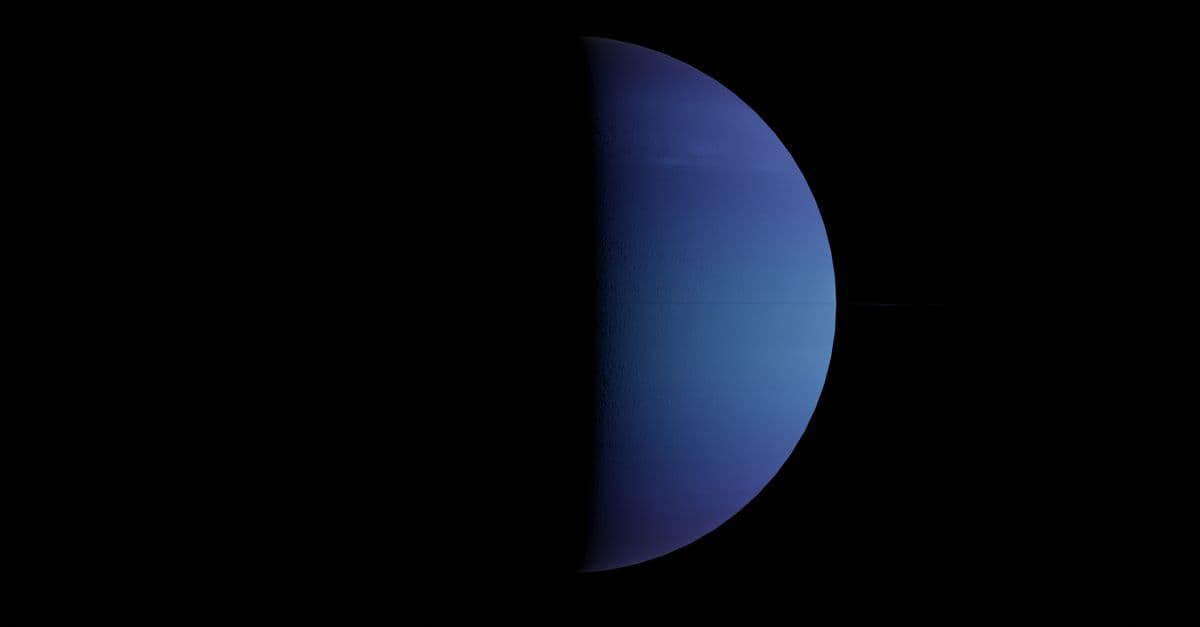
Photo: Zelch Csaba / Pexels
The galaxy is full of orphans. Rogue planets — gas giants and rocky worlds drifting through interstellar space without a parent star — appear to outnumber the stars themselves. They were flung from their birth systems billions of years ago by gravitational encounters between forming planets, and have wandered the dark spaces ever since. Microlensing surveys run by OGLE (Optical Gravitational Lensing Experiment) and the MOA (Microlensing Observations in Astrophysics) collaboration have flagged around a dozen strong rogue-planet candidates over the past decade, and a nine-year MOA survey published in 2023 concluded that free-floating planets are considerably more common than earlier work assumed — a population that may run into the billions or trillions across the Milky Way.
Thought experiment. This article explores a hypothetical scenario for educational and speculative purposes. The events described are not predictions and should not be interpreted as warnings, advocacy, or instructions.
This is a thought experiment, not a prediction: what would actually happen if one of these orphan worlds drifted through our solar system? The physics is well understood even though the probability is vanishingly small, and working through it tells us something real about how stable — and how fragile — planetary architecture actually is.
Key takeaways
- Rogue planets are likely more numerous than stars in the Milky Way, based on microlensing statistics from OGLE and MOA.
- A typical encounter would happen at relative velocities of roughly 20–50 km/s (45,000–110,000 mph) — fast enough that the rogue planet would not be captured into a bound orbit, but slow enough to meaningfully perturb the solar system it passes through.
- A Jupiter-mass rogue passing within about 50 AU (astronomical units, where 1 AU = the Earth-Sun distance) could destabilize the outer solar system enough to eject Kuiper Belt objects and shift Neptune's orbit.
- An Earth-mass rogue passing within roughly 1 AU of the Sun could shift Earth's orbital eccentricity enough to disrupt the climate for millennia, or in an extreme case, eject Earth from the solar system entirely.
- The known stellar flyby of Scholz's Star, which passed through the outer Oort Cloud about 70,000 years ago, shows this kind of gravitational disturbance is not purely theoretical — it has already happened with a star, and could happen with a rogue planet.
- The statistical odds of a close encounter are extraordinarily low on human timescales, but not zero across the Sun's roughly 10-billion-year total lifespan.
What exactly is a rogue planet
A rogue planet, also called a free-floating planet (FFP) or nomad planet, is a planetary-mass object that is not gravitationally bound to any star. It formed the way ordinary planets do, coalescing from a swirling disk of gas and dust around a young star, but at some point was thrown out of its system entirely.
The ejection mechanism is straightforward gravitational bullying. During the first tens of millions of years of a planetary system's life, forming planets migrate, jostle, and occasionally swing close enough to each other to exchange large amounts of orbital energy. When two planets have a close encounter, the lighter one typically loses the fight: it either gets flung into a wide, unstable outer orbit or is accelerated past the star's escape velocity and lost to interstellar space forever. Simulations of planetary system formation suggest that a typical system loses one to five planets this way before its architecture stabilizes.
A smaller fraction of rogue planets may never have belonged to a star system at all. Some form the way stars do, through direct gravitational collapse of a dense clump within a molecular cloud, but without gathering enough mass to ignite hydrogen fusion. These "sub-brown-dwarf" objects blur the line between planet and failed star, though most working definitions place the mass ceiling for a "planet" at around 13 times the mass of Jupiter, the point at which deuterium fusion can ignite.
How astronomers actually find something with no light of its own
Finding an object that emits no starlight and reflects almost nothing is, by definition, one of the harder problems in observational astronomy. Rogue planets are found almost exclusively through three methods. Faint glows in the sky can have other sources, such as sunlight scattered by dust in the zodiacal light.
Gravitational microlensing is the workhorse technique. When a rogue planet passes almost directly between Earth and a distant background star, its gravity bends and briefly magnifies the star's light, producing a symmetric brightening that rises and falls over hours to days, depending on the mass of the lensing object. The shorter and sharper the light curve, the lower the mass of the lensing body. OGLE and MOA both scan tens of millions of stars in the crowded galactic bulge nightly, watching for these transient blips. The catch: microlensing events do not repeat, and they say nothing about where the object is heading, so they cannot be used to track a rogue planet's future trajectory.
Infrared emission works for young, still-warm rogue planets. A newly ejected gas giant retains enormous internal heat from its formation and radiates in the infrared for tens to hundreds of millions of years before cooling below detectability. Jupiter itself, still warm from its formation 4.5 billion years ago, radiates about 1.7 times more energy than it receives from the Sun; a rogue version of Jupiter, with no external heat source at all, would be detectable purely by that residual glow if it were close and young enough. This is the method the James Webb Space Telescope and the upcoming Nancy Grace Roman Space Telescope are best positioned to exploit for any object approaching the outer solar system.
Direct imaging occasionally works for young, hot, isolated planetary-mass objects in nearby star-forming regions, where they stand out as faint infrared point sources unattached to any star. This method has turned up several free-floating planet candidates in clusters, though confirming their exact mass remains difficult without a companion star's gravity to measure against.
How would we first detect an incoming rogue planet?
We would most likely spot it first as a faint, slow-moving infrared source using wide-field survey telescopes, then confirm its trajectory over months to years of repeated observation as its parallax and proper motion became measurable. For an object still decades from the outer solar system, this would likely give us centuries of advance warning before any close approach to Earth's orbit.
How likely is an encounter, really
Stars in the Sun's immediate galactic neighborhood pass within roughly one light-year (about 63,000 AU) of the Sun on average every 100,000 years or so. Encounters close enough to matter gravitationally are progressively, dramatically rarer:
| Approach distance | Approximate frequency (stars) | Approximate frequency (rogue planets, if 5x more numerous than stars) |
|---|---|---|
| Within 10,000 AU | Every ~10 million years | Every ~2 million years |
| Within 1,000 AU (near Pluto's orbit) | Every ~10 billion years | Every ~2 billion years |
| Within 100 AU (near Neptune's orbit) | Essentially never in the Sun's lifetime | Extremely rare, but not impossible over 10 billion years |
Table: Approximate close-encounter frequencies for stars versus rogue planets passing near the solar system, scaled from stellar-density statistics.
These numbers are not purely hypothetical extrapolation. In 2015, astronomer Eric Mamajek and collaborators demonstrated that a dim red dwarf and brown dwarf binary system now called Scholz's Star passed within roughly 0.8 light-years of the Sun approximately 70,000 years ago, five times closer than Proxima Centauri is today, and likely grazed the outer edge of the solar system's Oort Cloud of comets. Follow-up work by researchers at the Complutense University of Madrid and Cambridge University found that Scholz's Star's flyby helps explain unusual hyperbolic orbits among a set of roughly 340 solar system objects. That is direct evidence that close gravitational visitors are not a fringe idea; one has already brushed past us within the span of modern human existence. A rogue planet doing something similar is entirely plausible over geological time, even though the probability in any given century is minuscule.
Scenario one: a Jupiter-mass rogue passes at 50 AU
Picture a Jupiter-mass rogue planet on a hyperbolic trajectory — meaning it is moving too fast to ever be gravitationally captured — sweeping through the outer solar system at roughly 30 km/s (67,000 mph), with its closest approach at 50 AU, just beyond Neptune's orbit at about 30 AU.
Years to decades before closest approach: infrared surveys detect the object first as a faint, slowly brightening point source with measurable proper motion. As it nears, parallax measurements sharpen its predicted trajectory. Space agencies and observatories worldwide would coordinate tracking, the way they already do for potentially hazardous near-Earth asteroids, just on a much larger and slower scale.
At closest approach: the rogue's gravity meaningfully tugs on Neptune, whose orbital eccentricity shifts measurably. The Kuiper Belt — the disk of icy bodies beyond Neptune that includes Pluto — takes the brunt of the disturbance. Countless small bodies get scattered onto new, more eccentric orbits. Some are ejected from the solar system outright; others are flung onto long, comet-like paths that will eventually carry them toward the inner solar system. Earth and the other inner planets feel only a faint gravitational nudge directly, with orbital shifts at roughly the 1% level or less.
Decades to millennia after: this is where the real consequences unfold. The disturbed Kuiper Belt slowly funnels a wave of comets inward over the following tens of thousands of years. This produces a statistically elevated rate of comet impacts across the inner solar system, Earth included. It is analogous to the mechanism proposed in the Nice Model, developed by planetary scientists Rodney Gomes, Harold Levison, Alessandro Morbidelli, and Kleomenis Tsiganis and published in Nature in 2005, which explains the Late Heavy Bombardment — a spike in lunar and inner-planet cratering roughly 3.9 billion years ago — as the result of the giant planets migrating and destabilizing the primordial Kuiper Belt. A rogue planet flyby at 50 AU would be a compressed, external version of the same physics: gravitational chaos in the outer solar system translating, with a long delay, into more comets crossing Earth's path.
This scenario is disruptive over the long haul but survivable. It reorganizes the outer solar system's architecture and elevates impact risk for tens of thousands of years without directly threatening Earth's orbit. The scenario that would actually threaten Earth's stability requires the rogue to come much closer.
Scenario two: an Earth-mass rogue passes at 1 AU
A rogue planet threading through the inner solar system is a far more serious proposition, both because the inner planets are more tightly packed and because Earth's own orbital stability depends on comparatively delicate balance. Picture an Earth-mass rogue passing within roughly 1 AU of the Sun, meaning its path crosses Earth's own orbital distance.
Direct gravitational effects depend almost entirely on how close it comes to Earth specifically, not just to the Sun. Orbital perturbation calculations for planetary flybys generally scale with the inverse square of the closest-approach distance, so small differences in that distance produce very different outcomes:
- At a closest approach of roughly 10 million km (about 26 times the Earth-Moon distance), Earth's orbit would be significantly perturbed. Its eccentricity — how elliptical versus circular the orbit is — could shift by roughly 0.05 to 0.1, which is a large change from Earth's current, nearly circular eccentricity of about 0.017. That alone would measurably lengthen or shorten the length of the year and distort the seasonal cycle.
- At a closest approach of roughly 1 million km (under three times the Earth-Moon distance), the encounter could be severe enough to eject Earth from its orbit entirely, sending it on a hyperbolic trajectory out through the outer solar system or into interstellar space, following the same orbital-mechanics principle that ejects rogue planets from their home systems in the first place.
Tidal effects become significant at extremely close range. Within roughly 100,000 km, the rogue's gravity would raise dramatic tides on Earth, on the order of a meter or more beyond today's typical ocean tide range, and would meaningfully disturb the Moon's own orbit around Earth. At distances tighter still, tidal flexing could generate substantial internal heating in both bodies, the same physical process that keeps Jupiter's moon Io volcanically active today through Jupiter's tidal pull.
Atmospheric and climate consequences would follow from any lasting change to orbital eccentricity, independent of any direct collision risk. Orbital eccentricity governs how much the distance between Earth and the Sun varies over a year, which in turn governs how extreme the difference between summer and winter solar energy input becomes. A 5% shift in eccentricity would noticeably sharpen the contrast between seasons; a 20% shift would produce a climate pattern with no analog in human history, potentially triggering ice ages, runaway heating in certain hemispheres and seasons, or both in alternation, depending on how axial tilt interacted with the new orbit.
The likelihood of a rogue planet passing this close to Earth specifically, as opposed to merely entering the solar system, is essentially zero on any timescale relevant to human civilization. Earth is a small target moving through a large volume of space. But across the roughly 4.5-billion-year history of the solar system, and its remaining lifespan of several billion more years, an event of this kind cannot be ruled out with total confidence, only judged as extraordinarily improbable per unit time.
Could a rogue planet ever be captured into a permanent orbit
For a passing rogue planet to become a captured member of the solar system rather than a one-time visitor, it needs some mechanism to lose orbital energy during the encounter. Two mechanisms can, in principle, do this:
- Three-body gravitational exchange: if the rogue planet passed close to the Sun during an encounter that also involved a third massive body, such as another passing star, energy could be exchanged in a way that leaves the rogue bound to the Sun while the third body carries away the excess energy. This is a known, if statistically rare, outcome of three-body dynamics.
- Gas drag: early in the solar system's history, while a protoplanetary disk of gas and dust still surrounded the young Sun, a passing object could have lost orbital energy to friction against that gas, gradually settling into a bound orbit.
Today, with no protoplanetary disk remaining and the Sun existing as a single, isolated star rather than part of a binary or multiple system, direct capture through either mechanism is essentially impossible. A rogue planet entering the solar system now would do one of two things: pass through on a hyperbolic trajectory and continue back out into interstellar space, or, in an extremely narrow range of encounter geometries, end up loosely and temporarily bound on a wildly elongated orbit that would itself likely be disrupted or ejected again within a few orbital periods.
Could a captured rogue planet already be part of the solar system?
Possibly, and this is not just speculative. The clustering of orbital orientations among a group of extreme trans-Neptunian objects — icy bodies orbiting hundreds of AU from the Sun — led astronomers Konstantin Batygin and Michael Brown to propose the existence of a hidden "Planet Nine" with roughly five to ten times Earth's mass. Batygin and Brown's own analysis found the observed clustering had only about a 0.007% probability of occurring by chance if no such perturbing body existed. Among the proposed explanations for Planet Nine's origin is that it was never native to our solar system at all: a rogue planet captured by the Sun's gravity during a close stellar encounter early in solar system history, or a rogue trans-Neptunian object that influenced the outer solar system's structure for hundreds of millions of years before eventually being lost again.
Has something like this actually happened before
Several independent lines of evidence suggest the solar system carries the scars of past gravitational disturbances, even without a single confirmed rogue-planet event pinned to a specific date.
The Late Heavy Bombardment, a documented spike in cratering across the inner solar system roughly 3.9 billion years ago recorded in lunar rock samples, is explained by the Nice Model as the result of Jupiter and Saturn crossing a 2:1 orbital resonance, which destabilized the orbits of Uranus and Neptune and scattered a huge population of small bodies inward. While this specific event is attributed to internal solar system dynamics rather than an external rogue planet, it demonstrates that the outer solar system has been chaotically reorganized before, and that such reorganizations reliably translate into inner-solar-system bombardment on geological timescales.
Scholz's Star's flyby, discussed above, is the clearest documented example of an external object disturbing the solar system's outer reaches within a timeframe close enough to leave traceable evidence — the unusual hyperbolic orbits among roughly 340 catalogued objects that researchers link to its passage roughly 70,000 years ago.
The Planet Nine hypothesis, if confirmed, would be direct evidence that a planetary-mass body from outside the solar system's original formation zone is orbiting the Sun today, having arrived through a mechanism resembling exactly the "close encounter, near-capture" scenario this article explores.
None of these lines of evidence proves a rogue planet has specifically passed through the inner solar system in the way described in the scenarios above. But together they establish that gravitational encounters between the solar system and outside objects, stellar or planetary, are a real and recurring feature of the solar system's history, not a purely hypothetical curiosity.
What we could actually do about it
A close encounter with a rogue planet is not something humanity could deflect or prevent. The masses involved, planetary rather than asteroid-scale, put any kind of physical intervention completely out of reach of current or foreseeable technology, unlike smaller-scale threats such as an incoming asteroid, where kinetic impactor missions have already been demonstrated to work. Another thought experiment about astronomical-scale engineering is what if we built a Dyson sphere around the Sun.
What would actually be possible falls into a narrower set of responses:
- Long-range tracking and orbit refinement, using the same infrared and astrometric survey techniques already used for near-Earth asteroids and comets, scaled up for an object that would likely be detectable decades to centuries before any close approach.
- Orbital modeling, to continuously refine predictions of how the rogue planet's gravity would reshape the orbits of Neptune, the Kuiper Belt, and eventually the inner planets as more tracking data came in.
- Long-term adaptive planning, treating the resulting climate and orbital shifts the way governments today plan for multi-decade sea-level rise or drought trends, just stretched across centuries or millennia instead.
- Sustained impact monitoring, since the most survivable but statistically most likely consequence of an outer-solar-system encounter is an elevated rate of comet impacts over tens of thousands of years, not the extreme scenario of Earth's own orbit being disrupted directly.
Mostly, the honest answer is that humanity would observe, model, and adapt, on timescales that dwarf any individual human life. It is the same posture we already take toward hurricane forecasting or seismic hazard mapping, just extended from days and years out to centuries and millennia.
What people get wrong about rogue planets
A common misconception is that a "rogue planet passing through the solar system" is functionally the same threat level as an asteroid impact, just on a bigger scale. It is not. The overwhelming majority of possible rogue planet encounters, even ones close enough to be scientifically interesting, do not involve any direct collision at all. The danger, such as it is, comes almost entirely from gravitational perturbation cascading through the system over long timescales, not from the rogue planet itself striking anything.
Another frequent error is treating "trillions of rogue planets in the galaxy" as evidence that an encounter is likely soon. Population size and encounter probability are different quantities entirely. The galaxy being full of rogue planets does not change the fact that interstellar space is almost entirely empty; the nearest known star, Proxima Centauri, is over 270,000 AU away, and even a galaxy full of wandering worlds leaves each one, on average, an enormous distance from any given star system including ours.
A third misconception, especially common online, conflates rogue planets with the discredited "Nibiru" or "Planet X" doomsday claims that have circulated since the 1990s and predicted specific near-term collision dates that never occurred and were never supported by any tracking data. Real rogue planet science, by contrast, is grounded in measured microlensing statistics, documented stellar flybys like Scholz's Star, and orbital dynamics that are testable and falsifiable. The distinction matters: one is a legitimate area of astrophysics with real detection programs behind it; the other is a recurring pseudoscientific claim with no observational support.
Frequently asked questions
Q: How many rogue planets are there in the Milky Way? Estimates vary by method and mass range, but a nine-year MOA microlensing survey published in 2023 concluded that free-floating, Earth-mass planets could outnumber the roughly 100 billion stars in the galaxy, with some models suggesting a total rogue planet population running into the billions or trillions.
Q: Could a rogue planet sneak up on Earth without warning? Unlikely for anything large enough to matter gravitationally. A Jupiter- or Earth-mass rogue planet would be detectable via infrared emission or microlensing years to centuries before reaching the inner solar system, giving substantial advance warning, though a small, cold, already-cooled rogue planet would be much harder to spot early.
Q: Would a rogue planet's gravity be strong enough to pull Earth out of orbit? Only in an extremely close encounter, within roughly one million kilometers, would an Earth-mass rogue planet's gravity be strong enough to eject Earth from its orbit. At more moderate distances, the effect would be a shift in orbital eccentricity rather than outright ejection.
Q: Has a rogue planet ever actually passed through our solar system? There is no confirmed case of a rogue planet passing through the solar system, though a dim stellar system called Scholz's Star, not a rogue planet, is confirmed to have grazed the outer Oort Cloud about 70,000 years ago, demonstrating that this kind of encounter does occur.
Q: Is Planet Nine a captured rogue planet? It is one hypothesis among several. Planet Nine itself has not been directly observed; its existence is inferred from the unusual orbital clustering of extreme trans-Neptunian objects, and one proposed origin story is that it is a rogue planet captured by the Sun's gravity long ago, rather than a planet that formed in place.
Q: What is the difference between a rogue planet and a brown dwarf? Mass and formation history. Both can be free-floating, but a brown dwarf typically forms the way a star does, through direct gravitational collapse of a gas cloud, and can fuse deuterium, while a rogue planet more commonly forms within a planetary system and is later ejected by gravitational interactions with its siblings.
Q: Could a rogue planet be captured into orbit around the Sun today? It is essentially impossible today, since the Sun no longer has a protoplanetary disk to provide the gas drag needed to bleed off orbital energy, and it is not part of a binary system that could absorb energy in a three-body exchange. A rogue planet entering today would almost certainly pass through and continue back into interstellar space.
Q: How would astronomers first detect an incoming rogue planet? Most likely through infrared survey telescopes such as the James Webb Space Telescope or the upcoming Nancy Grace Roman Space Telescope, which can pick up the residual heat a young gas giant still radiates from its formation, long before it would be visible in reflected light.
Q: What actually causes the Late Heavy Bombardment, and is it related to rogue planets? The leading explanation, the Nice Model, attributes the Late Heavy Bombardment about 3.9 billion years ago to Jupiter and Saturn crossing an orbital resonance that destabilized the outer solar system from within, not to an external rogue planet. It is relevant here because it demonstrates the same underlying mechanism, outer solar system chaos translating into inner solar system bombardment, that a rogue planet flyby would also trigger.
The takeaway
A rogue planet drifting through the solar system would not be a single dramatic collision event; it would be a slow-motion gravitational disturbance whose consequences unfold over tens of thousands of years, most of them concentrated in the outer solar system's asteroid and comet populations rather than in a direct strike on Earth. The physics of how that disturbance would spread, from Neptune's orbit through the Kuiper Belt and eventually into an elevated comet-impact rate at Earth, is the same physics already documented in the Late Heavy Bombardment and in Scholz's Star's confirmed flyby past the outer Oort Cloud 70,000 years ago. The odds of it happening again within any human timescale are close to zero, but the solar system's own history shows this is not a purely theoretical scenario: it is a rare but real feature of how planetary systems age inside a moving, crowded galaxy.
Read next:
Follow new articles
Add SciHub101 to your feed reader to see new science and technology stories.
About the Author
SciHub101 is an independent science and technology publication founded and edited by Buğra Sözeri, a software engineer and app developer based in Türkiye. AI tools assist with drafting and research. Source documentation in the existing archive is uneven, and articles are being reviewed and corrected. The Editorial Team byline identifies editorial responsibility; it does not certify specialist or independent human review. Where we compare products, anything built by our own team is labelled as such — see the editorial guidelines and About page for how corrections and disclosures work.
Related Articles
What If Yellowstone Erupted Tomorrow?
The Yellowstone supervolcano produces a major eruption roughly every 600,000–800,000 years. The last was 631,000 years ago. If it erupted today, parts of the western United States would be buried in ash, global temperatures would drop, and agriculture would collapse for years.
What If We Built a Dyson Sphere Around the Sun?
A Dyson sphere — a structure capturing all of the Sun's energy — would harness 3.86 × 10²⁶ watts, more than a trillion times humanity's current power use. Building it requires more material than exists in any individual planet, but could in principle be done by dismantling Mercury or several asteroids.
What If the Sun Disappeared for One Week?
Eight minutes after the Sun vanishes, Earth goes dark. What happens to life, physics, and civilization in the days that follow?
What If the Sun Became a Black Hole?
If the Sun were swapped for a black hole of the same mass, Earth's orbit would not change at all. The danger is the lost sunlight, which would turn the surface into a frozen, lightless world.
What If Earth Had Two Moons? The Science of a Twin-Moon World
A second moon would change tides, eclipses, calendars, and possibly life itself. Here's exactly what would happen — based on real orbital physics — if we suddenly had two moons.
Oort Cloud and Kuiper Belt Explained
Oort Cloud vs Kuiper Belt: two icy reservoirs at the edge of the solar system. Sources of comets, Planet Nine, interstellar visitors, and Voyager.