The Zodiacal Light: The Solar System's Hidden Glow
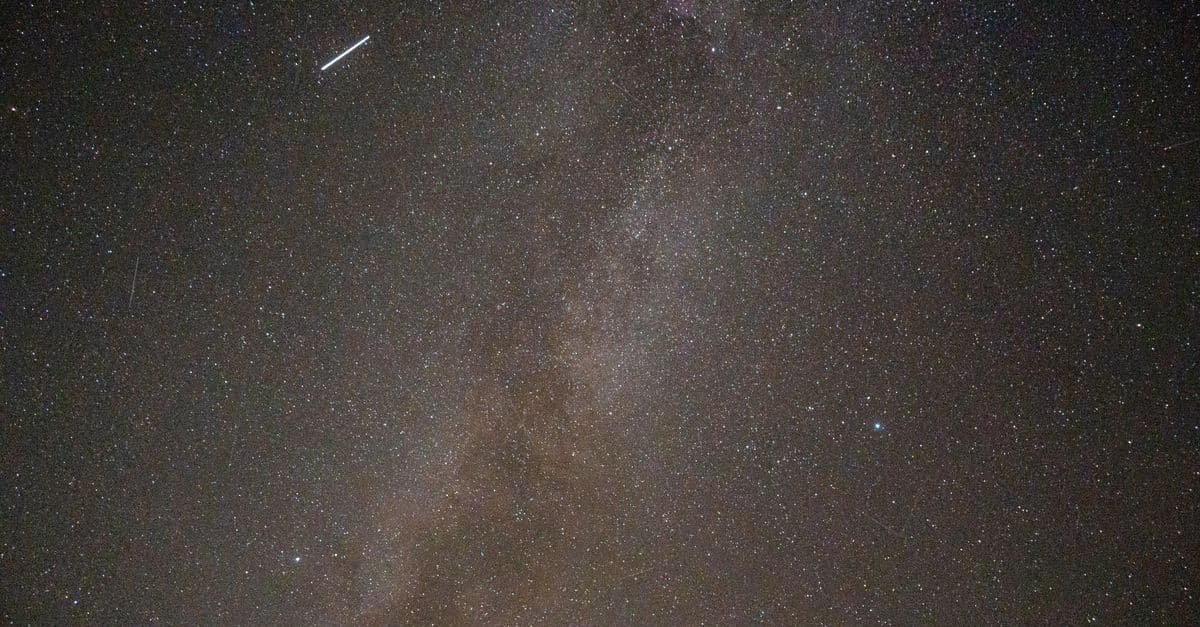
Photo: fish socks / Pexels
From a dark site far from city lights — a desert in winter, a mountain at altitude, any place far enough from the nearest parking lot — there is something visible in the western sky after twilight that most people have never heard of. A faint, diffuse pyramid of light rises from the horizon along the path of the zodiac, far broader than any galaxy arm but softer than any cloud, pale and white and utterly silent. It does not move. It is not a cloud. It has been there every clear night for the entire history of human civilization, noticed by ancient observers, misidentified for millennia, and still underappreciated. It is the zodiacal light, and it is the visible signature of 4.6 billion years of solar system debris.
What the Zodiacal Light Actually Is
The zodiacal light is sunlight — specifically, sunlight scattered off a vast, diffuse cloud of dust particles spread through the inner solar system in a lens-shaped concentration centered on the ecliptic plane (the plane of the solar system). The scattering is the same basic process that makes the sky blue and sunsets red, except the scatterers are not atmospheric molecules but solid dust grains ranging from a few micrometers to a few millimeters in size, floating in interplanetary space.
Zodiacal light — a faint, diffuse glow extending along the plane of the solar system (the ecliptic), visible before dawn in the east or after dusk in the west, caused by sunlight scattered off interplanetary dust particles concentrated in the inner solar system within roughly 3 AU of the Sun.
The "zodiacal" qualifier refers to its location: the dust follows the ecliptic plane, roughly the same path traced by the constellations of the zodiac. The light appears most intensely close to the Sun (within 30–40 degrees of the solar direction), as a conical or pyramidal glow, and extends in a much fainter band completely around the sky along the ecliptic — the zodiacal band — connecting to a diffuse brightening on the opposite side of the sky from the Sun called the gegenschein (German for "counter-glow"), produced by the enhanced backscattering of sunlight from dust particles directly behind Earth relative to the Sun.
Source: Leinert et al., Astronomy and Astrophysics Supplement (1998) — Comprehensive review of the zodiacal light: photometry, spatial distribution, dust properties, and the interplanetary dust complex as a whole.
The gegenschein is notoriously difficult to observe — it is roughly circular, perhaps 10 degrees across, and only about 50 to 100 nanostelwatts per square meter per steradian (extremely faint by any photometric standard), typically visible only from exceptional dark sites as a barely perceptible brightening against the zodiacal band. That this structure — stretched around the entire ecliptic plane — is visible at all from Earth's surface is a testament to how much dust the inner solar system contains.
Where the Dust Comes From
The interplanetary dust complex is not static. Dust particles in the inner solar system experience a slow, steady spiral toward the Sun due to the Poynting-Robertson effect: a particle absorbing sunlight and re-emitting thermal radiation preferentially in the forward direction loses angular momentum over time, causing its orbit to decay. A particle 100 micrometers in diameter at 1 AU drifts into the Sun in roughly 20,000 years. Without a continuous supply of fresh dust, the zodiacal cloud would dissipate quickly on geological timescales.
Poynting-Robertson effect — the slow orbital decay of dust particles caused by the directional asymmetry of absorbed and re-emitted radiation: a particle absorbs sunlight from the forward direction and re-emits thermal radiation symmetrically (in its own reference frame), which in the lab frame appears slightly asymmetric, resulting in a net drag on the particle's orbit and gradual inward spiraling toward the Sun.
The continuous replenishment comes from two main sources:
Comets contribute the dominant fraction of the submicron-to-millimeter dust. As comets approach the Sun and their ices sublimate, they release embedded dust grains in enormous quantities. Comet Halley alone was estimated to release about 10¹⁰ grams of dust per perihelion passage. Short-period Jupiter-family comets make frequent passes of the inner solar system (periods of 3–20 years) and are estimated to contribute 50–90% of the zodiacal dust mass, depending on the model.
Evidence: meteor showers, which are Earth passing through trails of comet dust, demonstrate directly that comets leave debris distributed along their orbits. The Perseid meteor shower comes from the debris trail of Comet Swift-Tuttle; the Leonids from Comet Tempel-Tuttle; the Eta Aquariids from Comet Halley. Over millions of years, this trail dust diffuses through the inner solar system via gravitational perturbations and the Poynting-Robertson effect, becoming part of the general zodiacal cloud.
Asteroid belt collisions contribute the larger fraction of millimeter-to-centimeter particles. Collisions between asteroids produce fragments; those fragments undergo further collisions in a collisional cascade, grinding material down to dust sizes that are then transported inward by the Poynting-Robertson effect. Infrared mapping of the zodiacal cloud reveals "bands" — slightly enhanced dust concentrations at the inclinations of specific asteroid families — confirming that recent collisions between particular asteroid family members have injected identifiable dust.
Source: Nesvorny et al., Astrophysical Journal (2010) — Dynamical modeling demonstrating that Jupiter-family comets are the dominant source of the inner zodiacal cloud dust, contributing ~85–90% of the flux detected by IRAS infrared satellite.
| Dust Source | Size Range | Dominant Region | Contribution |
|---|---|---|---|
| Jupiter-family comets | 0.1–1,000 µm | Inner solar system (< 3 AU) | ~85–90% of mass |
| Asteroid belt collisions | 0.1 mm–1 cm | Asteroid belt (2–3.5 AU) | ~10–15% of mass |
| Kuiper Belt (trans-Neptunian) | 1–1,000 µm | Outer solar system | Estimated few % |
| Interstellar dust | < 0.1 µm | Permeates solar system | Very small fraction |
The total mass of the interplanetary dust complex is estimated at roughly 10¹⁸–10¹⁹ grams — roughly the mass of a small asteroid. It occupies a volume of tens of billions of cubic kilometers but at a number density of perhaps one particle per cubic kilometer at 1 AU, making interplanetary space effectively empty in any practical sense while still being dense enough to scatter measurable amounts of sunlight.
Parker Solar Probe and the Dust-Free Zone
One of the most counterintuitive aspects of the inner solar system's dust distribution is what happens very close to the Sun. Intuitively, you might expect the dust density to increase all the way to the solar surface — after all, the Poynting-Robertson effect is constantly moving particles inward. But theory has long predicted that at some critical distance, the solar heat would become intense enough to sublimate (vaporize directly) the dust particles before they reach the Sun, creating a dust-free zone near the solar surface.
The prediction dates to the 1920s: at roughly 4 solar radii (about 0.02 AU), silicate and carbonaceous dust particles should be destroyed by sublimation. At roughly 19 solar radii (about 0.09 AU), even the most refractory particles — those that resist heat the longest — should be vaporized. Between 4 and 19 solar radii, different compositions would be progressively eliminated.
In 2021, a team using the Wide-field Imager for Solar Probe (WISPR) — a camera on NASA's Parker Solar Probe designed to image the solar corona and inner heliosphere — reported the first direct observational confirmation of the dust-free zone.
WISPR — the Wide-field Imager for Solar Probe, a pair of optical imagers on NASA's Parker Solar Probe designed to observe solar corona, solar wind structures, and the inner heliosphere in white light by detecting scattered and emitted photons; capable of imaging zodiacal dust scattered sunlight in the innermost solar system.
As Parker Solar Probe made successive close passes of the Sun (reaching within about 20 solar radii on its closest approaches), the WISPR team tracked the brightness of the zodiacal light in the sunward direction. They expected the brightness to increase continuously as the spacecraft moved closer, reflecting increasing dust density. Instead, they found the brightness increase to level off and then decrease at the innermost distances — consistent with entering a region where dust density was declining due to sublimation.
Source: Stenborg et al., Astronomy & Astrophysics (2021) — Parker Solar Probe WISPR observations detecting the decrease in F-corona brightness at approximately 19 solar radii, providing the first direct observational evidence for the dust-free zone near the Sun.
The dust-free zone boundary appears to begin at approximately 19 solar radii — close to but slightly larger than theoretical predictions, likely because the real dust particles have a distribution of compositions and sublimation temperatures rather than the single material assumed in simple models. Particles made of silicates sublime closer to the Sun; any iron-rich or refractory particles survive a bit farther out.
The vaporized material does not disappear — it becomes ionized by solar radiation and is then carried outward by the solar wind, distributing metals and molecular species through the inner heliosphere. The Sun is, very slowly, being enriched by the material that spirals into it and vaporizes, though the quantities involved are negligible compared to the Sun's own mass.
How to See the Zodiacal Light
The zodiacal light is actually bright enough to see with the naked eye under the right conditions. It is, in fact, one of the sky's brighter diffuse objects — roughly magnitude 3–4 per square degree at its peak near the Sun — but it requires specific conditions to detect:
- No Moon. The zodiacal light is faint enough to be completely overwhelmed by moonlight. Observations are only possible during the weeks around new Moon.
- No light pollution. Even modest suburban skyglow masks the zodiacal light completely. A Bortle Class 3 sky or better is typically needed.
- Correct season. The zodiacal cone is only visible above the horizon when the ecliptic plane rises steeply from the horizon. In the Northern Hemisphere, the best times are February–March after dusk (when the ecliptic is steep in the western sky after sunset) and September–October before dawn. In equatorial regions, the zodiacal light is visible year-round.
- Wait for full dark adaptation. After 20–30 minutes in the dark, human eyes achieve maximum sensitivity; the zodiacal light is much more obvious to a fully dark-adapted eye.
The zodiacal band (the fainter belt connecting the dawn cone to the dusk cone) and the gegenschein require even darker skies and are typically described as visible only from the darkest sites on Earth — the Chilean Atacama, Mauna Kea, the Australian outback.
Source: Kuchner et al., Astrophysical Journal (2000) — Observational photometry of the zodiacal light and gegenschein brightness across different ecliptic longitudes and latitudes, providing calibrated surface brightness maps for observers.
The Infrared Signature: What Spacecraft See
The zodiacal light as seen by the naked eye from Earth is only the most accessible manifestation of the interplanetary dust complex. In the infrared, the dust is far more prominent — it absorbs sunlight and re-emits it as thermal radiation peaking in the mid-infrared (around 10–25 micrometers), making the zodiacal cloud the brightest diffuse feature of the mid-infrared sky.
For space-based infrared observatories, the zodiacal light is a significant source of background noise, limiting sensitivity toward faint astronomical sources near the ecliptic. The Infrared Astronomical Satellite (IRAS), launched in 1983, provided the first all-sky map at 12, 25, 60, and 100 micrometers and revealed the detailed structure of the zodiacal cloud in unprecedented detail: the dust bands associated with specific asteroid families, the trails left by individual comets (discrete elongated filaments of dust along orbital paths), and the overall three-dimensional distribution of the cloud.
JWST, operating at wavelengths from 0.6 to 28 micrometers, must carefully model and subtract the zodiacal light contribution from its images to extract faint extragalactic signals. For observations near the ecliptic, the zodiacal background can dominate over the astronomical signal, constraining which objects can be studied at which sensitivity levels.
Source: Low et al., Astrophysical Journal Letters (1984) — IRAS discovery of the asteroidal dust bands and cometary dust trails in the infrared zodiacal cloud, demonstrating the detailed structure within the interplanetary dust complex.
Connection to Exoplanet Debris Disks
The interplanetary dust complex around the Sun is a scaled-down version of a phenomenon observed around thousands of other stars: debris disks. These are extended disks or rings of dust and larger bodies — planetesimals, asteroid belt analogs, comet analogs — orbiting other stars and detected primarily through their excess infrared emission above what the star alone would produce.
Debris disk — a circumstellar disk of dust and small solid bodies around a main-sequence star, generated by ongoing collisions among larger parent bodies (planetesimals); the dust emits thermally in the infrared, making debris disks detectable around nearby stars even when individual bodies are too small to image directly.
About 20–25% of nearby sun-like stars show detectable infrared excess at far-infrared wavelengths, indicating the presence of a substantial debris disk. Famous examples include:
Vega (25 light-years): One of the first debris disks discovered, from IRAS 1983 data. Vega's disk is much more luminous than the solar zodiacal cloud, suggesting a higher rate of collisions among planetesimals — possibly analogous to the Late Heavy Bombardment period in our solar system's history.
Fomalhaut (25 light-years): A narrow, offset ring imaged in detail by HST and JWST. The ring's sharp inner edge and slight eccentricity suggest an unseen planet sculpting it from the interior — similar to how Neptune's moon Galatea sculpts Neptune's ring arcs.
Beta Pictoris (63 light-years): A nearly edge-on disk that allowed direct imaging of a disk warp — subsequently explained by the presence of the planet Beta Pictoris b, directly imaged in 2008. The disk contains multiple structural features, each pointing to the gravitational influence of planets.
The connection is direct: just as the gaps and structures in Saturn's rings reveal the gravitational architecture of its moon system, and just as the solar zodiacal cloud's structure encodes the history of cometary and asteroidal activity in our solar system, the structure of a stellar debris disk is a probe of the unseen planetary system within it. Gaps, rings, asymmetries, and warps all encode planetary masses, orbits, and numbers.
Source: Wyatt, Annual Review of Astronomy and Astrophysics (2008) — Comprehensive review of debris disk observations, theory, and the connection between disk structure and underlying planetary systems.
JWST has pushed debris disk science substantially further by resolving dust structures at far-infrared and mid-infrared wavelengths at unprecedented sensitivity, detecting very faint disks (equivalent to the solar zodiacal cloud brightness level) around nearby stars and beginning to map substructure within them at resolutions that can, in principle, localize the influence of individual unseen planets.
The Meteorite Connection: Dust That Reaches Earth
The interplanetary dust complex is not entirely separate from Earth. Particles of the right size — roughly 10 micrometers to 1 millimeter — are slow enough when they hit the upper atmosphere to decelerate without vaporizing and drift to the ground as cosmic dust or micrometeorites. Earth accretes roughly 40,000 tonnes of extraterrestrial material per year, with most of this being fine interplanetary dust rather than macroscopic meteorites.
These cosmic dust particles, when collected from stratospheric aircraft flights or from Antarctic ice (where they accumulate without terrestrial contamination) and examined under electron microscopes, provide direct samples of the interplanetary dust complex. They fall into two main categories: chondritic smooth particles (relatively unaltered, composed of silicates and organics, from asteroidal sources) and fluffy aggregate particles (fragile, porous aggregates of small grains, from cometary sources). The morphology reflects the collection mechanism: cometary particles are released gently from sublimating surfaces and maintain the fluffy aggregate structure of the original comet surface; asteroidal particles result from violent collisions and are more compact and processed.
Analysis of these particles has found amino acids, complex organic molecules, and in some cases presolar grains — tiny mineral grains that condensed around other stars before the solar system formed and survived unaltered through 4.6 billion years of solar system history. The interplanetary dust complex is, in this sense, a delivery vehicle for the raw materials of chemistry.
Source: Brownlee, Annual Review of Earth and Planetary Sciences (1985) — Characterization of stratospheric cosmic dust particles (interplanetary dust particles, IDPs) collected by NASA aircraft, establishing morphological categories and compositional classes.
The cosmic ray connection provides another dimension: galactic cosmic rays (discussed separately in the context of cosmic ray origins) interact with interplanetary dust particles in ways that can alter their surface chemistry and create specific isotopic signatures that serve as exposure age indicators. A dust grain's cosmic-ray exposure history encodes how long it has been traveling as a free grain in space before reaching Earth.
The Bigger Picture: Dust as a Tracer of Planetary History
The zodiacal cloud is not a fixed background feature of the solar system. It fluctuates. Major cometary breakup events — like the disruption of Comet Schwassmann-Wachmann 3 in 2006, which released enormous amounts of material into the inner solar system — temporarily increase dust production. Periods of enhanced asteroid collisions in the asteroid belt would increase the dust flux. During the Late Heavy Bombardment (approximately 4.0–3.8 billion years ago), when a major reshuffling of giant planet orbits sent a wave of impactors through the inner solar system, the zodiacal cloud would have been orders of magnitude brighter than today.
For exoplanets, this variability has implications: a star's debris disk brightness is a rough indicator of the level of collisional activity among its planetesimals, and hence an indirect indicator of the dynamical state of its planetary system. A very bright disk suggests recent major collisions or a planetary system still in a dynamically unsettled phase. A faint disk like the Sun's suggests a mature, settled system — one with fully formed planets on stable orbits that no longer stir up catastrophic planetesimal collisions on large scales.
The zodiacal light you can observe from a dark field before dawn is therefore a direct window onto the current state of our solar system's collisional environment — stable, relatively quiescent, but still grinding through the last of its primordial debris. Every meteor shower traces a thread of cometary material; the persistent faint cone of light traces the integrated sum of billions of years of the same process.
For context on the stellar remnants and dense objects around which debris disks sometimes form, and how the gravitational dynamics of these systems shape the surrounding material, stellar evolution from birth to death provides the foundational timeline. The dust around other stars that JWST now resolves in high-fidelity images likely contains the same stories written in our own zodiacal cloud — just at different chapters of each system's history.
The Takeaway
The zodiacal light is one of the few naked-eye phenomena most people have never consciously seen, despite its presence every clear night. It is sunlight scattered off a lens-shaped cloud of interplanetary dust — mostly cometary debris and asteroid collision ejecta — spread through the inner solar system and continuously replenished as fast as the Poynting-Robertson effect drains it into the Sun. Parker Solar Probe's WISPR imager confirmed in 2021 that the dust does not reach all the way to the Sun: at about 19 solar radii, it encounters enough heat to sublimate, leaving a dust-free zone that theory predicted for nearly a century. The same cloud of particles, observed in the infrared, connects to debris disks around other stars — the gravitational fingerprints of unseen planetary systems written in scattered light. The zodiacal light is, in short, the solar system's biography rendered visible — dusty, faint, and still being written.
Frequently Asked Questions
Q: What causes the zodiacal light?
A: Sunlight scattered off interplanetary dust particles concentrated in the ecliptic plane (the plane of the solar system). The dust is composed primarily of material released by comets (as their ices sublimate near the Sun) and debris from collisions in the asteroid belt. The scattering produces a faint, diffuse glow along the path of the zodiac, brightest near the Sun and fading with angular distance.
Q: When and where can I see the zodiacal light?
A: The zodiacal light requires a dark sky (no Moon, minimal light pollution), dark-adapted eyes, and the right season. In the Northern Hemisphere, the best viewing times are after dusk in February–March (looking west) and before dawn in September–October (looking east). The ecliptic needs to rise steeply from the horizon, which only happens at specific times of year at mid-latitudes. From equatorial regions it is visible year-round in both the east and west.
Q: What did Parker Solar Probe discover about dust near the Sun?
A: Using the WISPR wide-field imager, Parker Solar Probe detected in 2021 that the brightness of the zodiacal light (F-corona) in the sunward direction levels off and decreases at distances of roughly 19 solar radii from the Sun. This confirmed the existence of a long-predicted dust-free zone: at this distance, the solar heat is sufficient to sublimate (vaporize) the dust particles before they reach the solar surface.
Q: What is the gegenschein?
A: The gegenschein (German for "counter-glow") is a faint, roughly circular brightening of the sky at the point directly opposite the Sun in the sky, visible as a slight brightening within the zodiacal band. It results from enhanced backscattering of sunlight by dust particles in that direction — at the exact anti-solar point, the opposition surge (coherent backscattering and shadow-hiding) causes slightly more light to return toward the observer. It requires extremely dark skies to detect.
Q: How is the zodiacal light related to meteor showers?
A: Meteor showers occur when Earth passes through the debris trail of a specific comet — a concentrated stream of particles along the comet's orbit. Over millions of years, gravitational perturbations and the Poynting-Robertson effect spread this material throughout the inner solar system, where it becomes part of the general interplanetary dust cloud responsible for the zodiacal light. Meteor showers are the localized, concentrated version; the zodiacal cloud is the diffused, integrated result of the same process over geological time.
Q: What are debris disks around other stars, and how do they relate to our zodiacal cloud?
A: Debris disks are circumstellar disks of dust and small solid bodies (planetesimals) around main-sequence stars, detected by their excess infrared emission. They are the extrasolar equivalent of the solar system's interplanetary dust complex — generated by ongoing collisions among asteroid belt analogs and comet analogs. Their structure (gaps, rings, asymmetries) encodes the gravitational influence of unseen planets. Our zodiacal cloud is a relatively faint, mature debris disk by comparison with examples like Vega or Fomalhaut.
Q: Does interplanetary dust reach Earth?
A: Yes. Earth accretes roughly 40,000 tonnes of extraterrestrial material per year, most of it fine interplanetary dust particles (micrometeorites) in the 10 micrometer to 1 millimeter size range. These drift gently through the upper atmosphere and can be collected from stratospheric aircraft or Antarctic ice cores. Analysis reveals they include both asteroidal particles and fluffy cometary aggregates, often containing complex organic molecules and occasionally presolar grains that predate the solar system.
Read next:
Follow new articles
Add SciHub101 to your feed reader to see new science and technology stories.
About the Author
SciHub101 is an independent science and technology publication founded and edited by Buğra Sözeri, a software engineer and app developer based in Türkiye. AI tools assist with drafting and research. Source documentation in the existing archive is uneven, and articles are being reviewed and corrected. The Editorial Team byline identifies editorial responsibility; it does not certify specialist or independent human review. Where we compare products, anything built by our own team is labelled as such — see the editorial guidelines and About page for how corrections and disclosures work.
Related Articles
Triton: Neptune's Captured Moon and Its Inevitable Doom
Triton orbits Neptune backward, spews nitrogen geysers from a surface colder than anywhere else in the solar system, and is gradually spiraling toward a catastrophic end. It almost certainly came from the Kuiper Belt — and its violent capture may have reshaped the entire Neptunian system.
The Wow Signal 1977: 72 Seconds That Still Haunt Astronomy
On August 15, 1977, a radio telescope in Ohio detected a signal so precisely matched to the expected frequency of extraterrestrial contact that the astronomer who found it circled it in red ink and wrote one word. The signal never repeated. Nearly five decades later, astronomers still cannot fully agree on what caused it.
Long-Period Comets: Messengers From the Edge of the Solar System
Comet Hale-Bopp, which dominated the 1997 night sky, had not been seen by any human being before. Its previous perihelion passage was in approximately 2215 BCE, before writing systems existed in most of the world. It had spent the intervening 4,200 years falling inward from the outer solar system at speeds so slow that a bicycle could have overtaken it. When it finally arrived, its pristine composition — unchanged since the solar system formed 4.5 billion years ago — gave scientists a direct sample of the raw material from which planets were built. Long-period comets are the oldest, least-altered objects available for study. They are time capsules from the beginning.
Asteroids, Comets, and Meteors — What's the Difference?
Asteroids, comets, meteoroids, meteors, and meteorites — what each one is, where they come from, and how scientists study them.
2I/Borisov: The First Confirmed Interstellar Comet
In August 2019, an amateur astronomer in Crimea spotted a faint smudge moving at impossible speed. It turned out to be a comet from another star system — only the second interstellar object ever confirmed in our solar system, and the first one to look genuinely familiar.
Planetary Rings Explained: Not Just Saturn
Saturn's rings are the solar system's most famous structure, but they are far from unique. Uranus has 13 dark, narrow rings discovered by accident in 1977. Neptune has incomplete arcs instead of full circles. Jupiter has a faint ring made of dust blasted off its innermost moons by meteorite impacts. All four giant planets have rings — and they all work differently. Saturn's may be geologically young, which raises a question nobody has fully answered: where did they come from?