Triton: Neptune's Captured Moon and Its Inevitable Doom
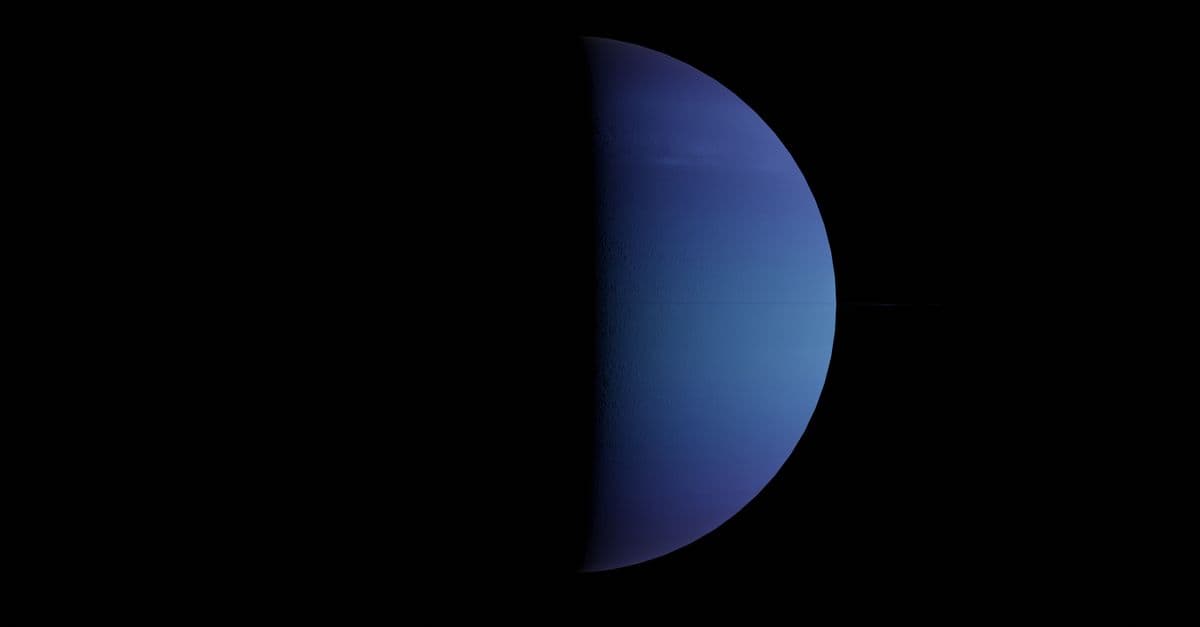
Photo: Zelch Csaba / Pexels
Every moon in the solar system formed alongside its planet from the same spinning disk of gas and dust, and every such moon orbits in the same direction its planet rotates. Except Triton. Neptune's largest moon circles its planet backward — retrograde — and that single orbital fact contains an entire violent history: a world that formed somewhere else entirely, was gravitationally captured by Neptune in a chaotic early solar system, and has been paying the orbital price ever since. It is also one of the most geologically active bodies we have visited, despite sitting nearly 4.5 billion kilometers from the Sun.
Key takeaways
- Triton's retrograde orbit is definitive evidence it did not form alongside Neptune but was captured from elsewhere — almost certainly the Kuiper Belt.
- Triton is the only large moon in the solar system on a retrograde orbit, making it unique among major moons.
- Voyager 2's August 25, 1989 flyby detected nitrogen geysers erupting up to 8 km high, despite surface temperatures of approximately −235°C (38 K).
- Triton's surface is geologically young — estimated at only 10 million years old — suggesting ongoing resurfacing by cryovolcanic activity.
- Tidal forces are decaying Triton's orbit over billions of years. It will eventually cross Neptune's Roche limit and either collide with the planet or break apart into a ring.
- The proposed Trident Discovery mission would provide the first close flyby since 1989, targeting Triton as a potential ocean world.
The One Piece of Evidence That Changes Everything
If you know one thing about Triton, let it be this: it orbits Neptune in the wrong direction.
Neptune rotates counterclockwise on its axis when viewed from above the solar system's north pole — the same direction as every other planet (with the exception of Venus and Uranus, which have their own complications). Moons that form in the same protoplanetary disk as their parent planet orbit in that same prograde direction. Earth's Moon is prograde. Jupiter's Galilean moons are prograde. Saturn's Titan is prograde.
Triton is retrograde. It orbits clockwise relative to Neptune's rotation, inclined at about 157 degrees to Neptune's equatorial plane.
There is no formation scenario that produces a large retrograde moon from a prograde protoplanetary disk. The laws of angular momentum conservation make it impossible. The only explanation is capture: Triton formed elsewhere, and Neptune's gravity snatched it out of an independent solar orbit.
The capture almost certainly happened during the early solar system, when the giant planets were still migrating through a dense disk of planetesimals. Neptune's outward migration would have scattered enormous numbers of Kuiper Belt Objects — and in a sufficiently dense environment, a multi-body gravitational interaction could have robbed Triton of enough orbital energy to bind it to Neptune permanently.
Kuiper Belt — a disk-shaped region of the outer solar system extending from roughly 30 to 50 AU beyond Neptune, populated by billions of icy bodies left over from solar system formation. It is the source of most short-period comets and likely the original home of Pluto, Eris, and Triton.
Source: Agnor & Hamilton, Nature (2006) — Proposed binary exchange capture model for Triton: Triton was originally part of a binary Kuiper Belt pair, and the binary's tidal encounter with Neptune ejected the companion and bound Triton.
The Violence of Capture
Capture by a planet is not gentle. When Triton first entered Neptune's gravitational sphere of influence, it would have been on a wildly eccentric orbit — looping far out and plunging deep in, heated by tidal flexing and gravitational interactions.
The most mathematically viable capture mechanism, proposed by Craig Agnor and Douglas Hamilton in 2006, involves Triton arriving as part of a binary pair. Binary Kuiper Belt Objects — two bodies orbiting each other while jointly orbiting the Sun — are common; roughly 5–10% of Kuiper Belt Objects are known binaries. When such a binary has a close encounter with a massive planet, the gravitational interaction can disrupt the pair, capturing one and ejecting the other. The energy transfer comes from the binary's internal orbital energy, making capture permanent without requiring an unrealistically precise approach.
This capture would have been catastrophic for the young Neptunian system. Before Triton arrived, Neptune likely had a family of smaller prograde moons similar to Uranus's inner system. Triton's highly eccentric early orbit would have swept through these moons repeatedly, destabilizing and eventually clearing them out. The current chaotic system of small irregular moons around Neptune — bodies with tilted, eccentric orbits — may be the debris field of that ancient carnage.
Over millions of years, tidal dissipation circularized and shrank Triton's orbit to its current near-circular retrograde path. The energy lost to tidal heating in that process would have kept Triton's interior warm — possibly maintaining a liquid water ocean beneath the surface for hundreds of millions of years after capture.
Source: Nogueira et al., Icarus (2011) — Numerical modeling of Triton's post-capture orbital evolution and implications for original Neptunian moon system.
Voyager 2's 1989 Discovery: A Geologically Alive World
Before Voyager 2's Neptune flyby on August 25, 1989, Triton was expected to be a dead, heavily cratered ice ball — the frozen outer solar system analogue of a geological corpse. What the spacecraft found was something else entirely.
Triton's surface temperature measured approximately −235°C (38 K), making it one of the coldest surfaces in the solar system — just 38 degrees above absolute zero. At those temperatures, nitrogen is solid. Carbon monoxide and methane freeze out of the atmosphere.
Yet the surface was erupting.
Voyager 2's cameras captured dark streaks across the southern polar cap — the remnants of geyser plumes that had deposited dark material in the downwind direction. Active geysers were observed erupting 8 km into Triton's thin nitrogen atmosphere. The plumes were driven not by volcanic heat from below but by solar heating from above: the South Pole was in the middle of a 40-year summer. Even this far from the Sun, sunlight penetrates the transparent nitrogen ice and is absorbed by the dark substrate below, creating a sublimation-driven overpressure that erupts through the ice as a geyser.
Cryovolcanism — volcanic-like activity in which volatile substances (water, nitrogen, methane, ammonia) play the role that lava does in conventional volcanism. Instead of molten rock erupting, cryovolcanism involves liquids or gases of these volatile compounds being expelled through the crust of an icy body.
The surface itself showed almost no impact craters. Crater counts are the standard tool for estimating a surface age: more craters means older. Triton's surface, extrapolated from Voyager 2 images, is estimated at only about 10 million years — a geological instant in a solar system that is 4.6 billion years old. Something has been continuously resurfacing Triton, erasing the cratering record.
Source: NASA/JPL Voyager 2 Science Team (1989) — Neptune encounter results, Science special issue 246(4936).
The Thin Atmosphere and Its Chemistry
Triton has an atmosphere, which is unusual for a moon this size at this distance from the Sun. It is extremely thin — surface pressure roughly 14 microbars, about 70,000 times less than Earth's sea-level pressure — but it exists and has been detected spectroscopically.
The atmosphere is predominantly nitrogen (N₂) with trace amounts of methane (CH₄) and carbon monoxide (CO). It varies seasonally: Triton's poles alternate between extended summer and winter over a roughly 80-year cycle as Neptune orbits the Sun. During southern summer (which was in progress during the 1989 Voyager encounter), sublimating nitrogen from the south polar cap replenishes the atmosphere. During winter, atmospheric nitrogen re-freezes back onto the surface.
The methane in Triton's atmosphere is chemically active under ultraviolet radiation, producing complex organic compounds called tholins — reddish-brown organic goo that coats the surface and gives Triton its pinkish hue. Tholins are considered potential prebiotic molecules in discussions of life's origins, though Triton's extreme cold makes biochemistry essentially impossible at the surface.
The cantaloupe terrain — large rounded ridges and depressions covering much of Triton's mid-latitudes and resembling the surface of a cantaloupe melon — has no direct analog elsewhere in the solar system. Its origin is debated: some researchers attribute it to convective overturn of the subsurface ice shell, others to ancient cryovolcanic flooding.
Source: Smith et al., Science (1989) — Voyager 2 atmospheric measurements and surface compositional analysis of Triton.
Is There an Ocean Under the Ice?
Triton's tidal history points toward an intriguing possibility that the Voyager 2 flyby could not definitively answer: a subsurface liquid water ocean.
During the centuries following capture, tidal dissipation would have been intense. As Triton's eccentric orbit circularized, the periodic tidal flexing generated frictional heat inside the moon — similar to the mechanism that keeps Jupiter's moon Io volcanically active, but on a different timescale. Models suggest this heating could have maintained a liquid water ocean for hundreds of millions of years after capture.
The question is whether that ocean persists today. Triton's surface is too cold for liquid water, but deep beneath the surface, a combination of residual radiogenic heat and tidal heating from the current circular orbit might keep water liquid. The geologically young, resurfaced terrain and the existence of active geysers suggest Triton's interior is not completely dead.
If Triton harbors a subsurface ocean today, it joins Europa, Enceladus, and Titan as candidate ocean worlds in the outer solar system — bodies where liquid water exists beneath an icy shell, potentially in contact with a rocky seafloor, and possibly capable of supporting chemistry relevant to life's origins.
The Trident mission concept, developed at JPL and proposed as a NASA Discovery mission, is specifically designed to answer this question. A single flyby would map Triton's surface in full, measure its gravitational field to constrain internal structure, sample the atmosphere and plume material, and look for magnetic signatures consistent with an ocean.
Source: Prockter et al., Lunar and Planetary Science Conference (2019) — Trident mission concept and science objectives.
Triton's Orbital Decay and Inevitable End
Triton's retrograde orbit is not merely unusual — it is dynamically unstable on geological timescales.
Any moon in a retrograde orbit around a prograde-rotating planet loses orbital energy through tidal interaction. The math is the same as for the Moon, but in reverse. The Moon is spiraling away from Earth because tidal bulges raised by the Moon are dragged slightly ahead of the Earth-Moon line by Earth's rotation, pulling the Moon forward. For a retrograde moon, tidal bulges are dragged in the opposite direction, braking the moon's orbit and causing it to spiral inward.
Triton is currently at about 355,000 km from Neptune's center — closer than the Moon is to Earth. It is slowly but measurably spiraling inward.
The endpoint is the Roche limit: the distance at which tidal forces overcome a body's self-gravity, tearing it apart. For Triton orbiting Neptune, this limit lies at roughly 2.5 Neptune radii.
When Triton crosses the Roche limit — in roughly 3.6 billion years by traditional estimates, though newer 2025 analyses suggest the timeline may extend considerably — it will either collide with Neptune's upper atmosphere or break apart into a ring system. If it fragments, Neptune would briefly acquire a ring system more spectacular than Saturn's — fed by the material of a 2,700-km-diameter moon. The ring would then slowly disperse or accrete onto Neptune over subsequent millions of years.
Source: Chyba et al., Nature (1989) — Early estimate of Triton's orbital decay timescale and Roche limit crossing.
Source: phys.org (2026, citing recent dynamical study) — Updated models suggest Triton's stability may exceed earlier estimates, potentially reaching 28 billion years before Roche limit crossing.
Triton Compared to Other Ocean Moon Candidates
| Property | Triton | Europa | Enceladus |
|---|---|---|---|
| Parent planet | Neptune | Jupiter | Saturn |
| Diameter | 2,707 km | 3,122 km | 504 km |
| Surface temperature | −235°C | −160°C | −200°C |
| Confirmed activity | Nitrogen geysers | Tidal heating (inferred) | Water vapor plumes |
| Likely subsurface ocean | Possible | High confidence | High confidence |
| Last visited | Voyager 2 (1989) | Galileo (1995–2003) | Cassini (2004–2017) |
| Orbital direction | Retrograde (captured) | Prograde (formed in place) | Prograde (formed in place) |
The contrast between Triton and its counterpart ocean moon candidates is instructive. Europa and Enceladus are confidently expected to have subsurface oceans based on multiple lines of evidence. Triton's ocean case rests primarily on its thermal history and the young surface — but neither Cassini nor any dedicated mission has ever orbited Neptune, leaving Triton as perhaps the least understood large, geologically active body in the solar system.
For context on what has been found at confirmed ocean worlds, see the search for life on Europa and Enceladus and Enceladus's hydrothermal vents.
Why Triton Has Waited 35 Years for a Return Visit
Voyager 2's 1989 flyby was humanity's only close look at the Neptunian system. Unlike the Jupiter and Saturn systems, which have each received multiple dedicated orbiters (Galileo, Juno, Cassini), Neptune has received nothing since. The reason is partly geometric: reaching Neptune via gravity assist requires alignments of the outer planets that occur on 12-year cycles, and the optimal window is not always funded. Neptune orbiter missions are also expensive and long — any mission launched in the mid-2020s would not arrive at Neptune until the late 2030s or early 2040s.
The Trident mission was a proposed Discovery-class mission (lower-cost category) designed to execute a single Triton flyby for roughly $500 million. It was not selected in the 2021 Discovery competition, losing to two Venus missions. However, the concept remains under study, and the scientific case for a Triton return — as both a geologically active world and a possible ocean moon — is strengthened with each passing year.
Source: NASA JPL Trident mission page (2020) — Trident Discovery mission proposal and science objectives summary.
The Trident Mission: Humanity's Proposed Return to Neptune
The case for returning to the Neptunian system is straightforward: Voyager 2 gave us 72 hours of close-up data in August 1989, covered roughly 40% of Triton's surface, and had instruments that, by modern standards, were limited in sensitivity and resolution. More than three decades of advances in planetary science — the discovery of ocean worlds at Europa and Enceladus, the reclassification of Pluto as a Kuiper Belt object, the growing evidence for subsurface oceans across the outer solar system — have reframed Triton from an oddity into a priority.
The mission concept developed to address this is Trident, a proposed NASA Discovery-class spacecraft designed for a single flyby of Triton in the 2038–2040 timeframe. Discovery-class missions are NASA's lower-cost competed program, with a target budget near $500 million (2020 dollars), significantly cheaper than flagship orbiters like Cassini or the Europa Clipper. A flyby rather than an orbiter is dictated by cost and by the difficulty of achieving Neptune orbit insertion, which requires either a large propulsion system or an extended tour that adds years to mission duration.
The 2034 launch window is the critical constraint. Neptune is far enough from the Sun that reaching it in a reasonable timeframe — under 15 years — requires a gravity assist from Jupiter. Jupiter and Neptune align for this trajectory only periodically, with the next optimal window opening around 2034–2035. Miss that window, and the next comparable opportunity does not recur for roughly 12 years. This is the same geometric constraint that made Voyager 2's 1989 flyby possible — the Grand Tour alignment of outer planets that Voyager exploited will not recur in its original form, but a Jupiter-assisted trajectory to Neptune remains achievable in the mid-2030s.
Gravity assist (gravitational slingshot) — a maneuver in which a spacecraft uses the gravity and motion of a planet to change its speed and direction without expending propellant. Voyager 2 used Jupiter, Saturn, and Uranus gravity assists to reach Neptune; Trident would use Jupiter alone.
Trident's science objectives, as defined in the mission concept study presented to the 2023–2032 Planetary Science Decadal Survey, center on four questions. First: is Triton an active ocean world? The mission would measure Triton's gravitational field to constrain its internal structure — a liquid water layer beneath the ice shell would produce a measurable gravitational signature. Second: what is the composition of Triton's plumes and atmosphere? Mass spectrometry of the gas erupting from the geysers would directly sample Triton's interior chemistry. Third: what does the unimaged 60% of Triton's surface look like? Full mapping would determine whether the cantaloupe terrain, active geysers, and polar caps extend globally or are localized. Fourth: what is Neptune's magnetosphere doing? Voyager 2 found that Neptune's magnetic field is dramatically tilted and offset from the planet's center, an unusual configuration that Trident would characterize in more detail.
The Decadal Survey — the field's consensus document for prioritizing planetary science for a decade — published its recommendations in 2023 as "Origins, Worlds, and Life." The survey identified a Uranus orbiter as the top priority flagship mission, with smaller missions to ocean worlds as high priorities. Trident, as a Discovery-class concept, was recognized as scientifically compelling but was not selected in the 2021 Discovery competition, which instead chose the DAVINCI and VERITAS Venus missions. As of 2026, Trident remains under study at JPL as a concept for the next Discovery competition, with the 2034 window providing urgency.
Source: Prockter et al., Planetary Science Journal (2022) — Trident mission concept paper detailing science objectives, instrument payload, trajectory design, and cost estimates for a Triton flyby targeting the 2034 Jupiter gravity assist window.
The Takeaway
Triton is, in many ways, an alien in its own planetary system. Captured from the Kuiper Belt, retrograde in orbit, geologically young despite sitting at the edge of the solar system, potentially harboring a subsurface ocean, and slowly spiraling toward an ultimate catastrophe — it packs more story per kilometer than almost any other moon. Voyager 2 gave us 72 hours of data from its 1989 flyby. The gaps in that dataset — the 60% of the surface never imaged, the unmeasured interior, the unsampled plume chemistry — are the reasons the planetary science community keeps proposing return missions. Triton is not a solved problem. It is an open question the size of a world.
Read next:
- The Search for Life on Europa and Enceladus: The Ocean Moons
- Enceladus Hydrothermal Vents and the Possibility of Life
- How Stars Are Born and Die: Stellar Evolution
Q: Why does Triton orbit Neptune backward?
A: Because it did not form alongside Neptune. A moon that formed in Neptune's protoplanetary disk would orbit in the same direction Neptune rotates. Triton's retrograde orbit proves it was captured from outside — almost certainly from the Kuiper Belt during the early solar system.
Q: What did Voyager 2 discover on Triton?
A: Nitrogen geysers erupting up to 8 km high, a geologically young surface estimated at only about 10 million years old, a thin nitrogen atmosphere, and dark streaks left by wind-blown plume deposits. The discoveries revealed an unexpectedly active world at extreme cold.
Q: What will happen to Triton?
A: Tidal interactions are slowly decaying Triton's orbit. Eventually it will cross Neptune's Roche limit — the distance at which tidal forces overwhelm self-gravity — and either collide with Neptune or break apart into a ring system. Traditional estimates placed this at 3.6 billion years; newer models suggest the timeline may be longer.
Q: Could Triton support life?
A: Triton's surface at −235°C is far too cold for any known biochemistry. However, if it harbors a subsurface liquid water ocean — which its thermal history suggests is plausible — it would join Europa and Enceladus as candidate ocean worlds where life's chemistry might operate.
Q: What is the Trident mission?
A: A proposed NASA Discovery-class mission designed to fly by Triton and map its surface, measure its internal structure, sample the atmosphere and plumes, and determine whether it has a subsurface ocean. It was not selected in the 2021 Discovery competition but remains an active concept.
Q: Is Triton bigger than Pluto?
A: Yes. Triton has a diameter of approximately 2,707 km; Pluto is about 2,377 km. Both are thought to have formed in the Kuiper Belt. Triton was captured by Neptune; Pluto remained on its own orbit and was classified as a dwarf planet in 2006.
Follow new articles
Add SciHub101 to your feed reader to see new science and technology stories.
About the Author
SciHub101 is an independent science and technology publication founded and edited by Buğra Sözeri, a software engineer and app developer based in Türkiye. AI tools assist with drafting and research. Source documentation in the existing archive is uneven, and articles are being reviewed and corrected. The Editorial Team byline identifies editorial responsibility; it does not certify specialist or independent human review. Where we compare products, anything built by our own team is labelled as such — see the editorial guidelines and About page for how corrections and disclosures work.
Related Articles

Venus's Volcanoes: The Planet That Erased Its Own History
Venus has almost no impact craters. That fact alone reveals something extraordinary about its past — and a 2023 re-analysis of 30-year-old radar images just caught its volcanoes in the act.
The Zodiacal Light: The Solar System's Hidden Glow
Before dawn in a dark-sky location, a ghostly pyramid of light rises from the eastern horizon along the path of the zodiac. Ancient observers thought it was a meteorological phenomenon — moisture in the upper atmosphere catching the sun. It is not. It is sunlight scattered off trillions of interplanetary dust particles spread across the entire inner solar system, the ground-down debris of comets and asteroids, and it is far stranger than it looks. In 2021, a camera on NASA's Parker Solar Probe detected that this dust does not extend all the way to the Sun.
Planetary Rings Explained: Not Just Saturn
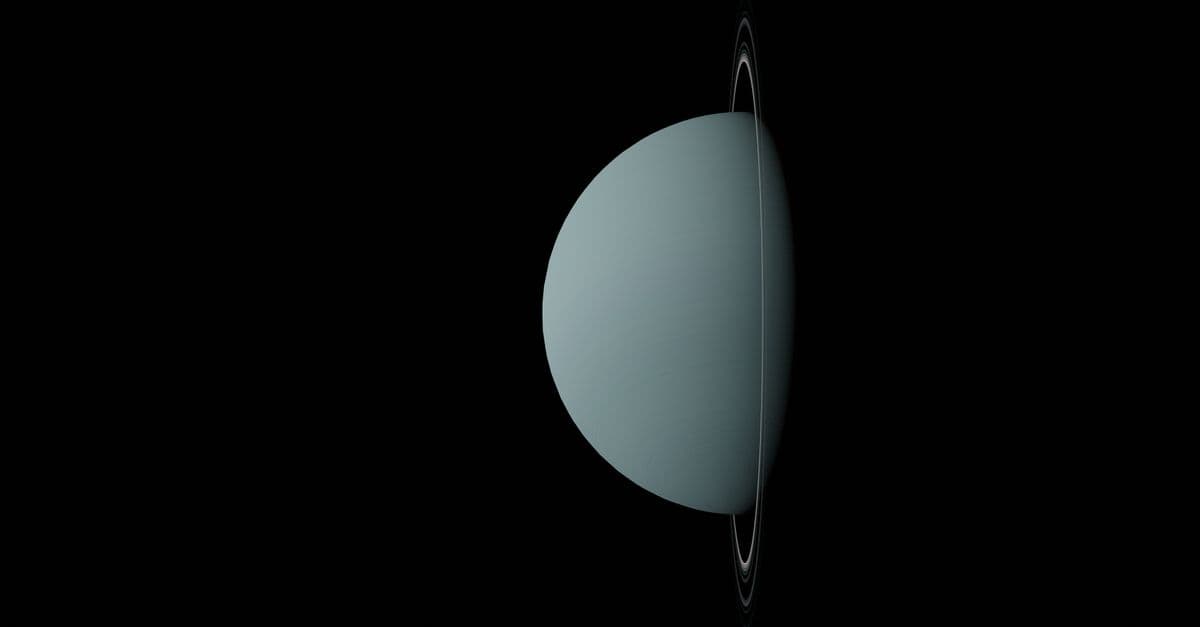
Saturn's rings are the solar system's most famous structure, but they are far from unique. Uranus has 13 dark, narrow rings discovered by accident in 1977. Neptune has incomplete arcs instead of full circles. Jupiter has a faint ring made of dust blasted off its innermost moons by meteorite impacts. All four giant planets have rings — and they all work differently. Saturn's may be geologically young, which raises a question nobody has fully answered: where did they come from?
The Voyager Probes: Humanity's Messengers in Interstellar Space
Launched in 1977, Voyager 1 and 2 are now in interstellar space — and still phoning home after nearly five decades.
Uranus and Neptune: The Solar System's Forgotten Ice Giants
Uranus and Neptune are the outermost planets in the solar system — massive worlds of water, methane, and ammonia ice that defy easy classification. Uranus spins on its side and is mysteriously cold, while Neptune radiates twice as much heat as it receives and harbors a giant storm. Both remain almost entirely unexplored.
Voyager 1 and 2 — The Most Distant Human-Made Objects in Space
Launched in 1977, the two Voyagers are still flying. They've left the solar system, are over 20 billion km from Earth, and carry a golden record meant for any aliens who might find them.