
Experiments
The Voyager Grand Tour Explained
Voyager used rare planetary alignment, gravity assists, and durable engineering to transform knowledge of the outer Solar System.
4 articles tagged with #Neptune
Voyager used rare planetary alignment, gravity assists, and durable engineering to transform knowledge of the outer Solar System.
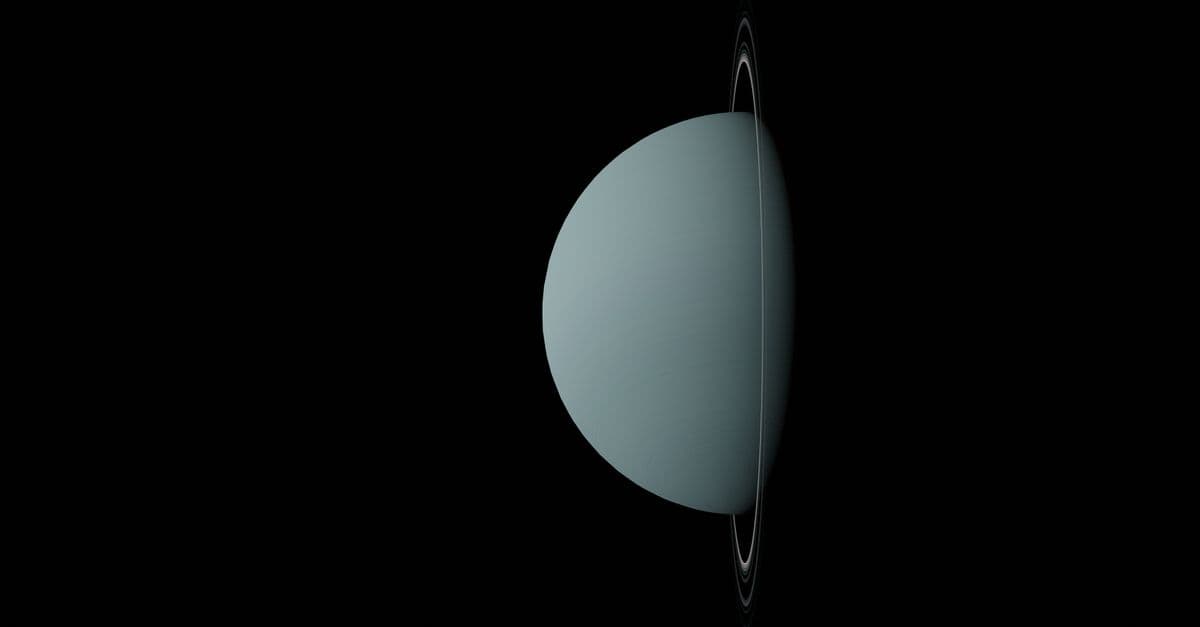
Saturn's rings are the solar system's most famous structure, but they are far from unique. Uranus has 13 dark, narrow rings discovered by accident in 1977. Neptune has incomplete arcs instead of full circles. Jupiter has a faint ring made of dust blasted off its innermost moons by meteorite impacts. All four giant planets have rings — and they all work differently. Saturn's may be geologically young, which raises a question nobody has fully answered: where did they come from?

Triton orbits Neptune backward, spews nitrogen geysers from a surface colder than anywhere else in the solar system, and is gradually spiraling toward a catastrophic end. It almost certainly came from the Kuiper Belt — and its violent capture may have reshaped the entire Neptunian system.

Uranus and Neptune are the outermost planets in the solar system, built mostly from hot, dense water, methane, and ammonia rather than hydrogen and helium. Uranus lies on its side and gives off almost no excess heat. Neptune radiates about 2.6 times the energy it absorbs and drives the fastest winds measured on any planet. Only Voyager 2 has ever visited either world.