The Voyager Grand Tour Explained
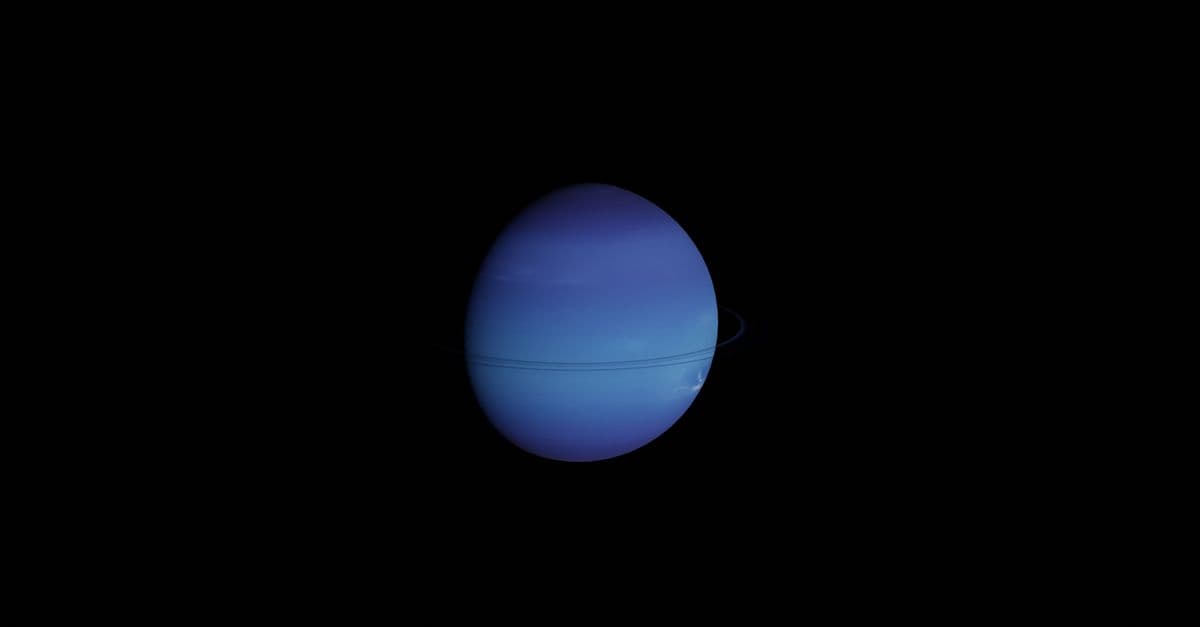
Photo: Mikhail Nilov / Pexels
In 1965, a 26-year-old NASA graduate student named Gary Flandro noticed something in his orbital calculations that no one had planned for: once every 176 years, Jupiter, Saturn, Uranus, and Neptune line up on the same side of the Sun in a way that lets a single spacecraft visit all four using each planet's gravity as a slingshot. That alignment was going to happen in the late 1970s. NASA had one shot to catch it, and the result was Voyager 1 and Voyager 2, the two spacecraft that rewrote what humans knew about the outer Solar System and are still transmitting data from interstellar space nearly 50 years later.
The problem: four planets, one launch window, no fuel to spare
Before Voyager, sending a probe to Neptune the conventional way, firing rockets directly at the target, would have taken about 30 years and required an impossibly large fuel load. A spacecraft only carries so much propellant, and every course correction burns through it. Getting to the outer planets in a human working lifetime meant finding another source of energy entirely.
Flandro's insight, published in a 1966 JPL report, was that a spacecraft could "steal" momentum from a planet's gravity field during a close flyby, exiting the encounter faster and on a new trajectory toward the next target, all without spending fuel (NASA/JPL, "Voyager's Grand Tour," 2017). This technique, called a gravity assist or gravitational slingshot, works like a skateboarder grabbing a moving truck: the truck barely notices, but the skateboarder picks up a huge amount of speed relative to the ground. The spacecraft borrows a sliver of the planet's orbital momentum around the Sun, and the planet's own motion around the Sun means it can afford to lend it.
The 176-year alignment meant that a probe launched around 1977 could hit Jupiter, then use Jupiter's gravity to bend toward Saturn, then Saturn's gravity to bend toward Uranus, then Uranus's gravity to bend toward Neptune, arriving at the fourth planet in about a decade instead of three. The gravity-assist principle itself had already been tested once, when Mariner 10 used a Venus flyby to reach Mercury in 1974, but nothing had ever attempted a four-planet chain.
How the Grand Tour actually worked
NASA never built the four-spacecraft "Grand Tour" fleet Flandro originally envisioned; budget cuts scaled the plan down to two spacecraft under the less ambitious-sounding name Voyager. Both were built at JPL, both carried nearly identical instrument packages, and both launched from Cape Canaveral in the same month: Voyager 2 first, on August 20, 1977, followed by Voyager 1 on September 5, 1977 (NASA Voyager mission page). Voyager 1 traveled a faster, more direct trajectory and reached Jupiter and Saturn first, despite launching second.
The mission design split the workload. Voyager 1 was aimed at a close flyby of Saturn's giant moon Titan, a target scientists cared about enough that they were willing to sacrifice the option of sending that spacecraft on to Uranus and Neptune afterward, since the Titan flyby geometry bent Voyager 1's path up out of the plane where the other planets orbit. Voyager 2 took the more conservative Saturn flyby, preserving its trajectory so that, if it survived and NASA approved the extension, it could continue on to Uranus and then Neptune.
What is a gravity assist and how does it work?
A gravity assist uses a planet's gravitational pull to change a spacecraft's speed and direction without burning fuel. As the spacecraft falls toward the planet and swings past it, it exchanges a tiny amount of momentum with the planet, in the same way two billiard balls trade momentum in a collision. The planet's enormous mass means it loses an immeasurably small amount of orbital speed, while the comparatively tiny spacecraft gains a substantial velocity boost relative to the Sun.
Why did NASA only launch two spacecraft instead of four?
Congress cut funding for the original four-probe "Grand Tour" program in 1972 because of its cost, roughly a billion dollars in the plan under consideration at the time. NASA scaled the mission down to two spacecraft, rebranded it Voyager, and reused Mariner-program spacecraft designs to hold down costs, a decision project scientist Edward Stone later described as producing "the little spacecraft that could" (Smithsonian National Air and Space Museum).
What each flyby revealed
Nothing had ever flown this close to the outer planets before, so nearly every image and measurement was a first. The two spacecraft, working together over more than a decade, turned four fuzzy telescope dots into four distinct worlds.
At Jupiter, Voyager 1 arrived in March 1979 and Voyager 2 followed in July of that year. Voyager 1 caught active volcanic eruptions on the moon Io, the first volcanic activity ever observed on a world beyond Earth, and both spacecraft found a faint ring system around the planet along with two previously unknown moons, Thebe and Metis (EBSCO Research Starters, "Voyagers 1 and 2 Explore the Outer Planets"). The Great Red Spot, long known from Earth-based telescopes, resolved for the first time into a churning storm system with visible internal structure.
At Saturn, Voyager 1 made its closest approach in November 1980, dedicating its trajectory to a close pass of Titan, the only moon in the Solar System known to have a substantial atmosphere. That flyby found five previously unknown moons and a faint new ring, later named the G-ring. Voyager 2 arrived in August 1981 and delivered detailed imagery of Saturn's ring structure, atmosphere, and additional moons, including close looks at the icy moon Enceladus.
Voyager 2 alone continued outward. It became the first, and to date the only, spacecraft to fly past Uranus, in January 1986, discovering ten new moons and finding that the planet's magnetic field is tilted nearly 60 degrees from its rotational axis, a peculiarity still not fully explained. Three and a half years later, in August 1989, Voyager 2 flew past Neptune, the only spacecraft ever to visit it, revealing the Great Dark Spot storm system and the geologically active moon Triton, which turned out to have active nitrogen geysers despite surface temperatures near minus 235 degrees Celsius (minus 391 degrees Fahrenheit).
Voyager Grand Tour flyby dates and headline discoveries
| Encounter | Spacecraft | Closest approach | Headline discovery |
|---|---|---|---|
| Jupiter | Voyager 1 | March 5, 1979 | Active volcanoes on Io; faint ring system |
| Jupiter | Voyager 2 | July 9, 1979 | Confirmed ring system; moons Thebe and Metis |
| Saturn | Voyager 1 | November 12, 1980 | Titan's thick atmosphere; five new moons, G-ring |
| Saturn | Voyager 2 | August 25, 1981 | Detailed ring structure and atmosphere data |
| Uranus | Voyager 2 | January 24, 1986 | Ten new moons; 60-degree tilted magnetic field |
| Neptune | Voyager 2 | August 25, 1989 | Great Dark Spot; active geysers on Triton |
Table: dates and discoveries compiled from NASA Voyager mission timeline and EBSCO Research Starters.
The Golden Record and the choice to speak beyond the Solar System
Each Voyager carries a 30-centimeter (12-inch) gold-plated copper phonograph record, mounted on the outside of the spacecraft along with a cartridge, needle, and pictographic instructions for playing it. A committee led by astronomer Carl Sagan of Cornell University selected the contents: greetings recorded in 55 languages, natural sounds like wind, surf, and animal calls, 90 minutes of music spanning cultures and centuries, and 115 images encoded as analog data, showing anatomy, DNA structure, cities, and daily life on Earth (Britannica, "Voyager 1"). The record's cover is etched with a diagram showing Earth's location relative to 14 pulsars, treated as galactic landmarks whose slowly changing periods act as time stamps that would let any future finder calculate roughly when the record was launched.
The Golden Record was never really designed with realistic odds of alien discovery in mind. Sagan himself said the record's real audience was Earth, that its purpose was to say something true and hopeful about human beings to the people who built and launched it, in an era, the height of the Cold War, when hope was not a given. It functions less like a message in a bottle aimed at aliens and more like a time capsule aimed at ourselves, a snapshot of what a fractured, nuclear-armed planet decided was worth saying about itself when it had the chance.
Engineering built for a mission nobody thought would last 45 years
The Voyager team designed for a four-year primary mission covering Jupiter and Saturn. Nobody in 1977 seriously planned for the spacecraft to still be sending data home in the 2020s, which makes the choices made under that shorter design horizon look, in hindsight, unusually conservative. Both spacecraft carry radioisotope thermoelectric generators (RTGs) that convert the heat from decaying plutonium-238 into electricity, a power source that does not depend on sunlight, which matters enormously once a spacecraft is billions of kilometers from a Sun that provides less than a thousandth of the light intensity it gives Earth.
That RTG power output has been declining by roughly four watts per year since launch, a slow, predictable fade rather than a sudden failure, and mission engineers have spent the past decade methodically shutting down non-essential instruments and heaters to keep the remaining, more scientifically valuable instruments running as long as possible (JPL, "Voyager, NASA's Longest-Lived Mission, Logs 45 Years in Space"). Commands sent from Earth now take over 22 hours to reach Voyager 1 and another 22-plus hours for a confirmation to return, meaning a single round-trip diagnostic conversation with the spacecraft can eat most of two days.
On August 25, 2012, Voyager 1 became the first human-made object to cross the heliopause, the boundary where the outward pressure of the solar wind gives way to the thin plasma of interstellar space, confirmed by a sharp jump in the density of surrounding plasma detected by the spacecraft's instruments (Space.com, "Voyager 1 marks 10 years in interstellar space"). Voyager 2 followed through the heliopause in November 2018. Both spacecraft are technically still inside the Solar System, since the Sun's gravitational influence and the outer Oort Cloud extend far beyond the heliopause, but they have left the bubble of solar wind that the Sun blows around itself, a distinction similar to leaving a house's yard while the house's mailing address technically still covers the street the yard sits on.
The interstellar mission's current power crisis
By 2026, the slow arithmetic of that four-watt-per-year decline has turned the Voyager Interstellar Mission into an ongoing exercise in deciding what to give up. Voyager 1 launched with ten science instruments; as of 2026, only two remain switched on, the magnetometer and the plasma wave subsystem, after engineers commanded the spacecraft to power down its Low-energy Charged Particles experiment on April 17, 2026, to free up enough electricity to keep the rest of the spacecraft functioning (Smithsonian Magazine, 2026; CNN, 2026). Every remaining instrument shutdown is effectively permanent — there is no serviceable component 25 billion kilometers away, so each decision trades away a category of interstellar-space data no other spacecraft can currently collect, in exchange for keeping the transmitter and remaining sensors alive a little longer.
JPL engineers are pursuing a coordinated fix nicknamed the "Big Bang" plan: swapping older, power-hungry onboard components for lower-power alternatives, a maneuver flagged as a possible way to keep at least one science instrument running into the 2030s (Space.com, 2026). NASA projects that Voyager 1 will cross one light-day from Earth, a distance at which a one-way radio signal takes a full 24 hours to arrive, on November 18, 2026 — a milestone that underscores just how far the "little spacecraft that could" has traveled since 1977, and how much of the remaining mission now comes down to careful electrical bookkeeping rather than any single dramatic encounter (SpaceDaily, 2026).
Common misconceptions about the Voyager missions
The biggest misconception is that Voyager 1 and Voyager 2 traveled the same route in the same order. They did not. Voyager 1 launched second but arrived at Jupiter and Saturn first, because its trajectory prioritized speed and the Titan flyby over visiting every remaining planet. Voyager 2 is the only spacecraft that has ever visited Uranus or Neptune; Voyager 1's post-Saturn path was bent out of the ecliptic plane, the flat disk where the planets orbit, and it has not been near another planet since 1980.
A second common error is assuming "interstellar space" means Voyager 1 has left the Solar System entirely. NASA is explicit that the heliopause marks the edge of the Sun's plasma bubble, not the edge of its gravitational domain. The spacecraft would need to pass through the Oort Cloud, an enormous shell of icy debris that some estimates extend halfway to the nearest star, before it could be considered outside the Solar System in the gravitational sense, a passage that could take another 300 years to begin and roughly 30,000 years to complete.
A third misconception, understandable given how the Golden Record gets covered in pop culture, is that NASA expected it to be found. The realistic odds of any spacefaring civilization intercepting a specific, tiny, silent spacecraft in the vastness between stars are effectively negligible on any human timescale. The record's real function was symbolic and terrestrial: it forced the mission team to answer, concretely, the question of what one civilization would choose to say about itself if it only got one chance.
Why the Grand Tour still matters
The Grand Tour's biggest legacy is not any single image or discovery, though the volcanoes on Io and the geysers on Triton remain among planetary science's most striking finds. Its legacy is proving that the gravity-assist chaining technique could work across four planets and a decade of flight time, a template later reused by missions like Galileo, Cassini, and New Horizons, each of which used planetary flybys to reach distant targets without carrying impossible amounts of fuel.
It also reset expectations for how long a well-engineered spacecraft can keep functioning. Voyager was designed for four years and has now operated for close to five decades, a ratio of actual to planned lifespan that has made mission planners noticeably more willing to build in redundancy and conservative power margins on later deep-space missions, even at higher upfront cost. Every outer-planet mission flown since Voyager, and every one currently on the drawing board, exists in a Solar System that Voyager mapped first.
The takeaway
The Voyager Grand Tour succeeded because a graduate student's orbital-mechanics insight collided with a once-in-176-years planetary alignment, and NASA built two spacecraft precise and durable enough to exploit it. Gravity assists let Voyager 1 and Voyager 2 reach four planets on a fuel budget that would not have covered one direct trip to Neptune, and the conservative engineering behind their power systems has kept them transmitting for roughly a decade longer than anyone who built them expected. The mission's real achievement was less about any single planet and more about proving a method, one that every outer-planet mission since has borrowed.
Read next:
- The Double-Slit Experiment: How Light Proved the Universe Is Weird
- Quantum Mechanics Foundations Explained
- Black Holes Explained: How They Work
Frequently Asked Questions
Q: What was the Voyager Grand Tour? A: The Grand Tour was a mission concept, proposed by JPL researcher Gary Flandro in 1965, to use a rare once-every-176-years alignment of Jupiter, Saturn, Uranus, and Neptune to send a spacecraft past all four using gravity assists instead of direct rocket burns.
Q: When did Voyager 1 and Voyager 2 launch? A: Voyager 2 launched first, on August 20, 1977, followed by Voyager 1 on September 5, 1977. Both launched from Cape Canaveral, Florida, and used similar Titan-Centaur rockets.
Q: Why did Voyager 1 arrive at Jupiter before Voyager 2 even though it launched second? A: Voyager 1 flew a faster, more direct trajectory prioritized for a close encounter with Saturn's moon Titan, while Voyager 2 took a slower path that preserved the option of continuing on to Uranus and Neptune.
Q: What is a gravity assist? A: A gravity assist is a maneuver that uses a planet's gravitational field to change a spacecraft's speed and trajectory during a close flyby, borrowing a small amount of the planet's orbital momentum without expending spacecraft fuel.
Q: Which planets did Voyager 2 visit that Voyager 1 did not? A: Voyager 2 is the only spacecraft to have flown past Uranus (1986) and Neptune (1989). Voyager 1's trajectory was bent out of the planetary plane after its Saturn flyby and never approached another planet.
Q: What is on the Voyager Golden Record? A: Each Golden Record holds greetings in 55 languages, natural and man-made sounds, roughly 90 minutes of music, and 115 images encoded as analog data, selected by a committee led by astronomer Carl Sagan.
Q: Has Voyager 1 left the Solar System? A: Voyager 1 crossed the heliopause, the edge of the Sun's plasma bubble, in August 2012, but it remains inside the Solar System in the gravitational sense because it has not yet passed through the Oort Cloud.
Q: How is Voyager still powered after nearly 50 years? A: Both spacecraft carry radioisotope thermoelectric generators that convert heat from decaying plutonium-238 into electricity. Output declines by about four watts per year, so engineers have progressively shut down non-essential instruments to conserve power.
Q: How long does it take to send a command to Voyager 1? A: A radio signal takes over 22 hours to reach Voyager 1 one way, so a command-and-confirmation round trip takes more than 44 hours.
Q: Could a mission like the Grand Tour happen again soon? A: Not with the same four-planet gravity-assist chain. The specific alignment of Jupiter, Saturn, Uranus, and Neptune that enabled the original Grand Tour recurs only about once every 176 years, so the next equivalent opportunity is roughly a century away.
Sources
- NASA/JPL, "Voyager's Grand Tour," NASA Technical Reports Server, 2017
- NASA Science, Voyager mission overview
- NASA Science, Voyager mission timeline
- NASA/JPL, "Voyager, NASA's Longest-Lived Mission, Logs 45 Years in Space"
- EBSCO Research Starters, "Voyagers 1 and 2 Explore the Outer Planets"
- Britannica, "Voyager 1: Definition, Data, Golden Record, & Facts"
- Space.com, "Voyager 1 marks 10 years in interstellar space"
- Smithsonian National Air and Space Museum, Voyager spacecraft collection record
- Smithsonian Magazine, "To Keep the Voyager 1 Spacecraft on Its Interstellar Journey, NASA Turned Off One of Its Few Remaining Instruments," 2026
- CNN, "Voyager 1 shuts off instrument to buy time before 'Big Bang' fix to extend the mission," 2026
- Space.com, "How long can the Voyager probes keep exploring interstellar space?," 2026
- SpaceDaily, "The complete story of Voyager's interstellar mission," 2026
Follow new articles
Add SciHub101 to your feed reader to see new science and technology stories.
About the Author
SciHub101 is an independent science and technology publication founded and edited by Buğra Sözeri, a software engineer and app developer based in Türkiye. AI tools assist with drafting and research. Source documentation in the existing archive is uneven, and articles are being reviewed and corrected. The Editorial Team byline identifies editorial responsibility; it does not certify specialist or independent human review. Where we compare products, anything built by our own team is labelled as such — see the editorial guidelines and About page for how corrections and disclosures work.
Related Articles
Quantum Tunneling: How Particles Pass Through Walls
Particles can penetrate energy barriers that classical physics says they cannot cross. This quantum phenomenon, first observed in radioactive decay, powers nuclear fusion in stars and modern electronics.
The Mars Viking Life Detection Experiments
NASA's Viking landers ran the first direct biology tests on Mars. The results were provocative, disputed, and still important.
Planetary Rings Explained: Not Just Saturn
Saturn's rings are the solar system's most famous structure, but they are far from unique. Uranus has 13 dark, narrow rings discovered by accident in 1977. Neptune has incomplete arcs instead of full circles. Jupiter has a faint ring made of dust blasted off its innermost moons by meteorite impacts. All four giant planets have rings — and they all work differently. Saturn's may be geologically young, which raises a question nobody has fully answered: where did they come from?
Voyager 1 and 2 — The Most Distant Human-Made Objects in Space
Launched in 1977, the two Voyagers are still flying. Voyager 1 is now over 25 billion km from Earth, both have entered interstellar space, and they carry a golden record meant for any aliens who might find them.
The Cassini Grand Finale: What 22 Death Dives Taught Us About Saturn
In 2017, NASA deliberately destroyed the Cassini spacecraft by plunging it into Saturn. Before it died, it made 22 passes through a region no spacecraft had ever entered — the 2,000-kilometer gap between Saturn and its innermost rings. The data it collected upended what scientists thought they knew about the rings' age, mass, and origin, and revealed a magnetic field so perfectly symmetrical it has no right to exist.
How Do Spacecraft Navigate in Deep Space? The Science of Interplanetary Navigation
Deep space navigation is mostly done from the ground: NASA's Deep Space Network measures a spacecraft's range, velocity, and angular position from radio signals, then models its path. Gravity assists and onboard autonomy handle the rest.