The Cassini Grand Finale: What 22 Death Dives Taught Us About Saturn

Photo: Necati Ömer Karpuzoğlu / Pexels
Saturn had been orbited by Cassini for 13 years when scientists decided to destroy it. Not out of frustration, but precision: with fuel nearly exhausted, NASA engineers chose to plunge the spacecraft into Saturn's atmosphere on September 15, 2017, ensuring it could never accidentally contaminate Titan or Enceladus — moons that might harbor life. But first, they sent it somewhere no spacecraft had gone before: the narrow gap between Saturn and the inner edge of its rings, 22 times in a row. What Cassini measured in that gap rewrote the story of one of the solar system's most iconic features.
Why the Gap Between Saturn and Its Rings Was Off-Limits Until 2017
The gap sounds empty. It is approximately 2,000 kilometers wide, sitting between the cloud tops of Saturn's upper atmosphere and the inner edge of the D ring — the faintest, innermost ring of Saturn's system. For most of Cassini's mission, this region was considered too dangerous to enter. No one knew whether particle concentrations there would sandblast the spacecraft's instruments or its antenna dish before it could transmit data.
The D ring — the innermost and faintest of Saturn's main rings, located between about 67,000 km and 74,500 km from Saturn's center; its inner boundary defines the outer edge of the gap that Cassini traversed during the Grand Finale.
The risk calculation changed in the mission's final year. With fuel running low and the science return from repeated flybys of the same targets diminishing, the mission team proposed a new trajectory: incline Cassini's orbit sharply, so its periapsis (closest point) dropped inside the rings. This would enable measurements of Saturn's gravity field and magnetic field from an altitude and at a precision never previously achieved — but at the cost of eventually making contact with the atmosphere.
The decision was made in 2010. Seven years later, beginning April 26, 2017, Cassini made its first Grand Finale dive. It survived 22 of them.
Source: NASA Jet Propulsion Laboratory (2017) — Overview of the Cassini Grand Finale trajectory design, science goals, and the rationale for the terminal plunge into Saturn's atmosphere.
How You Weigh a Ring System from Space
One of the Grand Finale's central scientific goals was measuring the mass of Saturn's ring system. Astronomers had estimated ring mass before, using orbital resonances between ring structures and Saturn's moons, but those methods carried large uncertainties. The Grand Finale offered a cleaner technique: gravitational gradiometry by spacecraft.
When Cassini flew through the gap between Saturn and the rings, the spacecraft's trajectory was shaped by the gravitational pulls of both Saturn below it and the ring system above it. By tracking Cassini's velocity using radio signals (specifically, measuring the Doppler shift in its downlink signal to Earth), scientists could detect accelerations of a fraction of a millimeter per second squared. This precision was sufficient to separately resolve the gravitational contribution of the rings from the gravitational field of Saturn itself.
Doppler tracking — a technique for measuring a spacecraft's radial velocity by observing the frequency shift in its radio signal; as the spacecraft speeds up or slows down due to gravitational influences, the signal frequency shifts proportionally, allowing velocity changes of millimeters per second to be detected from hundreds of millions of kilometers away.
The result, published in Science in 2019, was striking: the total mass of Saturn's main ring system is approximately 1.54 × 10¹⁹ kilograms. That is roughly 0.41 times the mass of Saturn's moon Mimas — which is itself only about 2 × 10¹⁹ kg. In other words, the entire ring system, spanning 280,000 kilometers from inner to outer edge, contains less material than a moon 400 kilometers in diameter.
Most scientists had expected the rings to be at least as massive as Mimas, based on earlier estimates. The Grand Finale measurement put the rings at about 40% of that.
Source: Iess et al., Science (2019) — Measurement of Saturn's gravitational field and ring mass using Cassini Grand Finale radio tracking data; total ring mass measured as (1.54 ± 0.49) × 10¹⁹ kg.
| Parameter | Value | Significance |
|---|---|---|
| Ring system mass | 1.54 × 10¹⁹ kg | ~40% of moon Mimas; lower than most pre-Cassini estimates |
| Ring mass relative to Mimas | 0.41 ± 0.13 Mimas masses | Mimas = 3.75 × 10¹⁹ kg |
| Implied ring age | 10–100 million years | Far younger than the solar system (4.5 billion years) |
| Magnetic dipole tilt | < 0.007° | Smallest tilt measured for any planetary body |
| Ring "rain" mass flux | ~1,000–10,000 kg/s | Material falling into Saturn's atmosphere continuously |
The Rings Are Young — And That Changes Everything
The low ring mass was not just a physical measurement. It had an immediate implication for age.
Saturn's rings are mostly water ice. They appear bright and clean, but micrometeorite bombardment slowly darkens them by depositing carbon-rich dust. The longer the rings have existed, the darker they should appear — because decades of meteoritic contamination accumulate. The rings' relatively bright, pristine appearance had already suggested to some scientists that they might be younger than the solar system. The Grand Finale mass measurement turned that suggestion into a strong constraint.
The reasoning works like this: if the rings had been present for 4.5 billion years, their enormous surface area (spread thin over hundreds of thousands of kilometers) would have accumulated enough interplanetary dust to significantly reduce their reflectivity and increase their inferred mass through contamination buildup. The low measured mass is inconsistent with 4.5 billion years of exposure. Combined with the brightness data, models constrain ring age to roughly 10 million to 100 million years — which places their formation during the Mesozoic era on Earth, when dinosaurs were alive.
A ring system as massive and visually dominant as Saturn's — the feature most people picture when they think of Saturn — may have formed relatively recently in geologic terms, during a cosmic event whose cause is still debated. The leading hypotheses include a large moon or comet being tidally shredded as it passed too close to Saturn, or a collision between two pre-existing moons.
Source: NASA Jet Propulsion Laboratory / JPL News (2019) — Summary of ring age implications from Grand Finale mass measurements; the "geologically young" ring constraint.
Source: Iess et al., Science (2019) — Combined ring mass and optical depth measurements implying formation within the last 10–100 million years.
For a broader treatment of how planetary rings form and persist around different worlds, see planetary rings explained across all planets.
Ring Rain: The Atmosphere Is Eating the Rings
Even before the Grand Finale, scientists had detected what became known as "ring rain" — ionized particles from the rings falling into Saturn's upper atmosphere along magnetic field lines. The Grand Finale provided the first in-situ measurements of this process from inside the gap.
Ring rain — the continuous infall of charged ring particles into Saturn's upper atmosphere, dragged along magnetic field lines; first inferred from ground-based infrared observations in 2013, confirmed and quantified by Cassini Grand Finale measurements.
Cassini's mass spectrometer detected water-group ions (H₂O⁺, OH⁺, O⁺) and organics raining into the atmosphere at rates of roughly 1,000 to 10,000 kilograms per second. This is not a trivial flux. At the high end of that range, the rings would be entirely consumed by this mechanism alone within roughly 100 million years — consistent with the age estimate from the mass measurement, and suggesting the rings are not in a stable long-term state but rather in the process of gradual self-destruction.
The chemical complexity of the infalling material was surprising. Grand Finale mass spectrometer measurements detected methane, ammonia, molecular hydrogen, hydrocarbons, and carbon dioxide in the material flowing between the rings and the atmosphere. The gap is not empty. It is a chemically active transport zone.
Source: Waite et al., Science (2018) — In-situ mass spectrometry of the material in the ring-atmosphere interface zone during Cassini Grand Finale dives; detection of complex organics and water-group ions in ring rain.
The Magnetic Field Alignment Mystery
Among the Grand Finale's most theoretically troubling discoveries was the measurement of Saturn's internal magnetic field at unprecedented resolution.
Planets generate magnetic fields through a dynamo process: convection of electrically conducting fluid (liquid metals or ionized material) in the planet's interior, combined with the planet's rotation, generates electric currents that sustain a magnetic field. The resulting field is almost always tilted relative to the planet's rotation axis — Earth's magnetic pole is offset from its geographic pole by about 11 degrees. Jupiter's magnetic pole is offset by about 10 degrees. Even slight tilts are expected by dynamo theory, because perfect alignment would require perfect axial symmetry in the fluid motions driving the dynamo, and turbulence in real fluids prevents that.
Saturn's measured dipole tilt, from the Grand Finale magnetic field measurements, is less than 0.007 degrees — less than 25 arcseconds. This is essentially zero. The magnetic field is aligned with the rotation axis to a precision that defies every standard dynamo model.
Source: Dougherty et al., Science (2018) — Cassini Grand Finale magnetometer measurements resolving Saturn's internal magnetic field; dipole tilt measured at < 0.007°, identified as the smallest tilt measured for any planetary dynamo.
The theoretical problem is real. A dynamo with perfect axial symmetry cannot sustain itself — this is known as Cowling's theorem, a fundamental result in magnetohydrodynamics established in 1933. If the field cannot be generated by a perfectly axisymmetric flow, then something in Saturn's interior must be breaking the symmetry just enough to drive the dynamo while hiding all detectable asymmetry from external measurements.
Cowling's theorem — the result, proved by Thomas Cowling in 1933, that a self-sustaining magnetic dynamo cannot be generated by fluid motions that are perfectly symmetric about the rotation axis; it implies Saturn's magnetic field cannot truly be axisymmetric at depth, even though it appears so from outside.
One proposed explanation involves a stable, conducting layer — possibly a layer of helium rain (helium separating from hydrogen under Saturn's interior pressure and "raining" downward) — that acts as a filter. As field structures generated by an imperfect dynamo at depth propagate outward through this layer, any non-axisymmetric components are damped. What reaches the surface appears nearly perfectly aligned. This is called the "screening hypothesis," but it has not been definitively confirmed, because confirming it requires knowledge of Saturn's interior structure that Cassini's measurements, while excellent, cannot fully provide.
Source: Cao et al., Icarus (2020) — Analysis of the internal magnetic field geometry from Grand Finale data and discussion of the screening layer hypothesis for explaining Saturn's exceptional axisymmetry.
The Plasma Environment Between Saturn and Its Rings
The gap was expected to be tenuous — and it mostly was, lacking the dense ring material found above the D ring. But it was not empty. Grand Finale particle detectors measured a complex plasma environment with multiple populations of charged particles flowing between Saturn's ionosphere and the ring system.
Strong field-aligned currents (FACs) were detected — ribbons of electrical current flowing along magnetic field lines connecting Saturn's atmosphere to the inner ring edge. The intensity of these currents was comparable to the auroral field-aligned currents at Saturn's poles, meaning the ring-atmosphere junction is electrically active at a level comparable to the polar aurora. Saturn's rings are not just visually connected to the planet; they are electrically connected to it.
Field-aligned current (FAC) — an electrical current that flows parallel to a magnetic field line, typically connecting a planet's ionosphere to a plasma source at a higher altitude; on Earth, FACs link the ionosphere to the magnetosphere and drive auroral displays.
Ultraviolet spectroscope measurements detected a diffuse "haze" of molecules scattered throughout the gap — a mix of water vapor, methane, and organic compounds that had migrated from the rings inward. The chemical complexity of the gap region implies an ongoing exchange of material between the rings and the planet's upper atmosphere, with implications for the long-term chemistry of Saturn's ionosphere.
Source: Cravens et al., Science (2019) — Electron density and composition measurements in the ring-ionosphere transition zone during Grand Finale dives; detection of field-aligned currents and complex molecular species.
What the Final Plunge Itself Measured
On September 15, 2017, Cassini entered Saturn's atmosphere at a velocity of approximately 113,000 kilometers per hour and began transmitting real-time science data as it decelerated. For about one minute and 55 seconds, it continued to send data before the signal cut out — not because the spacecraft was destroyed, but because it began to tumble as aerodynamic forces overcame its attitude control thrusters.
In those final 115 seconds, Cassini's ion and neutral mass spectrometer directly sampled Saturn's upper atmosphere at altitudes never before accessible. It detected hydrogen and helium (as expected), but also detected methane, water, carbon monoxide, carbon dioxide, and a suite of complex hydrocarbons — including benzene — at altitudes hundreds of kilometers above what most models had predicted.
The presence of heavy organics so high in Saturn's atmosphere implies upward transport from deeper in the atmosphere that standard circulation models had not captured. The final measurements from a dying spacecraft updated models of how Saturn's atmosphere is structured at its topmost layers.
Source: Waite et al., Science (2018) — In-situ mass spectrometry of Saturn's upper atmosphere during Cassini's terminal entry; detection of methane, water, and complex organics at thermospheric altitudes.
What the Grand Finale Means for Planetary Science
Cassini's final mission phase delivered more novel science per unit time than almost any prior period in the 13-year mission. The ring mass measurement constrained ring age. The ring rain measurements revealed a transient, self-consuming ring system. The plasma measurements characterized the ring-atmosphere electrical circuit. And the magnetic field measurement introduced a mystery — the perfect alignment problem — that will require new missions to resolve.
The ring age result has the most immediate implications. If Saturn's rings formed only tens of millions of years ago, then the ring systems of other planets — Uranus and Neptune have rings too, discovered in 1977 and 1984 respectively — are also potentially transient features rather than permanent structures. Planetary ring systems, far from being defining architectural features of giant planets, may be temporary adornments that form, evolve, and disappear on timescales short by solar system standards.
For a comparison with how ring systems differ across all the giant planets, see planetary rings explained across all planets. The death and ongoing behavior of the compact stellar remnants produced when massive stars end their lives connects to processes explored in neutron stars: the most extreme objects in the universe.
Source: Science journal special issue, Vol. 362 (October 2018) — Six papers simultaneously publishing Grand Finale results on gravity, magnetic field, atmosphere, plasma, and ring-ionosphere interactions.
The Takeaway
Cassini's Grand Finale was science by deliberate sacrifice. By flying where no spacecraft had gone before and then steering into Saturn to prevent contamination of possibly inhabited moons, it extracted a final payload of discoveries that none of its earlier orbital passes could have produced. The rings are geologically young — maybe 100 million years old at most — and are actively being consumed by the planet they orbit. Saturn's magnetic field is so perfectly aligned with its rotation axis that it cannot be explained by any standard planetary dynamo theory. The gap between the planet and its rings is not empty but is instead a chemically active electrical junction conducting thousands of kilograms per second from ring to atmosphere. Cassini answered questions that planetary scientists had held for decades, and then handed them several new ones that the next Saturn mission will need to go back and resolve.
Frequently Asked Questions
Q: Why did Cassini's Grand Finale only have 22 orbits?
A: The number of Grand Finale orbits was constrained by Cassini's remaining fuel. Each orbit required small thruster burns to adjust the trajectory, and with propellant nearly exhausted after 13 years of operations, the mission team calculated that approximately 22 passes could be completed before the spacecraft lost attitude control. The final orbit was designed to terminate in Saturn's atmosphere, which served both as the endpoint of the science mission and as a planetary protection measure.
Q: How was Saturn's ring mass measured from a spacecraft?
A: By tracking tiny changes in Cassini's velocity using the Doppler shift in its radio signal. Flying between Saturn and the rings, the spacecraft experienced gravitational pulls from both the planet below and the ring system above. By precisely measuring how Cassini accelerated and decelerated during these passes — to a precision of fractions of a millimeter per second — scientists could separate the gravitational contribution of the rings from Saturn's own field and calculate ring mass directly.
Q: How young are Saturn's rings?
A: The Cassini Grand Finale mass measurement, combined with the observed brightness and composition of ring particles, constrains the ring age to roughly 10 million to 100 million years. This means the rings likely formed during the Mesozoic era — when dinosaurs existed on Earth — not at the birth of the solar system 4.5 billion years ago.
Q: What is the Saturn magnetic field alignment mystery?
A: Saturn's magnetic pole is offset from its geographic (rotation) pole by less than 0.007 degrees — essentially zero. All dynamo theory predicts that a magnetic field generated by convecting fluid in a planet's interior should show at least some tilt, because perfect axial symmetry in a fluid flow is physically impossible to sustain (Cowling's theorem). Saturn appears to violate this expectation. The leading explanation — a conducting layer of helium rain that screens out non-axisymmetric components — has not been confirmed and requires future missions to test.
Q: What is ring rain?
A: Ring rain is the ongoing process by which charged particles from Saturn's rings fall into the planet's upper atmosphere along magnetic field lines. Cassini's Grand Finale mass spectrometers measured ring rain rates of approximately 1,000 to 10,000 kilograms per second — enough material that, if sustained at the upper range, would consume the entire ring system within about 100 million years.
Q: What happened in Cassini's final 115 seconds?
A: As Cassini entered Saturn's atmosphere, it kept its antenna pointed at Earth and transmitted real-time mass spectrometer data for approximately one minute and 55 seconds. During this time it directly sampled Saturn's upper atmosphere, detecting expected gases (hydrogen, helium) plus unexpected compounds including methane, water, carbon dioxide, and benzene at altitudes far above what atmospheric models had predicted. The signal cut out when aerodynamic forces overwhelmed the spacecraft's attitude thrusters, causing it to tumble.
Q: Will there be another Saturn mission?
A: NASA's Dragonfly mission, launched in 2028, targets Saturn's moon Titan — but is a lander, not an orbiter. As of 2026, no dedicated Saturn orbiter successor to Cassini has been formally approved, though the Planetary Science Decadal Survey (2023–2032) recommended a Uranus orbiter as the highest-priority large flagship mission. Follow-on Saturn science is expected to come from ground-based observations and analysis of Cassini's extensive archive.
Read next:
Follow new articles
Add SciHub101 to your feed reader to see new science and technology stories.
About the Author
SciHub101 is an independent science and technology publication founded and edited by Buğra Sözeri, a software engineer and app developer based in Türkiye. AI tools assist with drafting and research. Source documentation in the existing archive is uneven, and articles are being reviewed and corrected. The Editorial Team byline identifies editorial responsibility; it does not certify specialist or independent human review. Where we compare products, anything built by our own team is labelled as such — see the editorial guidelines and About page for how corrections and disclosures work.
Related Articles
Cassiopeia A: The Youngest Supernova Remnant in the Milky Way
Cassiopeia A is the expanding debris field of a star that exploded around 1680 CE — yet almost no one on Earth recorded it. Today, X-ray and infrared telescopes reveal a forensic masterpiece: shock waves, newly minted heavy elements still glowing from the blast, and a neutron star cooling at the center. Cas A is not just a beautiful object. It is the best laboratory we have for understanding what supernovae actually do to the universe.
The Apollo Program's Science Legacy: What 842 Pounds of Moon Rocks Revealed
Six Apollo landings returned 842 pounds of lunar material to Earth — 2,196 samples collected from six different sites across the nearside. Fifty-five years later, those rocks are still generating new discoveries, the laser retroreflectors are still in use, and the fundamental questions they raised about the Moon's violent origin have only deepened.
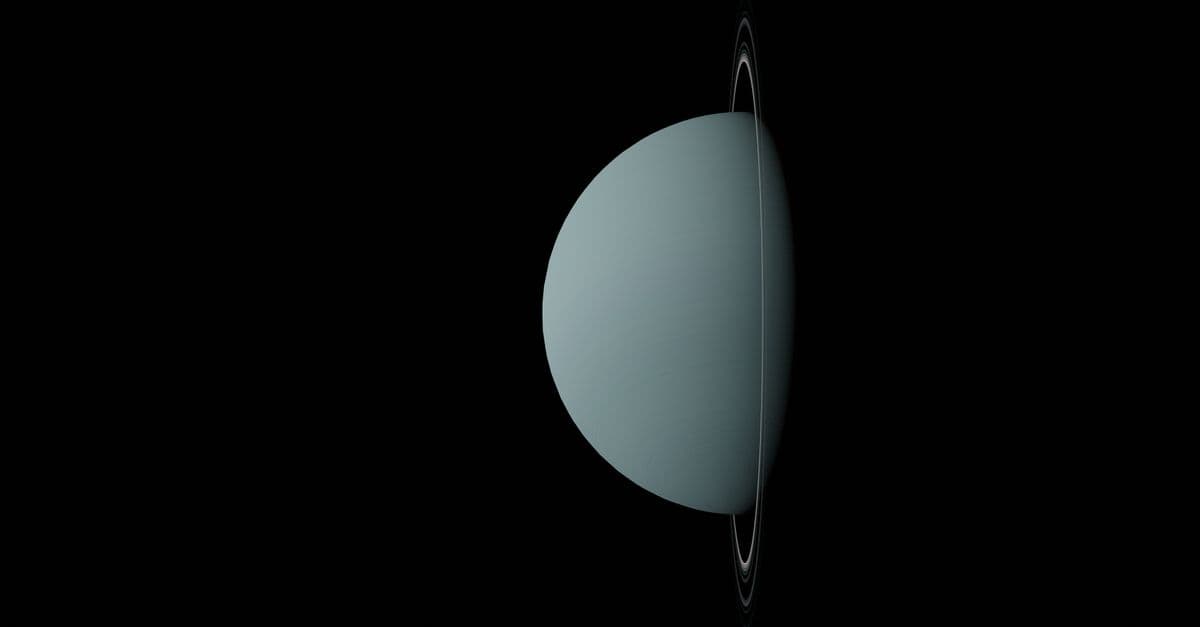
Planetary Rings Explained: Not Just Saturn
Saturn's rings are the solar system's most famous structure, but they are far from unique. Uranus has 13 dark, narrow rings discovered by accident in 1977. Neptune has incomplete arcs instead of full circles. Jupiter has a faint ring made of dust blasted off its innermost moons by meteorite impacts. All four giant planets have rings — and they all work differently. Saturn's may be geologically young, which raises a question nobody has fully answered: where did they come from?
Enceladus's Hydrothermal Vents and the Case for Life
Saturn's tiny moon Enceladus shoots plumes of water vapor and hydrogen gas into space from cracks in its icy crust. Those plumes carry direct evidence of 90°C hydrothermal vents on the ocean floor — the same kind of environment where life on Earth may have started.
Saturn's Rings Explained — Origin and Future
How Saturn got its rings, why they're disappearing, and why they're paper-thin — the full story from Galileo to Cassini's grand finale.
What Are Saturn's Rings Made Of — And How Long Will They Last?
Saturn's iconic rings are made of more than 90% water ice and span nearly 300,000 km across, yet they are only about 10 meters thick. Surprisingly young in cosmic terms, the rings are slowly draining into Saturn and will vanish entirely in roughly 100 million years.