What Are Saturn's Rings Made Of — And How Long Will They Last?
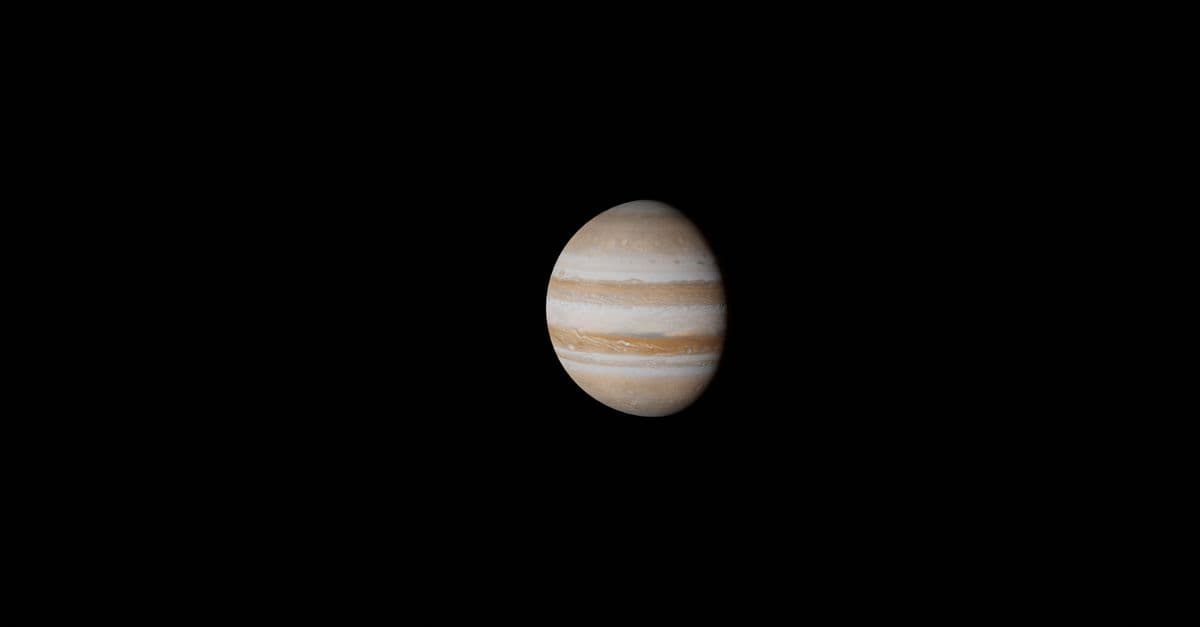
Photo: Zelch Csaba / Pexels
When Galileo first turned his primitive telescope toward Saturn in 1610, he was baffled. The planet appeared to have two smaller companions clinging to its sides — what he described as "ears." It took another 45 years before the Dutch astronomer Christiaan Huygens, equipped with a better telescope, understood the truth: Saturn was encircled by a thin, flat ring of material completely detached from the planet's surface.
Four centuries later, Saturn's rings remain one of the most visually arresting sights in the entire solar system — and one of the most scientifically fascinating. They are staggeringly large, surprisingly thin, composed mostly of water ice, younger than the dinosaurs in cosmic terms, and slowly disappearing. Everything about them defies first intuitions.
What the Rings Are Made Of
Saturn's rings consist overwhelmingly of water ice. Spectroscopic analysis, confirmed and refined by NASA's Cassini spacecraft, shows that roughly 90 to 95 percent of the ring material is water ice (H₂O), with the remainder composed of rocky silicate dust and trace amounts of organic compounds that give certain regions a slightly reddish tint.
The ice particles range enormously in size. Some are tiny grains no bigger than a grain of sand, just a few micrometers across. Others are boulders the size of a house, several meters in diameter. A small number of chunks approach the scale of a modest building. Despite this range, there are no large embedded moons hiding within the main ring system itself — just an endless population of individually drifting ice particles, each following its own Keplerian orbit around Saturn.
The purity of the ice is remarkable. On Earth, ice tends to accumulate dirt and impurities quickly. In the rings, collisions between particles continuously resurface the ice, breaking off darker crusts and exposing fresh, clean material beneath. This self-cleaning mechanism keeps the rings bright and reflective — they have a geometric albedo (reflectivity) of around 0.6, meaning they reflect about 60 percent of incoming sunlight.
The Ring Structure: A, B, C, and Beyond
Saturn's ring system is not a single uniform disk. It is divided into distinct bands separated by gaps, each with its own density, opacity, and particle properties. Astronomers label the main rings alphabetically in order of their discovery, which does not correspond to their distance from Saturn.
The C Ring is the innermost of the three main rings visible from Earth. It is relatively transparent and faint, made of smaller particles and lower overall density. It spans from about 74,500 km to 92,000 km from Saturn's center.
The B Ring is the broadest, most opaque, and most massive ring in the system. It stretches from 92,000 km to 117,500 km from Saturn's center and contains the bulk of the ring's total mass. Its optical depth — a measure of how much it blocks light — can exceed 5 in its densest regions, meaning virtually no light passes through. The B Ring's mass has been a subject of considerable debate; Cassini's gravity measurements revised earlier estimates significantly downward, suggesting it is less massive than previously thought.
The Cassini Division — the most prominent gap, about 4,800 km wide — sits between the B and A rings. For centuries astronomers thought it was genuinely empty. It is not. It contains sparse material, but density is dramatically lower than the rings on either side. The gap is maintained by a gravitational resonance with Saturn's moon Mimas: any particle that would orbit in the Cassini Division completes exactly two orbits for every one orbit that Mimas completes. This 2:1 resonance systematically kicks particles out of the region.
The A Ring spans from 122,000 km to 136,800 km. It is slightly less dense than the B Ring but still substantial. Within the A Ring sits the Encke Gap (327 km wide), kept clear by the small moon Pan, and the Keeler Gap (42 km wide), maintained by the moon Daphnis. Near the outer edge of the A Ring sits the Roche Division, and just beyond that, a thin structure called the F Ring — a narrow, braided ring shepherded by two moons, Prometheus and Pandora.
Further out lie the G Ring and the diffuse E Ring, which is kept replenished by geysers erupting from the moon Enceladus.
How Thin Are the Rings, Really?
Here is a fact that consistently astonishes people: despite extending nearly 300,000 km from edge to edge — wide enough to fit almost the entire Earth-Moon distance — Saturn's main rings are on average only about 10 to 100 meters thick. Some regions are as thin as 10 meters.
To put this in perspective: if you scaled Saturn's rings down to the size of a standard sheet of paper (about 0.1 mm thick), that sheet of paper would need to be roughly 6 kilometers in diameter. The rings are, in proportion, far thinner than a razor blade.
This extraordinary flatness is a consequence of the rings' history. Collisions between ring particles dissipate energy and drive the system toward its lowest-energy configuration — a thin rotating disk. Any particle that drifts out of the orbital plane gets nudged back by gravity and collisions, maintaining the remarkable flatness.
Origin: Where Did the Rings Come From?
This is perhaps the biggest open question in ring science, and Cassini's discoveries made it more pointed rather than less.
For decades, the dominant assumption was that Saturn's rings were ancient — primordial remnants left over from the formation of the solar system 4.5 billion years ago. But two lines of evidence now challenge this picture strongly.
First, the rings are remarkably pure. If they were 4.5 billion years old, meteoritic dust and debris continuously bombarding the solar system would have significantly darkened and contaminated them. Their observed purity argues for a much younger age — perhaps only 100 to 400 million years old. In geological terms, that would make them younger than the dinosaurs.
Second, Cassini measured Saturn's gravity field with extraordinary precision and used the resulting data to estimate the rings' total mass. The answer — roughly 1.5 times the mass of Saturn's moon Mimas — was substantially lower than pre-Cassini estimates. A more massive ring system could plausibly have survived long enough to be primordial. The lower mass estimate makes this increasingly difficult to justify.
The leading hypothesis for the rings' origin is the tidal disruption of a moon. Roughly 100 to 200 million years ago, a mid-sized icy moon — somewhere between the size of Mimas and Enceladus — may have strayed too close to Saturn and crossed the Roche limit: the distance within which Saturn's tidal gravitational forces overcome the internal gravity holding a body together. The moon would have been torn apart, its material spraying into orbit around Saturn and eventually settling into the flat disk we see today.
An alternative hypothesis suggests a comet or large asteroid struck a preexisting moon, shattering it. A third possibility involves two moons colliding during a period of orbital instability early in the solar system's history.
No consensus exists, but the young-ring scenario has gained considerable support from Cassini data.
Cassini Mission Discoveries
NASA's Cassini spacecraft, which orbited Saturn from 2004 to 2017, transformed our understanding of the ring system. Its final orbits — the "Grand Finale" phase — sent it diving repeatedly between Saturn's cloud tops and the innermost edge of the rings, sampling the material directly.
Among Cassini's key ring discoveries:
Ring rain. Cassini confirmed that the rings are losing mass. Charged water molecules (and other compounds) from the rings spiral along magnetic field lines and rain down into Saturn's upper atmosphere at a rate of 432 to 2,870 kilograms per second — or roughly 10,000 kg/sec on average when averaged over the full ring system. At this rate, the entire ring system would drain into Saturn in as little as 100 million years.
The rings are dynamic. Rather than a static, fixed structure, the rings are constantly in motion. Cassini observed waves, wakes, and propeller-shaped disturbances created by small embedded moonlets too tiny to see directly. It found evidence of clumping and aggregation — particles temporarily sticking together before being pulled apart again.
Enceladus feeds the E Ring. Cassini discovered that Saturn's moon Enceladus has a subsurface liquid water ocean and vents geysers of water vapor and ice from its south pole. This material continuously replenishes the diffuse E Ring.
The B Ring has unexpected structure. Rather than being a smooth disk, the B Ring showed complex, poorly understood density variations. Cassini's mass measurement revealed it contains less material than its opacity suggested — the physics of how particles pack together is more complex than models predicted.
Oxygen ions detected. Cassini found oxygen ions in the ring environment — almost certainly produced when ultraviolet light and particle impacts break apart water ice molecules.
The Future: Disappearing Rings
Saturn without its rings is a genuinely strange thing to contemplate, but it is the planet's eventual fate. The ring rain draining material into Saturn's atmosphere, combined with meteoritic erosion and gravitational perturbations from moons gradually sweeping material away, means the rings are on borrowed time.
Current estimates suggest the rings will be substantially depleted within 100 to 300 million years. Given that Earth is 4.5 billion years old, we happen to exist at a geologically fortunate moment — perhaps the peak of the rings' visual glory.
Saturn's smaller, fainter rings — the G and E rings — will likely disappear even sooner. The F Ring, maintained by Prometheus and Pandora, is also thought to be transient on these timescales.
After the rings are gone, Saturn will still be a gas giant of enormous size and complexity. Its many moons — Titan with its thick nitrogen atmosphere and methane lakes, Enceladus with its subsurface ocean, Iapetus with its puzzling two-tone coloring — will remain. But the solar system will have lost one of its most iconic sights.
Rings Around Other Planets
Saturn is far from alone in having rings. All four of the solar system's giant planets have ring systems, though none come close to Saturn's in extent, mass, or brightness.
| Planet | Ring System |
|---|---|
| Jupiter | Faint dust rings; maintained by volcanic Io and meteoritic impacts on inner moons |
| Saturn | Massive, bright ice rings; the most extensive in the solar system |
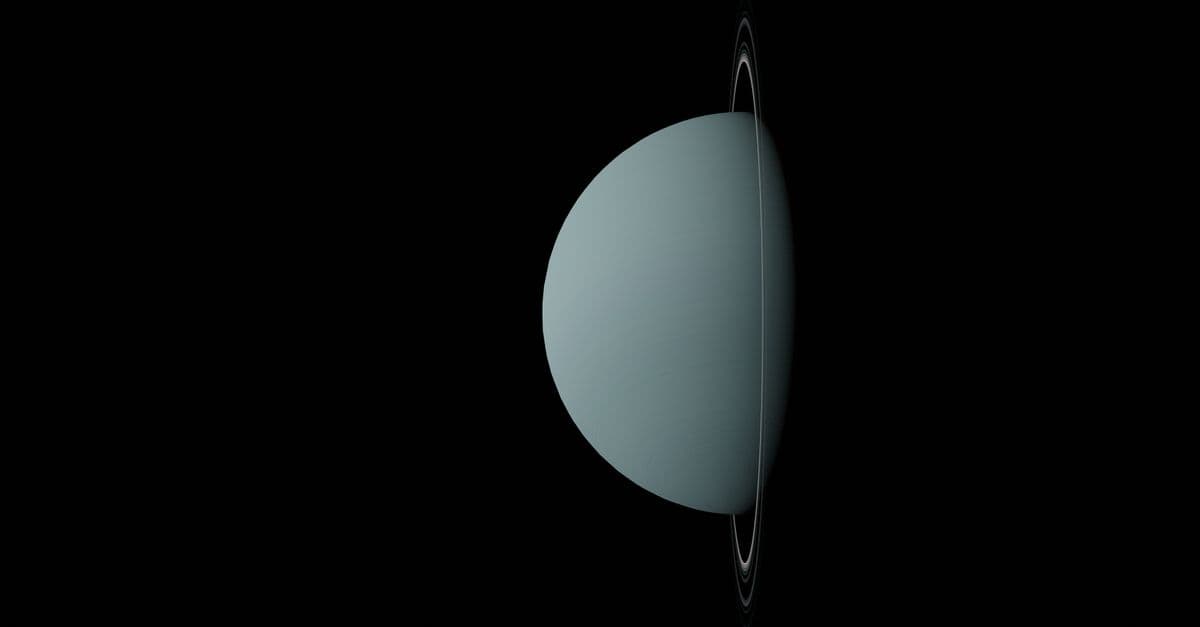
| Uranus | Narrow, dark rings; discovered in 1977 during a stellar occultation |
| Neptune | Five narrow rings; one contains bright "arcs" of denser material |
Even some asteroids and trans-Neptunian objects have been found to have ring systems, suggesting that rings are a common feature of rotating bodies throughout the universe.
Key Facts at a Glance
| Property | Value |
|---|---|
| Outer diameter of main rings | ~270,000 km |
| Average thickness (main rings) | 10–100 meters |
| Estimated age | 100–400 million years |
| Composition | ~90–95% water ice, ~5% rocky dust |
| Estimated mass | ~1.5× the mass of Mimas |
| Rate of ring rain | ~10,000 kg/sec average |
| Time until rings largely gone | ~100 million years |
| Number of named gaps | 30+ |
Saturn's rings are a temporary jewel — a cosmic accident of timing that we are privileged to witness. As Cassini showed us so vividly, they are not a frozen relic but a dynamic, evolving system, slowly raining away into the planet they encircle. In another 100 million years, future observers (whoever they may be) will look toward Saturn and see something far less dramatic. We caught it at the right moment.
Related Reading
Follow new articles
Add SciHub101 to your feed reader to see new science and technology stories.
About the Author
SciHub101 is an independent science and technology publication founded and edited by Buğra Sözeri, a software engineer and app developer based in Türkiye. AI tools assist with drafting and research. Source documentation in the existing archive is uneven, and articles are being reviewed and corrected. The Editorial Team byline identifies editorial responsibility; it does not certify specialist or independent human review. Where we compare products, anything built by our own team is labelled as such — see the editorial guidelines and About page for how corrections and disclosures work.
Related Articles
What Is Hubble's Law? How We Discovered the Universe Is Expanding
In 1929, Edwin Hubble showed that galaxies recede from us at speeds proportional to their distance, the first direct evidence that the universe is expanding. The slope of that relation, the Hubble constant, is still debated: two precise methods disagree by about 5 sigma.
Uranus and Neptune: The Solar System's Forgotten Ice Giants
Uranus and Neptune are the outermost planets in the solar system, built mostly from hot, dense water, methane, and ammonia rather than hydrogen and helium. Uranus lies on its side and gives off almost no excess heat. Neptune radiates about 2.6 times the energy it absorbs and drives the fastest winds measured on any planet. Only Voyager 2 has ever visited either world.
Saturn's Rings Explained — Origin and Future
How Saturn got its rings, why they're disappearing, and why they're paper-thin — the full story from Galileo to Cassini's grand finale.
Planetary Rings Explained: Not Just Saturn
Saturn's rings are the solar system's most famous structure, but they are far from unique. Uranus has 13 dark, narrow rings discovered by accident in 1977. Neptune has incomplete arcs instead of full circles. Jupiter has a faint ring made of dust blasted off its innermost moons by meteorite impacts. All four giant planets have rings — and they all work differently. Saturn's may be geologically young, which raises a question nobody has fully answered: where did they come from?
The Cassini Grand Finale: What 22 Death Dives Taught Us About Saturn
In 2017, NASA deliberately destroyed the Cassini spacecraft by plunging it into Saturn. Before it died, it made 22 passes through a region no spacecraft had ever entered — the 2,000-kilometer gap between Saturn and its innermost rings. The data it collected upended what scientists thought they knew about the rings' age, mass, and origin, and revealed a magnetic field so perfectly symmetrical it has no right to exist.
Enceladus's Hydrothermal Vents and the Case for Life
Saturn's tiny moon Enceladus shoots plumes of water vapor and hydrogen gas into space from cracks in its icy crust. Those plumes carry direct evidence of 90°C hydrothermal vents on the ocean floor — the same kind of environment where life on Earth may have started.