What If the Sun Disappeared for One Week?
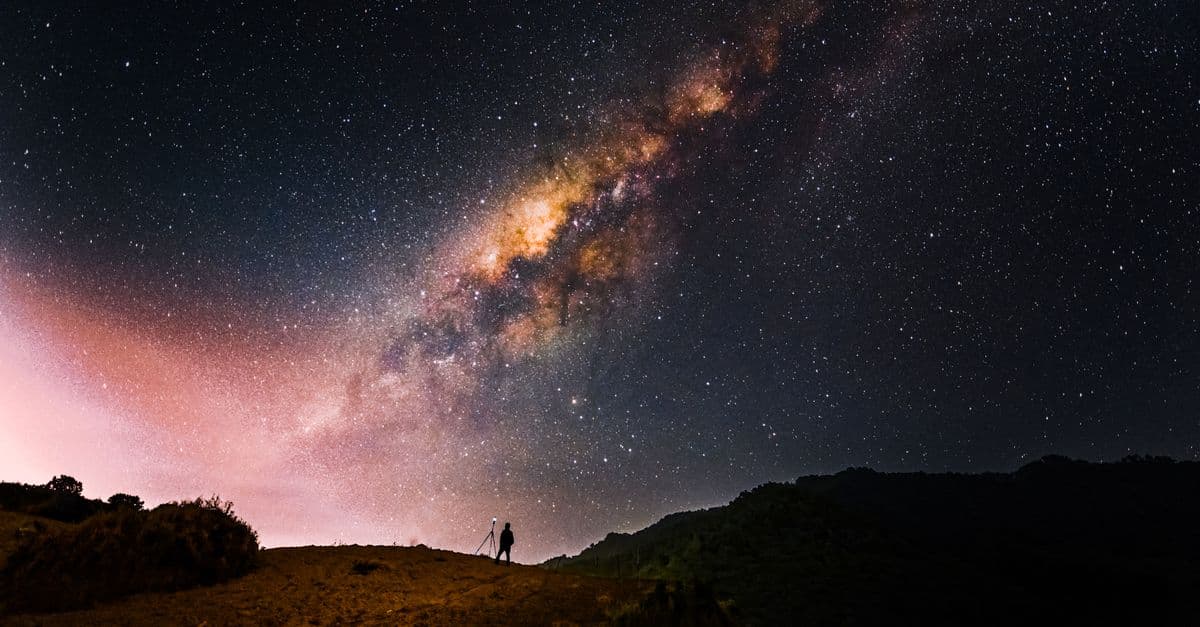
Photo: Martin Marthadinata / Pexels
It is Tuesday morning. A solar physicist in Tucson is drinking her second coffee, monitoring the usual heliographic data feeds, when every one of them flatlines at once. Not a glitch, not a server outage — somewhere along the 150-million-kilometer (93-million-mile) corridor between here and there, the Sun has simply stopped shining. Eight minutes and twenty seconds later, the last photons it ever emitted arrive at Earth's surface, and the sky drops from blue to black between one heartbeat and the next.
Thought experiment. This article explores a hypothetical scenario for educational and speculative purposes. Nothing in known stellar physics allows a star to switch off instantly. The events described are not predictions and should not be interpreted as warnings, advocacy, or instructions.
This is a companion piece to our deeper dive into what a full year without the Sun would do to Earth, which walks through the slide into a frozen, near-lifeless planet. A single week is a completely different animal. It is short enough that the worst physical outcomes in that year-long scenario — Snowball Earth surface temperatures, atmospheric CO₂ freezing out as dry ice, the total collapse of the terrestrial biosphere — never come close to happening. But seven days is also long enough to break something that a year-long article about deep timescales tends to skip past: the first week is where almost all of the human drama actually happens, hour by hour, while the physics is still relatively gentle. This article stays inside those 168 hours, in as much forensic detail as the data supports, and treats the longer scenario as the dark road this one very deliberately does not go down.
Key takeaways
- Earth would coast in its normal orbital path for the full week. Gravity depends on the Sun's mass, not its light, and that mass does not change — so nothing about the planet's trajectory shifts in any way a human would notice in seven days.
- Surface temperatures would fall by roughly 10°C (18°F) in the first 24 hours and by an estimated 20–30°C (36–54°F) by day seven, driven by how fast the atmosphere and land radiate away stored heat with no solar input replacing it.
- The single most consequential number in this scenario is not a temperature — it is the roughly seven-day window most crop plants and stored food supplies can survive before cold damage becomes irreversible, which is why day seven functions as a rough dividing line between "recoverable" and "not."
- If the Sun reappeared exactly on schedule, the week would leave deep economic and agricultural scars but would not come close to threatening the survival of the species — a very different verdict from the one-year version of this scenario.
Hour zero to hour six: the cut and the immediate scramble
The first thing that happens is not thermal, it is electrical. Solar power supplied roughly 7% of global electricity generation in 2024 and was still growing fast, according to the International Energy Agency's Renewables 2024 report (IEA, 2025). Every one of those installations goes instantly and permanently dark the moment the light stops arriving, which means grid operators on the daylit side of the planet are suddenly missing a meaningful slice of generating capacity during what had been, until seconds earlier, peak solar output hours.
Within the first hour, the practical failures cascade in a predictable order. Grid-tied solar farms drop offline first. Nuclear plants, hydroelectric dams, and fossil-fuel generation are unaffected mechanically and continue running, but operators now have to rebalance load across an entire continent's grid in real time, with no warning and no precedent. Countries with the heaviest solar dependence — parts of the Netherlands, Australia, and California, all of which draw well over a fifth of their electricity from solar on sunny days — see the first rolling blackouts within two to three hours as demand spikes for heating collide with a suddenly smaller supply.
Air temperature does not crash immediately. Earth's atmosphere and land surface hold a substantial reservoir of stored heat, and that reservoir depletes gradually rather than all at once. Climate data on typical overnight cooling, the difference between a sunny afternoon's peak and the following dawn's low, generally falls in the 5–15°C (9–27°F) range even under a completely clear, moonless sky — because the ground and air release stored heat slowly, not instantaneously. The first six hours of this scenario, thermally speaking, feel almost exactly like the first six hours of an unusually long, unusually dark night. The unsettling part is not the temperature. It is the psychological realization, growing hour by hour, that dawn is not coming.
Hour six to hour 24: the first full night that never ends
By the six-hour mark, the initial adrenaline of the event gives way to something closer to sustained unease. Emergency broadcast systems, which are built for localized disasters, are suddenly carrying a global message with no regional variation and no clear timeline. This is itself unprecedented; even the largest wars and pandemics in recorded history had geographic centers and peripheries. A sunless Earth does not.
Car accidents spike in the first hours specifically because drivers, out of pure reflex, look up. Traffic engineers who have studied mass distraction events — total solar eclipses being the closest real-world comparison — have documented measurable increases in crash rates during the brief totality windows of eclipses, when millions of drivers simultaneously glance skyward. A week-long event compounds that risk over a much longer window before people adjust their behavior.
Physically, the first 24 hours produce a surface temperature drop of roughly 10°C (18°F) on average, consistent with the rate at which land and near-surface air lose stored heat once solar input is removed entirely, a rate borrowed from the same thermal models used to study nuclear winter and large-scale volcanic dimming events. That average conceals enormous regional variation. Continental interiors — the American Midwest, central Siberia, inland Australia — cool fastest because they have no adjacent ocean to buffer them. Coastal cities and island nations barely notice the first day thermally, because the ocean's upper layer has been storing solar energy for a very long time and releases it slowly.
Would you actually notice the temperature drop on day one?
In most places, yes, but not dramatically. A 10°C (18°F) drop over 24 hours is roughly the difference between a mild spring afternoon and a cold spring night — uncomfortable, especially in the tropics where such temperatures are unfamiliar, but not immediately dangerous for a healthy adult with normal clothing and shelter.
Psychologically, this is where the week starts to diverge sharply from ordinary bad weather. Research on seasonal affective disorder shows that reduced daylight disrupts the circadian clock by increasing melatonin production and suppressing serotonin, and population studies from Northern Europe find that roughly one in ten people develop measurable depressive symptoms during the naturally darker winter months alone (reviewed in a 2021 study in the International Journal of Environmental Research and Public Health, PMC8243845). That is under conditions of merely shortened, not eliminated, daylight, spread across months rather than compressed into hours. A hard, total, unscheduled cutoff is a different psychological event entirely, and researchers studying polar night communities like Longyearbyen, Svalbard, where the sun does not rise for roughly four months each winter, describe measurable shifts in sleep architecture, mood, and social behavior within the first one to two weeks of the dark period even when residents know exactly when the sun will return. This scenario removes that certainty completely for the first several days, which is arguably the more psychologically corrosive element.
Day two and three: temperature accelerates, agriculture starts its clock
By day two, the cooling rate does not stay linear, it accelerates, because the atmosphere and surface are now radiating away heat from an already-depleted reserve. Estimates consistent with nuclear-winter climate modeling — where the physical mechanism is loss of solar input at the surface rather than an actual absent Sun, but the resulting thermal curve is the closest peer-reviewed analog available — put the global average temperature drop somewhere in the 15–20°C (27–36°F) range by the end of day three.
This is the point where agriculture enters a race against the clock that has nothing to do with sunlight directly and everything to do with cold. Photosynthesis stops within seconds of the cutoff, but that alone does not kill a plant quickly: most crop plants carry stored carbohydrate reserves sufficient for several days of maintenance respiration without any new photosynthesis at all. The real threat arriving on day two and three is frost and freeze damage, which is a completely different failure mode with a much shorter fuse. Tropical and subtropical crops, adapted to a narrow temperature band and never exposed to near-freezing conditions, are the first casualties. Rice paddies across South and Southeast Asia, which feed roughly half the world's population according to agricultural trade data compiled by the International Rice Research Institute, are especially vulnerable because rice has essentially no cold tolerance below about 10°C (50°F) during its growing stages.
Table: The first week, hour by hour and day by day
| Time elapsed | Approximate global surface temperature change | Dominant failure mode |
|---|---|---|
| Hour 0–1 | Negligible | Instant loss of all solar electricity generation |
| Hour 1–6 | Negligible | Grid rebalancing, emergency broadcast strain, traffic accidents |
| Hour 6–24 | About −10°C (−18°F) | Circadian disruption begins; continental interiors cool fastest |
| Day 2–3 | About −15 to −20°C (−27 to −36°F) | Frost damage to tropical and subtropical crops begins |
| Day 4–5 | About −25°C (−45°F) | Coral bleaching starts; agricultural season effectively lost |
| Day 6–7 | About −20 to −30°C (−36 to −54°F) | CO₂ begins accumulating; polar regions become uninhabitable without shelter |
Table: Estimated temperature and infrastructure impacts over a seven-day total solar blackout, extrapolated from nuclear-winter and volcanic-dimming climate models, which are the closest peer-reviewed analogs for surface cooling without solar input.
Oceans behave completely differently, and this single fact is the reason the one-week scenario stays survivable while the one-year scenario does not. Seawater's specific heat capacity is roughly four times that of typical rock or soil, and the upper ocean alone stores far more heat energy than the entire atmosphere. NOAA's ocean heat content research shows this reservoir is large enough that even a full year without solar input does not freeze the deep ocean; over one week, the ocean surface itself barely registers a temperature change at all. Coral reefs are the exception, because reef-building coral depends on symbiotic algae, zooxanthellae, that require sunlight to photosynthesize and supply the coral with energy. Coral bleaching, the process by which stressed coral expels these algae, can begin within 48 hours of a severe light disruption based on established bleaching-response research, making reefs one of the fastest-failing ecosystems in the entire scenario despite the ocean's overall thermal stability.
Day four and five: the point of no return for the growing season
By day four, food security researchers watching a real version of this event would already understand something uncomfortable: even if the Sun returns exactly on schedule at hour 168, the damage to that year's crop cycle is largely already locked in across the tropics and much of the mid-latitudes. This is the single most important asymmetry in the entire scenario. The temperature and infrastructure effects of the week are real but reversible. The agricultural effects, once frost damage sets in past a certain point in a crop's growth cycle, are not reversible within the same season, regardless of what happens to the Sun afterward.
Global average temperature by day five sits an estimated 25°C (45°F) or more below baseline, per the same class of dimming-event thermal models referenced above. At the poles, already extreme cold becomes genuinely lethal within minutes for anyone without serious shelter and cold-weather gear. Snowfall intensifies across mid-latitudes as falling temperatures wring moisture out of the atmosphere faster than usual, producing what several climate researchers modeling abrupt dimming events describe as an unusually rapid transition from normal precipitation to persistent, heavy snow even in regions with no typical snow season at that time of year.
How does one week compare to the year-long scenario physically?
A week reaches roughly a fifth to a quarter of the temperature drop that the one-year scenario documents by its own one-month mark. The year-long article tracks a descent toward −100°C (−148°F) and CO₂ ice caps forming at the poles by month twelve; the one-week scenario never gets past an estimated −20 to −30°C (−36 to −54°F) below baseline, a serious but fundamentally different order of catastrophe.
Day six and seven: the edge of the window
The final two days are where the scenario's ceiling becomes visible. Global average temperature drop, extrapolated from the same volcanic and nuclear-winter dimming analogs used throughout this piece, sits somewhere in the 20–30°C (36–54°F) range by hour 168. That is a serious, damaging, historically unprecedented shock, comparable in scale to nothing in the instrumental climate record. It is not, however, anywhere near the range where the deep ocean's thermal reservoir gets meaningfully drawn down, where atmospheric CO₂ starts condensing into dry ice at the poles, or where the surface biosphere as a whole is at risk — all thresholds the year-long companion scenario crosses well after this one-week window closes.
Carbon dioxide, with photosynthesis halted planet-wide, begins accumulating in the atmosphere as the usual daytime uptake by plants and phytoplankton simply stops. Over seven days this is a measurable but genuinely minor effect; atmospheric CO₂ concentration does not shift enough in a week to have any direct physiological impact, since the ongoing respiration-versus-photosynthesis cycle that governs short-term atmospheric CO₂ swings operates on a scale of parts per million, not the kind of jump that would matter to human health inside a single week.
The unexpected upside: astronomy's best week ever
With zero atmospheric scattering from solar light and, within days, dramatically reduced electrical demand for outdoor lighting in many regions as populations conserve power, ground-based telescopes experience observing conditions that satellite-era astronomers rarely get. The night sky, stripped of the usual competition between artificial light pollution and residual solar glow, reveals the Milky Way's galactic core to the naked eye from cities where it has never been visible in living memory. This single detail routinely appears in survivor and thought-experiment writing about this scenario because it is one of the only unambiguously positive outcomes: millions of people get a direct, visceral view of the galaxy for the first time in their lives, purely as a side effect of a genuinely dangerous week.
Energy grids, under acute and simultaneous stress everywhere at once, are forced into a degree of cross-border coordination that ordinary climate diplomacy has struggled to achieve over decades of negotiation. This is not a claim that the crisis produces good policy outcomes on its own; it is an observation, grounded in how emergency response systems generally behave under shared, undeniable, immediate threat, that coordination problems which are politically intractable in normal times tend to dissolve rapidly once the stakes become universal and impossible to deny.
What people get wrong about the one-week version
The most common error is importing the ending of the year-long scenario into the week-long one. Because both articles start with the identical physical event, a switched-off Sun, it is tempting to assume the week-long version is simply "the year-long version, but shorter," with proportionally similar consequences. It is not. The relationship between elapsed time and temperature drop in these dimming scenarios is not linear; it accelerates as heat reserves deplete, which means the difference between one week and one year is not a sevenfold difference in severity, it is the difference between a serious but recoverable shock and a civilization-ending one.
A second frequent misconception, carried over from the same source, is that Earth's orbit would be measurably disturbed within a week. It would not. General relativity holds that gravitational effects propagate at the speed of light, exactly like the light itself, but the Sun's gravitational pull depends on its mass, and a star that stops fusing hydrogen does not lose any mass in the process. Earth's 29.8-kilometer-per-second (18.5-mile-per-second) orbital velocity and the Sun's gravitational field are completely unaffected. After seven days, Earth would be exactly where undisturbed orbital mechanics predicts it should be, coasting around a dark, 1.989 × 10³⁰-kilogram sphere instead of a shining one.
A third misconception is assuming the oceans would be a source of danger in a week the way they would eventually become dangerous in a longer scenario, through large-scale surface freezing. NOAA's ocean heat content data makes clear that a week is not remotely enough time to meaningfully draw down the upper ocean's thermal reserve, let alone freeze it. If anything, in the one-week scenario the ocean is the single most stable, least-changed part of the entire planet, and coastal populations fare measurably better than inland ones purely because of that thermal buffering.
Could the Sun actually reappear on schedule, and would that fully fix things?
No known astrophysical process could make a star switch off and then switch back on again after a fixed interval; this remains, as stated at the top of this article, a pure thought experiment rather than a physically plausible event. But within the internal logic of the scenario, a return of solar output at exactly hour 168 would restore daylight, restart photosynthesis, and stabilize temperatures within days to weeks as the atmosphere and surface reabsorb solar heat at their normal rate. What it would not restore quickly is the agricultural season already lost to frost damage in the tropics, the coral reef systems already bleaching by day two, or the psychological aftershock of a week most of humanity spent uncertain whether daylight was coming back at all. Recovery, in other words, would be measured in growing seasons and years for agriculture and ecosystems, even though the physical trigger itself resolved in exactly the seven days the scenario specifies.
FAQ
Q: Would Earth fly off into space if the Sun disappeared for a week? No. Gravity depends on the Sun's mass, not its light output, and a star that stops shining does not lose mass instantly. Earth would continue coasting along its normal orbital path throughout the entire week, with no measurable deviation a human observer would notice.
Q: How cold would it actually get in one week? Extrapolated thermal models based on nuclear-winter and volcanic-dimming research put the global average drop at roughly 10°C (18°F) in the first 24 hours, accelerating to an estimated 20–30°C (36–54°F) below baseline by day seven, with continental interiors cooling fastest and coastal regions cooling slowest.
Q: Would plants and crops survive a week without sunlight? Most plants have enough stored carbohydrate reserves to survive several days without new photosynthesis. The bigger threat is cold damage, not starvation: tropical and subtropical crops with no frost tolerance, including rice, begin taking irreversible damage by day two or three, well before starvation from lack of photosynthesis would become the limiting factor.
Q: Would the oceans freeze during a one-week solar blackout? No. Seawater's heat capacity is roughly four times that of rock or soil, and the upper ocean stores far more heat energy than the entire atmosphere. A week is nowhere near enough time to meaningfully cool the ocean surface, let alone freeze it, which is why coastal populations experience a dramatically milder week than people living far inland.
Q: How does this compare to the year-long version of this scenario? A week reaches only a fraction of the severity documented in the full year-long scenario, which tracks temperatures falling toward −100°C (−148°F) and atmospheric CO₂ beginning to freeze at the poles by month twelve. The one-week version never approaches any of those thresholds; it is a serious, damaging shock, not a planetary catastrophe.
Q: If the Sun came back after exactly seven days, would humanity fully recover? The physical trigger would resolve almost immediately, with daylight and photosynthesis restarting right away, but the consequences would linger. Frost-damaged crops across the tropics, bleaching coral reefs, and psychological aftershocks from a week of uncertainty would all take considerably longer than seven days to repair, even though the Sun itself returned exactly on schedule.
The takeaway
The physics of a one-week solar blackout is almost entirely a story about which reservoirs of stored heat and stored energy run out first, and which ones don't. The atmosphere and land surface deplete their heat reserves fast enough to produce a serious, historically unprecedented cold snap within days. The ocean's far larger thermal reservoir barely moves in that same window, which is exactly why this scenario stays survivable while its one-year counterpart does not. The genuine point of no return in the one-week version is not a temperature threshold at all, it is agricultural: frost damage locked in by day three or four outlasts the event itself by an entire growing season, even after the Sun comes back exactly on schedule.
Read next:
Follow new articles
Add SciHub101 to your feed reader to see new science and technology stories.
About the Author
SciHub101 is an independent science and technology publication founded and edited by Buğra Sözeri, a software engineer and app developer based in Türkiye. AI tools assist with drafting and research. Source documentation in the existing archive is uneven, and articles are being reviewed and corrected. The Editorial Team byline identifies editorial responsibility; it does not certify specialist or independent human review. Where we compare products, anything built by our own team is labelled as such — see the editorial guidelines and About page for how corrections and disclosures work.
Related Articles
What If Every Person Had a Personal AI Doctor?
A doctor who knows your complete medical history, never forgets, is available at 3 AM, and has read every study ever published. What's not to like?
What-If Science Guide: How Hypotheticals Work
How scientists reason about hypothetical scenarios — Fermi estimates, models, analogues — with worked examples and the best deep dive for each scenario family.
What If Gravity Disappeared for One Second?
What if gravity vanished for one second? The math shows orbits shift by millimeters to meters, and the ground may carry you along. A thought experiment.
What If You Traveled at the Speed of Light? — Science Explained
What would actually happen as you approached the speed of light? The energy bill diverges, your clock slows, the sky bunches up ahead of you, and the empty space between stars turns into a particle beam. The reason the limit exists is more interesting than the scenario.
What If Earth Had No Atmosphere? — Science Explained
What would actually happen if Earth's atmosphere disappeared? Temperature swings from +120°C to –170°C, water boiling into space, instant deafness, UV sterilisation, and a very bad day for everything alive.
What If Gravity Was Twice as Strong? — Science Explained
What would actually happen if gravity suddenly doubled? Your skeleton would fracture under your own weight, the atmosphere would compress into a dense killing fog, and tall buildings would collapse. But life could still evolve — just very differently.