What If Earth Had No Atmosphere? — Science Explained
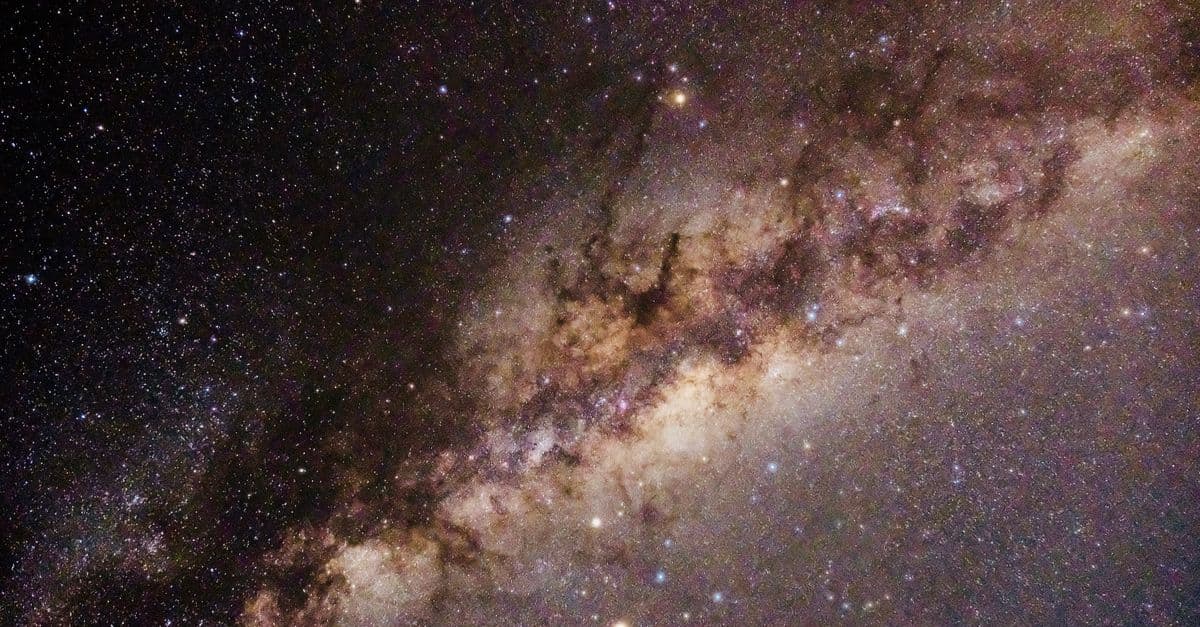
Photo: Jobert Enamno / Pexels
The Moon is Earth's closest neighbour, and it has no atmosphere. Its surface temperature swings from +127°C in full sunlight to –173°C at night. Micrometeorites constantly bombard it, leaving fresh craters. Sound cannot travel across it. Water cannot persist on its surface. Every molecule exposed to space gets bombarded by solar wind particles and UV radiation.
Thought experiment. This article explores a hypothetical scenario for educational and speculative purposes. The events described are not predictions and should not be interpreted as warnings, advocacy, or instructions.
The Moon is Earth without an atmosphere. And it is, for all practical purposes, dead.
Now imagine Earth like that. Not the Moon — we have oceans, organic chemistry, 71% water coverage. The transformation would be fast, total, and fascinating to describe even as it's terrifying to contemplate. Think of Earth's atmosphere the way you'd think of a car's airbag and windshield combined: it's not just cushioning, it's the barrier that makes the whole interior survivable at highway speed. Remove it and everything the barrier was holding back — heat, cold, radiation, vacuum — arrives at once.
Key takeaways
- Sound disappears: Instantly — sound requires a medium to propagate; no air means complete silence
- Water boils: At zero atmospheric pressure, water's boiling point drops well below body temperature — oceans and body fluids both begin to vaporize
- Temperature extremes: Roughly +120°C in direct sunlight, –173°C in darkness, swinging every 12 hours, similar to measured lunar surface extremes (NASA LRO data)
- UV radiation: Without the ozone layer, which currently absorbs 97 to 99 percent of medium-frequency UV, full-spectrum UV reaches the surface (NOAA)
- Life timeline: Complex surface life dies within roughly a minute; deep subsurface microbial life, estimated at tens of billions of tonnes of carbon biomass, could persist indefinitely (PNAS, 2018)
Most surprising fact: In 1966, NASA technician Jim LeBlanc briefly lost pressure in his spacesuit inside a vacuum chamber. He later said the last thing he remembered before losing consciousness was the saliva on his tongue beginning to boil — a real-world preview of what removing Earth's atmosphere would do to every exposed surface of a human body, everywhere on the planet, simultaneously.
What Would Happen First (Seconds to Minutes)
In the first second, two things happen simultaneously: all sound stops, and you begin to die.
Sound is a pressure wave — molecules colliding, compressing, and rarifying in sequence to carry energy from a source to your eardrum. Take away the molecules and there is nothing left to carry the wave. Every sound you could possibly make — speech, footsteps, the crack of thunder — would simply not occur. The universe outside your body would become perfectly, absolutely silent. It's a strange kind of silence, too, not like a quiet room but like the complete absence of the physical possibility of sound.
Your body, meanwhile, is trying to keep its internal pressure near 1 atmosphere (about 101 kilopascals). With nothing pushing back from the outside, gas trapped in your lungs, sinuses, and intestines would expand rapidly. Contrary to science fiction, you would not explode — human skin and connective tissue are elastic enough to contain that expansion, a point confirmed by decades of vacuum-chamber accident case studies (Armstrong limit, Wikipedia summary of aerospace medicine literature). What does happen is called ebullism: above an altitude equivalent to roughly 19 kilometers on Earth — the so-called Armstrong limit, where ambient pressure drops to about 47 millimeters of mercury — water in your saliva, the fluid lining your lungs, and your tears starts to boil at normal body temperature, because 37°C is now above the local boiling point of water. Blood stays liquid a little longer because it's sealed under pressure inside your vessels, but skin and mucous membranes swell visibly within seconds.
You would have perhaps 10 to 15 seconds of useful consciousness before hypoxia — oxygen starvation in the brain — put you under. Full loss of blood pressure and cardiac arrest would follow within roughly one to two minutes if pressure were not restored, based on the same aerospace physiology data used to set spacesuit and spacecraft safety margins. A related thought experiment is what if we ran out of oxygen for 5 seconds.
Meanwhile, on the ocean surface, something far larger in scale would be happening. Atmospheric pressure is what keeps water liquid at Earth's surface temperatures. Right now, water boils at 100°C at sea level because 1 atmosphere of pressure is pushing down on it, keeping the molecules from escaping into vapor too easily. Drop that pressure to zero and the boiling point falls dramatically — by the time you reach a near-vacuum, water boils at temperatures well below freezing. Earth's oceans, at an average surface temperature around 15°C, would start boiling immediately, everywhere, all at once.
This isn't cooking; it's flash evaporation. The surface layers of every ocean, lake, and river would vaporize explosively into steam. Because evaporation absorbs heat from its surroundings (it's an endothermic process — the escaping molecules carry thermal energy away with them), the remaining water would cool rapidly even as its surface boils. The result is a strange feedback loop: boiling water that is simultaneously freezing from beneath. Within hours, the oceans would develop a churning mix of steam venting into space, an ice layer forming underneath the boiling zone, and pockets of liquid water trapped between the two — a genuinely bizarre three-phase transition happening across an area of roughly 361 million square kilometers of ocean surface at once. For the opposite scenario, see what if all water on Earth disappeared.
Why Water's Boiling Point Depends on Pressure
This is the mechanism worth slowing down on, because it explains almost everything else in this scenario. The relationship between pressure and boiling point is described by the Clausius-Clapeyron equation, a 19th-century thermodynamics result that links a substance's vapor pressure to its temperature. In plain terms: liquids boil when their vapor pressure — the tendency of molecules to escape into gas form — matches the pressure of the environment pressing down on them.
At sea level, air pressure is high enough to keep water's vapor pressure in check until 100°C. Climb a mountain, where air pressure is lower, and water boils at a lower temperature — this is why recipes at high altitude need adjusting, and why camping stoves at 3,000 meters take longer to cook rice properly even though the water is technically boiling. Push pressure all the way to zero, as in a vacuum, and there's nothing left to hold the vapor pressure in check at all. Water can boil at temperatures far below its normal freezing point, because "boiling" at that point just means "escaping into a gas phase," not "being hot."
That's the same physics behind ebullism in the human body and the same physics that would turn Earth's oceans into a churning mix of vapor and ice within hours of losing the atmosphere. It's a useful analogy for the whole thought experiment: air pressure isn't just something you breathe, it's a structural constraint that keeps liquid water, and liquid tissue, in the state you're used to.
What Would Happen Next (Hours to Days)
The water vapor now venting from the former oceans would not stay near Earth for long. Earth's atmosphere is currently held in place by gravity, but its lighter molecules — hydrogen and water vapor especially — are also under constant pressure from the solar wind, the continuous stream of charged particles (mostly protons and electrons) blown outward from the Sun. Earth's magnetic field normally deflects most of this, funneling it toward the poles (where it creates the aurora), but a magnetic field alone does not stop atmospheric erosion the way a dense atmosphere does.
We know what this stripping process looks like because NASA's MAVEN spacecraft has measured it happening at Mars in real time. MAVEN found that solar wind strips about 100 grams of gas per second from the Martian atmosphere today, a rate that climbs sharply during solar storms, and that this same process, running far more aggressively when the Sun was young and more active, is the leading explanation for how Mars went from a wetter, thicker-atmosphere world billions of years ago to the thin, dry planet it is now (NASA/University of Colorado, 2015). Earth's water inventory is vastly larger than what Mars ever had, and Earth's magnetic field, generated by convection in the molten iron core, doesn't depend on having an atmosphere at all — so an airless Earth would still have some protection. But without a thick atmosphere to buffer and replenish the exosphere, water vapor would be ionized by solar UV and swept away steadily, a process that would take a very long time to finish rather than seconds, but that would never stop.
In the shorter term — hours, not eons — temperature becomes the dominant hazard. With no atmosphere to scatter, absorb, or redistribute incoming sunlight, the sunlit hemisphere would heat toward equilibrium with direct solar radiation. Airless bodies at Earth's distance from the Sun reach subsolar temperatures in the range measured on the Moon by NASA's Lunar Reconnaissance Orbiter: around +127°C at local noon (NASA LRO). Earth's darker ocean surface, absorbing more sunlight than the Moon's pale regolith, would likely push slightly past that figure before the oceans finish boiling away and expose more reflective ice and dry seabed beneath.
At night, the same lack of atmosphere means no greenhouse blanket to slow heat loss. Temperatures would plunge toward the Moon's measured nighttime extreme of roughly –173°C within hours of sunset. A single Earth rotation — 24 hours — would carry any fixed point through a swing of nearly 300°C, a range far more violent than anything currently experienced anywhere on Earth's surface, including Antarctica's coldest recorded temperature of –89.2°C at Vostok Station.
Radiation exposure would be the third simultaneous crisis. The ozone layer, concentrated between 10 and 50 kilometers of altitude, currently absorbs 97 to 99 percent of the Sun's medium-frequency UV radiation and essentially all UV-C entirely, according to NOAA's Global Monitoring Laboratory (NOAA). Remove the atmosphere and you remove the ozone layer with it — there's nothing left to filter. Full-spectrum solar UV, including the UV-C wavelengths that are lethal to unprotected cells within minutes because they directly fragment DNA, would reach every exposed surface. No unprotected organism caught in daylight would have any meaningful chance of survival.
Long-Term Consequences
Over years and decades, an airless Earth would start to look geologically strange in ways that go beyond temperature and radiation. Weathering — the slow chemical and mechanical breakdown of rock by water, wind, and CO₂-driven chemical reactions — requires an atmosphere to function. Without it, exposed rock surfaces would stop eroding in the ways we're used to and would instead fracture under thermal stress: the repeated 300°C daily temperature swing would crack surface rock into fine powder through pure thermal expansion and contraction, a process similar to what's observed on the Moon and on Mercury. Without wind or flowing water to move that dust around, it would simply accumulate in place, and impact craters from micrometeorites — currently burned up harmlessly in Earth's upper atmosphere — would begin pockmarking the surface for the first time since the earliest chapters of Earth's geological history.
But life would not be eliminated entirely, and this is the part of the scenario that surprises most people. Earth's deep subsurface biosphere — microbial communities living in rock pores, aquifers, and marine sediment kilometers below the surface — is estimated to hold somewhere between 23 and 90 billion tonnes of carbon in biomass, depending on the study and methodology used, with subseafloor sediments alone estimated at roughly 2.9 × 10²⁹ microbial cells (PNAS, 2012; ScienceDaily summary of Kallmeyer et al.). These organisms don't photosynthesize, don't breathe atmospheric oxygen, and in many cases derive energy from chemical reactions with rock rather than from sunlight at all — a process called chemolithotrophy. Surface catastrophe is essentially irrelevant to their existence. They would keep living, dividing on timescales of months to thousands of years, for as long as geothermal heat and chemical gradients persisted deep underground — which, on a planet with an active molten core like Earth's, means effectively indefinitely on any human timescale.
The deep ocean tells a similar story. Under a rapidly forming ice cap several meters thick, insulated from the vacuum above, liquid water heated by Earth's internal geothermal energy could persist for a very long time — plausibly millions of years — even as the surface layers finish boiling away into space. Around hydrothermal vents on the ocean floor, chemolithotrophic ecosystems similar to those found today near vents like those in the Pacific's East Pacific Rise would likely continue functioning much as they do now, since they already don't depend on sunlight or a breathable atmosphere.
Over truly deep time — hundreds of millions to billions of years — Earth's geological engine itself might slow. Plate tectonics, the process that recycles crust and drives volcanism, mountain-building, and the long-term carbon cycle, appears to depend partly on water acting as a lubricant in subduction zones, softening rock and lowering the friction needed to slide one tectonic plate beneath another. Venus is the natural comparison here: a 2023 study using data reanalyzed from NASA's Magellan mission found strong evidence that ancient Venus once had Earth-like plate tectonics, but lost it as the planet's water disappeared through a runaway greenhouse process and photodissociation of water vapor by solar UV high in its atmosphere, leaving Venus's crust locked into the single rigid plate ("stagnant lid") regime it shows today (LPI/USRA, 2023). An airless Earth, drying out over geological time, could plausibly follow a similar path, though the process would take vastly longer given Earth's much larger existing water and volatile inventory.
Could This Actually Happen? Testing the Physics
It's worth being explicit about how implausible the trigger for this scenario actually is, because that context matters for understanding why it's a thought experiment rather than a risk assessment. Earth's atmosphere has a mass of roughly 5.15 × 10¹⁸ kilograms, held in place by gravity strong enough that escape velocity at the surface is 11.2 kilometers per second — comparable to the speed most atmospheric molecules would need to simply leave on their own, which is why gravitational atmospheric loss over human timescales is negligible.
No plausible near-term astronomical or geological event removes an atmosphere that size instantaneously. The closest real analogs are gradual: Mars losing its atmosphere over roughly 4 billion years to solar wind stripping after its dynamo (its internal magnetic-field generator) shut down, or Venus losing its water over a comparably long span through a runaway greenhouse effect. Both processes are measured in eons, not seconds, and both required either the loss of a protective magnetic field (Mars) or a fundamentally different starting climate that trapped heat in a self-reinforcing loop (Venus). Earth retains an active magnetic field generated by its molten iron core, and that field does not depend on having an atmosphere — meaning even in this hypothetical, Earth would keep some of the protection that Mars lost early on, and stripping would proceed more slowly than it did for Mars.
The instant-removal version used throughout most of this article — atmosphere gone in an instant, no gradual transition — exists specifically to isolate cause and effect cleanly for teaching purposes. It lets us reason from first principles (pressure, radiation, thermodynamics) about what each individual layer of the atmosphere is actually doing for us, without the complicating variable of a multi-year transition period during which humans might adapt, evacuate underground, or otherwise respond.
Earth Without an Atmosphere vs. Its Nearest Real-World Analogs
| Body | Surface pressure | Daytime high | Nighttime low | Water on surface | Magnetic field |
|---|---|---|---|---|---|
| Earth (today) | ~101 kPa (1 atm) | ~57°C record | ~–89°C record | Liquid oceans, 71% coverage | Strong, active dynamo |
| Earth (no atmosphere, hypothetical) | ~0 kPa | ~+120°C to +127°C | ~–173°C | Boils and freezes simultaneously, then slowly lost to space | Retained (core-generated) |
| The Moon | Near-vacuum (~3×10⁻¹⁵ atm) | +127°C | –173°C | None on surface; ice only in permanently shadowed polar craters | None (no active dynamo) |
| Mars (today) | ~0.6 kPa (0.6% of Earth's) | ~20°C (equator, midday) | ~–140°C (poles, winter) | None liquid; ice at poles and subsurface | None (lost ~4 billion years ago) |
| Venus (today) | ~9,200 kPa (92 atm) | ~464°C (constant) | ~464°C (constant) | None; lost billions of years ago | Very weak, induced only |
Table: Earth without an atmosphere would sit closest to the Moon in pressure and temperature swing, while sharing Mars's long-term atmospheric-loss mechanism and Venus's history of losing its surface water. Sources: NASA Mars Exploration, NASA LRO, NOAA/NASA Venus fact sheets.
What People Get Wrong About This Scenario
The most common myth, reinforced by decades of science fiction, is that a human exposed to vacuum would explode. It's a dramatic image but not what actually happens. Skin and connective tissue are elastic enough to contain the pressure differential between a body's roughly 1 atmosphere of internal pressure and the vacuum outside; documented vacuum-chamber accidents, including the 1966 Jim LeBlanc incident at NASA, show swelling and ebullism in exposed tissue, not explosive rupture.
A second common misconception is that exposure to space, or to an airless Earth, would cause instant freezing. It's the opposite problem, at least initially: in direct sunlight, with no atmosphere to block incoming solar radiation, surfaces heat up rapidly rather than freezing, similar to how the sunlit side of the Moon reaches temperatures above the boiling point of water. Freezing is the fate of the night side and of anything in shadow, not of the scenario generally. Vacuum itself doesn't have a temperature the way air does — heat loss in a vacuum happens only through radiation, which is a much slower process than the conductive heat loss you'd feel from cold air or cold water. This is why astronauts in shadow don't flash-freeze instantly; heat loss to radiation alone takes minutes to hours, not seconds, even though the surrounding environment is close to absolute zero.
A third misconception worth addressing: that "no atmosphere" would mean total silence for the atmosphere's remaining gases too, everywhere and forever. In practice, small pockets of gas — inside caves, underground bunkers, sealed structures — would retain their own local pressure and could carry sound normally within that enclosed space, exactly the way sound works fine inside a sealed submarine even though it wouldn't propagate through the ocean floor around it. It's only the open, unconfined outdoor environment that goes silent.
The Physics Behind the Scenario, in Detail
Three separate physical principles are doing all the work in this thought experiment, and it's worth naming each one clearly.
Why does water boil at a lower temperature with less pressure?
Boiling happens when a liquid's vapor pressure equals the surrounding ambient pressure. Lower the ambient pressure and you lower the temperature at which that equality is reached. At zero pressure, in a true vacuum, liquid water is fundamentally unstable — it converts to vapor (and, below the triple point of about 0.01°C and 611.657 pascals, directly to ice via sublimation) essentially on contact with the vacuum, which is exactly why both the oceans and human body fluids begin vaporizing the instant atmospheric pressure disappears.
Why would the sunlit side get hotter without an atmosphere, not colder?
An atmosphere does two competing things to surface temperature: it reflects and scatters some incoming sunlight before it reaches the ground (a cooling effect), and it traps outgoing infrared heat radiated back up from the surface (a warming, greenhouse effect). Removing the atmosphere removes both effects at once. On the sunlit side, the loss of the reflective/scattering effect dominates, so temperatures climb toward direct solar equilibrium — the same reason the Moon's daytime surface, with zero atmosphere, gets hotter than Earth's equator despite receiving the same solar flux at the same distance from the Sun.
Why does the nighttime side get so much colder without an atmosphere?
At night, there's no incoming sunlight to worry about, so the only atmospheric effect that matters is the greenhouse trapping of outgoing heat. Earth's current atmosphere — mainly water vapor and CO₂ — slows the rate at which the ground radiates its stored daytime heat back into space overnight, which is why deserts with dry, thin air cool far more at night than humid regions at the same latitude. Remove the atmosphere entirely and that insulating blanket disappears completely, so the ground radiates its heat away almost unimpeded, plunging toward the Moon's measured nighttime low of –173°C within hours.
Would the whole planet die at the same time, or would some regions last longer?
Not uniformly. The two poles, which already receive lower-angle, weaker sunlight even with a full atmosphere, would likely retain ice and cold conditions the longest, similar to how the Moon's permanently shadowed polar craters retain ice today according to NASA's LRO mission. Underground and undersea locations, insulated from surface extremes entirely, would be least affected of all, which is exactly why the deep biosphere's survival prospects are so much better than the surface's.
How does this compare to what actually happened to Mars?
Mars is the closest real precedent, though the process there took about 4 billion years rather than seconds. Once Mars's internal dynamo shut down and its magnetic field faded, its atmosphere lost its main shield against solar wind stripping, and NASA's MAVEN mission has directly measured that ongoing loss at about 100 grams of gas per second today, accelerating sharply during solar storms (NASA/AGU, 2015). Earth in this scenario would face the same long-term erosion mechanism, just starting from a much larger reservoir of water and gas, and with an intact magnetic field slowing the process compared to what happened at Mars.
The Slow, Real-World Version of This Scenario
The instant version of this thought experiment collapses on a human timescale, but the slow version — atmosphere gradually stripped away over geological time, the way it actually happened at Mars — is a real astrophysical process, and it's the version worth taking most seriously as science rather than spectacle. It's also, notably, the same category of process that terraforming proposals for Mars try to run in reverse: delivering volatiles via comet or asteroid bombardment, generating a magnetic shield artificially, and slowly building an atmosphere back up over centuries to millennia. Earth's stronger gravity (surface gravity of 9.8 m/s² versus Mars's 3.7 m/s²) means any atmosphere Earth regained would be retained far more easily than one built on Mars, for exactly the same physical reason that a heavier object needs more energy to reach escape velocity.
FAQ
Q: Would Earth become like the Moon? A: Similar in some ways, but not identical. Earth has a liquid iron core generating an active magnetic field, ongoing tectonic activity, and far more water locked in its crust and mantle than the Moon ever had. The Moon has very little water and no active geology. A stripped-atmosphere Earth would likely be hotter on its sunlit side (dark ocean water absorbs more sunlight than the Moon's pale regolith) and more geologically active, with vast ice deposits underground rather than the Moon's barren, dry regolith.
Q: Would the oceans completely disappear? A: Not quickly. Surface layers would vaporize within hours, but the deep ocean — insulated by a forming ice cap and heated from below by Earth's geothermal energy — would likely remain liquid for a very long time, plausibly millions of years. Solar wind stripping of the escaping water vapor, based on the rates NASA's MAVEN mission has measured at Mars, would take a comparably long time to remove Earth's much larger water inventory. On human timescales, most of Earth's water would remain frozen and underground rather than vanishing outright.
Q: Would humans know it was coming? A: If the atmosphere disappeared gradually over days or longer, the effects would build progressively: thinning air, dropping pressure, rising UV exposure, giving some warning. If it disappeared instantly, as in the version of this thought experiment used for teaching purposes, there would be no warning at all — just sudden silence and unconsciousness within about 15 seconds, based on documented human vacuum-exposure physiology.
Q: What about Earth's magnetic field? A: Earth's magnetic field is generated by convection currents in the molten iron outer core, a process that doesn't require an atmosphere at all. An atmosphere-free Earth would retain its magnetic field, which would continue deflecting a large fraction of incoming solar wind. This is one reason Earth's hypothetical water loss would proceed more slowly than what actually happened at Mars: Mars lost its magnetic field first (roughly 4 billion years ago), and only then lost its atmosphere to unshielded solar wind stripping.
Q: Could we rebuild the atmosphere? A: In principle, yes, though only over very long timescales. Comets, asteroids, and volcanic outgassing could resupply water vapor and other gases over millions of years, and this is essentially the same mechanism proposed in serious Mars terraforming research: delivering volatiles via impactors to thicken a target planet's atmosphere. Earth's stronger surface gravity, 9.8 m/s² versus Mars's 3.7 m/s², would make any rebuilt atmosphere far easier to retain than an equivalent atmosphere on Mars.
Q: Why don't astronauts freeze instantly in the vacuum of space if it's so cold? A: Because vacuum doesn't have a temperature the way air does, and heat only escapes into a vacuum through radiation, a comparatively slow process. There are no air or water molecules present to conduct heat away quickly, the way cold air or cold water would against exposed skin. It takes minutes to hours for a body to lose significant heat purely through radiation, which is why the immediate threats to an unprotected human in vacuum are ebullism and hypoxia, not instant freezing.
Q: Would any plants or animals survive on the surface? A: Essentially none, given the combination of near-total vacuum, extreme UV exposure, and 300°C daily temperature swings. Extremophile organisms such as tardigrades can survive short exposures to vacuum and radiation in laboratory tests, but the sustained combination of conditions described here, indefinitely and without any atmosphere ever returning on relevant timescales, would exceed what any known surface-dwelling organism can tolerate for more than brief periods.
Q: Is there a real planet or moon that shows what this would actually look like? A: The Moon is the closest working model for temperature extremes and vacuum conditions, while Mars is the closest model for the long-term atmospheric-stripping mechanism, and Venus is the closest model for how a planet can lose its surface water permanently. No single body perfectly matches an airless Earth, because Earth starts with far more water, a stronger magnetic field, and more internal heat than any of the three.
Q: How does this scenario relate to what actually happened on Mars billions of years ago? A: It's effectively the slow-motion, real version of this thought experiment. Mars had a thicker atmosphere and likely surface water roughly 3.5 to 4 billion years ago, before its internal dynamo shut down, its magnetic field faded, and solar wind stripping — the same process NASA's MAVEN mission measures happening today at about 100 grams per second — gradually thinned its atmosphere to the roughly 0.6% of Earth's current surface pressure Mars has now.
The takeaway
Earth's atmosphere isn't a passive layer of "air we breathe" so much as an active structural system holding several different catastrophes at bay simultaneously: a pressure vessel keeping water and body fluids liquid, a radiation shield absorbing nearly all dangerous UV, and a thermal blanket smoothing out the difference between direct sunlight and open space. Take it away and each of those functions fails independently, on its own timescale, which is why the consequences unfold in layers — seconds for sound and consciousness, hours for boiling oceans and temperature extremes, millennia for water loss to space, and billions of years for the geological aftermath. The real value of the scenario isn't the shock of imagining Earth stripped bare; it's what it reveals about how much invisible engineering an atmosphere is quietly doing every single day.
Read next:
Follow new articles
Add SciHub101 to your feed reader to see new science and technology stories.
About the Author
SciHub101 is an independent science and technology publication founded and edited by Buğra Sözeri, a software engineer and app developer based in Türkiye. AI tools assist with drafting and research. Source documentation in the existing archive is uneven, and articles are being reviewed and corrected. The Editorial Team byline identifies editorial responsibility; it does not certify specialist or independent human review. Where we compare products, anything built by our own team is labelled as such — see the editorial guidelines and About page for how corrections and disclosures work.
Related Articles
What If Humans Could Photosynthesize? — Science Explained
What would actually happen if humans could photosynthesize like plants? The math is brutal: you'd need skin the area of a small room, you'd still need food, and you'd have to spend most of your life lying flat in direct sunlight.
What If the Internet Went Down Permanently? — Science Explained
What would actually happen if the internet disappeared forever? Financial systems would fail in hours, food supply chains would collapse within days, and modern medicine would be crippled within weeks. The scale of what humanity would lose is staggering.
What If We Ran Out of Oxygen for 5 Seconds? — Science Explained
What would actually happen if Earth's oxygen vanished for just 5 seconds? Buildings would implode, the sky would go black, your eardrums would rupture, and all metal surfaces would weld together. Oxygen is doing far more than you think.
What If You Traveled at the Speed of Light? — Science Explained
What would actually happen as you approached the speed of light? The energy bill diverges, your clock slows, the sky bunches up ahead of you, and the empty space between stars turns into a particle beam. The reason the limit exists is more interesting than the scenario.
What If Gravity Was Twice as Strong? — Science Explained
What would actually happen if gravity suddenly doubled? Your skeleton would fracture under your own weight, the atmosphere would compress into a dense killing fog, and tall buildings would collapse. But life could still evolve — just very differently.
What If Earth Doubled in Size? — Science Explained
What would actually happen if Earth suddenly doubled in size? Surface gravity would crush most life, the atmosphere would thicken into a lethal blanket, and reaching space might become impossible.