What If Earth Doubled in Size? — Science Explained
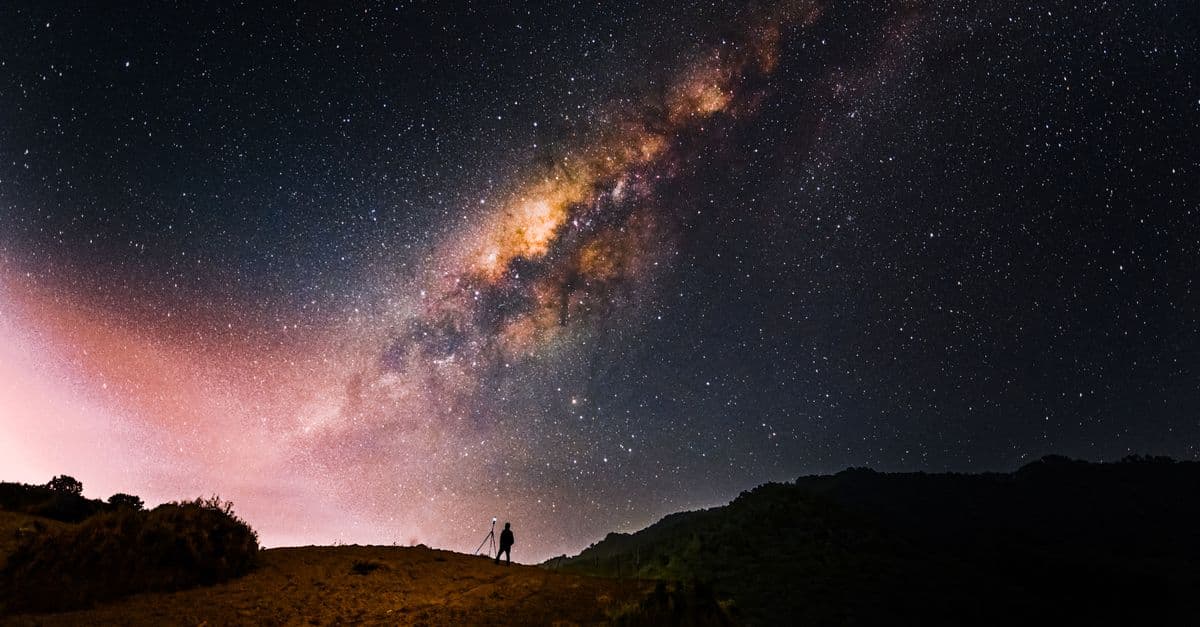
Photo: Martin Marthadinata / Pexels
People imagine a bigger Earth as simply more of the same — more land, more ocean, bigger mountains. They picture humans living as normal, just with longer flights between continents. The physics says something far more brutal: doubling Earth's radius while keeping the same density would double surface gravity, since g scales directly with radius at constant density (mass grows as r³, and g = GM/r² reduces to g ∝ r). A 70 kg person would suddenly weigh the equivalent of 140 kg. Your heart would struggle to push blood to your brain. Your bones would be under loads they never evolved to carry. The "bigger Earth" scenario is, for most existing life, closer to a death scenario than an upgrade.
Thought experiment. This article explores a hypothetical scenario for educational and speculative purposes. The events described are not predictions and should not be interpreted as warnings, advocacy, or instructions.
Key takeaways
- Gravity increase: Doubling radius at constant density doubles surface gravity (g = GM/r²; mass grows as r³, so net effect is g ∝ r), taking Earth from 9.8 m/s² to roughly 19.6 m/s²
- Human survival threshold: Sustained exposure above roughly 2g causes measurable cardiovascular strain even in short human centrifuge trials, and permanent life at that load is an open medical question, not a solved one
- Atmosphere compression: A more massive planet holds a thicker atmospheric column against its surface, raising surface pressure and pushing oxygen and nitrogen into physiologically dangerous partial-pressure ranges
- Escape velocity climbs: Reaching orbit on a doubled Earth demands roughly 41% more delta-v — the rocket equation punishes that increase exponentially in fuel mass
- Plate tectonics and body plans shift: Higher gravity plausibly increases convective forces inside the planet while capping how tall trees, animals, and buildings can safely grow
What Would Happen First (Seconds to Minutes)
The scenario assumes Earth's radius doubles instantaneously while its density stays the same as today's. The first effect would be felt by everything with mass: surface gravity doubles, going from 9.8 m/s² to approximately 19.6 m/s². That number comes directly from the gravity equation g = GM/r². Radius doubling multiplies volume — and therefore mass, at constant density — by eight (2³). Divide that eight-fold mass increase by the new radius squared (a four-fold increase, since 2² = 4), and the net change in surface gravity is a factor of two: 8/4 = 2.
Every standing creature would immediately feel roughly twice as heavy. A 70 kg human would experience the mechanical equivalent of permanently carrying another 70 kg strapped to their body — a load comparable to a heavy backpack that never comes off, day or night, for the rest of their life. Joints built for one body-weight of compressive load would face double that instantly. The cardiovascular system, evolved and tuned for a 1g gradient between heart and brain, would face an immediate deficit in blood pressure regulation, particularly for anyone standing upright.
Trees, engineered by millions of years of evolution to support their own weight at 1g and no more, would begin failing within minutes under doubled gravity. The tallest, most top-heavy species — coast redwoods among them — would be first to buckle, since their entire structural margin is already spent holding themselves up against ordinary Earth gravity. Tall buildings not engineered with a 2x safety factor for vertical loading would face structural failure at their weakest points: welded joints, foundation slabs, and unreinforced masonry.
What Would Happen Next (Hours to Days)
Within hours, the cardiovascular consequences would move from uncomfortable to medically dangerous. The human heart pumps roughly 5 liters of blood per minute at rest under normal 1g conditions. Real short-arm human centrifuge research — the closest thing scientists have to lab-controlled hypergravity on living people — shows that even brief exposure to 2g at the feet produces measurable, significant changes in blood pressure regulation compared to standing at 1g, driven by the extra orthostatic challenge of moving blood against a steeper gravitational gradient (American Journal of Physiology-Regulatory, Integrative and Comparative Physiology, 2022; PMC, short-arm centrifuge cerebral perfusion study). Those studies run centrifuge sessions lasting minutes to a few hours, not a lifetime — nobody has ever lived at sustained 2g, so long-duration outcomes are extrapolated rather than directly measured. People with any pre-existing cardiac condition would be at serious immediate risk. Even healthy individuals would likely experience fatigue, dizziness, and reduced exercise tolerance as the body works harder just to keep blood moving upright.
The atmosphere would transform on a similar timescale. A larger, more massive Earth holds a taller and denser column of gas against its surface, so atmospheric pressure at ground level would climb substantially — plausibly toward roughly double current sea-level pressure, since the mass of air above any given point on the surface would increase along with the planet's stronger gravitational pull holding that air down. The partial pressure of both oxygen and nitrogen would rise in step with total pressure. Oxygen becomes toxic to the central nervous system at inspired partial pressures above roughly 1.4 to 1.6 atmospheres, the accepted operational ceiling in professional and technical diving, above which the risk of oxygen-toxicity seizures rises sharply (NCBI StatPearls, Oxygen Toxicity; Divers Alert Network). Doubling Earth's surface pressure would push the oxygen partial pressure well past that threshold. Nitrogen, meanwhile, produces nitrogen narcosis at elevated partial pressures — the same intoxicating effect deep-sea divers experience below roughly 30 meters of water.
In practice, unmodified human beings breathing this new atmosphere at ground level would face a combination of oxygen-toxicity risk and nitrogen narcosis simultaneously, a physiological environment closer to a deep dive than to standing on solid ground. For another breathing-related scenario, see what if we ran out of oxygen for 5 seconds.
Long-Term Consequences
Over generations, the life that survived the initial shock would face selective pressure toward radically different body plans. Comparative anatomy across existing high-gravity-adapted animals — and basic structural engineering — both point toward the same outcome: on a higher-gravity world, successful animals trend low, wide, and heavily built. Think tortoise or rhinoceros proportions rather than giraffe proportions. The tallest surviving land creatures would likely be measured in tens of centimeters rather than meters, because the energetic and structural cost of holding mass vertically against 2g escalates fast, and at some threshold, tall body plans simply stop being viable.
Forests would undergo an equally dramatic contraction. Peer-reviewed research on the physical limits of tree height — the landmark study by George Koch, Stephen Sillett, and colleagues, published in Nature in 2004 — found that the tallest coast redwoods (Sequoia sempervirens) top out at roughly 122 to 130 meters, a ceiling set by the increasing water stress that gravity and path-length resistance impose on leaves at extreme heights, even when soil moisture is abundant (Koch et al., "The limits to tree height," Nature 428, 2004). That maximum height is a direct function of how hard gravity fights the tree's ability to pull water upward through its xylem. Double the gravitational pull, and that ceiling would drop substantially — vegetation on a doubled Earth would trend toward dense, low, scrubby growth rather than soaring canopies, for the same physical reason bonsai trees stay small when their growth is constrained.
The most counterintuitive long-term consequence concerns space exploration. Earth's actual escape velocity is 11.2 km/s. On a doubled-radius Earth of the same density — and therefore eight times the mass — escape velocity would rise to roughly 15.8 km/s, an increase of about 41%. That sounds modest until you run it through the Tsiolkovsky rocket equation, which describes how a rocket's required propellant mass scales exponentially, not linearly, with the velocity change (delta-v) it needs to achieve. A 41% increase in required delta-v does not mean 41% more fuel — it can mean needing a fundamentally different class of vehicle, since the exponential term in the rocket equation punishes every additional km/s of delta-v more than the last. It is a genuinely open question whether a civilization evolving on a doubled Earth, breathing a denser and more oxygen-toxic atmosphere, with weaker overall industrial output per capita (since higher gravity raises the energy cost of every physical task, from lifting to machining), would ever develop the metallurgy, propellant chemistry, and launch infrastructure needed to reach that higher threshold using chemical rockets alone.
The Science Behind It
The core physics is gravitational: g = GM/r², where M is the planet's mass and r is its radius. Hold density (ρ) constant and double the radius, and mass grows with volume — proportional to r³, since volume is (4/3)πr³. Substituting M ∝ r³ into the gravity equation gives g ∝ r³/r² = r. Surface gravity, in other words, is directly proportional to radius when density stays fixed. Double the radius, and you double the gravity — not quadruple it, a common intuitive error that comes from forgetting that mass itself is also changing as the planet grows.
This relationship is why planets of different sizes across the solar system and beyond have such different surface gravities. Mars, at roughly half Earth's radius, has surface gravity of about 3.7 m/s² — about 0.38g, a figure well-documented from Mars rover mission data and orbital measurements. Real exoplanets known as super-Earths — rocky worlds larger than Earth but smaller than ice giants like Neptune — offer working examples of what higher-gravity, larger rocky worlds actually look like. Kepler-442b, at about 1.34 Earth radii and an estimated 2.36 Earth masses, sits in its star's habitable zone and is one of the more Earth-like super-Earth candidates identified by the Kepler mission (NASA Exoplanet Catalog, Kepler-442 b). Kepler-452b, discovered orbiting a Sun-like star, has a radius of about 1.63 Earth radii, an estimated mass of roughly 5 Earth masses, and a modeled surface gravity in the range of about 1.9g (IOP Science, Kepler-452b discovery and validation paper; NASA Exoplanet Catalog, Kepler-452 b). These worlds are genuinely interesting habitability candidates precisely because they show what a doubled-gravity Earth-analog might really involve — they're theoretically capable of holding liquid water and an atmosphere, but they are not simply "bigger Earths" with nothing else different.
The atmospheric calculation follows the barometric formula, which describes how atmospheric pressure decreases with altitude at a rate set by the atmosphere's scale height — a value determined by temperature, average molecular mass of the gas, and gravity. Higher surface gravity compresses the atmosphere more tightly against the ground, both raising surface pressure and shrinking the scale height, meaning the atmosphere becomes a thinner, denser shell hugging the surface rather than a tall, gradually thinning column. Practically, the sky would likely appear a deeper, hazier blue, since denser air scatters more light across all wavelengths.
The geophysical effects compound the atmospheric ones. Higher surface gravity increases pressure throughout Earth's mantle, which plausibly accelerates the convective currents that drive plate tectonics — the same convective process, incidentally, that (via the Coriolis-organized geodynamo in the core) sustains Earth's protective magnetic field, discussed in detail in our piece on what would happen if Earth stopped rotating. Isostasy — the physical principle by which the crust "floats" on the mantle, with taller mountains requiring deeper supporting roots underneath them — means that under doubled gravity, mountain-building would be self-limiting in a much more aggressive way. Taller peaks would need proportionally deeper crustal roots to stay buoyant, and the increased weight bearing down on those roots would suppress how tall any mountain range could realistically grow. The Himalayas, under this scenario, would likely be shorter and squatter, not taller.
Would the Oceans and Water Cycle Survive?
Doubling Earth's radius at constant density doesn't just change gravity on land — it reshapes the entire hydrosphere. Ocean depth in absolute terms would likely stay in a similar range, since the total volume of water on Earth doesn't change in this scenario, only the gravity acting on it and the larger surface area it's spread across. But water pressure at any given depth would increase in proportion to the stronger gravitational pull. At the real Mariana Trench's Challenger Deep, ambient pressure today measures approximately 1,086 bar (about 15,750 psi) at a depth of roughly 10,935 meters — more than a thousand times atmospheric pressure at sea level (NOAA, Challenger Deep depth and pressure research). Under doubled surface gravity, a trench of comparable depth would plausibly see pressure in the range of double that figure, deep into territory that pushes even pressure-adapted deep-sea organisms toward their known physiological limits. The extreme-pressure chemistry that governs mineral solubility and precipitation at those depths would shift as well, since pressure directly affects reaction equilibria in ways ordinary surface chemistry doesn't have to account for.
Rainfall and weather patterns would also change, though less catastrophically than gravity's direct effects on bodies and buildings. Stronger gravity increases the terminal velocity at which raindrops fall — the speed at which a falling drop's weight is balanced by air resistance — meaning storms on a doubled Earth would likely deliver rain and hail with more kinetic energy per drop, a subtle but real increase in the physical force of ordinary weather.
Comparing Doubled Earth to Real High-Gravity Worlds
The solar system and known exoplanets give us reference points for what higher-gravity, larger rocky worlds are actually like, rather than leaving the question purely theoretical. The table below places the hypothetical doubled Earth alongside real planetary bodies with meaningfully different gravity.
Table: Surface gravity across real and hypothetical rocky worlds
| World | Relative radius (Earth = 1) | Surface gravity | Notes |
|---|---|---|---|
| Mars | ~0.53 | 3.7 m/s² (0.38g) | Confirmed by rover and orbiter data; too low to retain a thick atmosphere long-term |
| Earth (today) | 1.0 | 9.8 m/s² (1.0g) | Baseline for all comparisons in this article |
| Kepler-442b | ~1.34 | Estimated, not yet precisely measured | Habitable-zone candidate around a K-type star (NASA Exoplanet Catalog) |
| Kepler-452b | ~1.63 | Estimated ~1.9g | Orbits a Sun-like G2 star; among the closest known analogs to a larger, older Earth (IOP Science, 2015) |
| Doubled Earth (this scenario) | 2.0 | ~19.6 m/s² (2.0g) | Hypothetical; density held constant at Earth's actual value |
Table: Approximate surface gravity across Mars, Earth, two well-studied super-Earth exoplanet candidates, and the hypothetical doubled-Earth scenario. Exoplanet gravity figures are model-derived estimates from published mass and radius measurements, not direct measurements, since no spacecraft has visited these systems.
Notice that the doubled-Earth scenario sits gravitationally between Kepler-452b's estimated 1.9g and a genuinely uncharted regime. That comparison matters because it means the doubled-Earth thought experiment isn't pure fantasy physics — it describes conditions in the same broad range that real habitability researchers already study when they evaluate whether super-Earth exoplanets could plausibly support complex life. Another physics thought experiment is what if we could teleport matter.
What People Get Wrong About "Bigger Earth" Scenarios
The most common misconception is treating "bigger" as synonymous with "more of the same, just larger" — bigger oceans, bigger mountains, bigger continents, same rules. That framing quietly assumes gravity stays constant, which is the one variable that changes the whole picture. Popular fiction and casual thought experiments frequently skip the gravity math entirely and jump straight to imagining a planet with more land area for humans to spread out on, without asking whether unmodified human bodies could function there at all.
A second misconception conflates "doubling the radius" with "doubling the mass." Because volume scales with the cube of radius, doubling Earth's radius at constant density actually multiplies its mass by eight, not two. This is the same cubic relationship that makes small increases in a planet's size translate into large increases in surface gravity and total gravitational pull — a detail that matters enormously in real exoplanet science, where astronomers use exactly this radius-mass-density relationship to estimate whether a newly discovered exoplanet is likely rocky (like Earth and Mars) or a gas-rich mini-Neptune, based on how its measured radius and mass relate to each other.
A third mistake is assuming atmospheric changes would be gradual or manageable. Because atmospheric pressure follows an exponential relationship with gravity through the barometric formula, doubling surface gravity doesn't produce a mild, linear increase in air pressure — it produces a much steeper compression of the entire atmospheric column, concentrating far more gas near the surface than intuition suggests. That's part of why the oxygen-toxicity and nitrogen-narcosis consequences discussed earlier aren't minor side effects; they follow directly and unavoidably from the same physics that determines gravity itself.
A fourth mistake, common in less careful treatments of this scenario, is assuming Earth's orbit around the Sun would be disrupted. It would not be. The Sun's gravitational pull on Earth depends only on Earth's total mass and its distance from the Sun, not on Earth's radius or surface gravity. A doubled-radius Earth, despite being eight times more massive, would still orbit the Sun on essentially the same trajectory — though its much stronger gravitational pull would meaningfully change its relationship with the Moon, since the Earth-Moon system's dynamics depend heavily on the mass ratio between the two bodies.
Could Any Life Actually Adapt to This?
The honest scientific answer is: some life plausibly could, but not human life in its current form, and not on any timescale shorter than deep evolutionary time. Basic biomechanics gives a rough sense of what would need to change. Bone and muscle strength scale differently with body size than body weight does — a relationship known in biology as allometric scaling — which is why larger land animals on Earth today (elephants, for example) already have proportionally thicker leg bones relative to their body length than smaller animals like mice. A species evolving under sustained 2g would face similar pressure toward disproportionately robust skeletal structures, shorter overall stature, and a lower center of mass, mirroring the same tortoise-like body plan trend discussed earlier in this article.
There is also a useful, if imperfect, real-world analog: astronauts. Spaceflight research consistently shows that human bones lose roughly 1 to 2 percent of their density per month in microgravity aboard the International Space Station, a rate of bone loss that, on a monthly basis, outpaces what a postmenopausal woman experiencing osteoporosis loses in an entire year (NASA, Counteracting Bone and Muscle Loss in Microgravity; NASA Scientific Visualization Studio, ISS Bone Loss Research). That finding demonstrates something directly relevant here in reverse: human skeletal structure is exquisitely sensitive to how much gravitational load it experiences, adapting (and de-adapting) its density in response to mechanical stress. It's reasonable to infer, though not directly proven by any existing study, that sustained exposure to roughly double the gravitational load humans evolved under would drive the opposite adaptation over generations — denser, sturdier bone structure, at real metabolic and reproductive cost, exactly the kind of trade-off natural selection enforces ruthlessly over deep time rather than a single human lifespan.
The takeaway
Doubling Earth's radius looks, on the surface, like a story about more room — more land, more ocean, more everything. The actual physics tells a story about gravity, and gravity turns out to govern almost everything else: how hard your heart has to work, how thick and dangerous the air becomes, how tall a tree or a human or a mountain range is allowed to grow, and whether a civilization could ever muster enough rocket fuel to leave the ground at all. None of this makes a doubled Earth uninhabitable in some ultimate cosmic sense — real super-Earth exoplanets in comparable gravity ranges remain live candidates in the search for habitable worlds. It does mean that "just a bigger Earth" is never just bigger. It's a fundamentally different planet, governed by the same equations, arriving at wildly different answers.
Read next:
FAQ
Q: Would doubling Earth's radius quadruple gravity or double it? A: It would double it, not quadruple it. Gravity follows g = GM/r². Doubling the radius at constant density multiplies mass by eight (since volume scales as r³), and dividing that eight-fold mass increase by the four-fold increase in r² (2² = 4) leaves a net factor of two. The quadrupling intuition is a common mistake that comes from forgetting mass also changes as the planet grows.
Q: Could humans survive on a 2g Earth? A: Not in our current biological form, based on the best available evidence. Short-arm human centrifuge studies show measurable cardiovascular strain from just minutes at 2g, and nobody has ever lived at that load for years, so long-term outcomes are extrapolated rather than directly observed. Lifelong survival at 2g would likely require major physiological adaptation across many generations, not a single human lifetime.
Q: What would happen to oceans on a doubled Earth? A: Ocean depth in absolute terms would likely stay similar, but pressure at any given depth would rise with the stronger gravity. The real Challenger Deep in the Mariana Trench already sits at roughly 1,086 bar of pressure at about 10,935 meters down; a comparable trench under doubled gravity would plausibly see pressure well beyond that figure, deep into territory that challenges even pressure-adapted deep-sea life.
Q: Would the planet be more or less geologically active? A: Likely more active. Higher surface gravity increases the pressure differential that drives mantle convection, the process behind plate tectonics. More convective energy plausibly means more volcanism and more frequent, larger earthquakes — though isostasy would also cap how tall individual mountains could grow, since taller peaks need deeper, heavier crustal roots to stay buoyant under stronger gravity.
Q: Could a doubled Earth still orbit the Sun normally? A: Yes. The Sun's gravitational pull on Earth depends on Earth's total mass and its distance from the Sun, not on Earth's radius. A doubled-radius Earth would be eight times more massive at constant density, which would meaningfully change Earth-Moon orbital dynamics, but the Earth-Sun orbit itself would remain essentially stable.
Q: Have astronomers found real planets like this? A: Yes. Super-Earths — rocky worlds larger than Earth but smaller than ice giants — are among the most common exoplanet types discovered by NASA's Kepler and TESS missions. Kepler-442b (about 1.34 Earth radii) and Kepler-452b (about 1.63 Earth radii, with modeled surface gravity around 1.9g) are two of the more Earth-like habitable-zone candidates studied for what larger rocky worlds might actually be like.
Q: Why would the atmosphere become dangerous to breathe on a doubled Earth? A: Stronger gravity compresses more atmospheric gas into the layer nearest the ground, roughly doubling surface pressure and, with it, the partial pressures of both oxygen and nitrogen. Oxygen becomes toxic to the central nervous system above roughly 1.4 to 1.6 atmospheres of partial pressure — the same ceiling professional divers observe — while elevated nitrogen partial pressure produces the same narcotic effect deep-sea divers experience below about 30 meters of water.
Q: How much harder would it be to launch a rocket from a doubled Earth? A: Escape velocity would rise from Earth's real 11.2 km/s to roughly 15.8 km/s, about a 41% increase. Because the Tsiolkovsky rocket equation scales propellant requirements exponentially with delta-v, that 41% increase in required velocity translates into a far larger jump in fuel mass needed, potentially putting chemical-rocket spaceflight out of reach for a civilization evolving under those conditions.
Q: Would trees and forests look different on a doubled Earth? A: Almost certainly. Peer-reviewed research on real coast redwoods found their maximum height — roughly 122 to 130 meters — is set by how hard gravity and water-transport physics fight a tree's ability to pull water up through its trunk. Doubling gravity would lower that structural ceiling substantially, likely producing dense, low, scrubby vegetation instead of tall forest canopies.
Q: Is there a real-world analog for how the human body responds to changed gravity? A: Yes, in reverse. Astronauts aboard the ISS lose roughly 1 to 2% of bone density per month in microgravity — faster than a postmenopausal woman with osteoporosis loses bone in an entire year. That demonstrates how sensitively human bone density responds to gravitational load, which suggests, though it does not directly prove, that sustained higher gravity would drive the opposite adaptation: denser, sturdier skeletons over many generations.
Follow new articles
Add SciHub101 to your feed reader to see new science and technology stories.
About the Author
SciHub101 is an independent science and technology publication founded and edited by Buğra Sözeri, a software engineer and app developer based in Türkiye. AI tools assist with drafting and research. Source documentation in the existing archive is uneven, and articles are being reviewed and corrected. The Editorial Team byline identifies editorial responsibility; it does not certify specialist or independent human review. Where we compare products, anything built by our own team is labelled as such — see the editorial guidelines and About page for how corrections and disclosures work.
Related Articles
What If Humans Stopped Sleeping? — Science Explained
What would actually happen if humans stopped sleeping? Within days: hallucinations. Within weeks: organ failure. A rare disease called fatal familial insomnia makes this experiment real — and terrifying.
What If We Ran Out of Oxygen for 5 Seconds? — Science Explained
What would actually happen if Earth's oxygen vanished for just 5 seconds? Buildings would implode, the sky would go black, your eardrums would rupture, and all metal surfaces would weld together. Oxygen is doing far more than you think.
What If Gravity Was Twice as Strong? — Science Explained
What would actually happen if gravity suddenly doubled? Your skeleton would fracture under your own weight, the atmosphere would compress into a dense killing fog, and tall buildings would collapse. But life could still evolve — just very differently.
What If You Traveled at the Speed of Light? — Science Explained
What would actually happen as you approached the speed of light? The energy bill diverges, your clock slows, the sky bunches up ahead of you, and the empty space between stars turns into a particle beam. The reason the limit exists is more interesting than the scenario.
What If Earth Had No Atmosphere? — Science Explained
What would actually happen if Earth's atmosphere disappeared? Temperature swings from +120°C to –170°C, water boiling into space, instant deafness, UV sterilisation, and a very bad day for everything alive.
What If Gravity Disappeared for One Second?
What if gravity vanished for one second? The math shows orbits shift by millimeters to meters, and the ground may carry you along. A thought experiment.