What If Earth Stopped Rotating?
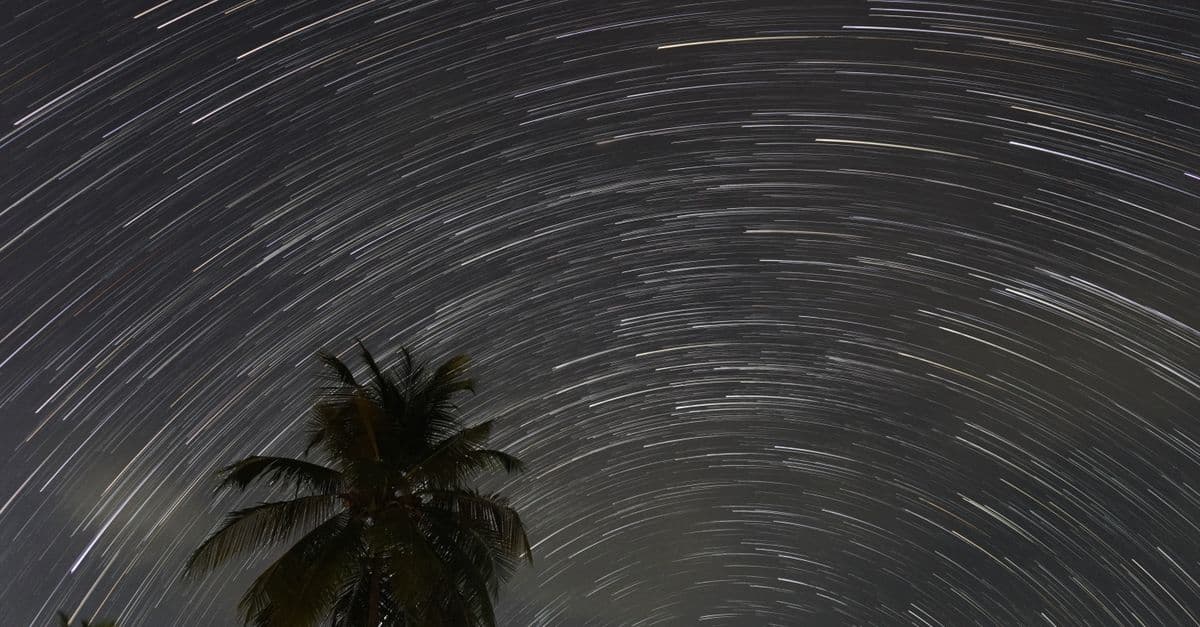
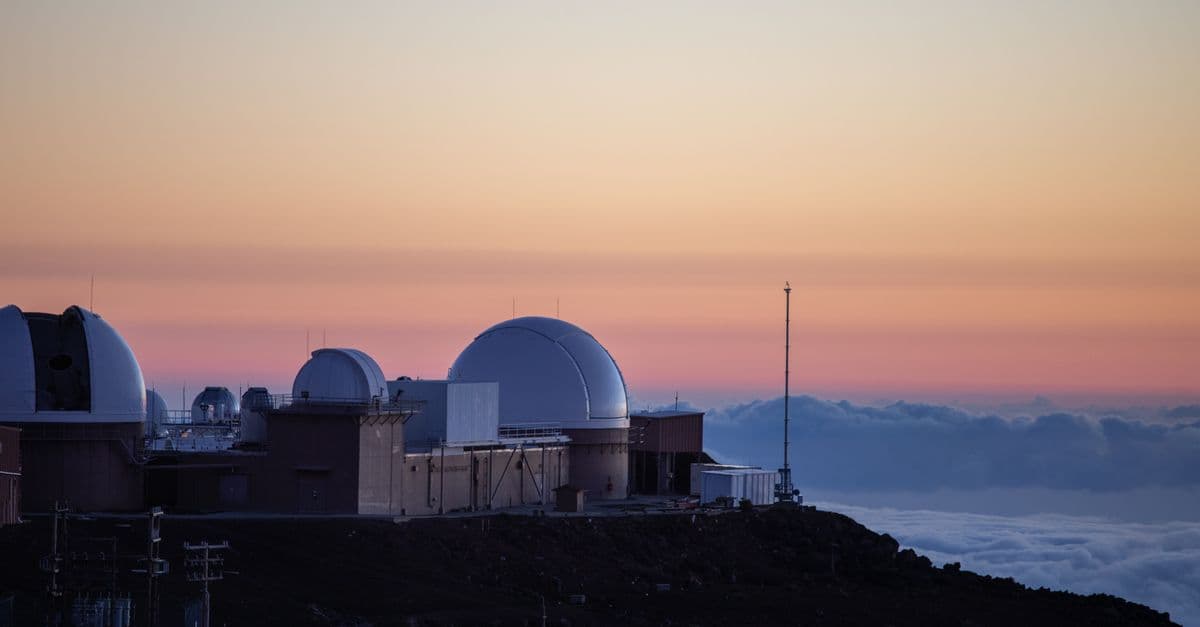
Photo: Mubas Akz / Pexels
Skip past the first catastrophic hour and the first catastrophic century, and a stopped Earth eventually settles into something stranger than the initial chaos: a planet with a permanent day side and a permanent night side, exactly like the tidally locked exoplanets astronomers now search for around red dwarf stars. This article is not about the winds that would scour the surface in the opening minutes — other pieces on this site cover that mechanical catastrophe in detail. This one asks the question that comes after the dust settles, over centuries and millennia: what does the ecosystem look like once a non-rotating Earth reaches a new equilibrium, and where, if anywhere, could life hang on?
Thought experiment. This article explores a hypothetical scenario for educational and speculative purposes. The events described are not predictions and should not be interpreted as warnings, advocacy, or instructions. A planet cannot stop rotating suddenly through any known natural process — this is a physics and climate-science exercise, not a forecast.
Why a stopped Earth becomes two different planets
Rotation is the reason Earth has one climate system instead of two. Right now, every point on the surface cycles through day and night every 24 hours, which means heat gets spread around fairly evenly over a full rotation even though the poles receive less sunlight than the equator. Take rotation away and that averaging mechanism disappears.
Earth would still orbit the Sun once every 365.25 days, because orbital motion and axial spin are independent of each other — stopping one does not stop the other. But if Earth no longer turns on its axis relative to the stars, it ends up rotating once per year relative to the Sun, the same geometry astronomers call synchronous or tidal rotation. One hemisphere faces the Sun continuously; the opposite hemisphere faces away continuously. This is the exact configuration many known exoplanets around M-dwarf stars are believed to have, because they orbit close enough to their stars that gravitational tides have locked their spin to their orbit (NASA Exoplanet Exploration on tidally locked worlds).
The result is not a planet with weather that varies by season. It is a planet with weather that varies by geography, permanently. One place is always summer. Another is always midnight. Climate stops being a cycle and becomes a map.
The day side: a planet-sized desert
The hemisphere locked in permanent daylight would not simply get warm. It would get warm in the way a desert gets warm, then keep going, because there is no nightfall to let heat radiate back out to space.
Ground temperatures at the point directly under the Sun — the substellar point — would likely climb into the range of 50°C to 80°C at the surface once the atmosphere and oceans reach a new steady state, based on general circulation models of synchronously rotating terrestrial planets (Joshi, Haberle & Reynolds, Icarus, 1997). That is well above the upper limit for most plant photosynthesis, which typically shuts down somewhere between 40°C and 50°C as proteins denature and stomata close to conserve water.
Under sustained heat like that, the ecological trajectory is predictable because Earth already has a preview of it: the hyperarid cores of the Sahara and the Atacama, where daytime ground temperatures regularly exceed 60°C and almost nothing grows except crusts of cyanobacteria hiding just under translucent rocks. Without a cool night to recover in, the day-side hemisphere would likely evolve into something closer to that — a near-continuous desert belt, its exact boundary shaped by whatever mountain ranges and coastlines happen to sit at different distances from the substellar point.
Standing water would be the first casualty. Evaporation driven by constant, un-interrupted sunlight would pull moisture off any exposed lake or sea faster than rainfall could replace it, in the same way the Dead Sea and the Aral Sea have shrunk under sustained evaporative pressure without a countervailing water source. Over centuries, the day-side hemisphere would likely dry into salt flats and dune fields, with any surviving water pushed into deep aquifers or transported poleward as vapor.
Could anything grow there?
Only at the margins. The zone nearest the terminator — the line separating day from night — would receive lower, more oblique sunlight and stay cooler, similar to how Earth's polar regions receive weaker sunlight than the tropics even in constant summer. Drought-tolerant scrub and succulent-type vegetation, similar to what survives in the driest edges of the Sonoran or Namib deserts today, is the closest present-day analog for what might cling to the day-side fringe.
The night side: a permanent ice age
The far hemisphere is the mirror problem. With no sunlight ever reaching it directly, the only heat available comes from three sources: residual heat radiating out from Earth's interior (geothermal flux, roughly 0.09 watts per square meter globally, a tiny amount — U.S. Geological Survey), atmospheric heat transported over from the day side by wind, and ocean currents carrying warm water from the sunlit hemisphere.
Without those imports, night-side surface temperatures would plunge toward the range seen at Earth's actual coldest recorded spot: Vostok Station in Antarctica, which registered -89.2°C in 1983 (NOAA National Centers for Environmental Information). Climate simulations of tidally locked planets without strong ocean heat transport put permanent night-side temperatures in a similar range, cold enough to freeze carbon dioxide out of the atmosphere in extreme cases and cold enough to lock up virtually all surface water as ice in less extreme ones (Joshi et al., 1997; Wordsworth, Astrophysical Journal, 2015).
An ice sheet that thick and that permanent would behave like Antarctica does now: nearly sterile at the surface, but not necessarily dead underneath. Antarctica's own ice sheet hides subglacial lakes, like Lake Vostok, that have stayed liquid for millions of years under kilometers of ice, insulated by geothermal heat from below and pressure from above, and those lakes host microbial communities that have never seen sunlight (British Antarctic Survey on subglacial lakes). A permanently dark hemisphere on a stopped Earth would likely develop the same kind of hidden, chemosynthesis-based ecosystem — life running on chemical energy from rock and water instead of photosynthesis — buried under an ice cap that never melts.
The night-side ocean, if enough liquid water survives there at all, would depend heavily on how much heat the currents from the day side manage to smuggle across. Climate modeling of tidally locked exoplanets shows this heat-transport question is the single biggest variable in whether the night side is a dead ice slab or a cold-but-functioning ocean world (Yang et al., 2014).
The terminator ring: the only place left with seasons
Between the everlasting day and the everlasting night sits a narrow band, following the line where the Sun would sit permanently on the horizon. This terminator zone is the closest thing a stopped Earth would have to a temperate climate, and it is also the leading candidate habitat that astrobiologists point to when they model life on real tidally locked exoplanets.
The physics is straightforward. Right at the terminator, incoming sunlight arrives at a low, grazing angle rather than the intense overhead angle found at the substellar point, so the ground absorbs less energy per unit area — the same geometric principle that makes Earth's poles colder than its equator today, described in any planetary energy-balance model. That lower energy input keeps terminator temperatures in a plausible range for liquid water, roughly comparable to a mild, overcast temperate zone rather than a desert or an ice sheet.
But "mild" does not mean calm. The terminator ring is exactly where the two extreme air masses meet: superheated, rising air from the day side and dense, frigid, sinking air from the night side would collide continuously along this line, because there is no day-night cycle to interrupt the contrast and let the atmosphere reset. Planetary circulation models of tidally locked worlds consistently show persistent, powerful jet streams and storm systems locked onto the terminator, driven by exactly that thermal gradient (Carone, Keppens & Decin, Astronomy & Astrophysics, 2015).
What would grow in the terminator zone?
The terminator ring is the most plausible strip for agriculture-like plant life on a stopped Earth, because it is the only region with both liquid water and survivable temperatures. Real-world analogs are Earth's subpolar temperate zones — coastal Scandinavia, southern Chile — but the light would be perpetual dusk rather than a normal day-night cycle, closer to the low, slanting light plants experience at high latitude in midsummer than to full daylight.
Would there be a day-night cycle anywhere?
Only far from the terminator does the "always noon" or "always midnight" condition apply strictly. Right along the terminator itself, a stopped Earth's very slow one-year rotation relative to the Sun (a byproduct of the same orbital mechanics described above) would mean the Sun creeps slowly along the horizon over months rather than hours, giving that narrow band something closer to a slow-motion sunrise-that-never-quite-finishes than true daylight or true dark.
What could actually survive, and where
Ecology on Earth is currently organized around a day-night cycle almost every organism's biology is tuned to, from circadian genes in humans to the opening and closing of plant stomata. Removing that cycle for 99 percent of the planet's surface would be an extinction-level filter, but "extinction-level" is not the same as "total."
| Zone | Approximate steady-state condition | Closest present-day Earth analog | Most plausible surviving life |
|---|---|---|---|
| Substellar point (day-side center) | 50°C to 80°C surface, near-constant evaporation | Sahara/Atacama hyperarid core | Extremophile microbial mats, cyanobacteria under translucent rock |
| Day-side periphery | Hot, arid, seasonal dust storms | Namib and Sonoran desert fringe | Drought-tolerant succulents, burrowing insects, nocturnal-adapted (in this case shade-adapted) reptiles |
| Terminator ring | Cool, perpetually stormy, liquid water present | Subpolar coastal temperate zone | Hardy grasses, lichens, cold-tolerant crops, migratory or storm-adapted animal life |
| Night-side surface | -80°C to -90°C, ice-covered | Interior Antarctic plateau | Essentially none at the surface |
| Night-side subglacial | Insulated, geothermally warmed pockets under ice | Subglacial Lake Vostok, Antarctica | Chemosynthetic microbes, no photosynthesis required |
| Deep ocean (either hemisphere) | Largely unaffected by surface changes | Hydrothermal vent communities today | Vent-based ecosystems running on chemical energy, effectively unchanged |
Table: Estimated ecological zones on a permanently non-rotating Earth, ordered from the hottest region to the least-affected region.
The deep ocean row deserves emphasis, because it is the one genuinely reassuring line in this table. Hydrothermal vent ecosystems on the real Earth's ocean floor already run entirely on chemosynthesis — bacteria oxidizing hydrogen sulfide from vent water instead of using sunlight — and support tube worms, vent crabs, and blind shrimp with no dependence on surface conditions at all (Woods Hole Oceanographic Institution on hydrothermal vent ecosystems). Those communities would likely be the most rotation-indifferent ecosystems on the entire planet, largely unbothered by whatever chaos unfolds thousands of meters above them.
Why this differs from the Snowball Earth analogy
It is tempting to compare a stopped Earth to the Cryogenian-period "Snowball Earth" episodes, roughly 720 to 635 million years ago, when geological evidence suggests glaciers reached the equator and most of the ocean froze over (Hoffman et al., Science, 1998). But the comparison only holds partway.
Snowball Earth was a globally uniform cold event caused by a runaway ice-albedo feedback loop: more ice reflected more sunlight, which caused more cooling, which caused more ice. A stopped Earth is the opposite pattern spatially — it is not globally uniform at all. It is two extreme, opposite climates permanently welded together with a storm-wracked seam between them. Snowball Earth still had a day-night cycle and full seasonal variation everywhere; a stopped Earth would have neither, anywhere except that thin terminator ring.
That distinction matters ecologically. Life survived Snowball Earth largely by retreating to geothermal refugia and thin patches of open water near volcanic hotspots, according to the leading reconstructions of that period. Life on a stopped Earth would have a structurally different retreat available: not scattered hotspots, but one continuous ring circling the entire planet, arguably a more generous refuge than anything Snowball Earth offered, even if it came with relentless storm activity.
What people get wrong about the "eternal twilight zone"
The most common misconception is picturing the terminator ring as a static line, like a fixed strip of coastline you could walk along and always find the same conditions. In reality, a stopped Earth's very slow, roughly annual rotation relative to the Sun means that ring drifts across the surface over the course of a year, following the same geometry that currently produces Earth's seasons. Anywhere the terminator sweeps past would get a slow, months-long "day," then a slow, months-long retreat back into night, rather than a genuinely fixed climate boundary.
The second misconception is assuming the night side would be completely lifeless just because it is dark. Photosynthesis fails without light, but chemosynthesis does not need it, and Earth's own deep ice sheets and ocean floor already demonstrate that dark, cold, sunlight-starved environments can sustain functioning food webs when a chemical energy source is available. A frozen night-side hemisphere would likely be sterile at the surface but not necessarily sterile all the way down.
The third misconception, common in more sensational treatments of this scenario, is that a stopped Earth would look like the Moon's day side and night side — bone dry, airless extremes. Earth retains an atmosphere and, in most model outcomes, retains liquid water somewhere, which fundamentally changes the physics. Heat transport by air and by ocean currents is the entire reason tidally locked exoplanet researchers do not write off night sides as automatically frozen solid; the same transport mechanisms would apply here.
For the mechanics of how Earth would actually reach this stopped state and what the initial hours and centuries look like, see what if the Earth stopped spinning, which covers the kinetic-energy release, the ocean redistribution, and the magnetic field's slow decline in detail. For a related but distinct planetary scenario, what if Earth had no axial tilt explores what happens when seasons disappear for a different reason — no tilt, but rotation intact — producing a very different, band-shaped climate map instead of a two-hemisphere one. And for the astronomy side of why real exoplanets end up in this exact day-side/night-side configuration in the first place, what makes a planet habitable lays out the broader conditions researchers look for, including rotation and tidal locking, when they assess a distant world's odds of supporting life. A companion treatment of the same scenario is what if the Earth suddenly stopped rotating.
FAQs
Q: Would the entire day side of a stopped Earth turn into desert? A: Most of it, over time. Climate models of synchronously rotating planets put substellar surface temperatures at 50°C to 80°C, above the range most plants tolerate, which drives the kind of runaway evaporation and drying that produces desert conditions in real deserts today. The day-side edges, cooler than the substellar point, would likely stay marginally more habitable.
Q: Would the night side freeze completely solid? A: Not necessarily. It depends heavily on how effectively ocean currents and atmospheric winds carry heat from the day side across to the night side. Some tidally locked exoplanet climate models find enough heat transport to keep night-side oceans from fully freezing; others, with weaker circulation, predict near-total ice cover. Either way, the surface would be extremely cold, likely in the range of Antarctica's coldest recorded temperatures.
Q: Where would be the best place to try to survive? A: The terminator zone, the ring separating permanent day from permanent night, is the most plausible habitable band. It receives angled, moderate sunlight rather than the extremes on either side, and it is the only region with a strong likelihood of retaining liquid water in a survivable temperature range.
Q: Is there a real planet that already looks like this? A: Not Earth, but the configuration is common among known exoplanets orbiting close to red dwarf stars, which make up the majority of stars in the galaxy. Many of those planets are believed to be tidally locked to their stars in exactly the day-side/night-side pattern a stopped Earth would settle into, which is why astrobiologists use terminator-zone models built for those worlds to reason about scenarios like this one.
Q: Could deep-sea life survive unaffected? A: Largely, yes. Hydrothermal vent ecosystems run on chemosynthesis, converting chemicals from vent water into energy rather than relying on sunlight, and they already function independently of surface conditions on the real Earth today. A stopped Earth's deep ocean floor would likely remain one of the least disrupted environments on the planet.
Q: Would agriculture be possible anywhere? A: In principle, along the terminator ring, where temperatures and light levels would most resemble a perpetually overcast, cool temperate climate. It would not resemble normal farming, given the constant storm activity generated at the day-night boundary, but it is the one zone where liquid water, moderate temperature, and some sunlight would coexist.
The takeaway
A stopped Earth does not end up as one dead planet. It ends up as three very different planets stitched together: a sun-scorched desert hemisphere, a frozen dark hemisphere with a plausible hidden biosphere buried under its ice, and a storm-lashed twilight ring in between that would carry most of whatever surface life survived the transition. That structure is not speculation invented for this article. It is the same three-zone pattern climate scientists already model for real tidally locked exoplanets, which means a permanently non-rotating Earth would not be an alien scenario at all. It would just be Earth joining a category of world astronomers already study across the galaxy.
Read next:
Follow new articles
Add SciHub101 to your feed reader to see new science and technology stories.
About the Author
SciHub101 is an independent science and technology publication founded and edited by Buğra Sözeri, a software engineer and app developer based in Türkiye. AI tools assist with drafting and research. Source documentation in the existing archive is uneven, and articles are being reviewed and corrected. The Editorial Team byline identifies editorial responsibility; it does not certify specialist or independent human review. Where we compare products, anything built by our own team is labelled as such — see the editorial guidelines and About page for how corrections and disclosures work.
Related Articles
What If the Sun Disappeared Instantly?
If the Sun vanished right now, we'd have 8 minutes of sunlight left. Then darkness, plummeting temperatures, and Earth drifting into interstellar space.
What If Gravity Disappeared for One Second?
What if gravity vanished for one second? The math shows orbits shift by millimeters to meters, and the ground may carry you along. A thought experiment.

What If All Water on Earth Disappeared?
What would happen if every drop of water on Earth vanished? Explore the catastrophic consequences for life, atmosphere, and planet.

How Does the Moon Affect Earth? Tides, Climate, and the Conditions for Life
The Moon raises the ocean tides, slows Earth's rotation, and is drifting away at about 3.8 cm per year. Whether it also keeps Earth's tilt stable enough for a mild climate is a live scientific debate, and this article lays out both sides.
What If All Humans Disappeared Tomorrow?
If humanity vanished overnight, Earth would begin a dramatic recovery — from nuclear meltdowns in hours to rainforest regrowth over centuries.
What If Earth Lost Its Axial Tilt?
Earth's 23.5° tilt creates seasons and stabilizes climate. What would happen if it vanished — or flipped to 90°?. Learn the science, key examples, and...