What If the Earth Stopped Spinning?
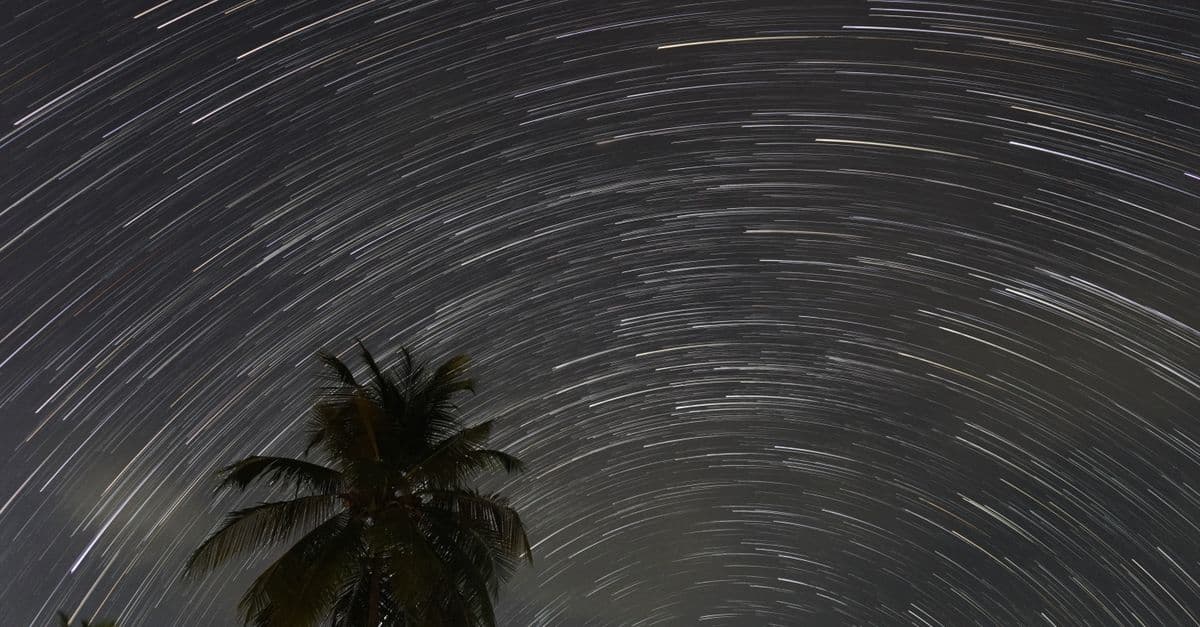
Photo: Mubas Akz / Pexels
Earth rotates once every 24 hours, dragging its atmosphere, oceans, and surface along at up to 1,674 km/h at the equator. This rotation shapes everything: the day/night cycle, the Coriolis effect driving weather patterns, the magnetic field generated by the rotating iron core, and even the shape of the planet itself (the equatorial bulge). What happens when it stops?
Thought experiment. This article explores a hypothetical scenario for educational and speculative purposes. The events described are not predictions and should not be interpreted as warnings, advocacy, or instructions.
An instantaneous stop is physically impossible — nothing in the solar system carries the force needed to halt a spinning planet in a single moment, and if it somehow happened, the inertial violence alone (supersonic winds, kilometer-high ocean surges) would end the story before adaptation ever mattered. This article takes the other, genuinely useful path: a gradual slowdown, stretched across months, years, and eventually millennia, of the kind actual tidal forces produce over cosmic timescales. That version lets us ask a more interesting question — not "how do you die in an instant," but "how does a planet, and the life on it, adapt when the clock itself keeps changing?"
Key takeaways
- A gradual slowdown — unlike an instant stop — avoids the catastrophic inertial effects and gives ecosystems, agriculture, and human physiology time to respond to a steadily lengthening day.
- As rotation slows, the day/night cycle stretches from 24 hours toward weeks, then months, then a full six-month day and six-month night at the tidally locked end state.
- Crops, migratory animals, and human circadian rhythms are all tuned to a roughly 24-hour cycle (photoperiodism and the ~24.2-hour human "free-running" clock) — a slow rotational drift would force real biological renegotiation, not just an alarm-clock inconvenience.
- The oceans would slowly redistribute from the equatorial bulge toward the poles as the bulge relaxes, reshaping coastlines over centuries without the tsunami-scale violence of an instant stop.
- The eventual end state — one hemisphere locked toward the Sun, the other in permanent night — mirrors how Mercury settled into its 3:2 spin-orbit resonance with the Sun after billions of years of tidal braking.
Why "gradual" is the physically honest version of this question
Every version of "what if Earth stopped spinning" that circulates online defaults to the instant-stop scenario because it's more dramatic: supersonic winds, planet-scale tsunamis, a bulge of ocean sloshing toward the poles. All of that is real physics, and it would happen if the surface halted in a single second. But nothing does that to a planet. What actually slows planetary rotation is tidal friction, a mechanism you can observe happening to Earth right now, just glacially slowly.
The Moon's gravity raises a tidal bulge in Earth's oceans and, to a smaller degree, in the solid crust. Because Earth rotates faster than the Moon orbits, that bulge is dragged slightly ahead of the Earth-Moon line. The mismatch creates a gravitational torque that pulls back on Earth's spin while pushing the Moon into a higher orbit. Astronomers have measured the result directly: using ancient eclipse records stretching back over 2,000 years, researchers led by F.R. Stephenson found that Earth's day is lengthening by a long-term average of about 1.8 milliseconds per century, a figure confirmed by more recent analyses in the 1.5–2.3 millisecond-per-century range depending on the record set used (Stephenson et al., 2016, Proceedings of the Royal Society A; Explaining Science, 2026 summary).
That real-world rate, roughly two milliseconds per century, is far too slow to matter to any human lifetime. For this thought experiment, we compress the timeline: imagine a mechanism (unspecified, and not something any real force in the solar system could deliver on a human timescale) that slows Earth's rotation by an amount equivalent to what tidal forces would achieve over millions of years, but compressed into a period of months to a few years, so we can actually observe how ecosystems, agriculture, and human biology respond stage by stage rather than skipping straight to the catastrophic or the geological.
Stage one: days get noticeably longer
The first stage most people would actually notice is the day getting longer by minutes, then hours, at a pace slow enough that no single day feels different from the last, but fast enough that within a matter of months the difference is undeniable.
What changes physically: the length of a solar day (sunrise to sunrise) stretches past 24 hours. Sidereal time (rotation relative to the stars) and solar time (rotation relative to the Sun) start to diverge more than they already do. Clocks built around a fixed 24-hour day become progressively less useful as a description of daylight, even though nothing about the length of the year changes, since orbital period around the Sun is independent of rotation rate.
What changes biologically: virtually every organism on Earth runs some version of an internal clock synchronized to roughly 24 hours, a mechanism called photoperiodism in plants and circadian rhythm in animals. Human circadian rhythm, when isolated from external light cues in controlled laboratory studies, naturally runs slightly longer than 24 hours (close to 24.2 hours on average), which is one reason humans are so good at entraining to a slightly lengthening day and comparatively bad at short-cycle disruption like jet lag or shift work (Czeisler et al., 1999, Science). A day stretching from 24 to 26 to 30 hours over a period of months is, biologically speaking, closer to a slow-motion version of chronic mild jet lag than a catastrophe — annoying, sleep-disrupting, and measurably bad for metabolic and cognitive health if it persists, but survivable and adaptable.
Agriculture is the more fragile system in this early stage. Many staple crops are photoperiodic, meaning they use day length, not temperature or calendar date, as the trigger for flowering and reproduction. Short-day plants like rice and soybeans flower when nights exceed a critical length; long-day plants like wheat and barley flower as days lengthen past a threshold (USDA Agricultural Research Service, photoperiodism overview). If the day/night ratio drifts steadily away from the pattern these varieties evolved and were bred against, flowering timing desynchronizes from the conditions (rainfall, temperature, pollinator activity) that made those triggers useful in the first place. Farmers dependent on precisely timed staple crops would see yield instability well before the rotation slowdown became an existential threat to the planet.
Stage two: weeks-long days and the collapse of the 24-hour rhythm
As the slowdown continues, the length of a full day/night cycle passes from hours into days, then weeks. This is where the "gradual" scenario starts to diverge sharply from ordinary experience, because no organism on Earth evolved a biological clock tuned to a multi-day light cycle.
How would ecosystems adapt to a lengthening day?
Species with short generation times and high genetic diversity, insects, many microbes, fast-breeding rodents, could plausibly shift their circadian machinery through natural selection over the multi-year timescale of a gradual slowdown, since organisms with clock genes better matched to the new cycle length would out-reproduce those that weren't. Long-lived, slow-breeding species, large mammals, trees, coral, would not have time to evolve new rhythms and would instead rely on behavioral flexibility, migrating toward more stable microclimates, or simply suffering reduced fitness.
Migratory animals present a particular problem. Many species use day length as their primary migration trigger — a mechanism well documented in birds, where photoperiod changes cue the hormonal shifts that initiate migratory restlessness (Gwinner, 1996, Journal of Experimental Biology). A day/night cycle that no longer matches the seasonal patterns these triggers evolved against would scramble migration timing relative to food availability, breeding grounds, and weather windows, a mismatch problem similar in kind (though larger in scale) to the phenological mismatches already documented under ordinary climate warming.
For humans, a multi-day light cycle would force a shift away from light-driven scheduling entirely. Sleep science already tells us what happens when humans lose reliable daily light cues: without external light, human circadian rhythm free-runs on its own internal (roughly 24.2-hour) period, drifting slowly out of sync with the actual environment (Czeisler et al., 1999). A week-long day would mean farmers, outdoor workers, and eventually entire economies operating on artificial-light schedules disconnected from the actual sun position, essentially converting most of civilization to the equivalent of permanent shift work, a condition the International Agency for Research on Cancer classifies as a probable human carcinogen due to circadian disruption (IARC Monograph 124, 2020).
Stage three: the ocean and crust slowly reshape
While biology is struggling to keep up, the planet itself is changing shape underneath everything, just slowly enough to avoid the instant-stop scenario's wall-of-water catastrophe.
Earth's equatorial diameter is currently about 42.7 km larger than its polar diameter, a bulge maintained by the centrifugal effect of rotation (NASA Earth Fact Sheet). As rotation slows, the centrifugal force holding that bulge in place weakens, and both the oceans and the solid crust begin relaxing toward a more spherical shape. In the instant-stop scenario, the fluid ocean does this in hours, producing a planet-scale surge toward the poles. In the gradual scenario, the ocean redistributes over centuries, moving as a slow but continuous shift in mean sea level, dropping at the equator and rising at higher latitudes, rather than a single catastrophic wave.
That slow redistribution still reshapes coastlines meaningfully within a human civilizational timescale. Equatorial port cities would see gradually receding shorelines; higher-latitude coastal cities would see gradual, persistent sea level rise layered on top of whatever climate-driven sea level change is already happening. Unlike catastrophic flooding, this is the kind of change infrastructure planning can, in principle, adapt to, the same way coastal engineers currently plan for multi-decade sea level rise projections, just compressed into a faster and more disruptive timeline than ordinary climate change alone.
The solid crust bulge relaxes far more slowly than the ocean, because rock is far more rigid than water, but it still moves. The same kind of viscoelastic crustal adjustment that currently produces post-glacial rebound (land in Scandinavia and Canada is still rising as it slowly recovers from the weight of ice-age glaciers, a process documented through GPS and satellite gravimetry, see NOAA's overview of glacial isostatic adjustment) would apply to a relaxing equatorial bulge, producing elevated seismic activity concentrated along the boundary zones between the shrinking bulge and the rest of the crust, over a period of centuries to millennia rather than the near-instant crustal shock of a sudden stop.
What eventually happens to the magnetic field
Earth's magnetic field is generated by the geodynamo, convection currents in the liquid outer iron core that are organized into a coherent, Earth-scale magnetic field partly through the Coriolis effect, which itself depends on rotation. As rotation slows, the Coriolis organizing force in the core weakens. The convective motion driven by heat escaping the core would still exist, but the coherent dynamo structure that currently produces a roughly dipolar field (one that looks, from a distance, like a single bar magnet) would likely weaken and become more chaotic, potentially producing multiple shifting magnetic poles rather than the two stable ones we navigate by today.
A weaker, more chaotic magnetic field has consequences that unfold on geological, not human, timescales. The magnetosphere currently deflects most of the solar wind, the continuous stream of charged particles from the Sun; a weakened field would let more of that solar wind strip lightweight atmospheric molecules from the upper atmosphere over millions of years, the same mechanism widely credited with stripping most of Mars's atmosphere after Mars lost its global magnetic field roughly four billion years ago (NASA's MAVEN mission findings on Martian atmospheric loss). None of this would be visible within the human lifespan of the gradual-slowdown scenario, but it marks the difference between "life adapts to a changed planet" and "the planet itself eventually loses the atmosphere that makes adaptation possible at all."
The end state: a Mercury-style tidal lock
Where does a gradual slowdown actually end? If nothing interrupts the process, Earth's rotation relative to the Sun would eventually reach equilibrium, either a true 1:1 tidal lock (one face permanently sunward, exactly like the Moon's relationship to Earth) or a resonance state like Mercury's, where the planet rotates a fixed number of times for every orbit rather than exactly once.
Mercury is the best real-world model available. It rotates three times for every two orbits around the Sun, a 3:2 spin-orbit resonance rather than a simple 1:1 lock, a state that was stabilized by Mercury's eccentric orbit and the way solar tidal torque interacted with the planet's slightly asymmetric mass distribution (Cornell University Mercury spin-orbit resonance overview). Mercury did not start out this way. It began rotating much faster and was slowed by billions of years of solar tidal interaction until it locked into the stable 3:2 configuration, the same category of mechanism, tidal braking by a nearby massive body, that is currently (if extremely slowly) acting on Earth via the Moon.
Because Earth's Moon is far more massive relative to Earth than anything orbiting Mercury, and because lunar tidal braking currently dominates over solar tidal braking, the realistic multi-billion-year fate of the Earth-Moon system is Earth becoming tidally locked to the Moon, not the Sun, showing the Moon the same face permanently, the same relationship the Moon already has with Earth. That end state, according to standard tidal evolution models, would take on the order of tens of billions of years to complete, well past the point at which the Sun is expected to exhaust its hydrogen fuel and expand into a red giant, roughly five billion years from now, an event current stellar models suggest would engulf or at least render uninhabitable both Earth and the Moon long before Earth-Moon tidal locking could finish (NASA/JPL overview of the Sun's red giant future). A hypothetical Sun-locked Earth, the scenario in this article's gradual slowdown, is a physics thought experiment rather than Earth's actual projected fate, but it remains a physically coherent state, the same category of outcome Mercury has already reached with the Sun, and it usefully illustrates where "gradual slowdown" mechanically leads if carried to completion.
What would daily life look like at the tidally locked end state?
One hemisphere would face the Sun permanently, the other would face permanent night, with no day/night cycle at all inside either hemisphere. The boundary zone between them, the terminator, would experience the most moderate and stable conditions, likely the most habitable band on the planet, similar to how climate models of tidally locked exoplanets consistently identify the terminator zone as the most temperate region available.
Comparing the slow slowdown to an instant stop
| Effect | Instant stop | Gradual slowdown (months–years) |
|---|---|---|
| Atmosphere | Supersonic winds (~1,674 km/h at equator) scour the surface within minutes | Wind patterns shift gradually as the Coriolis effect weakens; no supersonic event |
| Oceans | Catastrophic poleward surge, potentially 8–9 km sea level change within hours | Slow multi-century redistribution from equator toward poles |
| Crust | Sudden bulge relaxation triggers massive earthquakes | Gradual seismic activity along bulge-boundary zones over centuries |
| Biology | No adaptation window; mass extinction event | Circadian and photoperiodic systems have years to partially adapt, though long-lived species lag behind |
| Agriculture | Immediate, total collapse | Progressive yield instability as photoperiod triggers desynchronize from evolved patterns |
| Magnetic field | Same long-term weakening, unrelated to the speed of the stop itself | Same long-term weakening, unfolding over millions of years regardless of stop speed |
| End state | N/A — surface devastation precedes any stable end state | Potential eventual tidal lock, a 6-month day/6-month night world, Mercury-style |
Table: how the pace of Earth's rotational slowdown changes the severity and survivability of each major consequence.
What people get wrong about "Earth slowing down"
The most common misconception is treating "Earth is slowing down" as breaking news rather than an ongoing, measured, and utterly unthreatening background process. Tidal braking is real, it's been measured through both ancient eclipse records and modern atomic clocks, and it adds about 1.8 milliseconds to the length of a day every century (Stephenson et al., 2016). At that rate, it would take roughly a million years to add a single extra minute to the day. Nothing about current, real-world tidal braking resembles the compressed months-to-years scenario explored in this article, which is a deliberate thought experiment, not a forecast.
A second common confusion is treating "gradual slowdown" as automatically gentle. It avoids the specific inertial catastrophe of an instant stop, the supersonic winds and near-instant tsunami-scale ocean surge, but it is not mild. A day that stretches from 24 hours to a full week within a matter of months would desynchronize agriculture, ecosystems, and human physiology fast enough to cause serious disruption well before rotation ever approached a full stop. Gradual, in this context, means "survivable in principle, with time to adapt," not "harmless."
A third misconception is assuming rotation and orbit are linked. They aren't. Slowing Earth's rotation does not change the length of the year, the 365.25-day orbital period around the Sun, because rotation and orbital motion are governed by entirely separate physics (spin angular momentum versus orbital angular momentum). A slowly rotating Earth would still take the same time to circle the Sun; it would just experience many fewer sunrises during that circuit, because each individual day/night cycle would be so much longer.
Frequently asked questions
Q: How fast would Earth's rotation actually have to slow to reach a six-month day? Physically, Earth's real tidal braking rate (about 1.8 milliseconds per century) would take on the order of tens of billions of years to produce anything close to a six-month day, far longer than the Sun is expected to remain a stable, hydrogen-burning star. The months-to-years slowdown explored in this article is a deliberate thought experiment using an unspecified accelerating mechanism, not a projection of anything currently happening or expected to happen to Earth.
Q: Would a gradual slowdown still produce supersonic winds like an instant stop? No. Supersonic winds in the instant-stop scenario come from inertia: air and surface briefly moving at very different speeds the moment rotation halts. A gradual slowdown lets the atmosphere continuously re-equilibrate with the surface at every stage, so wind speeds stay within the range of ordinary (if increasingly unusual) severe weather rather than reaching sound-barrier speeds.
Q: Could human circadian rhythms actually adjust to a much longer day? Partially. Laboratory studies show the human circadian clock naturally runs close to 24.2 hours when isolated from external cues and can entrain to moderately different day lengths, but chronic exposure to unusual light/dark cycles, the situation of shift workers today, is linked to measurable increases in metabolic and cardiovascular disease risk (IARC Monograph 124, 2020). A day lengthening into weeks would likely require artificial-light scheduling to maintain any semblance of the 24-hour rhythm human biology is tuned to.
Q: What would happen to crops during a gradual slowdown? Photoperiodic crops like rice, soybeans, wheat, and barley use day length as a trigger for flowering, not temperature or calendar date alone (USDA ARS photoperiodism overview). As the day/night cycle drifted away from the pattern these varieties were bred and evolved against, flowering timing would desynchronize from rainfall and pollinator cycles, producing yield instability well before any catastrophic endpoint was reached.
Q: Is Earth's rotation actually slowing down today? Yes, measurably, through a combination of ancient eclipse records and modern atomic clock comparisons, at a long-term average rate of about 1.8 milliseconds added to the length of a day per century, caused primarily by lunar tidal friction (Stephenson et al., 2016). This is the real, currently-observed process that this article's compressed thought experiment draws on, though at a rate roughly a million times slower than the scenario described here.
Q: Would Earth ever actually become tidally locked to the Sun? Almost certainly not, in reality. Because the Moon's tidal effect on Earth currently dominates over the Sun's, Earth's actual long-term tidal trajectory (over tens of billions of years) points toward locking with the Moon, not the Sun, and that process is expected to take far longer than the roughly five billion years before the Sun is expected to expand into a red giant and render Earth uninhabitable regardless (NASA/JPL Sun overview). Mercury's real 3:2 solar spin-orbit resonance is the closest available real-world analog for what "locked to a star" actually looks like.
The takeaway
A gradual slowdown avoids the instant-stop scenario's supersonic winds and hours-scale ocean catastrophe, but it replaces one kind of violence with another: a slow-motion desynchronization between Earth's rotation and every biological clock tuned to it, from photoperiodic crops to human circadian rhythm to migratory birds. Given centuries rather than hours, oceans and crust can reshape without planet-scale tsunamis, and given years rather than seconds, some species could plausibly adapt. But the honest answer to "would gradual be survivable" is that survivability and severity are separate questions, and even the gentler path to a stopped Earth ends, mechanically, in the same place Mercury already sits: one face locked toward its star, the other in permanent night, with only a thin habitable band at the boundary between them.
Read next:
Follow new articles
Add SciHub101 to your feed reader to see new science and technology stories.
About the Author
SciHub101 is an independent science and technology publication founded and edited by Buğra Sözeri, a software engineer and app developer based in Türkiye. AI tools assist with drafting and research. Source documentation in the existing archive is uneven, and articles are being reviewed and corrected. The Editorial Team byline identifies editorial responsibility; it does not certify specialist or independent human review. Where we compare products, anything built by our own team is labelled as such — see the editorial guidelines and About page for how corrections and disclosures work.
Related Articles
What If a Black Hole Appeared Next to Earth?
How close would a black hole have to be to destroy Earth? The answer depends on its mass and distance, and the numbers are stranger than the myth of a cosmic drain.
What If the Sun Became a Black Hole?
If the Sun were swapped for a black hole of the same mass, Earth's orbit would not change at all. The danger is the lost sunlight, which would turn the surface into a frozen, lightless world.
What If Earth Had No Atmosphere? — Science Explained
What would actually happen if Earth's atmosphere disappeared? Temperature swings from +120°C to –170°C, water boiling into space, instant deafness, UV sterilisation, and a very bad day for everything alive.
What If We Ran Out of Oxygen for 5 Seconds? — Science Explained
What would actually happen if Earth's oxygen vanished for just 5 seconds? Buildings would implode, the sky would go black, your eardrums would rupture, and all metal surfaces would weld together. Oxygen is doing far more than you think.
What If Radioactive Decay Stopped?
Radioactive decay provides Earth's internal heat, drives plate tectonics, and powers the magnetic field. If it stopped, Earth would cool, tectonics would cease, the magnetic field would die, and life would face increased radiation. Over billions of years, Earth would become a cold, geologically dead world.
What If Gravity Suddenly Became 10% Weaker?
Lower gravity sounds like a fitness boost — but the consequences would cascade through the planet, the climate, and life itself in ways most people don't expect.